Garden Blog - Top Tropicals

Date: 21 Nov 2025

How to keep your house plants beautiful all year by feeding them right
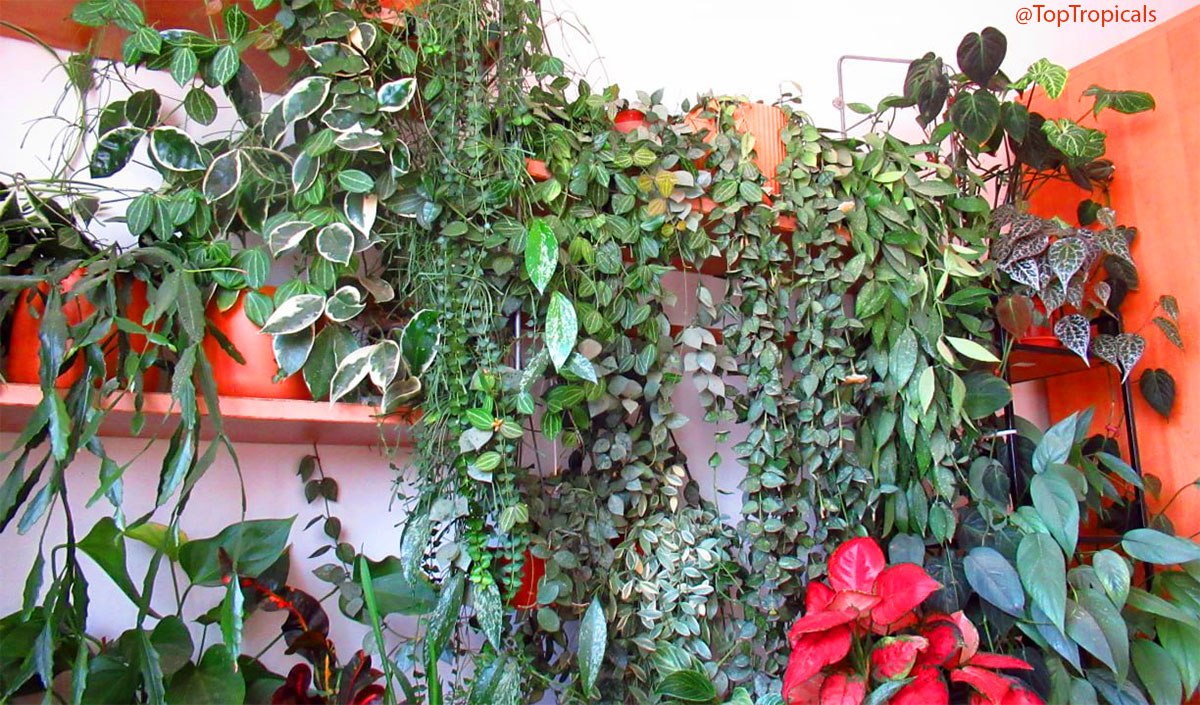
Indoor garden

Indoor garden

🍀 How to keep your house plants beautiful all year by feeding them right


🌱 Healthy house plants are not just about light and water. They need food, just like we do. A good fertilizer routine keeps them green, strong, and blooming through every season. Here is a simple guide to feeding indoor plants the right way.

🌱 General rules for fertilizing house plants


▪️Feed lightly but regularly. Indoor plants grow in limited soil, so nutrients run out faster. Small, frequent feedings work better than one heavy dose.
▪️Never fertilize dry soil. Water first, then feed.
▪️Reduce feeding in winter when growth slows.
▪️Watch your leaves. Pale, yellow, or slow-growing plants are asking for nutrients.
▪️Use a complete formula. House plants need both macro-elements (N-P-K) and micro-elements, not just nitrogen.

🌱 What fertilizer to use


Sunshine Boosters - the everyday diet.
Sunshine Boosters are simple, balanced liquid fertilizers you mix with water. They give your plants everything they need for steady, healthy growth. They contain the right blend of nitrogen, phosphorus, potassium, and trace minerals. They do not contain harsh chemicals, so they are safe for homes with pets and kids. Regular use keeps plants growing faster, stronger, and more resilient to stress.

Sunshine Superfood - the vitamin supplement.
If a plant turns yellow or looks weak, it often needs micronutrients. These are the plant version of vitamins, including iron, zinc, copper, and manganese. Sunshine Superfood delivers these quickly and in the right proportions. Mix it with water and apply when you notice yellowing or slow growth. It corrects deficiencies fast and keeps leaves lush and green.

Green Magic - the long-term slow feeder.
Green Magic is a controlled-release fertilizer that works for six months. It uses poly-on coating technology to release nutrients slowly, without burning roots. It is perfect for repotting or for plant owners who want a set-it-and-forget-it option. Mix one teaspoon per gallon of soil during repotting or every six months. Excellent for container fruit trees and ornamentals that need steady feeding.

🌱 The simple routine


▪️For regular watering: use Sunshine Boosters.
▪️Once a month: add Sunshine Superfood to prevent yellowing.
▪️Every six months: mix Green Magic into the soil for long-term support.

With the right diet, your house plants stay green, strong, and beautiful year-round. Feed them well, and they reward you every day.

📸 In the photo: Indoor garden of Marina Rybka, Israel, the Editor of TopTropicals.

🛒 Get your plants some food

📚 Learn more:
Why do you need Sunshine Boosters?
Which dry fertilizer to use - slow release or controlled release?
Green Magic effect: before and after
The SECRET growers never tell you: simple trick how to bring plants back to life and keep green
📱 What are Sunshine Boosters

#Fertilizers #How_to

🟢 Join 👉 TopTropicals

Date: 22 Apr 2026

Secrets of Real Mango Flavor

Top-down  view  of  a  white  tray  filled  with  assorted  mango  varieties  in 
 different  shapes  and  colors,  including  green,  yellow,  red,  and  orange, 
 arranged  outdoors  on  a  textured  surface.

A colorful mix of mango varieties - different shapes, colors, and flavors all in one harvest.

Mango Plant Facts

Botanical name: Mangifera indica
Also known as: Mango
USDA Zone: 9 - 11
Highligths Large tree taller than 20 ftSmall tree 10-20 ftFull sunWatering: Moderate. Water when top soil feels dryYellow, orange flowersPink flowersEdible plantSeaside, salt tolerant plant
Get personalized tips for your region

Mango Practical Growing Tips (Keep It Simple)

  • Sun: Full sun is key. 6–8+ hours daily for best growth and fruiting.
  • Soil: Excellent drainage is critical. In pots, use well-draining mix with added perlite or sand. Mango does not like wet roots.
  • Watering: Water deeply, then let soil dry slightly before watering again. Avoid constantly wet soil.
  • Containers: Excellent for pots. Condo mango varieties stay compact and are easy to manage on patios.
  • Feeding: Light but consistent feeding during active growth makes a big difference. Use controlled-release Green Magic for steady nutrition, and supplement with liquid Sunshine Boosters Mango Tango during warm months to push growth and fruiting.
  • USDA Zones: Best suited for Zones 9b–11. In Zone 9b, choose a warm, protected microclimate (south-facing wall, patio, or near structures) and be prepared to protect during cold snaps. In Zones 10–11, mango grows reliably in-ground. If you live in colder zones, grow in a pot so you can move the tree indoors or protect it during cold weather.
  • Cold Protection: Protect young trees during cold nights. Use cover or place near a wall or warm microclimate. Mature trees are more tolerant.
  • Airflow: Good airflow helps prevent disease and keeps growth clean.
  • Spacing: Give the tree room for light and airflow. Even compact trees benefit from space.

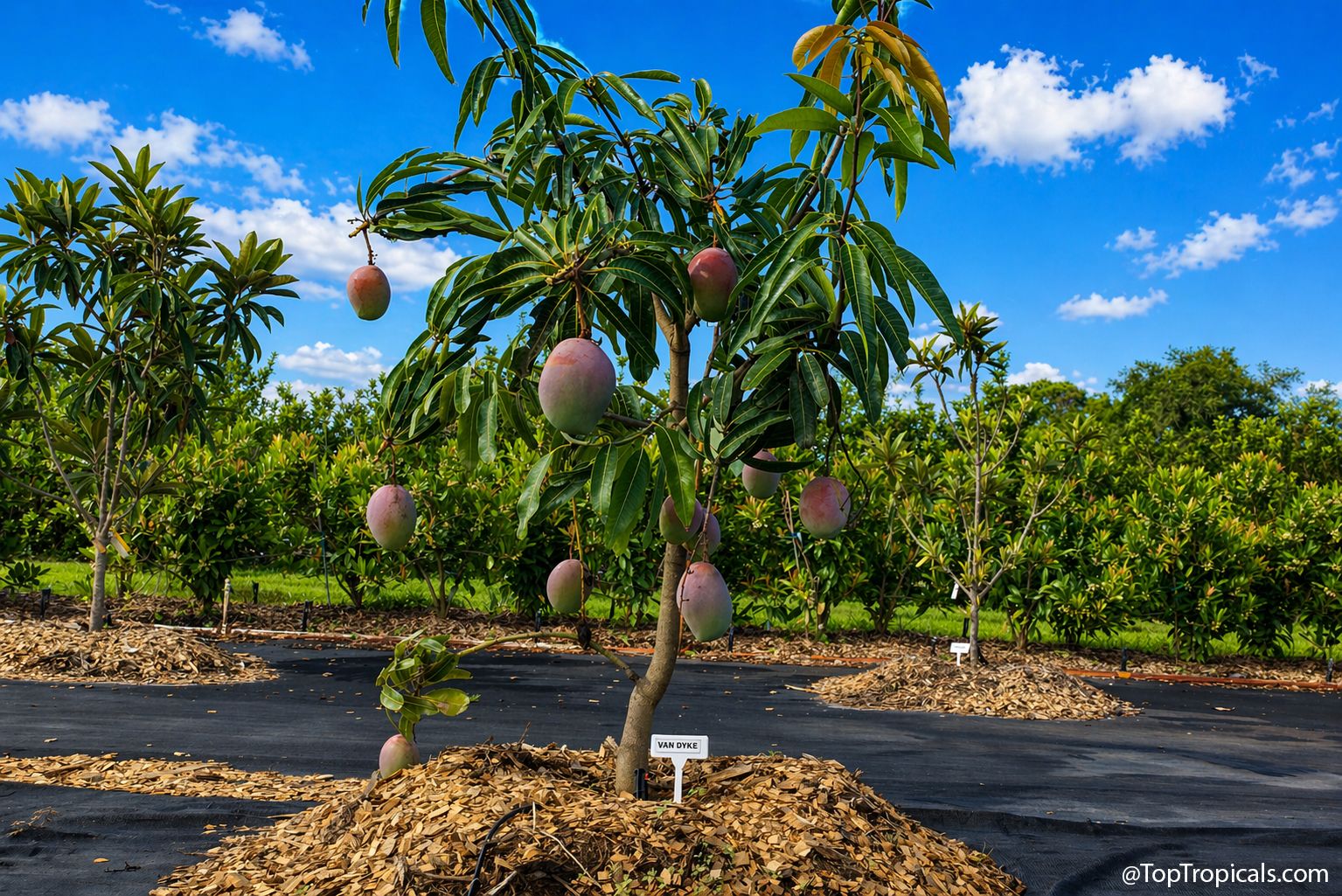
Mango  tree  Van  Dyke  growing  in  an  orchard,  loaded  with  ripening  mango 
 fruits,  surrounded  by  mulch  and  irrigation,  under  a  bright  blue  sky  with 
 scattered  clouds.

A fruiting mango tree Van Dyke in the grove, heavy with developing mangoes and enjoying full sun.

Mango Winter Care (Very Important)

Mango is not a truly cold-hardy plant. It performs best in USDA Zone 9b and warmer, where freezes are rare and short. In borderline areas, winter protection becomes part of the routine. Mango trees should be covered during cold nights, and planting near a south-facing wall helps protect from cold winds. That small microclimate can make a real difference. If your winters are less predictable, growing mango in a container becomes the simplest solution. It gives you full control — you can move the tree to a protected space when temperatures drop, and bring it back into the sun when conditions improve.

That is where condo mango varieties make the most sense. They are naturally compact, easier to manage in pots, and still produce full-size, high-quality fruit. You get all the benefits of a mango tree without needing a large yard or perfect climate — just sun, a container, and a bit of seasonal movement when needed.

📚 Mango tips from our Blog

Growing Mango in a Pot (Condo Mango Made Easy)

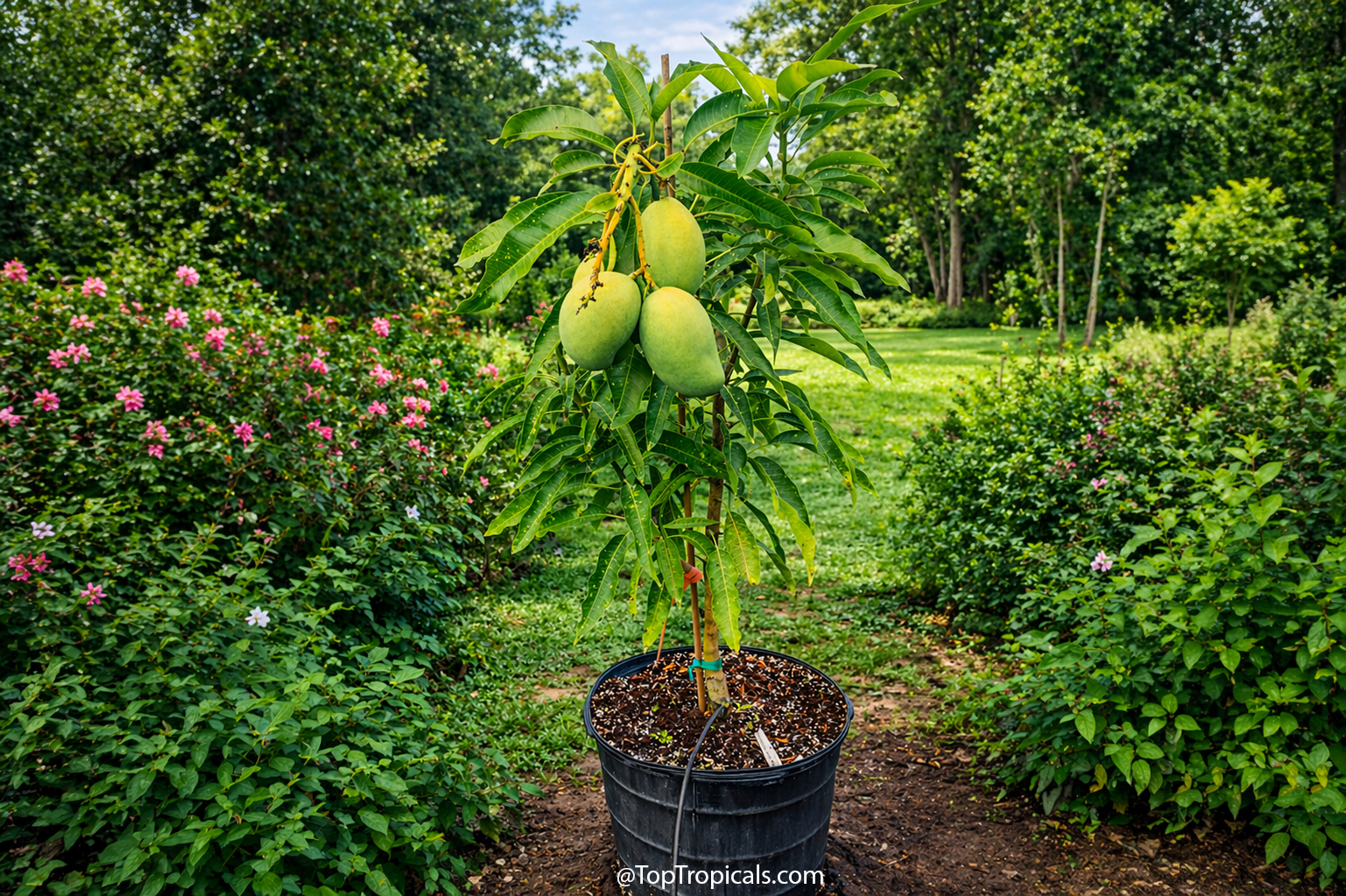
Young  mango  tree  growing  in  a  large  black  nursery  pot,  supported  with 
 stakes  and  drip  irrigation,  bearing  several  green  mango  fruits,  set  in  a 
 lush  garden  with  flowering  shrubs  and  a  sunny  lawn  in  the  background.

Young mango tree in a container, already holding fruit and thriving in a sunny garden setting.

Growing mango in a container is one of the easiest ways to control size, soil, and winter protection. Condo mango varieties stay naturally compact and adapt well to pots, making them ideal for patios, small spaces, or colder climates. You get full flexibility — move the tree when needed, manage its growth, and still enjoy real tree-ripened fruit.

  • Pot size: Start with 3–7 gallon, move up to 15–25 gallon as the tree grows.
  • Soil: Use fast-draining mix such as Abundance soilles mix.
  • Sun: Place in full sun. More light = better growth and fruiting.
  • Watering: Water deeply, then let soil dry slightly before next watering.
  • Feeding: Use controlled-release Green Magic for steady nutrition, plus liquid Sunshine Boosters Mango Tango during active growth.
  • Climate Flexibility: Can be grown in any USDA zone when kept in a container. Simply move indoors or to a protected area during cold weather to keep the tree safe.
  • Pruning: Light pruning keeps the tree compact and productive.

Once you taste a real mango from your own tree, everything changes. It is no longer something you buy — it is something you grow, wait for, and look forward to every season. What felt like hype suddenly makes sense. The passion people have for mango is not exaggerated — it just comes from a completely different experience.

And for people who have never tasted a fresh, juicy mango warmed by the sun, that moment comes as a surprise — the first time they realize what mango is actually supposed to taste like.

As Smokey quietly puts it: Now you know.

📚 More about Condo Mango

🛒 Shop Condo Mango

Landscape  infographic  showing  how  to  cut  a  mango  in  five  steps.  Step  1 
 -  slicing  along  each  side  of  the  pit.  Step  2  -  separating  the  two  cheeks  and
   the  pit.  Step  3  -  scoring  the  mango  flesh  in  a  grid  pattern.  Step  4  - 
 turning  the  cheek  inside  out  to  create  cubes.  Step  5  -  scooping  or  slicing 
 the  cubes  to  eat.  Bright  yellow  background  with  whole  and  cut  mangoes  and 
 green  leaves  decorating  the  layout.

Simple step-by-step guide to cutting a mango into clean, easy cubes - from slicing off the cheeks to popping and scooping the fruit.

🎥 Watch Mango videos

🛒 Shop Mango Trees

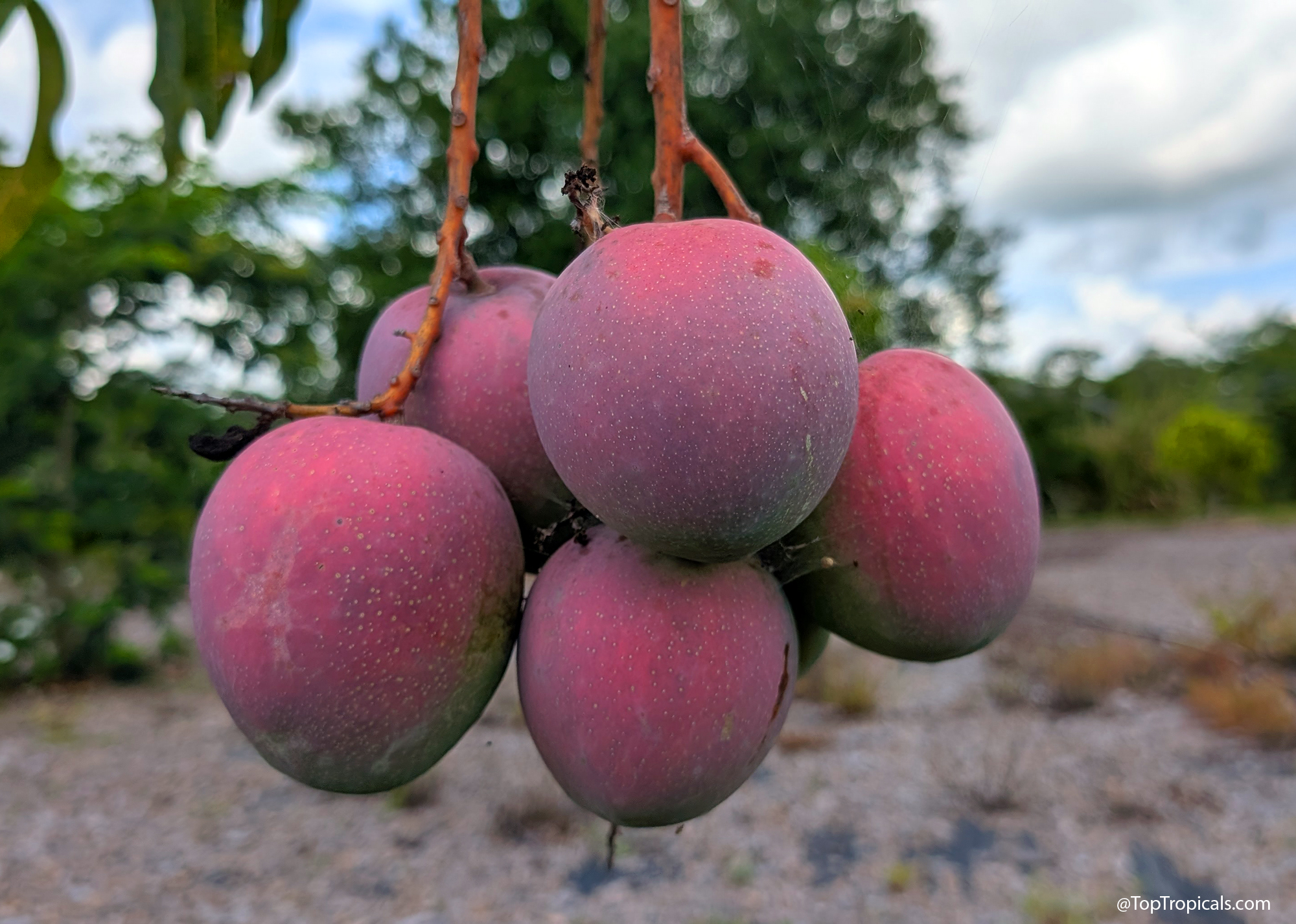
Close-up  of  a  cluster  of  ripening  mangoes  hanging  from  a  branch, 
 showing  red  and  purple  blush  tones  against  a  blurred  outdoor  background.

Cluster of ripening mangoes developing rich color on the tree just before harvest.

Taste the Mango Difference - Save 10%

Once you taste a real mango from your own tree, everything changes. Now you know. Get 10% off with coupon code MANGO2026 on 3 gal mango trees.
Offer valid through 04/28/2026.
Discount applies to 3 gal plants only. Not valid on previous purchases and cannot be combined with other promotions or discounts. Offer subject to change without notice.

Date: 13 Apr 2026

🏖️ Aloha, Backyard Edition 🌈

Sunshine  ginger  tabby  cat  surfing  pool  wave  with  donuts  and  coffee 
 Smokey  tuxedo  cat  relaxing 
 nearby
Sunshine: Look what I can do. It all started with plumerias. Aloha, backyard edition.

Smokey: You are not just planting a tree - you are building a tropical island lifestyle around it. Not bad for staying home.

It usually starts simple. A plumeria in a pot by the patio. The flowers catch your eye first, then the scent follows you, soft but unmistakable. And that scent does something strange - it brings back places you have been, or places you wish you had. Warm evenings, ocean air, tropical vacations that stay with you long after they are over.

Plumeria Plant Facts

Botanical name: Plumeria sp.
Also known as: Plumeria, Frangipani
USDA Zone: 9 - 11
Highligths Large shrub 5-10 ft tallSmall tree 10-20 ftFull sunWatering: Moderate. Water when top soil feels dryYellow, orange flowersRed, crimson, vinous flowersWhite, off-white flowersPink flowersPlant attracts butterflies, hummingbirdsDeciduous plantFragrant plantSeaside, salt tolerant plant
Get personalized tips for your region

That is the part people do not expect. One plant changes how the space feels. But adding a few changes everything. Different colors, slightly different fragrances, layers that build on each other. It stops being a plant and becomes an atmosphere that pulls you outside without thinking.

Plumeria carries that tropical world with it. The same feeling people travel for can live right outside your door. Mix a few varieties, and your backyard starts feeling like a place you never want to leave.

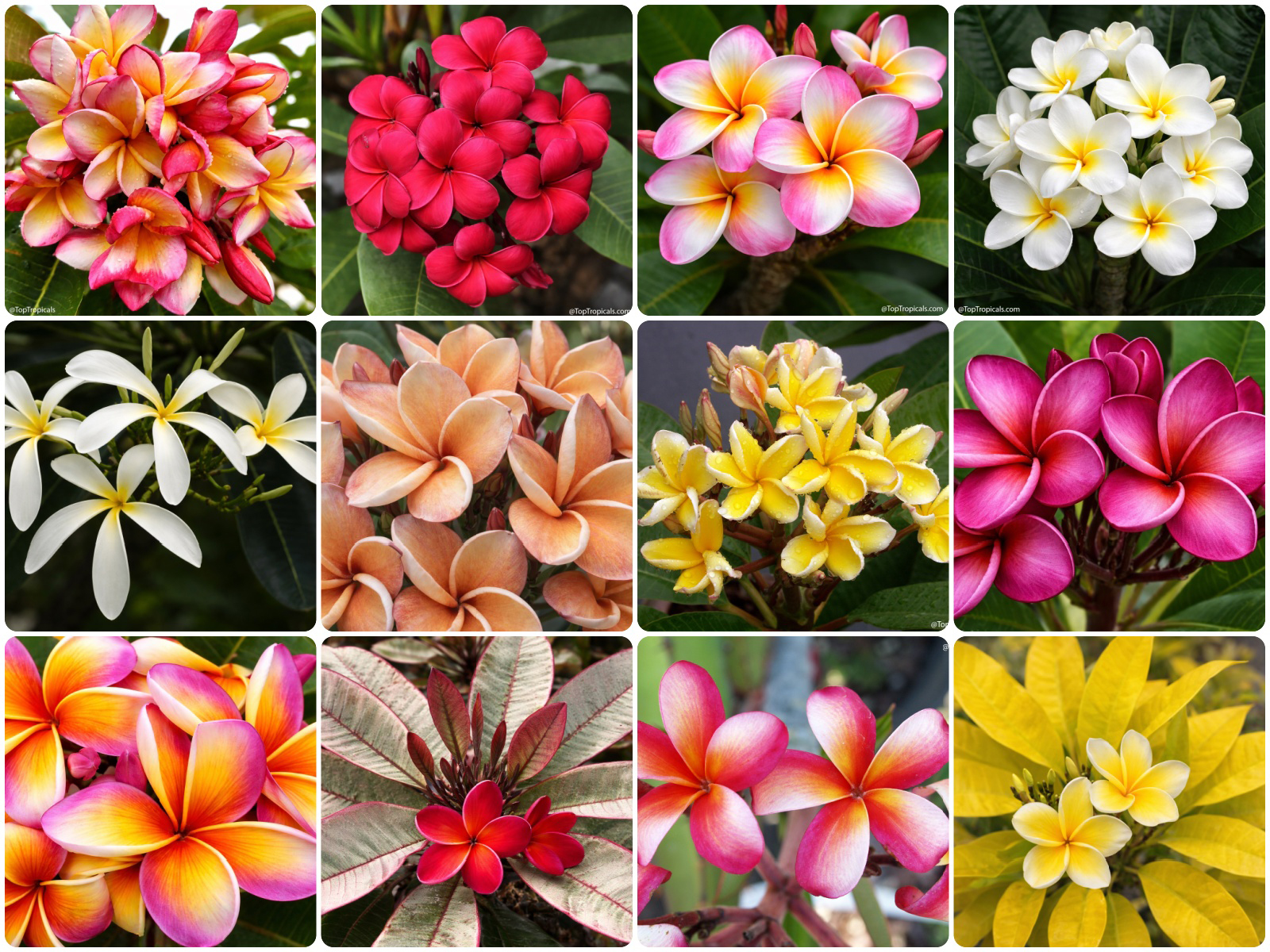
plumeria  flowers  collage  multiple  colors  red  pink  yellow  white 
 frangipani  blooms  close  up

Plumerias are one of those plants you don't just grow - you start collecting. One turns into two, then five, then suddenly you want them all!

🛒 Explore plumeria colors

Date: 2 Mar 2026

Eugenia Cherries 🍒

By Tatiana Anderson, Horticulture Expert at Top Tropicals with Smokey & Sunshine help

Eugenia brasiliensis - Grumichama fruit on the branch

Growing Eugenia Cherries (Cherry of the Rio Grande & Grumichama)

Cherry of the Rio Grande and Grumichama are compact, adaptable tropical fruit trees well suited to Southern landscapes. While forgiving, they perform best when planted correctly from the beginning.

Site and Planting

  • Drainage is essential. Avoid low areas where water collects. Plant on a slight mound if soil is heavy or clay-like.
  • Choose full sun for best flowering and fruit production. Partial shade is tolerated.
  • A south or southeast exposure near a wall improves cold resilience and reduces wind stress.
  • Dig a hole twice as wide as the container, but no deeper than the root ball.
  • Set the tree level with surrounding soil. Do not bury the trunk.

Water and Feeding

  • Water regularly during the first few months while roots establish.
  • Once established, trees tolerate short dry periods but fruit best with moderate, consistent moisture.
  • Feed lightly and consistenly. SUNSHINE Boosters Robusta liquid fertilizer is safe to use with with every watering. During hot season you may add controlled release Green Magic every 6 months. It is essential to apply micro elements: Sunshine Superfood micro nutrients complex

Cold Tolerance

  • Protect young trees during hard freezes.
  • Established Cherry of the Rio Grande can tolerate brief drops into the low 20s.
  • Established Grumichama tolerates temperatures into the upper 20s.

Harvest and Production

  • Cherry of the Rio Grande fruits from late spring into summer. Pick when fully dark and slightly soft.
  • Grumichama ripens quickly, often within four weeks after flowering. Pick when glossy and deep purple-black.
  • Both trees often begin fruiting within 2–3 years and increase production steadily with maturity.

Growing in Containers

  • Use at least a 10–20 gallon pot for long-term growth.
  • Ensure multiple drainage holes.
  • Use a high-quality, well-draining container mix. Avoid heavy garden soil. Top Tropicals Abundance soil-less mix is specially formulated for pot growing
  • Place in full sun for best fruiting.
  • Water deeply, then allow the top layer to dry slightly before watering again.
  • Move containers to a protected area during hard freezes.
  • Prune lightly to maintain shape and airflow.

Common Mistakes

  • Planting in poorly drained soil.
  • Overwatering and keeping soil constantly saturated.
  • Over-fertilizing with excessive nitrogen.
  • Planting too deep and burying the trunk.
  • Expecting heavy crops immediately instead of allowing time for maturity.
  • Skipping cold protection for young plants.

Learn more: Tropical Cherries – Eugenias

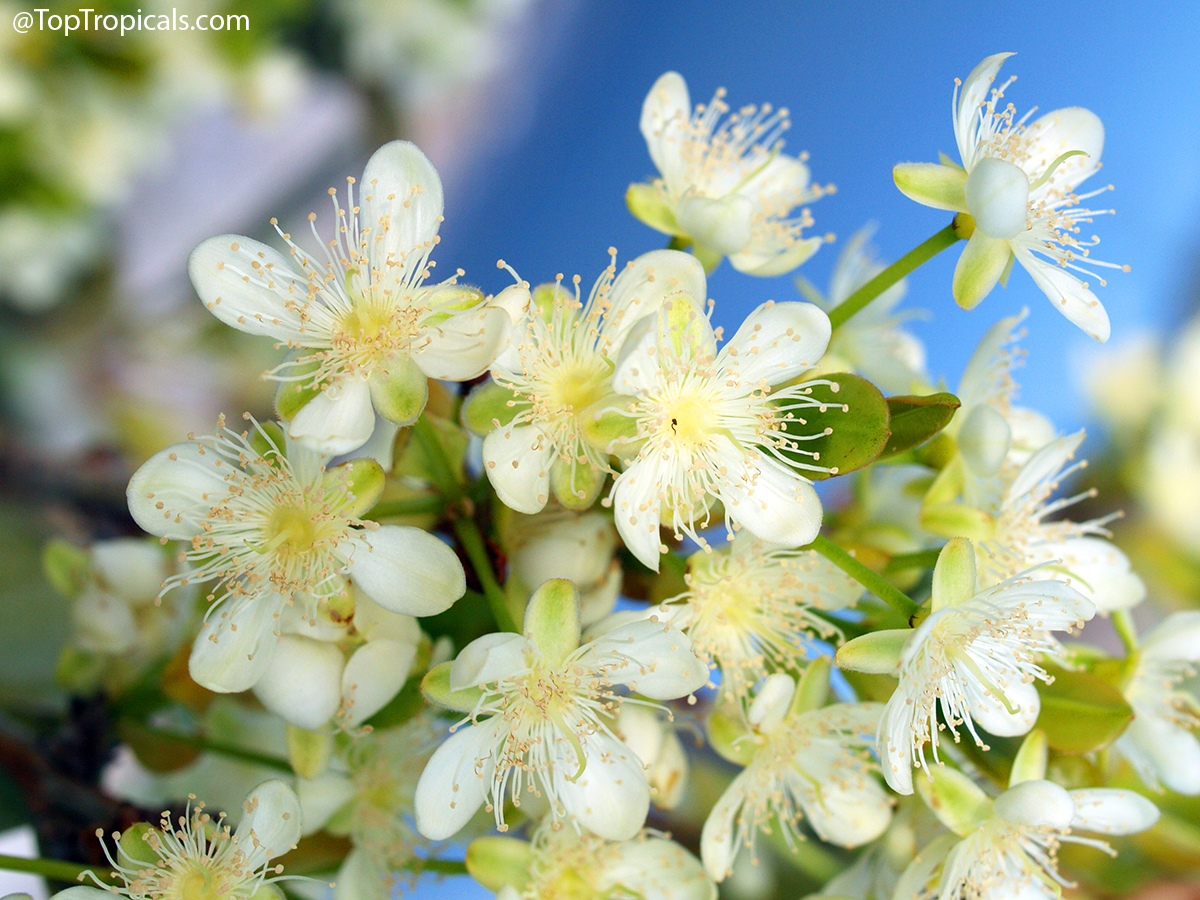
EGrumichama  flowers  (Eugenia  brasiliensis)  in  close-up  showing  white 
 petals  and  long 
 stamens

Eugenia brasiliensis - Grumichama flowers

❓Frequently Asked Questions: Eugenia cherries (FAQ)

  • Which one tastes better – Cherry of the Rio Grande or Grumichama?
    Cherry of the Rio Grande has a deeper, classic “sweet cherry” flavor with slight richness. Grumichama is softer, juicier, and often described as cherry with hints of grape and plum. Both are excellent fresh; Grumichama is especially popular for jam.
  • Which tree produces more fruit?
    Grumichama typically produces heavier crops once mature and can carry hundreds of fruits in a season. Cherry of the Rio Grande produces consistently but in slightly smaller volumes.
  • Do birds take all the fruit?
    Birds are attracted to both trees, especially Grumichama. Netting during peak ripening or harvesting promptly usually solves the issue.
  • Are these true "tropical" trees or subtropical?
    They are best described as subtropical tropicals. Unlike ultra-tender tropical fruits, Eugenia cherries tolerate occasional frost once established, making them more reliable in Southern landscapes.
  • Do they drop fruit messily?
    Fruit will fall if overripe, but the trees are compact and manageable. Regular harvesting prevents ground drop and keeps the area clean.
  • Can they be used for hedging or screening?
    Yes. Their dense evergreen foliage and upright growth make them suitable for edible hedges or privacy screens while still producing fruit.

Choosing between them is not about survival — both have proven resilient. It is about flavor preference, crop volume, and how you want to use the fruit in your kitchen and landscape.

Eugenia brasiliensis - Grumichama fruit close up

Eugenia aggregata (cv. Calycina), Cherry of the Rio Grande

🛒 Add Eugenia cherries to your garden

✍️ Top Ten Fruit Tree Winners of Florida 2026 Record Freeze

Date: 10 Sep 2024

We remember 9/11, and we always will

Two  kittens,  black  and  white,  with  American  Flag

"Darkness cannot drive out darkness; only light can do that. Hate cannot drive out hate; only love can do that." - Martin Luther King Jr.

As this day approaches, the weight of its memories fills our hearts - honoring the lives lost, the bravery of the heroes, and the resilience that carried us through such a difficult time.

In our journey of healing, let us stand united, supporting one another with love, kindness, and understanding. In times like these, tolerance and mutual respect, regardless of our differences, become gifts we share with the world.

Take a moment to appreciate what we have today, the people who surround us, and the ones who love us. Cherish them while they are here - today. Give a hug to those you love while you have the chance.

Nature offers us healing power in its quiet way. Fragrant flowers calm the mind, young fruiting trees represent renewal, every plant reminds us of life's resilience. As we reflect, may the beauty and growth around us help us find peace, and remind us of the strength that comes from standing together.

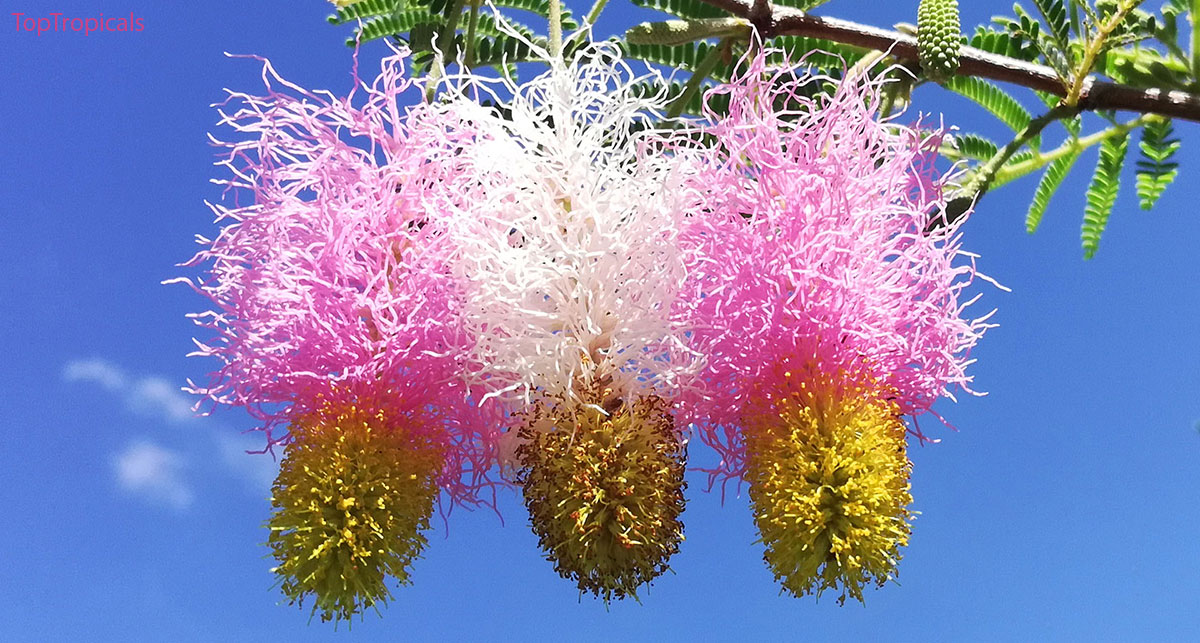
Dichrostachys  cinerea  -  Princess  Earrings,  Sickle  bush

In the photo above: Dichrostachys cinerea - Princess Earrings, Sickle bush from West Africa is one of the most unusual and unforgettable flowers of cheerful color combination... Let them bring hope, joy and sunshine into your day.