Garden Blog - Top Tropicals

Date: 24 Jun 2018

Choosing the right Mango for your garden

Q: Do the mango trees you sell already have fruit? Or how long does it take to get fruit? Are they tricky to keep up? I live locally and have been interested in getting a few!

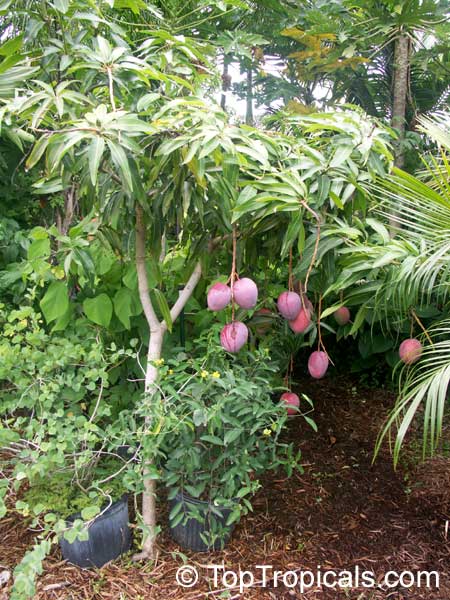
A: Some of our mangos in both 3 gal and 7 gal pots have fruit on them. All our mango trees are grafted which means they are ready to produce fruit. So if not the same year, you should get fruit the next year.
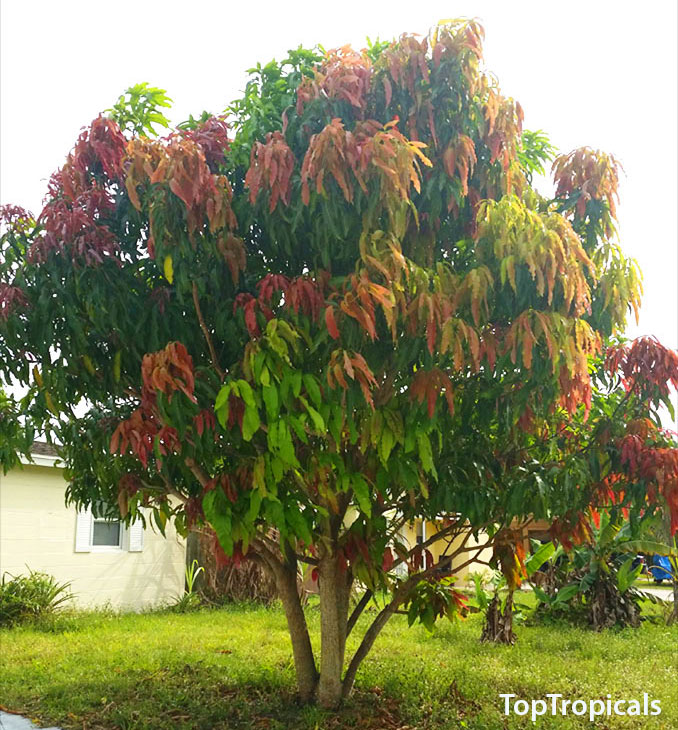
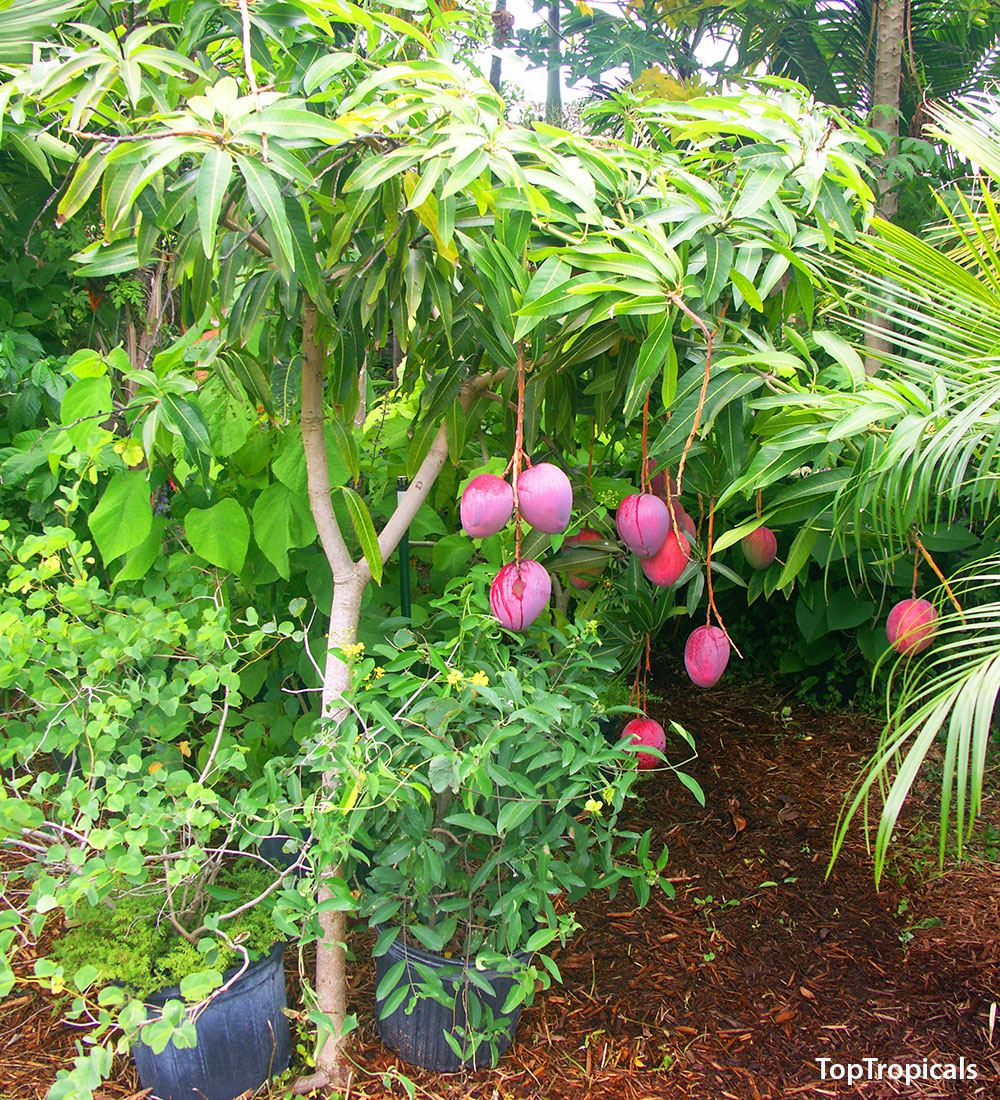
Mangoes in general are easy to grow plants. They are not picky about soil and water, however they need full sun for fruiting. When you are lucky to live in tropical or subtropical climate, your mango will thrive in a ground, and within 2-3 years you will have a mature tree, and a crop every year (those who have cold winters, still can grow a mango tree in a pot, and move it indoors for colder period). Visit our garden center for a tour of our Mango Gardenthat is only 3 years old and is full of fruit! Tasting table available :) We offer over 100 varieties, and our experts can help you to make the right choice for your garden. To start your own mango tree collection, depending on space available, you may begin with the following varieties:
Nam Doc Mai - one of the most popular and delicious Asian mango
Carrie - very compact grower, reliable producer with great taste
Cogshall and Ice Cream - dwarf varieties for small yards, excellent taste
Alphonso - considered one of the best tasting

See full list of our mango varieties, all fiberless and great sweet flavors.
Date: 16 May 2024

When Bigger means Better

Large  Avocado  trees  in  containers

Everybody loves shopping online nowadays, and plants are no exception. Buying plants by mail order is not uncommon anymore; it only takes one click, and luckily, there are many sources - from big shopping malls like Amazon to small backyard nurseries that sell their seedlings on eBay or Facebook - all delivered to your door. But plants are alive... So when doing your online plant shopping, you must ensure that you fully enjoy your experience and are happy with a healthy plant that a) doesn't die; b) recovers quickly; and c) starts growing fast, so you can see flowers and fruit as soon as possible.

The rule of thumb for shipping plants: bigger plants undergo shipping better, experience less stress, less leaf drop, and recover quicker than plants with smaller root systems. So when it comes to buying plants online, the bigger, the better. Unfortunately, many mail-order plant sources may sell you a tiny twig that has very few chances of surviving. Shipping is very expensive today, so shipping a bigger size plant may cost more than the plant itself.

Below is a piece of advice on how to make the best plant selection for your garden...

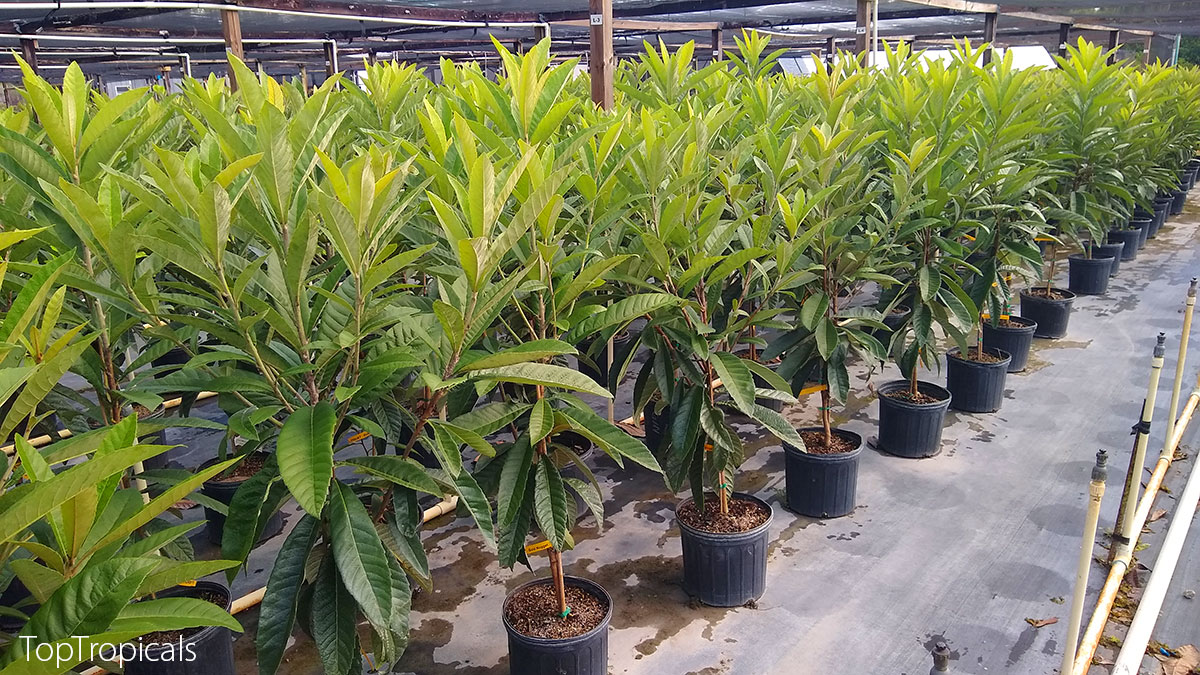
Loquat  trees  in  containers

Photo above: Loquat trees in 3 gal containers.

5 important rules on how to buy trees online

1. Find a source with bigger plants. Check reviews, ask friends for recommendations, inquire from the company about the size of their plants and how they pack their plants for shipping.
TopTropicals offers well-established, strong plants with developed root system, in container sizes 1, 3, 7, 15 gallon, directly from a tropical Florida growing farm. Our unique plant-packing techniques are state of the art!

2. Price not always reflects the size and quality of the plant
TopTropicals offers many deals, discounts and sales, while still providing the biggest and strongest plants grown in real tropical conditions.

3. Most fruit trees must be grafted to produce good fruit. Make sure you are not purchasing a seedling when it comes to Mango, Avocado, Peaches and some other trees with named varieties that don't come true to seed.
TopTropicals offers only grafted - Mango, Avocado and a large number of other tropical cultivars.

4. Pick up when possible from the nursery your ordered from, or get a delivery, instead of shipping the plants. A drive to the nursery will save you more time and money in the future, plus you can hand-pick the biggest and healthiest specimens.
TopTropicals is open 7 days a week for your convenience. Visit our Ft Myers Garden Center or Sebring Farm to select the biggest plants.

5. Take advantage of X-Large size plant material if you live outside the tropical zone and are trying to zone-push your tropical garden. Bigger plants will establish faster and have more chances to survive cold winters. Again, it will save you money in a long run (although bigger plants may be more expensive, but their survival rate is much higher when it comes to cold nights).
TopTropicals offers X-Large flowering and fruiting trees (7-15-25 gallons), and most of the varieties you see in our online store can be custom-ordered in big sizes. Delivery and installation available.

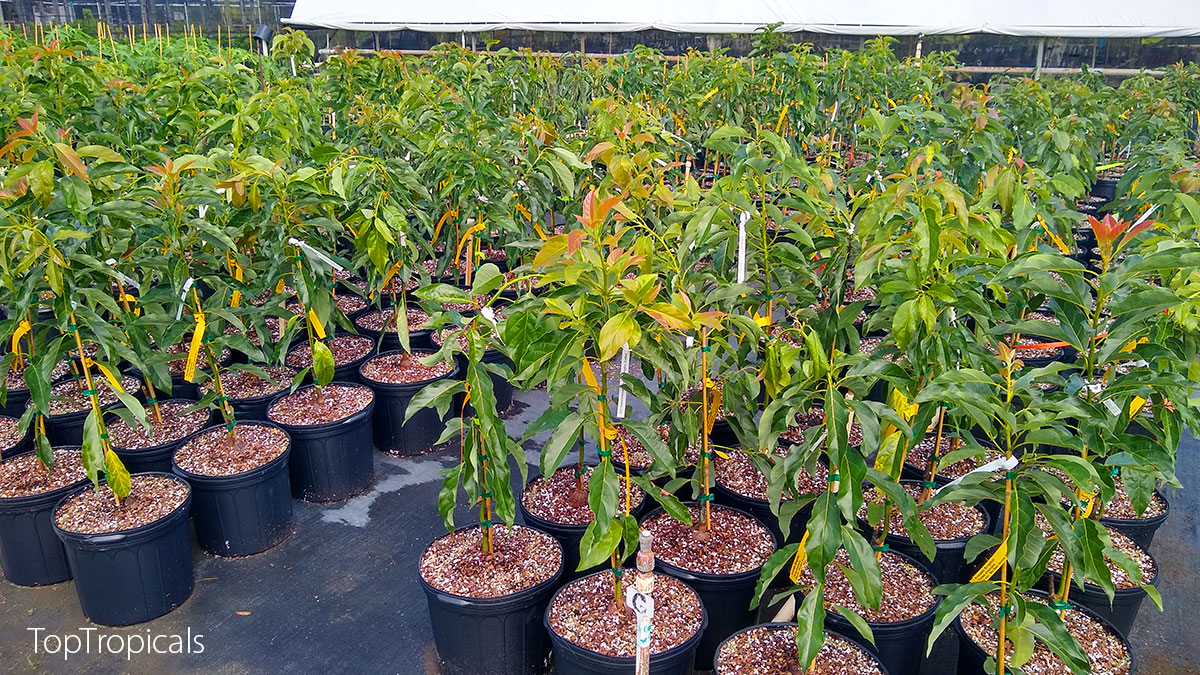
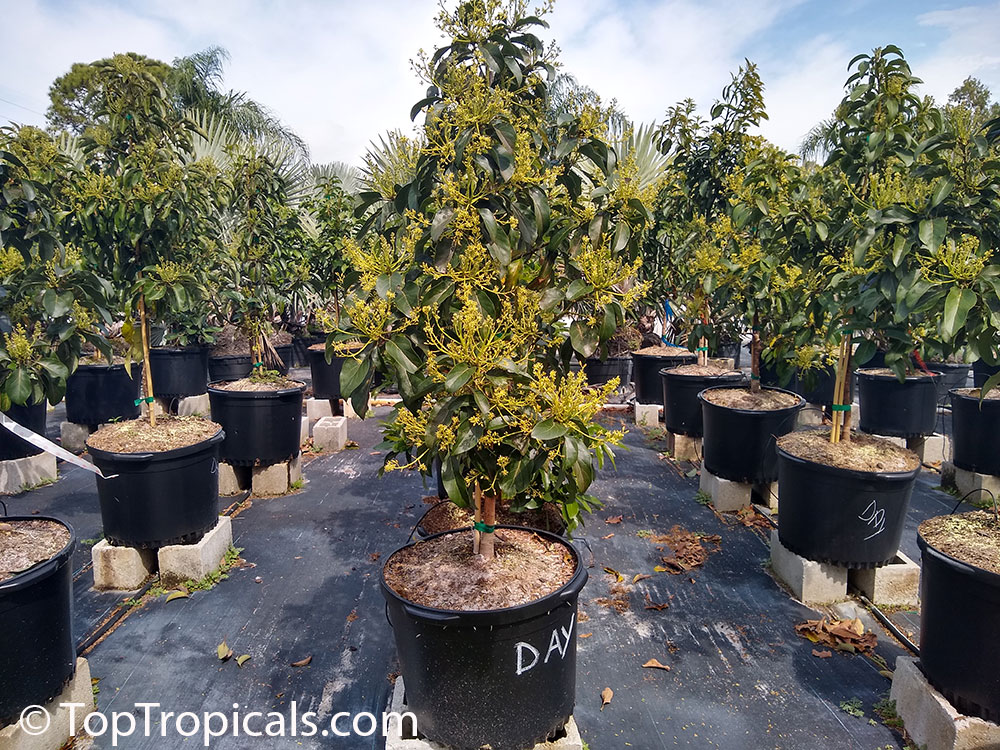
Avocado  trees  in  containers

Photo above: Avocado trees in 7 gal containers.

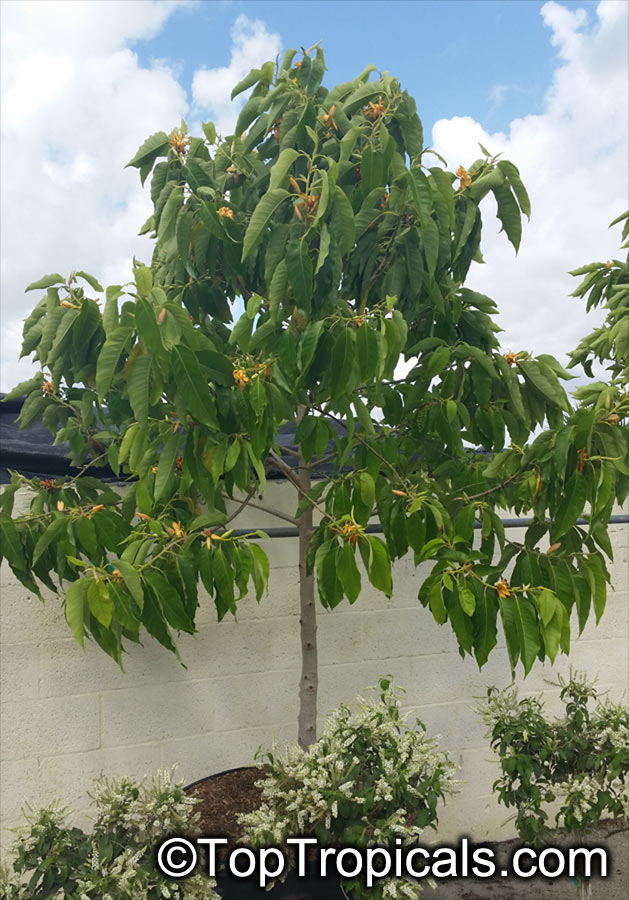
Large  Champaka  tree  in  container

Photo above: Magnolia champaca - Joy Perfume Tree in 25 gal container.

Date: 27 Apr 2020

How to feed a Mango tree...
and to grow a Dwarf Mango

How to fertilize a Mango tree

Q: My mango trees that I bought and planted last august now have fruit. I bought 2 types of fertilizer from you and never used it. Should I use your fertilizer now?

A: It is a perfect time now to fertilize your plants as they start active growth. For mango trees, we recommend liquid fertilizer Sunshine Booster - Mango Tango. It is formulated for Mango trees, especially for container grown. It improves quantity and quality of flowers and ability to set fruit, reduces bud-flower-fruit drop. Can be used as often as with every watering. For best results, use in combination with Sunshine Honey and Sunshine Superfood plant supplements. Its scientifically-balanced stable formula is organic Amino-acid based and has NO EDTA chelators to eliminate nutrients lockup; it does not affect crop taste.
Additionally, you may use slow-release granulated fertilizer Mango-Food once a month during hot season only. Dosage: 1 teaspoon per each gal of soil. Water-soluble fertilizers can be also used, however, those are usually EDTA-chelated which is not as efficient as Amono-acid based Sunshine Boosters and may create nutrients build up, especially if overdosed in containers.
For in-ground mango trees, you may use all the above, and slow-release granulated fertilizer can be applied in larger quantities: spread a handful around the drip line.

Remember that only liquid Sunshine Boosters can be applied year around. With other fertilizers, you need to be careful not to overdose, and apply only during hot weather (when night temperatures are steadily above 65F).

How to grow a Dwarf Mango tree

Q: I received the Ice cream mango tree in great condition (thank you for the ingenious packing job) on Wednesday and have planted it in a pot slightly bigger than the root ball. I plan to grow the tree on my front porch, so how big a container should I ultimately use when the tree outgrows this pot? How big a container does it need to fruit? I hope to keep it around 6-7 feet high, if possible. I live in Hawaii.

A: Ice Cream mango is a perfect variety for container culture, and it should be happy in Hawaii. You did everything right. Keep it in this small pot for now and wait until it starts vigorous growth in Summer. Once it starts growing (and you will notice roots growing too, sometimes they try to grow through the holes in the bottom of the pot), then it's time to step up into a bigger container (7-10 gal). Eventually you may use container size as large as 15 gal. Ice cream mango is slow growing and compact, and you will be able to maintain it under 7 ft with very minimal pruning if any.

Date: 13 Aug 2020

Healthy Plant Food

Q&A from Mr Booster

Establishing Avocado Tree

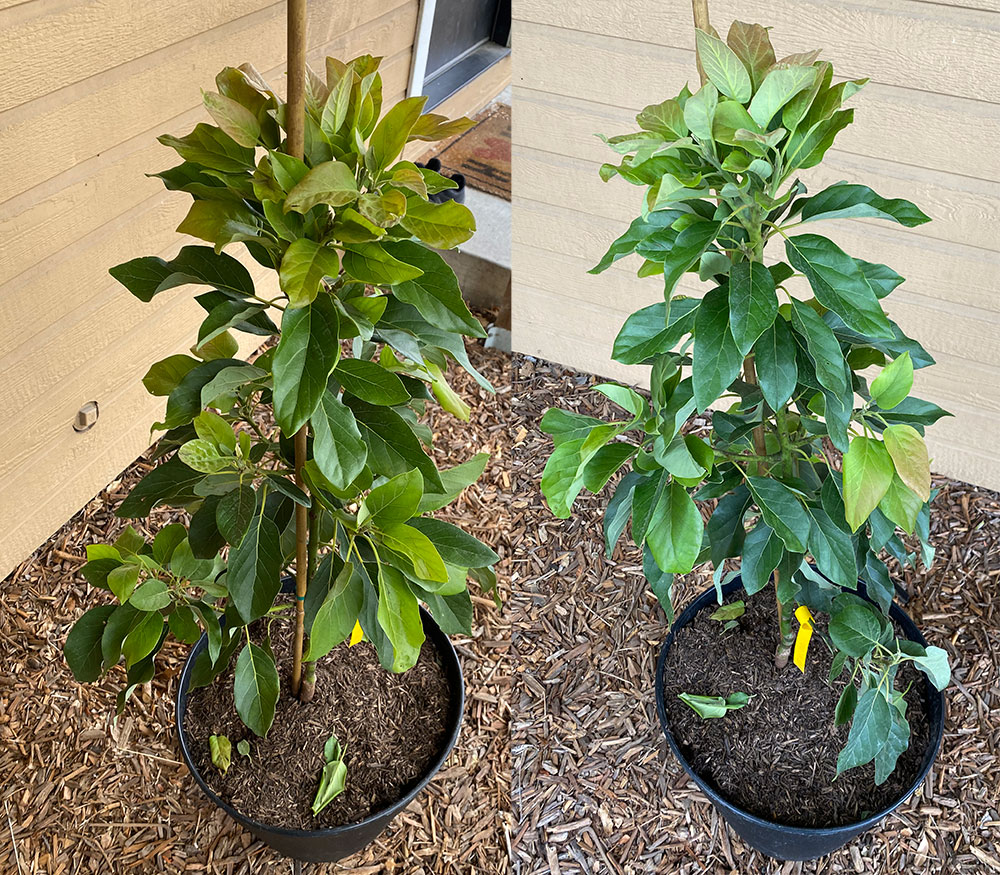
Q: I received my avocado Wurtz tree yesterday. Per instructions I have put the tree in a pot first. However I am having difficulty deciding what to trim off. Yesterday I removed obvious damaged leaves. However as you can see, the leaves are lighter in some areas and contain yellow and red in some spots. What would you advise? Given this is a critical state as I do not want to shock the tree after the trip, I would like to do everything possible to protect it and ensure viability.

A: Your Avocado tree looks great and healthy overall. You've done excellent job planting it. Wurtz is a good, vigorous variety, while the tree is somewhat dwarf, great for containers.
You are right, it is the best for the tree to leave it alone and do not trim or remove leaves any more, until it starts showing new growth. Then it will be obvious what needs to be trimmed. Reddish/orange color of young leaves is normal. If any spots or dots - no need to remove those leaves yet. Wait until the plant grows more leaves. It needs them for photosynthesis, in order to become stronger.

Keep the tree in bright shade and gradually move from filtered sun to full sun. Water daily. Within a week or two after planting, you can start applying mild fertilizer and micro-elements. We recommend at this growth stage:
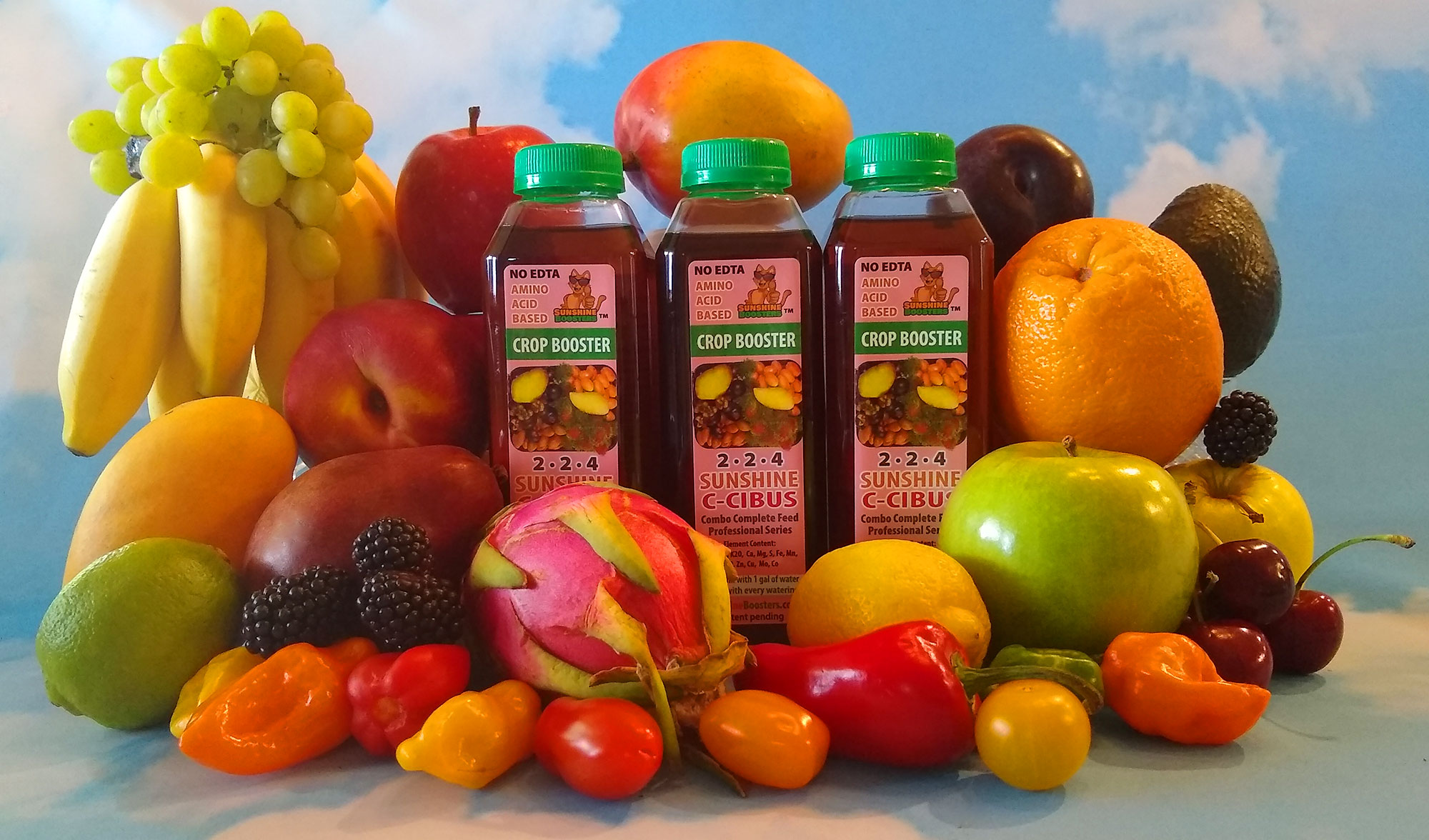
SUNSHINE C-Cibus - Crop Nutrition Booster
SUNSHINE SuperFood - Micro-element Plant Booster

SUNSHINE C-Cibus - Crop Nutrition Booster from Garden Series, or Combo Total Feed Collection - all nutrients in just one bottle, for fruit trees and edibles.

Date: 8 Jun 2019

Chosing a good avocado tree

TopTropicals.com

Q: I'm in coastal Broward County. I'm putting together an order on your web site, and one thing that I would like is an avocado tree. I'd like to have something as close to true "Hass" as possible. Which cultivar does well here in SE Florida, and is most like Hass in texture, creaminess, and flavor? I'm not a big fan of the yellow watery Florida avocados.

A: Mexican type of Avocado have dark skin and buttery texture, while Florida green fruit types (West Indian type, with smooth skin), have lots of delicious melting pulp, so it is a matter of preference.
In coastal Broward county you can grow a wide range of varieties since your climate is very mild, so you don't have select cold-hardy varieties like Winter Mexican, Brazos Belle or Joey, etc. Yet there are many interesting varieties that rare and much more exclusive than Hass, with the same, or even better, quality buttery fruit.

One of the most popular varieties - Brogdon, with red-purple colored pear-shaped fruit, very thin skin, and yellow buttery flesh. It is also very cold hardy.

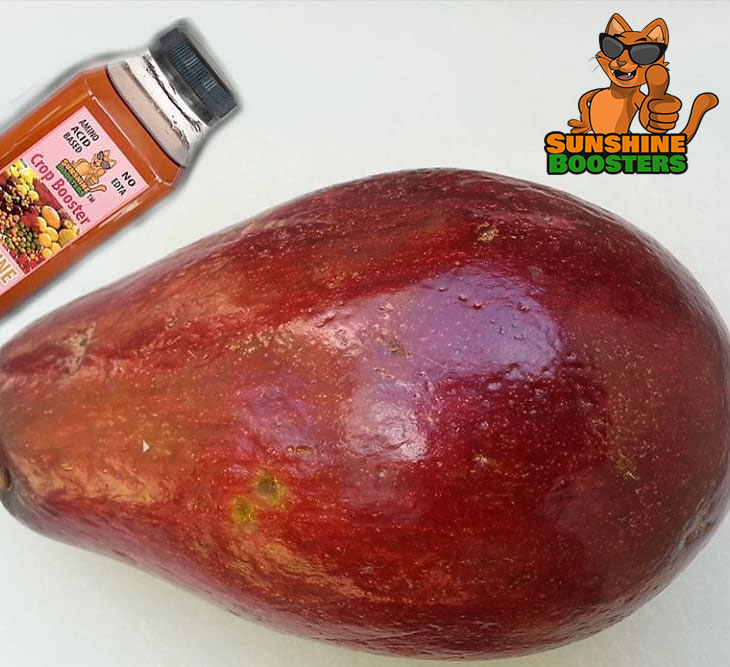
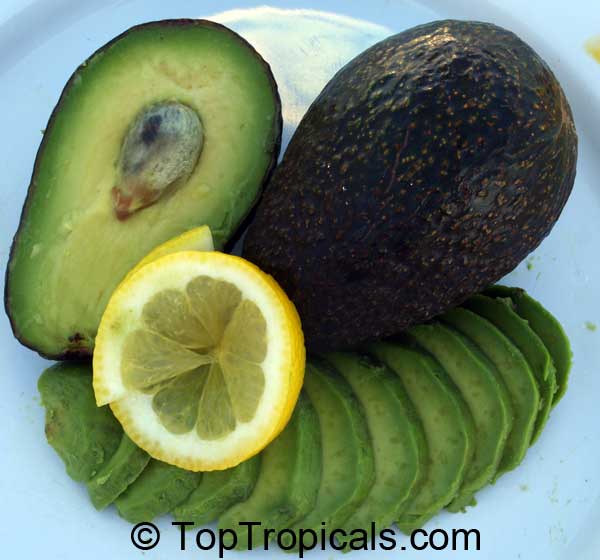
Very interesting exotic avocado is Kampong - Sushi Avocado - see photo above. The flavor of this fruit very nice, oily, creamy, nutty, reminds of almonds. At the same time, it has solid consistency and if you cut a square it remains a shape of the square. It is the best Sushi Avocado! It tastes great as an appetizer when cut in squares with some shrimp cocktail sauce.

Three collectible varieties:
Anise - leaves that smell like Anise, very rare, the fruit is of excellent quality, creamy and buttery.
Bacon - a large Mexican variety with dark-skinned medium-sized fruits, and a rich creamy flavor. It has exceptional fruit that ripen in late fall and into spring, they are easy to peel and have a light, subtle flavor. Another outstanding feature of the Bacon avocado tree is its angelic sweeping branches which helps keep the tree shorter and easier to pick its fruit.
Nishikawa is a very hot seller! Oval fruit somewhat resembles Hass, but larger, and has very high oil content.

See all Avocado trees from our store


Recommended fertilizers:
Fruit Festival Plant Food - Super Crop Booster
Mango-Food - Smart Release Fruit Tree Booster