Garden Blog - Top Tropicals

Date: 12 Sep 2025

What flowers do NOT attract bees?

Butterfly on a flower that doesn't attract bees

❌ What flowers do NOT attract bees?


Most tropical flowers bring in pollinators, and bees are usually first in line. But what if you’d rather avoid them? Maybe you’re allergic, or just don’t want bees buzzing around. Good news: some flowers attract butterflies, hummingbirds, moths, or even flies - but not bees.
  • 👉 Quick rules:


  • ✔️ Night-blooming + strong fragrance = moths or bats, not bees.
  • ✔️ Red tubular flowers with little scent = hummingbirds or butterflies, not bees.
  • ✔️ Rotten or fermented smell = flies, not bees.
  • ✔️ Carnivorous plants = trap insects, no bee nectar.

1.

Night-blooming, fragrant - moth and bat flowers


Bees forage by day, so many night-fragrant flowers skip them.
  • Brugmansia - Angel’s Trumpet - big, hanging blooms, moth and bat pollinated.
  • Cestrum nocturnum - Night-blooming Jasmine - powerful night scent, moths only.
  • Hylocereus Dragon Fruit - huge cactus flowers, bats and moths.
  • Brunfelsia - Lady of the Night - sweet fragrance at dusk, no bee interest.

2.

Hummingbird and butterfly flowers


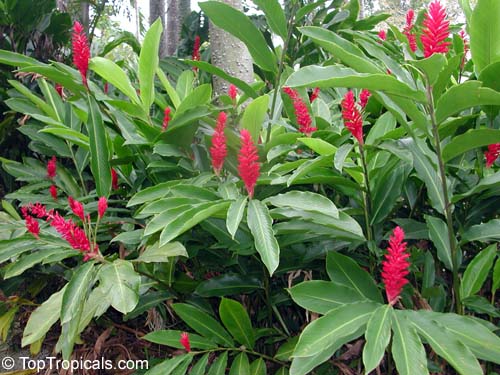
Bees don’t see red well. Tubular reds, oranges, and yellows usually go to birds and butterflies.
3.

🐱 Fly-pollinated oddballs


Some flowers smell bad to us but irresistible to flies.
  • Amorphophallus (Voodoo Lily) - rotting meat scent.
  • Tacca (Bat Head Lily) - spooky black flowers, fly-pollinated.
  • Stapelia (Carrion Flower) - also fly-pollinated.
  • Aristolochia (Pelican Flower) - giant, bizarre fly-traps.

4.

🌸 Specialized orchids


Not all orchids rely on bees. Many use moths, butterflies, or beetles instead.
  • Vanilla orchid - its natural bee pollinator is absent in most regions, so no bee appeal elsewhere.
  • Brassavola nodosa and others - open at night for moths, not bees.

5.

🕷 Bonus: carnivorous curiosities


Carnivorous plants don’t offer nectar. They trap insects instead, so bees stay away.

Nepenthes (Pitcher Plant) - uses pitchers of liquid to lure and digest insects.

These flowers keep the beauty, fragrance, and wildlife appeal - but without making your garden a bee hotspot.

🛒 Explore butterfly attractors

#Butterfly_Plants #How_to #Discover

🟢 Join 👉 TopTropicals

Date: 29 Nov 2023

What plants are good to order in Winter?

Christmas  dog  and  night  moon  with  snow

Photo above: Christmas time in Ukraine (left) and Florida (right)

Q: Are there any tropical plants that will do well if I order them in Winter? We just bought a house in New Jersey with a large sunroom, and I can't wait to fill it with tropical beauties! Should I wait until Spring, or do you have something for a Winter start?

A: This is indeed a very good question, as many tropical plant collectors grow their treasures outside the tropics. The short answer is - yes! You can start filling your tropical sunroom any time of the year, but some plants are easier to deal with in Winter than others. Below are some guidelines.

Winter  bloomers:  Jatropha,  Champaka,  Brunfelsia,  Calliandra,  Leonotis

Winter bloomers today, left to right: Jatropha, Champaka, Brunfelsia, Calliandra, Leonotis.

1. Plants that prefer Winter shipping to avoid overheating stress:
- All plants with lush foliage such as Philodendrons, Medinilla
- Trees with fine feathery leaves such as Moringa, Jacaranda, Poinciana
- Some fruit trees sensitive to overheating during shipping: Papaya, Stawberry Tree, Starfruit (Carambola), Bilimbi.

2. Subtropical plants that are relatively cold hardy
- Fruit trees: Loquats, Olives, Avocados, Tropical Cherries: Eugenia, Malpighia, Noni (more cold hardy than you may think), Canistel.
- Flowering trees: Champaka, Tabebuia.
- All Bananas
- see all relatively cold hardy plants

3. Winter-dormant and/or deciduous plants: Adeniums, Plumerias, Gingers, Sugar Apple , Peaches and Plums, June Plum and Hog Plum.
See all deciduous/winter dormant plants.

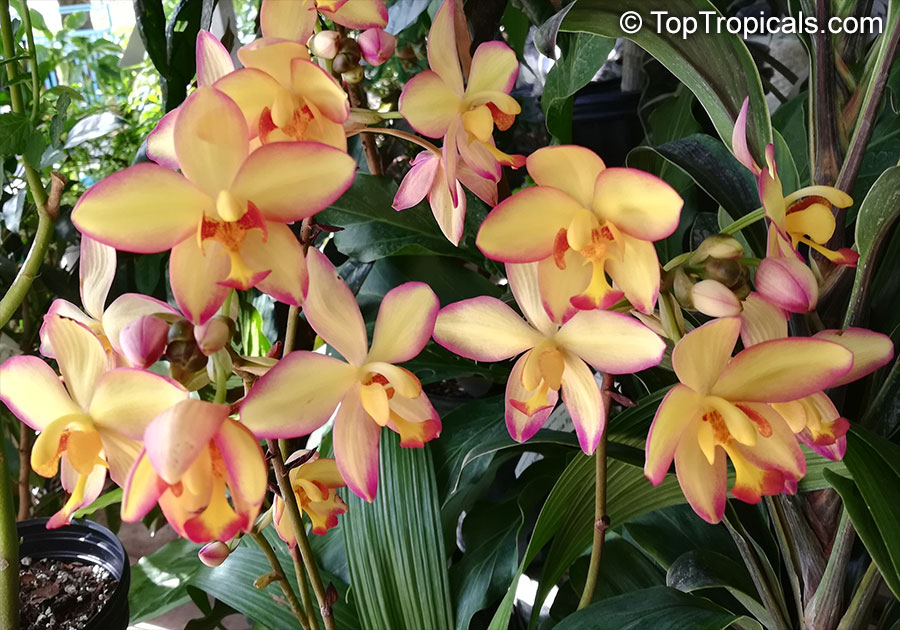
4. Orchids, including Ground Orchids.

5. Winter flowers. Keep in mind that many tropical plants are winter bloomers, and their flowering is most profuse in Winter months, so you can enjoy the blooms right away:
Dombeya, Thunbergia, Gloxinia, Brunfelsia, Calliandra, Tibouchina, Barleria, Leonotis, Clerodendrums, Chinese Hat (Holmskioldia).
See all Winter bloomers.

Winter  bloomers:  Clerodendrum  minahasse,  Malvaviscus  Summer  Snow,  Kopsia 
 fruticosa

Winter bloomers today, left to right: Clerodendrum minahasse, Variegated Malvaviscus Summer Snow, Kopsia fruticosa

6. Winter plant care. During Winter the daylight is shorter and temperatures are cooler.
- Reduce watering
- Use only liquid amino-acid based fertilizer Sunshine Boosters (safe to use year around)
- Monitor insects.

7. Shipping in Winter. We ship year around. However, if it gets below freezing in your area, you may use FedEx Hold location, they are temperature controlled so you don't have to worry about a box being dropped off at your cold porch outside.

8. A note for mild climate residents. Most tropical plants can be planted in the ground year around. Some ultra-tropical tender species such Chocolate tree, Ylang Ylang, or small size Mango trees can be grown in pots until Spring and planted out once chances of cold spell are gone. Until then, they can be moved indoors for cold nights.

Think outside the box and bring tropical paradise indoors during the time when we need warmth the most! Tropical plants will brighten your short winter days and help you to have truly HAPPY HOLIDAYS!

Winter  bloomers:  Gloxinia,  Barleria,  and  ever-bright  Crotons

Date: 14 Nov 2018

Plant Horoscope. Scorpio Zodiac lucky plants: Plants with thorns, red in color, and grow under adversity

TopTropicals.com

Scorpio - 10/23-11/21.
A WATER sign ruled by both Mars and Pluto.
Scorpio's plants are often found in remote places or on poor ground. They will likely have thorns, can be red in color, and grow under adversity. The good news is, most of these plants are nearly indestructible! This makes them desirable for every gardener.
The reproductive organs are ruled by Scorpio, so these are plants that balance the hormones, regulate the menstrual cycle, help with childbirth and pregnancy. Until this century, Scorpio was ruled by Mars, and the herbs associated with it had to do with the urogenital system and the colon. Many of the herbs related to Scorpio are cleansing and revitalizing. Now, astrologers assign Scorpio to Pluto, discovered in 1930 (Pluto is said by astrologers to be a higher octave of Mars). Physiologically, Scorpio involves the processes of catabolism and anabolism, the death and regeneration of body cells. Diseases of Scorpio are often involved with the slow buildup of toxic substances in the body (carcinogens, etc) or in the mind (anger, jealousy). Scorpio loves a spice with depth and complexity. Camphor Basil adds rich flavor to every dish it seasons, and its own aphrodisiac tendencies appeal to Scorpio's lusty nature.

Scorpio Zodiac lucky plants:
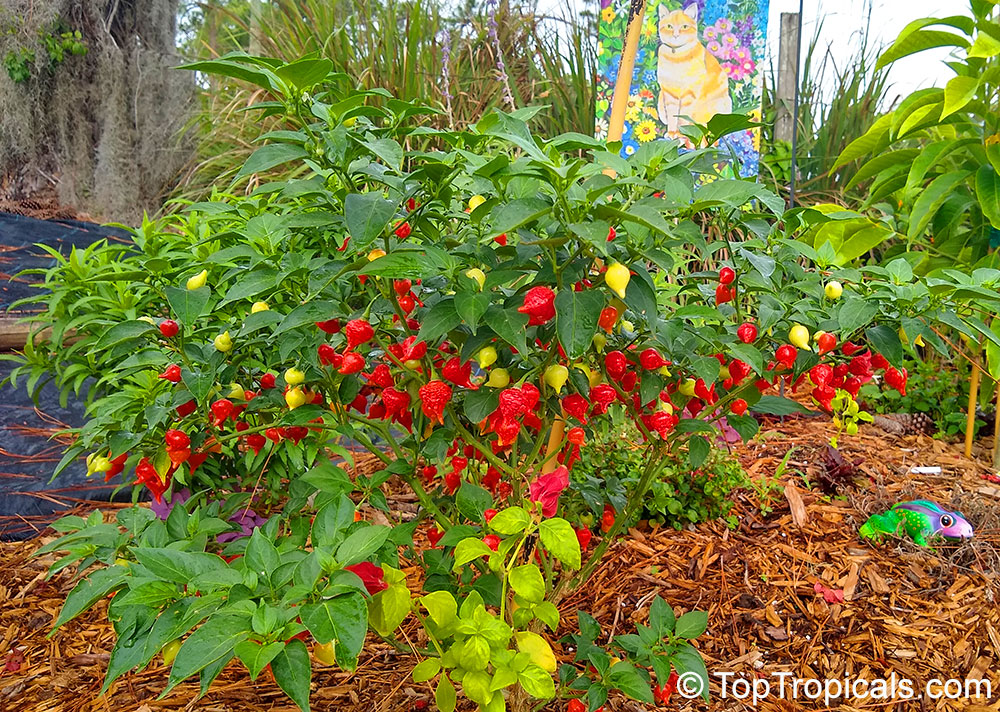
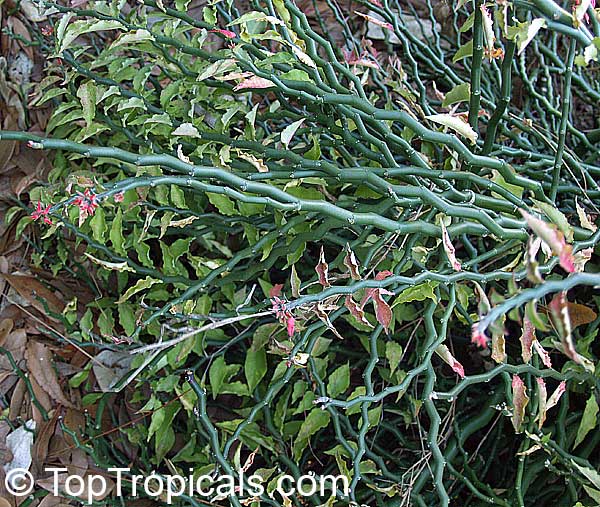
Ceiba, Baobab, Pistachio, Nutmeg, Thunbergia, Combretums, Dragon fruit, Medinilla, Camphor Basil, Oregano, Vanilla orchid, Hibiscus, Various cacti and succulents, Adenium, Honeysuckle, Peppers, Cordyline, Spider plant, Jasmine, Gooseberries, Wild indigo, Bougainvillea, Aloe vera, Raspberry , Palmetto, Horseradish tree, Camphor, Allspice and Bay Rum,Jujube, Sweet Mimosa, Agave, Milkweed, Hong Kong Orchid Tree, Pony Tail, Dwarf Poinciana, Bottlebrushes, Clusias, Crocosmia, Zig-Zag Cactus, Dracaena, Fire Bush, Hoyas, Jatropha , Kalanchoe, Sausage tree, Devils Backbone, Pereskia, Red Plumeria, Firecracker, Rattlebox, Rhoeo, Calendula, Geranium, Thistles, Mint , Sage, Catnip, Coriander, Sandalwood, Ginseng, Euphorbias, Acacias

Date: 24 Jun 2018

Plant Horoscope. Scorpio Zodiac lucky plants: Peppers, Ceiba, Baobab,Pistachio, Nutmeg

TopTropicals

Scorpio Zodiac lucky plants

Scorpio - 10/23-11/21. A WATER sign ruled by both Mars and Pluto. Scorpio's plants are often found in remote places or on poor ground. They will likely have thorns, can be red in color, and grow under adversity. The good news is, most of these plants are nearly indestructible! This makes them desirable for every gardener.

Scorpio Zodiac lucky plants: Peppers, Ceiba, Baobab, Pistachio, Nutmeg, Black-eyed Susan Thunbergia, Combretums, Dragon fruit, Medinilla, Camphor Basil, Cuban Oregano, Vanilla orchid, Hibiscus, Various cacti and succulents, Adenium, Honeysuckle, Cordyline, Spider plant, Jasmine, Gooseberries, Wild indigo, Bougainvillea, Aloe vera, Raspberry, Palmetto, Horseradish tree, Camphor, Allspice and Bay Rum, Jujube, Sweet Mimosa, Agave, Milkweed, Hong Kong Orchid Tree, Pony Tail, Dwarf Poinciana, Bottlebrushes, Clusias, Crocosmia, Zig-Zag Cactus, Dracaena, Fire Bush, Hoyas, Jatropha, Kalanchoe, Sausage tree, Devils Backbone, Pereskia, Red Plumeria, Firecracker, Rattlebox, Rhoeo, Calendula, Geranium, Thistles, Mint, Sage, Catnip, Coriander, Sandalwood, Ginseng, Euphorbias, Acacias.

For more info on Scorpio Lucky plants, links to these plants and other signs information, see full Plant Horoscope

Date: 27 Oct 2025

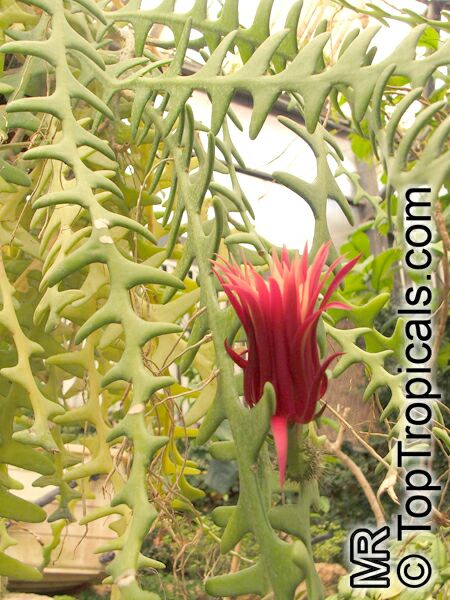
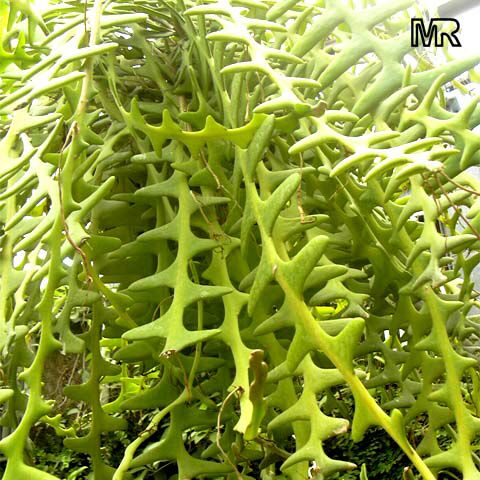
Weird cactus looks like pasta with Dragon Fruit

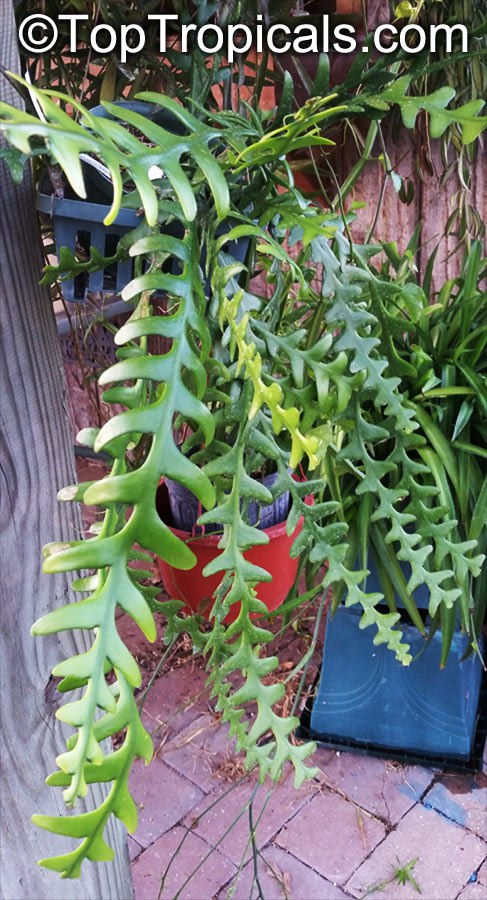
Epiphyllum guatemalense Monstrosa - Curly Locks or Orchid Cactus

👀 Weird cactus looks like pasta with Dragon Fruit

  • Epiphyllum guatemalense Monstrosa - Curly Locks or Orchid Cactus - is one of the most unusual jungle cacti you can grow. Instead of the usual flat cactus leaves, this one grows curly, looping stems that twist and spiral in every direction. It looks like a green waterfall of botanical noodles, perfect for a hanging basket or a high shelf where its wild shape can really show off.
  • ➰Curly Locks is actually a natural mutation of a Guatemalan jungle cactus that grows high up in jungle trees, using its stems to absorb moisture and light from the air. Like many epiphytic cacti, it produces large, fragrant flowers that open at night and look strikingly similar to orchids. After blooming, it forms small, oval pink fruits that are edible and juicy - like tiny dragon fruits!
  • ➰This plant is self-pollinating, so you don’t need insects or hand pollination to get fruit. It thrives in bright, indirect light and prefers to be a bit root-bound to trigger blooming. Just water moderately, let the soil dry slightly between waterings, and avoid moving it too often once it’s happy in its spot.
  • ➰Epiphyllum Curly Locks is not your typical cactus - it’s a living sculpture, a conversation piece, and a fruiting wonder all in one.


🛒 Add Curly Locks to your rare plant collection

📚 Learn more:


Botanical bedhead: curly, crazy, and full of surprises

#Fun_Facts #Container_Garden #Shade_Garden #Nature_Wonders

🟢 Join 👉 TopTropicals