Date: 10 Feb 2026
Cold-hardy avocado survival groups - what the numbers really mean
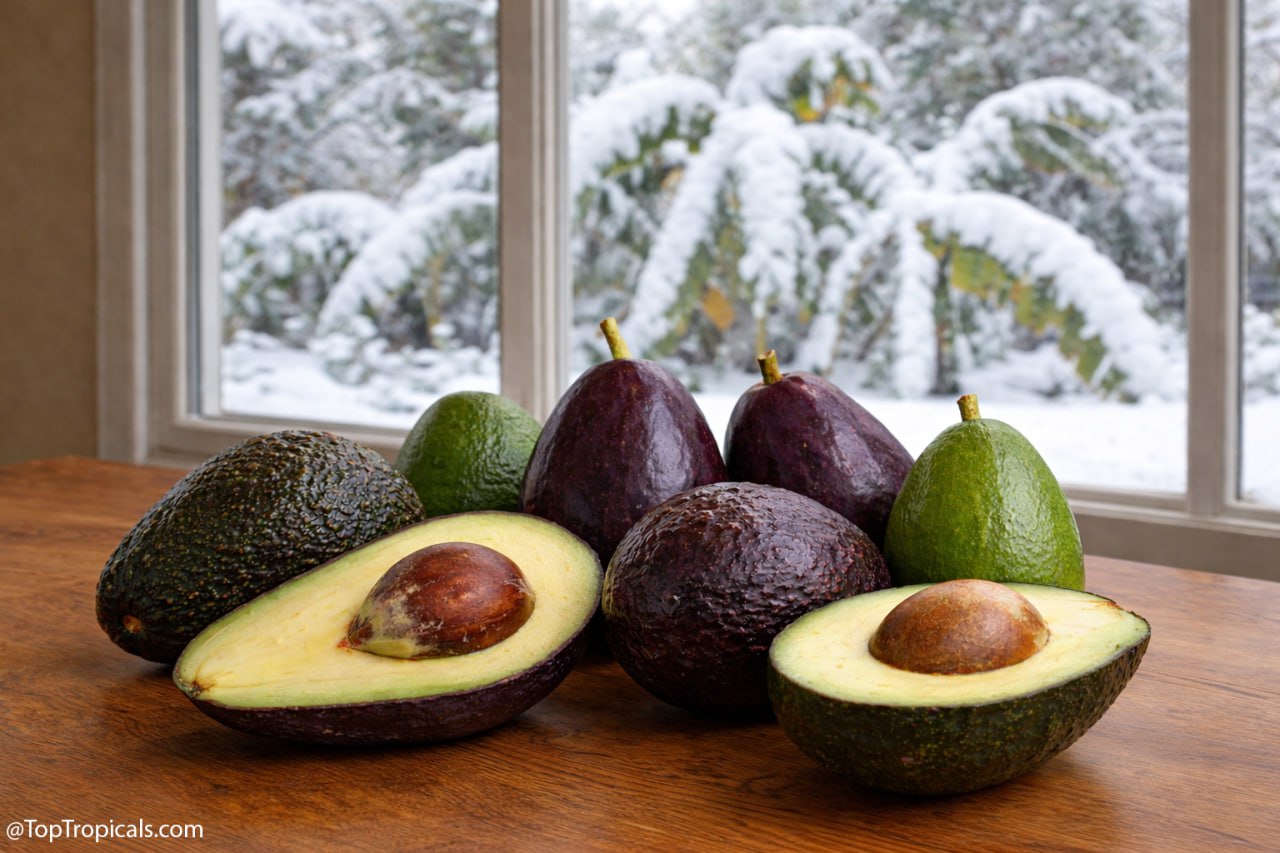
Different varieties of Avocado fruit on a table
Cold-hardy avocado survival groups - what the numbers really mean
Avocado cold hardiness is often misunderstood. Temperature numbers do not mean a tree stays untouched - they describe survival, not appearance. Leaf burn, twig dieback, and temporary setbacks are normal even on hardy varieties. The difference is whether the tree recovers.


Below are cold-hardy avocado varieties grouped by minimum reported survival temperatures, along with what growers typically observe after a freeze.
🌡 Hardy to 15F:
Brazos Belle (Wilma), Fantastic, Joey, Lila (Opal), Day.
Best freeze survivors. Minor leaf burn possible, but trees usually recover quickly with little structural damage. These are among the most cold-tolerant avocado varieties when fully established and exposed to short-duration freezes.
What to expect: Trees in this group often survive temperatures near 15F with little to moderate leaf damage. Some tip dieback is possible, but major limb loss is uncommon. Recovery is usually strong once warm weather returns, especially in dry winter conditions.
🌡 Hardy to 20F:
Bacon, Brogdon (Brogden), Fuerte (Dwarf), Mexicola, Miguel, Ulala (Super Hass), and Waldin.
Reliable survivors in cold-prone areas. Expect leaf damage and some setback, but established trees typically rebound.
These varieties perform well in marginal climates and are commonly grown where freezes are expected but not extreme.
What to expect:
Leaf burn is common at or below 20F, and young shoots may be damaged. Trees typically survive, but may need a full growing season to regain canopy density. Established trees usually rebound well with good drainage and protection from wind.
🌡 Hardy to 25F:
Black Prince, Choquette, Hall, Hardee Red, Lula, Marcus Pumpkin, Mexicola Grande, Nishikawa, Oro Negro, Poncho (Pancho), Tonnage, Winter Mexican, Wurtz (Dwarf) and Yamagata.
Moderate cold tolerance. Leaf drop and branch dieback are common after freezes, though trees usually survive.
This group includes moderately cold-tolerant avocados that handle light freezes but are more easily damaged during prolonged cold.
What to expect:
Expect noticeable leaf drop and some branch dieback when temperatures fall near 25F. Trees usually survive but may look rough for weeks or months. Proper placement and drainage greatly influence recovery speed.
🌡 Hardy to 30F:
Bernecker, Catalina, and Florida Hass (Haas).
Frost-tolerant only. Damage occurs quickly, and repeated freezes can cause serious stress without protection.
Actual results depend on tree age, freeze duration, wind, moisture, and microclimate. Lower numbers do not mean damage-free - they mean the tree lived to grow again.
These avocados are best suited to areas with only occasional frost and minimal freeze exposure.
What to expect:
Leaf damage occurs quickly near 30F, and unprotected trees may suffer significant canopy loss. Survival is possible during brief cold events, but repeated freezes can cause lasting damage. These varieties benefit most from proactive protection.
❗️ Important reminder
All temperature figures are approximate and experience-based, not guarantees. Survival depends on tree age, duration of cold, wind, moisture, and microclimate. Cold tolerance improves significantly as trees mature, while young trees remain vulnerable across all groups.
Understanding the difference between survival and damage is the key to choosing the right avocado for colder climates.
🛒 Explore cold hardy Avocado varieties
📖 Our Book: Avocado Variety Guide, Snack or Guacamole?
· Hard copy · PDF File Download
📚 Learn more:
· Avocado Variety Guide
· How to protect Avocado from cold and how hardy is it?
· Avocado that laughs at frost: Mexicola Grande for cooler climates
· Cold hardy Avocado Joey - you eat it with the skin
· Cold-hardy avocados: how cold-hardy are they?
· Cold-hardy avocado varieties - what freezing they really survive
🎥 These Avocados survived 25F hard freeze 3 nights of Florida Record Freeze
#Food_Forest #Avocado #Discover #How_to
🟢 Join 👉 TopTropicals
 Happy Labor Day!