Garden Blog - Top Tropicals

Date: 5 Jan 2026

How to grow papaya from seed without killing it

How to grow papaya from seed without killing it
🍊 How to grow papaya from seed without killing it, Part 1: Papaya basics

Papaya (Carica papaya) is one of the fastest and most rewarding fruit plants you can grow from seed - but it is also one of the easiest to lose early if you treat it like a regular tree. In this guide, we start at the very beginning: what papaya really is, how to choose and prepare seeds, and what it actually takes to get strong, healthy seedlings off to a good start.


🍊 Papaya basics - what kind of plant it really is


Papaya is not a tree - and that changes how you should grow it

🟡 Papaya is technically not a tree. It is a herbaceous plant with a hollow trunk - often jokingly called a giant grass.
🟡Papaya grows extremely fast from seed and usually starts producing fruit within 10–15 months. It has a palm-like look, with a large canopy of leaves at the top. Flowers and fruit form directly under that canopy, right on the trunk.
🟡In the ground, papaya can grow 10–15 ft tall, but there are dwarf varieties that stay under 4–5 ft in containers while still producing full-size fruit.
🟡Papayas are very productive and are one of the best exotic fruit plants to grow even outside the tropics, especially because they perform so well in containers.

🍊 Growing papaya from seed - what to know first


What grocery store papaya seeds don’t tell you

Papaya is easy to grow from seed, but one detail matters more than most people realize:
🟡Seeds from store-bought fruit come from unknown varieties
🟡Most will not be dwarf
🟡If you want a compact plant, start with a known dwarf variety or seeds from one
🟡The good news: papaya comes true from seed, so when the source is known, the result is reliable.

Now that you understand what papaya is - and what grocery store seeds don’t tell you - it is time to move on to the most misunderstood stage of all: germination. In Part 2, we break down exactly how papaya seeds sprout, what they need, how long they really take, and why so many people give up too early.

👉 Coming up next: Part 2 - Papaya seed germination, step by step

🛒 Explore Papaya varieties

📚Learn more:
· Carica papaya in Plant Encyclopedia
· How to grow papaya from seed without killing it:
Part 1: Papaya basics
Part 2: Seeds germination
Part 3: Containers, sunlight, and common mistakes
· Carefree Garden: How Easy Is It to Grow a Papaya Tree?
· Male papaya produces fruit!
· Top 10 fast-fruiting trees: #6. Papaya
· How to have fresh Papaya fruit year around
· The truth about Papaya
· Papayas contain a secret enzyme

🎥 Nobel Prize goes to this pregnant male papaya

#Food_Forest #How_to #Papaya

Papaya Plant Facts

Botanical name: Carica papaya
Also known as: Papaya
USDA Zone: 9 - 11
Highligths Small tree 10-20 ftFull sunWater Requirement: Low. Allow soil to dry out between wateringsWatering: Moderate. Water when top soil feels dryYellow, orange flowersWhite, off-white flowersEdible plantEthnomedical plant.
Plants marked as ethnomedical and/or described as medicinal, are not offered as medicine but rather as ornamentals or plant collectibles.
Ethnomedical statements / products have not been evaluated by the FDA and are not intended to diagnose, treat, cure, or prevent any disease. We urge all customers to consult a physician before using any supplements, herbals or medicines advertised here or elsewhere.Subtropical plant. Mature plant cold hardy at least to 30s F for a short time
Get personalized tips for your region
🟢 Join 👉 TopTropicals

Date: 9 Jan 2026

Moringa leaves made simple - daily benefits and 6 easy recipes

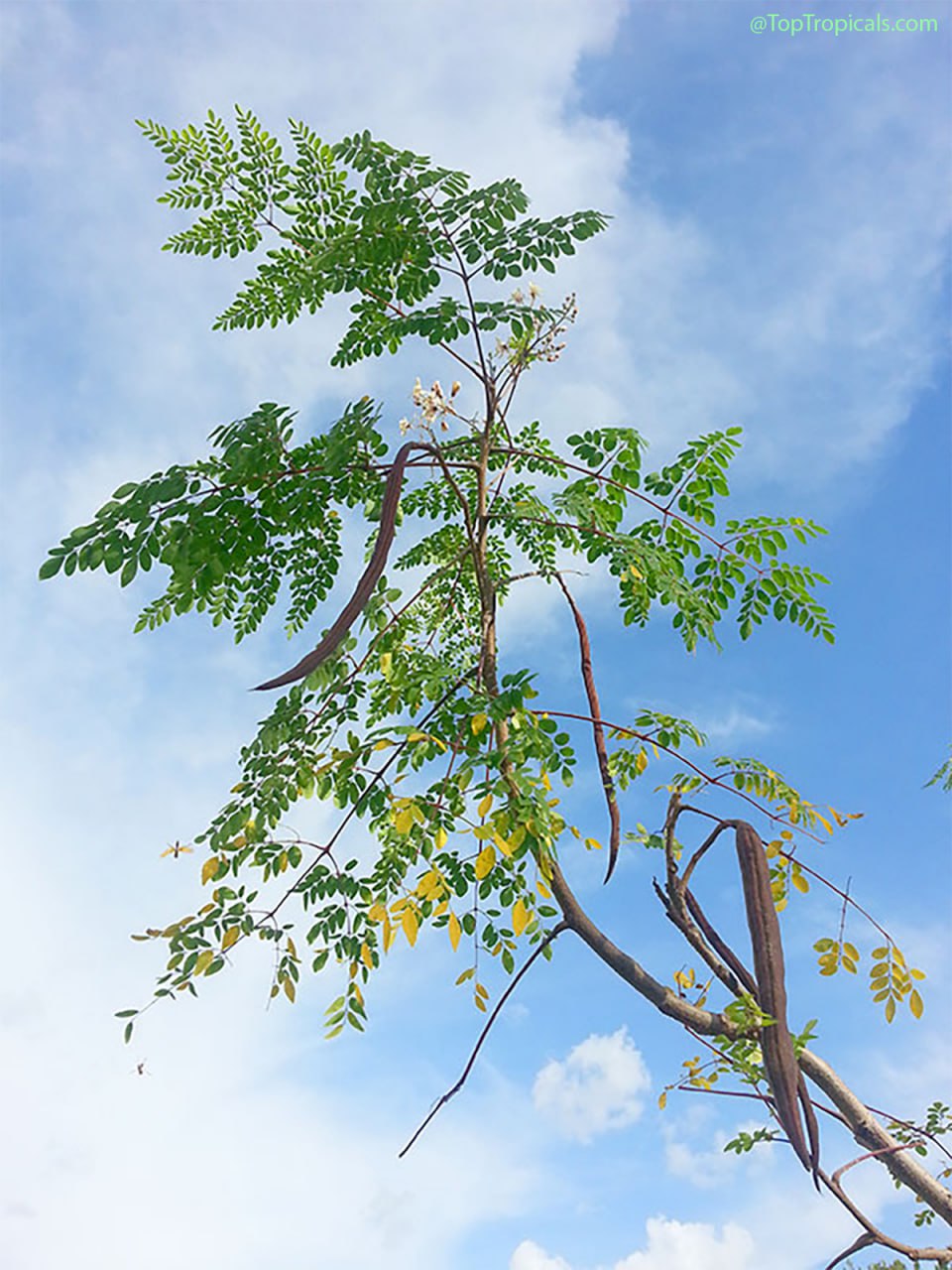
Moringa oleifera leaves and flowers

Moringa oleifera leaves and flowers

Moringa oleifera leaves on a branch

Moringa oleifera leaves on a branch

🌳 Moringa leaves made simple - daily benefits and 6 easy recipes


Moringa tree is called the Tree of Life for a reason. Moringa leaves, often called miracle greens, are packed with vitamins A, C, and E, calcium, iron, potassium, and plant protein. Regular use supports immunity, digestion, skin health, energy levels, and overall vitality. Traditionally, moringa has also been used to support blood sugar balance, heart health, and inflammation control thanks to its rich supply of antioxidants and bioactive compounds like flavonoids and polyphenols.

❤️ Key benefits of eating moringa leaves daily:


🌿 Supports blood sugar balance


Moringa may improve insulin sensitivity and help stabilize blood sugar, reducing sudden energy crashes. Regular intake has been linked to better glycemic control and reduced inflammation.

🌿 Improves digestion


High fiber supports gut health, while natural detoxifying compounds help liver function. Moringa may also promote healthy gut bacteria and improve digestion regularity.

🌿 Fights inflammation


Moringa leaves contain compounds that help reduce inflammatory markers in the body, supporting joint, heart, and overall cellular health.

6 easy moringa recipes to try


🌿 Moringa laddoo


Roast whole wheat flour in ghee, add fresh moringa leaves, jaggery, nuts, sesame seeds, and cardamom. Shape into laddoos and store airtight.

🌿 Moringa smoothie


Blend fresh moringa leaves, banana, curd, honey, and water. Top with soaked chia seeds and drink fresh.

🌿 Moringa dal


Cook toor dal with turmeric. Saute moringa leaves, onion, tomato, garlic, and chilies in ghee, mix into dal, and finish with cumin and asafoetida tempering.

🌿 Moringa paratha


Knead wheat flour with moringa leaves, onion, spices, and salt. Roll and cook on a hot tawa with oil or ghee.

🌿 Moringa chutney


Grind moringa leaves with coconut, green chilies, ginger, lemon juice, and salt. Serve fresh.

🌿 Moringa tea


Simmer fresh or dried moringa leaves in water for a few minutes, strain, and enjoy warm with honey or lemon if desired.

🛒 Grow your own Tree of Life - Moringa

📚 Learn more:

Horseradish tree Plant Facts

Botanical name: Moringa oleifera, Moringa pterygosperma
Also known as: Horseradish tree, Ben Oil Tree, Coatli, Drumstick tree, Bridal veil, Miracle Tree
USDA Zone: 9 - 11
Highligths Plant used for bonsaiLarge tree taller than 20 ftSmall tree 10-20 ftFull sunWatering: Moderate. Water when top soil feels dryWhite, off-white flowersEdible plantPlant attracts butterflies, hummingbirdsDeciduous plantEthnomedical plant.
Plants marked as ethnomedical and/or described as medicinal, are not offered as medicine but rather as ornamentals or plant collectibles.
Ethnomedical statements / products have not been evaluated by the FDA and are not intended to diagnose, treat, cure, or prevent any disease. We urge all customers to consult a physician before using any supplements, herbals or medicines advertised here or elsewhere.Fragrant plantSubtropical plant. Mature plant cold hardy at least to 30s F for a short time
Get personalized tips for your region

· Moringa oleifera in Plant Encyclopedia
· Moringa omelet recipe
· Moringa vs spinach: which one wins for nutrition?
· What edible plants and herbs can reduce your blood pressure
· Top 12 Eye-Supporting Fruit and Plants for Vitamin A - Retinol
· Memory & Cognitive Support (Brain Boosters) Edible Plants and Herbs
· How to grow drumsticks on a tree
· What is the most useful tree in the world?
· How to grow a happy Moringa Tree

#Food_Forest #Remedies #Discover #Trees #Recipes

🟢 Join 👉 TopTropicals

Date: 11 Jan 2026

Did you know why its an Akee time, too?

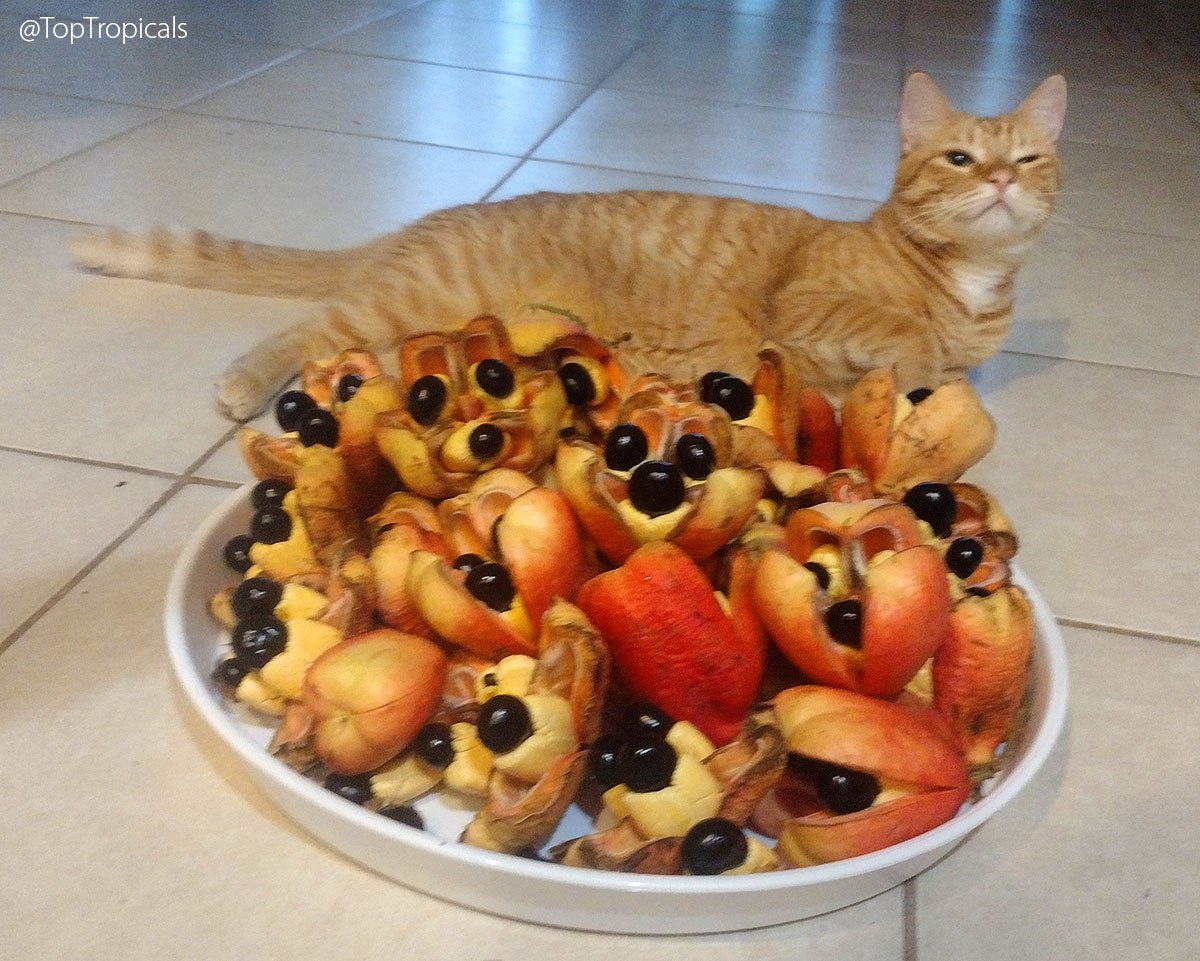
Cat Bob with his Ackee fruit (Blighia sapida)

Cat Bob with his Ackee fruit (Blighia sapida)

🍊 Did you know why it's an Akee time, too?


Akee (Ackee) starts fruiting late Summer through Fall, but we still have some fruit on the trees through the Winter!

🐈📸 Cat Bob with his Ackee fruit at TopTropicals PeopleCats.Garden

#PeopleCats

🟢 Join 👉 TopTropicals

Date: 22 Oct 2025

Which dry fertilizer to use - slow release or controlled release?

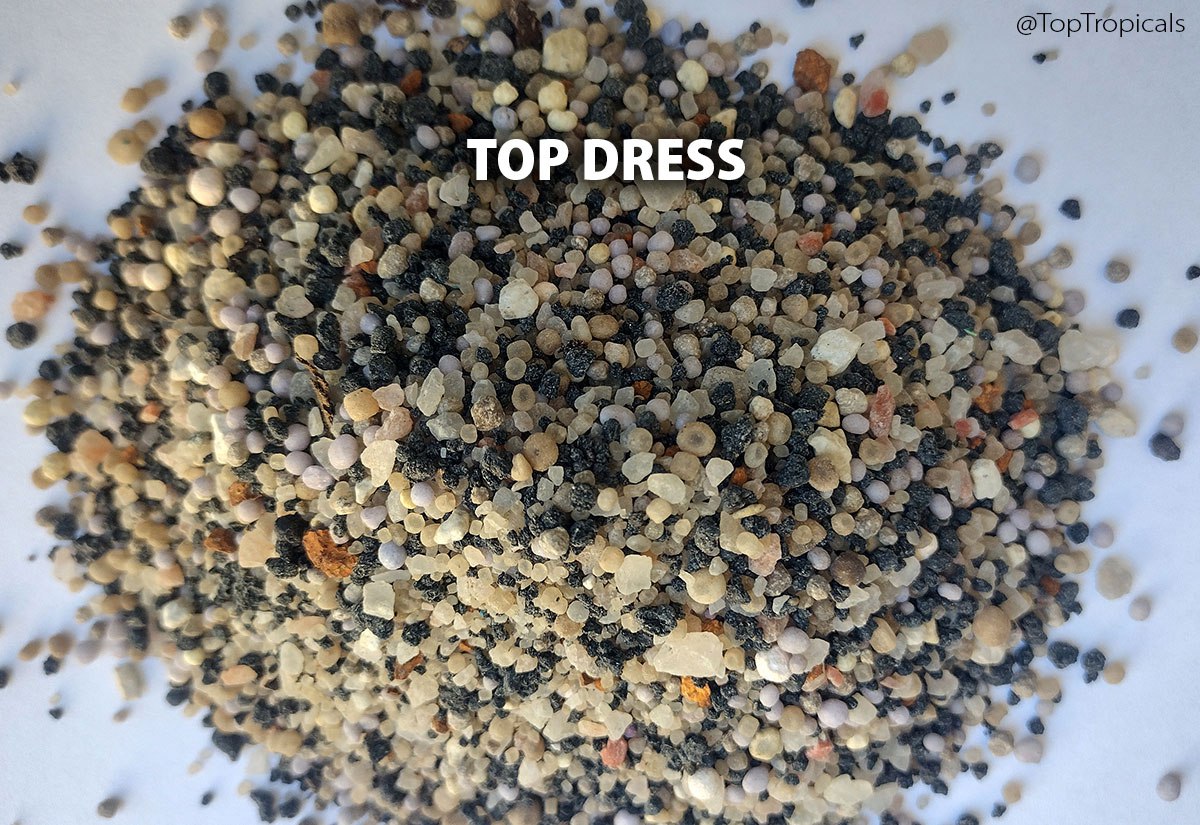
dry top dress fertilizer

dry top dress fertilizer

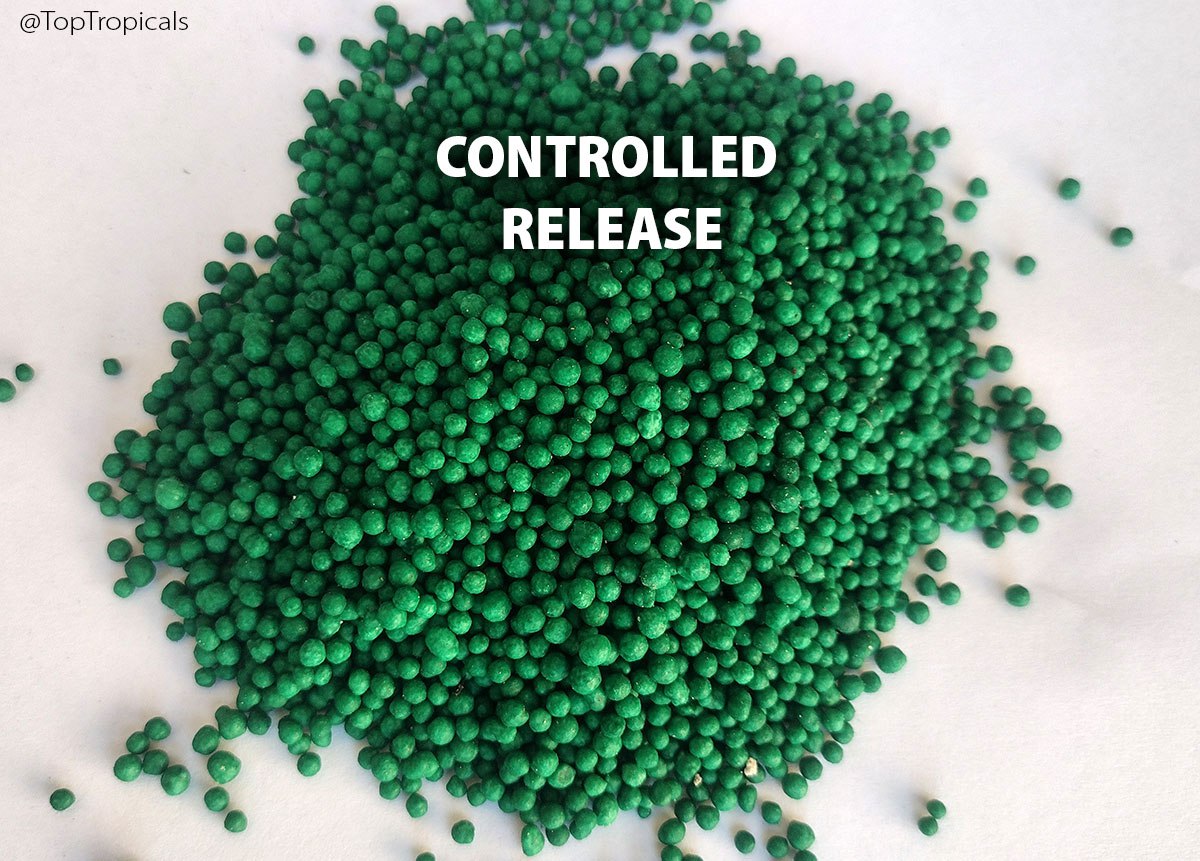
controlled release fertilizer Green Magic

controlled release fertilizer Green Magic

🌳 Which dry fertilizer to use - slow release or controlled release?


Q: You offer two kinds of dry fertilizers - Slow Release Trop Dress and Controlled Release Green Magic. What is the difference, and which one should I use? I used your water-diluted Sunshine Boosters with every watering, but now that I’ll be away for a few months, I just want to give my garden a long-lasting fertilizer.

✔️ A: Top Dress Slow Release Fertilizer is used for quick greening-up. Although it’s called “slow release,” the nutrients become available fairly fast. It contains soluble nitrogen (N), phosphorus (P), and potassium (K) that dissolve with rain or irrigation, acting within a week or a few weeks depending on temperature and rainfall. It’s great for giving your plants a quick boost of “fast food.”
We use Top Dress mainly for in-ground plants. It can be used in pots only during warm weather and active growth, but not in cooler months, as it may burn roots. Since we introduced Green Magic, we mostly use Top Dress only for garden beds and landscapes.

✔️ Green Magic Controlled Release Fertilizer is a true long-term, controlled-release fertilizer. Thanks to its PolyOn Technology coating, it provides steady, consistent feeding for 5-6 months. Unlike regular dry fertilizers that dump all nutrients at once, Green Magic releases them gradually - no burn, no guesswork, just steady nutrition.
Green Magic ideal for potted fruit trees, ornamentals, and houseplants. One handful keeps your plants fed for half a year. We use it for all container plants when potting up or refreshing soil every six months. It can also be used for in-ground plants if you want the best, most consistent results. Green Magic: try it out! (Sample here)

🛒 Shop Plant Food & More

📚 Learn more:


Green Magic effect: before and after
The SECRET growers never tell you: simple trick how to bring plants back to life and keep green
Give your plants their magic treat
How to make plants green quickly: Green Magic - the fertilizer that truly works like magic!
How to to make leaves green
What Fertilizer to Use Now and How? Part 1, Part 2, Part 3
Why my plant turned yellow and why plants need Micronutrients?
Why Should I Use Sunshine Boosters
Why is my palm tree turning yellow?
Which fertilizer to use: Organic or Inorganic?
How to make plants green
The Truth about fertilizers

#Fertilizers #How_to

🟢 Join 👉 TopTropicals

Date: 21 Aug 2025

🍒 Tropical Cherries – Eugenias

Two  cats  enjoy  Grumichama  fruit  indoors  —  a  tuxedo  cat  picks  berries  from  a  potted  tree  while  an  orange  fluffy  cat  smiles,  sitting  by  tea  cups  and  plates  of 
 fruit.

Tropical Tea Time with Grumichama

Eugenias have earned a spot in many Southern gardens because they’re easy, dependable, and surprisingly versatile. These small trees and shrubs grow well in the ground or in containers, and they don’t waste time before setting fruit.

15% Off Eugenias – Limited Time

Use code EUGENIA15 at checkout.
Excluding S/H. Offer expires 08/28/2025

👍 Popular Choices:

What Makes Eugenia Cherries Stand Out

  • Start producing fruit in just a couple of years
  • Compact size — easy to keep 6–12 ft tall, smaller in pots
  • Low-care — tolerant of most soils and resistant to common pests
  • Strong in hot weather, yet can handle a light frost down to the mid-20s °F
  • Plenty of fruit for people and birds alike

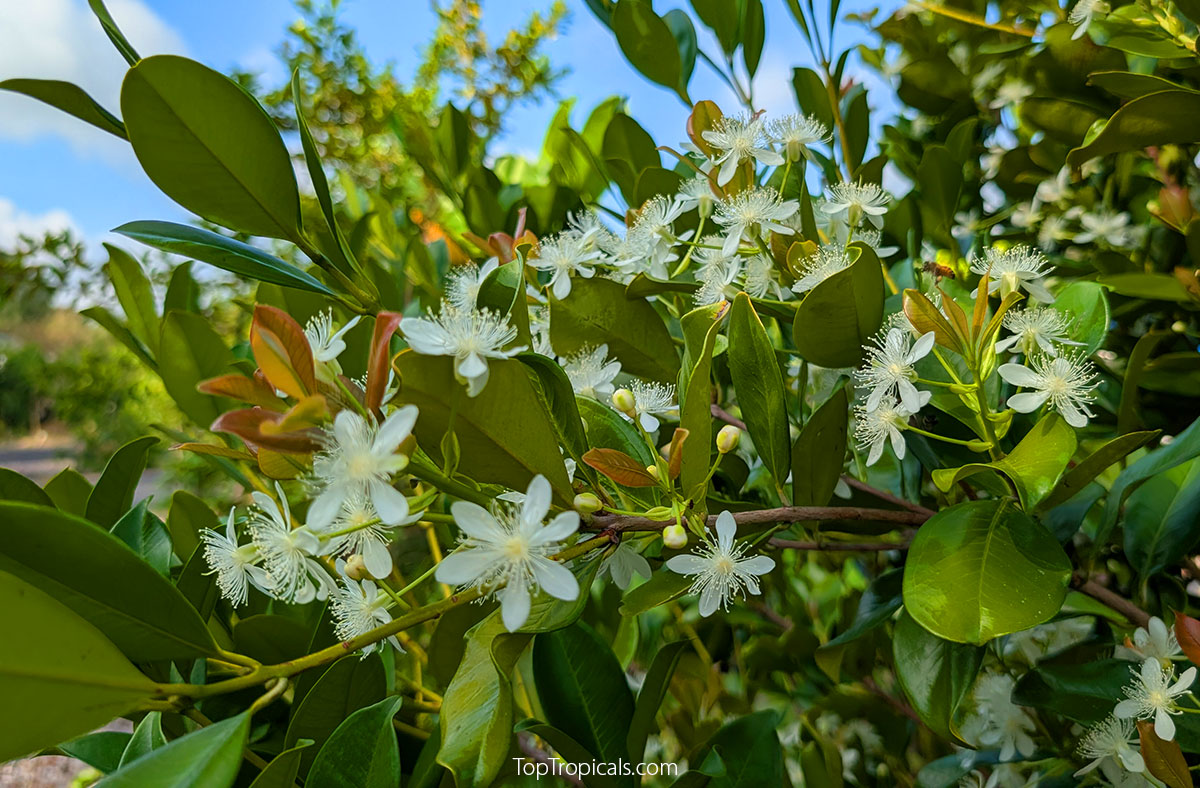
Close-up  of  Grumichama  tree  branches  with  clusters  of  small  white  flowers  among  glossy  green 
 leaves. Grumichama Tree in Bloom – Eugenia brasiliensis

Growing & Care

Outdoors

  • Best in USDA Zones 9–11
  • Sun or partial shade; more sun usually means sweeter fruit
  • Plant in well-drained soil; avoid heavy, wet spots
  • Withstands summer heat and humidity, and can take a light freeze

Container / Indoor

  • Do well in 5–10 gallon pots on patios or balconies
  • Need bright light indoors — a sunny window or grow lights
  • Can flower and fruit in containers if kept warm and well lit
  • In cooler zones, bring plants indoors for winter and back out in spring

General Care

  • Water: Keep soil evenly moist; drought-tolerant once established but best yields with regular watering
  • Soil: Use good potting mix - LINK TO SOIL
  • Fertilizer: Balanced slow-release LINKL TO FERTILIZER Sunshine Boosters
  • Pruning: Light trimming keeps plants bushy and productive
  • Pollination: Self-fertile; one plant will fruit on its own

Read Garden Blog about Tropical Cherries

Shop Tropical Cherries