Garden Blog - Top Tropicals

Date: 11 Feb 2021

Curious Gardenia graft
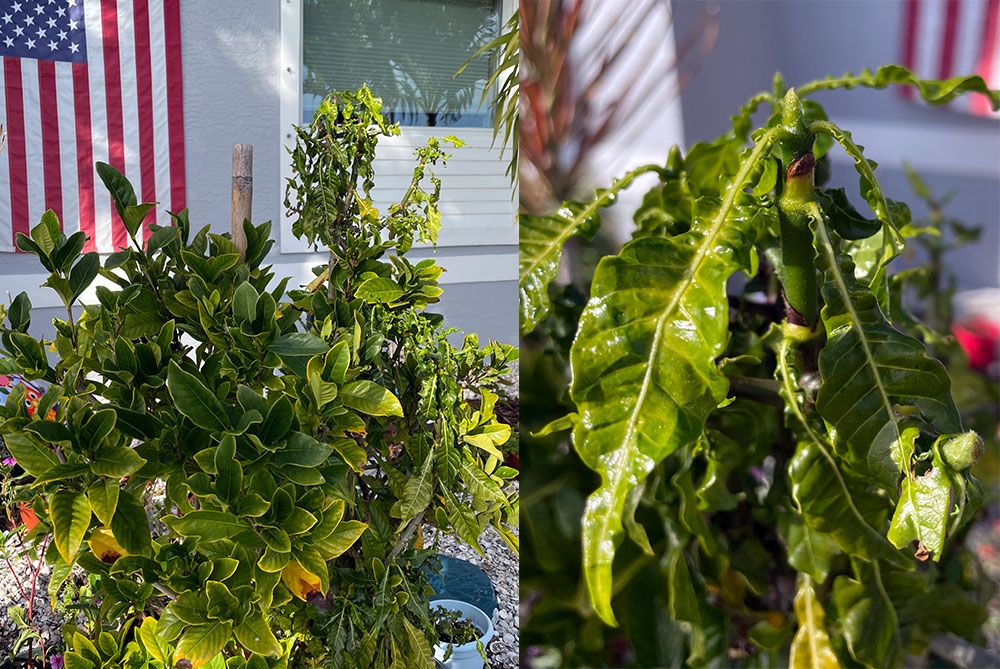
Q: I was told to send you pictures of my hybrid gardenia tree. About 6 months ago the new growth on the top of one side became crinkled. It doesn't get straightened out either. It seems like it just stays like that until it falls off. Any ideas?

A: Your plant is not sick at all. This is what happened...
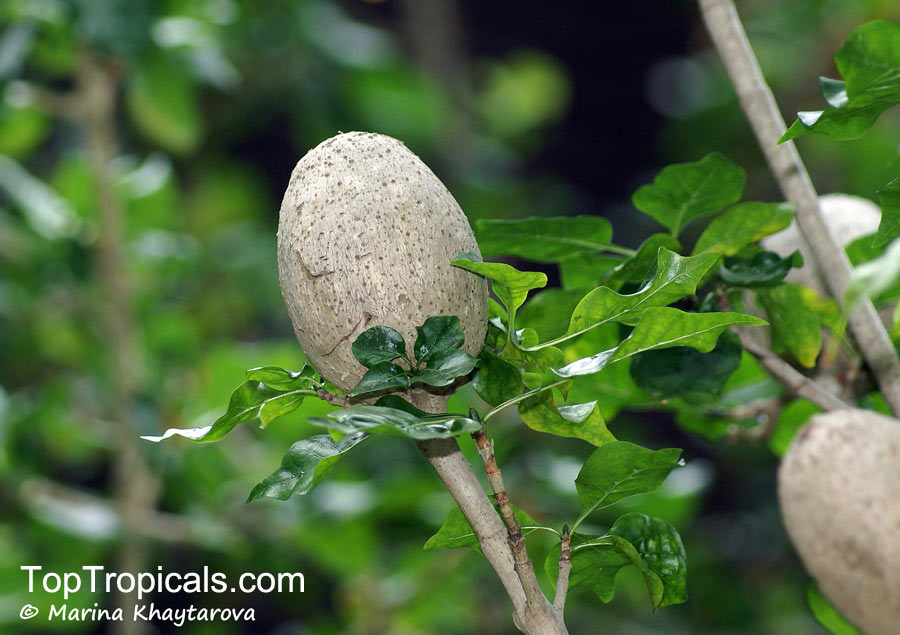
Your gardenia is a grafted variety. Gardenia varieties (Gardenia jasminoides hybrids) are grafted on rootstock of Gardenia thunbergia (this species is nematode-resistant and used for rootstock especially in Florida). The side branch that you call "crinkled" is actually the rootstock (Gardenia thunbergia) growing from UNDER the graft. Gardenia thunbergia has naturally "wavy" leaves.
If you follow this branch to its base, you will see where it starts - right below the graft. This happens very often.
You need to remove this branch altogether, from the point where it starts. It sucks energy from the plant and eventually may take over the whole plant.

Photo above: Gardenia thunbergia with curly leaves
Date: 22 Dec 2020

Growing Stephanotis and cold protection

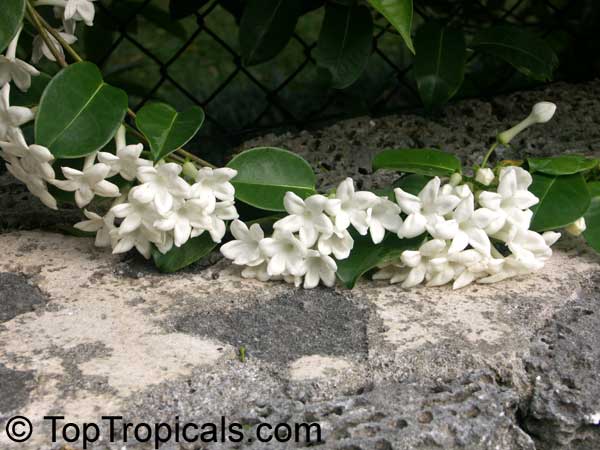
Q: I bought from you 3 plants Stephanotis How do I protect them from this low temperature now? I live in Ft Myers Beach.

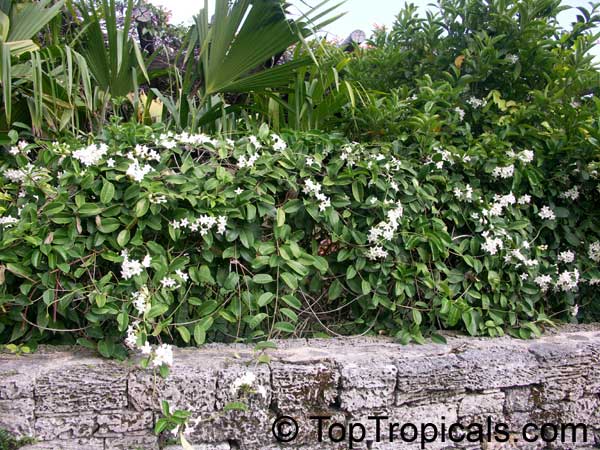
A: In Ft Myers Beach, you have frost-free winters. You don't have to worry about cold protection for the Stephanotis. It is pretty cold hardy plant in spite of being a true tropical (it enjoys Hawaii environment for example). From our own experience, Stephanotis can even take a light frost for a short period of time without any damage.
You can keep this plant either in a pot or plant in the ground in a nice sunny location for more profuse flowering. It can climb a tree, a fence, or a pagoda.
However, keep in mind that during cool weather you need to reduce amount of watering. Wet + cold is a bad combination for plants. Water again only when the soil gets slightly dry. In summer time, extra water is not critical because it evaporates quickly with high temperatures.

Date: 15 Dec 2020

Healthy Plants: Q&A from Mr Booster

What is an ideal potting mix?

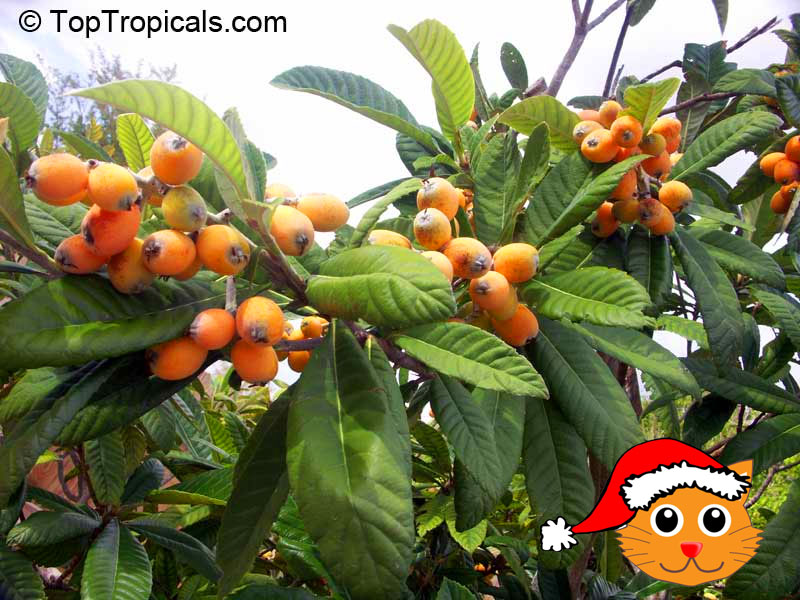
Q: A few years ago, I purchased a Barbie Loquat from you, and I'm pleased to say it's been growing very well. I now have several loquat seedlings. I have read that a well-draining medium should be used, and I have found that the various formulations provided on the web for such medium seem vaguely reminiscent of the recipe provided in your transplanting instructions. Therefore, I would like to retrieve your recipe, unless you could recommend an even better one?

A: The main requirements for a good potting mix are:
- perfect drainage, allowing air circulation that is so necessary for healthy roots; oxygen circulation helps to avoid root rot
- water retention: to keep nutrients in soil
- low pH (soil acidity) which is important for most tropical plants
- adequate amount of organic matter in the mix, in combination with proper fertilizer program

In our nursery we experimented with many different potting mixes for the past couple decades. We ended up with an ultimate mix for tropical container plants that we designed ourselves. This custom mix is called -

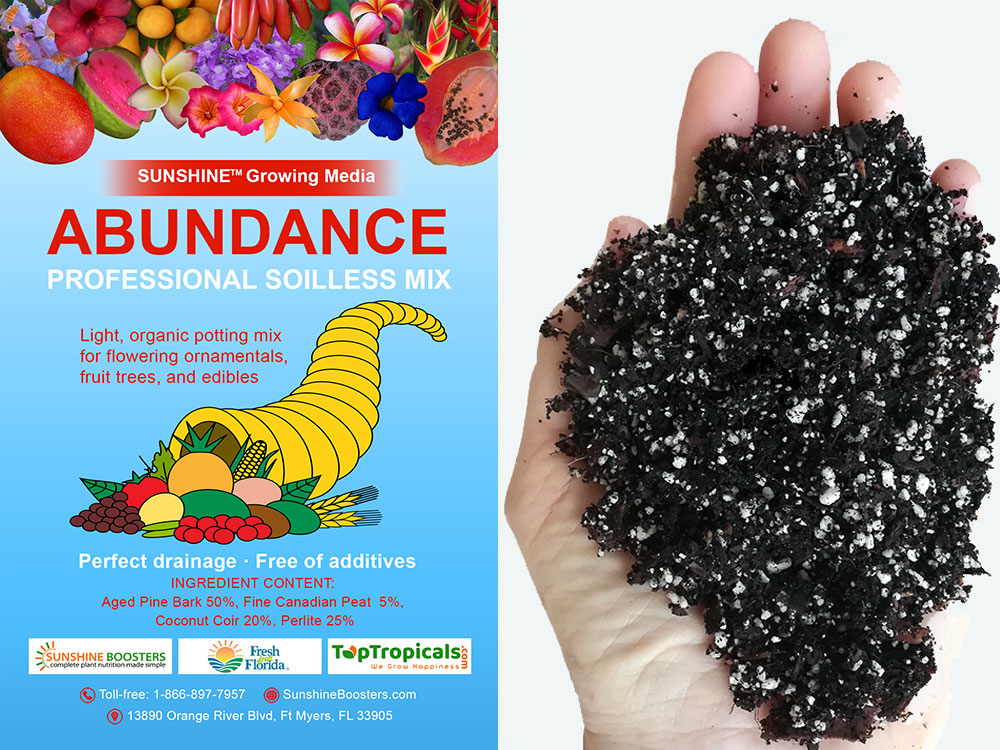
Abundance - TopTropicals professional soilless potting mix

It meets all the requirements above which makes it a perfect mix. All our plants are happy with it. Abundance is a professional quality (nursery-grade) potting mix with great drainage characteristics, ideal for any tropical plants. It is organically derived soil-less mix, free of any additives.
Ingredients are:
- fine Canadian peat moss
- coconut coir
- perlite
- aged pine bark (soil conditioner).
See more info on soil mixes.
We have this mix available for purchase in different packaging sizes - 2, 3, and 7 gal bags.

Besides proper potting mix, all container plants require regular fertilizing. We recommend the newest, scientifically balanced fertilizers Sunshine Boosters that are natural, eco-safe, great for all edibles and organic gardening. They are safe to use with every watering, provide all necessary elements for plant daily needs, and won't burn the roots.
For your loquat tree, consider Sunshine C-Cibus, it boosts both flowering and fruit production. Loquat is Winter-Spring bloomer, hopefully you will get some crop soon!

See more information about potting mix science

Date: 15 Oct 2020

Healthy Plants. Q&A from Mr Booster: Fertilizing Mango trees in Winter

Q: I'm living in Maryland growing zone 7A and would like some info on when to fertilize my potted mango trees. I ordered your Sunshine Mango Tango 2-2-4. All your mango trees are in pots.

A: You can start using this fertilizer right away, any time of the year, and every time you water your plants.
Sunshine Mango Tango, as well as other Sunshine boosters, is an amino-acid based liquid fertilizer that is scientifically developed for daily plant needs in all necessary nutrients. This means, you may use this fertilizer with every watering, including winter period.
Traditional fertilizers (both granulated and soluble, EDTA-chelated) can only be used during hot months while plants grow actively, and must be limited or not used at all during cooler months, to avoid nutrient lock up in soil (which basically means "building up unused elements"). With Liquid Sunshine Boosters, it is safe to add them every time you water your tree.
During cooler weather and when plant metabolism slows down, a tree will consume less water (as well as food), and you will automatically reduce watering, to keep over-wintering plants on a dry side. This means, less fertilizer too. This allows you to control elements intake naturally, like you control water amount just as much as the plant needs.

Date: 30 Aug 2020

Healthy Plant Food

Q&A from Mr Booster

How to make Mango tree fruit

Q: Hello, I have a five-year-old Lemon Meringue tree that has only given me fruit one year. It put out about 50 mangoes and has done nothing for the past three years. Do you recommend any vitamins or any of the nutrients that you guys sell to help with this for next season?

A: We've had very similar problem with our Nam Doc Mai Mango tree, fruited once and no more next year. Usually the reason is nutrients deficiency, here in Florida we have poor soils. We applied Mango-Tango tree booster and it started flowering within a couple of weeks.
Generally, Mango flowering season is over by now, however, we recommend to feed the tree starting now, during active growth season. This way it will get better established before winter and also will store away all elements necessary for triggering flowering and fruiting. So by late Fall through Winter it will be ready to flower.
Along with the fertilizer, additional micro-element supplements will be beneficial. For improving fruit quality and increasing number of flowers, we also recommend to use SUNSHINE-Honey - sugar booster

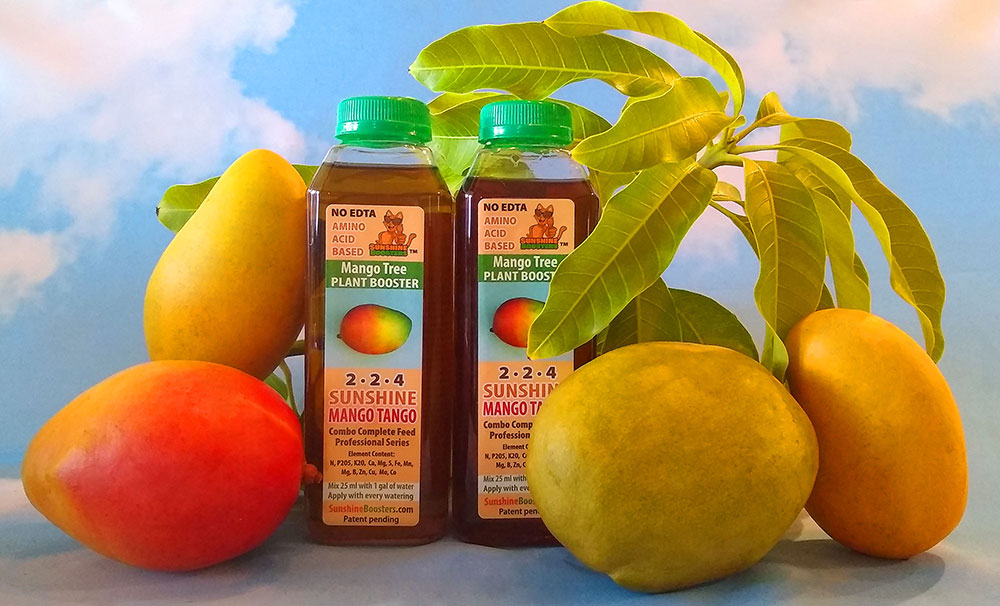
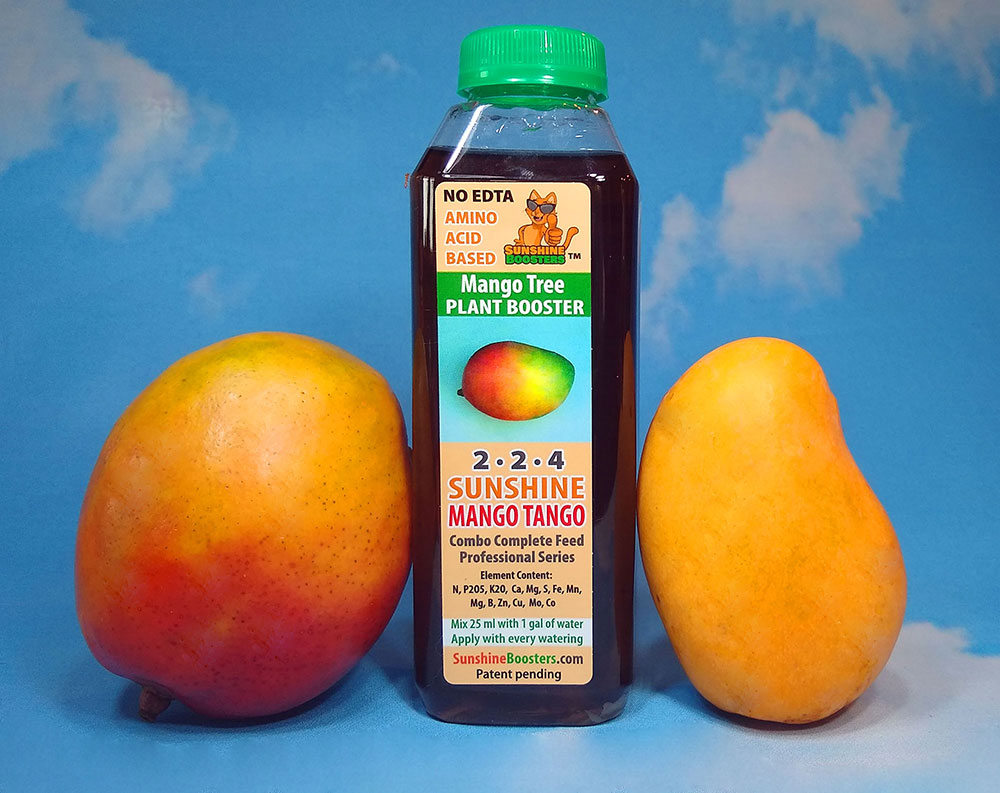
SUNSHINE Mango Tango - Mango Tree Booster, for healthy mango trees and profuse fruit production.

SUNSHINE Honey - a natural supplements that makes fruit sweeter, and increases fruit quantity and quality.