Garden Blog - Top Tropicals

Date: 9 Aug 2021

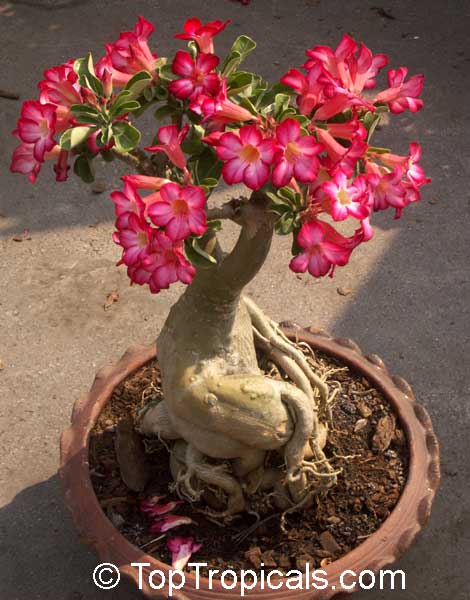
Care of Desert Roses
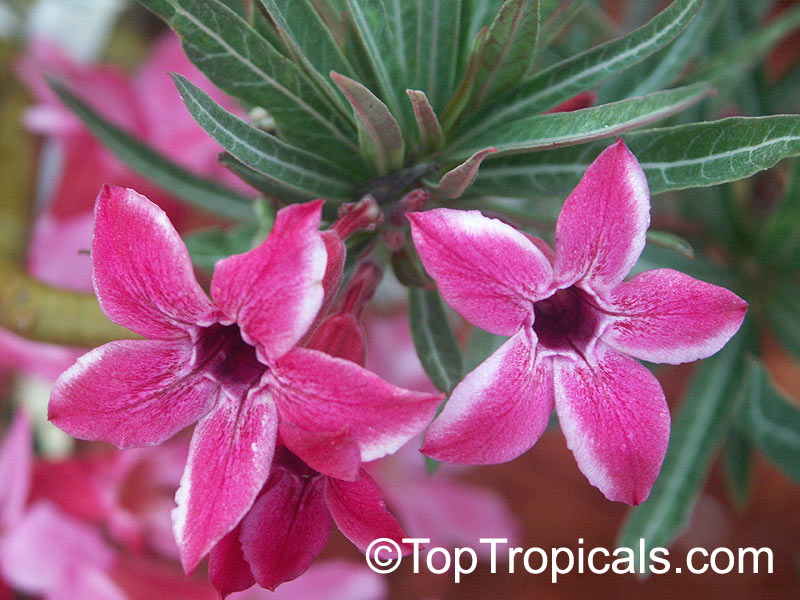
Q: I am looking forward to my three desert roses I just ordered from you and I am wondering how to take care of them, especially during winter time. Should I put the pots in full sun or shade? What kind of soil do they like? How often should I water them? When it gets cooler, should I bring them inside? We do have occasional frost here during winter.

A: Here are a few tips for your desert roses:

1. When received Adenium from mail-order, unpack carefully; branches are fragile. Plant in well-drained potting mix. Cactus mix will do, but we recommend special Adenium mix. If using regular acidic peat-based potting mix, you may add sea-shells on top of soil to neutralize acidity: adeniums prefer alkaline soils. Using clay pots is beneficial. Water once and do not water again until soil gets dry. Place in bright shade until new leaves sprout, then the plant can be moved to full sun.

2. Adenium is a succulent, but not a cactus. It needs watering, however let soil dry before waterings. Reduce watering during cool season and discontinue when plant gets dormant (drops all leaves in winter).

3. Bright light is the best for profuse flowering. However, adeniums look much healthier in slightly filtered light rather than in all-day full sun.

4. Fertilize and spray leaves with liquid fertilizer SUNSHINE Megaflor - Nutrition Bloom Booster. Phosphorous is responsible both for flowering and caudex development. Avoid caudex, spray over foliage only. Dry fertilizer can be used only during hot months.

5. Watch for spider mites during hot and dry season.

6. Give plants a break during winter dormant season. Keep in bright shade and reduce watering to 1-2 per month or stop watering if temperature is below 65F.

More info on growing Desert Roses:
What you need for successful growing Adeniums
Overwintering Adeniums outside of tropics
Growing Exotic Adeniums - Growing Exotic Adeniums

Date: 15 Jun 2021

Healthy Plants: Q&A from Mr Booster

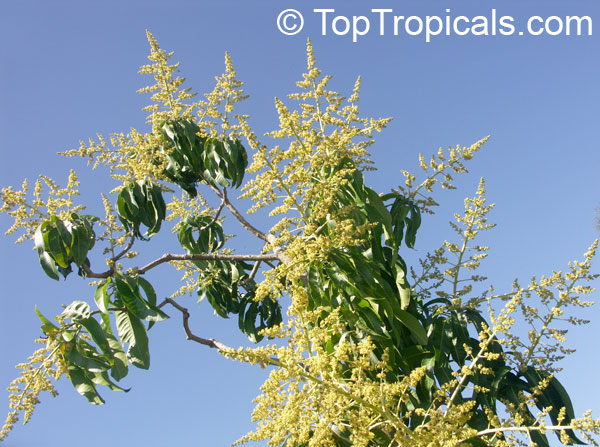
How to prevent mango flowers drop

Q:The mango blossoms my tree had in February have blown off due to weather conditions. Do you know what I can do to prevent this from happening again in the future?

A: The only "guarantee" to protect mango flowers from cold weather damage here in Florida is to plant a LATE flowering variety. Generally, mango trees are winter bloomers. Those varieties called "early season" start flowering in January (for example, Nam Doc Mai), and of course very often they get affected by cold, so they drop. Some varieties are so called "late season" - for example Venus. They start flowering in spring when the weather conditions are more favorable.
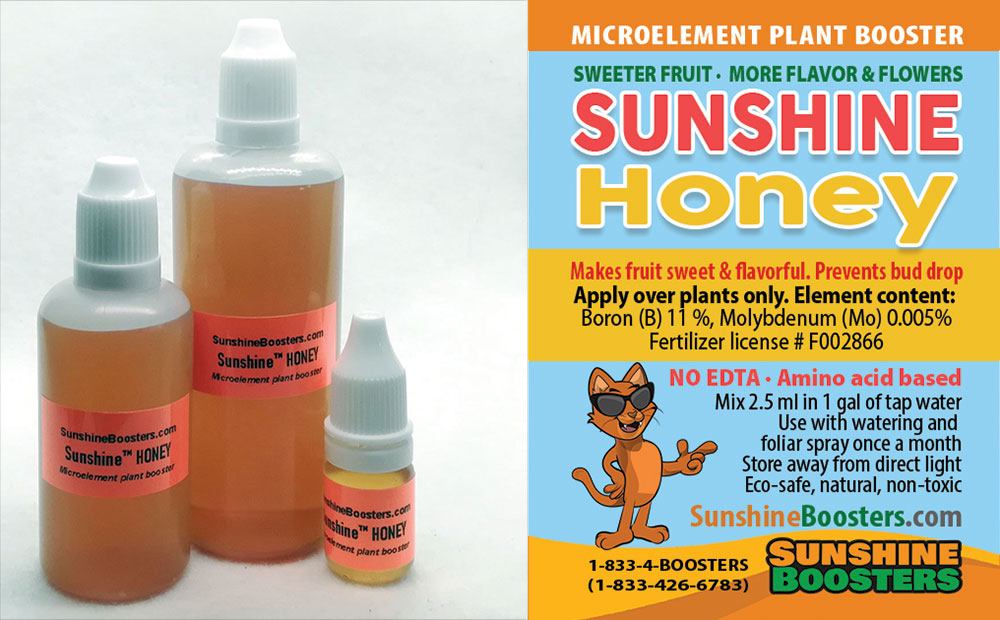
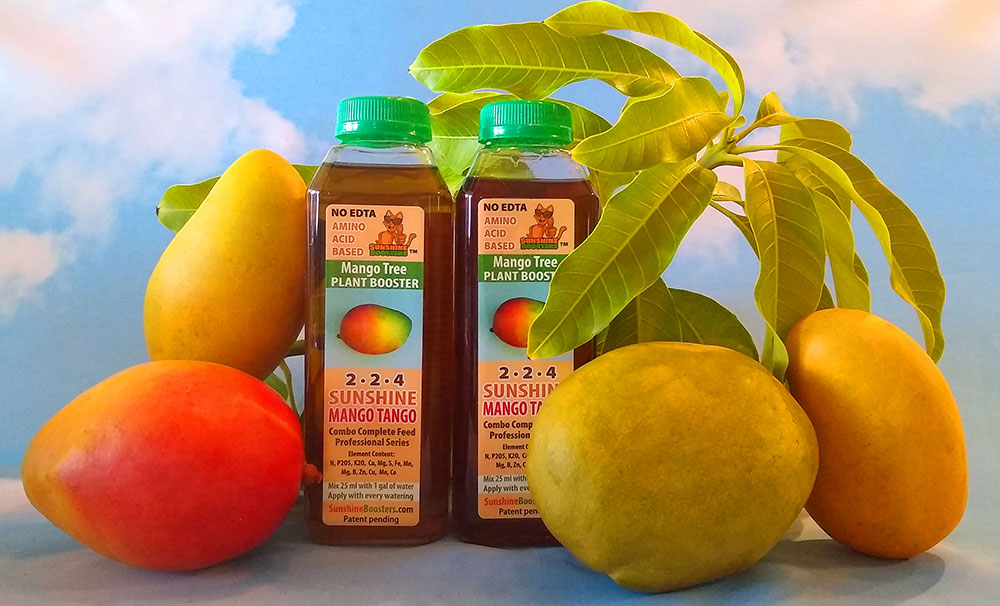
Another thing that may help you with mango flower drop is applying plant micro-element supplement Sunshine-Honey - it contains Molybdenum and Boron, which help flower and fruit development/strength and prevent their drop.

Read more: Boosting Mango Flowers and Fruit.

Date: 4 Jun 2021

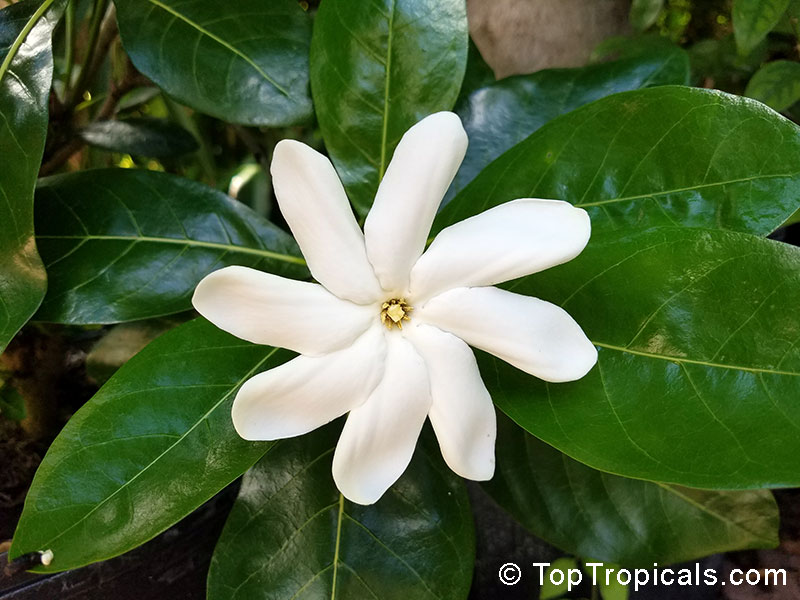
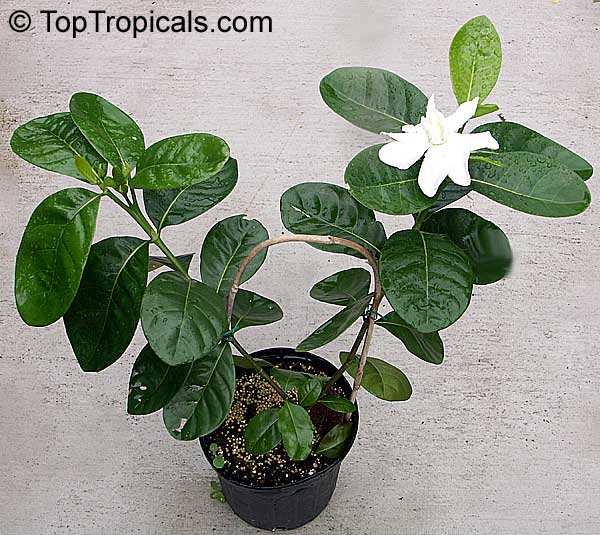
Tahitian Gardenia

Q: I am interested in your Tahitian Gardenia and I would love to try and grow this plant in a large container/fabric pot. The soil here where I live is terrible as it's hard rock, clay, and sand! So I'm not sure if amending the soil would help to plant in the ground? Can you tell me if this will do okay in a container or best in ground? I live here in Las Vegas, NV (zone 9a). Any information would be great to help me make a this decision, I love the selection of cool tropical plants you offer! Also my daughter does Tahitian/Polynesian dance and this would be a cool "topping on the cake" if she could have a live Tiare flower in her performances.

A: Tahitian Gardenia will be doing best if grown in container in your area. In its natural habitat, it grows full sun but also it enjoys mild weather conditions and high air humidity. All gardenias prefer acidic soils. In your area, if planted in the ground, it may be exposed to some harsh conditions: too high temperatures, too hot sun, dry air, and as you mentioned - heavy clay and sandy soil. You can enjoy this plant grown in container, which can be moved as needed away from too much sun during summer months. Use well-drained potting mix. Use plastic pot, do not use fabric or clay pots - soil will dry out too quickly.
Also remember to fertilize this plant on regular basis with a liquid fertilizer SUNSHINE Pikake - Fragrant Flower Booster.
Grow gardenia in full sun or semi-shade during the hottest months. You may spray it with pure water if the air too dry and hot. Enjoy your Tropical Beauty and good luck!

Date: 21 Apr 2021

Healthy Plants: Q&A from Mr Booster

Mango leaves and fertilizing

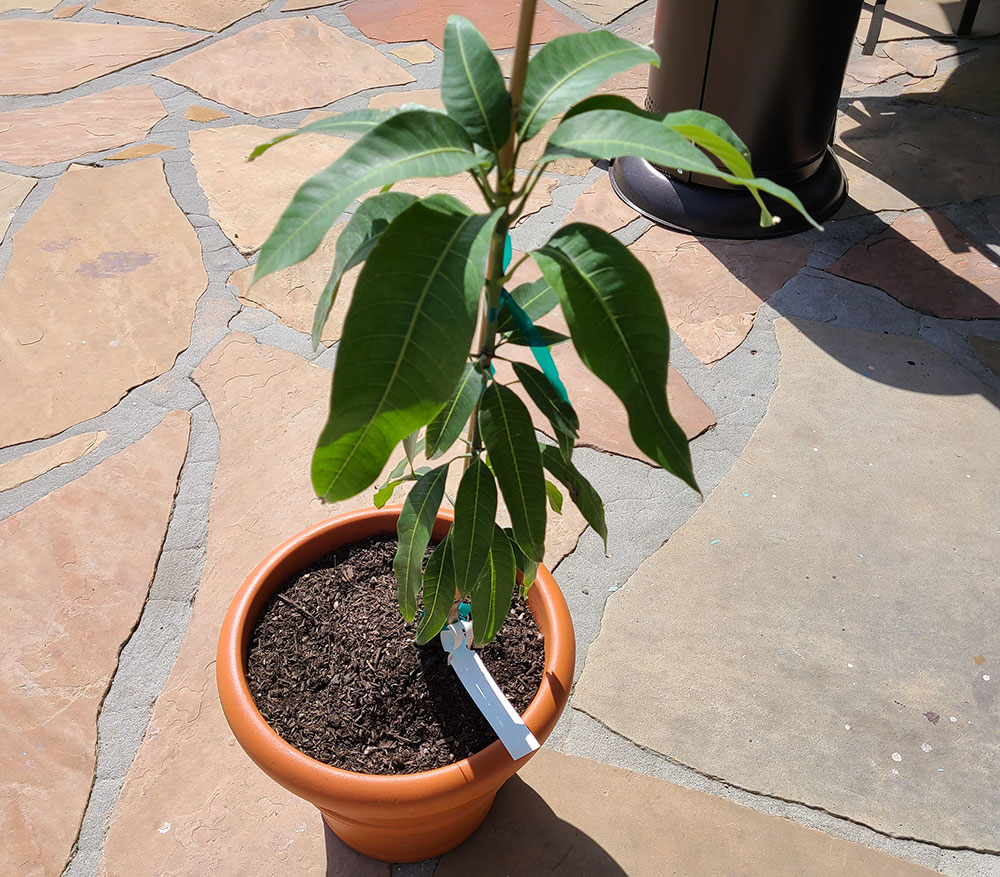
Q: I received a mango tree we ordered last week (I am in California) and am trying to make sure we take care of it properly. I noticed the corners of some leaves have began drying out. I wanted to see if there was anything else we should be doing or if it is something normal. Overall the tree looks good and the leaves have perked up, but I noticed the dry tips on a handful of leaves. Any help is appreciated! I have not fertilized in the pot yet or applied the mango sunshine booster.

A:Your mango tree looks pretty healthy, and these dry leaf tips may be caused by overall shipping stress. You have dry air in California, and temperatures may be getting up, this may cause additional drying effect. You may start fertilizing with a liquid fertilizer, it will help the plant to get stronger and grow faster - then heat and dry air won't be a problem as soon as the plant becomes better established and hopefully go into a bigger pot soon, or in the ground. Make sure to provide regular water if you have hot dry summers.

Date: 29 Mar 2021

Small flowering tree for community

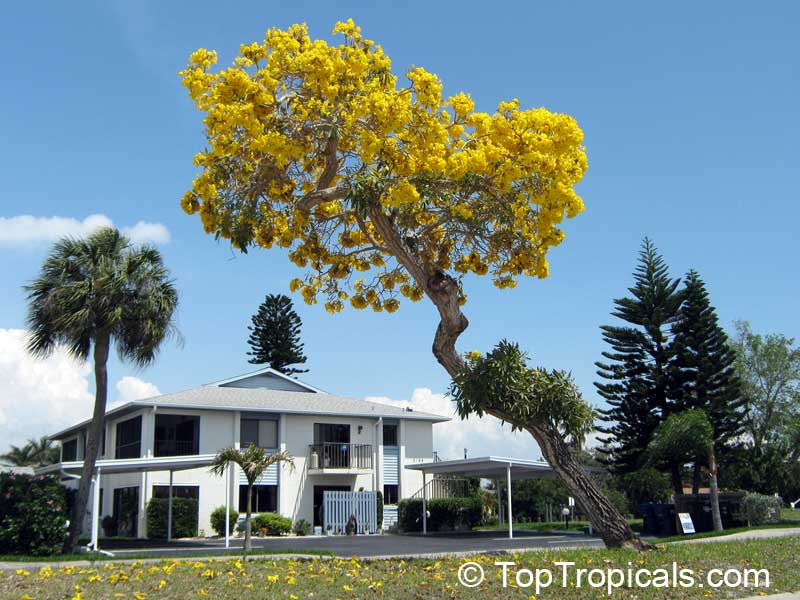
Q: Hi, I live on the east coast near West Palm, but I see you ship your plants. My HOA allows for Yellow Tabebuia species and I'm looking for two or three smaller trees that can fit in my front yard in smaller spaces. Ideally looking for trees that would stay under 20' in height, but preferably even smaller. Can you tell me the average height and spread of the Dwarf Golden Tabebuia or Silver Trumpet trees?

A: The Yellow Tabebuia - Tabebuia caraiba is a very good choice for a small yard. It grows about 20 ft average size, 7-10 ft wide. Sometimes taller, but it is slow growing and it will take many-many years to grow to a bigger size. It is a spectacular tree when in bloom, however, keep in mind that it is not very wind resistant; although it is not difficult to secure it back being a small tree. Another Tabebuia which is even more compact tree, has stronger root system and is more wind resistant:
Tabebuia chrysotricha - Dwarf Golden Tabebuia
Also some other interesting choices:
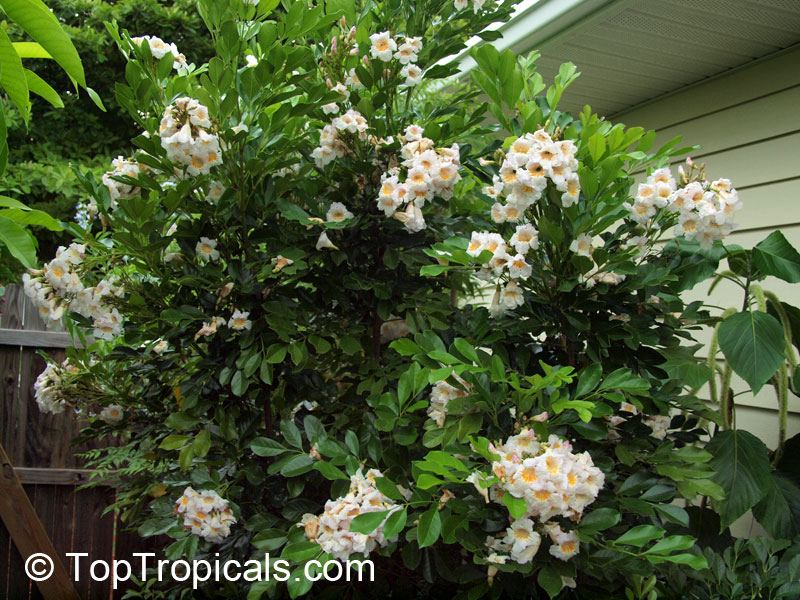
Radermachera Kunming - Dwarf Tree Jasmine
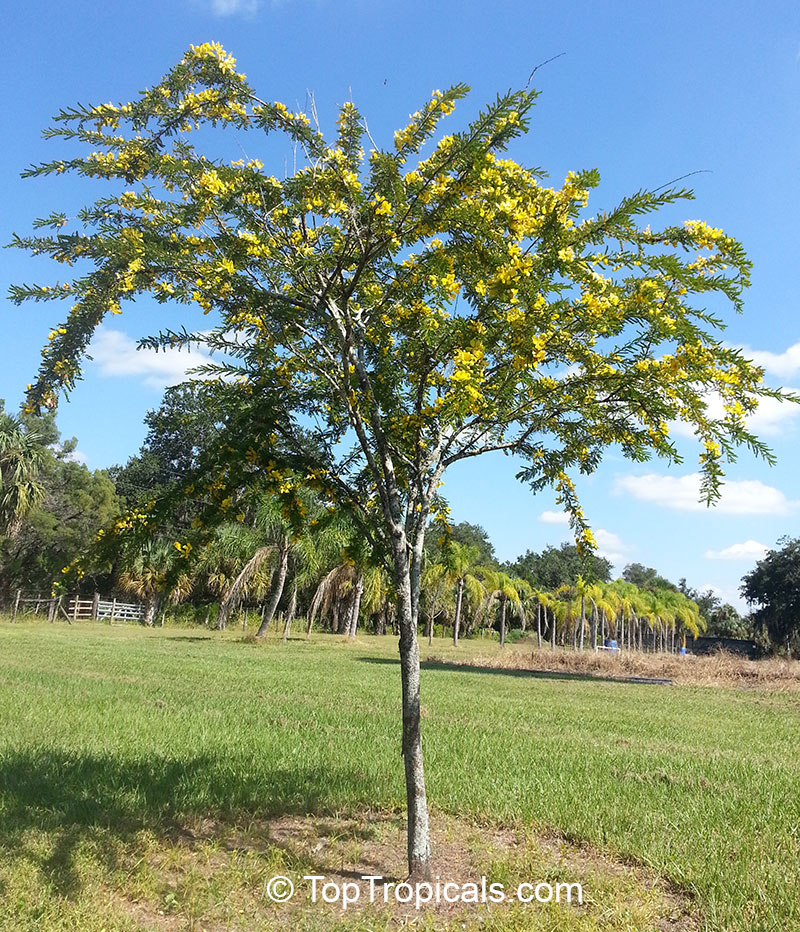
Senna polyphylla - Bahamas Cassia, Desert Cassia
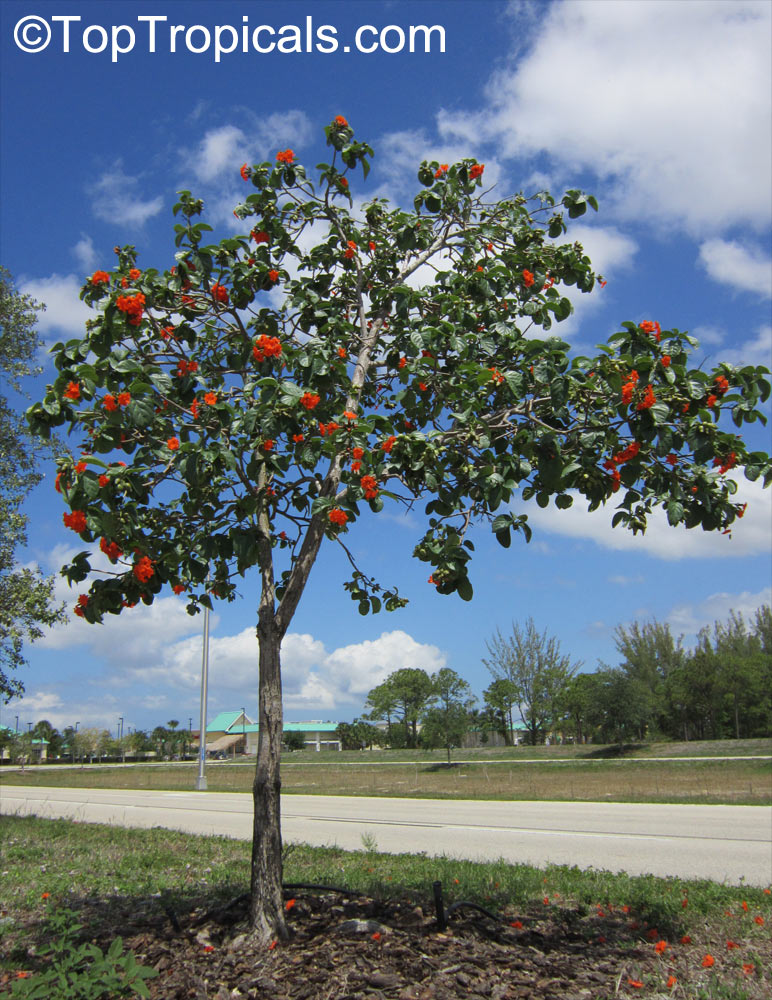
Cordia sebestena - Scarlet Geiger tree

See full list of compact small trees

Tabebuia chrysotricha - Dwarf Golden Tabebuia

Radermachera Kunming - Dwarf Tree Jasmine

Senna polyphylla - Bahamas Cassia, Desert Cassia

Cordia sebestena - Scarlet Geiger tree