Garden Blog - Top Tropicals

Date: 30 Jun 2020

Plants like to snack!
How to feed Poinciana tree

(and other tropical flowering trees)

Q: We purchased a Royal Poinciana tree from TopTropicals not too long ago and we gradually gave it more sun until finally we were able to plant it in direct sunlight where it's been for a week or so. Rain has been sporadic lately so I'm giving it a little bit of water every day. It seems to be doing fine. I do have a question about whether the leaves are as green as they should be? I read online that I should fertilize it with gardenia / ixoria fertilizer in March, June, and October. I looked on homedepot.com but didn't really find anything that goes by that name. Would fertilizer help? Can you suggest a fertilizer?

A: Your Poinciana tree looks pretty healthy and happy, congratulations with a great job!
Traditional (old-school) fertilizer recommendations usually suggest feeding a plant 2-3 times a year with a slow-release fertilizer. And although a plant will benefit from any fertilizer application (extra food is always good), however, for the best results, faster growth, sooner and more profuse blooming, your should use complete plant nutrition products - liquid fertilizers (see why liquid fertilizers are better than dry).
Here is an example. Some people eat a big heavy meal once a day which we all know, is not very healthy. Other people eat balanced food more frequently but in smaller portions - this is always the best way to go.
From this point, plants prefer SNACKING - frequent feeding, but with less concentrated, mild and balanced nutrients.
For your beautiful Poinciana tree (and other flowering plants), we suggest the following nutrition program:

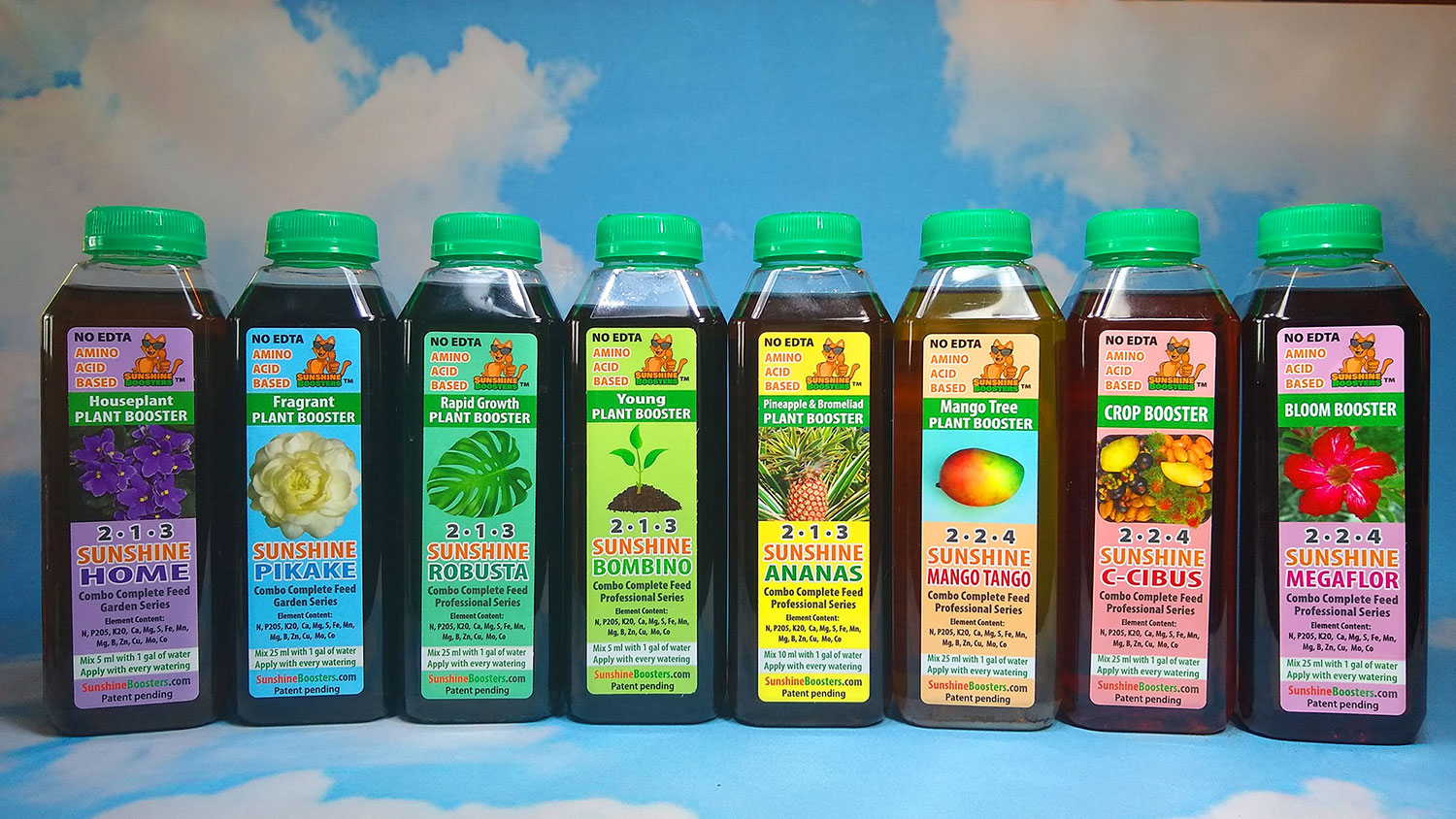
1) SUNSHINE Megaflor - Bloom Nutrition Booster - you may use this fertilizer as frequent as with every watering, it won't burn the roots, and will provide a complete nutrition for all plant needs throughout the year. You can continue fertilizing with Megaflor even during winter time. Sunshine Megaflor will help you to keep the plant healthy, vigorous, and resistant to stress and diseases. It turns leaves green and makes the plant strong so it will start flowering sooner for you.

2) Tropical Allure - Smart-Release Booster. Apply it once a month during hot season only (in Florida - from March to November).

Date: 11 Oct 2019

Fun of growing your own Pepper

By Onika Amell, tropical plant specialist

Q: Can you grow your own black pepper plants in the USA?

A: Who does not love the smell of freshly ground pepper, especially that lovely combination of white, green, black and red peppercorns, which are so much more interesting than just plain black corns. Yes, you can absolutely grow your own pepper! Peppercorns come from the plant Piper nigrum.

Growing Pepper Plant

Black pepper plants are actually vigorous vines, although they are pretty slow growing and can be kept in a pot as a compact plant. But they will need a strong support to climb over. Indoors, you can provide this support by installing a trellis in a large pot. Some gardeners prefer to grow them as a hanging plant instead. In warm climates, you can plant them directly outdoors in a protected location with partial shade. These plants need rich, moist, well-draining soil and warm, humid conditions. Peppers do not like temperatures below sixty degrees, although they can survive some cold spells. It is very important to bring these plants indoors or wrap them in a blanket if colder weather arrives.
If you live in colder parts of the country, you can certainly grow peppercorns in large pots. Grow them outdoors during the summer and move them indoors during the winter, or grow them year-round in your greenhouse. Houseplants will need bright light and consistent moisture. Spray the leaves regularly with a bottle of water to increase humidity. Do not allow room temperatures to fall below sixty degrees.
Besides the benefit of being able to grow your own gourmet pepper corns, the foliage, as well as the flowers on this plant, are beautiful in its own right. Off-white flowers appear from spring through summer, followed by slow fruit production. The berries will appear on spikes, with 50 to 60 berries per spike.

Fertilize this vine in the spring before new vigorous growth emerges. We recommend:
Tropical Greenhouse Plus - Plant Booster
Tropical Allure - Smart-Release Booster

You may be surprised to learn that black, white, green and red peppercorns are all the same seed on the same plant in the various stages of development and processing.

Black peppercorns are the most familiar and come from the corns that have reached their full size but are still green and not quite ripe. They are picked and allowed to dry in the sun. Enzymes in the berries cause the skin to turn black during the drying process. They are the strongest in flavor.

White peppercorns are the mature berries that ripen to a red color before being picked. After harvesting, they are soaked and rubbed free of the outer skin down to the smooth white underlayer, then dried and bleached by the sun. They are slightly milder than black pepper.

Green peppercorns are the unripe peppercorns picked at the same stage of ripeness as black peppercorns, but not allowed to dry. They can be pickled in vinegar or brine. They are the least pungent.

Red peppercorns are the mature, but unshelled version of the peppercorn. One can usually find them in some gourmet and health food stores. They can be quite expensive.

Ground pepper will only stay fresh for about three months, but peppercorns will last indefinitely. To make the most of your pepper harvest, store the peppercorns in an airtight container in a cool, dark location. Grind them immediately before use for the best flavor.
There is nothing like freshly ground black pepper simply combined with a good quality olive oil and a splash of balsamic vinegar. This makes a wonderful dipping sauce for fresh bread. Simple, yet elegant. All the better if the pepper was grown in your very own garden!

Date: 13 Jul 2024

How to grow everblooming orchids like these?

Sunshine Orchidasm Fertilizer

Sunshine Orchidasm Fertilizer

Orchids in bloom

🌸❓How to grow everblooming orchids like these?
  • 💋Orchids culture is different from garden ornamental plants. They are epiphytes, so you cannot use regular garden fertilizer on orchids, because they are very sensitive to salts.
  • 💋Orchids need a special, acidic type of fertilizer, very mild in action.
  • 💋Sunshine Boosters formula is exactly what orchids need. It is amino-acid based, very mild, and doesn't create nutrient lock up (building up salts is one of the biggest enemies of tender orchids). Sunshine Boosters Orchidasm Complete Feed is scientifically balanced orchid food that contains all necessary nutrients, including micro-elements, for healthy, happy, vigorous orchids.
  • 💋 Sunshine Orchidasm can be used as often as daily with every foliage spray.
  • 💋From our testing experience, after using Orchidasm Booster, orchids not only get happy and thriving - they also bloom more often - up to several times a year, shooting new flower spikes one after another (while normal blooming cycle for most orchids is once a year). It gets even better - the flower display lasts twice longer!


😊To enjoy beautiful Orchid flowers year around - treat them with Love, give them some Orchidasm!

📚 Learn more: Sunshine Orchidasm

🛒 Order Sunshine Orchidasm

#Fertilizers #How_to #Container_garden

🏵 TopTropicals

Date: 27 Apr 2020

How to feed a Mango tree...
and to grow a Dwarf Mango

How to fertilize a Mango tree

Q: My mango trees that I bought and planted last august now have fruit. I bought 2 types of fertilizer from you and never used it. Should I use your fertilizer now?

A: It is a perfect time now to fertilize your plants as they start active growth. For mango trees, we recommend liquid fertilizer Sunshine Booster - Mango Tango. It is formulated for Mango trees, especially for container grown. It improves quantity and quality of flowers and ability to set fruit, reduces bud-flower-fruit drop. Can be used as often as with every watering. For best results, use in combination with Sunshine Honey and Sunshine Superfood plant supplements. Its scientifically-balanced stable formula is organic Amino-acid based and has NO EDTA chelators to eliminate nutrients lockup; it does not affect crop taste.
Additionally, you may use slow-release granulated fertilizer Mango-Food once a month during hot season only. Dosage: 1 teaspoon per each gal of soil. Water-soluble fertilizers can be also used, however, those are usually EDTA-chelated which is not as efficient as Amono-acid based Sunshine Boosters and may create nutrients build up, especially if overdosed in containers.
For in-ground mango trees, you may use all the above, and slow-release granulated fertilizer can be applied in larger quantities: spread a handful around the drip line.

Remember that only liquid Sunshine Boosters can be applied year around. With other fertilizers, you need to be careful not to overdose, and apply only during hot weather (when night temperatures are steadily above 65F).

How to grow a Dwarf Mango tree

Q: I received the Ice cream mango tree in great condition (thank you for the ingenious packing job) on Wednesday and have planted it in a pot slightly bigger than the root ball. I plan to grow the tree on my front porch, so how big a container should I ultimately use when the tree outgrows this pot? How big a container does it need to fruit? I hope to keep it around 6-7 feet high, if possible. I live in Hawaii.

A: Ice Cream mango is a perfect variety for container culture, and it should be happy in Hawaii. You did everything right. Keep it in this small pot for now and wait until it starts vigorous growth in Summer. Once it starts growing (and you will notice roots growing too, sometimes they try to grow through the holes in the bottom of the pot), then it's time to step up into a bigger container (7-10 gal). Eventually you may use container size as large as 15 gal. Ice cream mango is slow growing and compact, and you will be able to maintain it under 7 ft with very minimal pruning if any.

Date: 7 Oct 2019

Fertilizing in Winter?

Q: I'm a bit confused about what winter fertilization schedule I should follow in South Florida. For blooming plants, usually, I use a monthly granular bloom booster fertilizer as well as a liquid fertilizer every 10 days or so. Should I continue that schedule in the winter as well? Should I stop fertilizing altogether in the winter? How about fruit trees? What fertilization schedule should I follow in the winter?

A: Here is a general fertilizing schedule for established plants that we follow here in SW Florida.
The rule of thumb is, do not fertilize (with macro- NPK elements) when minimum temperatures drop below 65F and stay at that level for more than 7 days. At this temperature point, most of the tropical and subtropical plants slow down their metabolism and some of them going into dormancy. This means, nutrients are not consumed as much as during active growth period, and built-up nutrient supply within a plant plus whatever is available in the soil is just enough to get by through the winter. So additional fertilizing is not necessary. You may continue micro-element supplements and bio-stimulants throughout the year. In fact, it is highly recommended to do so, to help the plant survive cold spells. These are very effective tropical plant protectors:
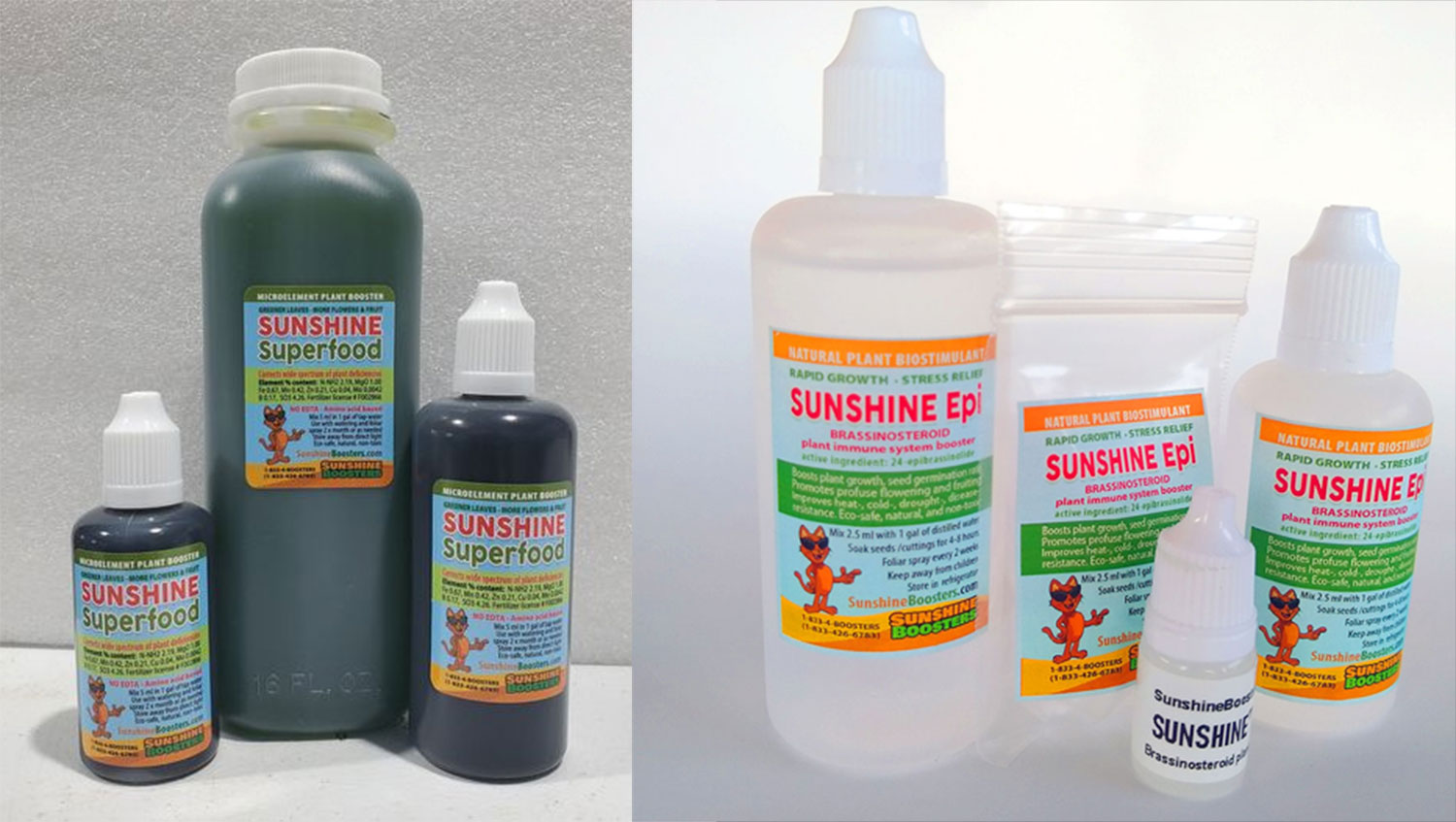
SUNSHINE-Epi - Brassinosteroid plant hormone
SUNSHINE-Power-Si - Advanced plant protector with Silicon
SUNSHINE SuperFood - Complex microelement supplement

This rule is applied to both flowering and fruiting plants, in general. However, some species are winter-flowering and winter-fruiting. For those, you can make an exception and provide extra nutrients for flowering and fruiting, as long as the weather stays warm. During cold spells, avoid any NPK fertilizers and use only bio-stimulants and micro-elements. If you apply NPK during cold, it won't be consumed by a plant, build up in the soil, and may create a root burn situation.

In simple words, fertilize from March to October. Give plants some rest from November to February.