Garden Blog - Top Tropicals

Date: 5 Jun 2025

Why Mallika Mango is stealing the spotlight in small gardens

Mallika Mango tree with fruit

🌈 Why Mallika Mango is stealing the spotlight in small gardens

🥭 Mallika mango is a top-tier Indian dessert mango with rich flavor, zero fiber, and condo-friendly size. It is a semi-dwarf mango from India known for its deep orange, fiberless flesh and intense sweetness with citrus and melon notes. The fruit is harvested mature-green and ripens off the tree at room temperature, reaching peak flavor after 2 to 3 weeks. Small but highly productive, Mallika is ideal for containers and prized for its flavor, disease resistance, and reliability. Best eaten fresh, but also excellent for juice and dried mango slices.

🛒 Shop Mango varieties

📚 Previous posts: #Mango_Rainbow - varieties you should try

#Food_Forest #Mango #Mango_Rainbow

🟢 Join 👉 TopTropicals

Date: 22 Jun 2025

What Mango fruits year around? Xosi Tu Quy - Four Seasons crisp Vietnamese mango perfect green or ripe

Xosi Tu Quy, Jin Huang - Four Seasons crisp Vietnamese mango

What Mango fruits year around? Xosi Tu Quy - Four Seasons crisp Vietnamese mango perfect green or ripe.
Mango Rainbow🌈

🥭 Xosi Tu Quy, Four‑Seasons, or Jin Huang, is a Vietnamese variety celebrated for its ability to flower and fruit multiple times annually. It produces medium-to-large, bright yellow, firm, fiber‑free fruit with a small seed and crisp, mildly sweet flesh. Ideal for green-eating and pickling, it also ripens to a gentle sweetness with floral-honey nuance. The tree grows vigorously with a dense canopy and shows good resistance to anthracnose - perfect for warm, humid, tropical or subtropical yards. In Florida it typically fruits May-August, possibly longer in ideal conditions.

🛒 Shop Mango varieties

📚 Previous posts: #Mango_Rainbow - varieties you should try

#Food_Forest #Mango #Mango_Rainbow

🟢 Join 👉 TopTropicals
Date: 9 Nov 2023

Veterans Day: November 11
Special Deals

Veterans  Day  Cat

Our special Veterans Day sale on tropical plants is a salute to those who served! Enjoy this discount code - a small token of gratitude for our heroes:

VETERANS23

Your savings with this code:
5% off orders $100+
10% off orders $150+
15% off orders $200+

Excluding S/H. Exp. 11-12-23

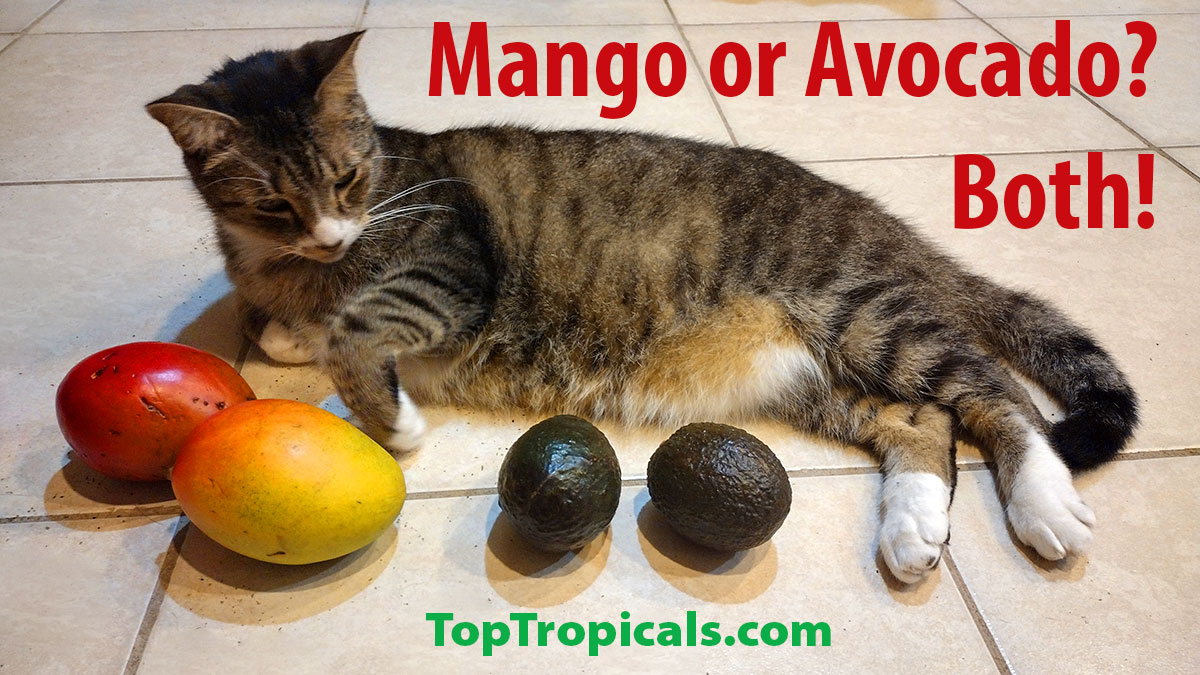
Mango & Avocado Super Sale!

Cat  with  mango  and  avocado

Instant 20% off Mango and Avocado trees

Celebrate Veterans Day with the taste of the tropics! Indulge in our exclusive offer on Mango and Avocado trees, available now at unbeatable prices. With the discount code above, your qualified purchase of these trees can be as low as:

$64 for Mango trees
$61 for Avocado trees

Hurry up! Limited time quantities - while supply lasts!

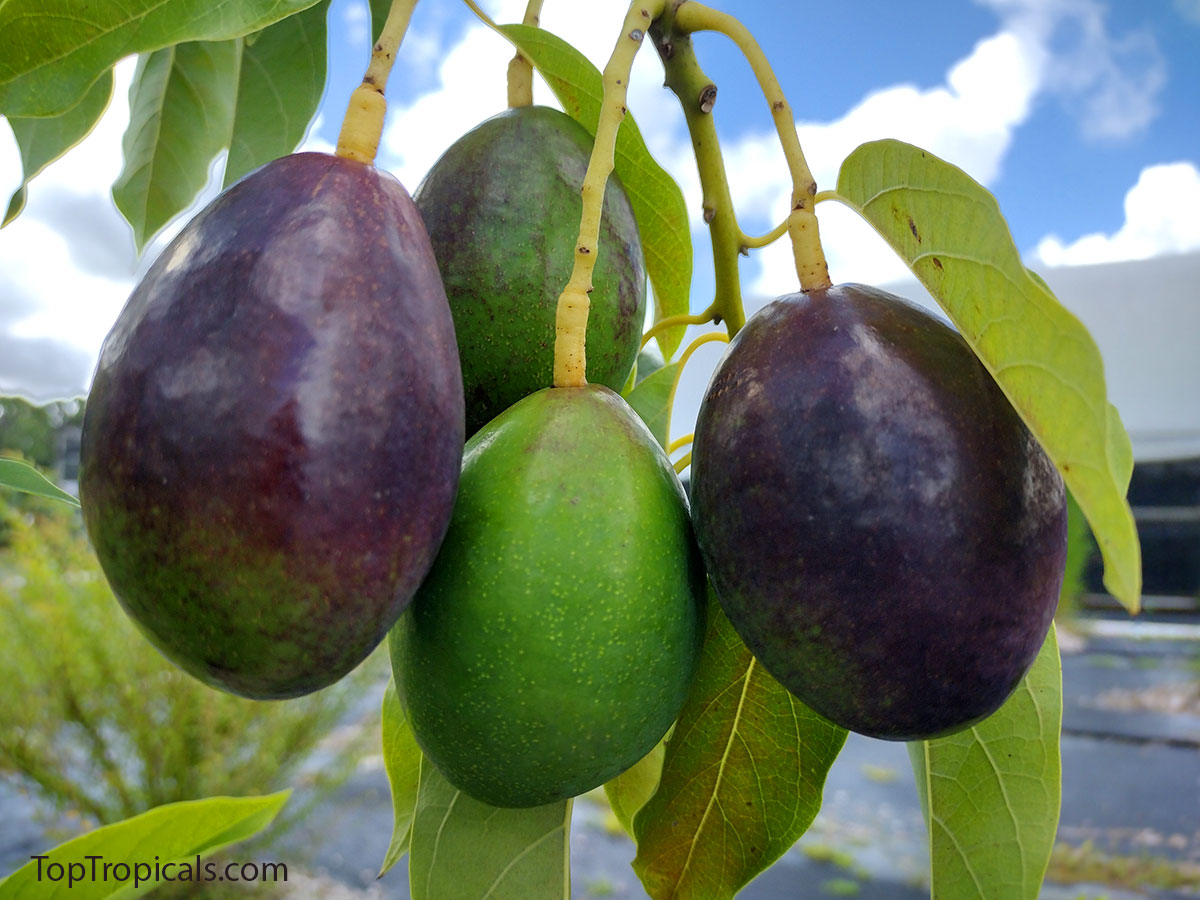
Avocado  fruit  on  a  branch

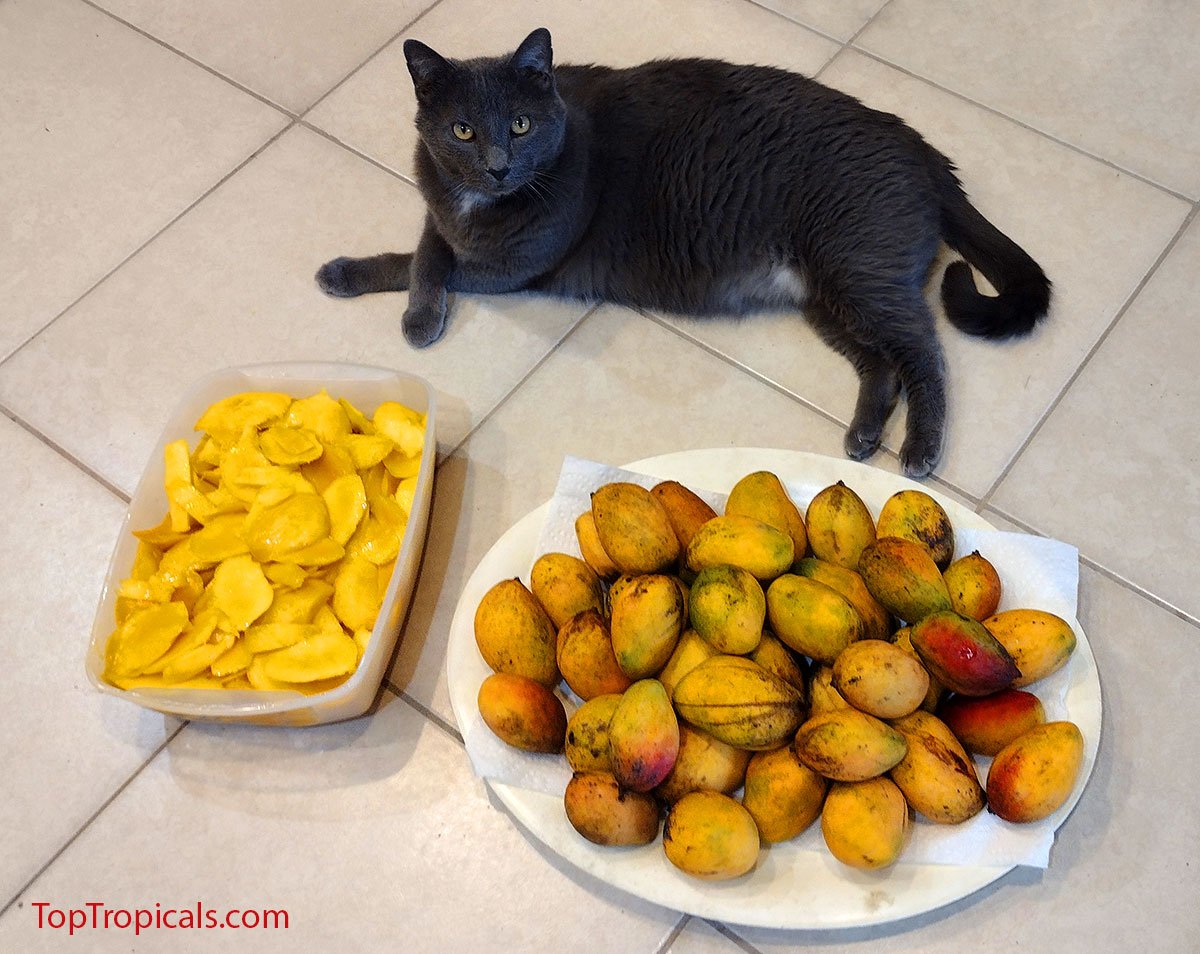
Cat  with 


mango

Date: 30 May 2019

Triple Sec Mango

TopTropicals.com

By Onika Amell, tropical plant specialist

Q: I live in Mesa, Arizona. I am considering purchasing two of you Triple Sec Mango trees. Can you please give me some information on this variety and how to grow it successfully here in hot and arid Arizona, if at all?

A: Triple Sec Mango is a new name for the superior variety Seacrest. The aroma of this fruit resembles Triple Sec - an orange liqueur. It's a juicy, mid-season variety that has good disease resistance.
Mango has pretty good heat and drought tolerance. It loves sun, but there are a lot of factors to consider when growing Mango in your area.
Check your soil. Soil quality is always first and foremost: when you live in an area of Arizona with hardpan (extremely compacted desert soil) or caliche (layers of soil cemented by calcium carbonate) you will have to learn how to deal with such soil types. Amend the soil as needed.
The best time to plant is spring or fall to give your Mango a chance to get established before the really intense Summer heat starts. Alternatively, protect the tree with a shade cloth. Tender, new growth will not stand a chance unprotected, especially newly planted and/or young trees.
Mangoes are tropical and sensitive to frost and freeze damage. Young trees especially will also need winter protection when temperatures go near or below freezing. Always plant trees in a location where they will be protected from cold wind. Consider staking your newly planted Mango trees for the first year. It's never a bad idea to even stake during periods of high winds.
Make sure your planting site has very good drainage. Always use a good quality mulch around your tree as it helps to trap moisture, keeping the ground and the roots beneath it cool. Keep mulch a couple of inches from the trunk of the tree. Avoid a location that gets full day sun. Morning sun, afternoon shade is ideal. Give regular watering until the tree is established. Once established, water only when the soil feels dry.
Fertilizer with a Mango-Food. A foliar spray of micronutrient solution is always recommended during the active growing period. Use plant stimulants and microelements to improve cold hardiness and vigor.

See more info on growing mango in hot climate and container grown mangoes in Arizona.

Date: 20 Dec 2020

Mango ID and ripeness

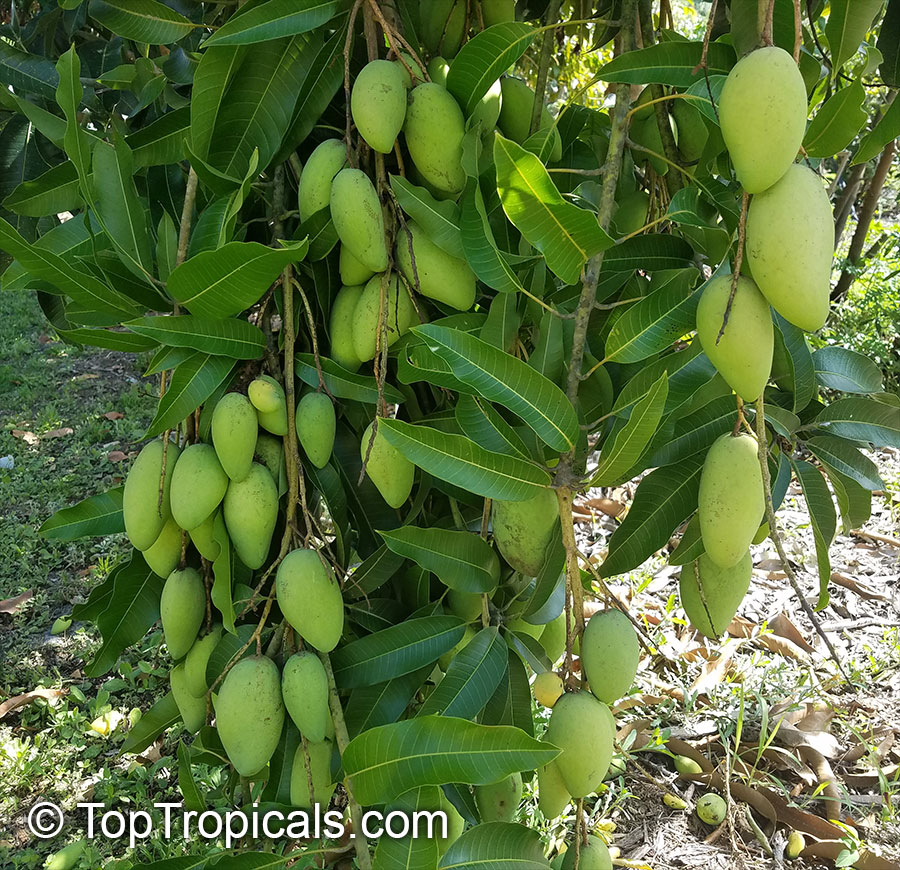
Q: As the World's Leading Authority on Tropical Plants, I hope you can help us out. We obtained a mango tree from a City giveaway, and planted it a few years ago. This is the 1st year it has produced fruit. They are almost all green color, & range from 6-7 inches in length. Attached are a few photos of the tree & its fruit. Please help to identify the type, and how to determine when they would be ready to pick. Or should we just wait until they fall off of the tree?

A: If the tree is grafted, it normally starts flowering within a year after planting. If the tree is over 6 years old and just now started fruiting - chances are, this is a seedling (possible at giveaways) without specific variety. However the fruit looks pretty good size and shape, hopefully it tastes great. You will find out soon!
Based on the pictures, there maybe a few possible choices, including varieties (or their seedlings) Keitt, Rosigold, it can be even Lancetilla if fruit grows bigger than 7" long. The next step would be, wait until the fruit get some color, then it will be easier to narrow down the variety. Also see if there is a lot of fiber or no fiber.
You may wait until at least one fruit ripens on the tree and let it fall naturally - that will be the color (can be all green, but in your case it looks like it's turning yellow blush). After that, you may pick full size fruit before they fall and let them ripen on a kitchen table. Usually once the fruit starts showing color, it is close to ripening. For all-green varieties, just wait till fruit grows to maximum full size. You may also check if the fruit gets softer to touch, then it's ready.