Garden Blog - Top Tropicals

Date: 24 Mar 2026

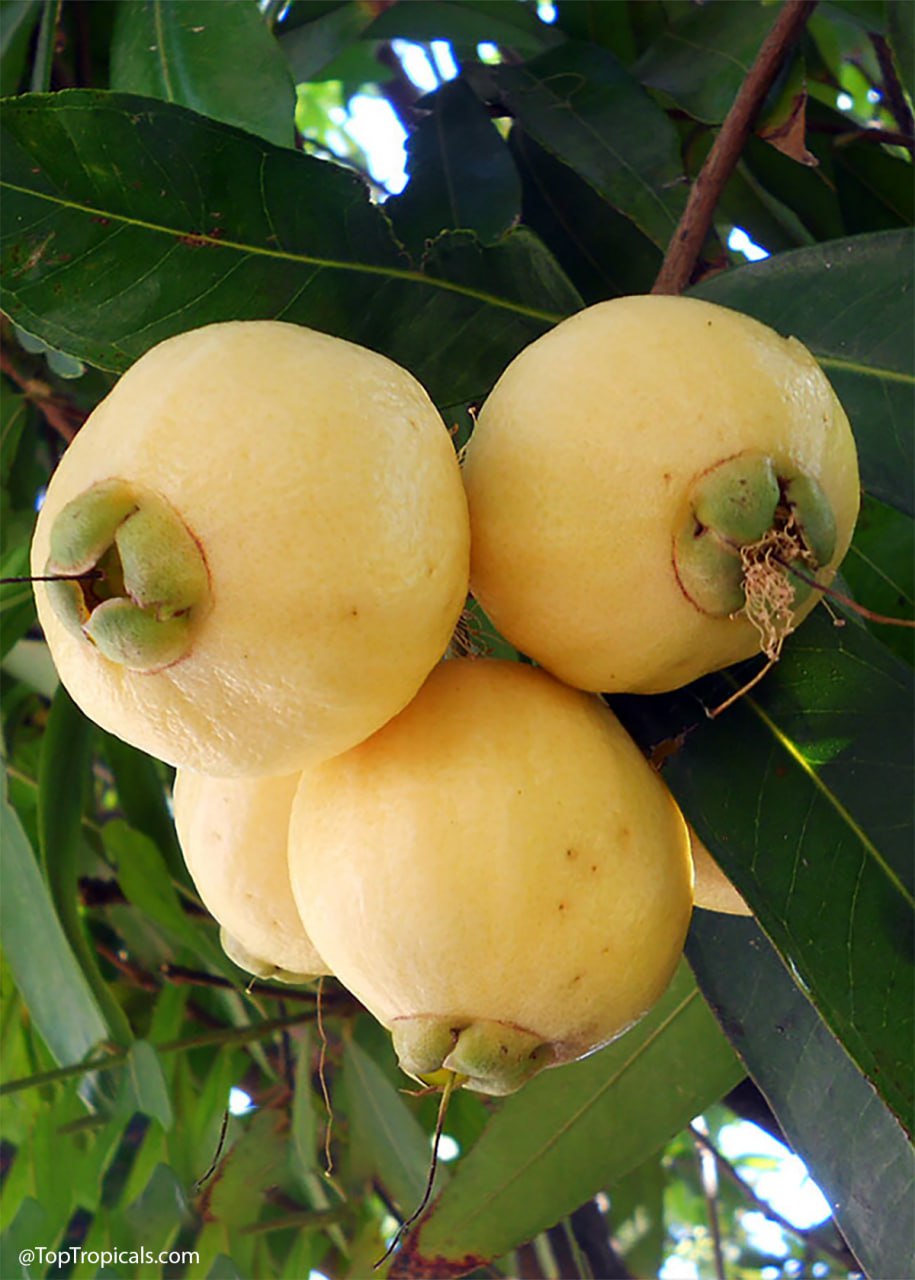
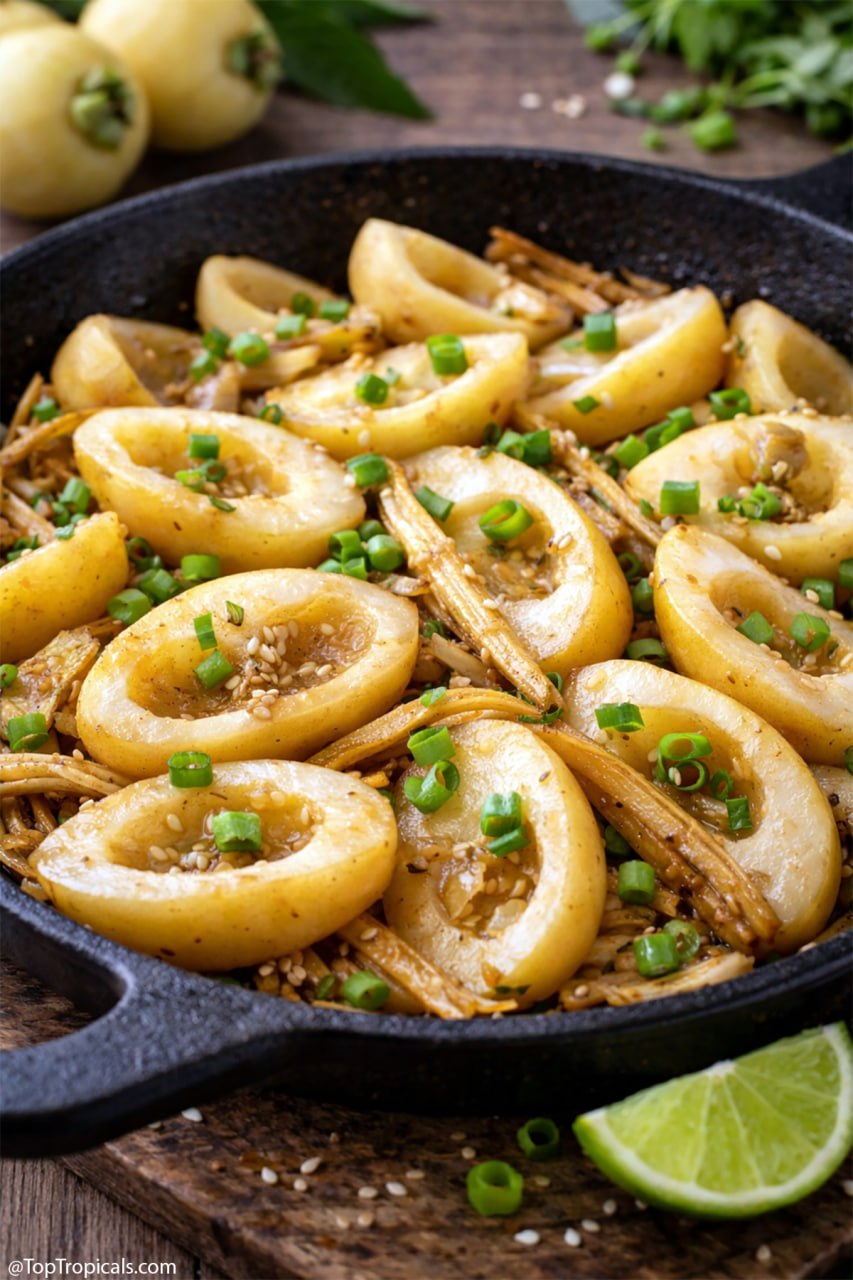
Rose apple stir fry: quick-n-fun exotic recipes

Rose apple stir fry

Rose apple stir fry

Syzygium jambos, Rose Apple

Syzygium jambos, Rose Apple

🍴 Rose apple stir fry: quick-n-fun exotic recipes

  • 🔴Cut in half and remove seeds from Rose Apples
  • 🔴Sauté briefly with ginger and a pinch of salt.
  • 🔴Keep slightly crisp.


🌿 About the plant:


Rose apple produces crisp, watery fruit with a mild floral scent.

🏡 In the garden:


Tropical tree that prefers warmth and humidity. Can grow fairly large but responds to pruning.

🛒 Plant your own Rose Apple Tree

📚 Learn more:

Plant Facts

Syzygium jambos, Eugenia jambos, Jambosa jambos
Rose apple, Malabar Plum, Pomme rosa
USDA Zone: 9-11
Large shrub 5-10 ft tallSmall tree 10-20 ftFull sunRegular waterWhite, off-white flowersPink flowersEdible plantPlant attracts butterflies, hummingbirdsSubtropical plant. Mature plant cold hardy at least to 30s F for a short timeSeaside, salt tolerant plant

#Food_Forest #Recipes
🟢 Join 👉 TopTropicals

Date: 23 Jan 2020

Meet PeopleCats of TopTropicals. Cat of the Day: Weasley the Immigrant

Weasley came from the neighborhood cat community (our neighbor takes care of at least a dozen of cats). Whether TopTropicals dry food tastes better than neighbor's, or simply he is such an enthusiast of tropical gardening, he hangs out with us all the time.
When you see him in our Garden Center drinking milk or chilling right on the walkway with other PeopleCats, don't get him confused with other two ginger cats we have: Barcy and Snitch... as well as the Russian Blue cat with a similar name Wesley...
Although Weasley currently has a status of a legal immigrant, he feels pretty confident around our greenhouses and will be happy to give you a tour. He is still a volunteer here but has already applied for a permanent residence and a full time position, so his food needs are being added to our cat payroll.
When visiting TopTropicals nursery, feel free to add your donation to a Cat Jar located in our office by customer's computer. We appreciate everybody's help - every penny goes to PeopleCat's needs.

Check out and more Cat of the Day stories.

Date: 17 Sep 2025

Mulberry Care and Growing Tips

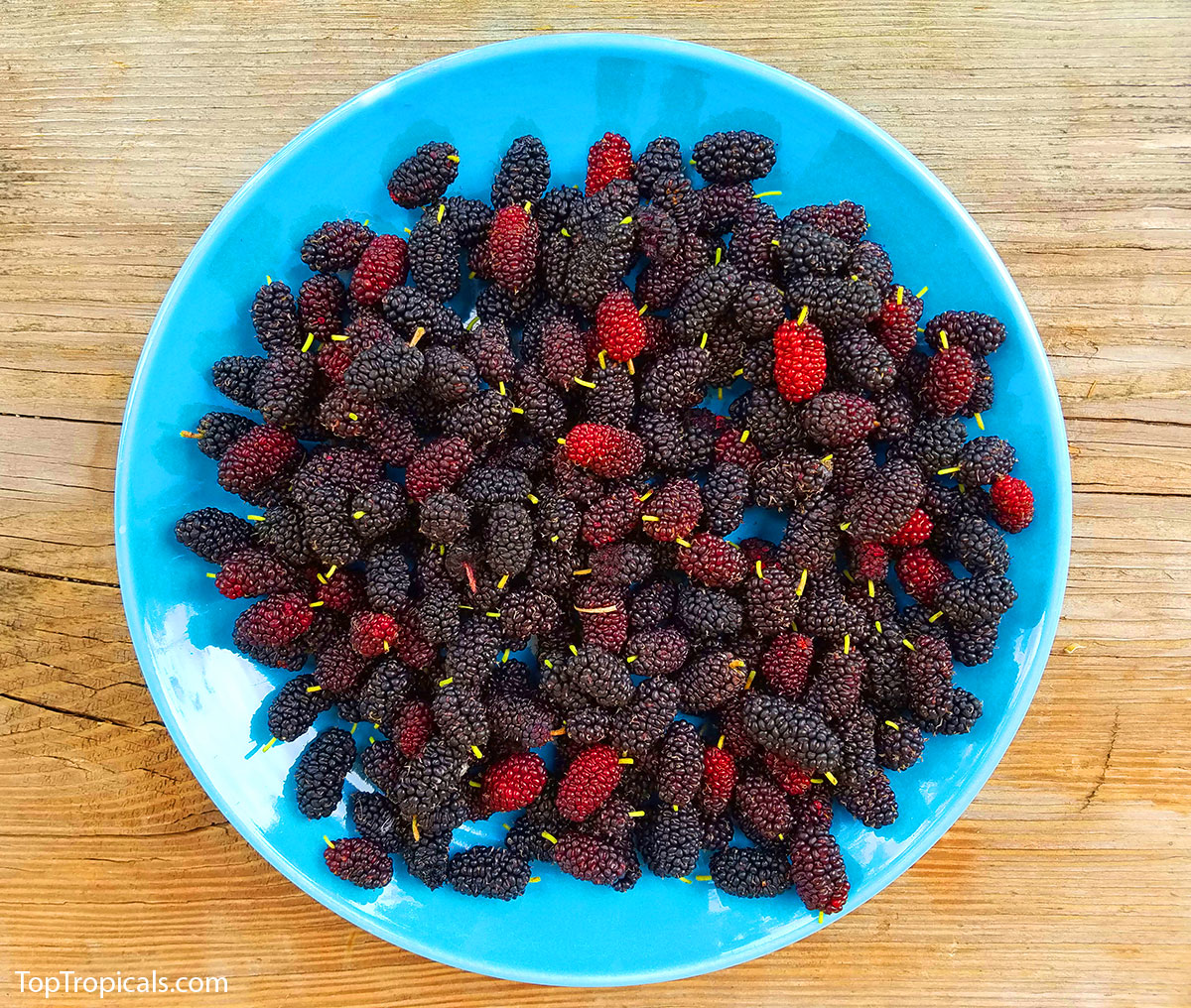
Mulberry  fruit  on  a  plate

Mulberries are tough, low-maintenance fruit trees that adapt to many conditions.

  • Climate: Hardy from USDA zone 5 to 10.
  • Soil: Grow well in almost any soil; prefer good drainage.
  • Watering: Regular watering during dry spells; drought tolerant once etablished.
  • Growth: 3–5 feet per year, producing fruit early.
  • Pruning: Annual pruning controls size and improves branching.
  • Pot culture: Dwarf types thrive in containers, staying 6–7 feet tall. Use a large pot, water consistently, and prune lightly. Use Abundance potting mix for best results.
  • Fertilizer: For reliable production, fertilizer regularly. Apply Sunshine C-Cibus liquid booster with every watering, or Green Magic controlled release fertilizer every 5-6 months.

❓ Mulberry FAQ


How soon will a mulberry fruit?

One to two years, sometimes the very first season.

What climates are suitable?

USDA zones 5–10, from -20F winters to hot summers.

How tall do they get?

Standard trees 20–30 ft; dwarfs 6–10 ft in pots.

Do I need more than one tree?

No, they are self-pollinating.

What do they taste like?

Sweet and juicy, like a blend of blackberry and raspberry.

How long is the harvest?

Everbearing types ripen gradually from summer into fall.

Do birds eat them?

Yes, but trees are so productive there’s plenty to share.

Are they messy?

Dark-fruited varieties can stain; white mulberries do not.

Can I grow them in containers?

Yes, dwarf types (Dwarf Everbearing, Issai) fruit well in pots.

How long do they live?

Many live for decades; Illinois Everbearing can endure for generations.

What are the health benefits?

Mulberries are low-glycemic, support healthy blood sugar, improve heart health, and are rich in antioxidants.

Shop Mulberries

Date: 7 Oct 2025

⭐ The Winter Stars: 8 Flowering Trees That Steal the Show
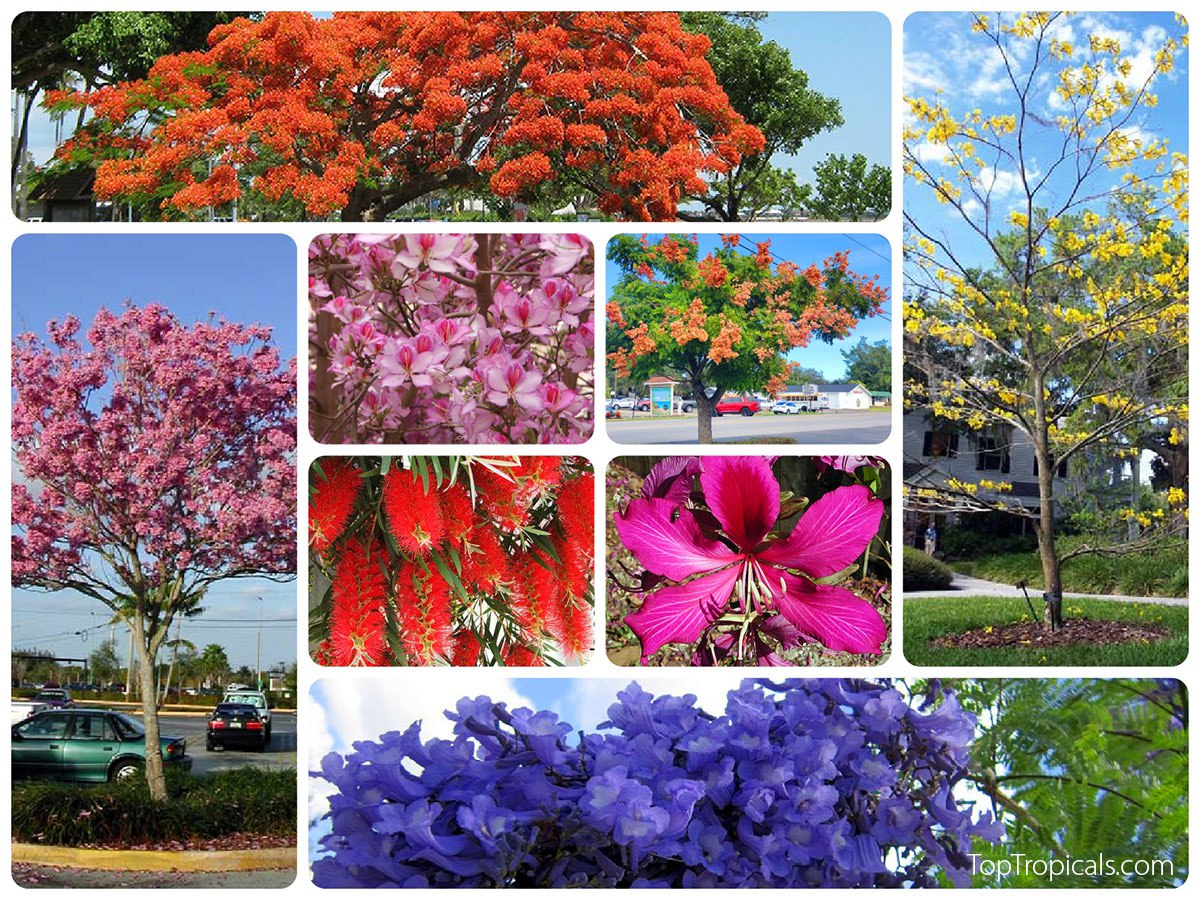
Collage  showing  eight  tropical  and  subtropical  winter-flowering  trees: 
 Royal  Poinciana  with  red-orange  canopy,  Dwarf  Pink  Tabebuia,  Dwarf  Golden 
 Tabebuia,  Pink  Butterfly  Orchid  Tree,  Golden  Rain  Tree,  Weeping  Red 
 Bottlebrush,  Hong  Kong  Orchid  Tree,  and  Jacaranda  with  purple 
 flowers.

8 Best Flowering Trees That Bloom in Winter: Royal Poinciana with red-orange canopy, Dwarf Pink Tabebuia, Dwarf Golden Tabebuia, Pink Butterfly Orchid Tree, Golden Rain Tree, Weeping Red Bottlebrush, Hong Kong Orchid Tree, and Jacaranda with purple flowers.

Royal Poinciana (Delonix regia)

The diva of tropical trees. Huge red-orange flowers blanket the branches from late winter through summer. If you’ve ever seen one in full bloom, you know — it stops traffic. Best in large yards or open spaces, but young ones do great in big pots for a few years. 🛒 Shop
Tatiana: “If you want a tree that makes people say ‘wow,’ this is it.”

Tabebuia chrysotricha – Dwarf Golden Tabebuia

Small tree, big drama. It turns solid gold just before new leaves appear. Blooms while completely bare — a stunning contrast of yellow on brown wood. Perfect for patios, courtyards, and containers. Handles cool nights down to the mid-20s F. Bright, cheerful, and forgiving — the kind of tree that always looks like it’s celebrating. 🛒 Shop

Tabebuia impetiginosa – Dwarf Pink Tabebuia (Pau D’Arco)

The Florida “cherry blossom.” Pink-lavender flowers smother the branches each winter, often before any leaves return. Thrives in sandy soil, tolerates drought, and grows beautifully in large planters or pots indoors near a sunny window. Ideal for seasonal residents or anyone who wants color when everything else is asleep. 🛒 Shop

Jacaranda mimosifolia

If color had music, this would be jazz. Soft, fern-like leaves and cascades of violet-blue trumpet flowers — airy, elegant, unforgettable. Outdoors, it makes a graceful shade tree; in containers, it stays compact with regular pruning. Jacarandas reward patience — they bloom bigger each year. 🛒 Shop

Koelreuteria paniculata – Golden Rain Tree

A favorite for its surprises — golden blooms in summer, pink paper lantern pods in fall, and bronze leaves before rest. Fast-growing, tough, and easy. Loves full sun and moderate water. Great for open lawns or patio tubs. The kind of tree that gives you something new to look at every month. 🛒 Shop

Callistemon citrinus – Bottlebrush Tree

The hummingbird magnet. Bright red, brush-shaped flowers bloom several times a year — sometimes even in cool weather. The dwarf form, ‘Little John,’ stays about 4 feet tall, perfect for pots or small borders. Trim lightly after flowering to keep it compact and colorful. 🛒 Shop
Tatiana: “If you’ve never grown a tropical tree before — start here. It’s the friendliest one.”

Bauhinia variegata – Pink Butterfly Tree

Graceful, fragrant, and forgiving. Its pink-lavender orchid-like flowers open from late winter through spring, filling the garden with color and pollinators. It’s fast-growing, drought-tolerant, and excellent for both ground and pots. Even the buds are edible — a fun bonus for adventurous gardeners. 🛒 Shop

Bauhinia blakeana – Hong Kong Orchid Tree

The queen of them all. Huge magenta-purple blooms that last for months, from fall through spring. Fragrant, clean (no messy seed pods), and perfect for patios or large decorative containers. Give it sun, a little water, and it will reward you with bloom after bloom. 🛒 Shop
Tatiana: “It’s the one tree that never lets winter win.”

A note on grafted Hong Kong Orchid Trees: Most Hong Kong Orchid Trees are grafted, and that’s actually a big advantage. Because they don’t grow from seed, grafted plants mature faster and begin blooming while still small — sometimes within the first year. That makes them perfect for patio pots or small gardens where space is limited.

Bringing the Tropics Home

Whether your garden faces the Gulf or your window faces the snow, these trees let you live in color year-round. Plant them outdoors in warm zones or grow them in pots indoors — they adapt, they bloom, they brighten every corner.

Gardening isn’t about waiting for spring — it’s about finding joy in every season. And when a tree blooms in January, that joy feels twice as sweet.

🛒 Shop Winter Flowering Plants
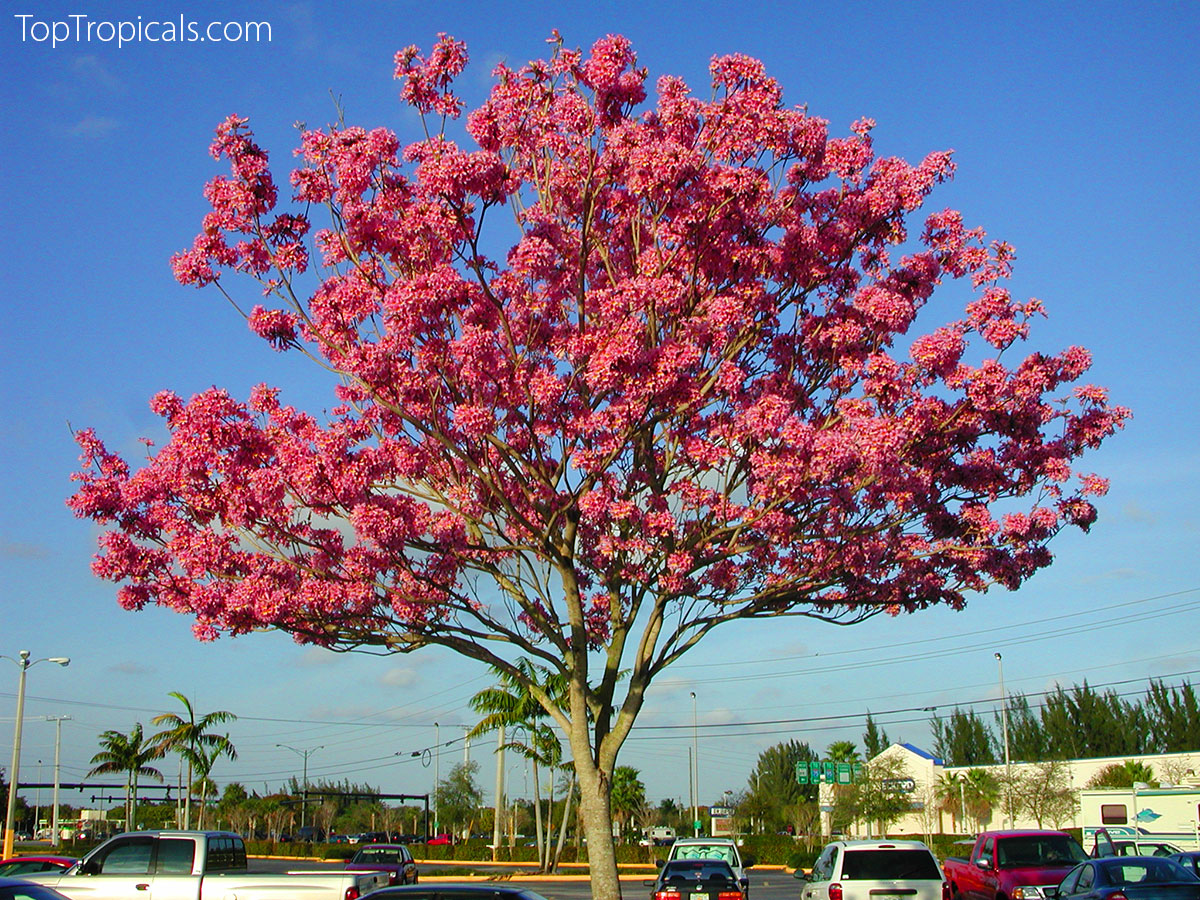
Tabebuia  impetiginosa  -  Dwarf  Pink  Tabebuia,  Pau  DArco,  Taheebo

✍️ Winter Bloomer Q&A

Q: Can these trees really bloom indoors?

Yes! Smaller species like Bottlebrush ‘Little John,’ Dwarf Tabebuias, and many Bauhinias bloom beautifully in pots with bright light or grow lamps.

Q: Do they lose their leaves in winter?

Some, like Tabebuias and Jacarandas, drop leaves right before blooming — it’s normal and part of their charm. Others, like Bottlebrush, stay evergreen.

Q: What fertilizer works best?

We use Sunshine Boosters — gentle, balanced, and perfect for tropicals. Feed every 2–3 weeks during active growth.

Q: How do I know when to water?

Touch the soil! If it’s dry an inch or two down, water deeply. Overwatering is the main mistake with tropicals.

Q: Can they handle frost?

A quick dip into the upper 20s F is fine for most mature trees. Cover young ones or move containers under shelter if colder.

Q: Which are best for beginners?

Start with Bottlebrush ‘Little John’ or Golden Tabebuia — compact, colorful, and nearly foolproof.

Q: When will they bloom?

Usually within few years if they get enough sun and warmth. Grafted plants blooms much sooner

Q: Which of these trees are best for pot growing?

For patios, balconies, or indoor sunrooms, choose the compact or grafted types:

🎥 Watch videos of Dwarf trees in bloom:

Dwarf Golden Tabebuia

Dwarf Pink Tabebuia

🛒 Shop Winter Flowering Plants
Date: 20 Dec 2025

☃️ Winter is choosing season

Smokey  the  tuxedo  cat  plans  spring  planting  on  a  laptop  plant 
 encyclopedia  while  Sunshine  the  ginger  cat  relaxes  by  a  fireplace  in  a  cozy 
 Christmas  living  room  with  tropical 
 plants.

Smokey: "December is for planning, not planting."
Sunshine: "Gift card now. Perfect plants later."
Smokey: "You surprise me sometimes. Must be the donuts."

This time of year always feels special to us. The days are shorter, the garden slows down, and we finally have a moment to pause, look at our wish lists, and dream a little about spring.

As gardeners, we know winter is not really planting season. It is choosing season.

It is when ideas take shape. When we think about what we want to grow next, what we want to add, and what we want to do differently when warm days return. That is why, in winter, the best plant gift is not a plant itself. It is the promise of one.

Cold weather and holiday shipping can make winter plant deliveries stressful, especially for tropical plants traveling north. A gift card lets plants wait for the right moment, and lets the gardener enjoy the fun part now: planning, choosing, and imagining.

It also solves something we all know too well. Every gardener is wonderfully different. Some dream of fruit trees, others of flowers, rare collectors, or easy growers. Some plant in containers, some in the ground. Guessing is hard. A gift card lets them choose exactly what fits their garden and their vision.

🎁 Holiday Gift Card Bonus

To make the season a little brighter, we are offering a holiday gift card bonus through 12/31/2025.

When you purchase a gift card, we add 15% extra value. Just add Christmas greeting in gift card message field. For example, a $100 gift card becomes $115 to spend.

The bonus value is not valid with other promotions or discounts. Gift cards cannot be used to purchase other gift cards. Bonus value is added at the time of purchase.

🎁 Get a gift card