Mom: You grew this… for me? You remembered my
favorite… Smokey: I did. Mom: You never forget what matters. It’s beautiful.
Smokey: Not as much as you. Happy Mother’s Day. Sunshine: You raised him right. It shows.
Some things stay with you from your mom.
A favorite fruit. A smell from the garden. The way she showed you how to
care for something and stick with it.
At the time, it felt small. Later, you realize it wasn’t. It turns
into something real - a tree, a habit, a way of doing things you still
follow.
Mother’s Day is simply a reason to tell your mom you remember. To
say thank you for what she taught you, and to show your love.
It does not have to be complicated. Just something that makes it clear
you were paying attention.
If you are thinking what to give, start simple.
A fruit she loves. A plant she will enjoy watching grow. Something
alive, not just something that sits on a shelf.
It does not have to be big. What matters is that it means something to
her.
And maybe, years from now, it becomes one of those things that stays.
We put together a few plants that make good Mother’s Day gifts.
Fragrant flowers. Fruit trees she can enjoy year after year. Easy
growers that do not require much effort.
If she has a favorite, start there. If not, pick something simple and
reliable.
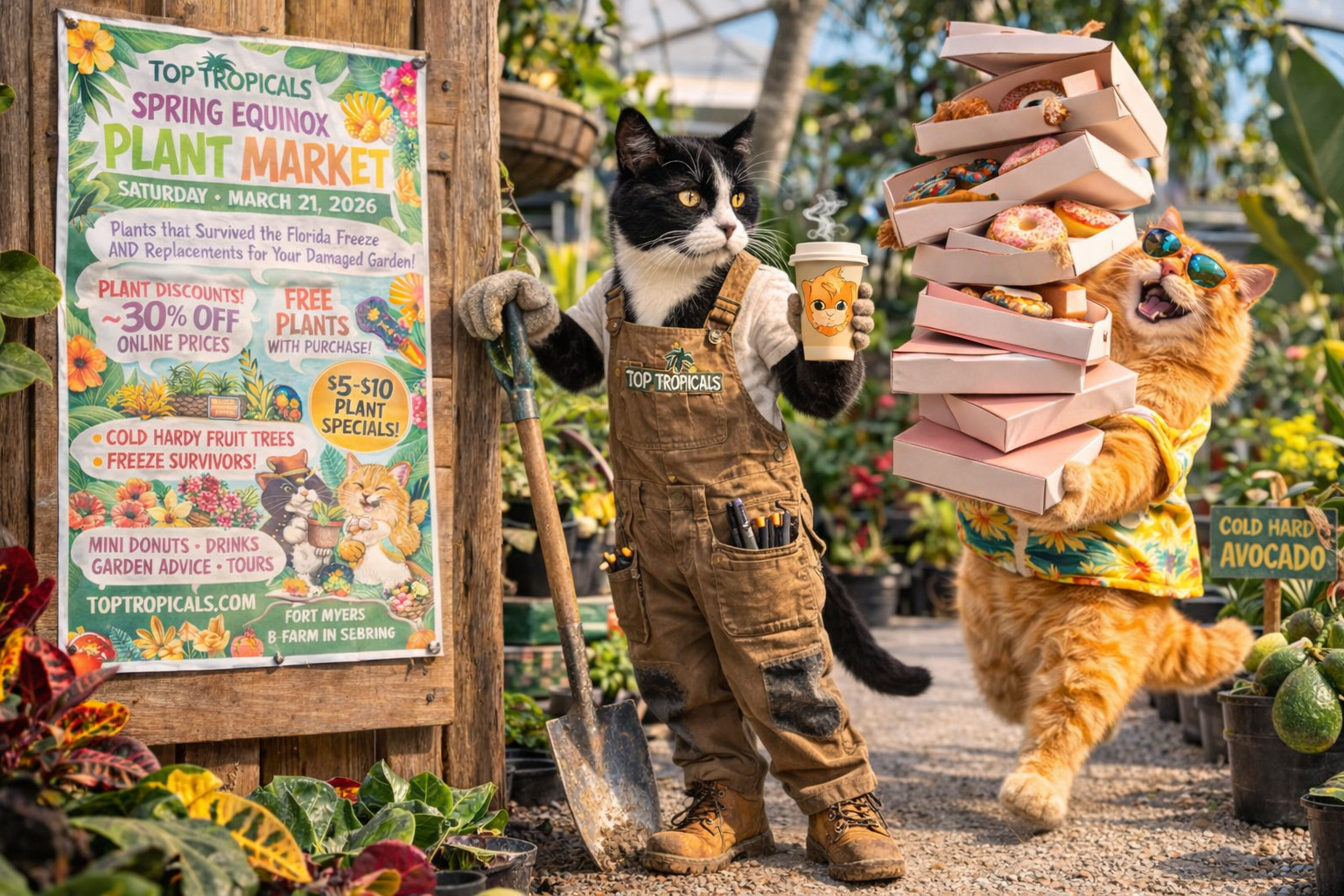
Sunshine:Smokey, hold my coffee. Donuts are coming. Big day
today.
Smokey: Under control. Try not to drop half of them.
Both: Friends, come over today.
Everything is ready for today at our Spring Equinox Plant Festival. The
garden is full and we would love to see you. Come over today and enjoy it
with us.
How to learn the secret meanings behind Thai flower names
Cats Smokey and Sunshine in Thai Adenoium garden
How to learn the secret meanings behind Thai flower names 🔮
If you have ever looked at names of Adeniums or Plumerias from Thailand, you may have noticed something interesting. Many of them sound poetic, mysterious, or even magical. That is not accidental.
Adenium Plant Facts
Botanical name: Adenium sp. Also known as: Adenium, Desert Rose, Impala Lily
USDA Zone: 9 - 10
Highligths
Plumeria Plant Facts
Botanical name: Plumeria sp. Also known as: Plumeria, Frangipani
USDA Zone: 9 - 11
Highligths
Thai plant breeders often give their hybrids meaningful names connected to jewels, wealth, beauty, and mythology. Instead of simple numbers or codes, the plants receive names that sound like something from a legend - Jade Swan, Golden Lotus, Rainbow Diamond.
Once you learn a few common Thai words, these names suddenly start to make sense. It is almost like decoding a secret language of flowers.
Below are some of the most common words you will see in Thai plant names.
🔠 Glossary of common Thai words used in plant names
Gems and precious stones 💎
Anyamanee - precious jewel or rare gem. Gaew / Kaew - crystal or glass-like jewel. Manee - jewel or gemstone. A classic word in elegant Thai names. Noppakao - nine gems, a symbol of royal power and prosperity. Petch - diamond. Symbol of brilliance and beauty. Ploy - gem or precious stone. Often used for plants considered rare or jewel-like. Yok - jade.
Wealth, luck, and prosperity 💰
Boon - merit, blessing, good karma. Chok - luck or good fortune. Kanjana / Kanjamapon - golden or noble. Mongkol - auspicious or lucky. Paruay / Pa Ruay - to become wealthy or prosperous. Ramruay - to become rich or prosperous. Sap / Sab - wealth or treasure. Sedthee - wealthy person. Tawee / Taweechok - to increase or multiply. Thong - gold. Yod - the best, the peak, or the finest.
Mythology and cultural symbolism 🐉
Bua - lotus. Chai / Chai Lai - victory or triumph. Hassadee - derived from the mythical Hatsadiling, an elephant-bird creature in Thai mythology. Hong - mythical swan or phoenix. Jai - heart or spirit. Maha - great or grand. Moradok - heritage, treasure, or legacy. Orathai - heart of Thailand or beloved Thai. Pratum / Pratuma - lotus blossom. Siam - Thailand, the historic name of the country.
Colors and visual descriptions 🎨
Chompoo - pink color. Lai - patterned or striped. Lueng - yellow. Moung / Muang - purple color.
Nature and poetic imagery
Chaba - hibiscus flower. Dao - star. Doung - heart, soul, or central essence. Fah - sky. Example: Sai Fah - sky-colored. Nam - water. Namwhan - sweet water or sweetness. Natee - river or flowing water. Sai - thread, line, or ray. Sairung - rainbow. Sang Aroon - dawn or sunrise. Suree - sun or sunlight.
🌸 Examples of plant names built from these words
Once you know the meanings, the names start to read like short poems.
Hong Yok - Jade Swan Ploy Nappan - Celestial Jewel Thong Hassadee - Golden Mythical Elephant Ped Sairung - Rainbow Diamond Som Paruay - Golden Prosperity Sai Fah - Sky Blue Pratum Thong - Golden Lotus Ramruay - Becoming Rich Chok Dee - Good Luck Thong Yod - Peak of Gold
You will see these words frequently in the names of Thai-bred Adeniums, Plumerias, Orchids, and other tropical flowers. Once you recognize them, plant names become much easier - and more fun - to understand.
🌹 Today, March 8, a big part of the world celebrates International Women's Day.
In many European countries it is also a celebration of spring, love, and new beginnings. The day when flowers appear everywhere, small gifts are exchanged, and warm wishes are shared.
🌹 Smokey and Sunshine decided they should not miss such an important occasion. Smokey arrived properly prepared with a bright bouquet, while Sunshine handled the essentials - coffee and donuts. And of course, no celebration at our place would be complete without plants.
🌹 So here is a cheerful March 8 greeting from our greenhouse crew!
Happy March 8 to all - both related and non-related.
Wishing love, happiness, and many beautiful days ahead to all women and to everyone lucky enough to have them in their lives.
By Tatiana Anderson, Horticulture Expert at Top
Tropicals with Smokey & Sunshine help
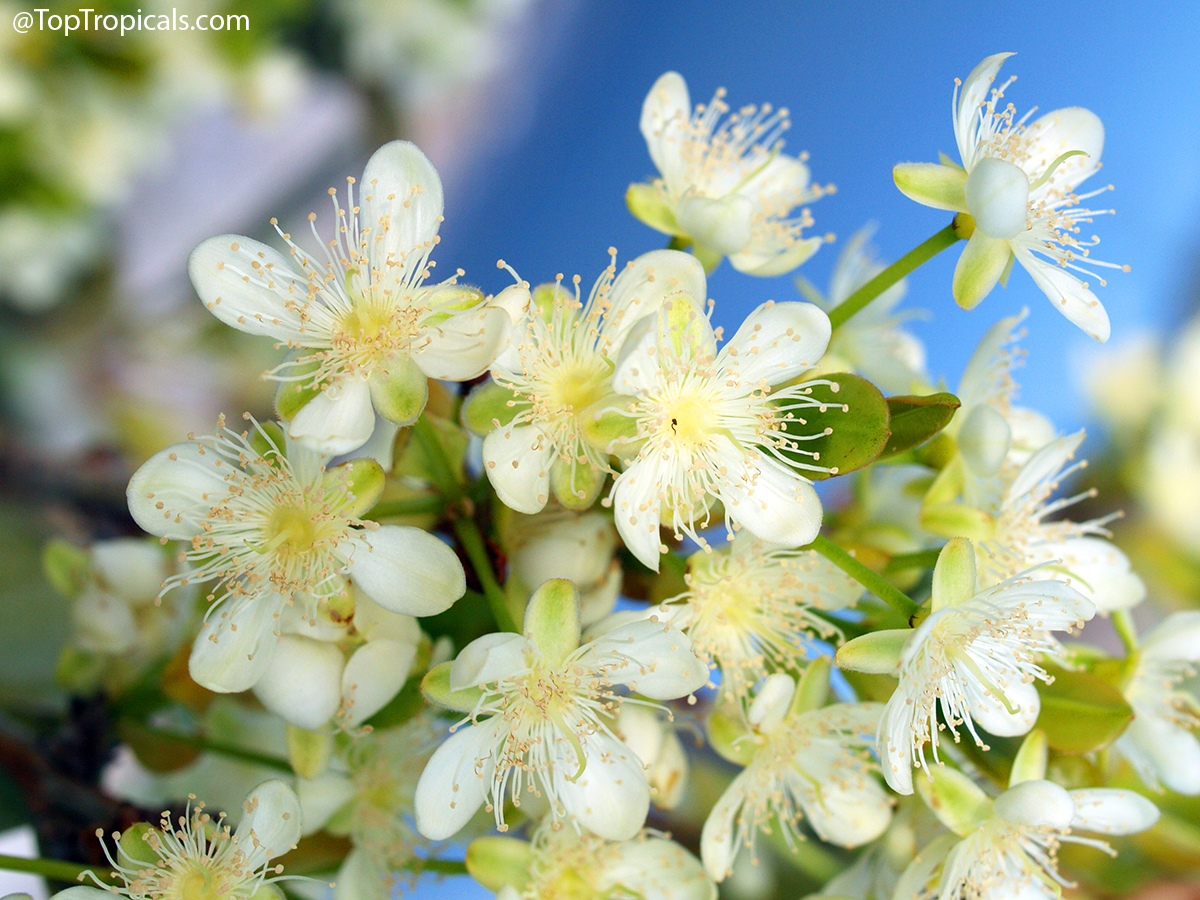
Eugenia brasiliensis - Grumichama fruit on the branch
Growing Eugenia Cherries (Cherry of the Rio Grande & Grumichama)
Cherry of the Rio Grande and Grumichama are compact, adaptable tropical
fruit trees well suited to Southern landscapes. While forgiving, they
perform
best when planted correctly from the beginning.
Site and Planting
Drainage is essential. Avoid low areas where water collects. Plant on
a slight mound if soil is heavy or clay-like.
Choose full sun for best flowering and fruit production. Partial shade
is tolerated.
A south or southeast exposure near a wall improves cold resilience and
reduces wind stress.
Dig a hole twice as wide as the container, but no deeper than the root
ball.
Set the tree level with surrounding soil. Do not bury the trunk.
Water and Feeding
Water regularly during the first few months while roots establish.
Once established, trees tolerate short dry periods but fruit best with
moderate, consistent moisture.
Established Cherry of the Rio Grande can tolerate brief drops into the
low 20s.
Established Grumichama tolerates temperatures into the upper 20s.
Harvest and Production
Cherry of the Rio Grande fruits from late spring into summer. Pick
when fully dark and slightly soft.
Grumichama ripens quickly, often within four weeks after flowering.
Pick when glossy and deep purple-black.
Both trees often begin fruiting within 2–3 years and increase
production steadily with maturity.
Growing in Containers
Use at least a 10–20 gallon pot for long-term growth.
Ensure multiple drainage holes.
Use a high-quality, well-draining container mix. Avoid heavy garden
soil. Top Tropicals Abundance soil-less mix is specially formulated for pot
growing
Place in full sun for best fruiting.
Water deeply, then allow the top layer to dry slightly before watering
again.
Move containers to a protected area during hard freezes.
Prune lightly to maintain shape and airflow.
Common Mistakes
Planting in poorly drained soil.
Overwatering and keeping soil constantly saturated.
Over-fertilizing with excessive nitrogen.
Planting too deep and burying the trunk.
Expecting heavy crops immediately instead of allowing time for
maturity.
Which one tastes better – Cherry of the Rio Grande or
Grumichama?
Cherry of the Rio Grande has a deeper, classic “sweet cherry”
flavor with slight richness. Grumichama is softer, juicier, and often
described as cherry with hints of grape and plum. Both are excellent fresh;
Grumichama is especially popular for jam.
Which tree produces more fruit?
Grumichama typically produces heavier crops once mature and can carry
hundreds of fruits in a season. Cherry of the Rio Grande produces
consistently but
in slightly smaller volumes.
Do birds take all the fruit?
Birds are attracted to both trees, especially Grumichama. Netting during
peak ripening or harvesting promptly usually solves the issue.
Are these true "tropical" trees or subtropical?
They are best described as subtropical tropicals. Unlike ultra-tender
tropical fruits, Eugenia cherries tolerate occasional frost once
established,
making them more reliable in Southern landscapes.
Do they drop fruit messily?
Fruit will fall if overripe, but the trees are compact and manageable.
Regular harvesting prevents ground drop and keeps the area clean.
Can they be used for hedging or screening?
Yes. Their dense evergreen foliage and upright growth make them suitable
for edible hedges or privacy screens while still producing fruit.
Choosing between them is not about survival — both have proven
resilient. It is about flavor preference, crop volume, and how you want to
use
the fruit in your kitchen and landscape.
Eugenia brasiliensis - Grumichama fruit close up
Eugenia aggregata (cv. Calycina), Cherry of the Rio Grande