Garden Blog - Top Tropicals

Date: 26 Oct 2018

Improving cold hardiness before winter: fertilizer and micro-elements

TopTropicals.com

Q: I live in New Jersey and it is getting cool here, with temperatures in the upper 40s, but my tropical plant collection is in a heated sunroom (still around 70s). Should I continue fertilizing my plants? And if yes, my second question about deciduous Sugar Apple tree. Should I continue fertilizing it until it drops leaves?

A: First of all, even though you live outside tropical climate, your plants enjoy warm temperatures year round, and can be treated like if they were in a Southern garden.
Plant nutrients, both macro-elements (regular fertilizer) and micro-elements (such as iron, manganese, magnesium, copper, and other elements) play an important role not only in overall plant health but also in plant hardiness.
The rule of thumb is, even in warm climates we cut off any fertilizer by the end of October. You still have time for the last treatment this year (next will be in March, or when your plants start showing new growth). You may apply just a bit of slow-release granulated fertilizer, or water-soluble by foliar spray, diluted 1/2 of label strength, to all evergreen species in your collection.
The most important application before winter is micro-elements and other plant boosters that will help you plant collection survive winter months with a shorter daylight and cooler temperatures. Now it is a perfect time to make these simple steps:

1) Miscro-element applications, any one of: Superfood, Iron Supplement, Greenleaf.
2) Sunshine-T application: for improving cold hardiness, plus immune system resistance to insects and deceases.
3) Sunshine-Honey application for all fruit trees to encourage bigger and sweeter fruit next year.

Regarding your second question. Deciduous tropical plants like Annonas, Adeniums, Plumerias, etc - do not need regular fertilizer at this time, however, go ahead and apply microelements Superfood complex, as well as Sunshine-Honey, while leaves are still green. These two will give a kick-start to provide better flowering in spring, and production of sweeter fruit later.

Check out SUNSHINE boosters - all with free shipping!

Date: 20 Oct 2018

Butterfly Garden from Anna Banana

TopTropicals.com

Butterfly facts

1. There are approximately 20,000 different species of butterflies, the largest of which is the Queen Alexandra Birdwing with a wingspan of 11 inches.
2. Female butterflies can lay over 1000 eggs during their short lifetime.
3. Butterflies lay their eggs on host plants which usually hatch within a few days, then turning into caterpillars. The caterpillar will then eat until it sheds it's skin several times, called instars, finally emerging from the chrysalis as a beautiful butterfly.
4. Butterflies are born to breed, their goal being to mate and begin the cycle again. Most live only a few days except the Monarch which can live up to six months.
5. Monarch butterflies migrate to Mexico every fall and remain there until spring when they make the return migration.
6. Due to the continuing destruction of the rain forests, where the largest population of butterflies are found, their numbers are dwindling. We encourage you to plant a butterfly garden!!

Remember:

- A sunny, less windy location is best, however, Zebras love to float in the shade of bushes and trees.
- The more host and nectar plants you have, the more butterflies will be attracted to your garden.
- Butterflies"puddle". They like a wet sandy area where they congregate and sip minerals and nutrients from the wet sand and water.
- Rocks to rest and enjoy their beautiful garden, and don't forget a bench or hammock for yourself.

FREE butterfly garden guide from Anna Banana

For our local Florida customers, it is a perfect time now to start a garden with plants for butterflies that will appear first thing in Spring. Establish these plants now for the Spring blooms that will attract the Beauty into your garden!
Stop by our Garden Center to check out our Butterfly Plants display, or simply call Anna Banana for a free consultation on Butterfly Garden at 239-771-8081.

Hurry up while butterfly plants are on 4-day sale!

TopTropicals.com

Date: 17 Oct 2018

October Tropical Garden: to do list

TopTropicals.com

1. Prune. Last pruning before winter. Check the trees and shrubs one more time. Cut away dead wood and remove crossing limbs and branches.

2. Mulch. Continue to mulch to stop weeds and get ready for winter. Keep mulch 1-2 inches away from the stems. Evenings are starting to cool, so it is more comfortable working in the garden.

3. Pest control. Check for mealy bugs and scales. Remember that a garden with many kinds of plants has fewer pests than gardens with lots of mass plantings. So keep up with variety! Avoid pest magnets like Oleander, Oak, Hibiscus which require constant spraying.

4. Propagation. You still can take cuttings but do it as soon as possible. Days are getting shorter and less sunlight signals thу plants to slow down their growth. Cuttings will not root as quickly.

5. Seeds. Consider growing vegetables and perennials from seeds

Date: 1 Oct 2018

Information on new exotic fruit variety:
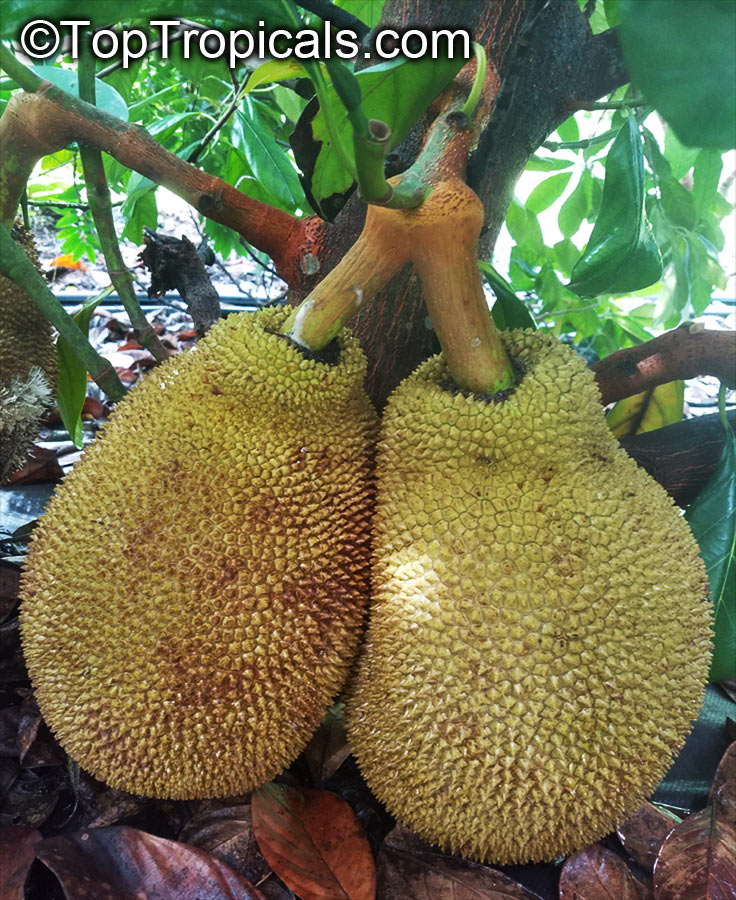
Artocarpus x integer (Jackfruit x Chempedak), Cheena cv. TopTropicals

TopTropicals.com

FRESH SEEDS! Grow exotic Chempedak from seeds and you will have the trees for only $1 each!

Check out a short video of the opened fruit.

Cheena is a natural hybrid between jackfruit and chempedak. Comes true from seed. This highly recommended variety has grown in TopTropicals garden from a seedling of Cheena (Jackfruit x Chempedak) that fruited within 3 years from planting. The fruit (20-25"size) is probably the best we ever tasted! It is super sweet, crunchy and has a rich, pleasant, excellent flavor. It has very little latex which makes it easy to handle when cutting up. The tree produces at the very base of the trunk, so you can prune it as short as you want. Our tree survived light frosts as well as 48 hours of 3ft flooding, with no damage!
The tree has an open, low and spreading growth habit and can be maintained at a height and spread of 8 ft with annual pruning. It is very easy to grow and is not as cold hardy as we thought for a Jackfruit x Chempedak types of plants. The only two recommendations are - good fertilу soil with a high content of compost and regular watering.
Cheena is a consistent producer. The fruit is up to 5 lbs, long, narrow and uniform in size and shape. The skin is green, with blunt spines that yellow and open slightly upon maturity.

Check out Chempedak Cheena seeds - FRESH - FRESH - FRESH
Check out Chempedak Cheena plants - special offer $30 OFF!

Date: 30 Aug 2018

6 Things to Do on Labor Day Weekend

TopTropicals

1. Plant a tree... or a shrub, even just a small perennial will do. This plant will make you feel good and accomplished for the whole year, until next Labor Day (or even longer!). You will always see this fruit of your work and remember your motivation, so things are not that bad with you!

2. Pull 66 weeds. Needless to say, you have plenty of those in your yard at the moment. Why 66? Just do it and see what happens. If you don't see any happy results, pull another 66.

3. Fertilize all plants in your garden or potted collection with slow release fertilizer and microelements. Remember, this is the last chance to give them food and strength to survive, before winter. Starting October, all leftover fertilizer goes to storage, even in tropical gardens.

4. Apply SUNSHINE booster to protect your plants from cool temperature, help to go into dormancy and rest without stress.
Remember, there are products for all your pre-winter needs: Sunshine-T for improving cold tolerance, Sunshine-BC for caudex and bonsai plants, Sunshine-H for houseplants, and general booster Sunshine-E to cover all occasions... 50 and 100 ml bottles available for large plant collections.
Sunshine-Honey