Garden Blog - Top Tropicals

Date: 15 May 2025

Which epiphytic cactus puts out the biggest bloom show

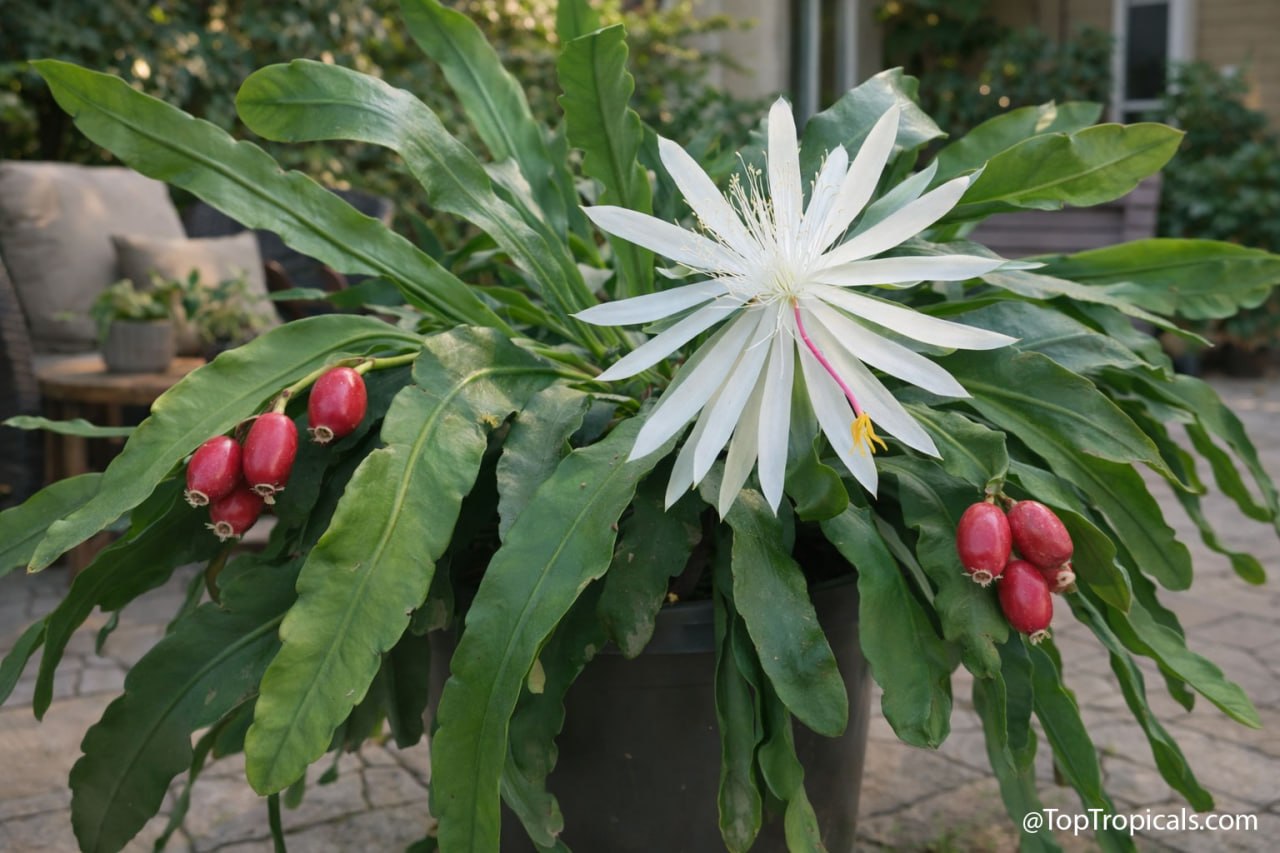
Disocactus ackermanni - Red Orchid Cactus

❤️ Which epiphytic cactus puts out the biggest bloom show

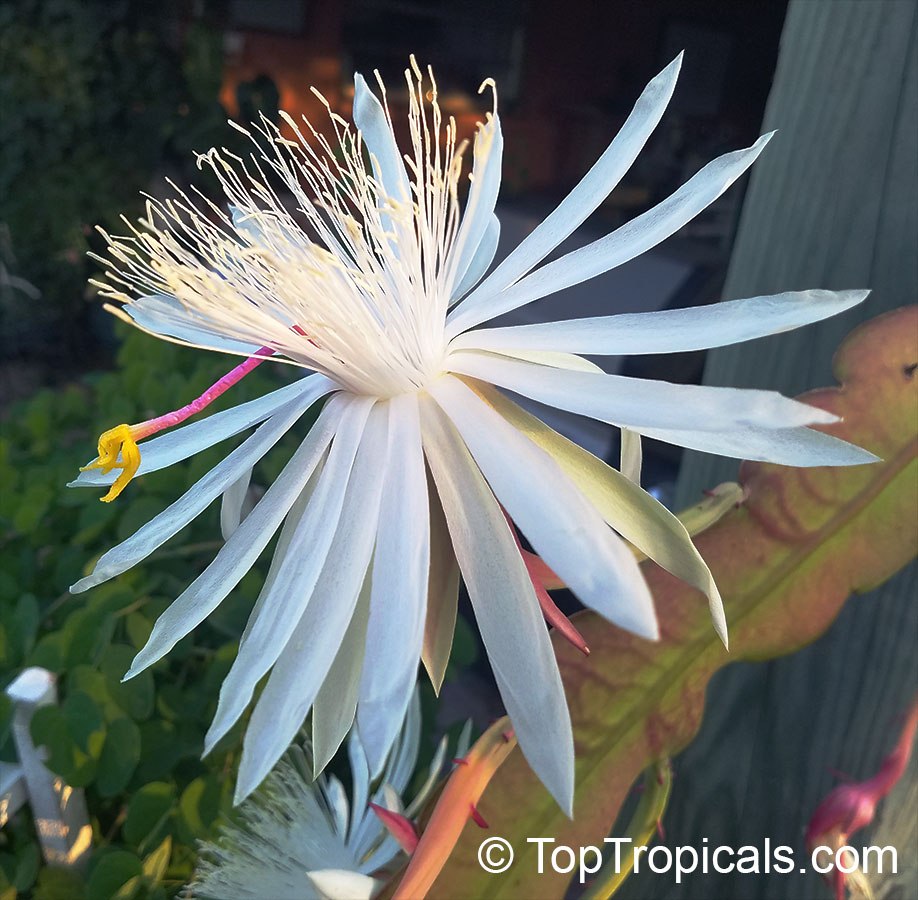
  • 🌺 Disocactus ackermanni, also called the Red Orchid Cactus, puts on a jaw-dropping show with huge, blazing red flowers that can reach 6 inches wide! It's a cactus that acts nothing like one - and then bursts out in flowers the size of your hand!
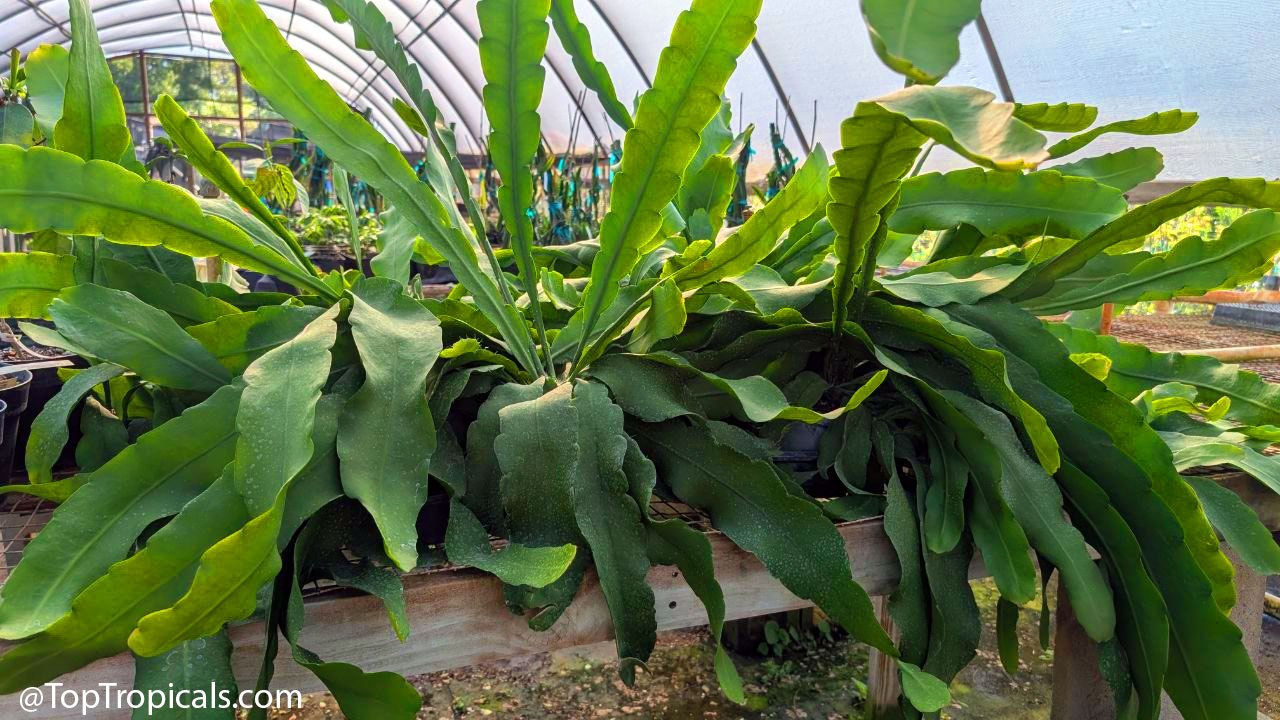
  • 🌺 It blooms from Spring through Summer and steals the spotlight every time. The plant grows like a lush, green fern with flat stems that drape and cascade like a living chandelier.
  • 🌺 It may be a cactus, but it loves water and shade - more diva than desert. Native to the tropical forests of Mexico, this epiphyte thrives in a hanging basket and turns heads wherever it grows.
  • 🌺 Why collectors search for it? Because it's rare, eye-catching, and just plain fun to grow. No spines, no drama - just bold flowers and easy charm. This is one of those plants that visitors always ask about. If you're a collector, it's not a want – it's a need.


🛒 Get the Red Orchid Cactus everyone talks about

📚 More about exotic epiphytic cacti:


Epiphyllum oxypetalum - Queen of the Night
Pseudorhipsalis (Wittia) amazonica - Blue Flame
Epiphyllum guatemalense Monstrosa - Orchid Cactus, Curly Locks

#Container_Garden #Shade_Garden #Nature_Wonders

🔴 Join 👉 TopTropicals

Date: 31 Aug 2025

🌿 The Jungle Cactus with a secret life

Collage  of  four  jungle  cactus  plants:  top  left  Epiphyllum  guatemalense 


Monstrosa  (Curly  Locks  Orchid  Cactus),  top  right  Epiphyllum  oxypetalum 


(Queen  of  the  Night),  bottom  left  Cryptocereus  anthonyanus  (Zig-Zag  Cactus),
 
 
  and  bottom  right  Disocactus  ackermanni  (Red  Orchid 


Cactus).

Jungle cactus collage: top left Epiphyllum guatemalense Monstrosa (Curly Locks Orchid Cactus), top right Epiphyllum oxypetalum (Queen of the Night), bottom left Cryptocereus anthonyanus (Zig-Zag Cactus), and bottom right Disocactus ackermanni (Red Orchid Cactus)

Most people picture cactus as desert plants: hot sun, sharp spines, dry sand. But that’s only half the story. There’s another branch of the family that lives in the shade of rainforests. These are the jungle cacti — epiphyte plants that climb trees, trail from branches, and throw out flowers so big and showy they look closer to orchids than to cactus blooms.

See one up close and it’s a surprise. The stems can be flat, zig-zagged, or even curly. Some trail like ferns, others pile into a shaggy basket. And when the flowers open — often at night — they’re wide, fragrant, and gone by morning. It’s no wonder gardeners like them from a first sight.

✔️ Jungle Cactus Q&A

Aren’t all cacti desert plants?

Not these. Jungle cacti are epiphytes and grow in rainforests, clinging to trees and catching rain. They never touch desert sand.

What kind of light do they need?

Outdoors, filtered sun under a tree works best. Indoors, give them bright but indirect light — east or north windows are usually safe. Direct summer sun can scorch the stems, whether inside or out.

How much water is safe?

They take more water than desert cactus but still hate wet feet. Outdoors, a rain shower is fine if the pot drains fast. Indoors, water when the top inch of soil feels dry. Always use a loose mix like Adenium mix so roots get some air.

Do they bloom indoors?

Yes. In fact, many bloom better inside where conditions are steady. They set buds when a little root-bound, and cooler nights help. Outdoors in frost-free zones, flowers come with seasonal shifts. Indoors, expect surprise buds after a cool spell by the window.

Best way to display them?

Hanging baskets show off trailing stems both inside and out. Shallow pots work well on shelves or ledges indoors. In warm climates, they can even be tied to a tree branch outside — exactly how they grow in the wild.

Extra note on indoor vs. outdoor care?

Indoors, watch for dry heated air in winter — they like a bit of humidity. A tray of pebbles and water under the pot helps. Outdoors, protect from heavy midday sun and bring them in if nights dip below the mid 30s F.

Jungle cacti are easy to keep and full of surprises. Whether trailing from a basket or blooming after dark, they prove that not every cactus belongs in the desert.

Read Garden Blog about Cacti

Add Jungle Cactus to your collection

Date: 4 Aug 2016

Top Tropicals Video: Orchids 101. Part 1.

Part 1. What is an orchid? Orchids come in many shapes, sizes and colors. There are approximately between 25,000 species as well as over 250,000 of hybrids. It's one quarter of a million! Learn about these amazing plants from series of Orchid videos with our orchid expert Robert Riefer.
Check out this video: Top Tropicals Orchids 101. Part 1. What is an orchid?...

Stay updated with TopTropicals Videos by subscribing to our channel at YouTube.com/TopTropicals and get our latest video news of what's fruiting and blooming!

Date: 30 Oct 2019

Fragrant Gold Leaf Orchid Vine

By Onika Amell, tropical plant specialist

Q: I am absolutely thrilled to see you have this vine. I've tried for years to get this plant! It is so, so rare. It just seemed impossible to find in this country. How do I make it thrive? I am ordering two.

A: We are happy to confirm that indeed we do have this rare vine!
Bauhinia aureifolia - Gold Leaf Orchid Vine - was discovered in Thailand in 1983. It is endemic to Pattani, Narathiwat, and Yala in Southern Thailand. Danish botanist Kai Larsen named this plant and hailed it as one of the rarest plant species of the world when it was discovered in the eighties.
The Thai people call this vine Bai Mai Si Thong. It is a beautiful climber with large, bi-loped leaves (7 inches or more!) and good branching.
Young leaves are a stunning burnt orange to terracotta color for about a week and as they reach full size, they turn green over a couple of days. This is a very rare color for Bauhinia. It produces leaves all the time and this means this vine is always full of beautiful color. With its golden leaves, it sure is reminiscent of Autumn.
This vine blooms from May to November. It bears bunches of small flowers that are delicately fragrant in the evenings. The cultivated plants range flower color from pure white to purple and pink, while the wild ones have often white petals with pinkish patches.
Bauhinia aureifolia needs well-drained soil, full light and good humidity to thrive. It will tolerate a light freeze once established and it is very important to protect young plants.
Gold Leaf Orchid Vine also makes a wonderful container plant with staking or support. It is a must for every rare plant collection!

RECOMMENDED FERTILIZERS:
Pink N Good Daily Plant Food - Flower Booster
Tropical Allure - Smart-Release Booster

Date: 14 Sep 2024

Why do we love Ground Orchids?

Ground  orchids  collage

Q: I need your expert advice on a low growing perennial with pretty flowers that I can plant in semi-shade close to my house. What is your favorite perennial?

A: Our most favorite bright flowering perennials are ground orchids!

Ground orchids are the easiest and most rewarding flowers for a tropical garden. They thrive in regular garden soil or potting mix, tolerate both sun and shade, and bloom nearly year-round.

Their adaptability makes them a perfect choice for any spot in the garden, whether you need to fill a sunny patch or a shaded area under trees. And look at these colors! From vibrant purples to soft pinks and yellows, ground orchids bring a splash of tropical beauty with minimal effort. Their consistent blooming makes them a must-have for gardeners seeking color all year.

Kittens  with  Ground 


orchids

Ground  orchids  video