Garden Blog - Top Tropicals

Date: 1 Feb 2023

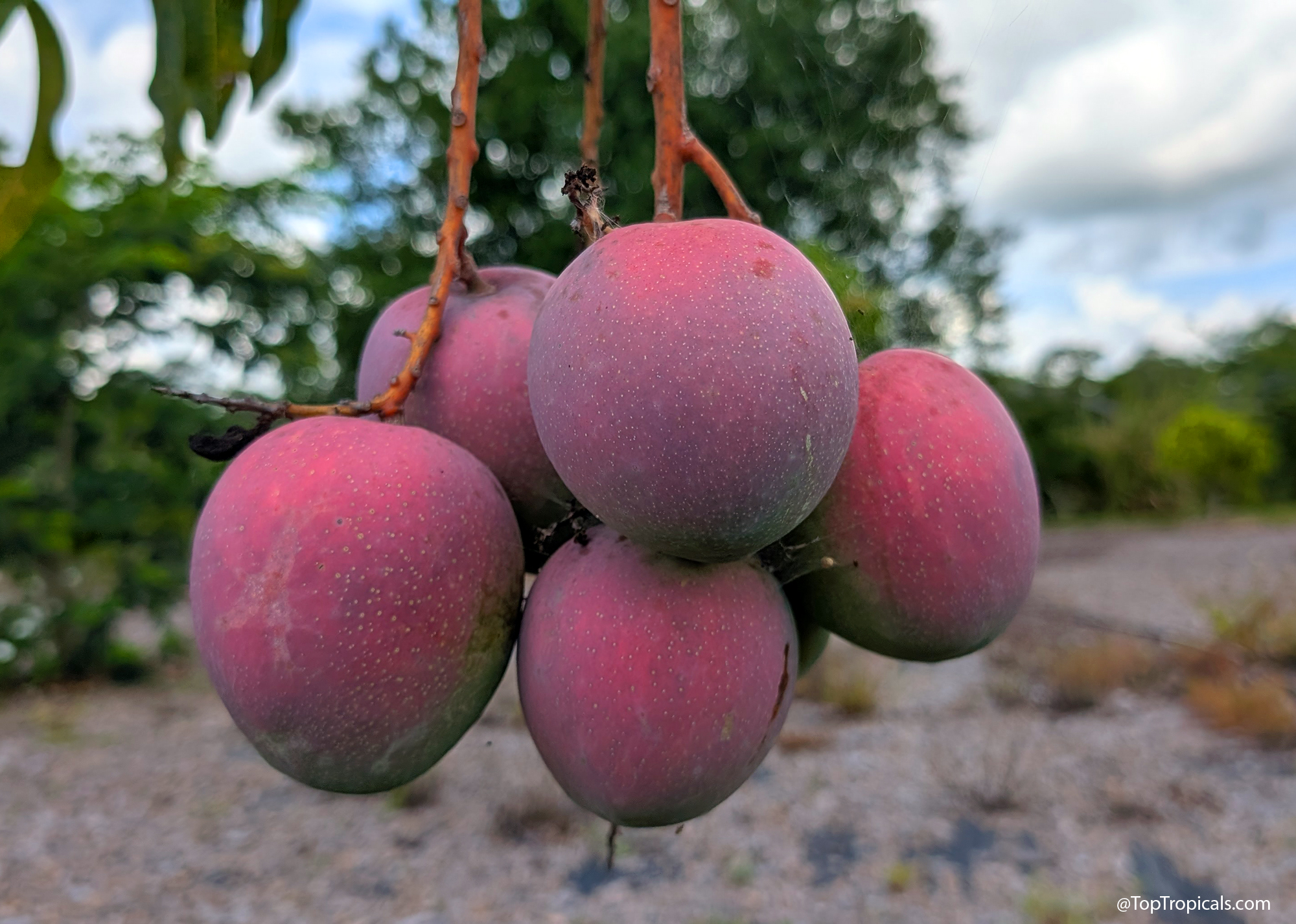
10 secrets of growing a perfect Mango tree

Grow Your Own Food

Mango  fruit  with  fertilizer  Mango  Tango  Sunshine  Boosters

How to grow a healthy and productive mango tree?

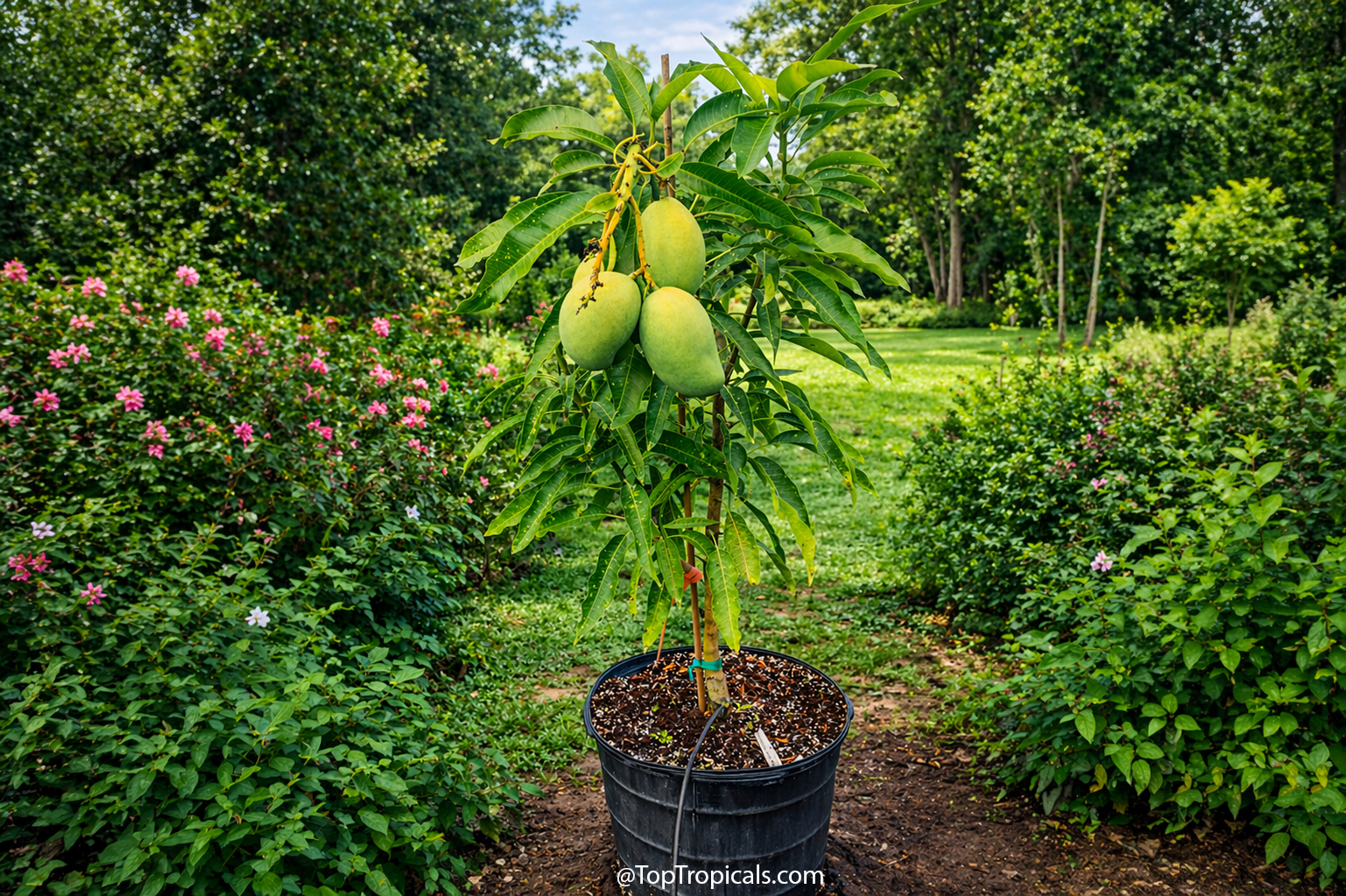
1. Right variety. Select a vigorous grower for in-ground planting, or a condo mango cultivar for growing in container. More info on varieties.
2. Soil must be well-drained. If planted in the ground, plant on a little elevation (see How to plant a tree)
3. Full sun is a must. The more sun, the more flower and fruit.
4. Water. Keep mango tree on a dry side, water young trees regularly but let top of the soil dry before next watering. Mango trees don't like wet feet.
5. Air circulation is important for mango tree to eliminate diseases. Allow enough space from other trees and buildings.
6. Fungicide. Mango leaves are very susceptible do fungal issues, especially in humid climates likу Florida. Spray fungicide (Copper or similar) according to the label, once a month.
7. Fertilize year around with every watering with liquid fertilizer Sunshine Boosters Mango Tango. Apply Micro-elements once a month and use other good supplements.
8. Shape. Check out Video: - to shape the most vigorous and productive tree.
9. Protect from hard freeze. Mango tree doesn't take freezing temperatures well. In subtropical areas Mango can be protected. Alternatively, it can successfully produce in container, if moved indoors during cold weather.
10. Fruit. Mango tree produces thousands of little flowers, many of them can set fruit. Do not let a small, young tree to keep more than 1-2 fruit, remove extra, to avoid exhaustion. Allow 2-3 years for the tree to establish until it produces a full crop. Apply Sunshine Honey supplement to your tree for sweeter fruit.

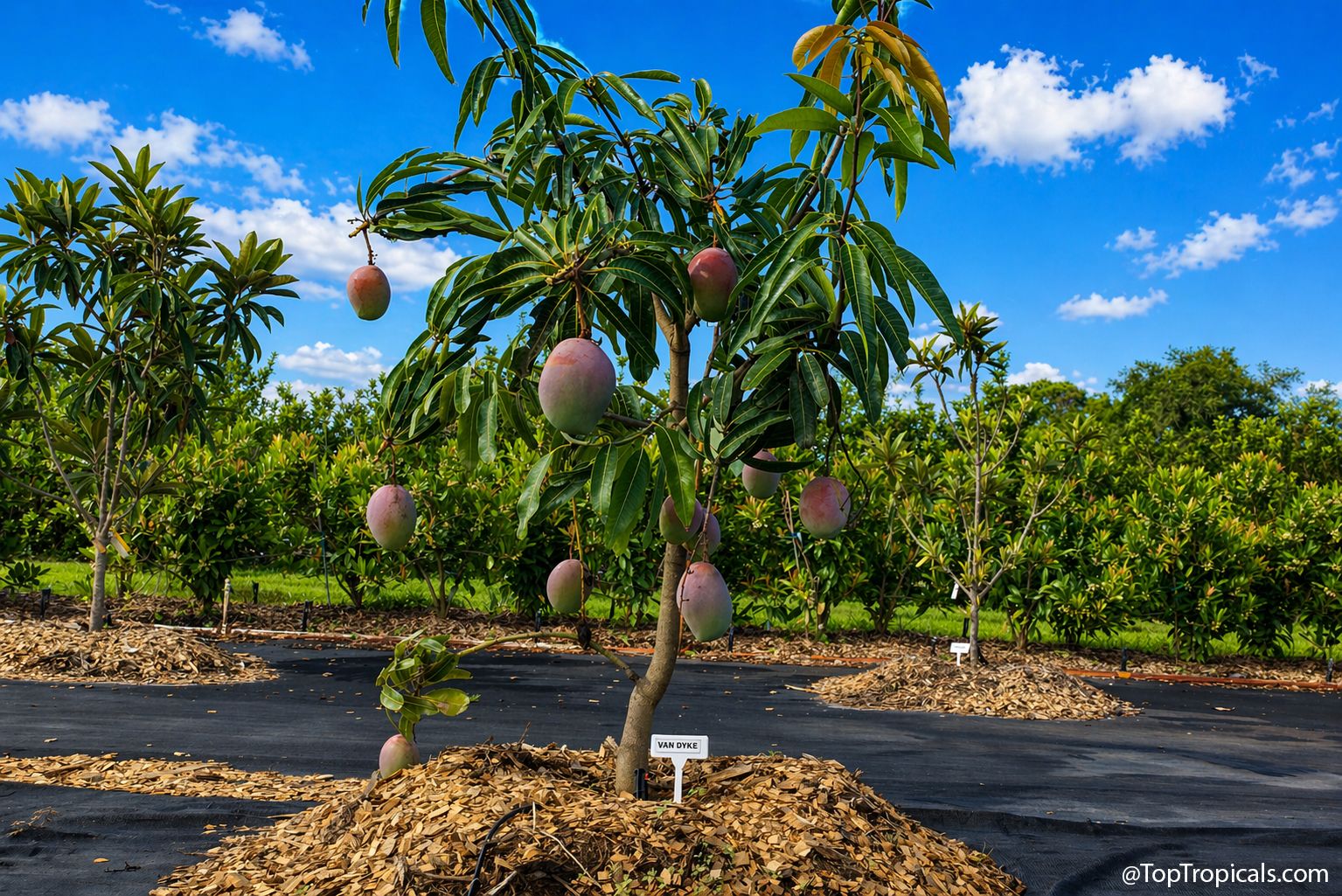
Perfectly  shaped  mango  tree

Tipping  mango  tree  video

Date: 28 Nov 2022

B-Farm in Sebring is now open!
Every Friday and Saturday

B-Farm  office  entrance

Thank you everyone for visiting us this weekend at new Top Tropicals location in Sebring (B-Farm)! We met many new friends as well as old friends that now are closer.
Local gardeners in Central Florida are now excited to have a special place for their needs in rare tropical plants.

B-Farm  banners  on  corner  of  FL  66  and  McRoy  Rd

Top Tropicals B-Farm conveniently located at the corner of FL-66 highway and McRoy Rd.

Parking  at  B-Farm

Sunshine Boosters at B-Farm

Many guests also purchased Sunshine Boosters liquid fertilizers. Sunshine Boosters are safe for daily use year around and ensure that you will have happy and healthy plants. Stash up for feeding your plants during the winter to make them strong, hardy and healthy!

At B-Farm, we offer free consultations on Sunshine Boosters. We can help you select proper combinations of fertilizers, micro-elements and special plant supplements, including those that improve cold hardiness of tropical plants.

Sunshine  Boosters  display  at  B-Farm

B-Farm  Team

B-Farm Team

Date: 17 Nov 2022

Get your plants ready for winter:
Just spray this to improve cold hardiness...

Sunshine  Plant  Supplement  Kit

How to improve plant cold hardiness?

Pland cold hardiness depends on several factors, including:
1) genetics of specific species
2) maturity of the plant, size of root system, stems and branches
3) plant health and vigor which is supported by proper nutrition program and adding special plant hormones.

While 1) and 2) may be out of our control, the 3rd factor is something that can be easily improved! It is important to feed plants during the season of active growth on regular basis by applying macro- and micro- elements. Liquid fertilizers and especially natural plant food like Sunshine Boosters can be applied year around to keep plants healthy and strong.
Besides the routine fertilizing program, just a few applications of special plant hormones can increase tropical plant hardiness big time! Before the cold is coming, spray your plants with these 3 magic potions and they will gain a few degrees in low temperature tolerance! It is recommended to make 2-3 applications.

- Sunshine Superfood
- Sunshine Epi
- Sunshine Power-Si

Cat  staying  warm  on  a  stove

Date: 11 Oct 2022

Fertilizing in Fall:
Plants need food too!

Sunshine  boosters  products  collage

Q: I know that I am not supposed to fertilize plants in winter. But I just bought several ground orchids from you, they are blooming now and I wonder if I can give them some food to support their bloom energy? When should I do the last application of fertilizer? I will keep them in a sun room during Winter until Spring.

A: Traditionally, end of October to November is the time when we give the last dose of fertilizer to our tropical plants. Liquid fertilizers, and especially amino-acid based Sunshine Boosters, are safe to apply year around. This means, you can continue feeding your plants with Sunshine Boosters through the Winter without risk of over-feeding or burning roots. Why?
The answer is very simple: even with their metabolism slowed down in Winter, plants will use all that food.
Sunshine Boosters have special mild formulas that are scientifically designed and based on Amino Acids. Plants will use all essential elements from the solution as needed.
Liquid fertilizer is diluted in water, and will be applied only when you water the plant. During Winter, water needs are lowered = watering times are less frequent, with less amount of water = the plants will get less water and less fertilizer accordingly.

Importance of micro elements
in combination with plant food during winter

winter  chlorosis  on  Kumquat  leaves

In the photo: winter chlorosis on Kumquat leaves that is very hard to treat and should be prevented instead

Keep in mind that feeding your plants regularly during Winter will help to avoid "winter chlorosis" and other deficiency problems. So called "cool-temperature-induced chlorosis" (CTIC) is especially common in Spring on young, actively growing leaves. Unless chlorosis is prevented by micro-element applications, affected leaves may remain in this condition for the rest of the growing season.

Make sure to select proper type of fertilizer for your over-wintering plants. We have special formulas for foliage, flowering plants, fruit trees, young seedlings, even for for orchids and bromeliads. Check out our selection!

Cats  looking  for  food  in  grocery  bags

Date: 30 May 2020

How to prevent mango fruit drop

Q: My mature mango tree is fully grown 15 yrs old and each year it fully blooms, sometimes twice. Shortly thereafter, all the baby mangos and flowers fall off providing no mangos for the season. I have tried fertilizing, spraying the tree for fungus or other insects, to no avail. I give up, any suggestions?

A: Dropping fruit in pretty common issue with mango trees. There may be several reasons, or a combination of reasons.
1. Fungal disease (anthracnose), and/or powdery mildew. To avoid fungal disease problems, spray your tree when it just begins to form the flower spikes. Treat foliage with Copper fungicide. There is also another one, very effective for anthracnose: Thiophanate methyl.
2. Inadequate nutrition. Feed your tree with a combination of granulated fertilizer Mango-Food, liquid booster SUNSHINE Mango Tango and micro-elements Sunshine Honey and Sunshine Superfood
Check out pictures of our mango tree problems that were fixed within a month by using Sunshine Boosters.
3. Too much rain or heavy dew during blooming and fruit set (see 1 - use preventive treatment for fungus)
4. Cold. Sometimes the cause of premature fruit drop is from the cold weather during bloom and fruit set. Usually the most affected varieties are the early bloomers including Glenn, Haden. The cold damages the developing embryo in the seed. The fruit starts to develop but because of ethylene gas given off by the damaged embryo, the fruit is triggered to drop before maturity. To see if cold temperature was the cause for your fruit dropping, cut open the fallen fruit. Even if there is a small speck of brown in the seed, that's enough damage to stop fruit development.
To learn more how to care for your mango, please read this publication.