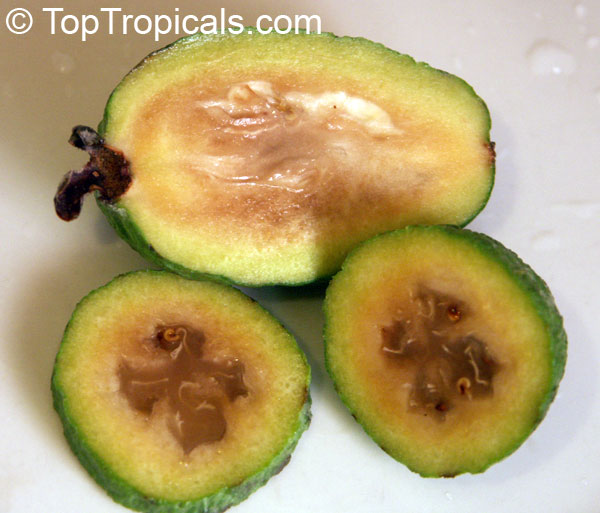
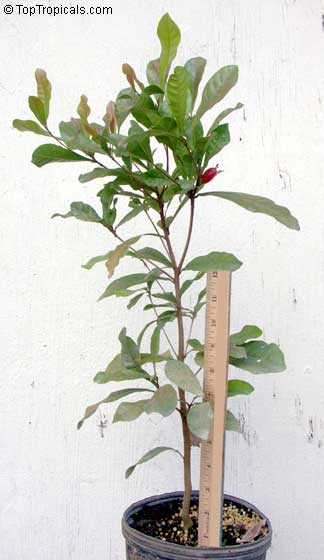
Q: What exactly is Feijoa - Pineapple Guava? Does the fruit really taste like pineapple? I
am curious to know if it is easy to grow.
A:Feijoa is certainly one of the easiest fruit trees to grow as it does
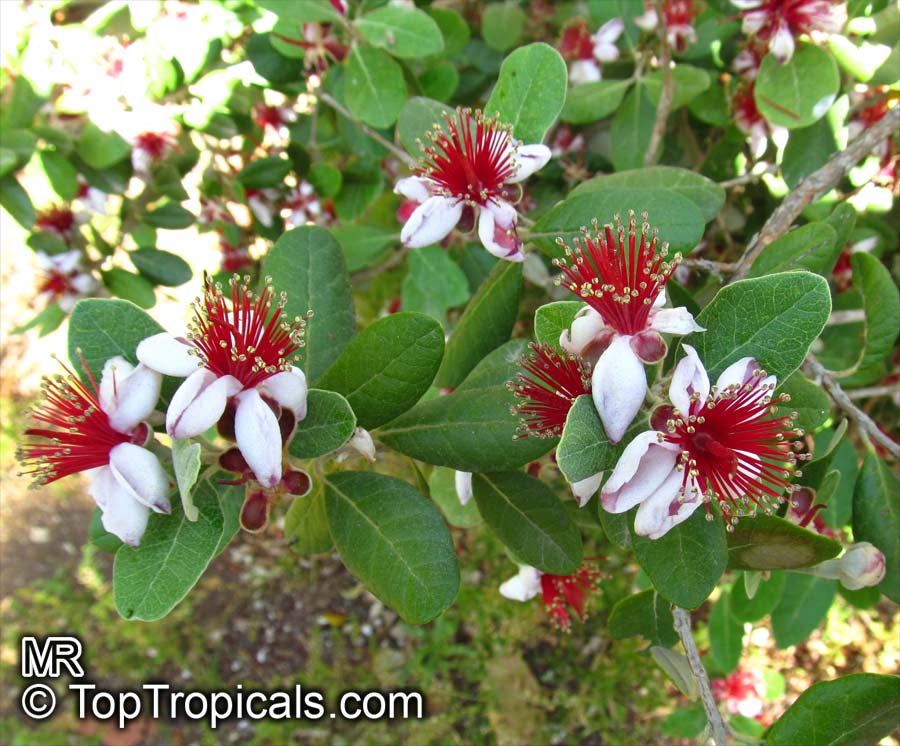
not require much care. It is an attractive, evergreen tree or large shrub with
dark green, oval, leathery leaves. It has an abundance of uses in the garden
and produces lovely edible flowers and fruit! The fruit is eaten fresh,
added to smoothies or fruit salad and is also commonly used to make delicious
jams and wicked chutneys. Feijoa fruit go a long way in flavor.
This plant is drought tolerant and will grow in almost any soil type. It
loves full sun or partial shade and is wind resistant. A lot of gardeners like
to grow it as a wind barrier for this reason. It can easily be shaped into a
dense, informal hedge or screen that needs very little pruning. Because of
this density, it provides excellent shelter for all kinds of wildlife.
Butterflies, birds, and butterflies will all love you for growing Feijoa!
Space the plant five feet apart to create a wind barrier hedge. Heat does
no not bother it at all and it will also withstand temperatures to 10 degrees
F.
The plant gets its names from the delicious perfume it emits. Some folks
seem the fruit taste like pineapple, with a slight minty undertone. Others feel
the flavor reminds them of juicy fruit gum! The texture is described as
smooth and slightly gritty - almost like a pear, but firmer.
If you prefer to grow this plant as a tree rather than a large shrub,
simply remove the lower branches up to one-third of the tree's height over a
period of time. The Pineapple Guava can grow up to 15 feet wide and tall. They
also do really well as a container plant on patios where you can truly enjoy the
lovely fragrance of the fruit. It prefers rich, organic, well-drained soil
and will need light fertilization every other month in most soils.
Pretty, pink, edible flowers will wow you from May to June, followed in
late summer or fall by the delicious and fragrant fruit. An interesting thing
about this fruit is that you don't pick it. It falls to the ground when it
is ripe. Or simply place something under your tree, like a tarp, and shake the
tree. The ripe fruit will fall off. You can store the fruit in your
refrigerator for up to a week. And remember! The fruit of the Feijoa is not only a
very rich source of soluble dietary fiber, but also an excellent source of
Vitamin C, and very rich in antioxidants. They are also low in calories. Each
fruit only holds 55 calories.
Date: 18 Apr 2026
The Secret to a Sharper Mind Might Be Growing in Your Backyard
Harvesting tropical fruits
The Secret to a Sharper Mind Might Be Growing in Your Backyard
Your garden shed might hold a more powerful tool for brain health than your medicine cabinet. What if the best defense against cognitive decline isn’t found in a pill bottle - but right outside your door? While we often think of gardening as just a hobby, new research suggests that the combination of physical "zone-pushing" and harvesting your own nutrient-dense tropical fruit could be a literal life-saver for your brain.
🍒 What the Research Actually Says
A massive study recently published in the journal Neurology followed more than 92,000 people to see how diet impacts the mind. The findings were clear: the quality of the plant-based foods you eat plays a massive role in your risk of dementia. It isn't just about "eating your veggies" - it's about which ones you choose.
(The full study: Plant-Based Dietary Patterns and Risk of Alzheimer Disease and Related Dementias in the Multiethnic Cohort Study)
🍒 Why Growing Your Own Fruit Changes the Game
If you grow your own fruit, you quietly solve two problems at once. It turns a "diet plan" into a natural part of your day.
1. Effortless Nutrition
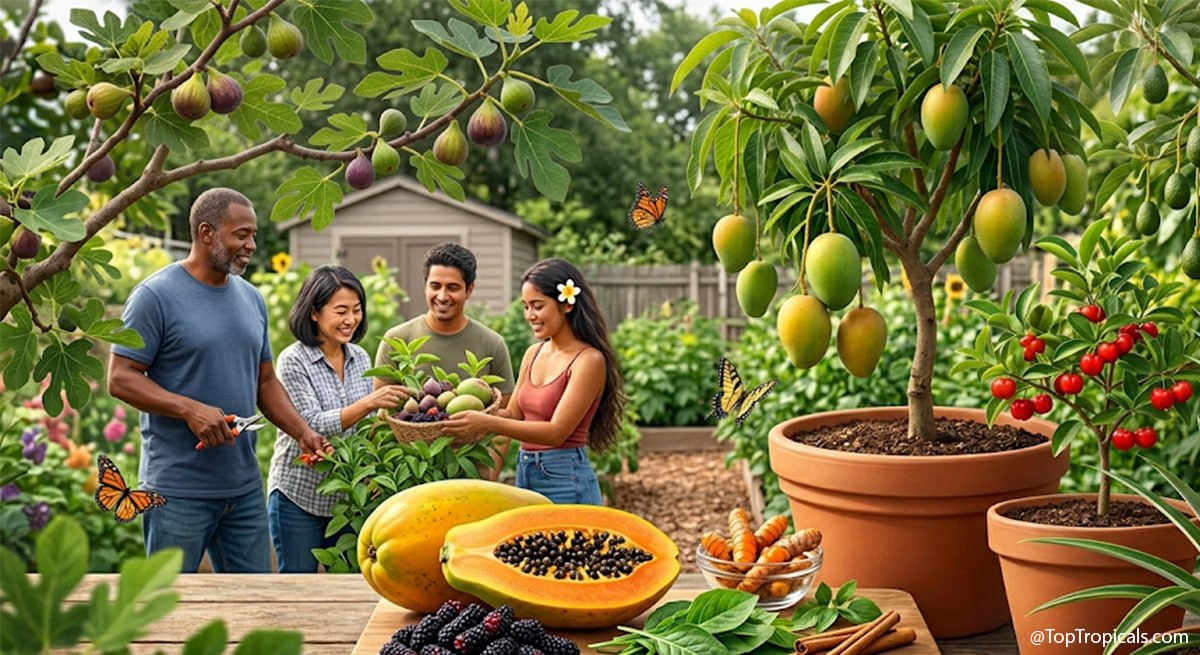
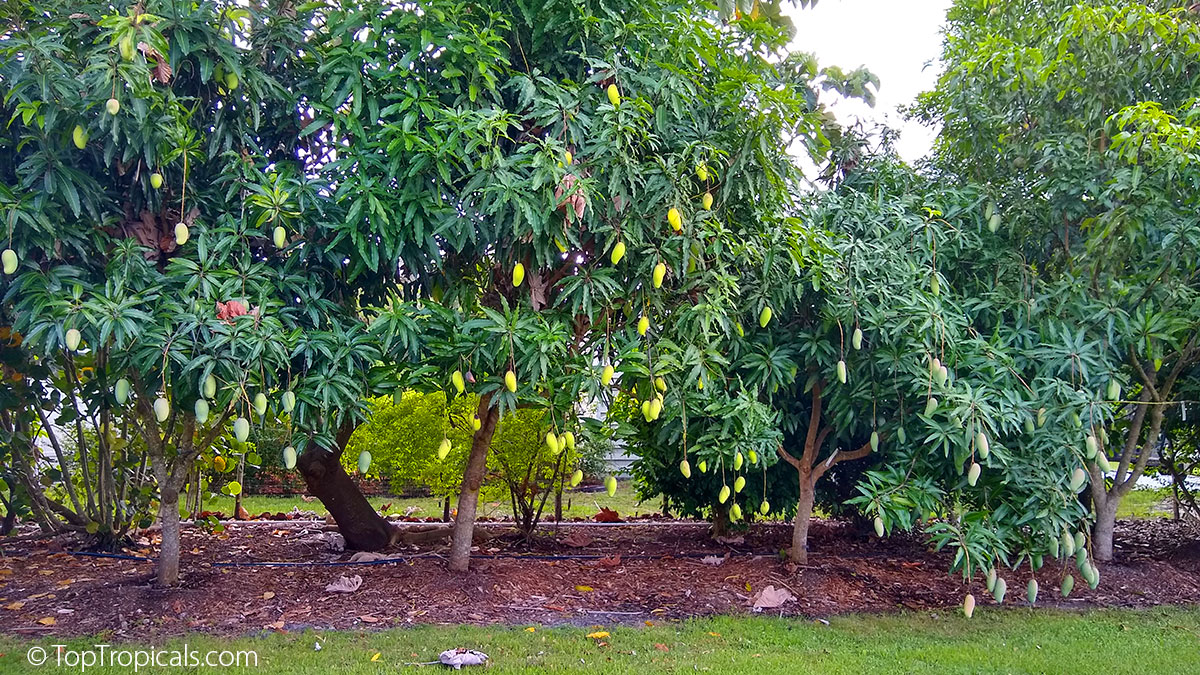
When a ripe mango, a handful of mulberries, or a fresh guava is hanging within arm's reach, you eat it. It replaces processed, sugary snacks without any "willpower" required. You are naturally moving toward the high-quality, whole-food diet the research supports.
Mango Plant Facts
Botanical name: Mangifera indica Also known as: Mango
USDA Zone: 9 - 11
Highligths
2. Functional Fitness
Gardening doesn't feel like a workout, but it is. Bending, pruning, carrying pots, and digging are all forms of functional movement. It’s steady, useful physical activity that supports your heart and brain while you’re focused on your plants.
3. The "Outdoor" Effect
Sunlight and fresh air are natural mood boosters. The mental focus required to manage tropical plants - especially when you’re protecting them from a surprise freeze - provides a level of mental engagement and stress relief that you just can't get from a treadmill.
🍒 What to plant if you are just starting
You don’t need a massive orchard to start investing in your brain health. One or two plants can shift your habits immediately.
Botanical name: Carica papaya Also known as: Papaya
USDA Zone: 9 - 11
Highligths
For Small Spaces:Dwarf Mango varieties and Cherries (Eugenias or Acerola), Pineapples thrive in containers and provide massive doses of antioxidants.
Pineapple Plant Facts
Botanical name: Ananas comosus Also known as: Pineapple, Pina
USDA Zone: 9 - 11
Highligths
For the "Zone Pusher":Figs and cold-hardy Avocados offer healthy fats and fiber that are essential for long-term health.
Fig Tree Plant Facts
Botanical name: Ficus carica Also known as: Fig Tree, Brevo
USDA Zone: 7 - 10
Highligths
Avocado Plant Facts
Botanical name: Persea americana, Persea gratissima Also known as: Avocado, Alligator Pear, Aguacate, Abacate
USDA Zone: 9 - 11
Highligths
🍒 Start Small, Start Now
The research makes one thing clear: improving your food quality matters, and you can see results no matter your age. Planting a fruit tree changes what you eat, how you move, and how often you step outside.
That’s more than just gardening - that’s a lifestyle shift your brain will thank you for.
🍒 FAQ
Does fruit really support brain health?
Yes. Diets rich in whole, high-quality plant foods are linked to a lower risk of dementia, especially when they replace processed snacks and added sugars.
Is gardening enough to count as exercise?
Absolutely. Regular gardening provides steady, functional movement that improves circulation and supports overall physical health.
Is it too late for me to start?
No. The study showed that even participants who improved their diet quality in their 60s and 70s saw a measurable reduction in dementia risk.
📅 Do Not Miss: March 21
- Spring Equinox Plant Market
🍩 Saturday, March 21, 2026: 9 am - 4 pm
Sunshine: Smokey, look at me! See what I can do on my bike? I'm
practicing to give people what they like: coffee and donuts.
Smokey: You'd be perfect for a Gulf beach cafe. But gardeners don't
come here for donuts.
Sunshine: Really? Then why do they come?
Smokey: Some gardeners lost plants to the freeze. Others want trees
that will handle winter better. Cold-hardy avocados. Macadamia. Grumichama.
And some just come for fun - to see the PeopleCats. Sunshine: And my charm... and my donuts will make it more fun.
🐱King is
back on gate duty - inspecting every vehicle for proper
plant-hauling capacity.
😺Paisley
is rearranging freeze survivors and new arrivals like a design
consultant.
😼Snitch is
supervising recovery efforts from a comfortable chair.
😸Persephone
is checking under tables for "hidden spring energy."
😻Sushi and
Loki are
preparing for guided garden tours - recovery edition.
This is not just a plant market. This is the spring reset.
👍 Why You Should Come
It is finally warm in Florida. After several nights of hard freeze, some
plants survived - and some didn’t. This event is your chance to see
real freeze champions in person.
If you lost plants, you are not alone. If you are ready to plant
smarter, this is your moment.
Walk the gardens.
See proven winter survivors.
Discover cold-hardy fruit trees and resilient ornamentals.
Get practical advice about replanting after freeze. This is rebuilding -
Florida style.
♥️ What Makes This Event Special
We are featuring:
Verified freeze survivors
Cold-hardy fruit trees
Tough flowering trees and shrubs
Replacement plants for damaged landscapes
Smart layering ideas for frost-resilient gardens
You will see which species handled 25F with wind and multiple nights of
freeze - with no protection.
Real-world test. Real results.
Cold hardy fruit favorites include:
Cold-hardy Avocado varieties, including varieties, which are cold hardy
to 15-20°F: Joey, Fantastic, Mexicola, Poncho, Brogdon and more.
Botanical name: Caesalpinia mexicana Also known as: Mexican Bird of Paradise, Dwarf Poinciana
USDA Zone: 9 - 11
Highligths
🎉Event Highlights
30% OFF online prices
FREE plants with purchase
$5-10 specials
Exciting raffle prizes
🌳Don't just mow - grow!
Start your food forest, beat rising prices, and plant a future your
family will thank you for.
🌿 Friendly Reminder
Just a quick reminder before we go: Sunshine Boosters are still
shipping free.
If you were thinking about stocking up for the season, now is a
great time to do it while the offer is still active.
Shade
Tree Discount Program
How to reduce an electric bill and energy costs?
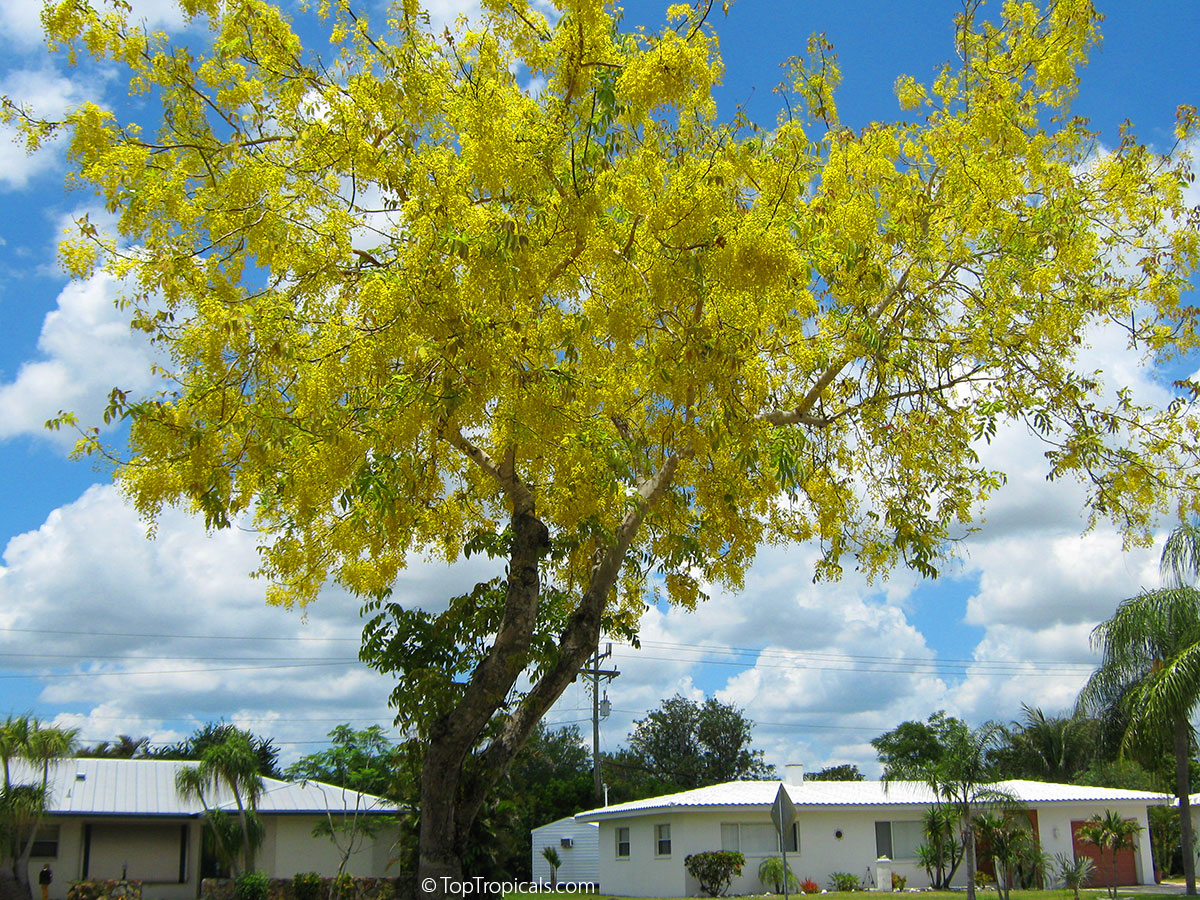
Photo above:
Cassia fistula - Golden Shower Tree - one of the most popular trees. This
all time favorite is fast growing and elegant.
Q: How to reduce an electric bill and energy
costs?
A: This summer is expected to be hot. And the
next summer... and next... Want to reduce your electric bill and energy costs?
There is an excellent solution: plant a shade tree! Once fully grown, these
trees will help keep your house cooler and lower your energy expenses.
Today we are offering a special discount you can use for purchasing
trees that will keep your homes cooler in Summer and gardens warmer in Winter!
Check out Fast
Growing Shade Trees, as well as other flowering trees and fruit trees and use discount below:
GETSHADE
Your savings with this code: 5% off orders $100+ 15% off orders $150+ 20% off orders $200+
Excluding S/H. Excluding 15 gal material. Exp.
6-12-24
6 easiest fruit trees and 5 spices to grow in containers indoors
Q: This is why I want to move so that I can grow absolutely anything I want from your catalogue. Prefered Puerto Rico. Right now I live in New York and there is absolutely nothing I can grow there.
A: Of course living in Puerto Rico brings more opportunities to grow tropical species. However, you can create your unique tropical paradise even living in New York. We have many customers from up North who successfully grow tropical species (and get them to flower and fruit) in greenhouses, and even indoors.
Here are a few suggestions of tropical fruit trees that adapt well for container/indoor culture - for both beginners and advanced gardeners.
Top 6 fruit trees great for indoors / container culture / beginners 1. Mango (Mangifera indica). Select from one of smaller mango varieties 2. Sugar Apple (Annona squamosa)
3. Guanabana, Soursop (Annona muricata)
4. Miracle Fruit (Synsepalum dulcificum)
5. June Plum (Spondias cytherea)
6. Guava (Psidium guajava)