Q: Is it possible to grow soursop in a large pot for life?
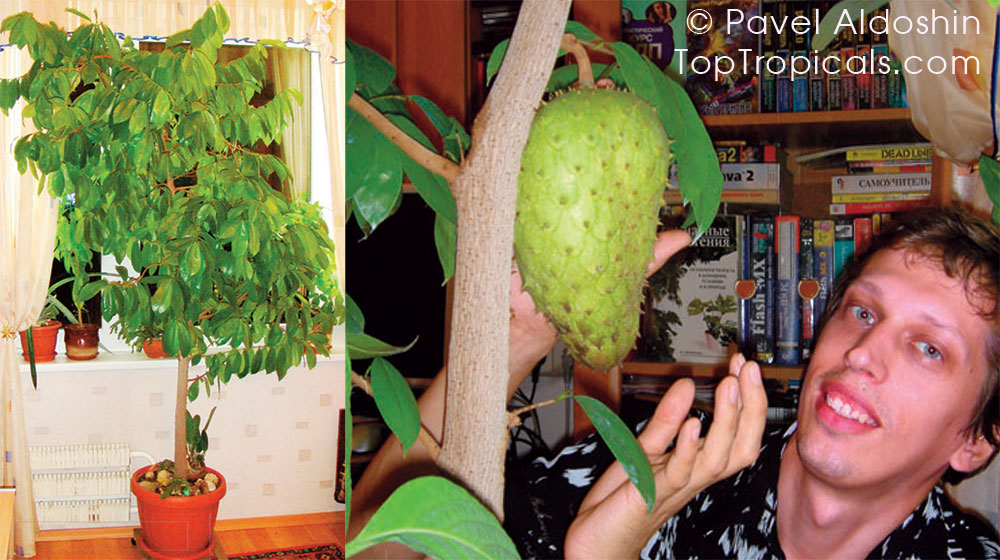
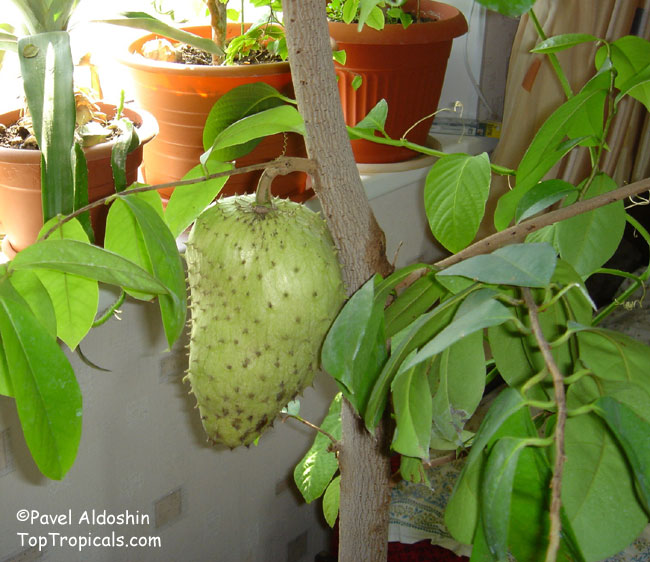
A: Soursop, or Guanabana - Annona muricata - is actually one of those tropicals fruit trees that
can be easily cultivated in a container. Most plants of genus Annona have compact nature, and these fruit trees usually start
production at a young age, as early as 3 years from seed. Annona muricata
seedlings take a little longer to fruit, this is why we offer grafted trees, which can start producing right away.
We have a very interesting article about growing Soursop in an
apartment. The article was written by an indoor gardener who lives in a very small
apartment in Moscow, Russia. He grew this tree from seed and after years of
cultivation fun, he finally got several large delicious fruit! It is an amazing
story. We have it published in our Tropical Treasures magazine, download the whole issue #7, get a hard copy, or you may download PDF file of the single article.
A: I live in Ave Maria, Florida. I want to try my hand at growing
my own tea. Which plant do I need?
A: Most people do not realize they are actually enjoying
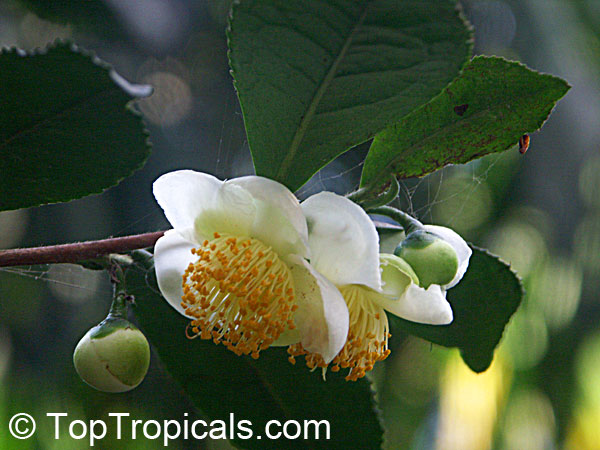
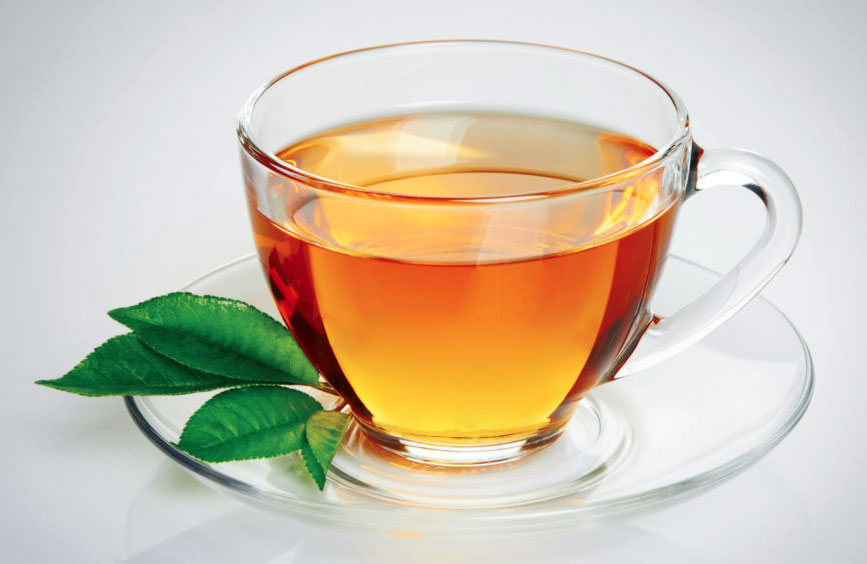
camellias when they sip their cup of tea. True tea comes from the Camellia sinensis
plant, an evergreen shrub or small tree.
In the fall and winter, the plant will produce small white flowers with
a lovely fragrance. The foliage is shiny and dark green with a very nice
informal and open look.
Camellia sinensis (or tea plant, as it is commonly known) prefers a
temperature between 65 and 86 degrees, which makes Florida an ideal area to grow
them. However, if you live in colder zones, you can certainly succeed
growing your own tea plants using a greenhouse. Alternatively, you can use
containers which can be brought inside when temperatures start falling. Tea plants
will usually survive a very slight freeze, though the leaves may be damaged or
killed. It will not tolerate a hard freeze. They prefer full sun or light
shade in the garden.
Tea plants will become small trees or large bushes if not pruned.
Hardcore tea growers trim back the shoots repeatedly to a height of around 4 feet
to encourage new growth and to contain the size.
Make sure to pick an area of your landscape where it does not flood or
remain wet during our rainy season. Camellia sinensis does not like wet feet
at all. They prefer well-drained, sandy and slightly acidic soil. If grown in
a container, add some sphagnum moss to the potting mix. They will benefit
from frequent applications of small amounts of fertilizer.
You will need some patience, too. Your plant should be around 3 years old
before you start harvesting leaves.
Now that you know how to grow the Tea, you need to check this out: the
Harvesting recipes how to harvest and make different kinds of real tea:
Green Tea, Japanese Style Green Tea, Oolong Tea, Black Tea, Orthodox Indian
Tea... Continue reading...
Date: 29 Jun 2019
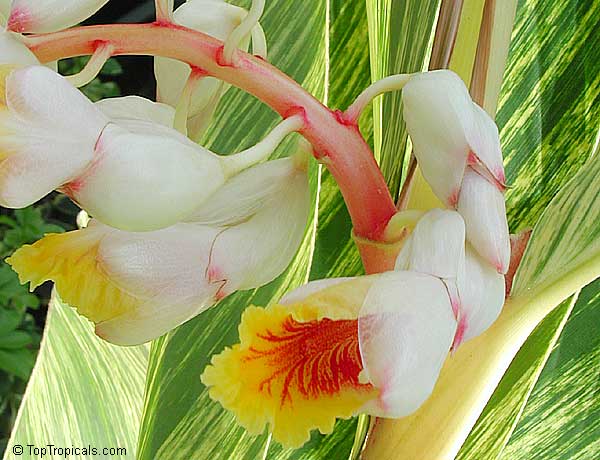
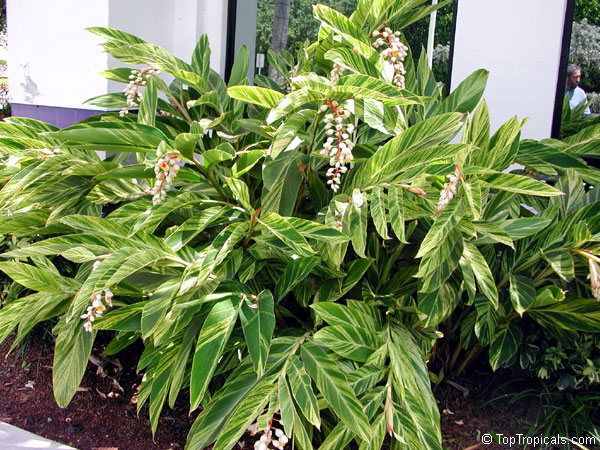
Variegated Shell Ginger - Alpinia zerumbet
By Onika Amell, tropical plant specialist
Q: I live in Deltona, Florida and hoping to find spreading ginger
with interesting foliage to grow in a partially shaded area in my garden
under a group of trees. Any suggestions?
A: Variegated ginger Alpinia zerumbet variegata is a clumping ginger valued for its
beautiful variegated foliage. The dark, green leaves have striking yellow stripes.
This ginger is sought-after, not only for the stunning foliage but also for its
beautiful flowers. The flowers are different from other members of the
ginger family and appear in drooping racemes from the ends of leafy stems rather
than directly from the rhizomes. This ginger is also commonly known as Shell
Ginger because the flowers resemble seashells! They are pink-tinged, fragrant
and appear in summer.
This evergreen perennial grows in upright clumps 3-5 feet tall. You may
prune the plant to control size.
It does not tolerate drought or a hard freeze but can take a few hours
or light frost (goes dormant in such case). In colder areas, rhizomes should
be dug up and stored in a cool room during winter.
This ginger will love a shaded corner in your garden. Plant it in
organically rich, well-drained soil in full sun to part shade. Keep the soil moist
but not soggy, and spread a thick layer of organic mulch around the plant
for moisture retention. There are no serious insect or disease problems to
worry about!
This ginger can be also be grown as a house plant as long as it has
bright light and humid conditions. It will grow to around 3-4 feet tall as a
houseplant.
Q: I live in New Cumberland, West Virginia. I love the smell of
Night-Blooming jasmine. Is it possible to grow it in the northern panhandle of
West Virginia? Do I have to plant it every year or do I keep it in a pot and
take it inside during the winter months?
A: Technically, Night Blooming Jasmine is not a true jasmine
(those plants belong to Oleaceae, or Olive family). Night Blooming Jasmine
belongs to the Solanaceae family, also known as the Nightshade or "Potato" family
of plants. Yes, this sweet fragrant flower called Jasmine for its perfume is
related to potatoes and tomatoes!
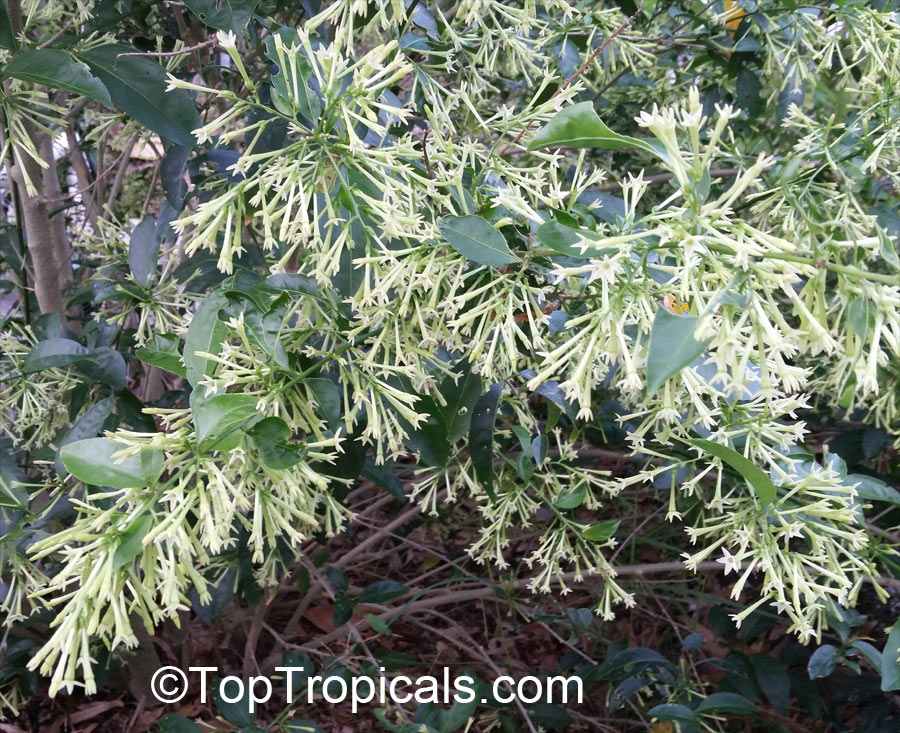
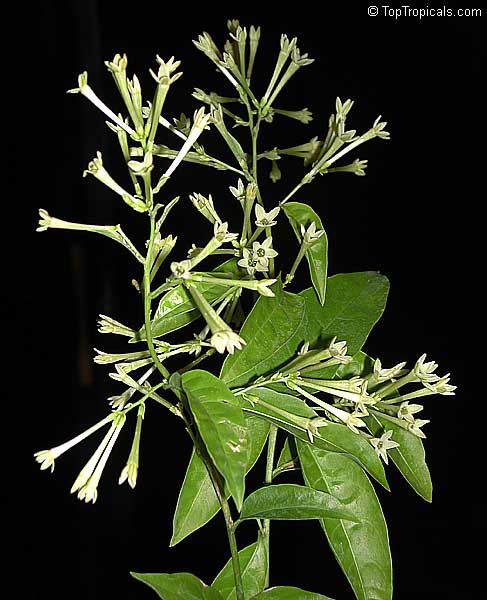
Night Blooming Jasmine - Cestrum nocturnum - is loved by many gardeners for its beautiful
fragrance at night. It is one of the most fragrant tropical evergreen shrubs
available. Cascading clusters of tiny, tubular pale yellow to white flowers open at
night and release a heavenly fragrance throughout the garden, especially on
warm summer evenings. The fragrance is much lighter during the day.
Night Blooming Jasmine is grown year-round in zones 9-11. It is at its
happiest in a sunny to a partially sunny spot in your garden in well-drained soil
but can be grown in cooler climates as a container or greenhouse plant.
You would absolutely be able to enjoy this plant during the warm months
in West Virginia, but it will most certainly not survive outside during the
winter. You will have to bring it inside. Take it outside again only once you
are confident there is no more possibility of frost. When grown indoors, be
sure to give it the sunniest, South facing window in your home. When grown in
a container, you will need to re-pot it every two to three years so it
doesn't become root-bound.
For those who are lucky to live in frost-free areas, in ideal growing
conditions outside, it can easily reach 8 feet with a spread of 5 feet. It has
a lovely informal look that can soften a more manicured garden. Add organic
matter to the planting hole when you plant to enrich the soil around the root
ball. Water well in the summer, but allow them to dry out a bit between
watering in the winter. Plant this Jasmine near pools, porches, doors, windows,
and walkways where its lovely fragrance can be enjoyed. The shrub is also an
excellent plant for privacy hedges and screens. When grown as a hedge, plant 3
feet apart.
Trim lightly after a bloom cycle to shape and then do a hard pruning in
fall or spring to control the size of this plant. Fertilize 3 times a year -
in spring, summer, and autumn - with a good quality granular fertilizer.
Night-blooming jasmine is an excellent mosquito repellent. The powerful
scent of the flowers attracts moths and bats that feed on mosquitoes and
other small insects.
The flowers of the Night Blooming jasmine are widely used in India and
other countries of South Asia for perfumery, medicinal applications and in
religious ceremonies.
Q: I am concentrating on adding more fragrance to my garden. I've
had great success growing gardenias and I have many different varieties, but
their flowers are all white, and I would like to add some colors to my
garden too. Are there any gardenias available in different colors? I live in
Waipio Acres, Hawaii.
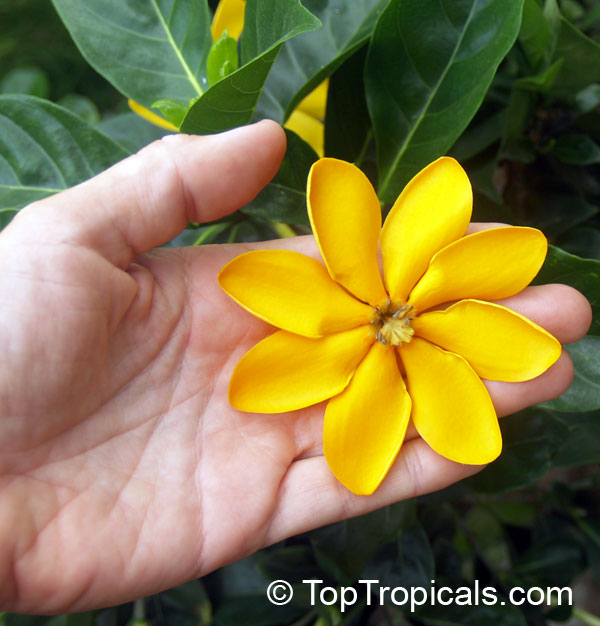
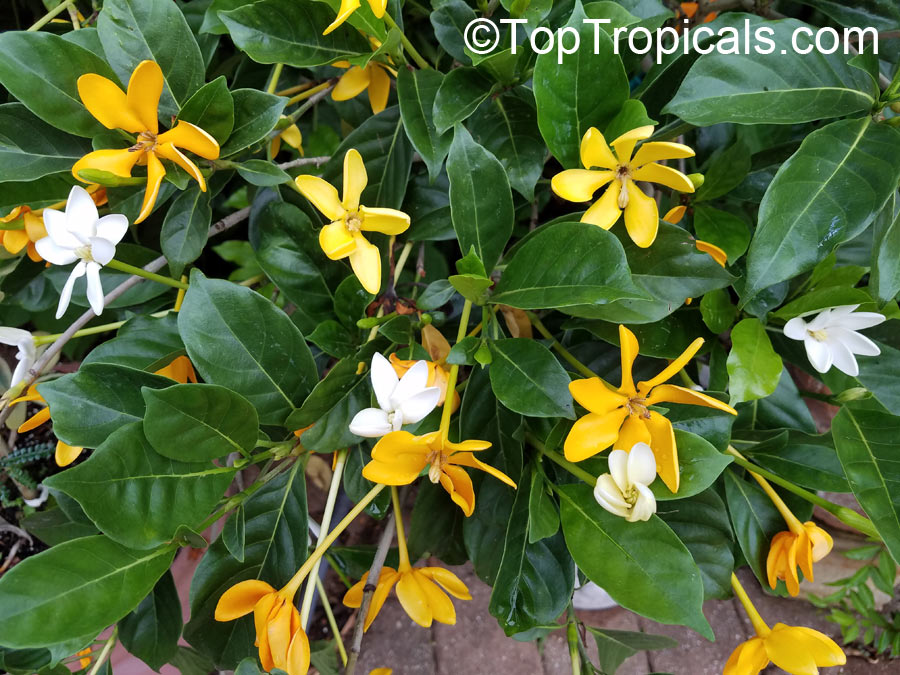
A: Meet the very rare and highly fragrant, tropical Gardenia tubifera Kula or Golden gardenia. Kula flowers change color as
they mature, which is a unique feature! Kula flowers start out as cream,
then change to yellow and finally to a beautiful gold. In addition to the
spectacular flowers, this gardenia also has beautiful, leathery, deep green
foliage.
This is a slow-growing and compact plant. Like all the other members in
the Gardenia family, the Golden gardenia will do best in an acidic,
well-drained, and fertile soil. It will appreciate a good deal of direct sunlight but
will be very happy if provided with midday and afternoon shade. As with with
gardenias, the more sunlight the more flowers.
It will eventually grow into a rounded shrub if left unpruned, but also
can be trained into a small tree, maintainable to a height of under 7-8
feet. Blooms will appear from spring onward. Prune after flowering, this will
encourage more flowers in a few months.
Gardeners living in colder areas, do not fret. Gardenias make perfect
container plants and can be grown indoors in colder climates. Just be sure to
provide high light when bringing them indoors.
The fragrance and changing colors of a Gardenia Kula is unforgettable.
They are most fragrant near sunset and during early evening hours. Plant them
near walks and patios where their lovely fragrance can be enjoyed. This
rare tropical Gardenia is sure to be a conversation piece in any garden.
Great collector's plant!