Garden Blog - Top Tropicals

Date: 7 Mar 2026

Sapodilla caramel toast: quick-n-fun exotic recipes

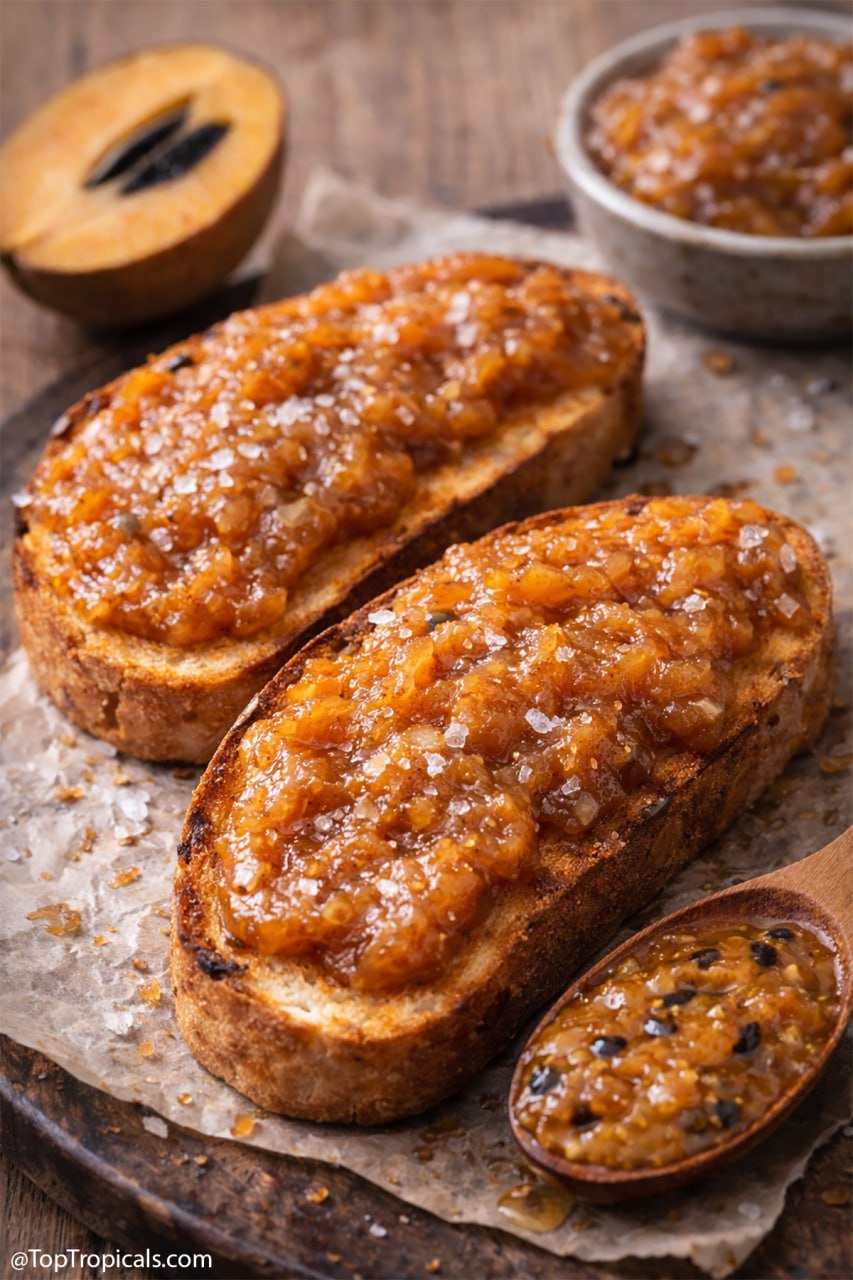
Sapodilla caramel toast

Sapodilla caramel toast

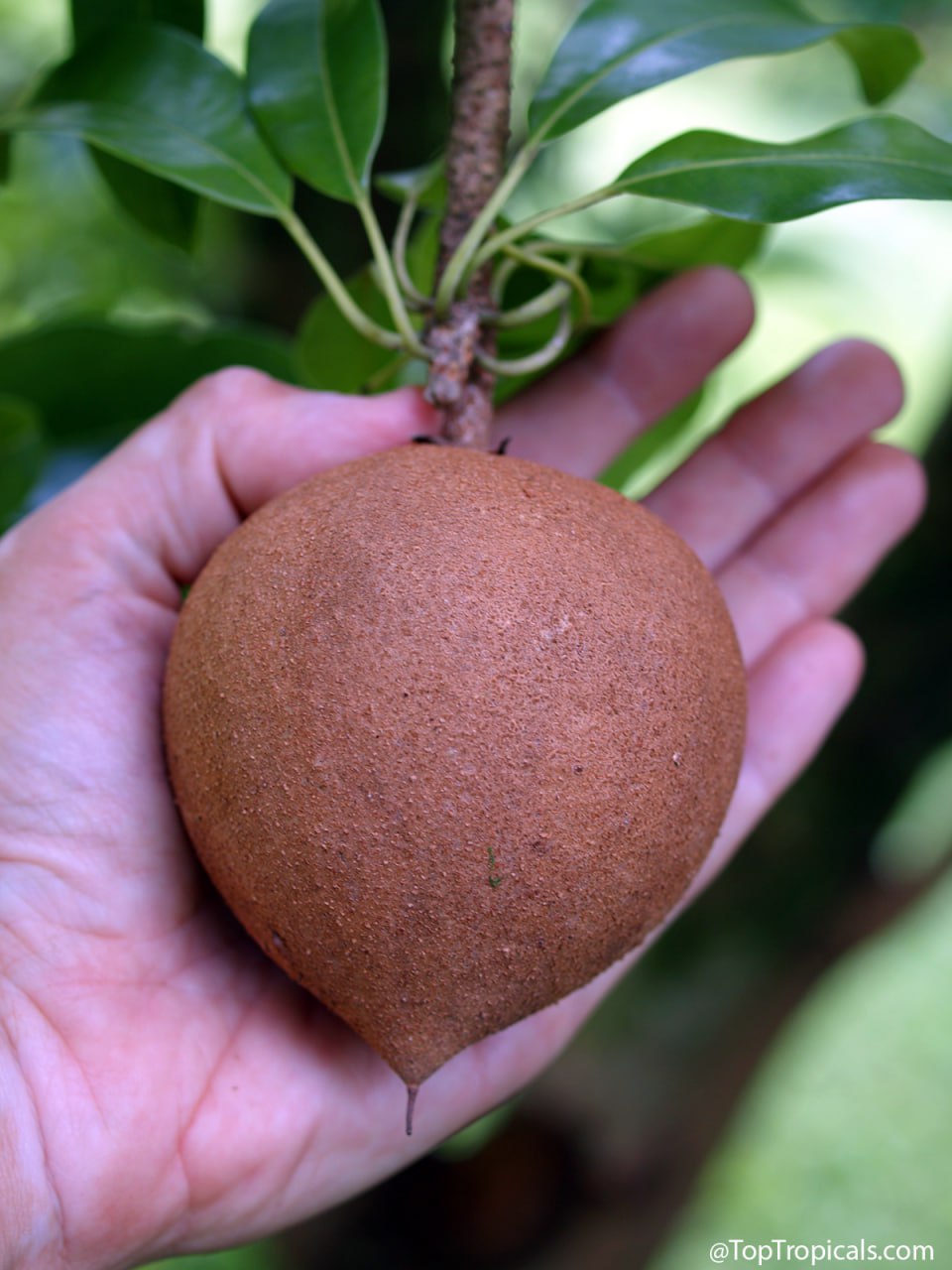
Sapodilla (Achras zapota) fruit

Sapodilla (Achras zapota) fruit

🍴 Sapodilla caramel toast: quick-n-fun exotic recipes

Sapodilla Caramel Toast

Ingredients

  • 1 ripe sapodilla
  • 2 slices toasted bread
  • Pinch of salt

Instructions

  1. Mash the ripe sapodilla flesh in a small pan.
  2. Warm gently until it becomes thick and caramel-like.
  3. Spread the warm sapodilla mixture over toasted bread.
  4. Finish with a small pinch of salt to balance the sweetness.


🌿 About the plant:


Sapodilla is a tropical evergreen producing brown fruit with sweet, brown-sugar flavored flesh.

🏡 In the garden:


Likes heat and humidity. Grafted or air layered trees fruit earlier. Drought tolerant once established but best with regular watering.

🛒 Add Sapodilla - Brown Sugar Fruit tree to your Food Forest

📚 Learn more:

Sapodilla Plant Facts

Botanical name: Manilkara zapota, Manilkara achras, Achras sapota
Also known as: Sapodilla, Ciku, Naseberry, Nispero, Sapote, Brown Sugar Fruit
USDA Zone: 9 - 11
Highligths Large tree taller than 20 ftSemi-shadeFull sunWatering: Regular. Let topsoil dry slightlyEdible plantSubtropical plant. Mature plant cold hardy at least to 30s F for a short timeSeaside, salt tolerant plant
Get personalized tips for your region

Sapodilla (Achras zapota) in Plant Encyclopedia
How to make Sapodilla fruit profusely?
A sugar that’s good for your health
When does Sapodilla start fruiting and what is the best variety
New variety of Sapodilla: Thai Brownie

#Food_Forest #Recipes

🟢 Join 👉 TopTropicals

Date: 11 Mar 2026

📅 Do Not Miss: March 21 - Spring Equinox Plant Market

🍩 Saturday, March 21, 2026: 9 am - 4 pm

Smokey  the  tuxedo  cat  in  work  clothes  studies  the  Spring  Equinox  Plant 
 Market  poster  at  the  Top  Tropicals  nursery  entrance  while  Sunshine  the 
 ginger  tabby  cat  rides  a  bicycle  balancing  coffee  and 
 donuts.
Sunshine: Smokey, look at me! See what I can do on my bike? I'm practicing to give people what they like: coffee and donuts.

Smokey: You'd be perfect for a Gulf beach cafe. But gardeners don't come here for donuts.

Sunshine: Really? Then why do they come?

Smokey: Some gardeners lost plants to the freeze. Others want trees that will handle winter better. Cold-hardy avocados. Macadamia. Grumichama. And some just come for fun - to see the PeopleCats.


Sunshine: And my charm... and my donuts will make it more fun.

Read more about Smokey & Sunshine

Ft Myers Garden Center: 13890 Orange River, Ft Myers, FL
Sebring B-Farm : 9100 McRoy Rd, Sebring, FL

More Spring Equinox Plant Market details

🌞 Welcome to our Spring Equinox Plant Market, proudly hosted by the PeopleCats of Top Tropicals.

This one feels different.

After Florida’s record freeze, many gardens are brown, trimmed back, or missing a few old friends. We felt it too. And now - we rebuild.

The equinox marks equal day and night. More light ahead. New growth beginning.

And the PeopleCats are ready🐾.

  • 🐱King is back on gate duty - inspecting every vehicle for proper plant-hauling capacity.
  • 😺Paisley is rearranging freeze survivors and new arrivals like a design consultant.
  • 😼Snitch is supervising recovery efforts from a comfortable chair.
  • 😸Persephone is checking under tables for "hidden spring energy."
  • 😻Sushi and Loki are preparing for guided garden tours - recovery edition.

This is not just a plant market. This is the spring reset.

👍 Why You Should Come

It is finally warm in Florida. After several nights of hard freeze, some plants survived - and some didn’t. This event is your chance to see real freeze champions in person.

If you lost plants, you are not alone. If you are ready to plant smarter, this is your moment.

Walk the gardens. See proven winter survivors. Discover cold-hardy fruit trees and resilient ornamentals. Get practical advice about replanting after freeze. This is rebuilding - Florida style.

♥️ What Makes This Event Special

We are featuring:

  • Verified freeze survivors
  • Cold-hardy fruit trees
  • Tough flowering trees and shrubs
  • Replacement plants for damaged landscapes
  • Smart layering ideas for frost-resilient gardens
  • You will see which species handled 25F with wind and multiple nights of freeze - with no protection.

Real-world test. Real results.

Cold hardy fruit favorites include:

Avocado Plant Facts

Botanical name: Persea americana, Persea gratissima
Also known as: Avocado, Alligator Pear, Aguacate, Abacate
USDA Zone: 9 - 11
Highligths Large tree taller than 20 ftSmall tree 10-20 ftFull sunWatering: Regular. Let topsoil dry slightlyEdible plantSubtropical plant. Mature plant cold hardy at least to 30s F for a short time
Get personalized tips for your region

🌸 Cold hardy subtropical flowering trees including:

And many other cold hardy plants

Mexican Bird of Paradise Plant Facts

Botanical name: Caesalpinia mexicana
Also known as: Mexican Bird of Paradise, Dwarf Poinciana
USDA Zone: 9 - 11
Highligths Small tree 10-20 ftSemi-shadeFull sunWatering: Moderate. Water when top soil feels dryYellow, orange flowersIrritating plantFragrant plantSubtropical plant. Mature plant cold hardy at least to 30s F for a short timeSeaside, salt tolerant plant
Get personalized tips for your region

🎉Event Highlights

  • 30% OFF online prices
  • FREE plants with purchase
  • $5-10 specials
  • Exciting raffle prizes

🌳Don't just mow - grow!

Start your food forest, beat rising prices, and plant a future your family will thank you for.

🌿 Friendly Reminder
Just a quick reminder before we go: Sunshine Boosters are still shipping free. If you were thinking about stocking up for the season, now is a great time to do it while the offer is still active.

🛒 Feed your plants

Date: 3 Aug 2025

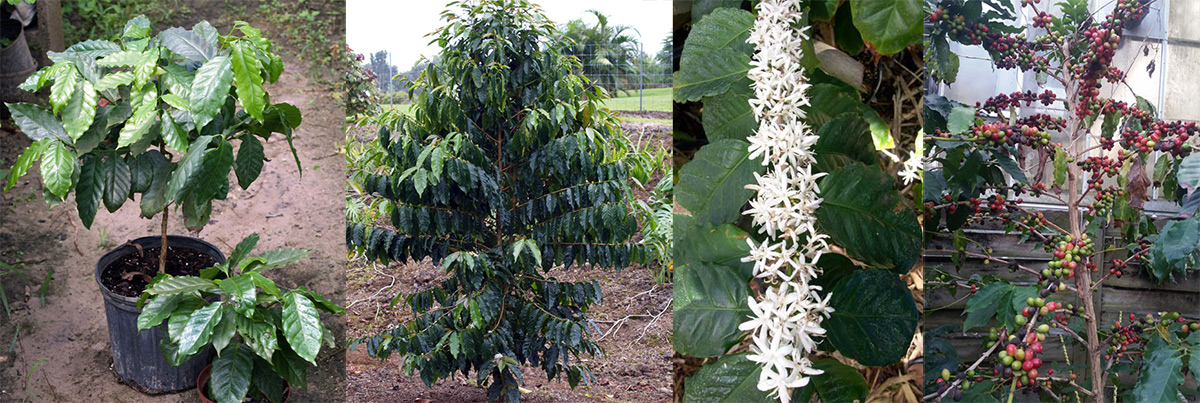
Four  stages  of  Coffee  Tree  growth:  a  young  potted  plant,  a  mature  tree  in  the  ground,  white  star-shaped  blooms,  and  a  branch  full  of  ripening  red  and  green  coffee  cherries.

What is the most popular and easiest tropical fruit tree to grow indoors?

No doubt about it - it's the Coffee Tree.

  • Coffee is shade-loving and easy to grow with regular water
  • It grows into a dark green shrub or small tree (about 3 to 5 feet tall in a pot)
  • Its fragrant, star-shaped flowers resemble gardenias
  • The whole fruit is edible and turns green to yellow to red
  • The seeds are real "coffee beans" that can be dried, roasted, and ground at home.

Five Reasons to Grow a Coffee Plant

  • Perfect Indoor Fruit Tree: Thrives in filtered light and stays compact
  • Low Maintenance: Forgiving, adaptable, and ideal for new gardeners
  • Aesthetic Appeal: Glossy green leaves and clusters of white blooms
  • Homegrown Coffee: Yes, you can roast your own beans.
  • Year-Round Beauty: Evergreen with seasonal fragrance

Coffee Plant Care Tips

  • Light: Bright, indirect light is best. Avoid harsh afternoon sun.
  • Water: Keep soil lightly moist but not soggy. Let the top inch dry out before watering again.
  • Humidity: Loves higher humidity. Mist regularly or place on a pebble tray.
  • Fertilizer: Use a balanced, gentle fertilizer like Sunshine Boosters C-Cibus every few weeks during growing season.
  • Soil: Loose, rich, and well-drained. High in organic matter and slightly acidic. For potted plants, use a quality indoor tropical mix, such as Top Tropicals Abundance mix
  • Repotting: Refresh soil and size up the pot every 1–2 years to keep roots healthy.
  • Can I grow it outdoors?: Yes - bring it outside in warm months and back indoors before frost. It's best suited for USDA zones 10-11, but container growing gives you flexibility in cooler climates.
  • How long until I get beans?: Expect flowers and fruit within 3 to 4 years from seedling stage - often sooner if you start with a young tree.
  • What does the fruit taste like?: Mild and sweet-tart, like a mix between a cherry and a cranberry. You can eat it fresh.

How to Make Coffee from Your Own Tree

  • Harvest: Pick the ripe red cherries
  • Pop and Soak: Squeeze out the beans and ferment 1-2 days to remove pulp
  • Dry: Spread out to dry for 1-2 weeks until hard and papery
  • Husk: Remove the thin shell to reveal green beans
  • Roast: Use a dry skillet or oven until fragrant
  • Grind and Brew: Cool, grind, and enjoy the freshest coffee you've ever had.
    Learn more: How to make your own coffee from homegrown beans

Coffee Health Benefits

  • Rich in antioxidants - supports heart and brain health
  • Boosts focus and mental alertness
  • Supports metabolism and fat-burning

Why Coffee Makes the Perfect Gift Plant

  • Long-living and beautiful
  • Symbolic, useful, and personal
  • Great for coffee lovers, gardeners, and the "person who has everything"

Read Garden Blog about Coffee

Shop Coffee Plants

Date: 7 Aug 2025

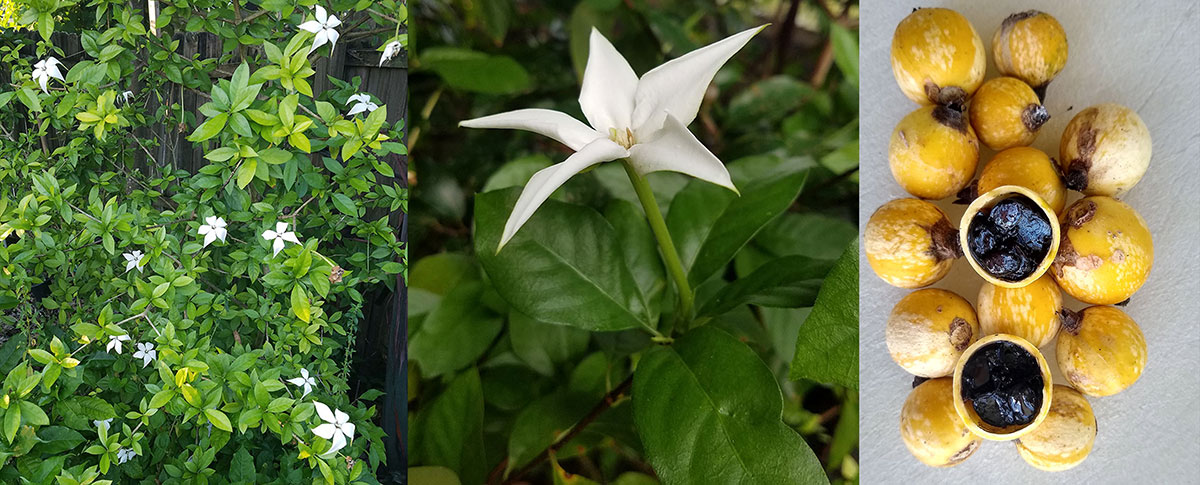
Randia  formosa  shrub  in  bloom  with  white  star-shaped  flowers,  close-up  of  single  bloom,  and  ripe  yellow  fruit  with  black  pulp  that  looks  like  blackberry  jam

Randia formosa - Blackberry Jam Fruit Tree with Flowers and Ripe Fruit

You know how some plants just surprise you?

That's Randia formosa - the Blackberry Jam Fruit Tree. At first, it just looks like a cute little gardenia-type shrub. Glossy leaves, sweet white flowers. Nice enough. But then the fruit shows up… and you crack one open and go, “Wait - this tastes like jam?!”

And not just any jam - like real, fresh blackberry jam. No sugar, no cooking. Just soft black pulp inside this golden little fruit. It's weirdly satisfying. One of those things you make everyone taste just to see their face.

What's even cooler is how easy it is. This thing starts blooming and fruiting when it's barely 2 feet tall. You can grow it in a pot on your porch, or even inside if it gets enough light. And while most of your other plants take the winter off, this one keeps going - flowers, fruit, the whole show.

If you've got a spot with filtered light and a little curiosity, it's absolutely worth a try. Honestly, it's just… fun.

This rare South American evergreen shrub checks all the boxes: fragrant, compact, easy, and edible.

✅ Grows in pots ✅ Indoors ✅ Small yards

Randia formosa – Blackberry Jam Fruit Tree – FAQ

What is Randia formosa?

Randia formosa, also known as Blackberry Jam Fruit or Jasmin de Rosa, is a compact tropical shrub that produces fragrant white flowers and small yellow fruits filled with soft, black pulp that tastes remarkably like blackberry jam. It belongs to the Rubiaceae family, the same as Gardenia and Coffea.

Why gardeners love Randia

  • Delicious jam-flavored fruit – no sugar needed.
  • Compact grower – perfect for patios and indoor spaces.
  • Fast results – blooms and fruits within 1–1.5 years.
  • Big yield in a small pot – 25–30 fruits at once!
  • Fall–Winter performer – keeps going when others stop.
  • Kid favorite – fun to grow, fun to eat.

What does the fruit taste like?

The pulp inside the fruit tastes just like fresh blackberry jam - sweet, tangy, and rich. It is edible fresh, without any processing or sweeteners, and is loved by both kids and adults.

How big does the plant get?

In the ground, Randia formosa typically reaches 4 to 5 feet tall. In containers, it usually stays smaller, around 3 to 4 feet, making it perfect for small gardens, patios, or indoor growing.

How soon will it fruit?

Very quickly! This is one of the fastest fruiting tropicals. Plants begin to flower and produce fruit within two years from seed. Еstablished plants in 3 gallon containers may begin fruiting at just 2 feet tall.

Does it need full sun?

No. It actually prefers filtered light or partial shade, especially in hot climates. Leaves tend to look healthier and greener when grown in dappled light.

Can I grow Randia formosa indoors?

Yes! Its compact size and shade tolerance make it an excellent choice for bright indoor spaces. Just be sure to provide good air circulation, high humidity if possible, and avoid cold drafts.

How cold-hardy is it?

Mature plants can tolerate temperatures down to about 26F for short period of time, but young plants are more sensitive and should be protected from frost. It is best grown outdoors in USDA zones 9b and up or kept as a container plant that can be brought indoors in winter.

What kind of soil does it need?

Randia formosa requires acidic, well-draining soil. Avoid alkaline soils, which may cause leaf chlorosis (yellowing with green veins).

How often should I water it?

Keep soil evenly moist but not soggy. It is sensitive to overwatering, especially in cooler weather. During winter, reduce watering. Underwatering may cause sudden leaf drop - but the plant usually recovers quickly once watered again.

What fertilizer does it need?

Yes. Use a slow-release fertilizer formulated for acid-loving plants. Regular applications of micronutrients (especially iron and magnesium) help prevent chlorosis. Foliar sprays can also be helpful. Apply Sunshine C-Cibus Booster or Green Magic controlled release fertilizer to keep your plant happy: Blackberry Jam Fruit is a heavy feeder!

When does it flower and fruit?

This plant can bloom and fruit for several months, often from summer through winter. It is known to bloom off-season, making it a fun and productive plant when others are dormant.

Are the flowers fragrant?

Yes, the white star-shaped tubular flowers have a light, sweet fragrance, similar to gardenias but less intense. The flowers open at night.

Is it self-pollinating?

Yes. A single plant can set fruit on its own, although insect activity can improve fruit set.

Are there any common problems?

The most common issue is chlorosis, which shows up as yellowing leaves with green veins - usually due to overwatering, poor drainage, or alkaline soil. It's fixable with acidification and micronutrients. The plant may also drop leaves suddenly if underwatered but tends to bounce back.

Is this plant related to Gardenia?

Yes. It is in the same plant family (Rubiaceae) as Gardenia and Coffee. That's why the flowers look similar and why it tolerates similar care needs.

Can it be used for bonsai or miniature tree styling?

Yes, due to its slow growth and branching habit, Randia formosa can be shaped into a miniature tree form and is quite attractive when trained.

Is it drought-tolerant?

Once established, it shows moderate drought tolerance. However, young plants need regular watering and are more vulnerable to drying out.

Read Garden Blog about Blackberry Jam Fruit

Get your Blackberry Jam Fruit
Date: 2 Jul 2024

What is the most useful tree in the world?

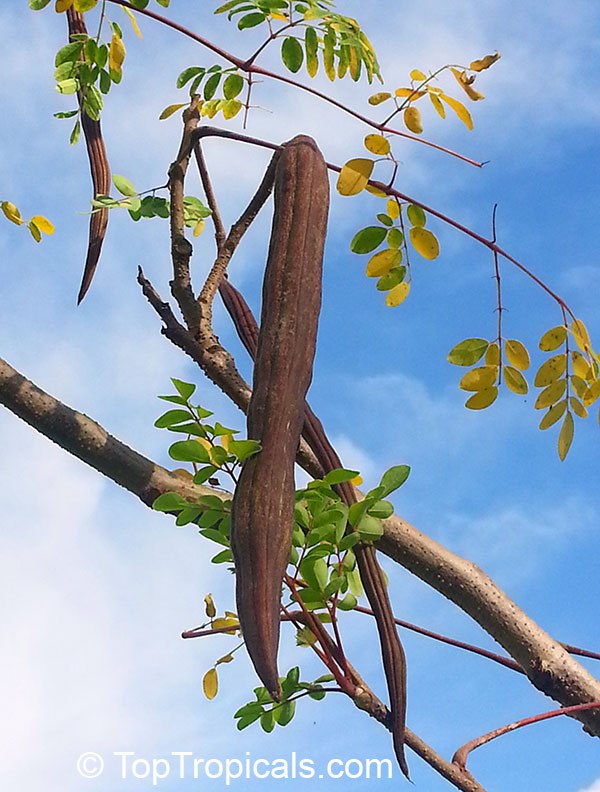
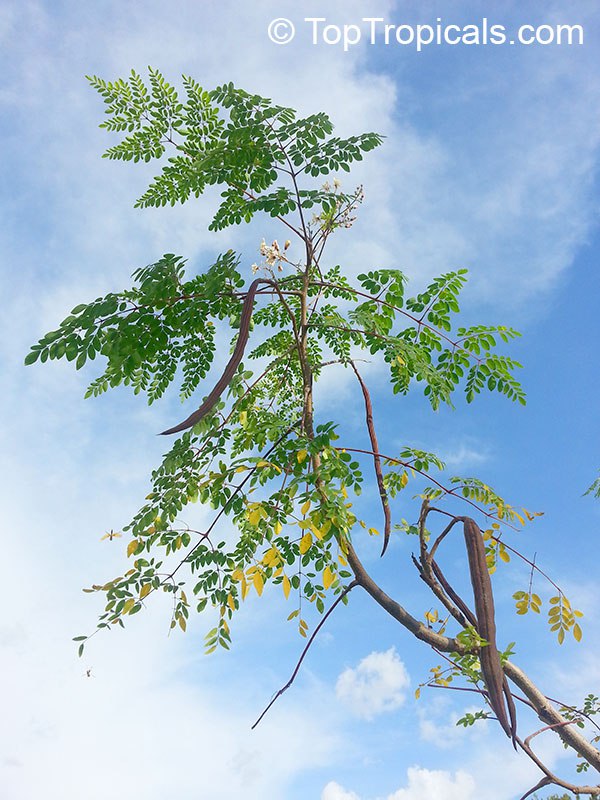
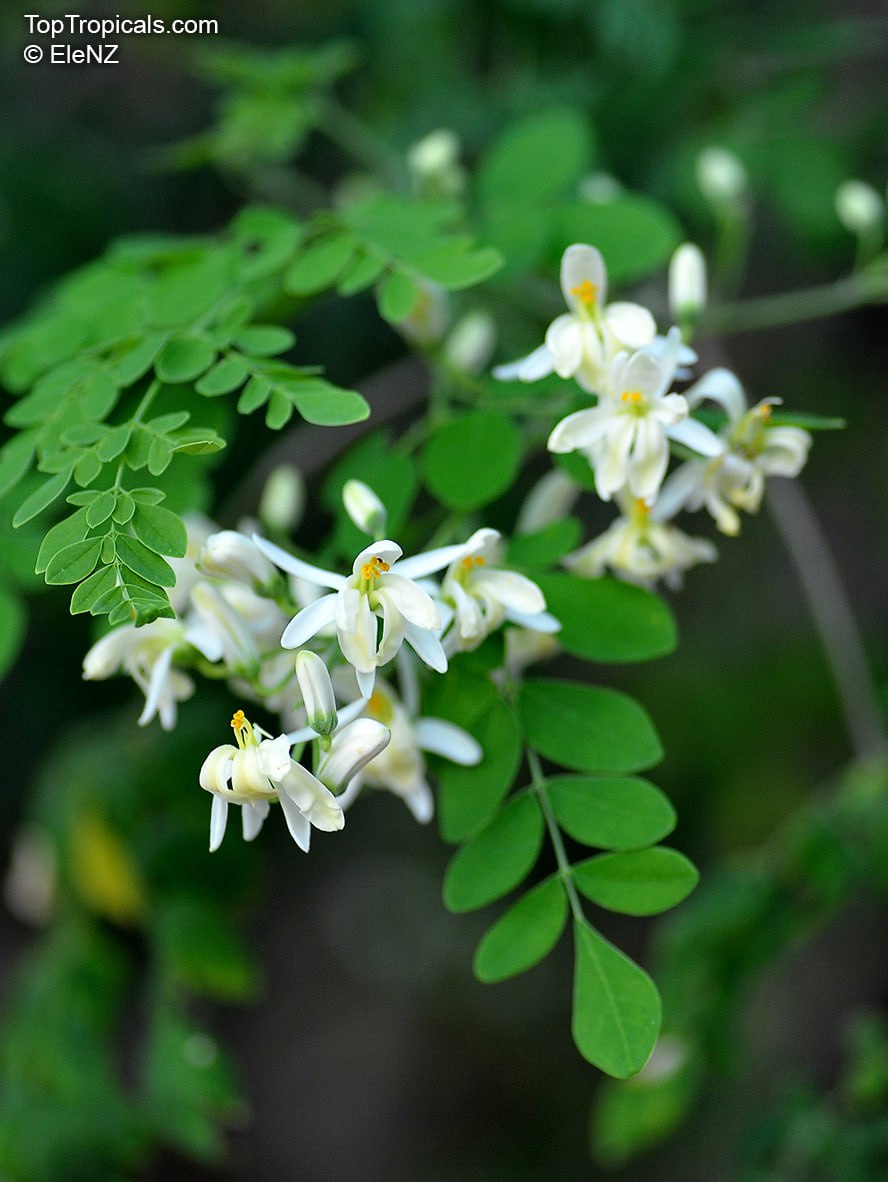
Moringa oleifera - Bridal veil, Horseradish tree, Drumstick Tree, Ben Oil Tree

Moringa oleifera - Bridal veil, Horseradish tree, Drumstick Tree, Ben Oil Tree

Moringa oleifera - Bridal veil, Horseradish tree, Drumstick Tree, Ben Oil Tree

Moringa oleifera - Bridal veil, Horseradish tree, Drumstick Tree, Ben Oil Tree

Moringa oleifera - Bridal veil, Horseradish tree, Drumstick Tree, Ben Oil Tree

Moringa oleifera - Bridal veil, Horseradish tree, Drumstick Tree, Ben Oil Tree

🌐 What is the most useful tree in the world?


💚 One of the most versatile and valuable trees known to humanity is Moringa oleifera, also called: Horseradish tree, Bridal veil, Horseradish tree, Drumstick Tree, Ben Oil Tree. It is indeed considered one of the most useful trees in the world. This reputation stems from its wide range of nutritional, medicinal, and practical applications.

💚 Moringa is a beautiful flowering tree with fragrant white flowers. It produces long green pods (looking like drumsticks!) and the seeds have been compared to a cross between peanuts and asparagus.

💚 Moringa leaves are rich in vitamins (A, B, C, E), minerals (calcium, potassium, iron), and amino acids, and have strong antioxidant properties. they are used in traditional medicine to treat inflammation. Moringa can help lower blood sugar and cholesterol levels.

💚 Almost every part of the tree is edible, including the leaves, pods, seeds, and flowers. Each part has its unique nutritional profile and culinary uses. Used in teas and cooking.

💚 The roots are used as a substitute for horseradish and the edible leaves make a highly nutritious vegetable. The roots have also been used in many folk remedies.

💚 Many Moringa products produced commercially: leaves, powder, oil. Moringa oil, extracted from the seeds, is used in cosmetics, skincare products. Seeds can be used to purify water, making it safer to drink.

💚 The plant can be used as a natural fertilizer and pesticide. Leaves are used as a nutritious feed for livestock.

📚 Learn more: How to grow a happy Moringa Tree

🛒 Plant your own Moringa Tree and save the Planet

#Food_Forest #Remedies

🏵 TopTropicals