Date: 18 Nov 2018
How to grow the biggest fruit on Earth...
Q: When I visited Thailand I bought this huge fruit at the market and the taste was amazing and unique! Now I see you have this Jackfruit tree for sale. I am excited to grow it but not sure if it will survive our winters. I live in Huston, TX. Also are there any special conditions required for successful fruiting?
A: Jackfruit indeed is one of the most fascinating tropical fruit. In spite of reputation being ultra tropical, the tree is not as cold sensitive as everyone believes. Mature trees can withstand light frost for a few hours without significant damage. The only thing, after cold snaps it may be not as profuse producer as in frost-free climates. Keeping Jackfruit in a pot is also an option in colder areas. The tree is quite unique not only about fruit but also about growth habit. The fruit is so large and heavy that the tree has a smart feature to produce only at the base of the trunk. This makes it possible to keep Jackfruit tree at very short height - 6-7 ft tall. We have many varieties of Jackfruit, and all of them can be grown in containers considering regular topping/pruning.
5 secrets of
Jackfruit successful production:
1) Frost free temperatures (occasional cold spells are not critical if
SUNSHINE-T cold protection booster is used)
2) Soil rich of organic matter (compost, manure, peat moss)
3) Moist soil and regular watering
4) Constant pruning and keeping under 7-10 ft
5) Regular application of fertilizer, microelements and SUNSHINE-Honey for better quality fruit.
Date: 14 Nov 2018
Recovering Soursop after shipping and cold
From Irene &
Marjorie, PA: We wanted to share our pics with you (after Summer). I
attached also the photo of the way the tree looked before your advice (back in
April). The big is the one we almost lost and you gave us these instructions and
it came back. These were your instructions:
"The soursop is one of my favorite fruits and I was so sad to hear
yours may be dead. Good news - the tree looks great! Yes, it does have some cold
damage but I'm surprised it still has leaves on it at all! In cooler weather,
they typically drop all of their leaves and stay that way until spring. You
can remove the damaged leaves and it will resprout new growth with the warmer
temperatures."
Taking care of
Soursop after shipping
Soursop - Annona muricata trees are very sensitive to temperature drops. This
always causes leaf loss. After shipping, do not water until the soil gets
slightly dry; keep it in bright shade. No fertilizer until the plant shows active
new growth. Be patient with your plant, and it should recover soon.
Soursop is an ultra-tropical tree and doesn't take any freeze. If you
live in a cooler climate, keep the plant in a pot (the good news is, Annonas,
in general, have a compact nature and are perfect for container culture).
Bring the tree indoors during the cold period, providing bright light.
We have a very interesting article about growing and fruiting Soursop
in an apartment. Check out 4534 Tropical Treasures Magazine # 7
Date: 9 Nov 2018
Taste of Mango
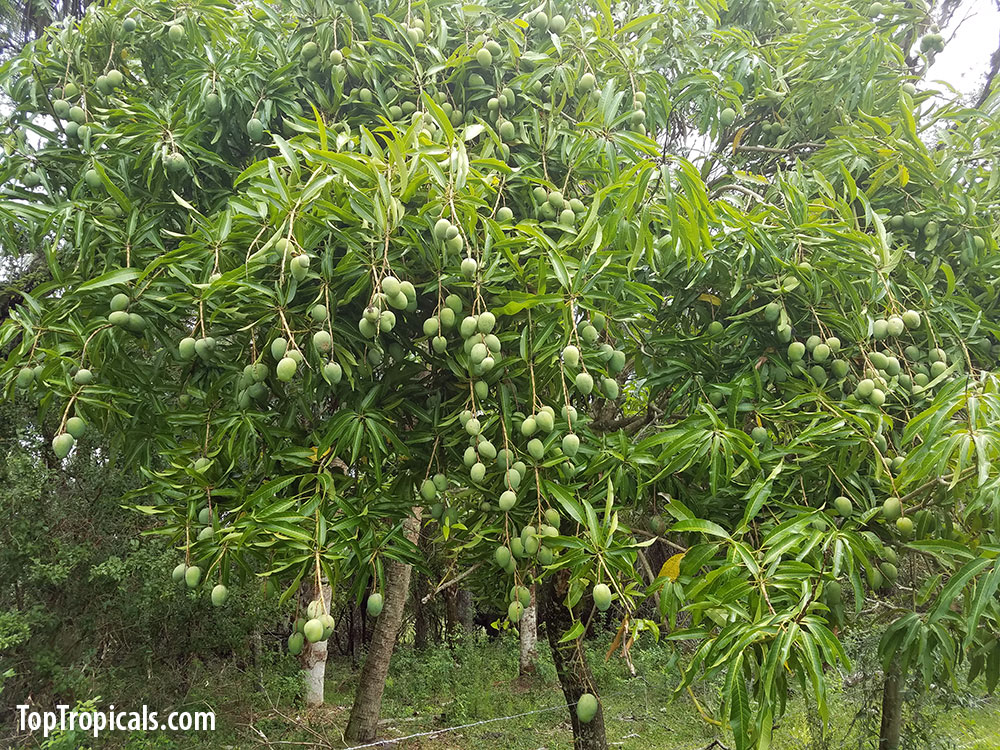
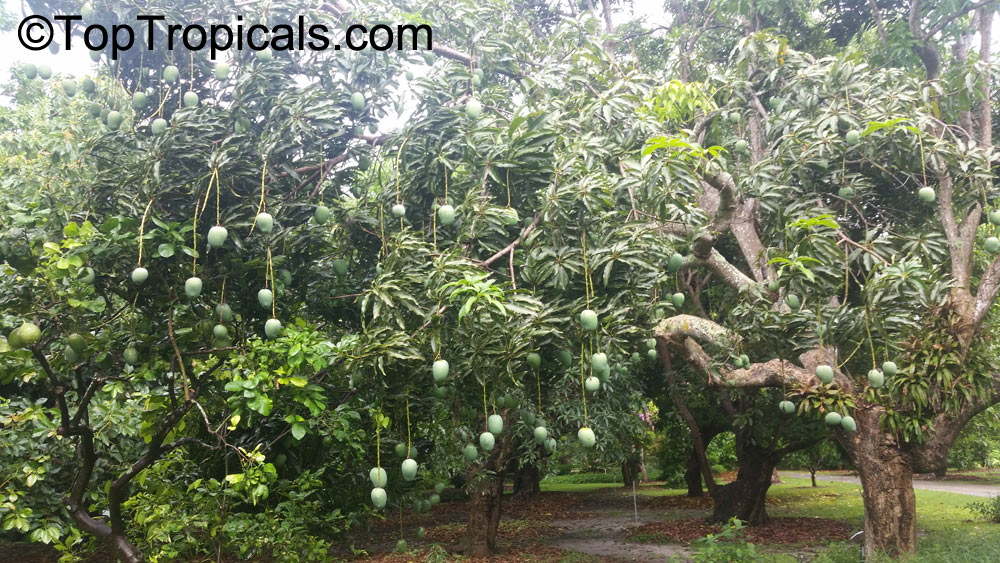
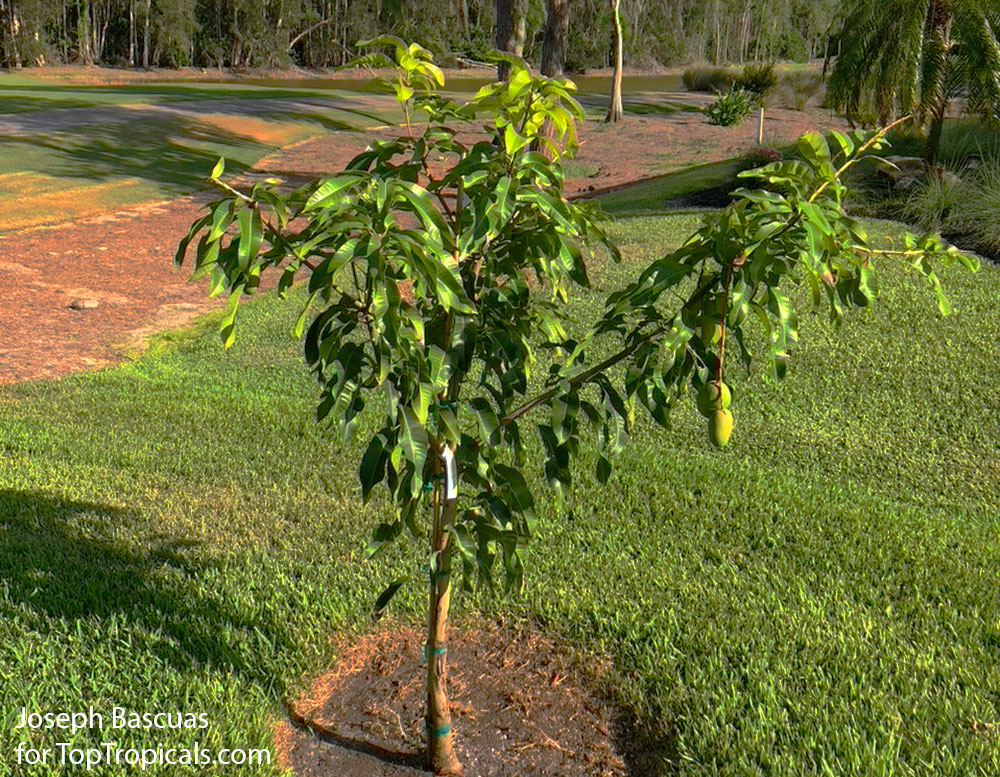
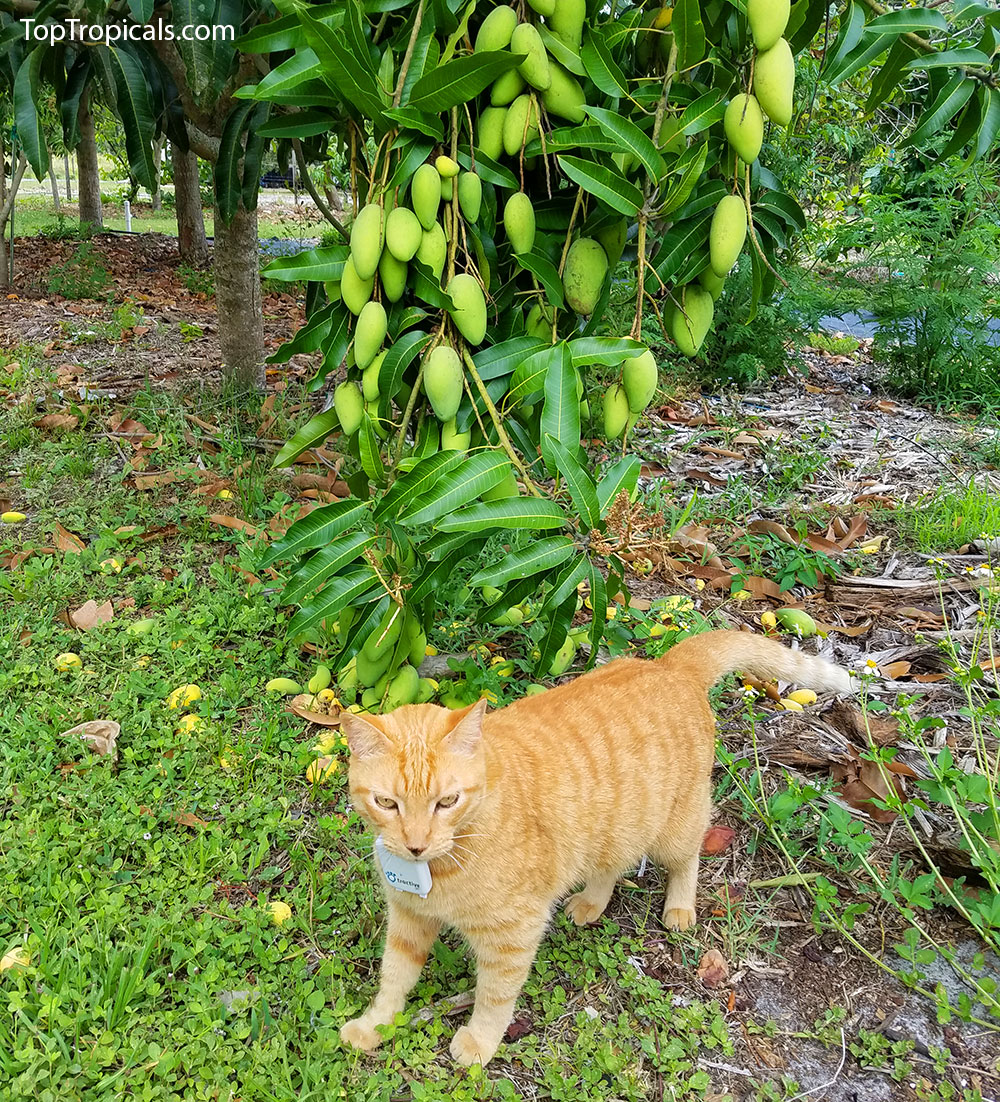
Mango harvest season is over, and now it's the time to plant young Mango trees for the next year season of flowering and fruiting. When choosing a mango tree, researching your location for proper growing conditions is relatively easy. But refining your decision-making process based on the taste of mango is both easy and fun (and filling)! However, since it is often difficult to find a convenient source for sampling a wide variety of mango fruits; we at Top Tropicals sat down and tasted a handful of varieties for you... Just another opinion on taste!
Pickering - Sweet, juicy, fiberless, with a hint of an apricot fragrance. (A universal favorite amongst the group.)
Nam Doc Mai - A slightly fibrous marmalade-like texture, with a sweet and floral flavor.
Cogshall - Very little fiber with a slightly tart and piney flavor.
Florigon - A mild, even flavor. Not too sweet, not too tart, and fiberless.
Mallika - A fiberless cantaloupe-like consistency. Slightly tart, with some semblance to non-acidic orange juice.
Valencia Pride - Slightly fibrous, with a tangy near citrus flavor.
Glenn - Very mild flavor, less sweet compared to other varieties, but very refreshing.
Date: 31 Oct 2018
Lighting for overwintering tropical plants indoors
Q: Days are getting shorter and darker... I brought my tropical plants indoors for overwintering (I live in Atlanta, GA). Could you give me some advice on what lamps should I use for additional lighting of my plants?
A: Indoor
plants are very unlucky: they have to grow in"caves,"and everybody knows
that plants don't grow in the caves. The luckiest plants win sunny windowsills,
but even there they dwell rather like in underbrush under tall trees, where
the sun illuminate them only early in the morning or in the evening, and its
light is diffused by foliage.
Usually domestic plants are in desperate lack of illumination not only
in winter, but also in summer. No light - no growth, no flowering. So, plants
need extra light to compensate the lack of illumination in the"room-cave"
conditions.
Before you will start any practical actions to help your plants, you
need first to decide whether you are going to set an additional illumination,
or provide full lamplight. In the case of just additional illumination, rather
inexpensive luminescent lamps will do, and you don't have to think about
their spectrum. Continue reading...
Date: 26 Oct 2018
Improving cold hardiness before winter: fertilizer and micro-elements
Q: I live in New Jersey and it is getting cool here, with temperatures in the upper 40s, but my tropical plant collection is in a heated sunroom (still around 70s). Should I continue fertilizing my plants? And if yes, my second question about deciduous Sugar Apple tree. Should I continue fertilizing it until it drops leaves?
A:
First of all, even though you live outside tropical
climate, your plants enjoy warm temperatures year round,
and can be treated like if they were in a Southern
garden.
Plant nutrients, both macro-elements (regular
fertilizer) and micro-elements (such as iron, manganese,
magnesium, copper, and other elements) play an important
role not only in overall plant health but also in plant
hardiness.
The rule of thumb is, even in warm climates we cut off
any fertilizer by the end of October. You still have
time for the last treatment this year (next will be in
March, or when your plants start showing new growth).
You may apply just a bit of slow-release granulated
fertilizer, or water-soluble by foliar spray, diluted
1/2 of label strength, to all evergreen species in your
collection.
The most important application before winter is
micro-elements and other plant boosters that will help
you plant collection survive winter months with a
shorter daylight and cooler temperatures. Now it is a
perfect time to make these simple steps:
1) Miscro-element applications, any one of: Superfood, Iron Supplement, Greenleaf.
2) Sunshine-T application: for
improving cold hardiness, plus immune system resistance
to insects and deceases.
3)
Sunshine-Honey application for all fruit trees to
encourage bigger and sweeter fruit next year.
Regarding your second question. Deciduous tropical plants like Annonas, Adeniums, Plumerias, etc - do not need regular fertilizer at this time, however, go ahead and apply microelements Superfood complex, as well as Sunshine-Honey, while leaves are still green. These two will give a kick-start to provide better flowering in spring, and production of sweeter fruit later.
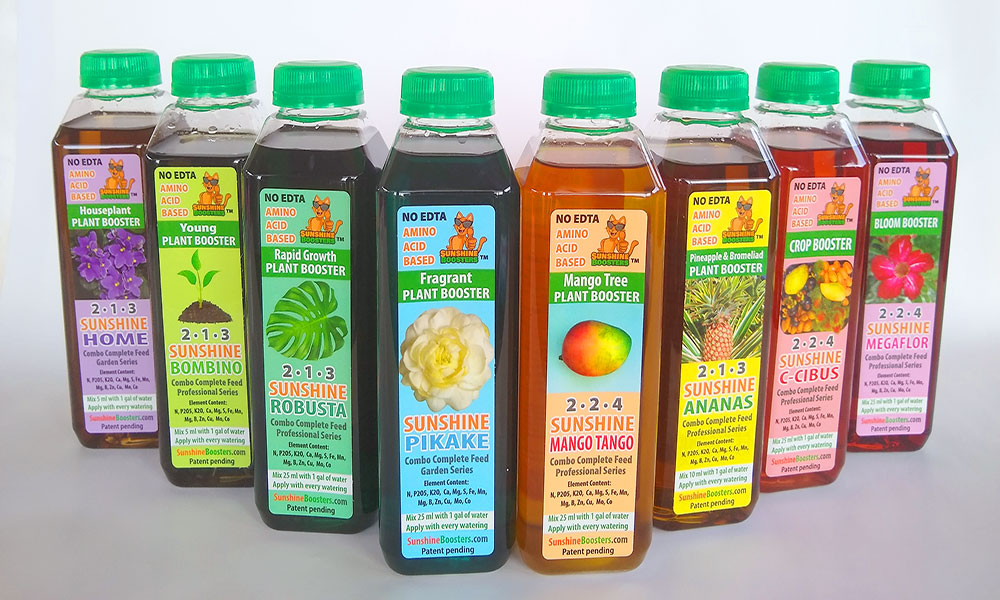
Check out SUNSHINE boosters - all with free shipping!