Date: 3 Feb 2019
Aquarius Plant Horoscope
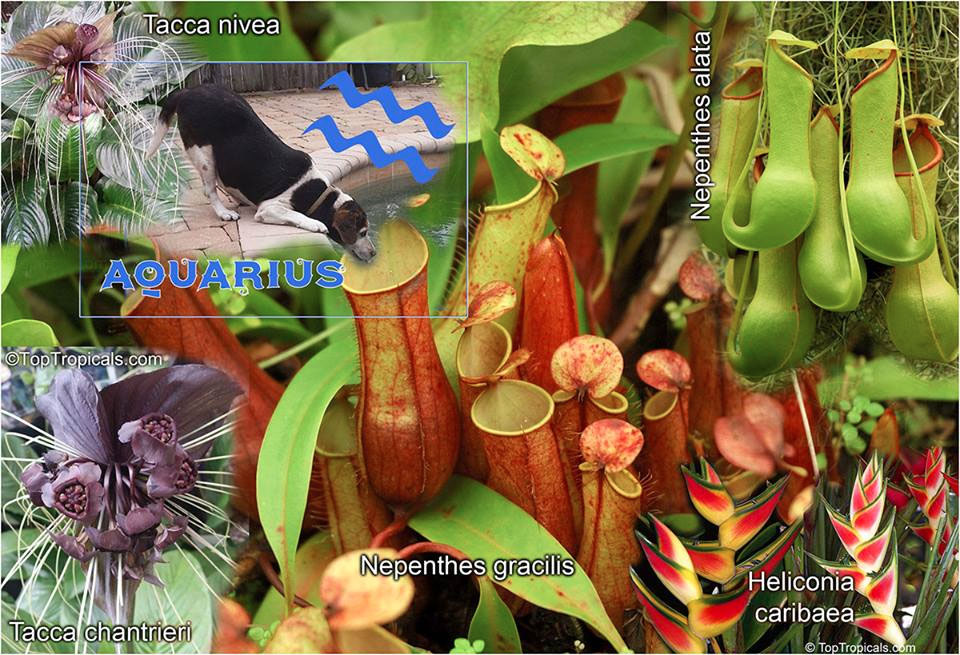

Aquarius - 1/22 -
2/18.
Aquarius is an AIR sign ruled by odd-ball Uranus.
The water-bearer's plants will often grow in unusual places and may vary in
appearance. They often have purple or blue flowers, or may have unusual
colors.
The most healing and beneficial plants for Aquarius are the ones that help
circulation, relax the nervous system, or promote inspiration. When Uranus
was discovered, it replaced Mercury as ruler of Aquarius. Physiologically,
Uranus rules the bioelectrical impulses that power the body's nervous system
(nervous tension and nervous exhaustion brought on by powerful changes in the
environment are related to both Mercury and Uranus). Physically, Aquarius
rules the lower legs, the calves, and the ankles, and the electrical impulses
that travel through the body's nervous system. The nervous system itself is
ruled by Mercury, and Uranus is said to be a "higher octave" of Mercury. Since
Uranus was discovered after the correspondences with plants had been
established, the herbs used in Aquarius are Mercury herbs. Always difficult to
pinpoint, quirky Aquarius appreciates the unusual and complex flavor of star anise. Use this star-shaped spice when you wish to bring happy
surprises into your life.
Aquarius Zodiac lucky plants:
Anise, Orchid, Golden rain - Koelreuteria paniculata, Bird of Paradise, Heliconia, Petrea, Mandevilla, Jasminum, Kiwi, Persimmon, Loquat, Olive, Alocasia, Colocasia, Citrus, Apple, Peppers, Gingers, Carambola, herbs spicy with an unusual flavor, White Pothos, Ivy, Shami - Prosopis cineraria, Neem, Medinilla, Sheesham Tree, Catnip, Passion fruit, Valerian, Aloe, Myrrh, Kava-kava, Cinnamon, Clove, Eucalyptus, Coffee, Cola nut, Nepenthes, Vanilla Orchid, Strongylodon - Jade vine, Tacca - Bat Lily, Eranthemums, Agapanthus, Orchid trees, Bolusanthus, Chamaedorea metallica, Clerodendrum ugandense, Clitoria, Duranta, Guaiacum, Jacaranda, Lavanda.
For other signs information, see full Plant Horoscope.

Date: 30 Jan 2019
How to set up indoor lighting for tropical plants
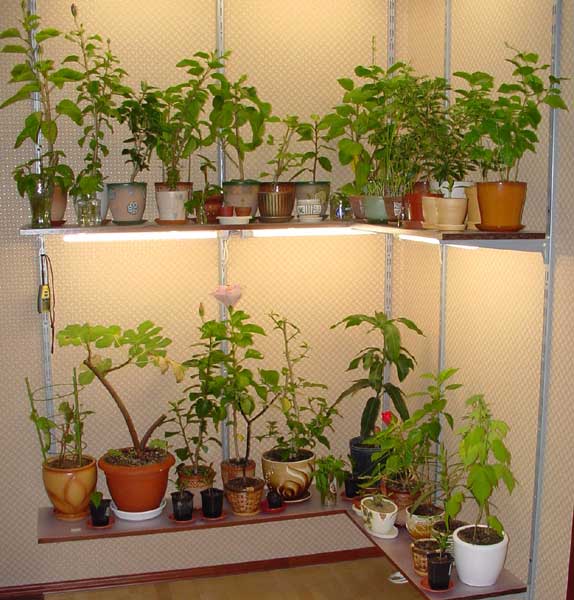
Q: My tropical plant collection goes indoors for winter. I have over 100 plants now and all windowsill space is taken. I am planning to build some shelves so I can also start some rare seeds indoors. Can you advise me on the choice of the grow lights so I can do it right?
A: Indoor plants are very unlucky: they have to grow in "caves," and everybody knows that plants don't grow in the caves. The luckiest plants win sunny windowsills, but even there they dwell rather like in underbrush under tall trees, where the sun illuminate them only early in the morning or in the evening, and its light is diffused by foliage. Usually, domestic plants are in desperate lack of illumination not only in winter but also in summer. No light - no growth, no flowering. So, plants need extra light to compensate for the lack of illumination in the "room-cave" conditions. And here is some science behind it...
Check out our selection of tropical plants tolerant to low light conditions
Date: 21 Jan 2019
Garden-burned Calories in 30 minutes

This is interesting! According to Harvard Medical School research, gardening activities are compared with some serious workout! Calories burned in 30 minutes by:
Walking 178
Bowling 133
Gymnastics 178
Dancing 244
Planting seedlings, shrubs 178
Planting trees 200
Gardening-weeding 205
Digging, spading dirt 222
So what are you waiting for? Start losing weight now by planting a tree and dancing!

Date: 21 Jan 2019
Featured Plant. Achras (manilkara) zapota - Sapodilla Silas Woods
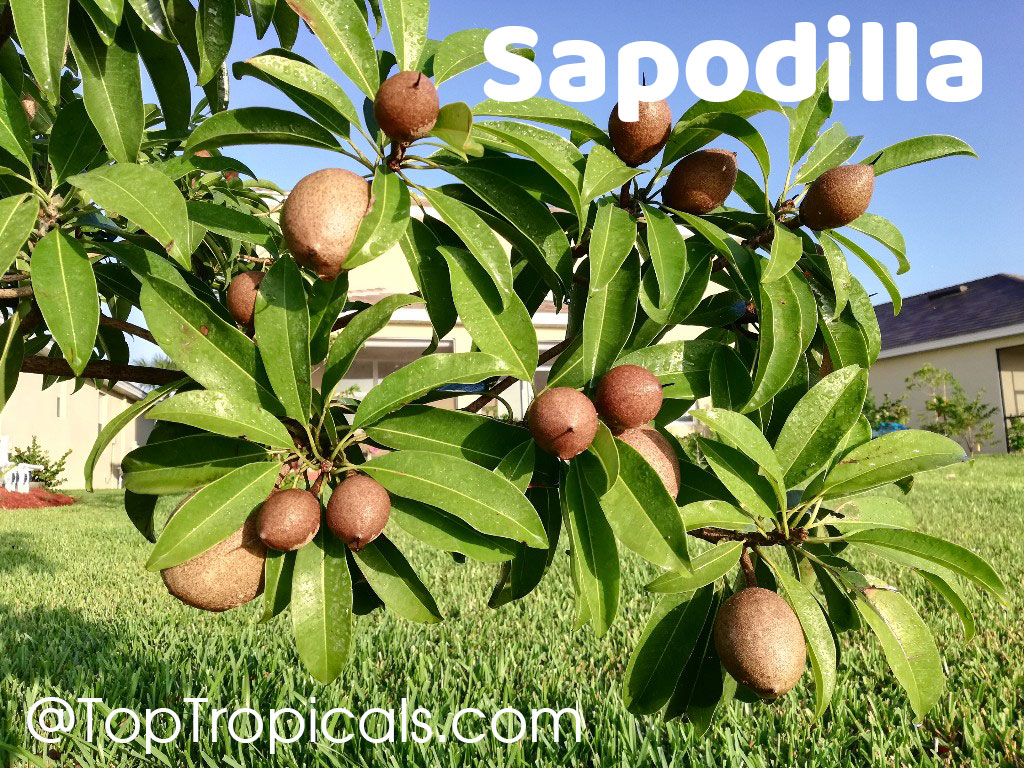
Achras (manilkara) zapota - Sapodilla Silas Woods
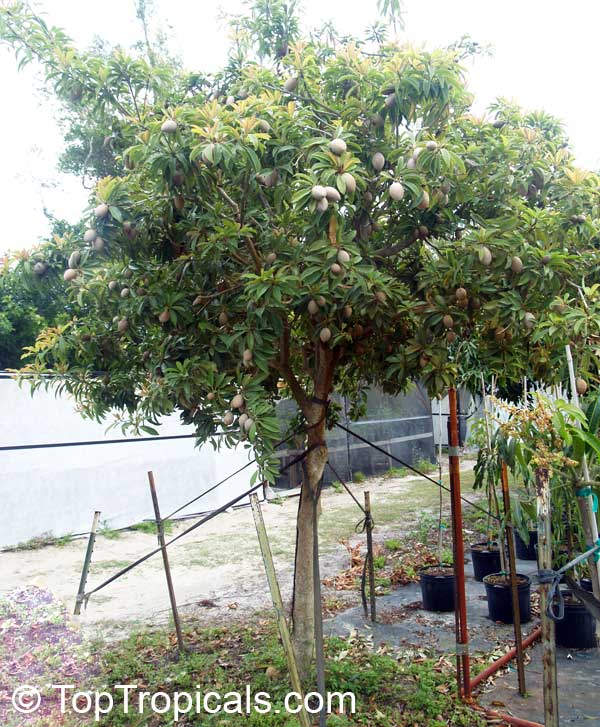
The Silas Woods is an outstanding variety of Sapodilla.
The tree has dwarf growth habit (under 20 ft in the ground) and adapts
well to a container.
This variety is highly productive.
Trees are producing year round, the branches often require support as they get very heavily loaded with fruits. Perfect fruit tree for small yards and container culture!

Date: 16 Jan 2019
Climate change is wiping out the Baobab, Africa's tree of life...
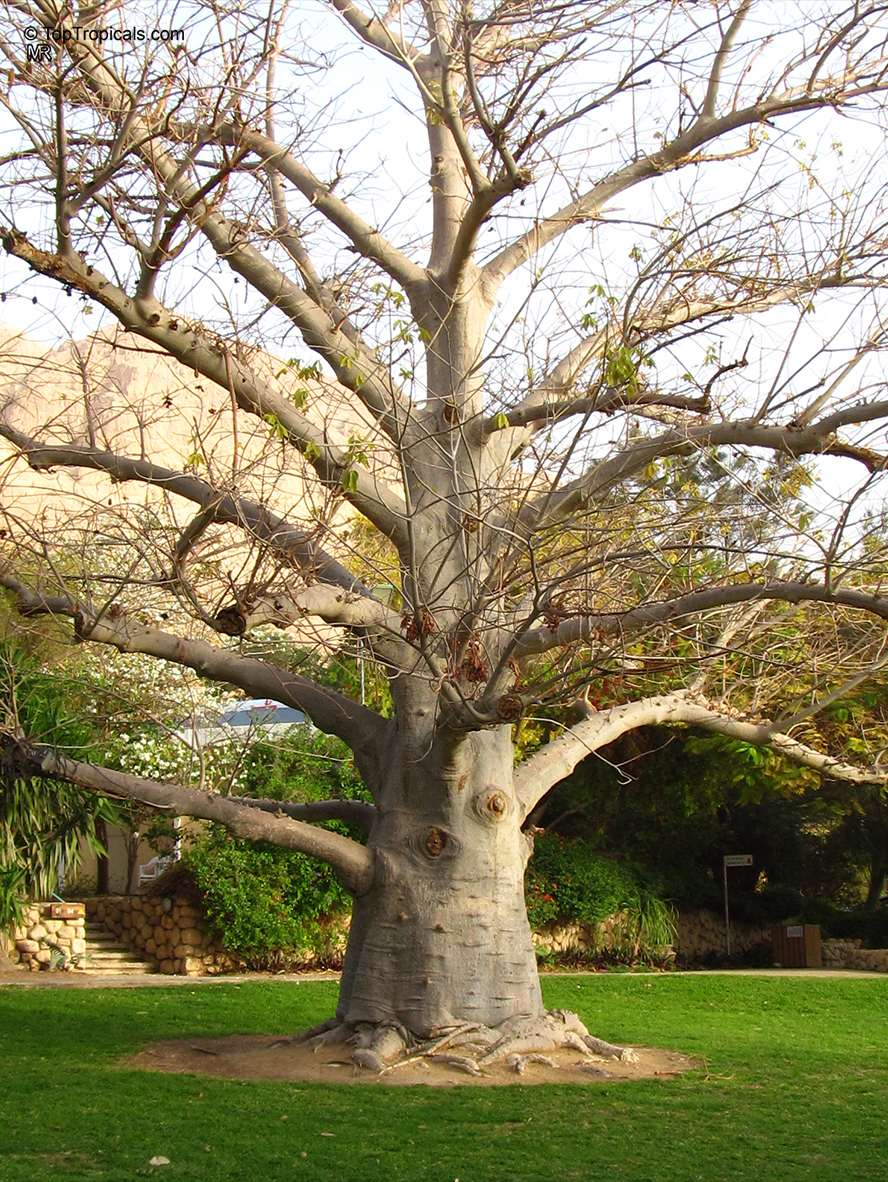
According to The Guardian News and Media, Africa's "tree of life" may not have much
longer left... These highly important species are threatened with
extinction, due to climate change and human development. Some species may not survive
the next century. While plants have generally adapted to extended droughts,
climate change is different, and with the Anthropocene, we are already
witnessing the loss of these impressive trees. Africa's largest, oldest inhabitants,
that have played silent witness to numerous generations, are already paying a
heavy price for the environmental crimes of foreign lands.
Baobab forms an integral part in people's livelihoods. In West Africa,
it is also called the "palaver tree" because of its social functions: when
there is a problem in the community, meeting under the Baobab tree with the
chief or the tribesmen would be synonymous with trying to find a solution to
that problem; it reinforces trust and respect among members of the community.
Its extinction would not simply be an environmental tragedy...
Every tropical gardener should have a Baobab to help to save this amazing species for the planet!