Garden Blog - Top Tropicals

Date: 31 Dec 2025

Year of the Fire Horse - what should you grow in 2026?

Year of the Fire Horse

Year of the Fire Horse

🐎 Year of the Fire Horse - what should you grow in 2026?


✔️ Here are the top lucky plants to grow, gift, or decorate with during the Year of the Fire Horse - each one chosen for its symbolism, element balance, and ability to channel that galloping energy in a positive direction:

🌿Anthuriums

Symbolizes: Elegance, passion, transformation
Why it's lucky: Its bold, vigorous leaves and exotic flowers are perfect for 2026.
Where to use it: Place in the southeast corner of your home, office, or garden to draw prosperity and charisma.
  • 🛒 What to plant: Exotic Anthuriums - Anthurium Black Dragon, Anthurium hookeri - Giant Birds Nest, Anthurium veitchii - King Anthurium, Anthurium vittariifolium - Long Leaf Anthurium


💮 Jasmines and Gardenias


Symbolizes: Love, luck, beauty
Why it's lucky: Horses are social and affectionate - jasmine’s sweet scent supports romance and good vibes.
Where to use it: Grow near entrances or windows; use jasmine oil in bedrooms to boost relaxation and harmony.
  • 🛒 What to plant: Fragrant Jasmines - Sambac, French Perfume, Night Blooming, and many varieties of Gardenias.


🌻 Sunflowers and sunny-yellow flowers


Symbolizes: Optimism, vitality, success
Why it's lucky: Bright yellow blooms reflect Fire energy and attract recognition.
Where to use it: Display in the east or south part of your home; great for creative spaces or work areas.

🎋 Lucky Bamboo, Money Trees and Bonsai


Symbolizes: Growth, flexibility, fortune
Why it's lucky: Combines Wood (growth) with Fire (motivation) - a perfect combo for 2026.
Where to use it: Place arrangements with 3 or 9 in the southeast to promote health and wealth.

Edible Greens with Fire-Friendly Energy


Symbolizes: Nourishment, healing, grounded action
Why they're lucky: Green leafy herbs support Wood energy, which fuels Fire. Think fresh, healthy, juicy, and nourishing.
🛒 What to plant: Tropical herbs, spices and edibles, including -
  • · Chaya (Maya spinach tree)
  • · Gynura (Longevity spinach)
  • · Lippia dulcis (Aztec sweet herb)
  • · Lemongrass and Citronella
  • · Alspice and Baurum
  • · Pepper Vines (Pipers) and Chili Peppers (Capsicums)
Grow them near the kitchen, patio, or sunny balcony for both beauty and bite.

❌ What to avoid?


Poisonous or sharp plants. The Horse is a plant lover - but not a fan of painful surprises. Keep the Fire Horse energy smooth, not spiky.

✍️ Final tip: Let the Fire Horse run wild - but not out of control


2026 is your chance to charge ahead - but keep your hooves on the ground. Plants can help you stay focused, bring balance, and add a little luck along the way. So get planting, stay bold, and let the good energy gallop in!

📚 Learn more:

  • More #Horoscope info for plants and cats
  • 2026: Year of the Fire Horse - time to grow bold, live free, and plant lucky

#Horoscope

🟢 Join 👉 TopTropicals

Date: 12 Jan 2025

How to protect tropical plants in Winter

Winter tips and podcast

Photo above: wrapping plants with frost cloth

Winter can be tough on plants, especially on tropical varieties. But with a little preparation, you can protect your garden and keep your plants safe from the cold. Here's how:

Winter Care Tips for Tropical Plants

Cut watering: Reduce watering to prevent root rot. Cold + wet = dead roots.
Water before frost: Thirsty plants are more vulnerable. Water them before a cold night to prevent damage.
Wind protection: Wind is more harmful than temperature drops. Plant near structures like houses or trees for shelter.
Prepare for long cold periods: If cold weather lasts for hours, use all available protection, including Christmas lights and propane heaters.
Don't use dry fertilizer in winter: Heavy fertilizing encourages tender growth, which is more susceptible to cold damage. Sunshine Boosters liquid fertilizers are safe to use year around as their intake is controlled by reduced watering.
Use fabric covers, not plastic: Plastic can cook plants in the sun, while fabric allows better ventilation.

Protecting  tropical  plants  in  winter  with  covers

Photo above: we cover our plants in the nursery with a thin synthetic fabric (sintepon) called "frost cloth" or "strawberry cloth". It is light, breathable and allows light and water to go through unlike plastic that creates heavy water pockets.

Prepare for Cold Nights

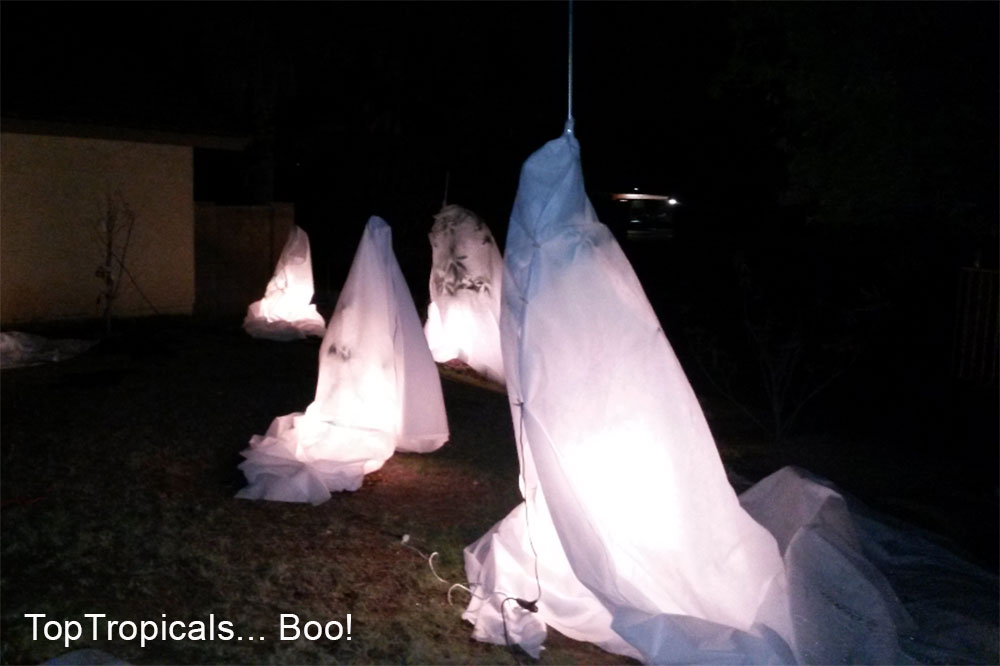
Wrap plants: On cold nights, cover individual plants or trees with sheets or blankets to shield them from wind chill.
Use Christmas lights: A simple string of lights can add extra warmth, protecting your plants during frosty nights.
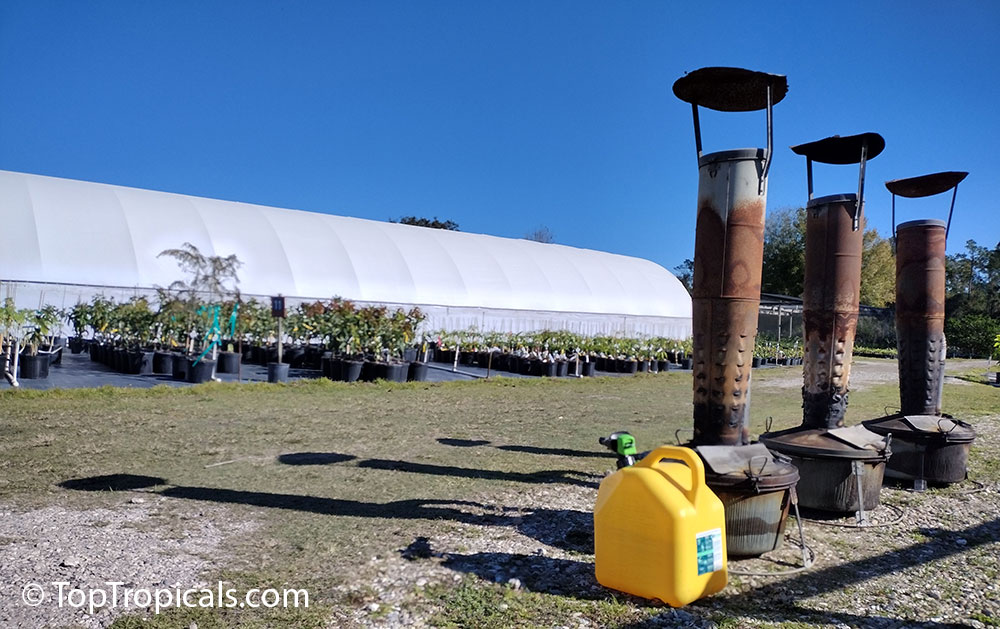
Use propane heaters: For added warmth in a larger area, place a propane heater near your plants. Make sure to follow safety guidelines and keep the heater at a safe distance from flammable materials. This can help maintain a few extra degrees of warmth, especially in more open garden spaces or temporary greenhouses. Always ensure proper ventilation to avoid harmful gas buildup.

Protecting  tropical  plants  in  winter  with  heaters

Photo above: we use both propane and kerosene heaters at the nursery

Large Collections? Build a Temporary Greenhouse

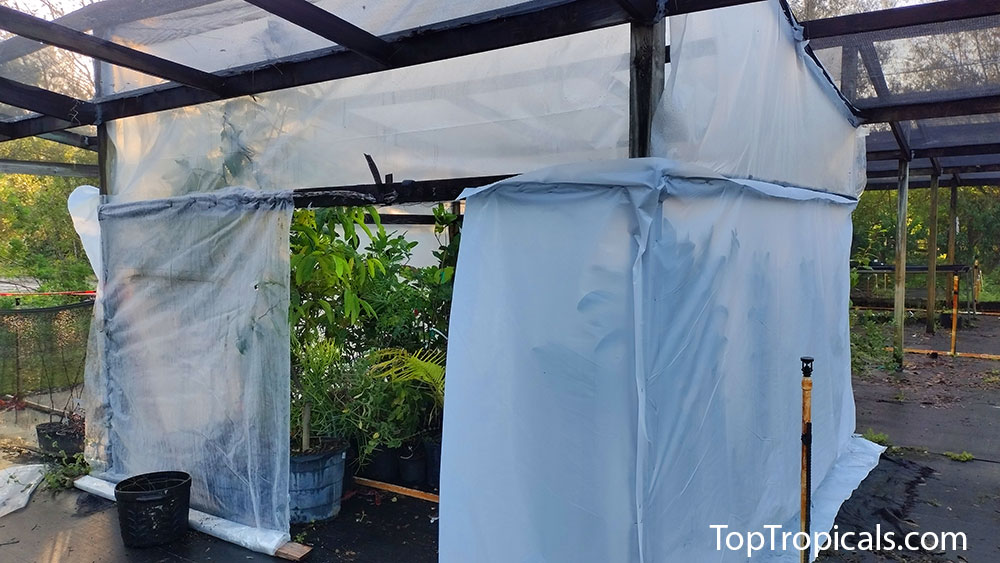
Affordable winter greenhouse: For large plant collections, you don't need an expensive greenhouse. A mobile carport with plastic or fabric covering, costing around $200, can house up to 100 plants!

Protecting  tropical  plants  with  temporary  greenhouse

Photo above: Temporary wrapping around plant collection with a plastic or frost cloth protects from a windchill. It may also win you a few degrees even without a heater. In this particular case, according to our temp sensors, with 30F outside, it was 41F inside this "dome", no heaters used.

Southern Exposure and Garage Storage

Southern windowsills: Compact tropicals can thrive on southern-facing windowsills, getting plenty of sunlight during the day.
Move plants inside: If you have larger collections, move them into a well-lit garage for the colder nights or longer periods.

Protecting  tropical  plants  in  winter  with  Christmas  lights

Photo above: using Christmas lights around plants while wrapping with frost cloth.

Key Factors for Survival

Cold duration: Tropical plants can survive brief cold spells but long durations, even above freezing, can be deadly.
Wind-chill: Wind chill can be harsher than the temperature itself.
Exposure: Southern-facing slopes hold heat longer, making them ideal for your plants.
Humidity: Proximity to lakes or oceans can create a milder micro-climate.
Gradual temperature Drops are safer. Plants adjust better to slow temperature changes than sudden cold blasts. Gradual cooling allows plants to prepare, reducing the risk of damage.

Protecting  tropical  plants  in  winter  with  plastic  greenhouse

Strengthen Plant Hardiness

Health and maturity: Well-established, healthy plants are more cold-hardy.
Boost plant immunity: Use products like SUNSHINE-Epi to improve cold resistance. Apply it before and during cold snaps to protect your plants.
Healthy plant is hardy. Make sure to fertilize your plants on regular basis - healthier and stronger plants are more cold hardy.

With these steps, you can protect your plants and help them survive the winter months. Stay warm and keep your garden thriving!

Podcast with Horticulturist Mark Hooten:
How to Protect Tropical Plants in Winter

Protect  plants  in  winter  podcast

Date: 6 Jun 2024

This is not AI

Wood Chip Flower - Strophanthus bovinii

👽 This is not AI...
It's a real plant, called Wood Chip Flower -
Strophanthus bovinii - blooming now in our garden.

@TopTropicals you will discover exotic plants you've never seen before:
🏵 Breathtaking flowers and perfume plants
🥭 Rare fruit trees from around the world
🌿 Ethnomedical herbs

All you need to know about rare tropical plants, how to grow and use them, where to get them - in one TopTropicals channel.
We have them all.

👉 Subscribe and share:
TopTropicals - We Grow Happiness

Date: 30 Apr 2023

B-Farm in Sebring
Now open 6 days a week!

Farm  dogs

In the photo: Sunshine and Mango, our friendly Customer "Service Animals" will be happy to give you a tour of the farm, including Sunshine Boosters selection and Mango Collection!

Attention local shoppers! Note new business hours for our Sebring location:

Monday - Saturday
9 am - 3 pm
Large discounts for locals!

Come visit us in Sebring, the heart of Florida, easily accessible from any Florida destination. You won't want to miss out on our 10-acre tropical farm, boasting the largest selection of rare plants, flowering and fruiting trees, edibles, and perfume plants from around the world!

Take your time and browse through our extensive collection, and don't hesitate to ask our knowledgeable staff for advice or assistance. You'll love being able to handpick your own garden gems straight from the grower. Whether you're a seasoned gardener or just starting out, we have something for everyone. So come on down and see for yourself...

P.S. Our Garden Center in Ft Myers is open as usual, 7 days a week

Mango  trees  at  Top  Tropicals  B-Farm

B-Farm  Avocado  specials

Date: 25 Jun 2019

True love of Night Blooming Jasmine

By Onika Amell, tropical plant specialist

Q: I live in New Cumberland, West Virginia. I love the smell of Night-Blooming jasmine. Is it possible to grow it in the northern panhandle of West Virginia? Do I have to plant it every year or do I keep it in a pot and take it inside during the winter months?

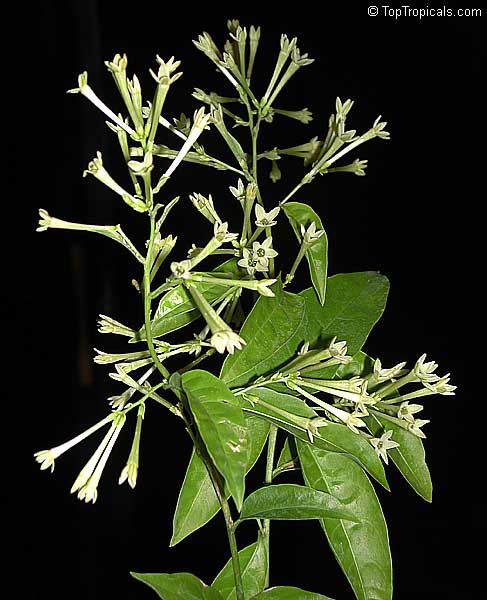
A: Technically, Night Blooming Jasmine is not a true jasmine (those plants belong to Oleaceae, or Olive family). Night Blooming Jasmine belongs to the Solanaceae family, also known as the Nightshade or "Potato" family of plants. Yes, this sweet fragrant flower called Jasmine for its perfume is related to potatoes and tomatoes!
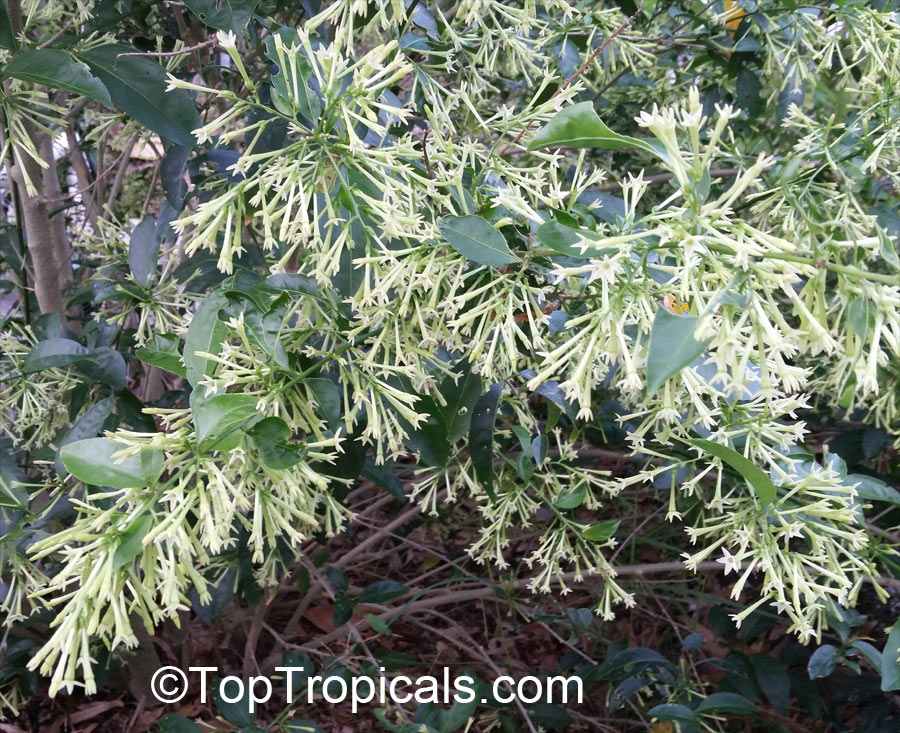
Night Blooming Jasmine - Cestrum nocturnum - is loved by many gardeners for its beautiful fragrance at night. It is one of the most fragrant tropical evergreen shrubs available. Cascading clusters of tiny, tubular pale yellow to white flowers open at night and release a heavenly fragrance throughout the garden, especially on warm summer evenings. The fragrance is much lighter during the day. Night Blooming Jasmine is grown year-round in zones 9-11. It is at its happiest in a sunny to a partially sunny spot in your garden in well-drained soil but can be grown in cooler climates as a container or greenhouse plant.
You would absolutely be able to enjoy this plant during the warm months in West Virginia, but it will most certainly not survive outside during the winter. You will have to bring it inside. Take it outside again only once you are confident there is no more possibility of frost. When grown indoors, be sure to give it the sunniest, South facing window in your home. When grown in a container, you will need to re-pot it every two to three years so it doesn't become root-bound.
For those who are lucky to live in frost-free areas, in ideal growing conditions outside, it can easily reach 8 feet with a spread of 5 feet. It has a lovely informal look that can soften a more manicured garden. Add organic matter to the planting hole when you plant to enrich the soil around the root ball. Water well in the summer, but allow them to dry out a bit between watering in the winter. Plant this Jasmine near pools, porches, doors, windows, and walkways where its lovely fragrance can be enjoyed. The shrub is also an excellent plant for privacy hedges and screens. When grown as a hedge, plant 3 feet apart.
Trim lightly after a bloom cycle to shape and then do a hard pruning in fall or spring to control the size of this plant. Fertilize 3 times a year - in spring, summer, and autumn - with a good quality granular fertilizer.

Recommended fertilizers:

Pink N Good Daily Plant Food - Flower Booster
Tropical Allure - Smart-Release Booster

Interesting facts:

Night-blooming jasmine is an excellent mosquito repellent. The powerful scent of the flowers attracts moths and bats that feed on mosquitoes and other small insects.
The flowers of the Night Blooming jasmine are widely used in India and other countries of South Asia for perfumery, medicinal applications and in religious ceremonies.

Limited time special offer:
Instant $5 off Night Blooming Jasmine