Garden Blog - Top Tropicals

Date: 20 May 2026

Why in Thailand Wrightia religiosa is near all temples and homes
Why in Thailand Wrightia religiosa is near all temples and homes Why in Thailand Wrightia religiosa is near all temples and homes Why in Thailand Wrightia religiosa is near all temples and homes
🏯 Why in Thailand Wrightia religiosa is near all temples and homes


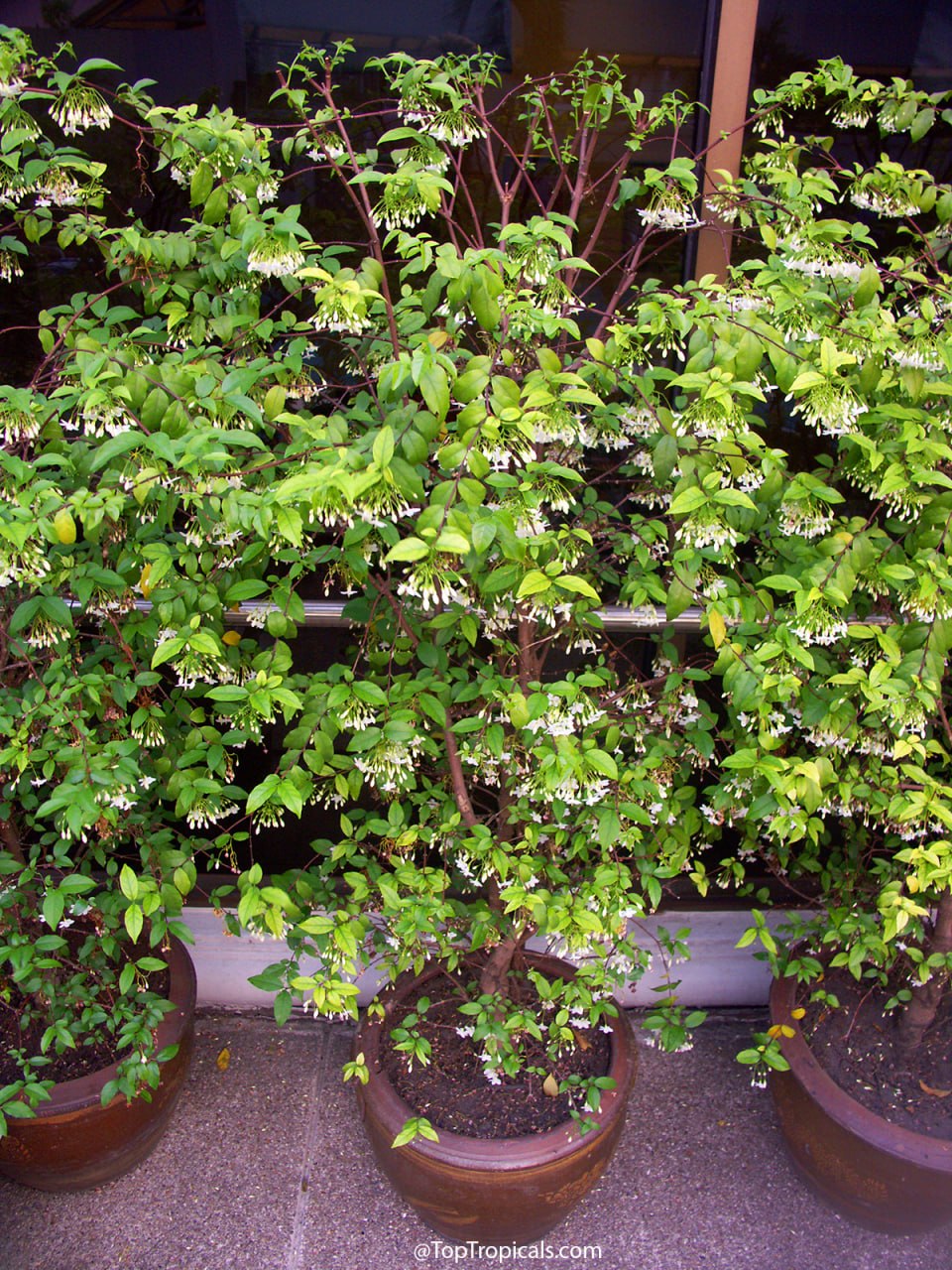
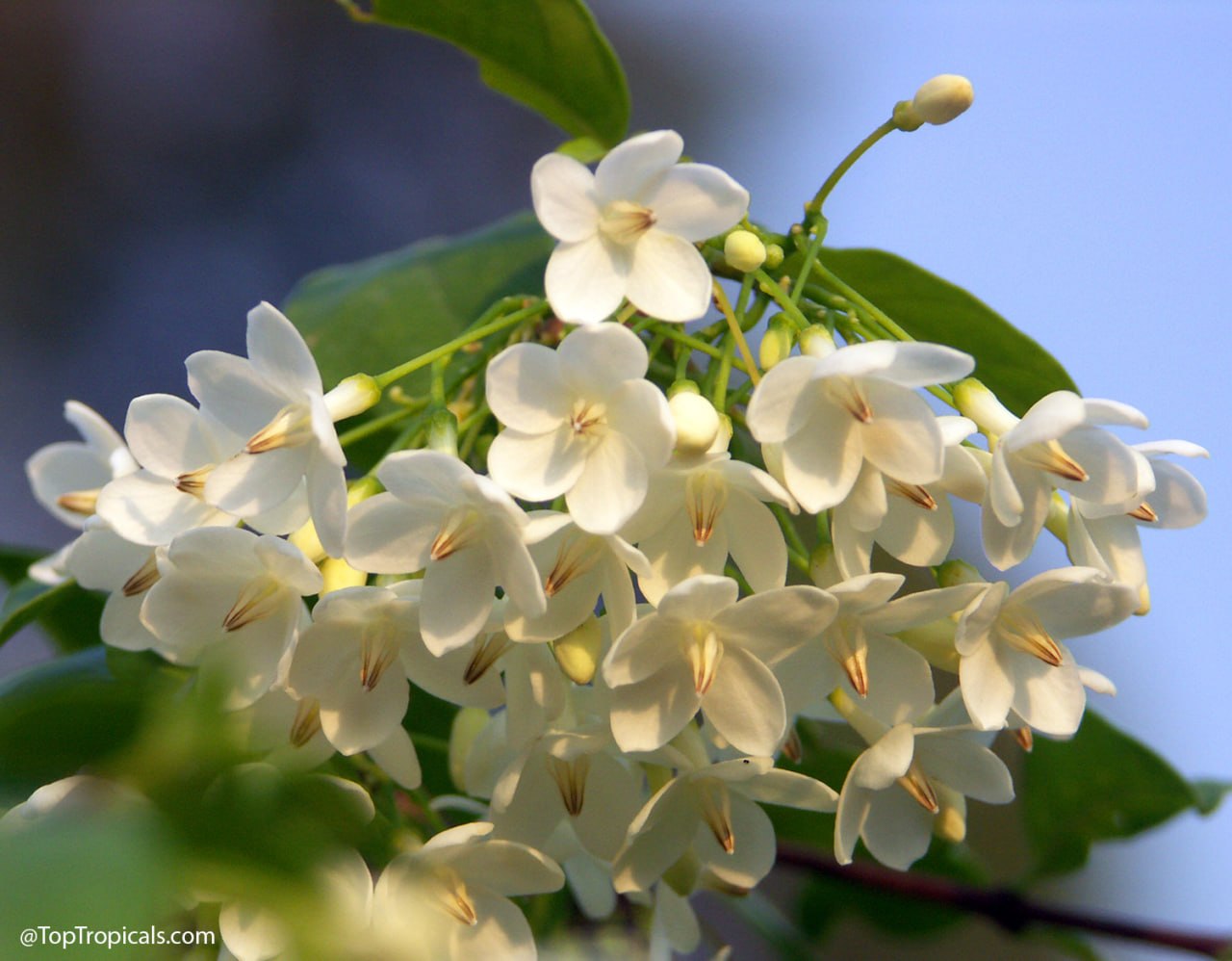
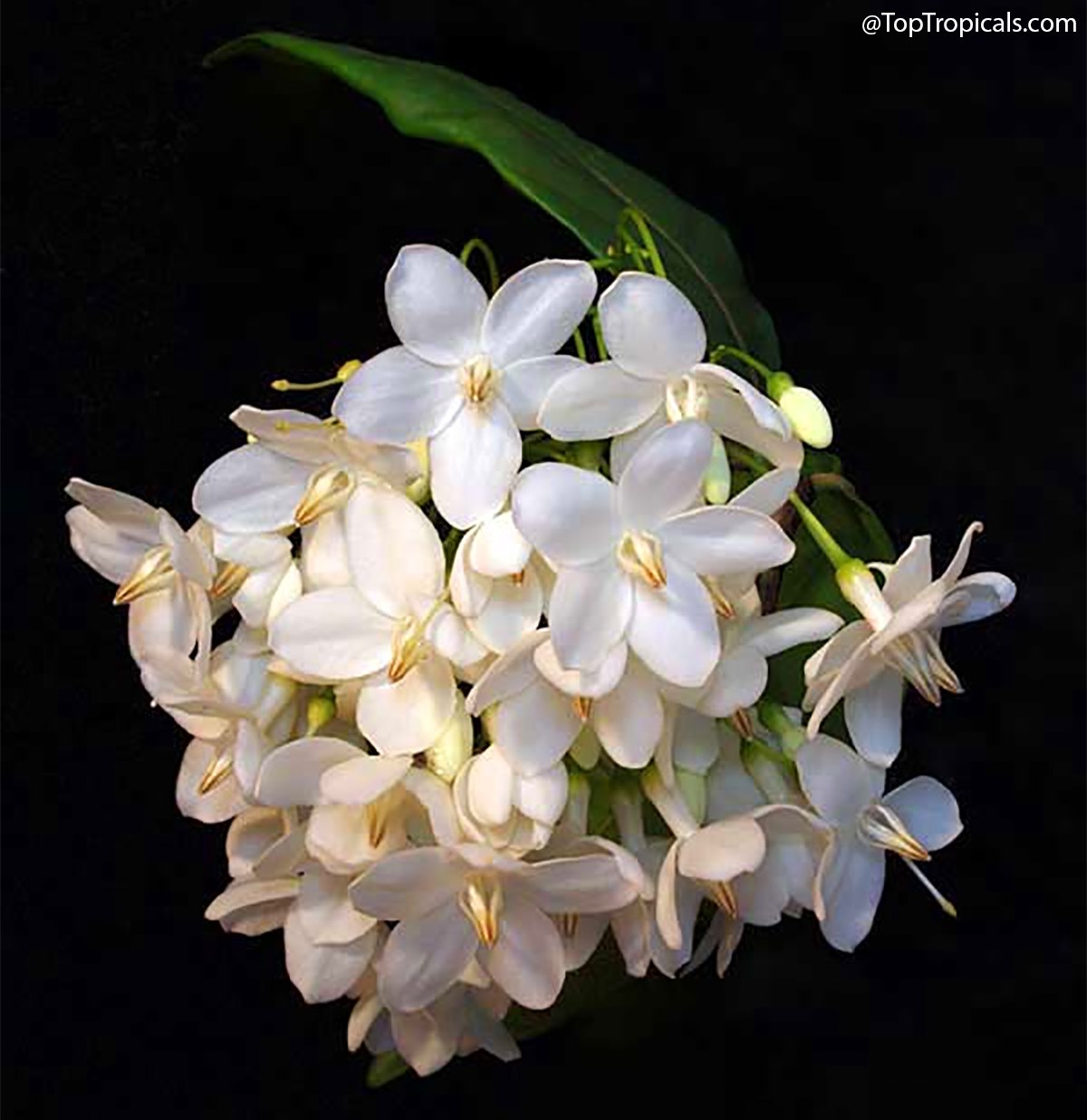
In Thailand, you will smell the Water Jasmine before you see it. Trace that soft, fruity, jasmine-like fragrance and you'll find Wrightia religiosa - an unassuming tropical shrub with tiny white flowers hanging like pendants. Also called Sacred Buddhist, this beloved plant is everywhere in Southeast Asia, cherished for its rich cultural history and old-world charm rather than loud colors.

💮 The Shrub of Buddhist Symbolism that Thai Temples Have Been Planting for Centuries

The species name religiosa is no accident. It literally refers to the plant’s long association with religious, spiritual, and cultural traditions across Thailand, Vietnam, Malaysia, and Singapore.

While the flowers themselves are visually simple, their unique growth habit has inspired generations of Buddhist symbolism. Unlike many flowers that point proudly toward the sky, the blooms of the Water Jasmine hang downward. In Thai culture, this downward-facing habit became a beautiful symbol of modesty and humility - a physical representation of bowing down rather than standing in pride.

Furthermore, many gardeners and monks associate the flower’s five distinct petals with foundational Buddhist virtues: wisdom, compassion, patience, kindness, and generosity. Whether ancient legend or folk interpretation, this cultural meaning has earned the plant a reputation as something sacred, making it a staple near homes and temple grounds.

💮 The Fragrance People Fall in Love With


Visually, Wrightia religiosa does not try to dazzle you with giant petals or wild, neon colors. Instead, its magic lies entirely in its scent.

The perfume it throws into the air is the real reason people become obsessed with it. It is a clean, intoxicating fragrance that drifts gracefully through the evening air. For anyone living in a warm climate, the best part is that the Water Jasmine is not a "one-and-done" bloomer. When the plant is happy, it flowers repeatedly and almost continuously throughout the year, meaning that incredible scent becomes a permanent fixture in your garden.

💮 From Temple Gardens to Bonsai Pots


Part of what makes Wrightia religiosa so widespread is its sheer versatility. It is an incredibly agreeable plant that adapts beautifully to whatever form a gardener desires. In Southeast Asia, you will see it styled as:
· A standalone specimen shrub
· A dense, fragrant privacy hedge
· A patio accent in containers
· A small, sculptural tree

It has also become an absolute classic in the tropical bonsai world. Because its branches are flexible, fast-growing, and highly responsive to pruning, even beginners can easily wire and shape young plants into twisted, artistic forms. Left to grow naturally, older plants develop a graceful, twiggy, and airy structure that looks naturally sculptural.

💮 The Fake-Dead Winter Quirk


Wrightia is easy to care for with standard sun and water, but it hates the cold (although survives it well). Below 65F, it abruptly drops all its leaves and looks completely dead. Many gardeners panic and throw it away - but it’s just resting. Simply bring container plants indoors for the winter. Once the warmth returns, it wakes up, flushes green, and resumes blooming.

💮 Subtle Beauty with Deep Roots


Some tropical plants impress with sheer size, but Wrightia religiosa does the opposite. Its beauty is quiet - thin branches, dangling white pendants, light green foliage, and a fragrance that gently fills a yard.

It is a plant with a few centuries of cultural history carried in its branches, and it is one of those rare garden gems you cannot truly appreciate until you experience its scent in person.

🛒 Plant the Sacred Buddhist and enjoy the magical aroma

📚 Learn more:

Snowflake Plant Facts

Botanical name: Wrightia antidysenterica
Also known as: Snowflake, Milky way, Winter Cherry Tree, Arctic Snow, Pudpitchaya, Sweet Indrajao, Hyamaraca
USDA Zone: 10 - 11
Highligths Plant used for bonsaiLarge shrub 5-10 ft tallSmall plant 2-5 ftFull sunWatering: Regular. Let topsoil dry slightlyWhite, off-white flowersPlant attracts butterflies, hummingbirdsEthnomedical plant.
Plants marked as ethnomedical and/or described as medicinal, are not offered as medicine but rather as ornamentals or plant collectibles.
Ethnomedical statements / products have not been evaluated by the FDA and are not intended to diagnose, treat, cure, or prevent any disease. We urge all customers to consult a physician before using any supplements, herbals or medicines advertised here or elsewhere.Fragrant plant
Get personalized tips for your region

Wrightia religiosa and other wrightias in Plant Encyclopedia

#Discover #Perfume_Plants

🟢 Join 👉 TopTropicals

Date: 6 Jun 2024

This is not AI

Wood Chip Flower - Strophanthus bovinii

👽 This is not AI...
It's a real plant, called Wood Chip Flower -
Strophanthus bovinii - blooming now in our garden.

@TopTropicals you will discover exotic plants you've never seen before:
🏵 Breathtaking flowers and perfume plants
🥭 Rare fruit trees from around the world
🌿 Ethnomedical herbs

All you need to know about rare tropical plants, how to grow and use them, where to get them - in one TopTropicals channel.
We have them all.

👉 Subscribe and share:
TopTropicals - We Grow Happiness

Date: 30 Apr 2023

B-Farm in Sebring
Now open 6 days a week!

Farm  dogs

In the photo: Sunshine and Mango, our friendly Customer "Service Animals" will be happy to give you a tour of the farm, including Sunshine Boosters selection and Mango Collection!

Attention local shoppers! Note new business hours for our Sebring location:

Monday - Saturday
9 am - 3 pm
Large discounts for locals!

Come visit us in Sebring, the heart of Florida, easily accessible from any Florida destination. You won't want to miss out on our 10-acre tropical farm, boasting the largest selection of rare plants, flowering and fruiting trees, edibles, and perfume plants from around the world!

Take your time and browse through our extensive collection, and don't hesitate to ask our knowledgeable staff for advice or assistance. You'll love being able to handpick your own garden gems straight from the grower. Whether you're a seasoned gardener or just starting out, we have something for everyone. So come on down and see for yourself...

P.S. Our Garden Center in Ft Myers is open as usual, 7 days a week

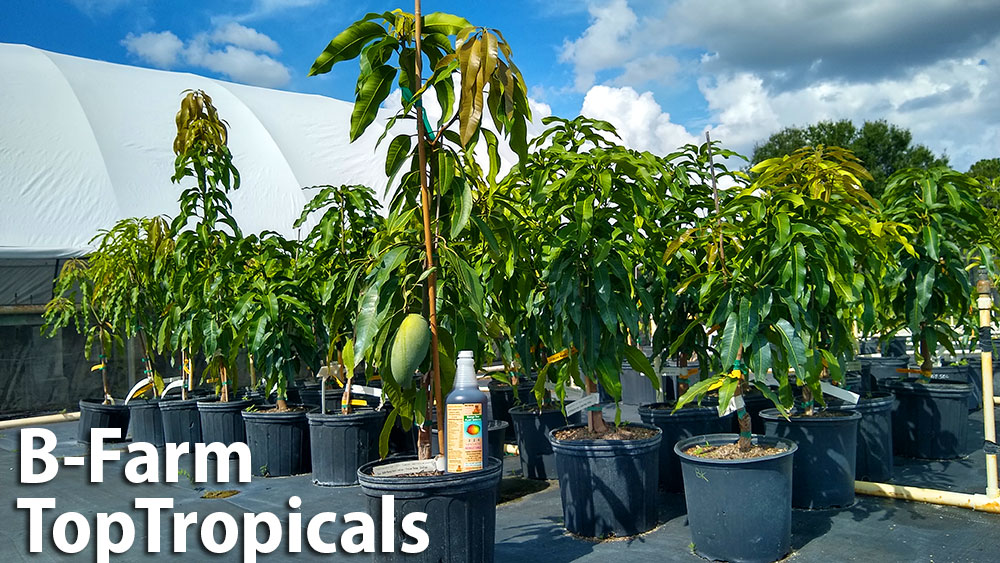
Mango  trees  at  Top  Tropicals  B-Farm

B-Farm  Avocado  specials

Date: 25 Jun 2019

True love of Night Blooming Jasmine

By Onika Amell, tropical plant specialist

Q: I live in New Cumberland, West Virginia. I love the smell of Night-Blooming jasmine. Is it possible to grow it in the northern panhandle of West Virginia? Do I have to plant it every year or do I keep it in a pot and take it inside during the winter months?

A: Technically, Night Blooming Jasmine is not a true jasmine (those plants belong to Oleaceae, or Olive family). Night Blooming Jasmine belongs to the Solanaceae family, also known as the Nightshade or "Potato" family of plants. Yes, this sweet fragrant flower called Jasmine for its perfume is related to potatoes and tomatoes!
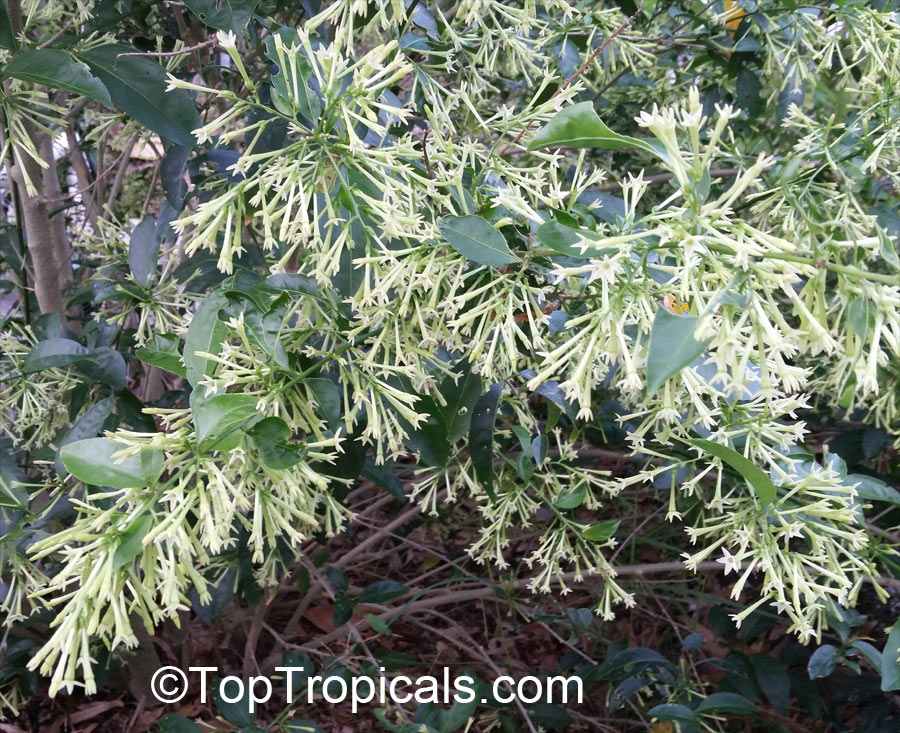
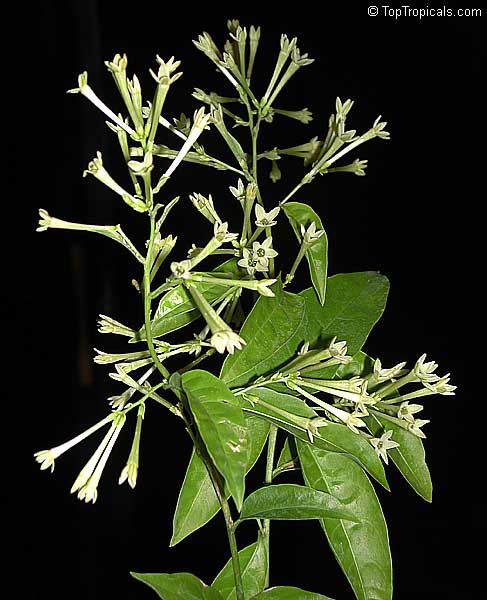
Night Blooming Jasmine - Cestrum nocturnum - is loved by many gardeners for its beautiful fragrance at night. It is one of the most fragrant tropical evergreen shrubs available. Cascading clusters of tiny, tubular pale yellow to white flowers open at night and release a heavenly fragrance throughout the garden, especially on warm summer evenings. The fragrance is much lighter during the day. Night Blooming Jasmine is grown year-round in zones 9-11. It is at its happiest in a sunny to a partially sunny spot in your garden in well-drained soil but can be grown in cooler climates as a container or greenhouse plant.
You would absolutely be able to enjoy this plant during the warm months in West Virginia, but it will most certainly not survive outside during the winter. You will have to bring it inside. Take it outside again only once you are confident there is no more possibility of frost. When grown indoors, be sure to give it the sunniest, South facing window in your home. When grown in a container, you will need to re-pot it every two to three years so it doesn't become root-bound.
For those who are lucky to live in frost-free areas, in ideal growing conditions outside, it can easily reach 8 feet with a spread of 5 feet. It has a lovely informal look that can soften a more manicured garden. Add organic matter to the planting hole when you plant to enrich the soil around the root ball. Water well in the summer, but allow them to dry out a bit between watering in the winter. Plant this Jasmine near pools, porches, doors, windows, and walkways where its lovely fragrance can be enjoyed. The shrub is also an excellent plant for privacy hedges and screens. When grown as a hedge, plant 3 feet apart.
Trim lightly after a bloom cycle to shape and then do a hard pruning in fall or spring to control the size of this plant. Fertilize 3 times a year - in spring, summer, and autumn - with a good quality granular fertilizer.

Recommended fertilizers:

Pink N Good Daily Plant Food - Flower Booster
Tropical Allure - Smart-Release Booster

Interesting facts:

Night-blooming jasmine is an excellent mosquito repellent. The powerful scent of the flowers attracts moths and bats that feed on mosquitoes and other small insects.
The flowers of the Night Blooming jasmine are widely used in India and other countries of South Asia for perfumery, medicinal applications and in religious ceremonies.

Limited time special offer:
Instant $5 off Night Blooming Jasmine

Date: 17 Jun 2025

What jasmine has a stronger scent than Sambac?

Jasminum molle, Indian Jui, Jasminum auriculatum

🎆 What jasmine has a stronger scent than Sambac?


⭐️ Once you smell it, you’ll never forget it! If you are looking for a jasmine that truly stands out, Jasminum molle (also known as Indian Jui or Jasminum auriculatum) is one of the best-kept secrets among fragrant plants.

⭐️ An uncommon jasmine with an unforgettable scent, with a rich, gardenia-like perfume that rivals the world-famous Jasmine Sambac, this stunning species deserves a special place in your collection.

⭐️ Extraordinary fragrance: The satin-white flowers release an intense, sweet scent that fills the air - one of the strongest among all jasmines.

⭐️ Multiple growth habits: Naturally bushy and fast-growing, it can be shaped into a dense shrub, grown in containers, or even allowed to climb slightly on a trellis. It also makes a great hedge.

⭐️ Versatile and hardy: Adapts well to full sun or part shade, wet or dry soil. Fairly cold-hardy, it can handle a light frost with no damage.

⭐️ Seasonal blooms: While blooming peaks in summer, flushes of flowers can appear again in fall or even winter, often in clusters that cover the plant.

⭐️ Cultural significance: In India, this jasmine is sacred to the Goddess Devi and widely used in religious ceremonies, garlands, perfumes, and hair adornments.

⭐️ Medicinal uses: Traditional remedies use jasmine oil for hair and skin health, and the roots for treating skin conditions.

⭐️ With small, dark green leaves and powdery white blooms, Jasmine Molle is a top choice for gardeners who love richly fragrant plants. It's easy to grow, low maintenance, and incredibly rewarding. Whether in a pot, a border, or a spiritual garden, this jasmine is more than just a plant - it's an experience.

🛒 Bring sacred fragrance into your garden

📚 Lean more about #Perfume_Plants

#Perfume_Plants #Hedges_with_benefits

🟢 Join 👉 TopTropicals