Garden Blog - Top Tropicals

Date: 24 Jun 2018

TopTropicals

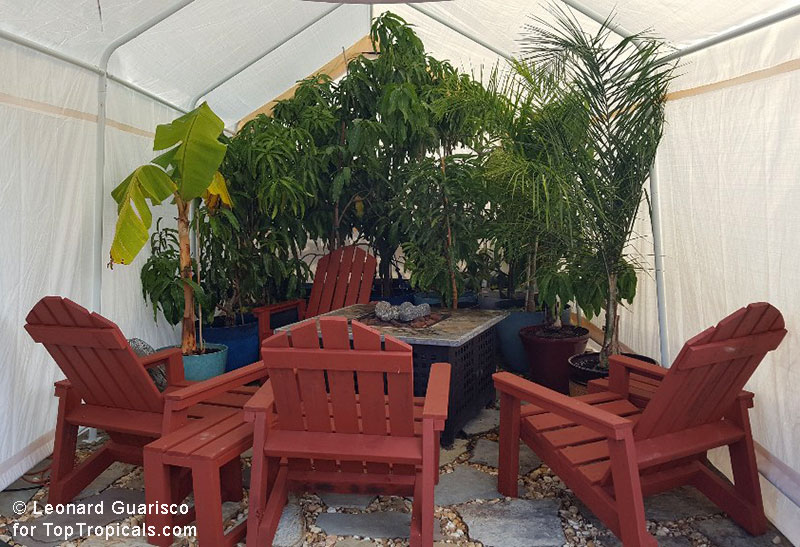
Mangos in portable garage

A word from our customer: I wanted to let you know how happy I was with my latest order, Mesk Mango. It arrived this past Saturday in EXCELLENT condition only losing 3 leaves while in transit to Morgan City, LA. I like the idea of the root ball dry, loosely packed and no Styrofoam peanuts compared to the old wet tightly packed root ball.
The attached pictures show where my container Mango collection (list below) will spend this winter so I don't lose any of my prized possessions! Again, thanks for supplying a great product and happy you survived the storm! 2 Nam Doc Mai, 2 Jakarta, 2 Valencia Pride, 2 Keitt, Pina Colada, Orange Sherbet, Cat Hoaloc, Spirit of 76, Carrie, Glenn, Coconut Cream, Mesk - in 7 gallon container during winter. 6-Nov-17.

Date: 26 Apr 2023

The Benefits of Companion Planting

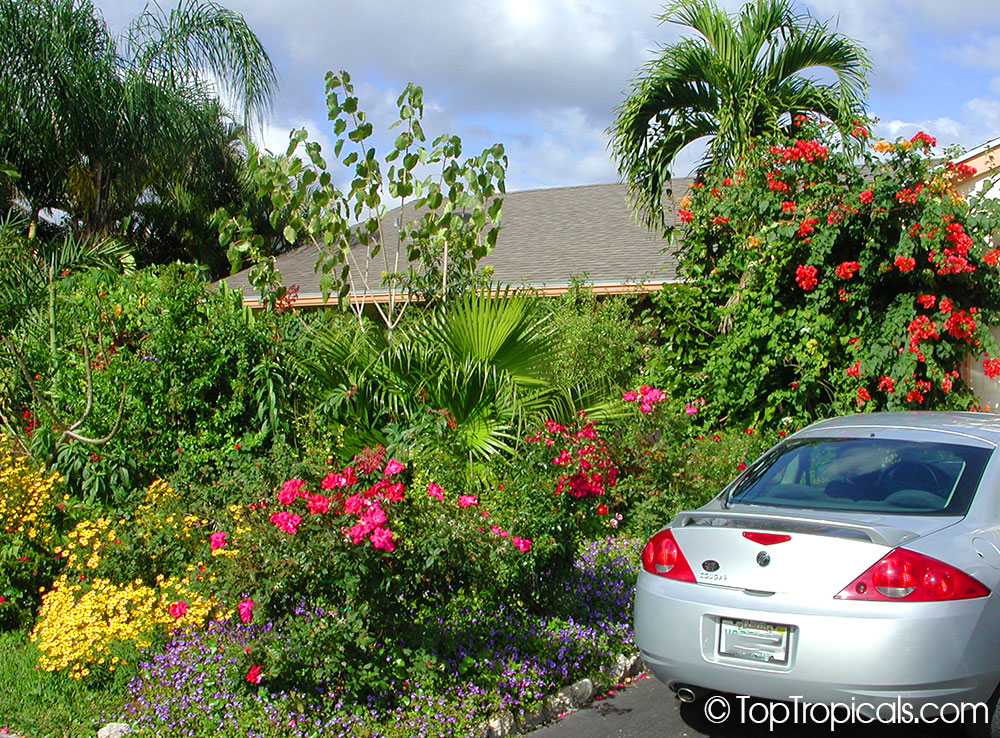
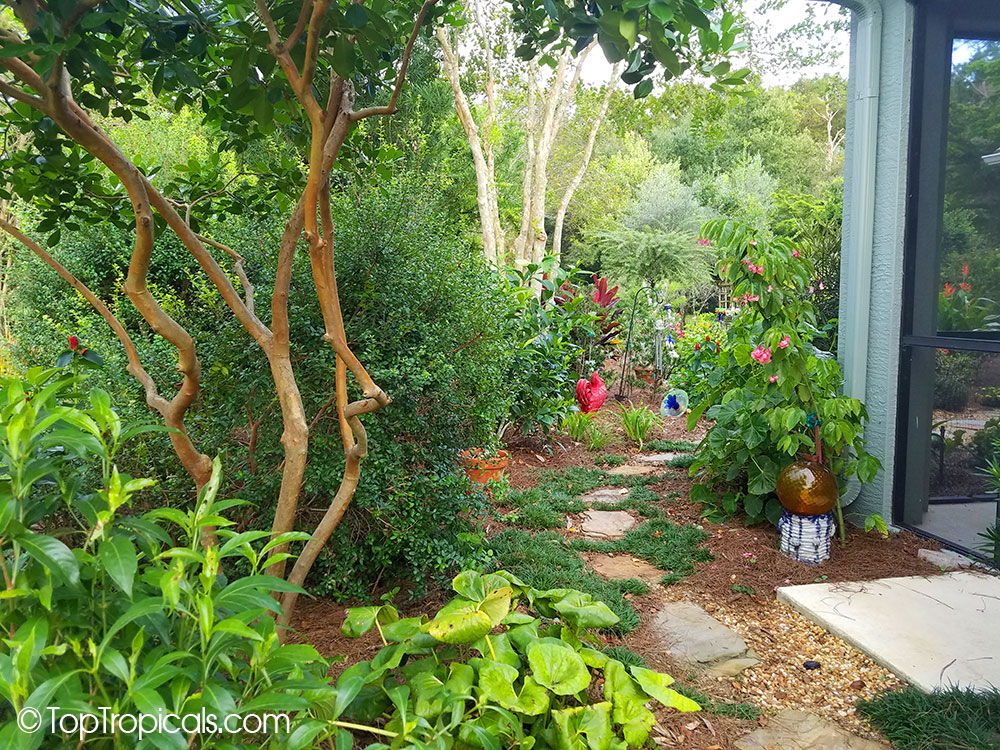
Landscaped  garden  with  companion  planting

Q: What is companion planting?

A: Companion planting is a gardening technique that involves planting different crops or types of plants together in a way that benefits all plants. This practice has been used for centuries, and it can be especially useful in tropical gardens where there is a diversity of plant life: trees, shrubs, vines and climbers, ground covers, fruit and edibles, and different flowering ornamentals. It is a great way to improve the health and yield of fruit tree crops while reducing the need for fertilizers and pesticides. By choosing the right companion plants and planning your garden layout carefully, you can create a vibrant and diverse ecosystem that will benefit both your plants and the environment.

Companion planting involves:

Planting different crops together to repel insects: adding such plants as Lemon grass, Patchouli leaf, or Moujean Tea near your vegetables can deter aphids and other pests.

Attracting pollinators - Butterfly plants. Many tropical crops, such as passion fruit, papaya, mango, and avocado, rely on pollinators to produce fruit. Companion planting can help to attract pollinators such as bees, butterflies, and hummingbirds to your garden.

Providing nutrients to the soil, adding mulch and low growing plants (ground covers) to preserve moisture.

Planting a variety of different types of plants together in order to create a more resilient ecosystem that is less susceptible to pests and diseases.

To get started, plan your garden layout and choose companion plants with similar water and light requirements.
For example, plant in the same group lush foliage plants, gingers, and flowering brunfelsias in shady areas; plant jasmines and gardenias in full sun and very well-drained spots.
Rotate annual crops regularly and experiment with combinations to find what works best. By doing this, you can create a thriving ecosystem that benefits both your plants and the environment, reducing the need for harmful chemicals.

Landscaped  front  yard  with  companion  planting

Buddah  and  flowers

Date: 6 Jan 2017

6 easiest fruit trees and 5 spices to grow in containers indoors

Q: This is why I want to move so that I can grow absolutely anything I want from your catalogue. Prefered Puerto Rico. Right now I live in New York and there is absolutely nothing I can grow there.

A: Of course living in Puerto Rico brings more opportunities to grow tropical species. However, you can create your unique tropical paradise even living in New York. We have many customers from up North who successfully grow tropical species (and get them to flower and fruit) in greenhouses, and even indoors.
Here are a few suggestions of tropical fruit trees that adapt well for container/indoor culture - for both beginners and advanced gardeners.

Top 6 fruit trees great for indoors / container culture / beginners
1. Mango (Mangifera indica). Select from one of smaller mango varieties
2. Sugar Apple (Annona squamosa)
3. Guanabana, Soursop (Annona muricata)
4. Miracle Fruit (Synsepalum dulcificum)
5. June Plum (Spondias cytherea)
6. Guava (Psidium guajava)

5 top spice plants (the spice will be with you right away, you don't have to wait for it to grow)
1. Allspice (Pimenta dioica)
2. Cinnamomon or Campor tree
3. Bay Leaf (Laurus nobilis)
4. Mint Tree (Satureja vimenea)
5. Vanilla orchid (Vanilla planifolia)

See a brief article of growing tropicals outside of tropics.

Don't forget to get some SUNSHINE boosters for your plant collection - for both successful indoor culture and cold protection!

See also our magazine Tropical Treasures) - Pushing the Limits of Tropical Gardening, with list of issues.

Date: 19 May 2016

Care of mail-order plants during hot summer
Q: I live in California and about a month ago ordered several plants from you, including fruit trees (Carambola, Mango, Avocado) and flowering trees (Xanthostemon, Adeniums, Champaca, Ylang Ylang). They were all doing well until I tried to move them into full sun, when they got leaf burn immediately. Ylang Ylang was doing great in a shade, but I repotted it from 1 gal into 3 gal and it is drooping leaves now. It has been very hot (over 100F) and dry (humidity is less than 25%). Any suggestions?

A: Hot summer can be pretty challenging time for establishing new plants. These are some guidelines to make your summer gardening more successful and rewarding.

1. You can order plants at any time, but keep your eye on your local weather forecast and try to chose cooler periods to schedule your plant shipments. Here at TopTropcals we monitor weather at destinations, and we can also delay shipment per your request until more favorable conditions.

2. During hot Summer months, many plants are still OK to ship, and to be planted, many species are heat tolerant. It's usually safe to ship most succulents, including Desert roses and Euphorbias. Some fruit trees are pretty easy too, like Loquats, Mango, Eugenias. Many flowering trees can take heat: Acacias, Clusias, Jatropha, Sausage Tree, Plumerias and many others. Check our full list of plants suitable for hot and dry conditions. Most jasmines, including Jasmine Sambac and Trachelospermum make also a safe choice for hot weather planting.

3. Use shade cloth or simply white sheets to protect young plants and new plantings from hot sun.

4. When establishing mail ordered plants during hot weather, keep them in shade for longer period of time than average recommended 1-2 weeks. Give them a chance to establish really well. In areas with low air humidity, try to create a simple mist system. It can be purchased in your local Home Depot for only $20 and set up takes only 10 minutes! It makes a big difference and can help you save many plants from hot weather stress.

5. Although it may seem that during hot weather plants need more water due to high evaporation, be careful with watering, and check soil with your finger before watering - don't water if it is still wet. Combination of "hot and wet" can be as harmful for the root system as "cold and wet" during winter. Protect root systems from overheating: covering black pots with white cloth will work. Remember when temperature is above 90F, most of plants slow down their metabolism, which means roots slow down or even stop pumping water and become more vulnerable to overwatering. For the same reason, do not hurry to step up into bigger container if roots haven't filled yet the existing pot.
Date: 27 Aug 2024

What trees will fruit quickly? Top 10 fast-fruiting trees

What trees will fruit quickly? Top 10 fast-fruiting trees

🥭 What trees will fruit quickly? Top 10 fast-fruiting trees


Q: I would like to plant several fruit trees... I am 85 years old and hope to see them fruiting soon. What fruit trees can you recommend that will fruit quickly?

A: Most grafted fruit trees, such as Mango, Avocado, and Peaches, will fruit quickly - often within the same year or the next. There are also many wonderful tropical fruits that will produce for you within a year or two, even without the need for grafting.

⚠️ In our next posts we will introduce to you the top 10 of most popular, most rewarding and easy to grow fast fruiting tropical trees...

📚 Discover 10 fast-fruiting trees in the following posts:
1. Annona - Sugar Apple, Custard Apple
2. Guava (Psidium sp.): Cattley and Tropical guava
3. Eugenias - Tropical Cherries
4. Barbados Cherry (Malpighia glabra)
5. Loquat (Eriobotrya japonica)
6. Papaya (Carica papaya)
7. Mulberry (Morus hybrids)
8. Carambola - Starfruit (Averrhoa carambola)
9. Blackberry Jam Fruit (Randia formosa)
10. Peanut Butter Tree (Bunchosia argentea)

Stay with us and make sure to subscribe! ⬇️

🛒 Shop fast fruiting tropical trees

#Food_Forest

🔴 Join 👉 TopTropicals