Garden Blog - Top Tropicals

Date: 30 Dec 2025

Persimmon spoon pudding: quick-n-fun exotic recipes
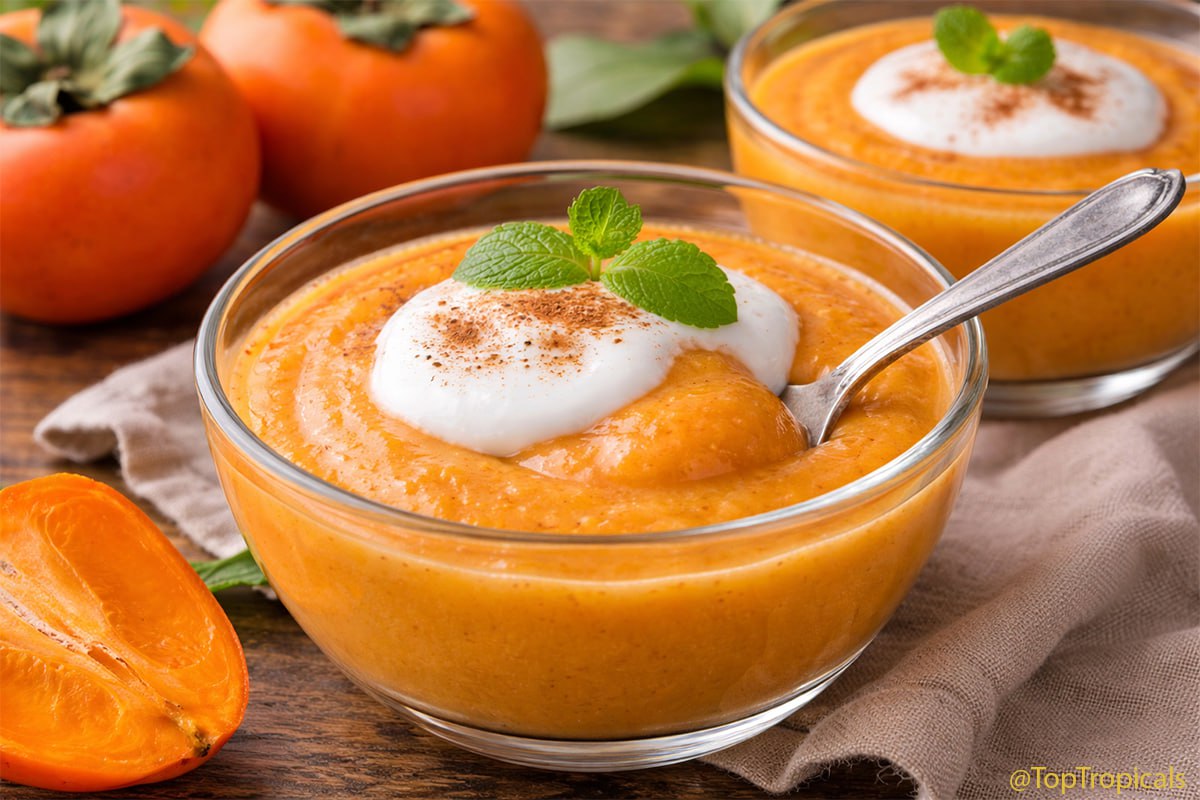
Persimmon spoon pudding
Persimmon spoon pudding

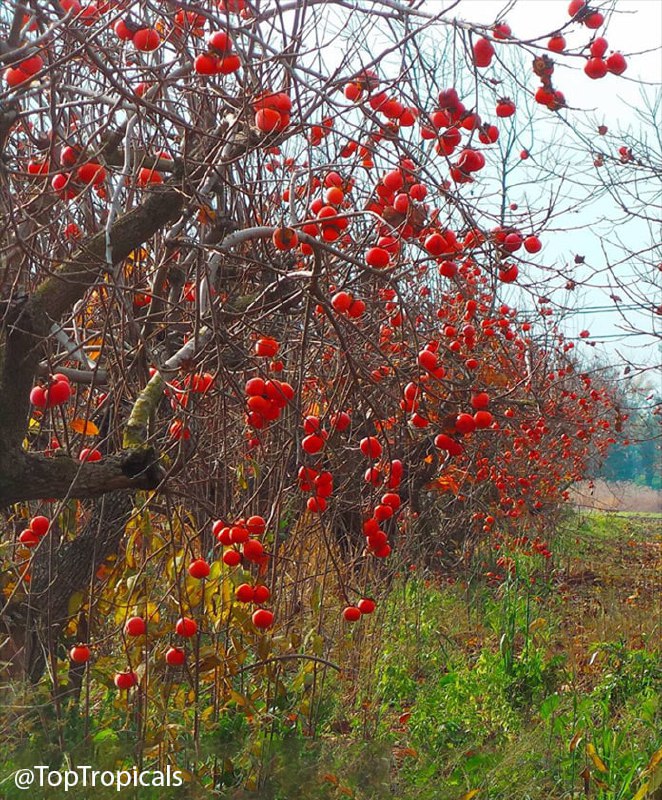
Persimmon tree (Diospyros sp)

Persimmon tree (Diospyros sp)

🍴 Persimmon spoon pudding


Ingredients

  • 2 very ripe persimmons (astringent type, fully soft)
  • 2 tablespoons plain yogurt
  • Optional: pinch of cinnamon

Instructions

  1. Scoop the soft persimmon flesh into a blender and puree until smooth.
  2. Chill the puree in the refrigerator for 15 to 30 minutes.
  3. Spoon into a bowl and top with plain yogurt.
  4. Sprinkle lightly with cinnamon if desired and serve.

🍑 About the fruit:


Persimmon (Diospyros spp.) is a graceful, cold-hardy subtropical fruit tree native to China and widely grown across temperate and warm regions. The fruit is loved for its rich sweetness, often compared to honey and apricot. Persimmons are divided into astringent types, which must soften fully before eating, and non-astringent types, which can be enjoyed firm. The fruit is nutritious and commonly eaten fresh or used in desserts.

🌱 In the garden:


Persimmon trees are highly ornamental, with drooping branches, lush summer foliage, and dramatic fall color. They thrive in well-drained soils, tolerate alkaline conditions, and are hardy in USDA zones 7-10. Many varieties perform well in containers, making persimmon a beautiful and productive choice for both edible landscapes and patio gardens.

🛒 Plant Persimmon Tree for sweet fruit and deserts

📚 Learn more:

Plant Facts

Diospyros blancoi, Diospyros discolor
Velvet Apple, Mabolo
USDA Zone: 9-11
Large tree taller than 20 ftFull sunRegular waterEdible plant
  • Explore Persimmon trees (Diospyros spp) in Plant Encyclopedia
  • How soon will Persimmon tree fruit?
  • Why so many gardeners this year planted Native American Persimmon
  • Hardy, dramatic looking tropical fruit tree with a sweet fruit

  • #Food_Forest #Recipes

    🟢 Join 👉 TopTropicals
    Date: 4 Jan 2026

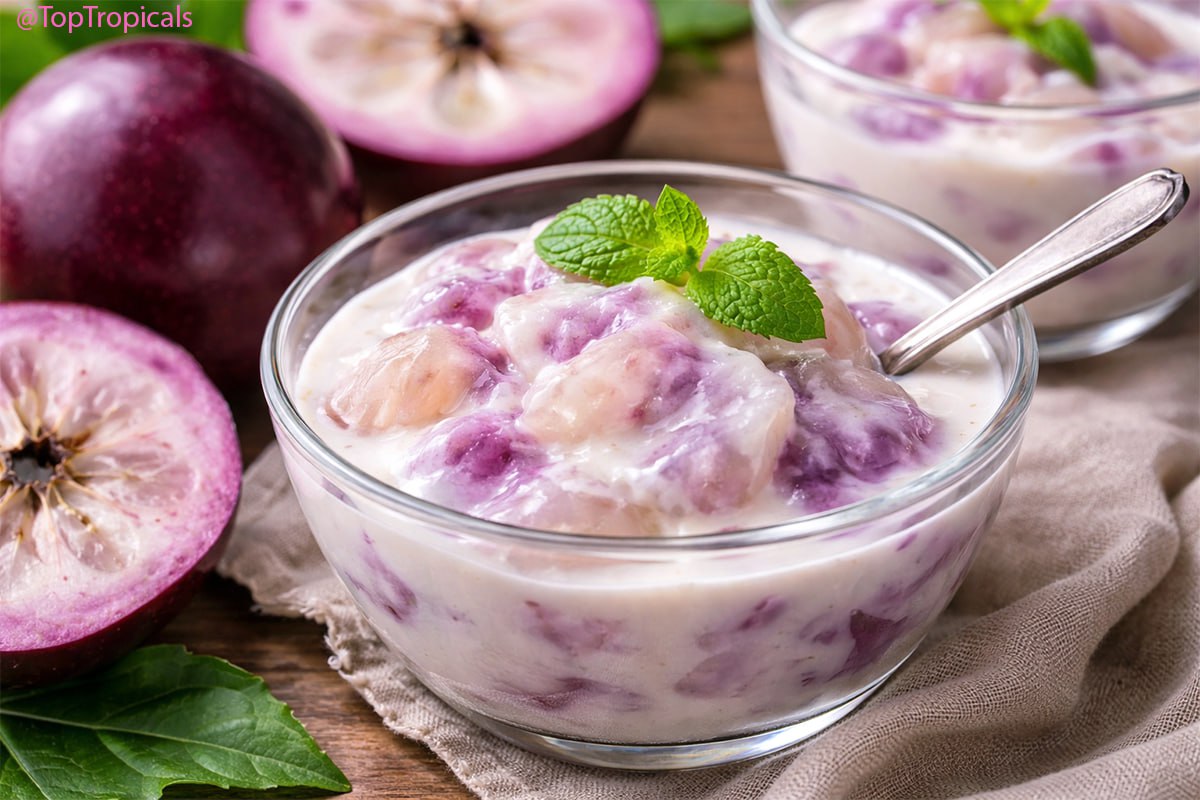
    Caimito creamy scoop: quick-n-fun exotic recipes

    Caimito creamy scoop

    Caimito creamy scoop

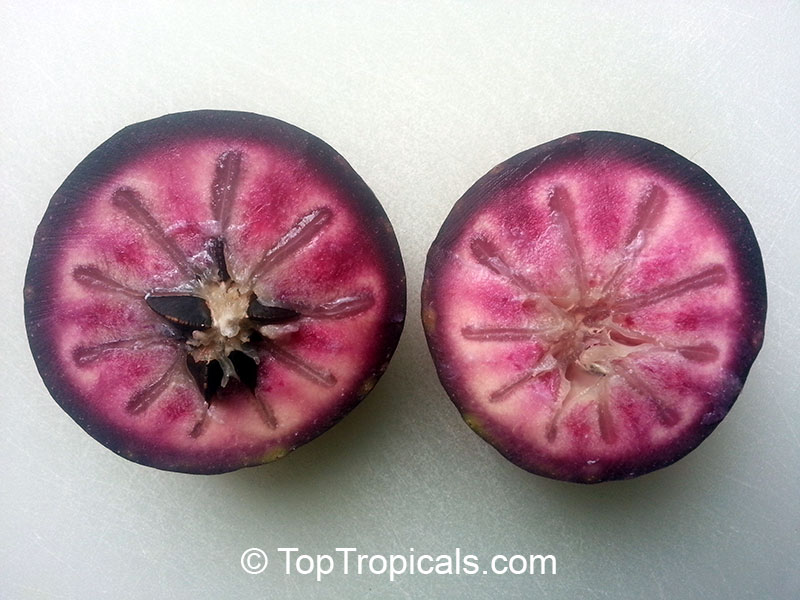
    Caimito Star Apple (Chrysophyllum cainito), fruit

    Caimito Star Apple (Chrysophyllum cainito), fruit

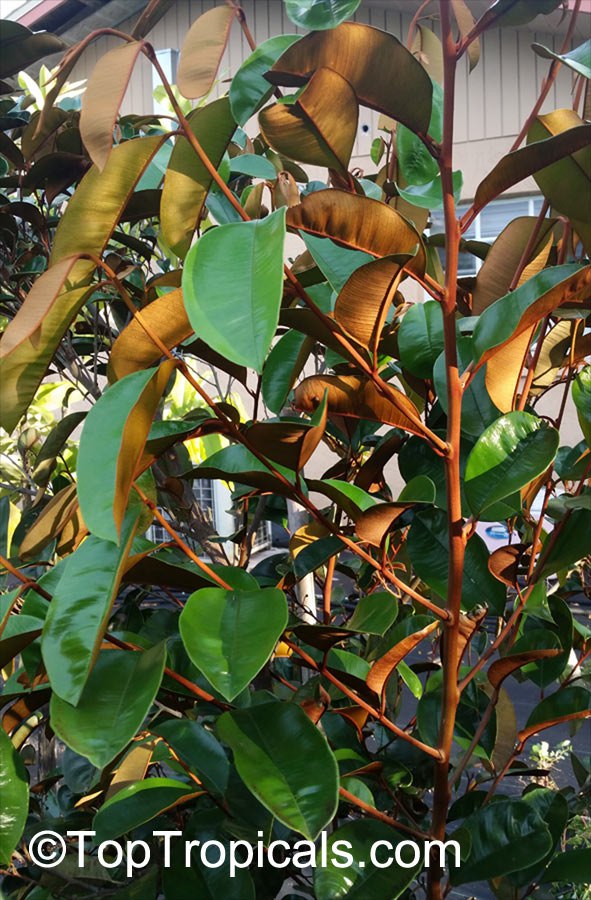
    Caimito Star Apple (Chrysophyllum cainito), leaves with rusty underneath

    Caimito Star Apple (Chrysophyllum cainito), leaves with rusty underneath

    🍴 Caimito creamy scoop: quick-n-fun exotic recipes

    • 🔴Chill star apple halves, then scoop out the jelly-soft pulp.
    • 🔴Stir gently with cold sweet cream for a tropical dessert cup.


    ⭐️ About the fruit:


    Caimito, also known as star apple, is a classic tropical fruit tree native to the West Indies and widely grown throughout the Caribbean, Central America, and other warm regions. It thrives in USDA zones 10-11 and can handle brief dips into the low 30s. The fruit has a mild, grape-like flavor and a soft, jelly texture, and is a good source of vitamin C and minerals. Traditionally eaten fresh, caimito is also used in desserts, drinks, and preserves.

    🌱 In the garden:


    Beyond its fruit, caimito is highly ornamental. Its large, glossy green leaves have a striking coppery-rust colored underside, giving the tree a dramatic two-tone effect when stirred by wind. It prefers full sun and regular watering and grows well in the ground or large containers. In cooler climates, container-grown trees can be moved indoors for winter protection, making caimito both a productive and visually stunning addition to the garden.

    🛒 Plant exotic Caimito Star Apple fruit tree

    📚 Learn more:

    Plant Facts

    Chrysophyllum cainito, Achras caimito
    Caimito, Star Apple, Satin Leaf
    USDA Zone: 9-11
    Large tree taller than 20 ftFull sunRegular waterEdible plantSubtropical plant. Mature plant cold hardy at least to 30s F for a short time
  • Caimito Star Apple (Chrysophyllum cainito) in Plant Encyclopedia
  • Starry fruit and rusty leaves: the tropical tree full of surprises
  • Why is it called Star Apple?

  • #Food_Forest #Recipes

    🟢 Join 👉 TopTropicals
    Date: 24 Jan 2026

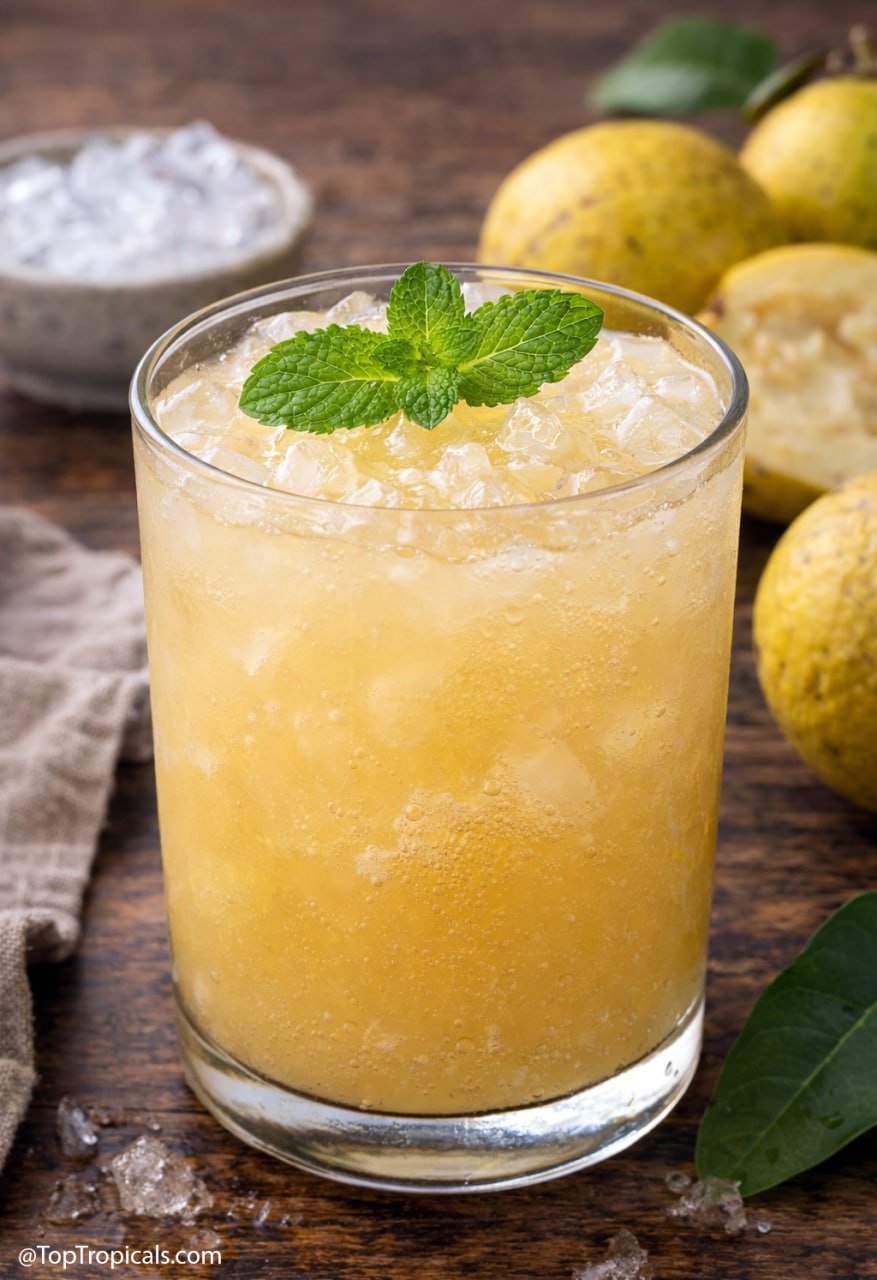
    Guava Cas cloud drink: quick-n-fun exotic recipes

    Guava Cas cloud drink

    Guava Cas cloud drink

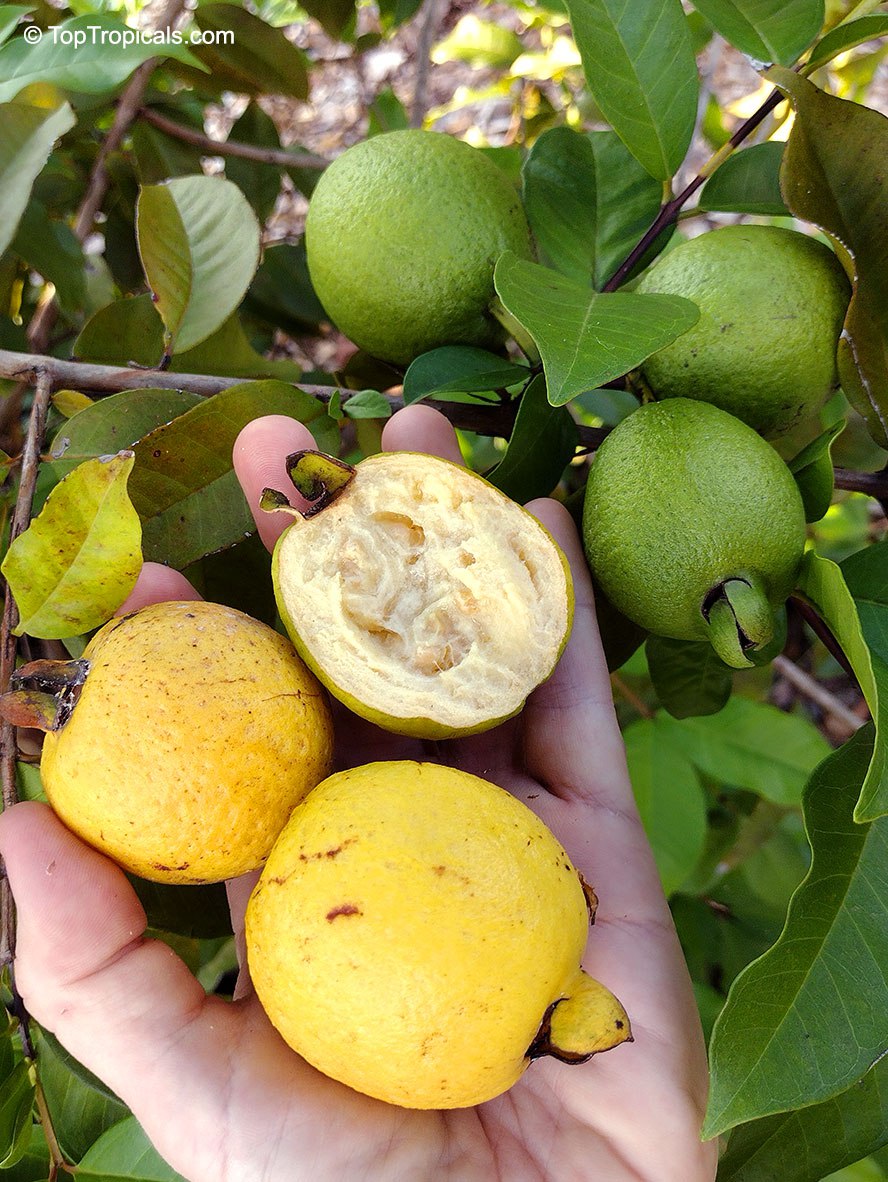
    Cas guava (Psidium friedrichsthalianum)

    Cas guava (Psidium friedrichsthalianum)

    🍴 Guava Cas Cloud Drink (Quick and Fun Exotic Recipe)

    Ingredients

    • 1 cup ripe Cas guava pulp (Psidium friedrichsthalianum)
    • 1.5 cups cold water
    • 1 tablespoon sugar (adjust to taste)
    • Ice cubes
    • Fresh mint (optional garnish)

    Instructions

    1. Add Cas guava pulp, cold water, and sugar to a blender.
    2. Blend until smooth and evenly mixed.
    3. Strain the liquid to remove seeds and coarse pulp.
    4. Serve over ice for a cloudy, tangy refresher.
    5. Garnish with mint if desired.

    Cas guava (Psidium friedrichsthalianum) is a Central American guava known for its bold, tangy flavor and high vitamin C content and Low sugar content. Unlike common guava, the pulp is sharp and refreshing, making it especially popular for drinks, juices, and traditional beverages.

    🌱 In the garden:


    Cas guava is a small, productive tree suited for warm climates. It prefers full sun, regular watering, and good drainage. The tree is adaptable, fairly fast-growing, and fruits reliably, making it a great choice for home gardens and containers.

    🛒 Plant easy and productive Cas Guava

    📚 Learn more:

    Plant Facts

    Psidium friedrichsthalianum
    Costa Rica Cas Fruit, Cas Guava
    USDA Zone: 9-11
    Large shrub 5-10 ft tallSmall tree 10-20 ftFull sunWhite, off-white flowersEdible plantSubtropical plant. Mature plant cold hardy at least to 30s F for a short time
  • Guava tree Cas (Psidium friedrichsthalianum) in Plant Encyclopedia
  • Zero Sugar fruit: forget lemonade - new perfect summer drink discovered!
  • What is the best fruit for summer drinks and wine?
  • •  What fruit is more sour and has more vitamin C than a lemon
  • •  What fruit can you drink? Costa Rican Cas is the Guava for Drinking
  • •  Costa Rican Guava

  • #Food_Forest #Recipes

    🟢 Join 👉 TopTropicals
    Date: 22 Jan 2026

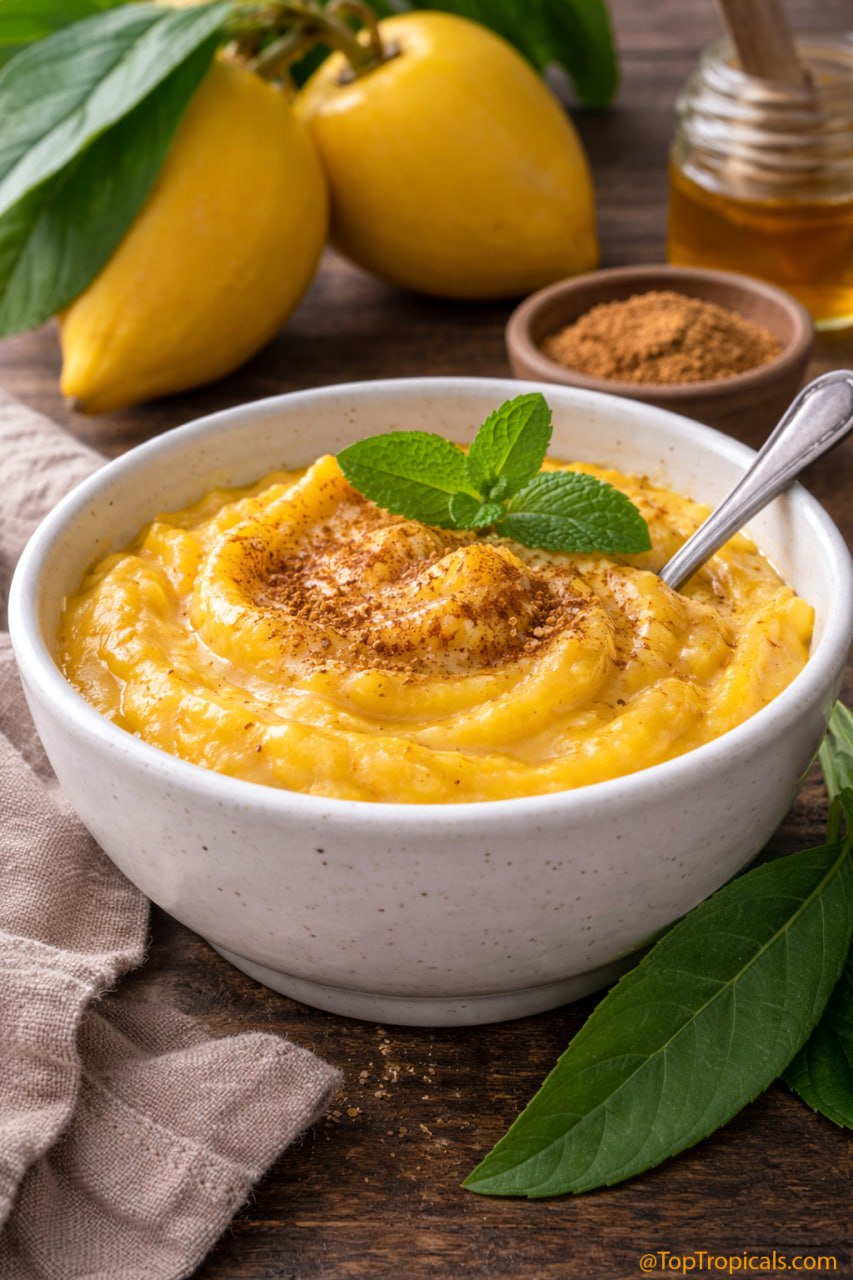
    Canistel breakfast mash: quick-n-fun exotic recipes

    Canistel breakfast mash

    Canistel breakfast mash

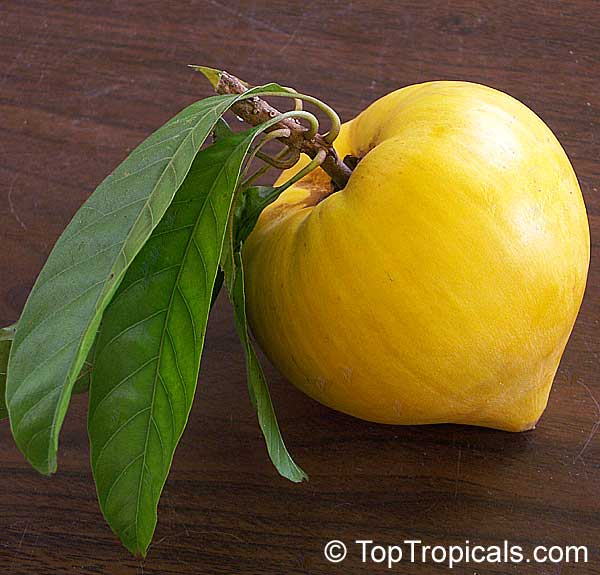
    Canistel - Pouteria campechiana, Egg Fruit

    Canistel - Pouteria campechiana, Egg Fruit

    🍴 Canistel Breakfast Mash

    Ingredients

    • 1 ripe canistel (egg fruit), peeled and seeded
    • 1 tablespoon milk
    • Ground cinnamon, to taste

    Instructions

    1. Scoop the canistel flesh into a bowl.
    2. Mash thoroughly with a spoon, adding milk gradually until smooth and custard-like.
    3. Serve immediately, topped with a light sprinkle of cinnamon.

    🌿 About the plant:


    Canistel (Pouteria campechiana), often called Eggfruit, has dense yellow flesh with a flavor reminiscent of sweet potato, pumpkin, and custard. It is naturally rich and filling, which is why it is often used mashed, blended, or cooked.

    🌱 In the garden:


    Canistel is a tough, drought-tolerant tropical fruit tree that performs well in warm climates. It prefers full sun, well-drained soil, and minimal fuss once established. Compact growth and heavy production make it well suited for edible landscapes and container growing.

    🛒 Add to your garden:


    📚 Learn more:

    Plant Facts

    Pouteria campechiana
    Canistel, Eggfruit, Chesa
    USDA Zone: 9-11
    Large tree taller than 20 ftSmall tree 10-20 ftFull sunRegular waterEdible plant
  • Pouteria campechiana - Canistel, Eggfruit - in Plant Encyclopedia
  • Health Benefits of Canistel Fruit
  • Pouteria campechiana - Canistel, the curious heart-shaped Egg Super-Fruit

  • #Food_Forest #Recipes

    🟢 Join 👉 TopTropicals

    Date: 21 Jan 2026

    Ice Cream Bean cool fluff: quick-n-fun exotic recipes

    Ice Cream Bean cool fluff

    Ice Cream Bean cool fluff

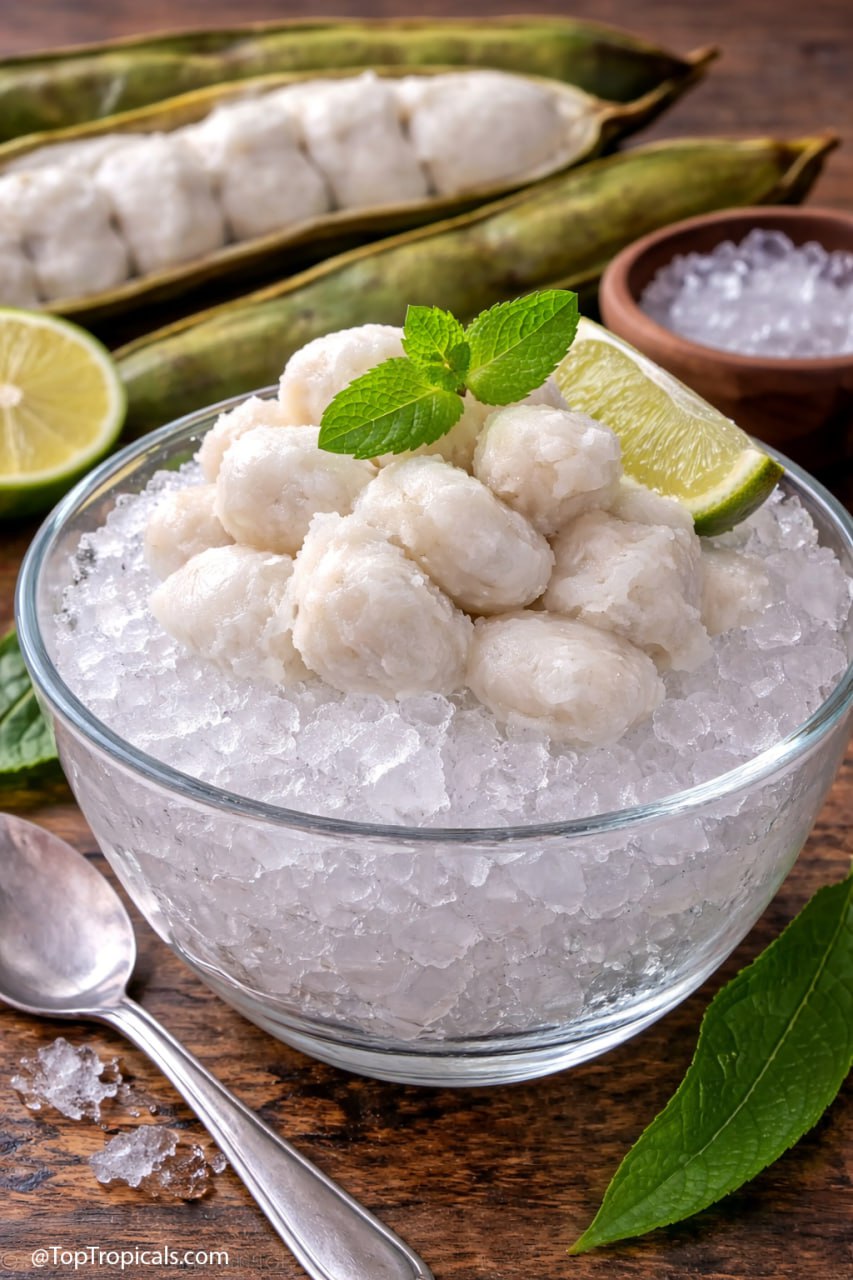
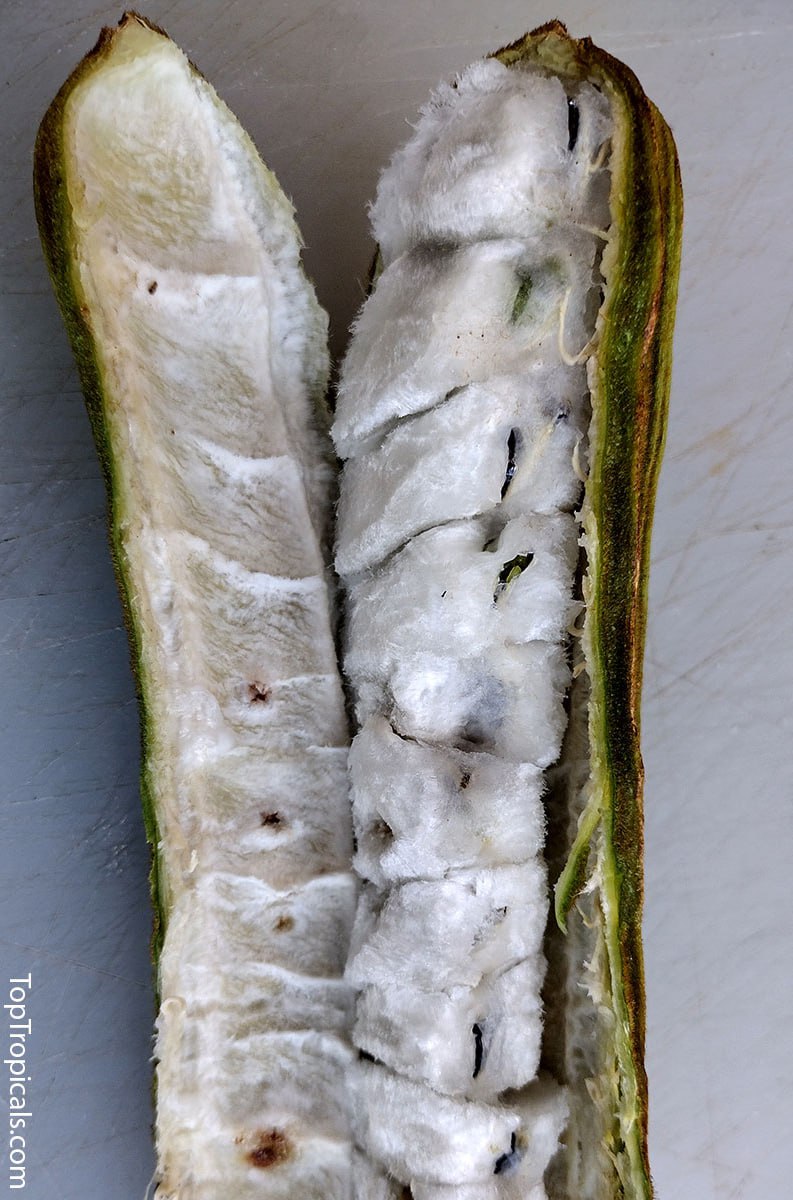
    Ice cream bean tree (Inga edulis) - fruit

    Ice cream bean tree (Inga edulis) - fruit

    🍴 Ice Cream Bean Cool Fluff

    Ingredients

    • Fresh Ice Cream Bean pulp (Inga edulis)
    • Crushed ice
    • Optional: lime wedge or mint leaf for garnish

    Instructions

    1. Open ripe Ice Cream Bean pods and scoop out the sweet white pulp.
    2. Remove and save the seeds if you want to plant more Ice Cream Bean trees.
    3. Chill the pulp for 20 to 30 minutes.
    4. Serve the chilled pulp over crushed ice as a natural shaved-ice dessert.

    🌿 About the plant:


    Ice cream bean (Inga edulis) produces long pods filled with sweet, cottony white pulp surrounding dark seeds. The flavor is mild, vanilla-like, and naturally creamy. The pulp is eaten fresh and used as a natural dessert across South and Central America.

    🌱 In the garden:


    Inga edulis is a fast-growing tropical tree with lush foliage and nitrogen-fixing roots that improve soil health. It is a perfect tree for a quick shade solution in just one season. While large in the ground, it can be managed with pruning in home orchards.

    🛒 Plant Ice Cream Bean tree

    📚 Learn more:

    Plant Facts

    Inga edulis, Inga feuilleei
    Ice Cream Bean, Inga, Guama, Guaba
    USDA Zone: 9-11
    Large tree taller than 20 ftFull sunRegular waterWhite, off-white flowersEdible plantSubtropical plant. Mature plant cold hardy at least to 30s F for a short time
  • Ice Cream Bean tree (Inga edulis) in Plant Encyclopedia
  • Did you know that ice cream actually grows on a tree?
  • What does Ice Cream Bean fruit taste like?
  • Ice Cream Bean Tree: Eating the fruit and planting the tree

  • #Food_Forest #Recipes

    🟢 Join 👉 TopTropicals