Garden Blog - Top Tropicals

Date: 17 Sep 2020

Healthy Plant Food: Q&A from Mr Booster

How to make pineapples fruit?

Q: I have purchased a Sugar Loaf Pineapple from you a few months ago, it is growing well and producing little babies around the main plant! I am so excited to have my own Pineapple plantation! How soon will they fruit and is there anything I can do to make them fruit faster? Can I give extra fertilizer just like I do for other garden plants?

A: It takes a year or two until a pineapple plant gains enough energy to be ready to fruit. However the total time depends on growing conditions and availability of all necessary nutrients.
Pineapples, like all other plants from Bromeliaceae family require very delicate fertilizer; traditional fertilizers, if overdosed, can harm Bromeliads and even kill them. At the same time, Pineapples require extra Magnesium for good production, and not every fertilizer has it, or contains it in well-accessible compounds / proper proportions.
Sunshine Ananas Booster is a scientifically formulated, mild fertilizer, designed especially for tender Bromeliads, containing Magnesium just in perfect concentration. Its amino-acid based ingredients are natural and work perfectly for edibles and organic gardens. Just follow the label instructions and speed up the fruit production 3-4 times!

In the photo: Mr B checking his Sunshine Boosters inventory before shipping to his Good Customers.
Date: 7 Aug 2020

Healthy Plant Food

Q&A from Mr Booster

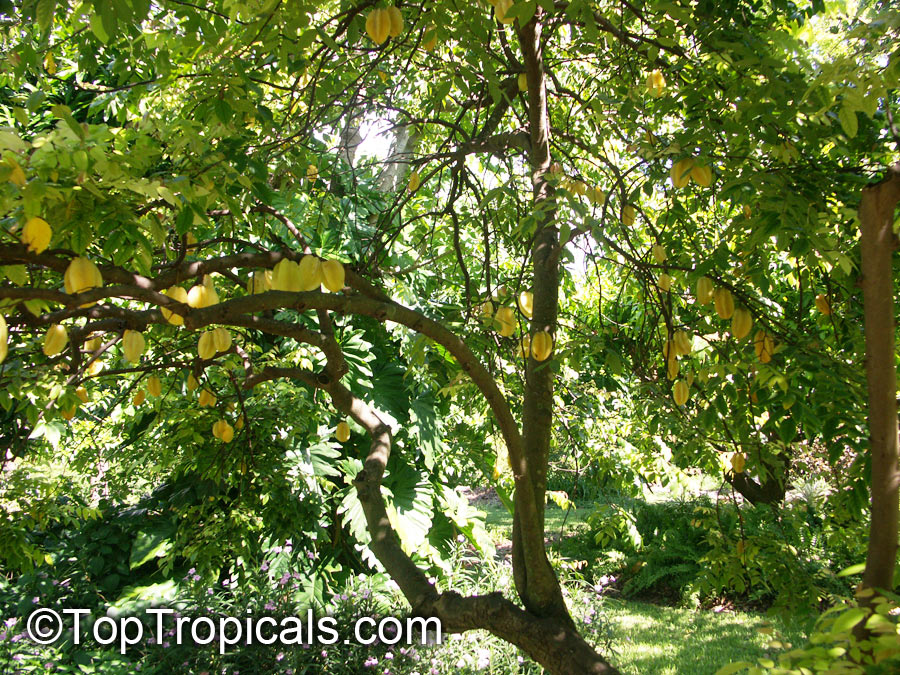
Plant food for a Star Fruit

Q: I have 2 Starfruit plants from you. One on the left is B10 has a lot of flowers but no fruit is developing. On the rite is Kenjeng. This one has no flowers at all. Both plants are growing very well. Plenty of sun and water. I am located in Boynton Beach Florida. So what to do?

A: Your trees on the pictures look very healthy, congratulations with a great care!
Starfruit, as well as other grafted fruit trees (like mango, avocado, etc) usually flower/fruit easily and readily while in pots in the nursery. Sometimes, once planted in the ground, they may reduce flowering or even stop flowering. What happened?
The answer is simple. In pots, we fertilize them on regular basis. In our nursery, we have fertilizer injector inline with irrigation system that dozes plant food with EVERY watering. In other nurseries, they may also use slow-release fertilizers, but it is still a regular routine to provide plant food to potted plants.
In the ground, especially in Florida poor soils, fruit trees may stop flowering or delay fruiting due to lack of nutrients, or dis-balance of elements in the ground. Without fertilizer, a tree may take extra time to develop bigger root system to reach out for necessary elements, and eventually will start fruiting anyway.
But we want it to fruit soon! The only way to fix the problem is to provide fertilizer on regular basis for a young tree. It is especially important during hot summer months when plant metabolism is fast due to high temperatures, plus nutrients may get washed away with frequent summer rains (like we have in Florida) even if you've added some fertilizer at time of planting.

You can use smart release fertilizer once a month during hot season, this one or similar:
Mango-Food - Smart Release Fruit Tree Booster.

But the most effective way to get a tropical tree to flowering and fruiting, is frequent applications of liquid fertilizer. We use Sunshine Boosters with every watering on our plants. They work great even on hard cases and weak plants, and you see the difference in a matter of weeks, sometimes even days.
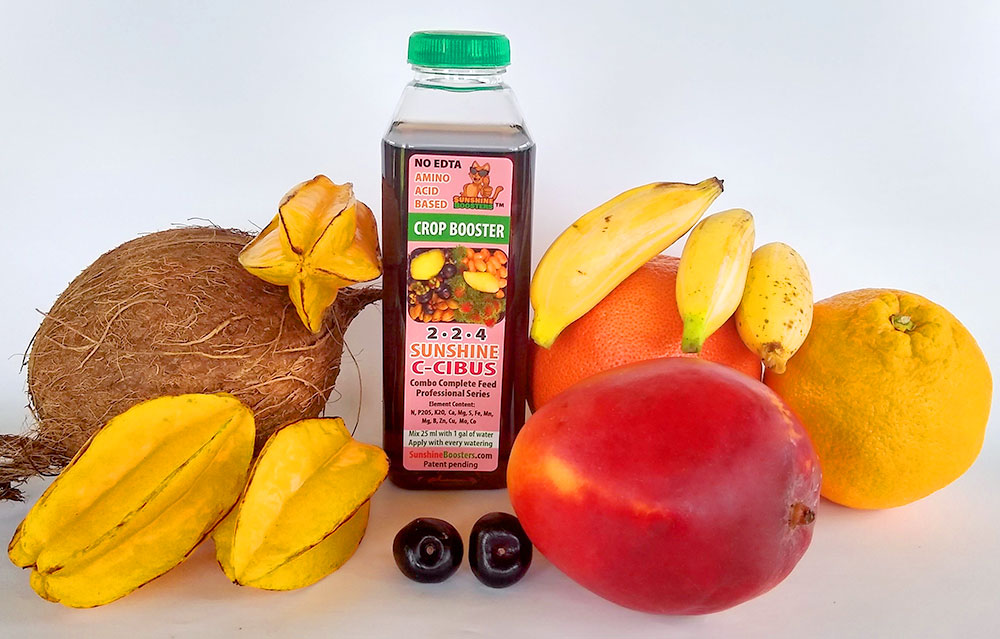
We recommend the following fertilizer that contains all necessary elements for young fruit trees: SUNSHINE C-Cibus - Crop Nutrition Booster

SUNSHINE C-Cibus - Crop Nutrition Booster from Garden Series, or Combo Total Feed Collection - all nutrients in just one bottle, for fruit trees and edibles.

Date: 19 Jul 2019

How to grow Soursop in a pot

Q: Is it possible to grow soursop in a large pot for life?

A: Soursop, or Guanabana - Annona muricata - is actually one of those tropicals fruit trees that can be easily cultivated in a container. Most plants of genus Annona have compact nature, and these fruit trees usually start production at a young age, as early as 3 years from seed. Annona muricata seedlings take a little longer to fruit, this is why we offer grafted trees, which can start producing right away.
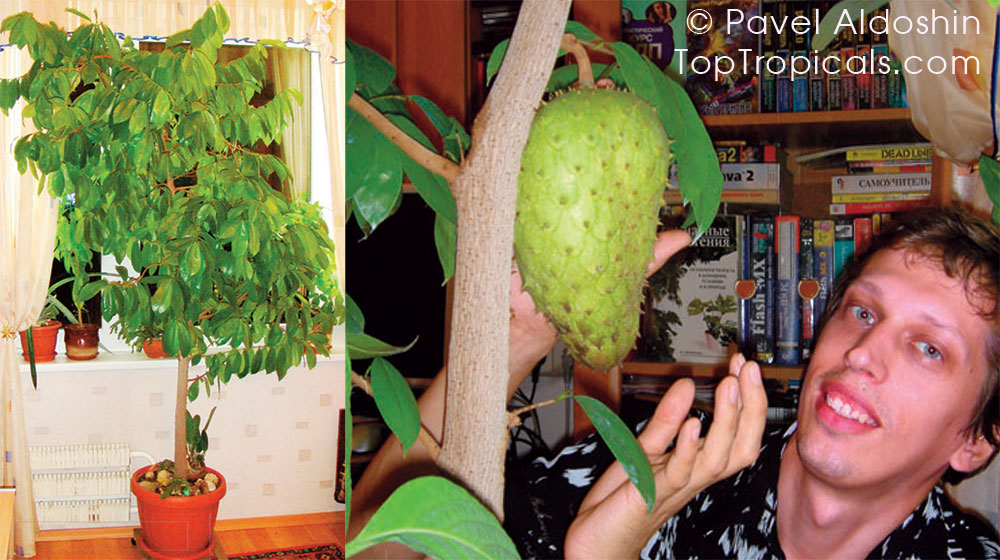
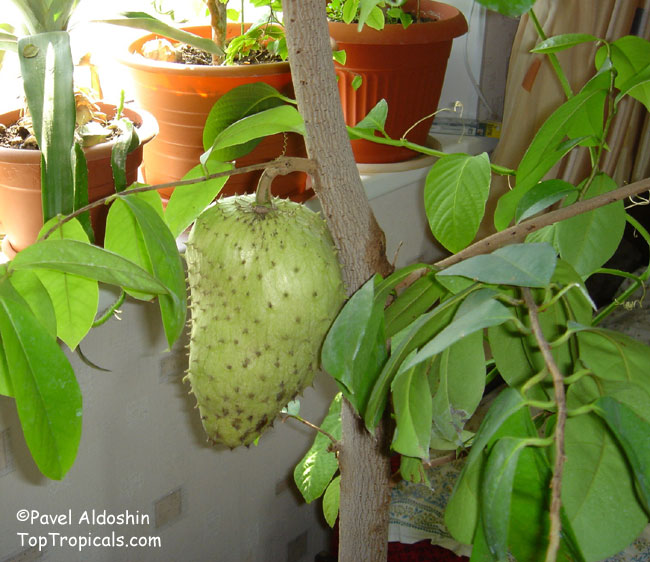
We have a very interesting article about growing Soursop in an apartment. The article was written by an indoor gardener who lives in a very small apartment in Moscow, Russia. He grew this tree from seed and after years of cultivation fun, he finally got several large delicious fruit! It is an amazing story. We have it published in our Tropical Treasures magazine, download the whole issue #7, get a hard copy, or you may download PDF file of the single article.

Recommended fertilizers and supplements:

Fruit Festival Plant Food - Super Crop Booster
Mango-Food - Smart Release Fruit Tree Booster
SUNSHINE-Honey - sugar booster

Date: 14 Jul 2019

A Cup of Tea Plant

By Onika Amell, tropical plant specialist

A: I live in Ave Maria, Florida. I want to try my hand at growing my own tea. Which plant do I need?

A: Most people do not realize they are actually enjoying camellias when they sip their cup of tea. True tea comes from the Camellia sinensis plant, an evergreen shrub or small tree.
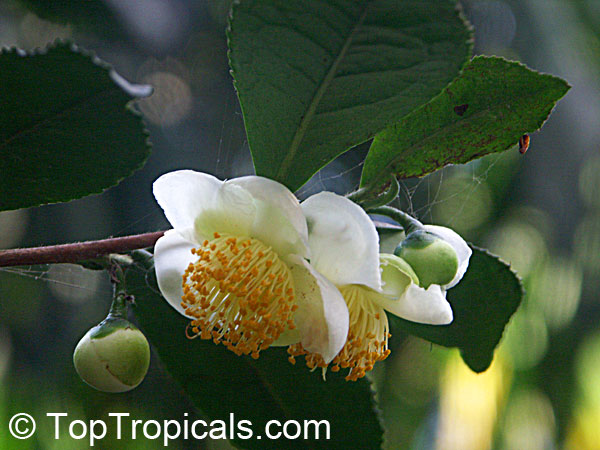
In the fall and winter, the plant will produce small white flowers with a lovely fragrance. The foliage is shiny and dark green with a very nice informal and open look. Camellia sinensis (or tea plant, as it is commonly known) prefers a temperature between 65 and 86 degrees, which makes Florida an ideal area to grow them. However, if you live in colder zones, you can certainly succeed growing your own tea plants using a greenhouse. Alternatively, you can use containers which can be brought inside when temperatures start falling. Tea plants will usually survive a very slight freeze, though the leaves may be damaged or killed. It will not tolerate a hard freeze. They prefer full sun or light shade in the garden.
Tea plants will become small trees or large bushes if not pruned. Hardcore tea growers trim back the shoots repeatedly to a height of around 4 feet to encourage new growth and to contain the size.
Make sure to pick an area of your landscape where it does not flood or remain wet during our rainy season. Camellia sinensis does not like wet feet at all. They prefer well-drained, sandy and slightly acidic soil. If grown in a container, add some sphagnum moss to the potting mix. They will benefit from frequent applications of small amounts of fertilizer.
You will need some patience, too. Your plant should be around 3 years old before you start harvesting leaves.

Recommended fertilizers:

Tropical Greenhouse Plus - Plant Booster
Tropical Allure - Smart-Release Booster

Harvesting recipes

Now that you know how to grow the Tea, you need to check this out: the Harvesting recipes how to harvest and make different kinds of real tea: Green Tea, Japanese Style Green Tea, Oolong Tea, Black Tea, Orthodox Indian Tea... Continue reading...

Date: 29 Jun 2019

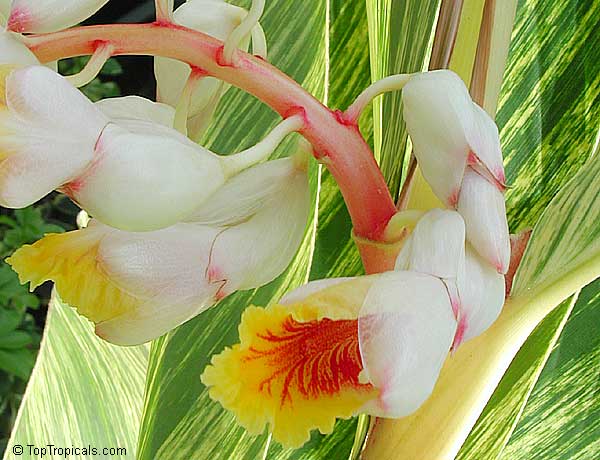
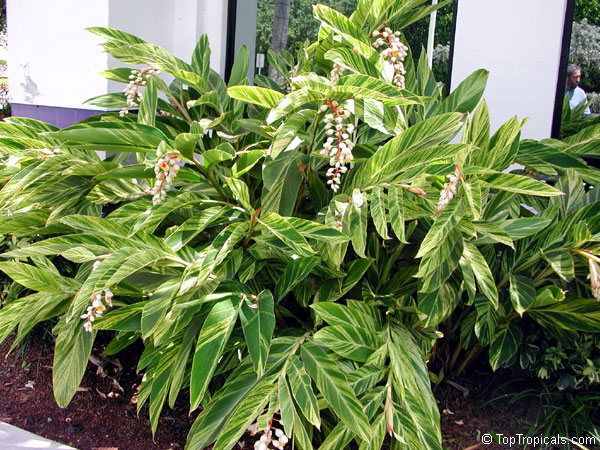
Variegated Shell Ginger - Alpinia zerumbet

By Onika Amell, tropical plant specialist

Q: I live in Deltona, Florida and hoping to find spreading ginger with interesting foliage to grow in a partially shaded area in my garden under a group of trees. Any suggestions?

A: Variegated ginger Alpinia zerumbet variegata is a clumping ginger valued for its beautiful variegated foliage. The dark, green leaves have striking yellow stripes. This ginger is sought-after, not only for the stunning foliage but also for its beautiful flowers. The flowers are different from other members of the ginger family and appear in drooping racemes from the ends of leafy stems rather than directly from the rhizomes. This ginger is also commonly known as Shell Ginger because the flowers resemble seashells! They are pink-tinged, fragrant and appear in summer. This evergreen perennial grows in upright clumps 3-5 feet tall. You may prune the plant to control size.
It does not tolerate drought or a hard freeze but can take a few hours or light frost (goes dormant in such case). In colder areas, rhizomes should be dug up and stored in a cool room during winter.
This ginger will love a shaded corner in your garden. Plant it in organically rich, well-drained soil in full sun to part shade. Keep the soil moist but not soggy, and spread a thick layer of organic mulch around the plant for moisture retention. There are no serious insect or disease problems to worry about!
This ginger can be also be grown as a house plant as long as it has bright light and humid conditions. It will grow to around 3-4 feet tall as a houseplant.

Recommended fertilizers:

Broad Leaf Plus - Ginger-Heliconia-Banana Booster
Tropical Allure - Smart-Release Booster

Limited time special offer:
Instant $5 off Variegated Ginger - Alpinia zerumbet