Date: 29 Sep 2020

Healthy Plant Food: Q&A from Mr Booster
Why my Sapodilla is not fruiting?
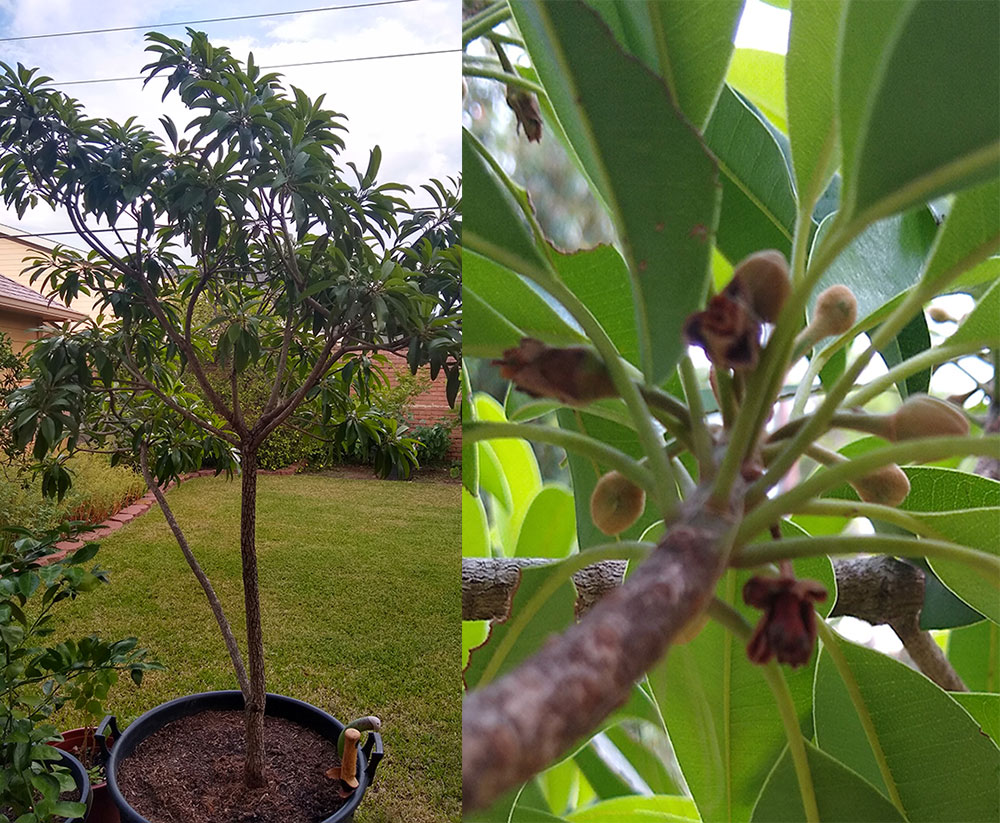
Q: I bought a Sapodilla tree from you several years ago, Silas Woods. I live in Houston area. The tree grows and produces blossoms for fruits, but then they just dry up and fall off. To-date, I have not gotten any fruits off the tree. Is there a reason for this? I really want a fruiting tree because Sapodilla is one of my favorite fruits. I have attached pictures of the tree. Please help.
A: Silas Woods is a free-flowering variety and in favorable conditions it should produce fruit almost year round, considering warm temperatures. The fact that the tree is producing flowers indicates that it is strong, overall healthy and ready for production, but for some reason these flowers don't set fruit. There may be several reasons for such behavior.
1) Too high temperature and too low humidity
In Houston area, humidity should be good in summer. However, if
temperatures stay above 90F for a long time, this may cause flower dry-n-drop.
Solution: try to move the potted tree into filtered light, or in a
spot where it does not get direct burning sun during the hottest hours of the
day (morning sun is the best)
2) Root bound.
Solution: check if the tree needs stepping up into a larger
container.
3) Lack of certain nutrients that are responsible for proper fruit
formation.
In particular, elements B (Boron), Mo (Molybdenum), and a few other
micro-elements (Fe - iron, Cu - Copper, etc.). This is most likely the cause of a
flower drop. This is very common reason for undeveloped fruit or lack of fruit
in container-grown fruit trees. When grown in the ground, plants can reach
out to all necessary elements in surrounding soil (considering soils are not
too poor on necessary elements). In a pot, a supply of nutrients can be
exhausted very quickly, so a quality fertilizer program is very important.
Fertilizer must include all necessary nutrients in easy accessible form, and a plant
must have their constant supply for proper development.
Solution: prescribe to your Sapodilla tree the following combination
of plant food:
- SUNSHINE C-Cibus - Crop Nutrition Booster. It will provide
well-balanced amounts of high absorption Nitrogen, as well as other macro-elements - to
provide enough energy to the tree, plus a combination of all necessary
micro-elements. It is safe to apply this fertilizer as frequent as with every
watering, including winter time.
- SUNSHINE-Honey - sugar booster. This supplement has a high content of
elements Mo and B - once the tree starts getting them on regular basis (a few
times a year, according to the label), it will change its habit dropping
flowers and/or premature fruit drop. As extra bonus, Sunshine Honey makes fruit
sweeter by bringing sugars from all over the plant and concentrating them into
fruit.
4) Lack of pollinating insects.
Solution: For most effective pollination, we always recommend to put
some pieces of fruit under the tree, apple peels, or even banana peel. Those
attract tiny beetles that are responsible for small flower pollination.
With winter time approaching, fruiting season is about to end, however, do not get discouraged and start the fertilizing program right away: this will bring up the plant into a healthy stage within a few months, and by next season it should be covered with fruit you like so much! Remember, Sunshine liquid fertilizers can be used year round, including winter, without a risk to burn roots or overdose, as long as you follow label instructions.
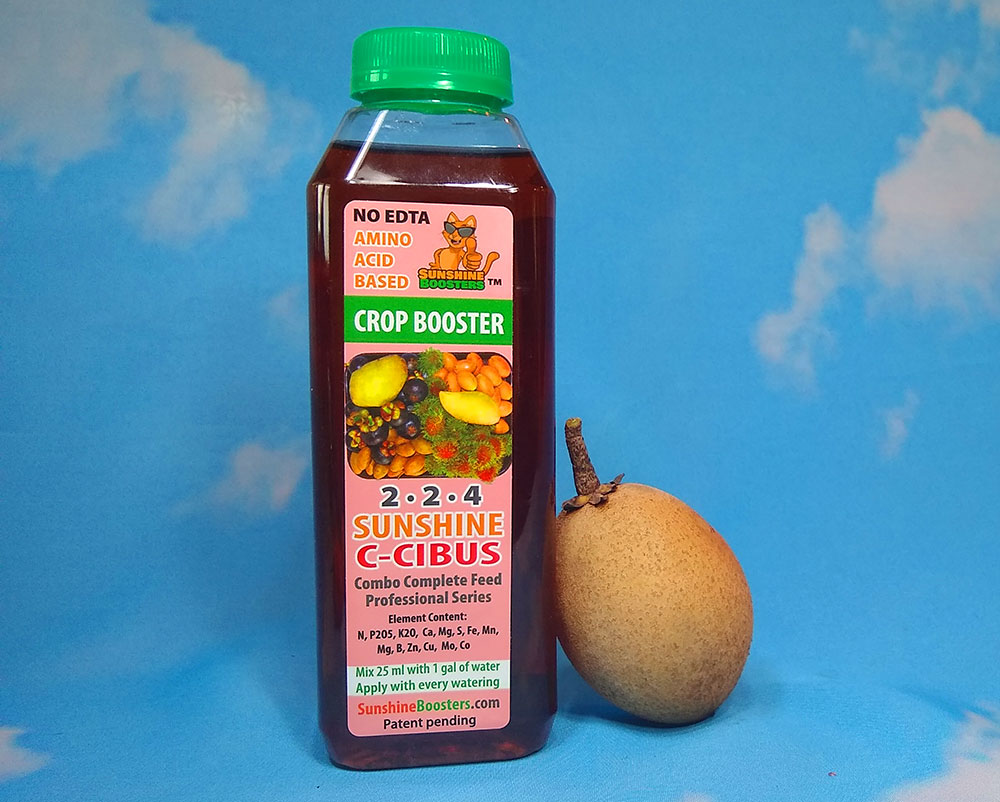
SUNSHINE C-Cibus - Crop Nutrition Booster from Garden Series, or Combo Total Feed Collection - all nutrients in just one bottle, for fruit trees and edibles.

Date: 16 Feb 2019
Featured plant. Randia formosa - Blackberry jam fruit
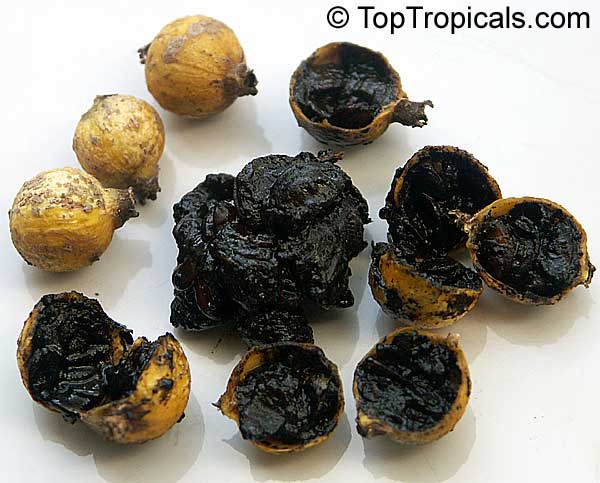
Randia formosa - Blackberry jam fruit
This unique compact plant, perfect for container culture, combines features of a fragrant flower and tasty desert fruit. Kids love it! Originally from Central and South America, this rare tropical small evergreen tree bears fruit which tastes like fresh Blackberry jam. Many claim that it's even better than preserves. Closely related to the gardenia, its flowers are sweetly fragrant. This relatively hardy tropical has attractive foliage and can be grown in a container as well as in the ground. The Randia formosa (or Rosenbergiodendron formosum) produces as many as 25 to 30 fruits at a time. Since it blooms for a few months in the fall and winter, fruiting and flowering can be enjoyed when many other plants are dormant. Large tubular white flowers that attract nocturnal moths... Read more about this plant...
Get it from our store... Limited quanity!

Date: 4 Oct 2024
How big is the Little Gem?
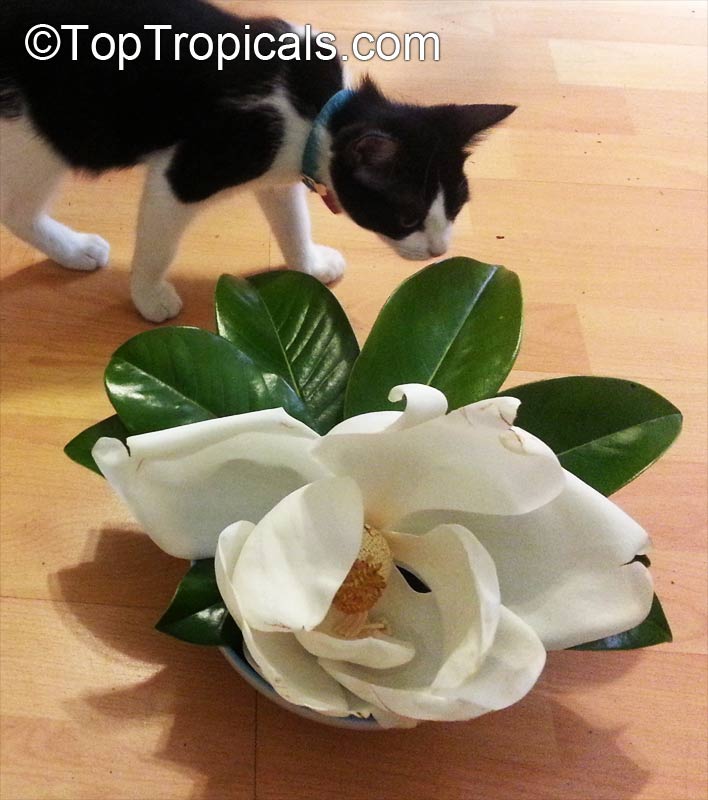
Little Gem Magnolia - Magnolia grandiflora - Southern Magnolia
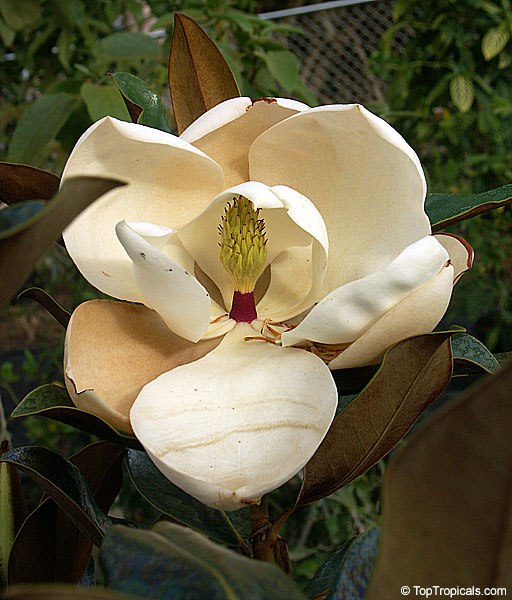
Little Gem Magnolia - Magnolia grandiflora - Southern Magnolia, flower
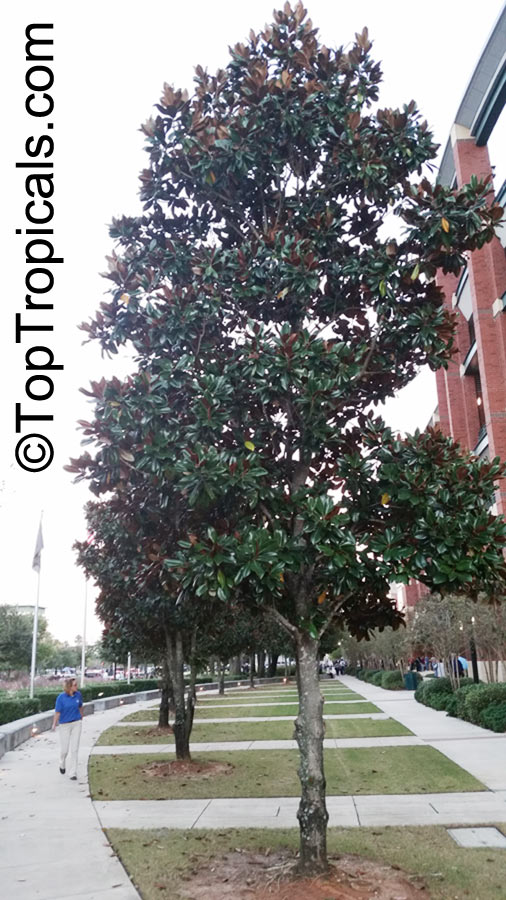
Little Gem Magnolia - Magnolia grandiflora - Southern Magnolia, tree
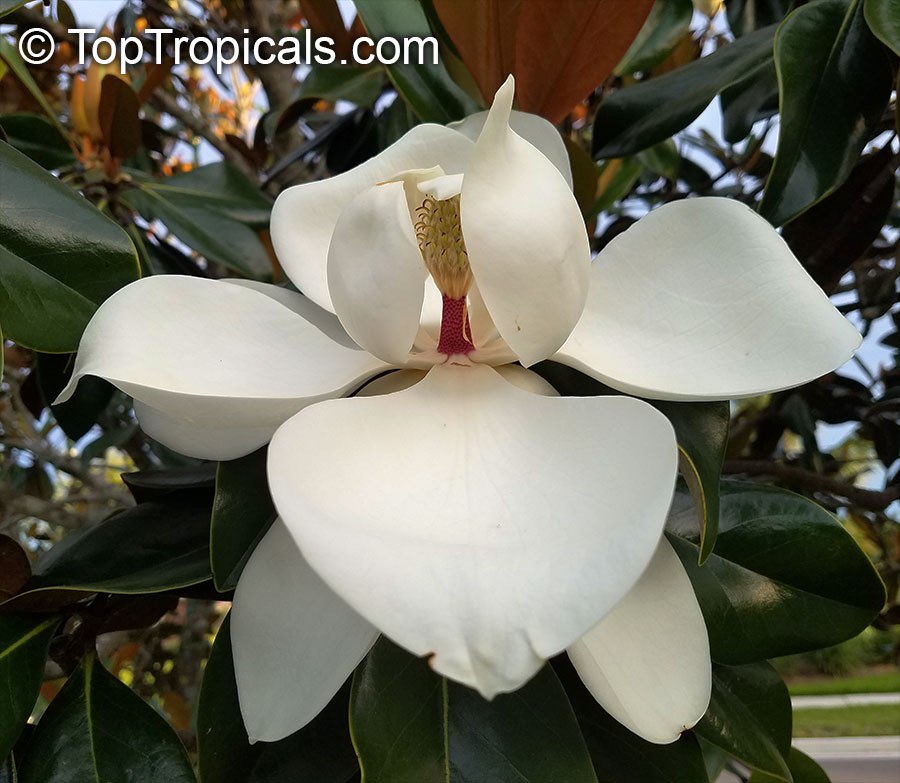
Little Gem Magnolia - Magnolia grandiflora - Southern Magnolia, flower
💎 How big is the Little Gem?
- 🕊 Looking for a cold-hardy tree with majestic flowers and a scent that could make angels swoon? Meet the Little Gem Magnolia! This delightful dwarf variety of the Magnolia grandiflora - Southern Magnolia - packs all the charm without the towering height.
- 🕊 With large, perfect white flowers that emit a divine fragrance, this beautiful columnar tree is like nature's perfume dispenser.
- 🕊 The leaves? They’re fluffy and brown underneath, like a teddy bear wearing a velvet jacket!
- 🕊 Though it’s called a "dwarf," don’t be fooled - Little Gem can still reach up to 8-10 feet wide if planted in the ground, offering plenty of blooms even when young.
- 🕊 While it's slow-growing, this compact beauty is perfect for small gardens where space is precious. Ideal perfume tree for container garden.
- 🕊 Whether it's in a container or part of your landscape, this magnolia is a total showstopper. If you're ready for a tree that blends elegance, fragrance, and manageable size, Little Gem is your new best friend!
📚 Learn more:
- · Southern Magnolia from the time of the dinosaurs
- · Tropical Magnolias
- · Plants with scents as heady as incense: Enchanted Magnolias - Joy in your life
🛒 Order Little Gem Magnolia
#Perfume_Plants #Trees
🔴 Join 👉 TopTropicals
Date: 21 Jan 2019
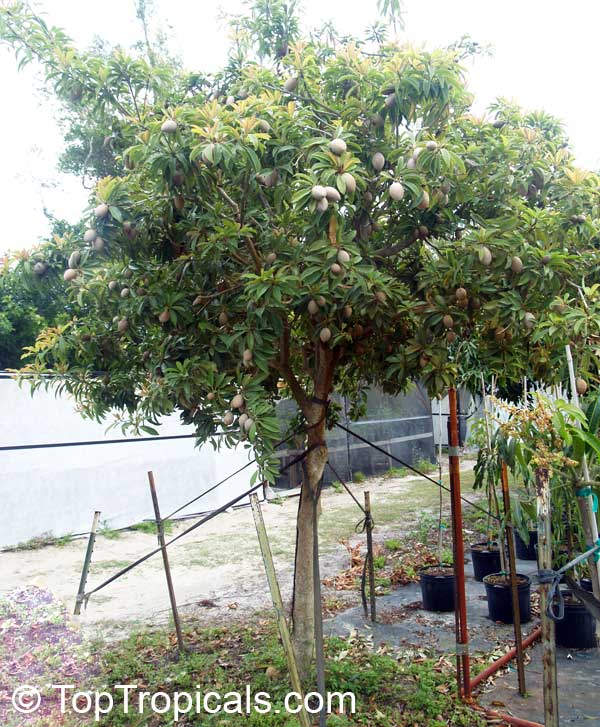
Featured Plant. Achras (manilkara) zapota - Sapodilla Silas Woods
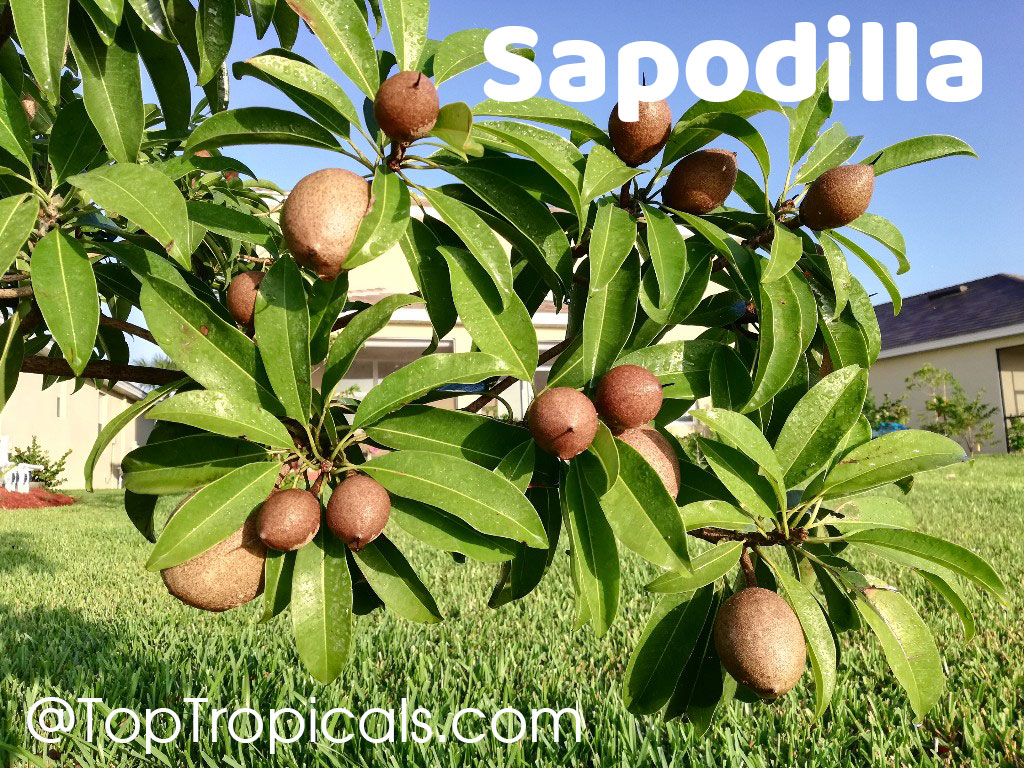
Achras (manilkara) zapota - Sapodilla Silas Woods
The Silas Woods is an outstanding variety of Sapodilla.
The tree has dwarf growth habit (under 20 ft in the ground) and adapts
well to a container.
This variety is highly productive.
Trees are producing year round, the branches often require support as they get very heavily loaded with fruits. Perfect fruit tree for small yards and container culture!
Date: 22 Feb 2026
How to grow Papaya from seed, step-by step - FAQ
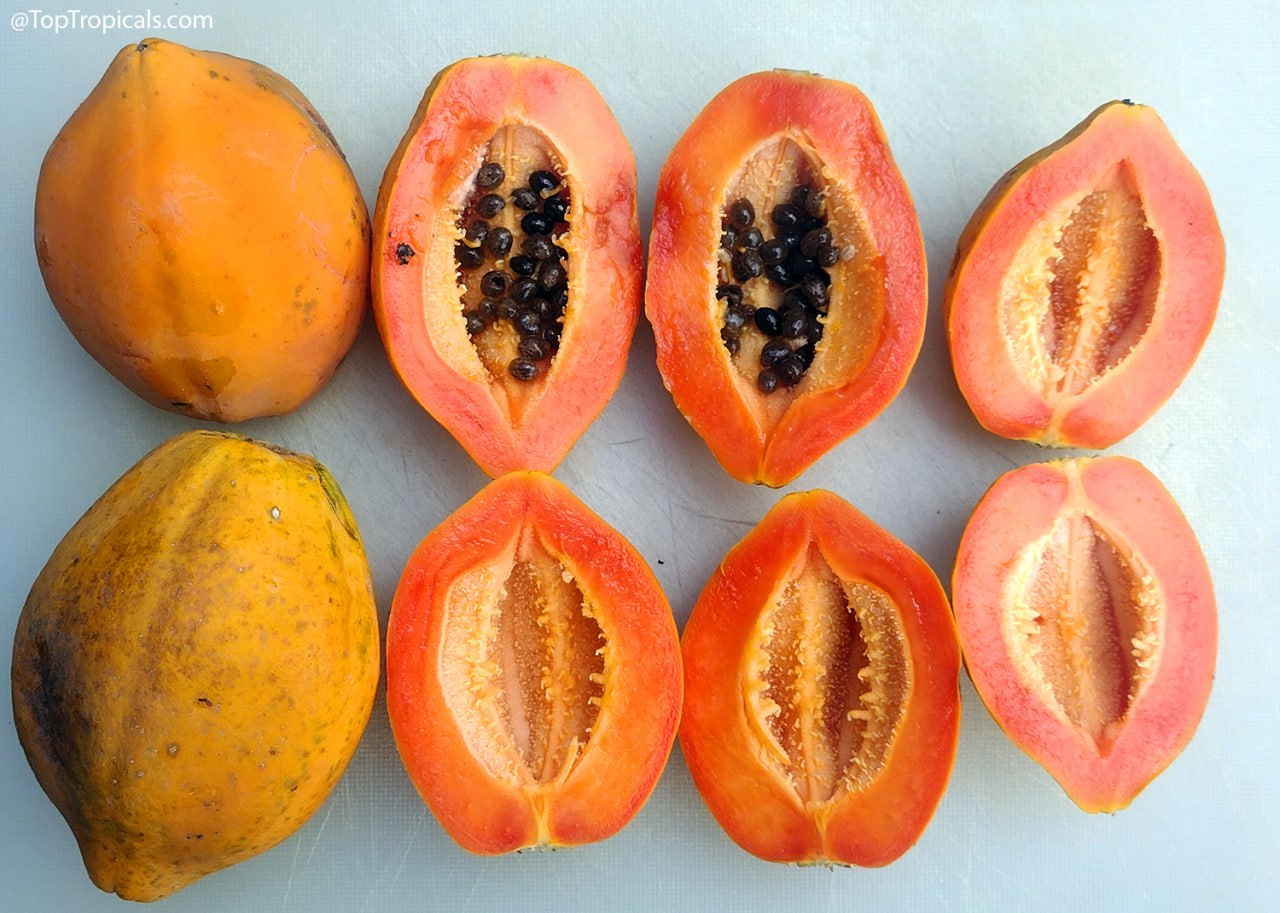
Carica papaya - Papaya fruit
🍊 How to grow Papaya from seed, step-by step - FAQ
💚 Is papaya a tree?
No. Papaya is a herbaceous plant with a hollow trunk. Treating it like a tree is one of the most common mistakes growers make.
💚 How fast does papaya grow from seed?
Very fast. Papaya can start producing fruit in 10–15 months when grown in warm conditions.
💚 Can papaya be grown in containers?
Yes. Dwarf papaya varieties stay under 4–5 ft tall in containers and still produce full-size fruit.
💚 Will seeds from grocery store papaya work?
They will germinate, but the variety is unknown and usually not dwarf. If you want a compact plant, use seeds from a known dwarf variety.
💚 Do papaya plants come true from seed?
Yes. When the seed source is known, papaya grows true to type.
💚 How long do papaya seeds take to germinate?
Fresh seeds usually germinate in 2–3 weeks with warmth. Stored dry seeds can take 8–10 weeks.
💚 What temperature do papaya seeds need?
Above 70F, ideally 85–90F. Bottom heat greatly improves success.
💚 Do papaya seeds need to be cleaned before planting?
Yes. The slimy coating must be removed or seeds may rot instead of sprouting.
💚 What soil is best for papaya seedlings?
A well-draining mix or coconut fiber. Soil should be moist, never soggy.
💚 Why do papaya seedlings rot so easily?
Overwatering and poor drainage are the main causes. Young papaya roots are very sensitive to excess moisture.
💚 Do papayas like transplanting?
No. Papayas hate root disturbance. Reduce transplanting and move into larger containers sooner rather than stepping up gradually.
💚 How big should the container be?
After a 4-inch pot, move directly into a 1-gallon or even 3-gallon container to minimize root disturbance.
💚 Does papaya need staking?
Yes. Papaya grows fast, and the stem can outpace root development. Even light wind can knock it over.
💚 How much sun does papaya need?
Full sun. Shade causes leggy growth, poor flowering, and little to no fruit.
💚 Should papaya be watered heavily?
No. Once established, papaya prefers drier conditions. Large plants tolerate rain better than young ones.
💚 Can papaya be planted in the ground?
Yes, but only in well-drained soil and elevated spots. Low areas with standing water will kill it.
💚 Is fertilizer important for papaya?
Yes. Papaya is a heavy feeder. Poor soil means poor growth and little or no fruit. Use Green Magic once every 6 months or Sunshine Boosters C-Cibus with every watering.
💚 Should papaya be pruned to control height?
No. Pruning ruins its natural form. If height is an issue, grow a dwarf variety instead.
🛒 Explore Papaya varieties
📚 Learn more:
- · Carica papaya in Plant Encyclopedia
- · How to grow papaya from seed without killing it: Part 1: Papaya basics
- · Carefree Garden: How Easy Is It to Grow a Papaya Tree?
- · Male papaya produces fruit!
- · Top 10 fast-fruiting trees: #6. Papaya
- · How to have fresh Papaya fruit year around
- · The truth about Papaya
- · Papayas contain a secret enzyme
Part 2: Seeds germination
Part 3: Containers, sunlight, and common mistakes
🎥 Nobel Prize goes to this pregnant male papaya
#Food_Forest #How_to #Papaya #Discover
🟢 Join 👉 TopTropicals