Garden Blog - Top Tropicals

Date: 27 Jan 2026

🌸 Adenium, Coffee, and Donuts

Smokey  and  Sunshine  with  a  blooming  adenium  desert  rose  on  a  worktable,
    surrounded  by  potted  adeniums  in  the  background.
Smokey: Desert rose. One caudex. Multiple grafts. Different flowers.
Sunshine: So it is a team plant. Everyone blooms, nobody agrees.
Smokey: Yet it grows just fine.
Sunshine: That is the secret. Coffee and donuts.

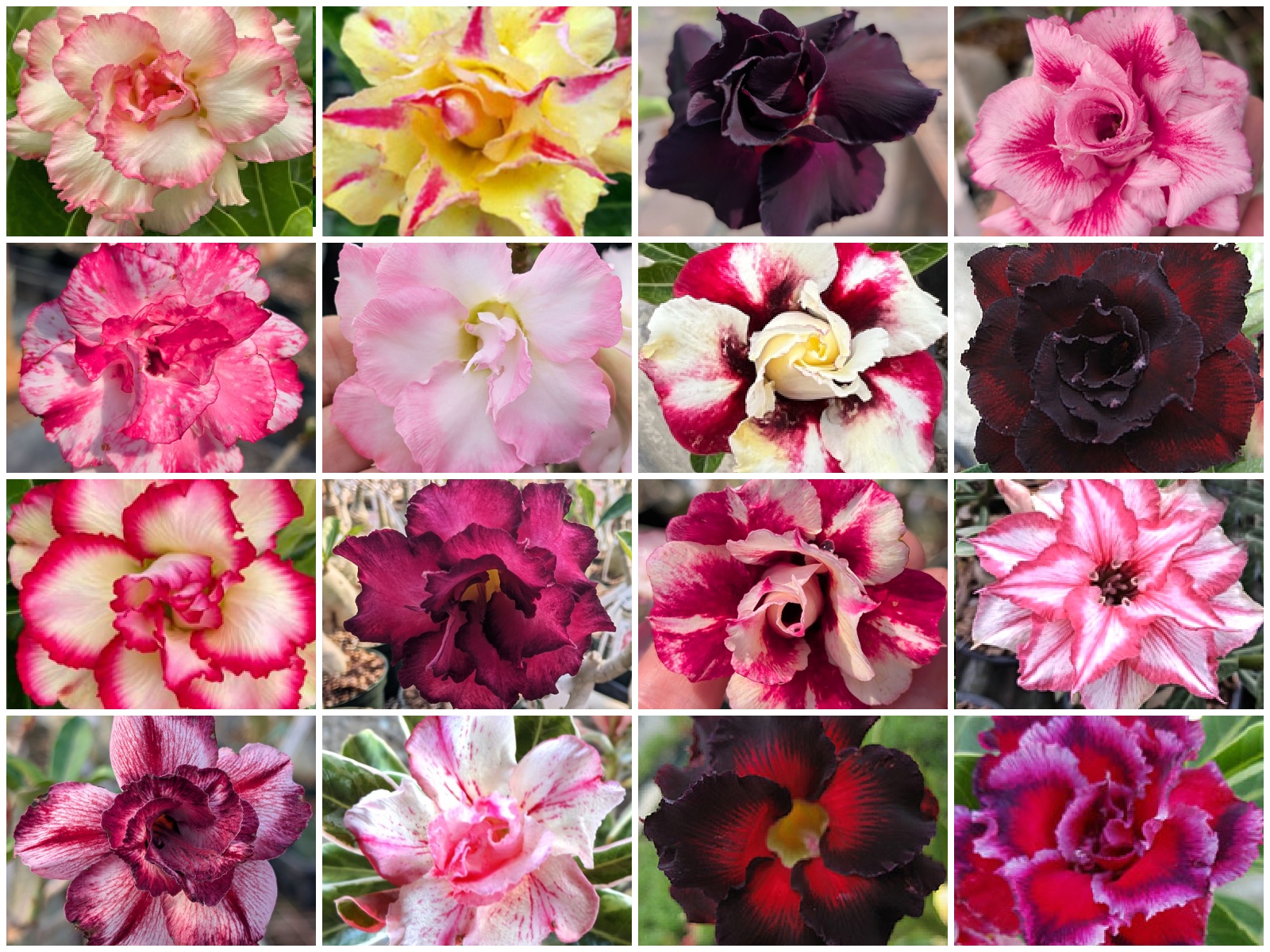
🌸Featured Adeniums

Recommended by our Horticulturist, Tatiana Anderson

Moung Kusuma Moung  Kusuma  adenium  flower  with  deep  magenta  velvety  petals  and  dark 
 edging

Deep magenta flowers with a velvety look and a darker, almost black edge. A bold, elegant adenium that stands out immediately.

Sunshine Adenium  Sunshine  flower  with  pink  and  white  petals  and  bright  color 
 contrast

Bright yellow and mauve swirls across layered petals create a warm, cheerful bloom that lives up to its name.

White Rabbit Adenium  White  Rabbit  flower  with  white  petals  and  bright  pink  streaks. Clean white petals brushed with playful pink streaks. A reliable bloomer with soft ruffled flowers.
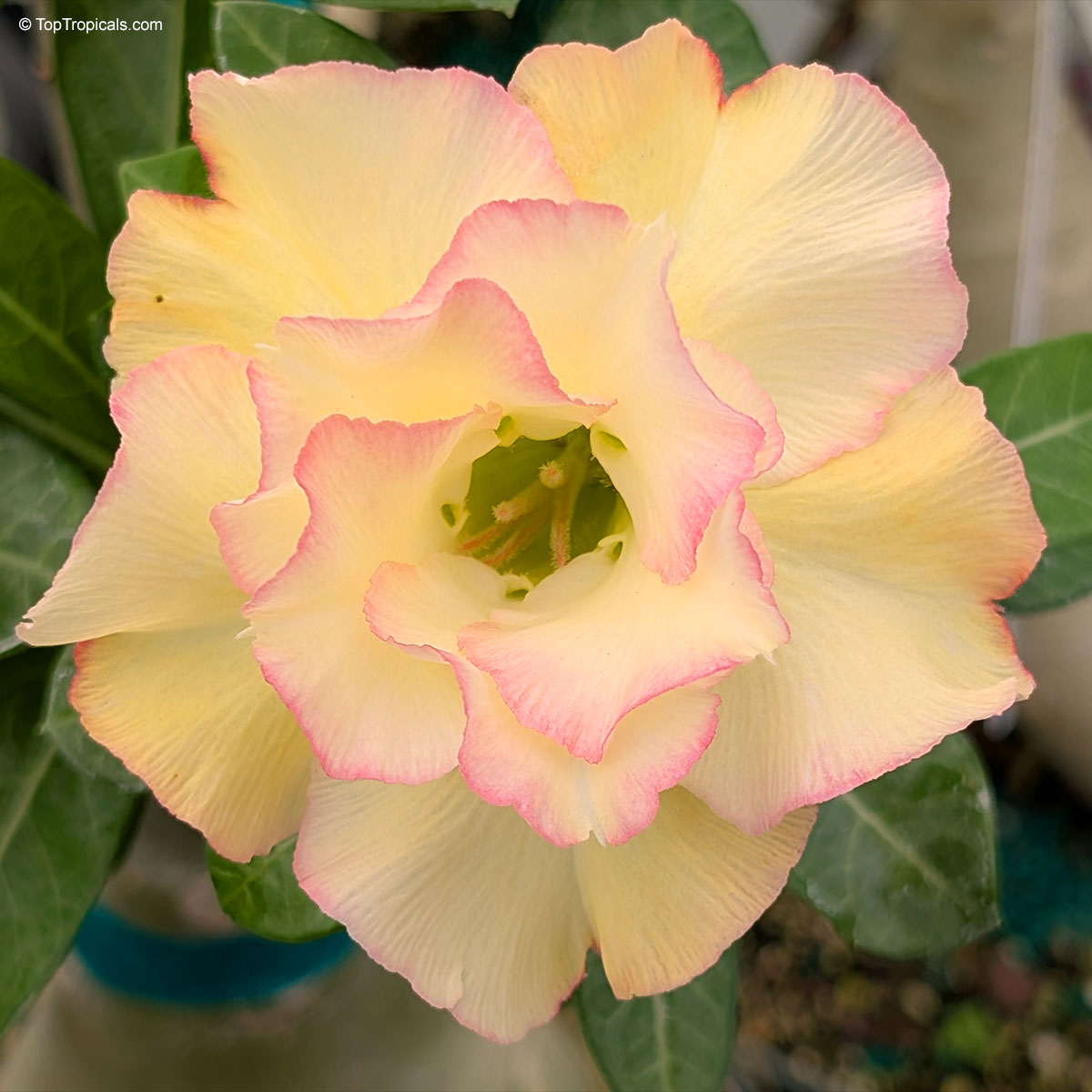
Thong Samsee Adenium  Thong  Samsee  flower  with  creamy  yellow  petals  and  soft  pink 
 edges

Known for its three-color effect, shifting from yellow to pink to nearly white on the same plant.

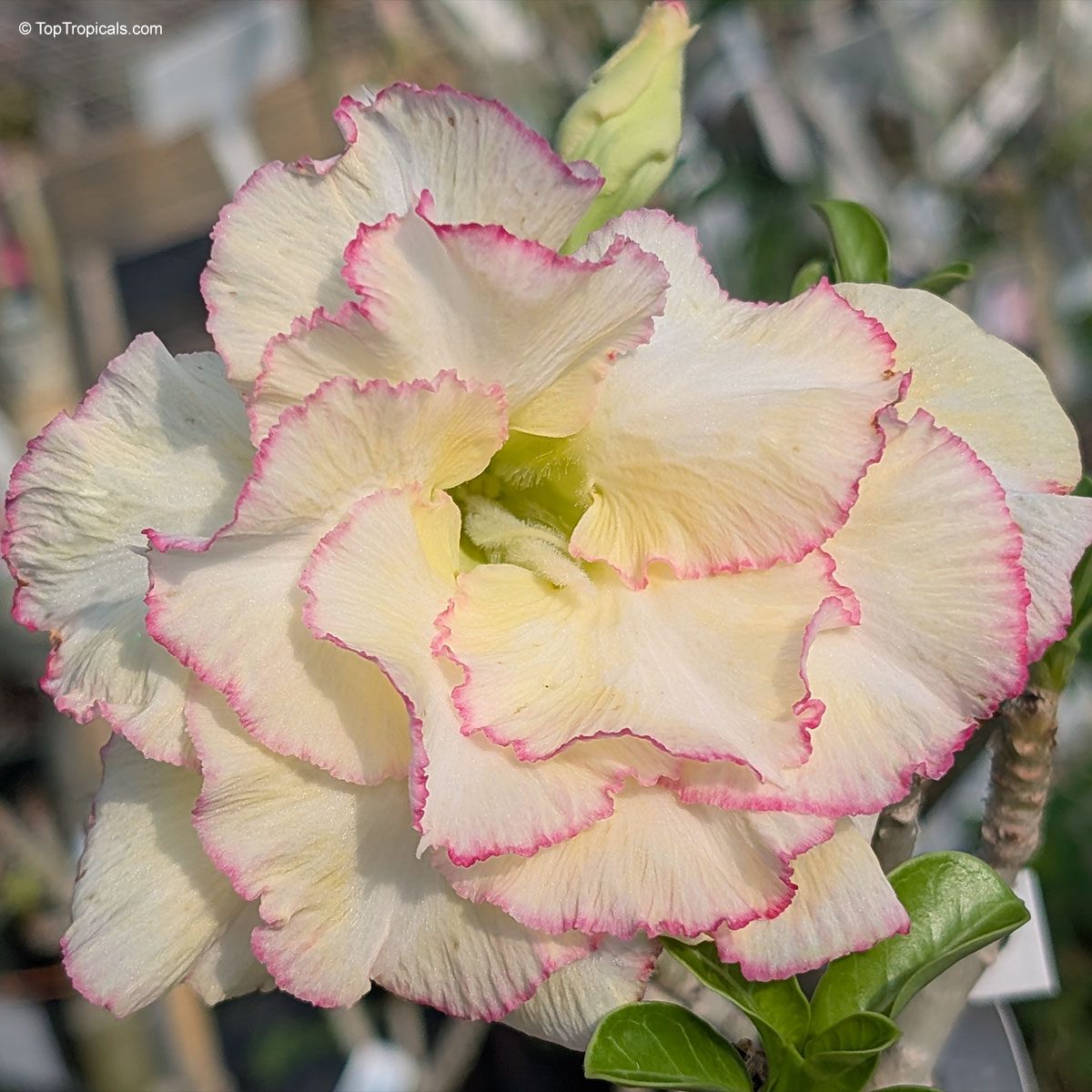
Candy Adenium  Candy  flower  with  creamy  white  petals  and  soft  pink  edges

Cheerful yellow petals dipped in cherry red with bold ruffled layers. Bright, playful, and impossible to miss.

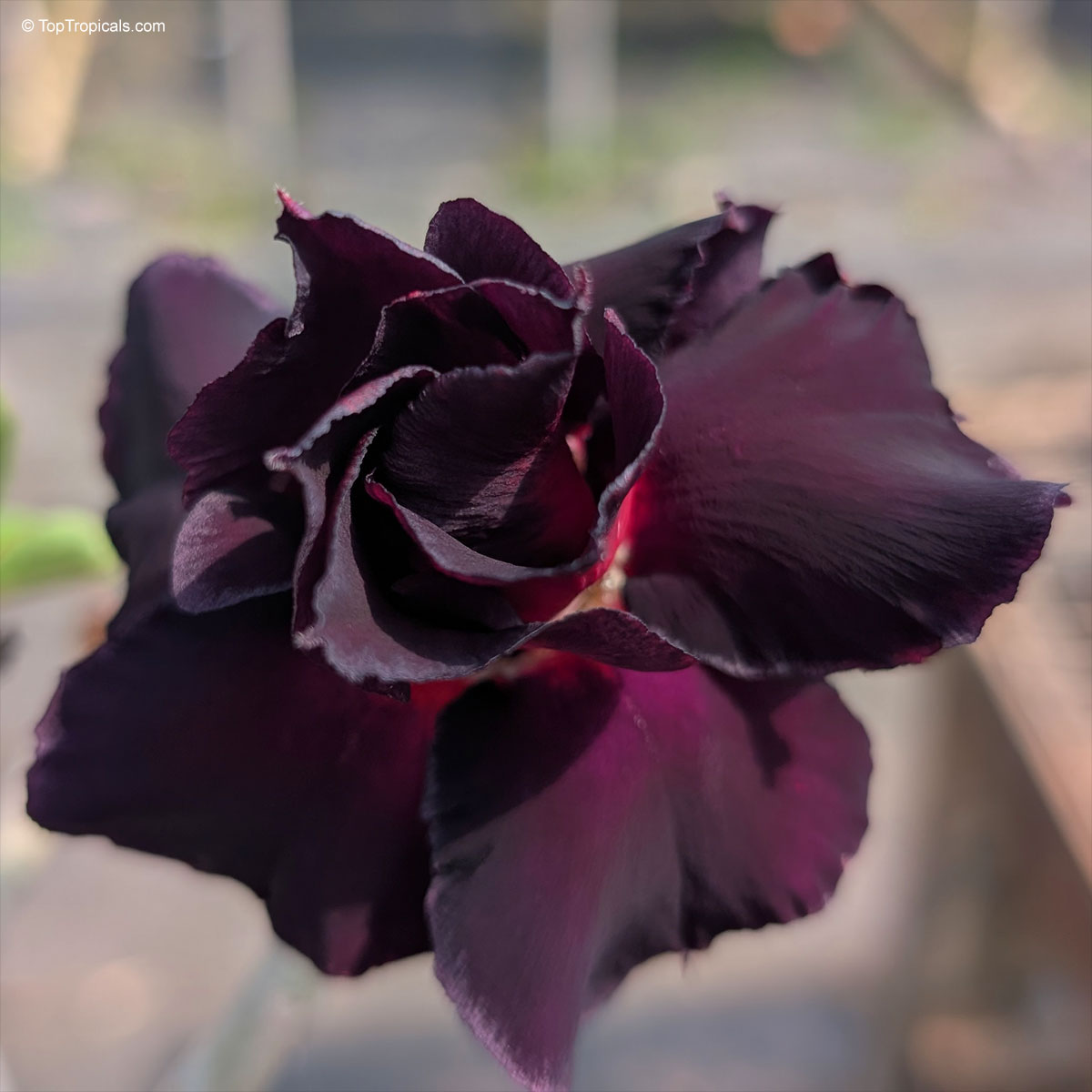
Black Sheep Adenium  Black  Sheep  flower  with  nearly  black  petals  and  deep  red 
 highlights

Nearly black petals with a glowing red center. Dark, dramatic, and different.

Free Adenium (Desert Rose) Shipping
Plant now, bloom soon. Get select Adenium (Desert Rose) varieties shipped to you with FREE S&H.
Offer valid through 02/06/2026. Limited quantities. While supplies last.
Free shipping applies to qualifying Adenium items only. Excludes other items and prior orders.

✍️ Learn About Adeniums

🎥 Watch Adenium Videos

🛒 Shop Adeniums

Date: 27 Jan 2026

🌸 Why adenium?

  • Easy to grow in containers
  • Thrive in sun or shade, indoors or out
  • Tolerant of low humidity
  • Very low water needs
  • Forgiving plants that tolerate missed watering
  • Long-lived plants that improve with age
  • Compact size, ideal for patios, balconies, and windows
  • Form unique, sculptural caudex shapes
  • Decorative even when not in bloom
  • Produce stunning, long-lasting flowers
  • Often blooming in a few months

🌸 Adenium Care Basics

Adeniums have many spectacular hybrids, and their basic culture is closer to orchids than to typical houseplants. The key is a small pot, excellent drainage, bright light, and careful watering.

Pot and Soil

  • Use a small pot sized to the root system.
  • Excellent drainage is required.
  • Use a very well-drained mix. We recommend specially formulated for Adeniums Desert Rose Soilless Mix

Light and Blooming

  • Give lots of light for heavy flowering.
  • In warm conditions and longer days, most hybrids and species begin blooming in spring.
  • In warmer climates they can keep blooming through fall and winter.

Watering (Most Important)

  • Adeniums dislike both extremes: over-watering and drying out too often.
  • Use neutral to hard water when possible.
  • Acidic water can sour the mix quickly and may cause root rot.
  • Water in the early morning so the plant can drink through the day.
  • Watering frequency can range from daily to every few days, depending on heat, light, and how fast the mix dries.
  • Never let the pot sit in a saucer of water.
  • Do not let the plant dry out too often, or it may go into early dormancy.
  • Do not wet the leaves.

Fertilizer (Caudex + Flowers)

  • To build a large swollen base/trunk (caudex), use a good quality fertilizer.
  • A fertilizer that helps trunk swelling also supports flowering. The best choice for this is Sunshine Megaflor.
  • Avoid fertilizers that are too high in nitrogen; choose a formula where the middle number is the highest.
  • Never apply fertilizer directly on roots.
  • Do not liquid feed a thirsty plant.
  • Always water lightly first, then feed, to avoid root burn and leaf drop.

The Caudex "Secret" (Shaping the Base)

  • At each repotting, lift the plant slightly so the upper roots are a little exposed.
  • This encourages new roots to grow downward and helps create a thicker, more interesting caudex shape.

Multi-Grafted Plants (Important Note)

  • Adenium hybrids can be multi-grafted with several colors/varieties on the same plant.
  • The swollen base forms only when the rootstock plant is grown from seed.

✍️ Adenium FAQ

How much light do Adeniums need?

Adeniums need lots of light for heavy flowering. Most hybrids and species start blooming when conditions are warm and days get longer, and in warmer climates they can keep blooming through fall and winter.

What is the best pot size for Adeniums?

Use a small pot sized to the root system, with excellent drainage. A small pot with excellent drainage is a must.

What kind of soil mix should I use?

Use only a well-drained mix. Adeniums do best in very well-drained soil. A small pot plus excellent drainage is the foundation of success.

How often should I water Adeniums?

Adeniums do not like both over-watering and drying-out too often. Water preferably in the early morning and do not water again until the mix dries on the surface. Watering can range from daily to every few days depending on heat, light, and how fast the mix dries.

Can Adeniums sit in a saucer of water?

No. Never allow your Adenium to sit in a saucer of water.

Should I wet the leaves when watering?

No. Do not wet the leaves.

What kind of water do Adeniums prefer?

Adeniums prefer neutral to hard water. Acidic water tends to sour the soil too fast and may cause root rot.

How do I create a large, swollen caudex?

At each repotting, lift the plant slightly so the upper parts of the roots are a little exposed. This encourages the plant to form more roots that grow downward and helps create a thicker, more interesting caudex.

What fertilizer should I use for caudex growth and blooms?

Use a good quality fertilizer to support both trunk swelling and flowering. Avoid formulas that are too high in nitrogen; the middle number should be the highest. Never apply fertilizer directly on roots, and do not liquid feed when the plant is thirsty. Water lightly first, then feed, to avoid root burn and leaf drop.

Can an Adenium have multiple flower colors on one plant?

Yes. Adenium hybrids can be multi-grafted with several colors or varieties on the same plant. Note that the swollen base forms only when the rootstock plant is grown from seed.

✍️ Learn About Adeniums

🎥 Watch Adenium Videos

🛒 Shop Adeniums

Date: 25 Jan 2026

Collecting clerodendrums: big color, little effort

Clerodendrum collage

Clerodendrum collage

🎨 Collecting clerodendrums: big color, little effort

  • 🎨 Collector hook


    If you love plants that look rare, unusual, and a little dramatic - but do not want high-maintenance divas - Clerodendrums belong in your collection.
    Clerodendrums are a surprisingly diverse group of plants, ranging from flowering vines to shrubs and even small trees. What they all share is bold, colorful blooms and an easygoing nature that makes them far less fussy than they appear. This combination of exotic looks and forgiving care is exactly why collectors gravitate toward them.
    Many clerodendrums bloom repeatedly through the year in warm climates, and several tolerate lower light better than most flowering plants. That makes them flexible - happy in the garden, in containers, on patios, or even indoors near a bright window. Their flowers come in striking combinations of red, white, blue, pink, and purple, often with unusual shapes that stop people mid-walk.
  • 🎨 Why clerodendrums earn collector status


  • ✦ Uncommon, eye-catching flowers
  • ✦ Long or repeat bloom cycles in many varieties
  • ✦ Vines, shrubs, and small trees in one genus
  • ✦ Excellent performance in containers
  • ✦ More tolerant of lower light than expected


🎨 Clerodendrum care made simple


Give clerodendrums bright filtered light to partial sun, regular watering with good drainage, and light feeding during active growth. A little pruning keeps them tidy and encourages fresh blooms. That is it. No complicated routines, no constant fixing.

For collectors who want maximum visual payoff without constant effort, clerodendrums deliver exactly what the title promises - big color, very little work.

🛒 Start your Clerodendrum collection

📚 Learn more:
#Butterfly_Plants #Shade_Garden #How_to #Hedges_with_benefits #Container_Garden

Plant Facts

Clerodendrum bungei
Cashmere (Cashmir) bouquet, Glory Bower, Clerodendron
USDA Zone: 9-11
Large shrub 5-10 ft tallSemi-shadeFull sunRegular waterRed, crimson, vinous flowersPink flowersPlant attracts butterflies, hummingbirdsDeciduous plantFragrant plantSubtropical plant. Mature plant cold hardy at least to 30s F for a short time
🟢 Join 👉 TopTropicals

Date: 16 Feb 2026

Yes, you can grow a mango tree on your patio - here is how to do it right

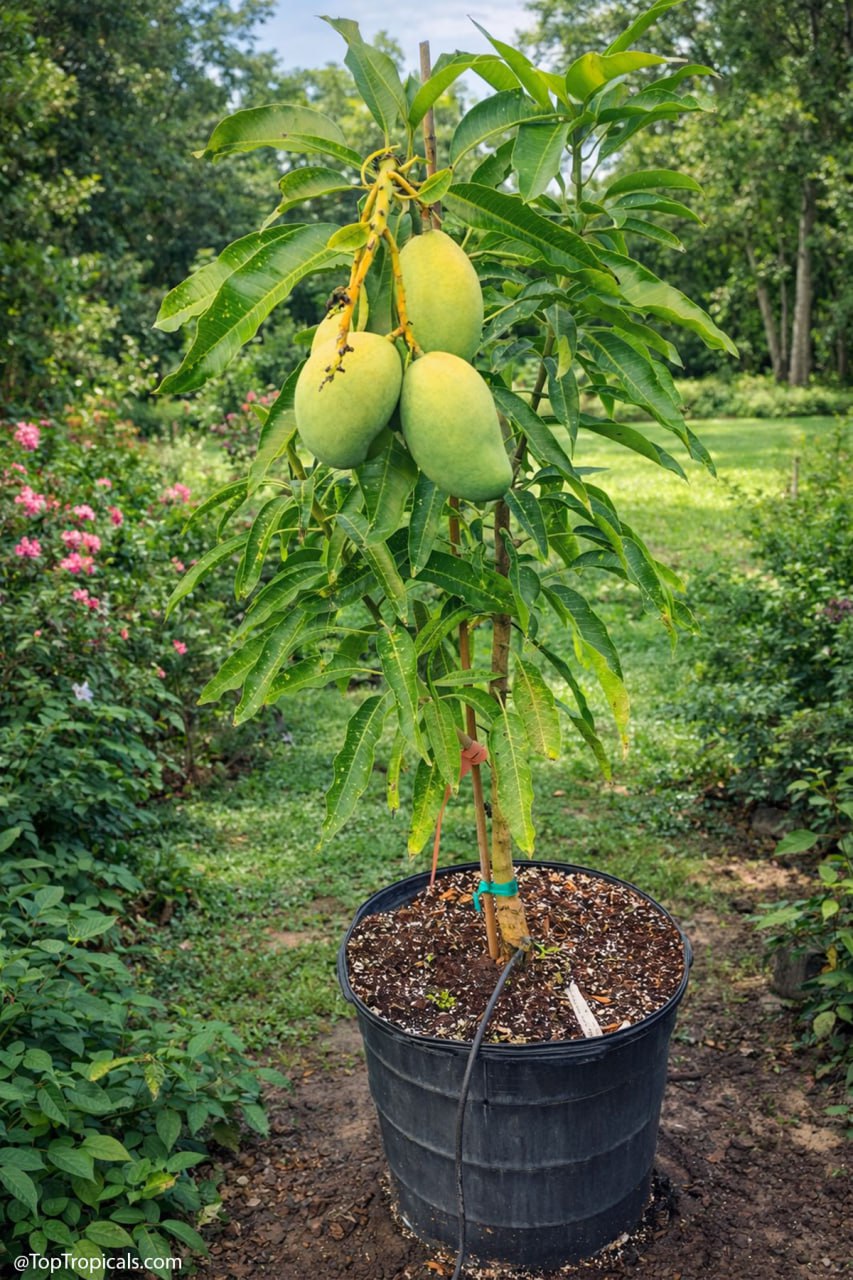
Mango fruiting in container

Mango fruiting in container

🥭 Yes, you can grow a container mango tree on your patio - here is how to do it right


Think you need a backyard orchard to grow mangoes? You don't. Mango trees grow very well in containers. Compact varieties, often called condo mangoes, stay naturally smaller and are well suited for pots, patios, and small yards. We grow and ship mango trees nationwide and have seen which varieties perform best in containers.

Growing mangoes in pots is also practical in cooler climates. The tree can be moved to protection during cold weather while still producing real fruit. Here is how to do it right.

🥭 Pick the right condo mango tree variety


Choose condo or semi-dwarf mango varieties that stay smaller and respond well to pruning. These mango trees usually stay 6 to 10 feet tall in containers with light pruning. Fruit size is full-size, just fewer than on large trees.

Good mango choices for pots include:
  • · Cogshall - compact and productive
  • · Pickering - naturally small and reliable
  • · Carrie - manageable size, great flavor
  • · Ice Cream - slow growing, narrow canopy
  • · Julie - classic Caribbean type
  • · more condo varieties...


🥭 Choose the right pot


Start small. Young mango trees do best in a 5- to 7-gallon pot. Oversized containers too early often cause overwatering and root issues.

Increase size gradually:
First pot: 5-7 gallons
Next size: 10-15 gallons
Mature container: 20-25 gallons

The pot must drain well. Mango roots dislike wet soil. Add holes if needed. Plastic, ceramic, and fabric pots all work.
  • 🥭 Use fast-draining soil


    Mango trees need air around their roots.
    Use a loose, fast-draining mix, such as Abundance Professional Soilless Mix. Improve drainage with perlite, pine bark, or coarse sand. Avoid heavy or water-holding soils. Drainage matters more than fancy ingredients.
  • 🥭 Water carefully


    Mango trees prefer a wet-dry cycle.
    Water deeply, then allow the top few inches of soil to dry before watering again. Always check with your finger first.
    In warm weather, water once or twice a week. In winter, much less. Overwatering is the most common container mistake.
  • 🥭 Give plenty of sun


    Mango trees love sun and heat.
    Place the pot in full sun with at least 8 hours daily. More sun improves growth and flowering.
    If overwintered indoors, use the brightest window possible. Grow lights help, but outdoor sun is best when weather allows.
  • 🥭 Fertilize lightly but consistently


    Potted mango trees benefit from regular feeding during active growth.
    Use a balanced mango or fruit tree fertilizer such as Sunshine Mango Tango (safe to use with every watering, year-around). Controlled-release fertilizer Green Magic (every 6 months) work well too. Avoid excess feeding, which promotes leaves over flowers.
    If leaves pale, check watering first, then nutrition.
  • 🥭 Prune to stay compact


    Pruning is essential for mangoes in pots.
    Light tipping and trimming control size, encourage branching, and increase flowering points. Keep the canopy open and balanced. Watch how simple tipping works in real life: .
    Avoid heavy pruning before flowering. Most pruning is best right after harvest.
  • 🥭 Protect from cold


    Mango trees are tropical and cold-sensitive.
    When temperatures drop below 40F, move the pot to protection or indoors. Young trees are especially vulnerable.
    During winter, reduce watering and stop fertilizing. Growth slows and the tree rests.
    When warm weather returns, reintroduce the tree to sun gradually to prevent leaf burn.
  • 🥭 Final thoughts


    Growing a mango tree in a pot is practical and rewarding. With the right variety, good drainage, full sun, and careful watering, a potted mango can thrive and fruit for years, even in small spaces. Ready to start? Choose a compact mango variety.


🛒 Discover Condo Mango

📚 Learn more:
#Food_Forest #How_to #Discover #Mango

Plant Facts

Mangifera indica
Mango
USDA Zone: 9-11
Large tree taller than 20 ftSmall tree 10-20 ftFull sunModerate waterYellow, orange flowersPink flowersEdible plantSeaside, salt tolerant plant
🟢 Join 👉 TopTropicals

Date: 5 Feb 2026

How to get three colors on the same plant: Yesterday, Today, and Tomorrow

Brunfelsia grandiflora - Yesterday, Today, and Tomorrow

🌸 How to get three colors on the same plant: Yesterday, Today, and Tomorrow

  • 💜 Brunfelsia is one of those plants that makes people stop mid-sentence.
  • It blooms in shade, smells incredible at night, and then does something unexpected - the flowers change color over just three days.
  • 💜 Purple. Lavender. White.
  • All at the same time, on one plant.
  • 💜 It is easy to grow, loves warm weather and part shade, and turns any garden path or patio into an instant conversation starter. Once it starts blooming, it just keeps going.
  • 💜 These are the most interesting varieties known as Yesterday-Today-Tomorrow for their magical color transformation from purple to lavender to white over three days: B. grandiflora, B. paucifolia, B. australis.


🛒 Explore Brunfelsias - the ultmate shade flowers

📚 Learn more:

Plant Facts

Brunfelsia grandiflora
Yesterday -Today -Tomorrow, Kiss-me-quick, Royal Purple Brunfelsia
USDA Zone: 9-11
Large shrub 5-10 ft tallSmall plant 2-5 ftSemi-shadeShadeRegular waterBlue, lavender, purple flowersWhite, off-white flowersPink flowersToxic or PoisonousPlant attracts butterflies, hummingbirdsFragrant plantSubtropical plant. Mature plant cold hardy at least to 30s F for a short time

#Perfume_Plants #Hedges_with_benefits #Container_Garden #Shade_Garden

🟢 Join 👉 TopTropicals