Date: 21 Feb 2020
When plants are ready for a meal?
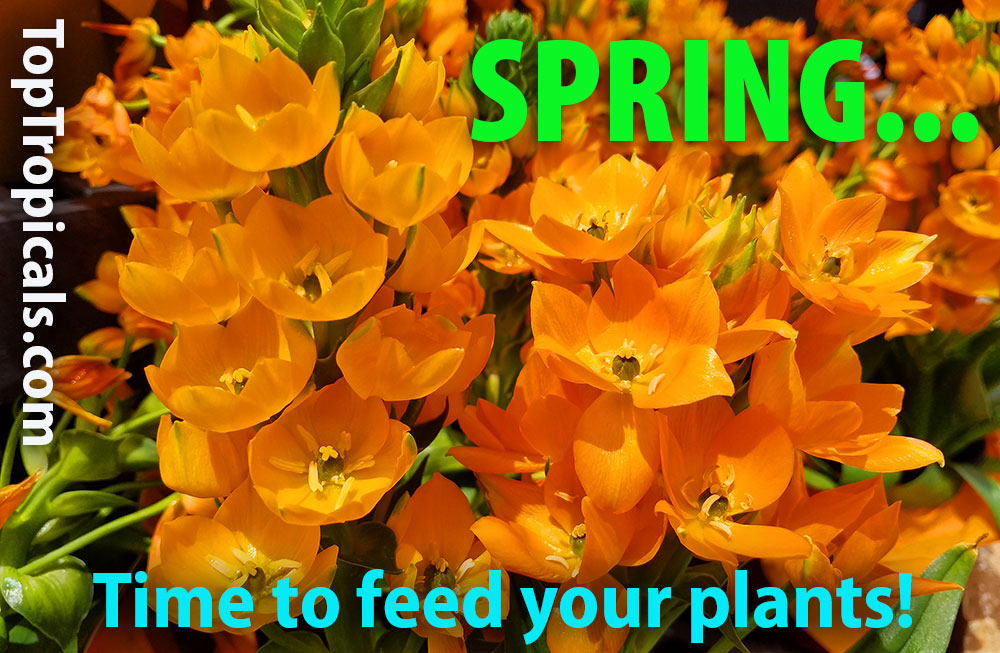
Q: We have an early Spring here in Florida. All plants in my garden flushing out new leaves and buds opening. Can I start fertilizing? I have Mango, Avocado, Peach trees, many medicinal herbs and flowering shrubs: Angel trumpets, plumerias, bromeliads. I prefer mild organic fertilizers; can you suggest something that is safe for edibles and butterflies?
Q: As a rule of thumb, tropical gardeners start regular fertilizing when the minimum temperatures (at night) go above 65F. Keep in mind that Sunshine Boosters fertilizers can be applied year around because they have mild formulas and used with every watering; during cooler period, you water less frequently, so feeding is reduced accordingly. Another advantage of Sunshine Boosters - they are natural (derived from organic amino acids which is the basics of Life). They are safe for edibles as well as pollinating insects.
Here is the feeding plan for your plants:
1. The most universal solution for all plants (both potted and
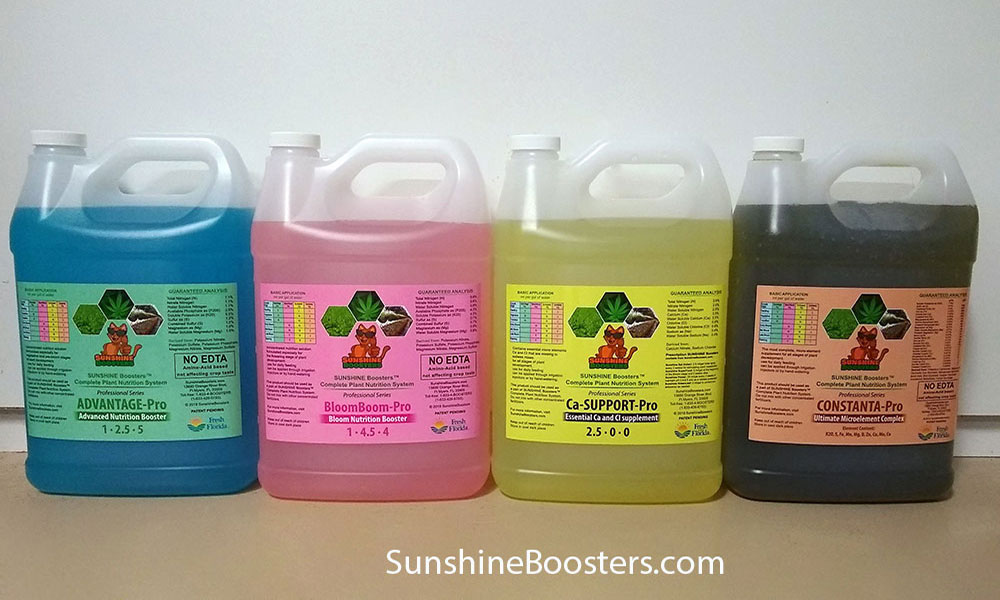
in-ground): get a complete set of Sunshine Boosters Pro system: Advantage-Pro for vegetative growth, BloomBoom Pro for flowering stage, and Ca-Support-Pro + Constanta-Pro as necessary daily supplements. You will need all these 4
components for your garden.
2. Start adding these liquid boosters with every watering according
to dozing directions and you will notice amazing growth boost within a
week.
3. Apply Sunshine Epi plant hormone every 2 weeks as a foliar spray to boost
immune system and metabolism of plants and protect them from diseases. Epi
makes plants (especially young plants and those "waking up" from dormancy)
grow twice faster! It also enhances effect of fertilizers by increasing plant
metabolism.
4. After cool winter temperatures, some plants may develop element
deficiencies like chlorosis (yellowing leaves). Additional microelement boost
can be provided with Sunshine Greenleaf (iron supplement) and Sunshine Superfood (micro-elements).
5. For additional boosting of flowering and setting fruit, use the
following individual boosters:
Sunshine Robusta - for foliage plants and when you need rapid vegetative
growth
Sunshine TotalFeed - for Plumerias and other fragrant plants
Sunshine Megaflor - for Brugmansias and other flowering heavy feeders
Sunshine C-Cibus - for improving fruit production and quality
Sunshine Honey - for sweeter fruit (must be applied 4-5 times a year)
6. For young/small plants (seedlings, rooted cuttings) as well as
tender tropicals like bromeliads, and orchids - Sunshine Bombino is a perfect choice due to its mild formula.
7. To save money, order complete sets rather than individual
boosters; you will be able to safe up to 40%! Sunshine Complete Nutrition System
Kits: Combo
Kit, and Pro Kit.
If you are a fan of organic gardening, do not use dry fertilizers. While water-soluble and granulated (smart-realease) fertilizers are popular choice in plant nurseries due to their convenience, they are not as safe as liquid boosters because they create salt build-up in soil and have a high risk of overdosing/burning plant roots, especially potted plants, plants at breaking dormancy, at establishing, and at early stages of plant development. Besides, dry fertilizers may affect the taste of your fruit and herbs. See advantages of liquid boosters over dry fertilizers.
Learn more about Sunshine Nutrition System - a Natural solution for your garden.

Date: 21 Sep 2019
Shaping a tree and regrowing branches
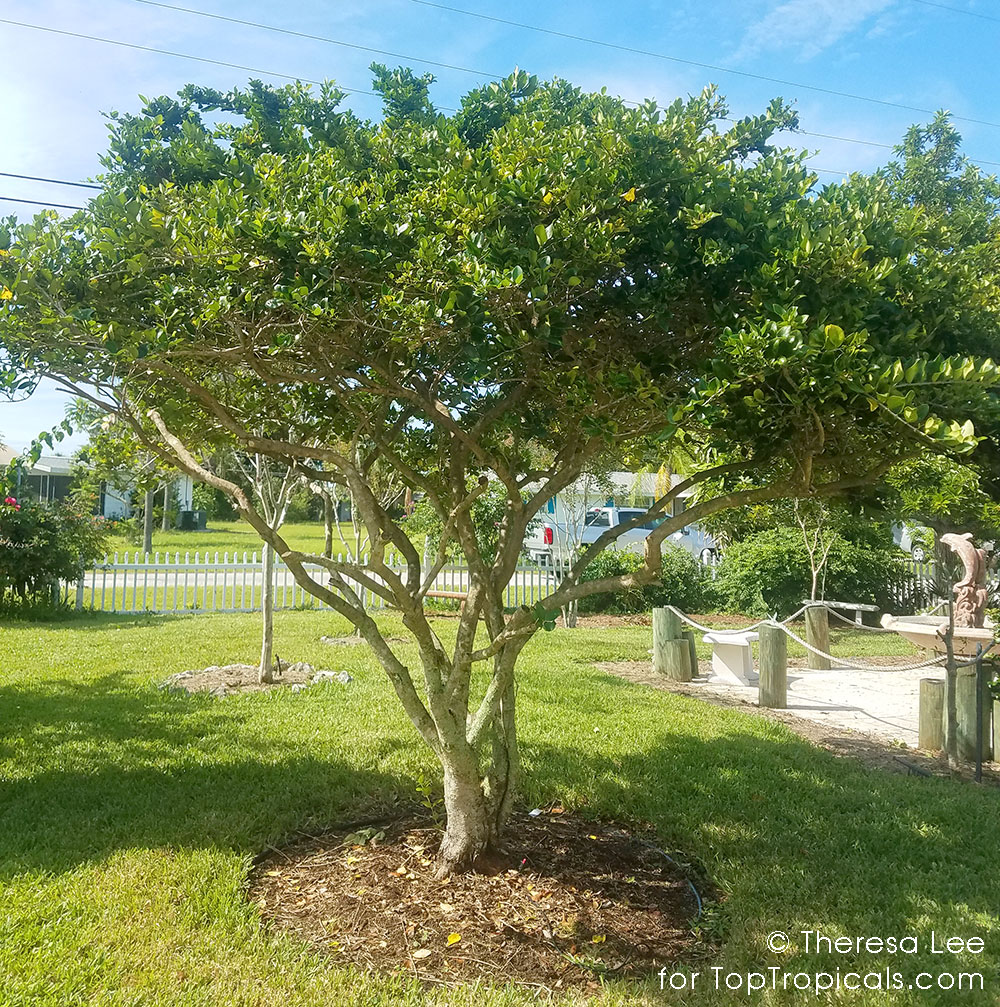
Q: I have been so worried about the beautiful ligustrum on my property since my husband decided to "prune" it 2 days ago. He removed about 20 branches from the tree and completely altered the look of the canopy which was so full and lovely ðŸ˜. Please advise me if there is anything I can do to help this tree. Will any of the branches grow back? Will the canopy return? It looks practically bare to me now.... so heartbroken. Any advice and reassuring would be greatly appreciated.
A: The good news is, the tree will regrow new leaves and will
branch out. The question is, how soon. Ligustrum is pretty slow-growing species
and it may take a while until it gets to the shape that is close to the
original.
On the other hand, pruning is beneficial almost for every plant, it
promotes new growth and bushy shape.
So do not panic, your beautiful tree has good chances to become even
prettier.
To speed up the process of re-leafing and promote healthy new growth,
we recommend the following:
1) Provide extra watering, assuming you have a sprinkler system that covers the yard. Water additionally 1-2 times a week using a garden house, for 1-2 minutes, saturating the soil around the tree and up to a drip line.
2) Apply the following fertilizers:
Tropical Greenhouse Plus - Foliage Booster
Tropical Allure - Smart-Release Booster
3) In addition to fertilizers, we recommend these 2 supplements that
will enhance effect of fertilizers and make re-grow process even faster:
SUNSHINEâ„¢ SuperFood
SUNSHINEâ„¢ HumiHum - a natural humate vitamin for plant
4) Mulch well around the tree, keeping it 2-3"away from the trunk
This should help to get your tree back in shape!
Date: 30 Aug 2019
LadyBugs guarding your plants!
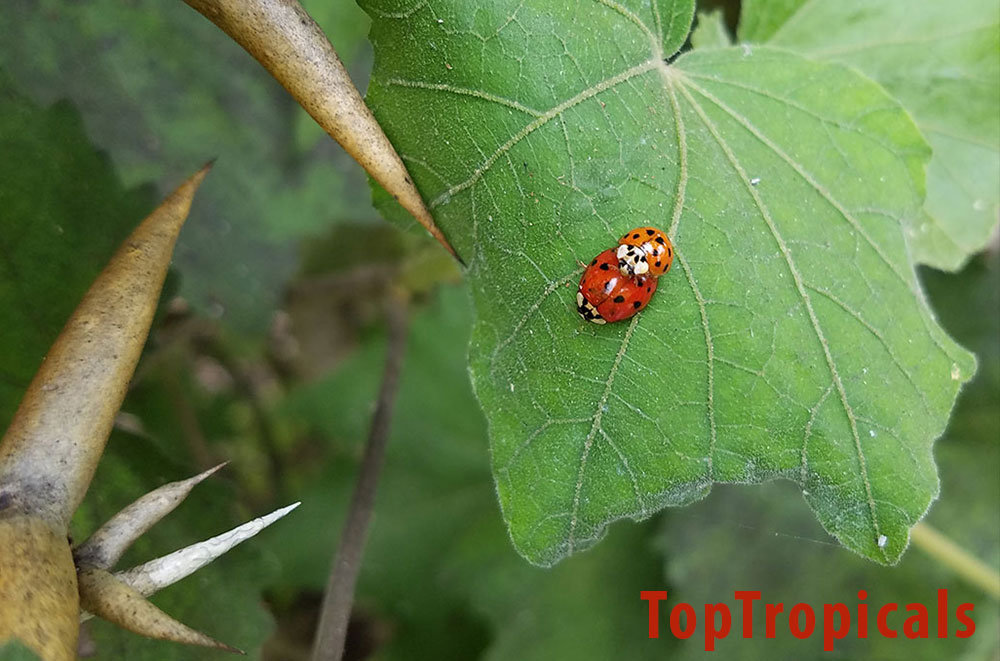
Q: I have a bunch of Ladybugs in my garden, I wonder if they eating my plants? Do I need to get rid of them?
A: Ladybug (Harmonia axyridis) is, in fact, one of the best insects you can find in your garden, it is a natural predator that takes care of many bad bugs, including aphids. Keep them happy and bring them to your garden. Ladybugs actually are cultivated as natural pest control, and you can even buy them for your yard, instead of chemicals!
Ladybug larvae eating aphids:
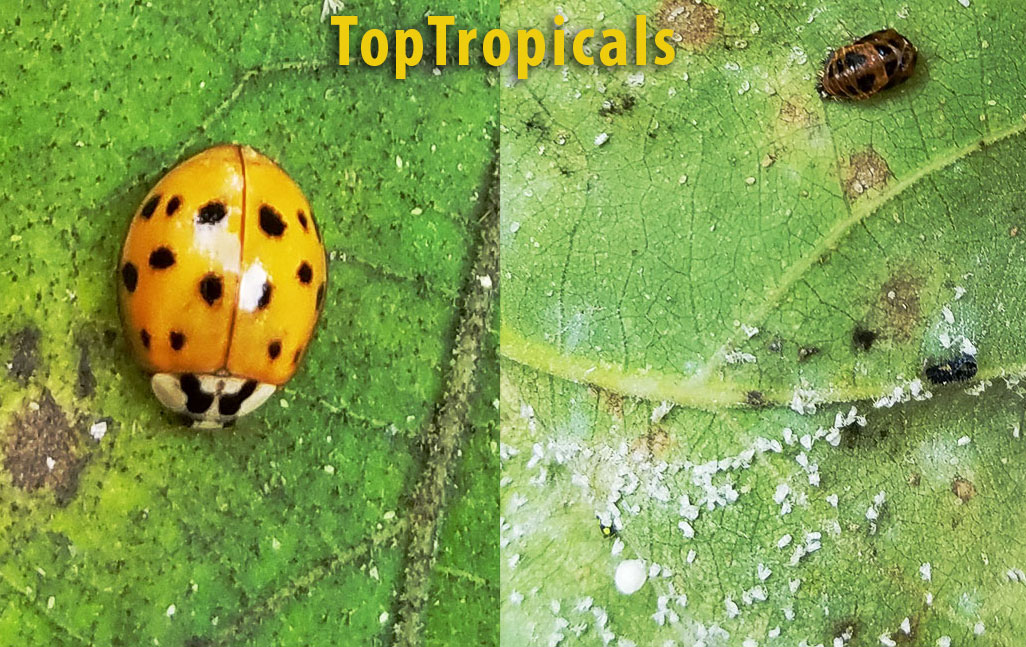
The wonderful insects that dine only on landscape pests and don't harm good bugs or plants are called 'beneficials', and ladybugs definitely fall into this category, but not the way many people think. It's the ladybug's larvae that are voracious predators of soft-bodied problem insects, especially aphids.
Photo below:
One of our PeopleCats, "Innocent" Ladybug (a.k.a. Bug) is wondering who else she can bug next...

Date: 24 Jul 2019
Plants that are not for eating
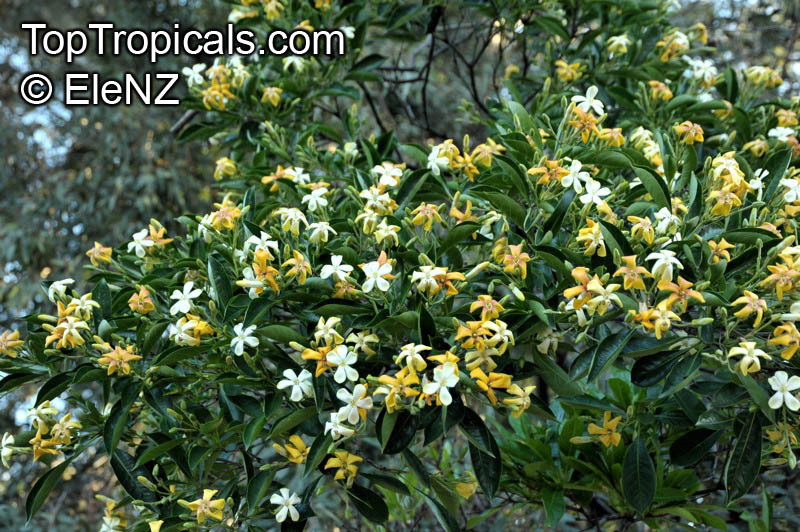
Q: On the website, it says that the pua keni keni tree is toxic. Do you know how toxic? Is it mild irritation or can someone die from ingesting any part of the plant?
A: Pua Keni Keni, Fagraea - seeds (and especially flesh of the fruit) are toxic, so we recommend to always wash your hands after handling them. Obviously, nobody in our team ever tried to eat them to check how toxic they are and if they are deadly.
In general, one must be careful when using plants for purposes other than ornamental growing, especially for consumption. While some obvious edibles (cultivated fruit, vegetables, herbs) are generally safe, but some individuals may have severe reactions - for example, many people are allergic to mangoes; other people may be sensitive to only mango leaves.
A number of plants that have parts commonly consumed for food, have other parts toxic or poisonous. Example: Potato - Solanum tuberosum - has edible tubers feeding the whole planet population, but this plant's fruit is highly toxic and even deadly if eaten. Fruit from a Potato plant look like tiny little green tomatoes since Potato belongs to the same family as Tomato - Nightshade, but it is super poisonous, while Tomato fruit is perfectly edible. So one must watch out and especially educate little children about not tasting anything directly from the garden.
As far as animals concern, in Nature they know what is poisonous and what is edible. Have you ever seen dead birds around a tree with poisonous fruit/seeds? Animals have their own sense for it. So if your concern is for pets, it is normally safe to have pets around plants with irritating or even poisonous parts. However, if your dog has a bad habit of chewing on stuff, you may use extra caution there.
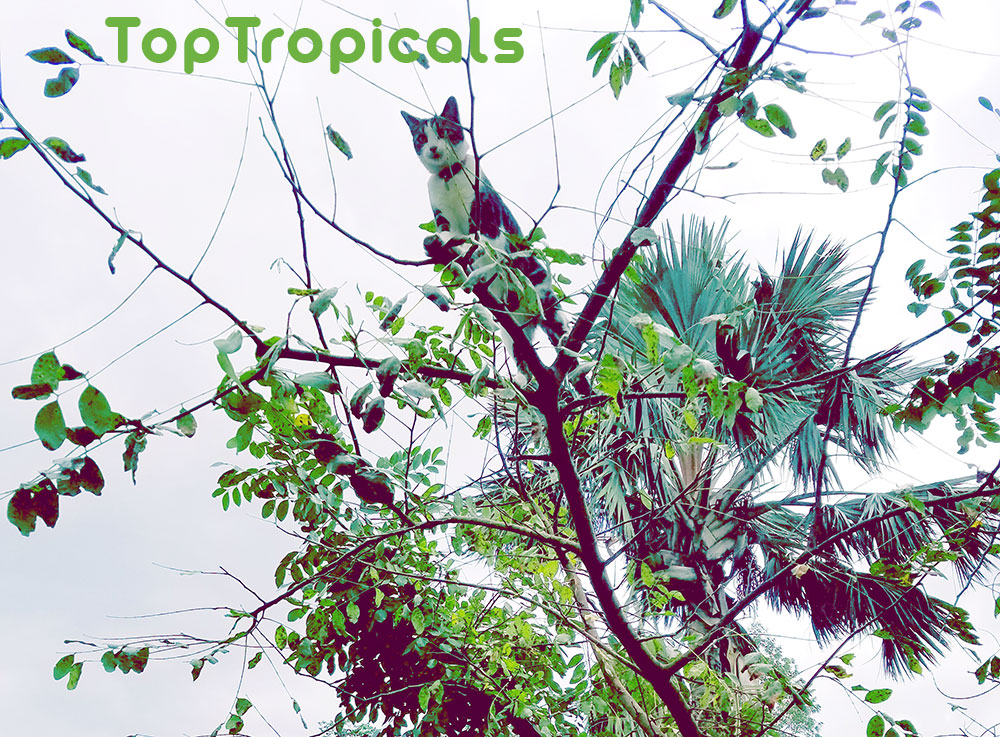
Photo below:
Riki-Tiki-Tavi exploring TopTropicals Gardens.

Date: 14 May 2019
How to make the whole garden fragrant.
List of the most fragrant yet easy to grow plants
Q: Dear toptropicals, thanks for the great database on tropicals plants! I really enjoy browsing your web site and I am planning on completing my collection by purchasing some plants from your shop. I am particularly looking for fragrant plants that make the whole area fragrant. Can you provide a list of recommended fragrant plants that bloom throughout the year round? I currently have: murraya, plumeria, michelia alba, figo, champaca, rangoon creeper, honeysuckle, jasmine, stephanotis, Arabian sambac, brunfelsias.
A: As a must-have additions to your impressive fragrant plant
collection, we can recommend the following rare fragrant plants below. These are
our favorites that are easy to grow and free-flowering. Since they flower at
different times, they will add fragrance to your garden throughout the year.
Aglaia odorata - Chinese Perfume Plant
Aloysia virgata - Almond Bush
Beaumontia grandiflora - Easter Lily Vine
Brugmansia Variegated Orange Angel Trumpet
Brunfelsia magnifica floribunda Jims Giant (very fragrant and very
compact!)
Cananga fruticosa - Dwarf Ylang-Ylang
Cerbera x manghas hybrid - Enchanted Incense
Cestrum nocturnum - Night blooming jasmine
Crinum Queen Emma - Spider lily
Eucharis grandiflora - Amazon Lily
Euodia hortensis - Scented Evodia, Golden False Aralia (very fragrant
leaves!)
Hedychium coronarium - Butterfly Ginger
Hiptage benghalensis - Helicopter Flower
Jasminum dichotomum - Rose Bud Jasmine - very fragrant!
Magnolia virginiana - Sweet Bay
Millettia reticulata - Evergreen Wisteria
Mirabilis jalapa - Four oclock plant - super fragrant!
Osmanthus x fortunei - Fortunes Tea Olive
Oxyceros horridus- one of the most intense perfume fragrances!
Radermachera Kunming - Dwarf Tree Jasmine
Satureja Viminea - Kama Sutra Mint Tree - strong mint fragrance
Sclerochiton harveyanus - Blue Lips, Mazabuka - lavender fragrance
Solandra maxima - Variegated Butter Cup
Telosoma cordata - Pakalana vine
Wrightia religiosa - Sacred Buddhist
You may consider many varieties of gardenias, and the most rewarding
are:
Gardenia vietnamensis - Vietnamese Gardenia
Gardenia Aimee Yoshioka (First Love)
Gardenia posoqueria - Shooting Star Gardenia
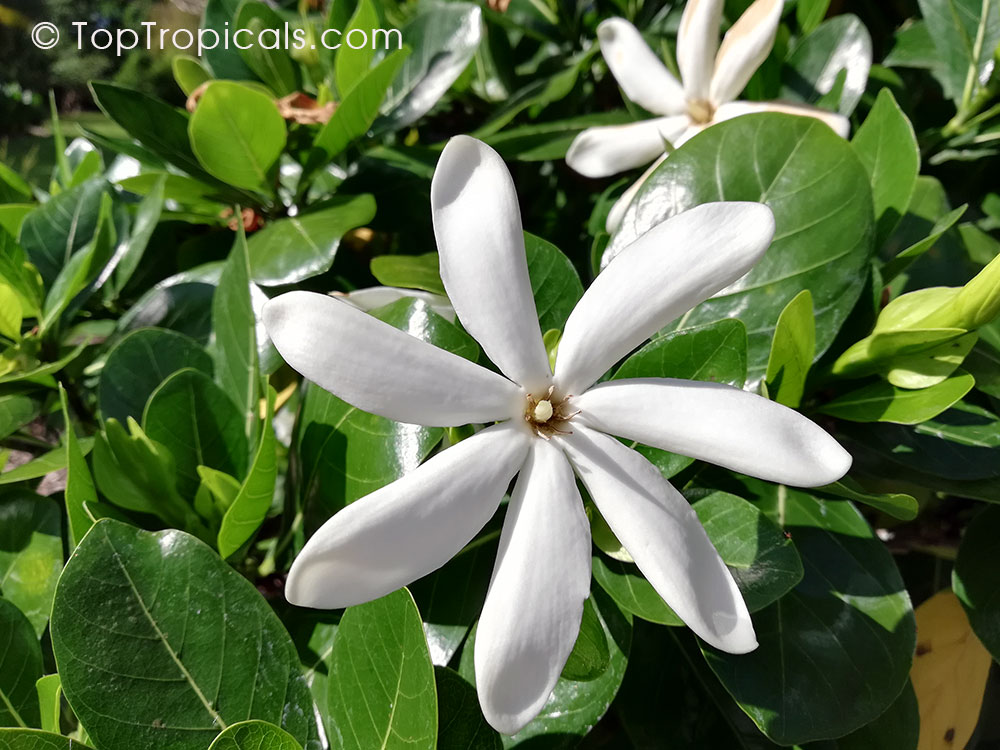
Gardenia taitensis Heaven Scent (double flower)
Gardenia taitensis Tiare Tahiti, single flower
Gardenia tubifera Kula - Golden Gardenia
To see the full list of fragrant flowers, follow this link