Garden Blog - Top Tropicals

Date: 22 Apr 2026

When Mango Ripens on the Tree, Everything Changes

Smokey  and  Sunshine  enjoying  fresh  homegrown  mango  harvest  in  garden
Sunshine: Never understood the passion for mango. I tried store mangoes. I really tried. Just disappointment. So this is what real mango is supposed to taste like?

Smokey: Now you know.

There is a moment when a mango is perfectly ripe — soft to the touch, warm from the sun, fragrant before you even cut it open. The skin gives way, and suddenly there is color, juice, and a sweetness that feels almost unreal. Not sugary, but deep and layered, like something that took its time to become what it is. In that moment, it feels less like fruit and more like something truly given, exactly as it should be.

What you find in most supermarkets is something else entirely. Picked early so it can survive shipping, it never gets the chance to finish ripening process. It softens, it turns yellow, but the depth never comes. The flavor stays thin, and the texture often turns fibrous — strings in the flesh that get stuck in your teeth instead of melting away. That fiber is not an accident. It helps the fruit stay firm enough to handle transport without damage. It looks like a mango, but it never becomes one.

The only way to close that gap is simple — let the fruit ripe where it belongs. On the tree. When you grow your own mango, you control that moment. You pick it when it is actually ready, not when it has to survive a truck ride across the country. And that one difference is everything you taste.
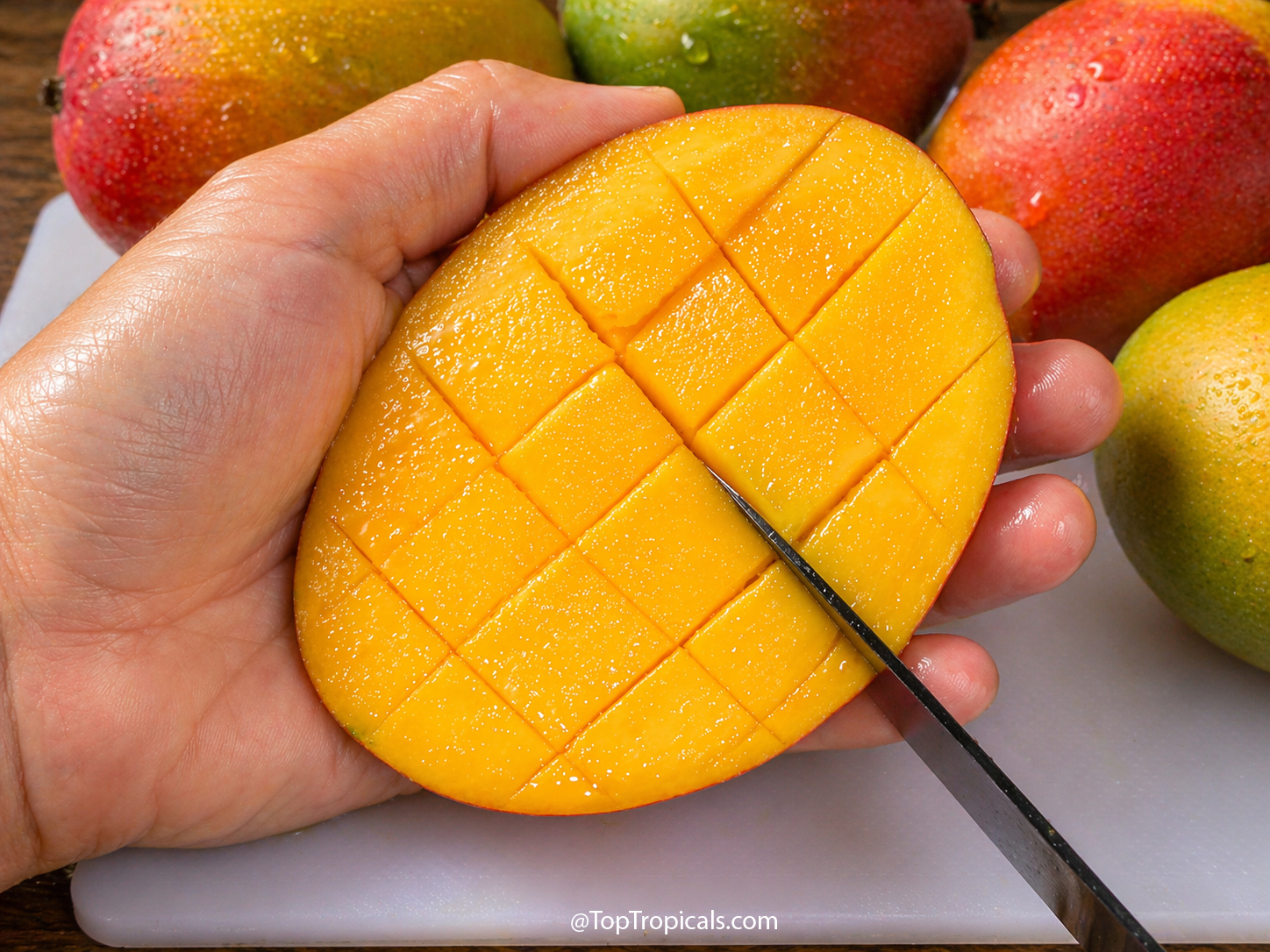
Close-up  of  a  hand  holding  a  mango  cheek  while  scoring  the  bright 
 orange  flesh  into  a  grid  pattern  with  a  knife,  with  whole  mangoes  in  the 
 background.

Scoring a mango cheek into cubes - the easiest way to prepare clean, ready-to-eat pieces.

📚 Learn more about mango varieties

🛒 Shop Mango Trees

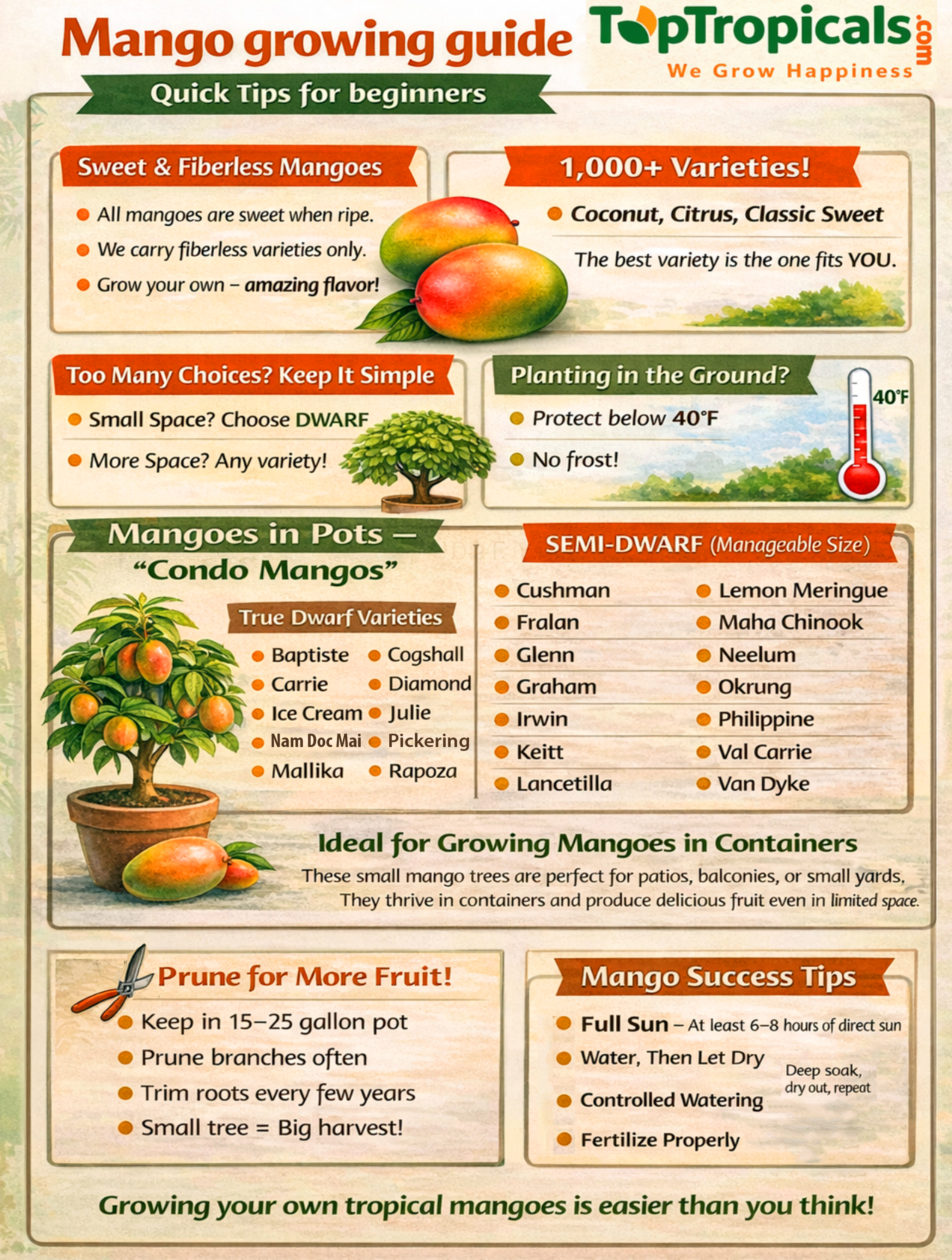
Educational  infographic  titled  mango  growing  guide  showing  beginner 
 tips  for  growing  mango  trees,  including  sweet  fiberless  varieties,  dwarf  and
    semi-dwarf  options  for  containers,  planting  tips,  pruning  advice,  watering,
    sunlight,  and  fertilizing  recommendations,  with  illustrated  mango  trees  and
    fruit.

Quick beginner guide to growing mango trees - from choosing the right variety to pruning, watering, and container growing tips.

Date: 27 Nov 2025

Happy Thanksgiving from all of us at Top Tropicals!

Smokey  the  tuxedo  cat  holding  a  Thanksgiving  sign  while  Sunshine  the 
 ginger  tabby  smiles  beside  him  on  a  potting  table.

Smokey: "We made a list of everything we are thankful for this year."
Sunshine: "I helped. Mostly by napping next to it."
Smokey: "And that is exactly why sunshine naps are on the list."

Smokey and Sunshine wanted to share a short Gardener Thanksgiving Message about what they are thankful for this year:

"We are thankful for warm laps during cold mornings.
Thankful for every gardener who stopped to scratch our heads between loading carts.
Thankful for the smell of fresh soil, new plants, and boxes that make perfect cat forts.
Thankful for mango season (even though humans never let us eat the fruit).
Thankful for sunshine naps on potting tables and shade naps under benches.
Thankful for all the tiny moments when gardens and people slow down together.
And thankful that we get to share this tropical adventure with you."

From the whole Top Tropicals Team and PeopleCats, we wish you a warm, peaceful, plant-filled Thanksgiving 🙏 ♥️

🛒 Shop Tropical plants

Date: 4 May 2026

🎉 Work First. Celebrate Anyway. That Is the Plan.

Sunshine  cat  holding  large  mango  tacos  in  a  garden  nursery  while  Smokey
    works  on  laptop  with  margarita  and  donuts  on 
 table
Smokey: Work first. Celebrations later.
Sunshine: I am celebrating efficient workflow.
Smokey: Impressive. Somehow your workflow smells like tacos.
Sunshine: I assembled mango tacos. Join my festivities.

Cinco de Mayo has a way of sneaking up the right way. The weather settles, the evenings stretch a little longer, and suddenly everything moves outside - plants, people, and whatever happens to be for lunch. It is the kind of day where you stay out longer than planned, something cold is sweating on the table, and dinner becomes whatever sounds good.

This year, it was mango tacos. Not a recipe we planned - just a few ripe mangoes that needed a purpose and the kind of lazy inspiration that shows up around 5pm in the garden. Nothing complicated. Just something warm from the pan and a quick assembly that somehow feels like a celebration.

It's funny how a good meal can send you down a rabbit hole. One bite of something fresh and you start wondering where it came from, whether you could grow it yourself, and how much better it might taste if you did.

That is really the point. A small shift from planning to picking, where the line between the garden and the kitchen starts to blur. If you are growing fruit, or thinking about it, this is your reminder: the best meals usually start about ten feet from your back door.

🛒 Start with one plant - Shop Fruit Trees

Date: 30 Aug 2019

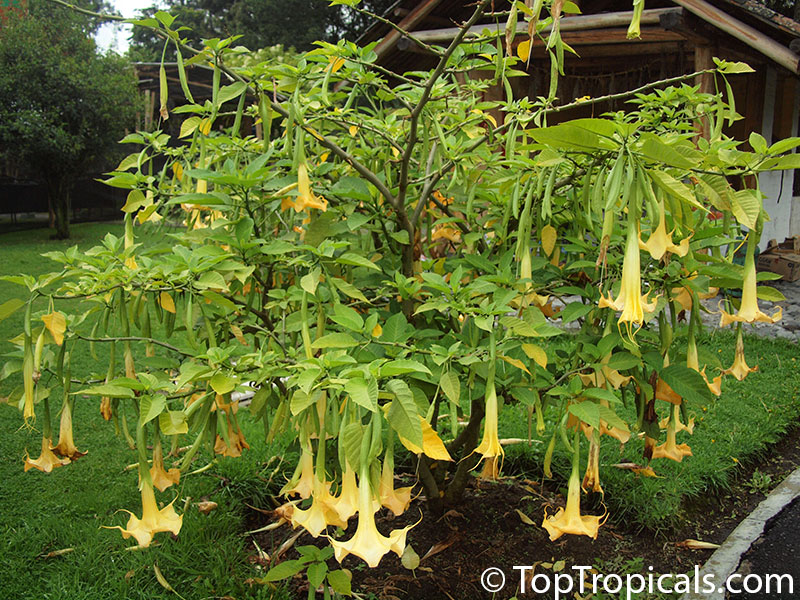
How to grow Angel Trumpet in Florida

Q: I purchased an Angel trumpet in March, 2018. It wasn't looking very good so I asked what to do about it. Your reply was to fertilize and keep it watered. I did & it started to improve. I went on vacation & it reverted, dropping leaves... How do I keep it happy?

A: With growing Angel Trumpets in Florida, there are a few things that may go wrong, although in general Brugmansia is a vigorous rapid grower. Once the plant is established, it is very easy to grow. Looks like your plant had some troubles at the start and is still struggling. Dropping leaves could be a sign of a root problem.

These are the main important points for Brugmansia growing:
1. Must be planted in a high spot, using very well-drained soil. Brugmansias do not like soggy conditions (happens with Florida summer). They like water, but only as long as drainage is good.
2. Full sun is a must for a healthy plant.
3. Brugmansias are heavy feeders. Fertilize at least once a month once the plant is established:
Pink N Good Daily Plant Food - Flower Booster
Angel Trumpet Delight - Smart-Release Booster
4. They are susceptible to bugs... check underneath the leaves and if any pests, spray with solution of any vegetable oil, water, and some dish soap.

The bottom line is, do not overwater but don't let it dry out. It's rainy season now, maybe too much rain affecting the plant.
Try these Sunshine Boosters, they have amazing results and often help us to bring stressed and weak plants back to life:
SUNSHINE-Power - plant booster
SUNSHINE-E - plant booster

Date: 10 Nov 2022

Fertilizing indoor plants in Winter

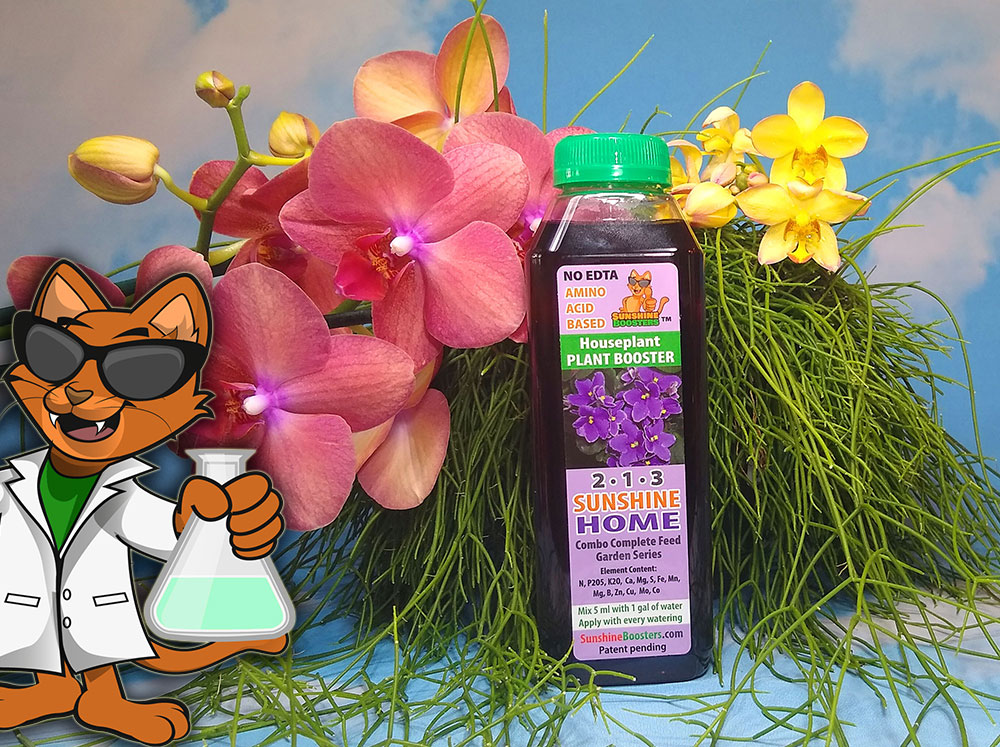
Sunshine  boosters  for  indoor  palnts

What is the best fertilizer for indoor plants?
Can I fertilize house plants in Winter?

The best fertilizer for indoor plants is liquid fertilizer Sunshine Boosters (TM). It is amino-acid based, natural, and is safe to use with every watering and year around. Unlike dry fertilizers that are not recommended to use during Winter, Sunshine Boosters formula is mild and scientifically balanced. Your houseplants will consume exactly as much nutrients as they need even during cooler months of less active growth. Sunshine boosters will not burn roots and won't create nutrient lockup (excessive salts that often caused by dry fertilizers). Sunshine Boosters is a perfect food for all kinds of plants, and different boosters available for different plant types (flowering, fruiting, even for orchids). Check out Sunshine Boosters selection.

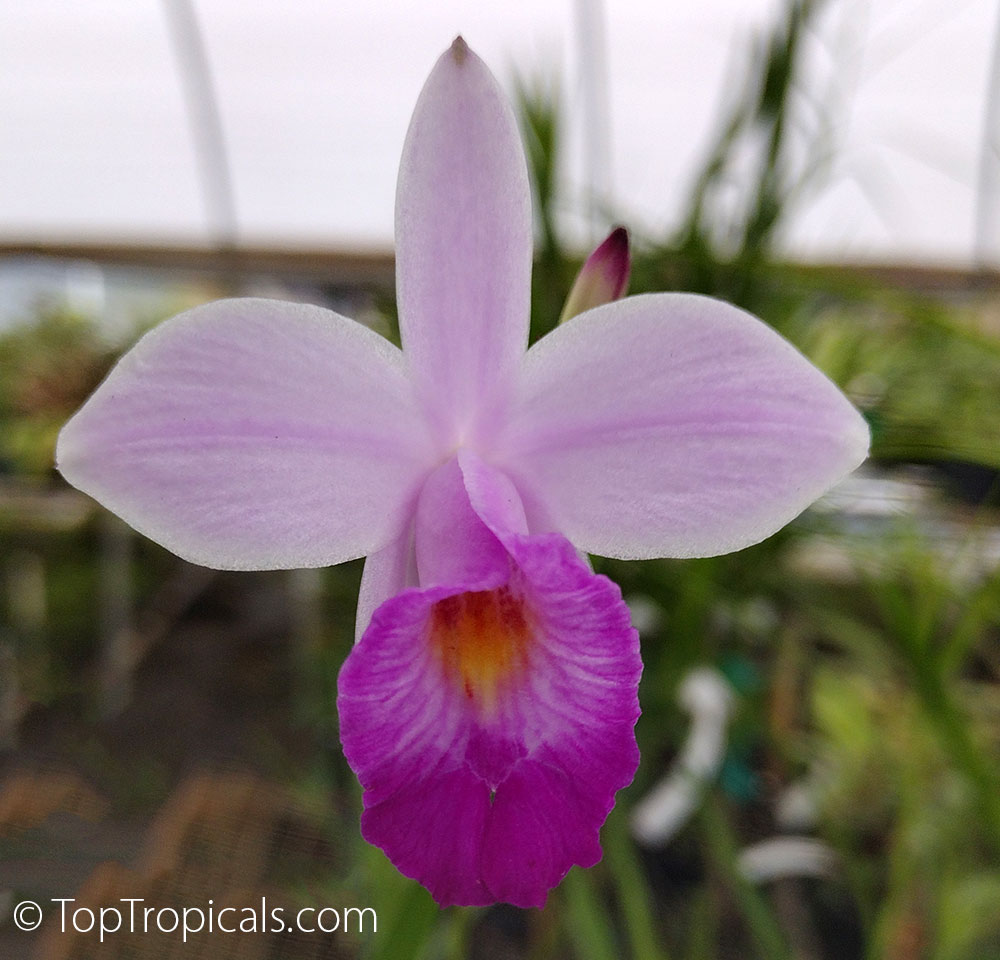
Arundina  graminifolia  -  Bamboo  Orchid,  Bird  Ground  Orchid

Grow Purple! In the photo: Arundina graminifolia - Bamboo Orchid, Bird Ground Orchid - Winter flowering orchid that grows in regular soil. These plants are in bloom right now, picture taken this week!