Date: 16 May 2026
🔮 When the World Around Becomes Too Gray: Plant a Tree. Eat a Donut. Keep going.

Smokey: Plant a tree.
Sunshine: And if that does not help?
Smokey: Plant another one.
Sunshine: And eat a donut.
Smokey: Not strictly necessary, but statistically beneficial.

If you have been feeling a little worn down lately, you are not alone.
You already know about the headlines. We do not need to list them. You have probably seen them today before breakfast.
We are not here to pretend that is not happening. It is happening. And it is a lot. But here is the thing we keep coming back to, the thing that has been true for as long as people have had hands and a patch of ground: when the world feels out of control, you can still plant something.
Gardening is not an escape. It is an answer. When you put a tree in the ground, you are making a quiet statement. You are saying that you expect there to be a future. That you intend to be in it. That shade and fruit and flowers still matter, and you are going to make sure they exist in your corner of the world.
That is not naive. That is courageous in the most ordinary and underrated way.
One tree, planted this season, might give you fruit in a few years. It might give butterflies somewhere to stop. It might give a bird a place to nest. It will almost certainly give you something to look at on a hard day that reminds you the world still contains beauty, and that you put some of it there. And if one tree does not quite do it? Plant another one.
Dostoevsky said beauty will save the world. We think a mango fruiting in your backyard counts. So does a Magnolia opening on a quiet morning.
Do not skip the donut.
A donut is a small, simple, completely unnecessary thing. That is exactly the point. It is not productive. It does not solve anything. It is just good, and sometimes that is the whole reason. In a world that constantly demands you be useful and informed and concerned, eating a donut is a quiet act of being human. You are allowed to enjoy a small thing on a hard day. You do not have to earn it.
Rest a little. Then go put something in the ground. Anything that will grow and flower and remind you that beautiful things are still happening whether the headlines mention them or not.
We have the plants. You bring the donuts.
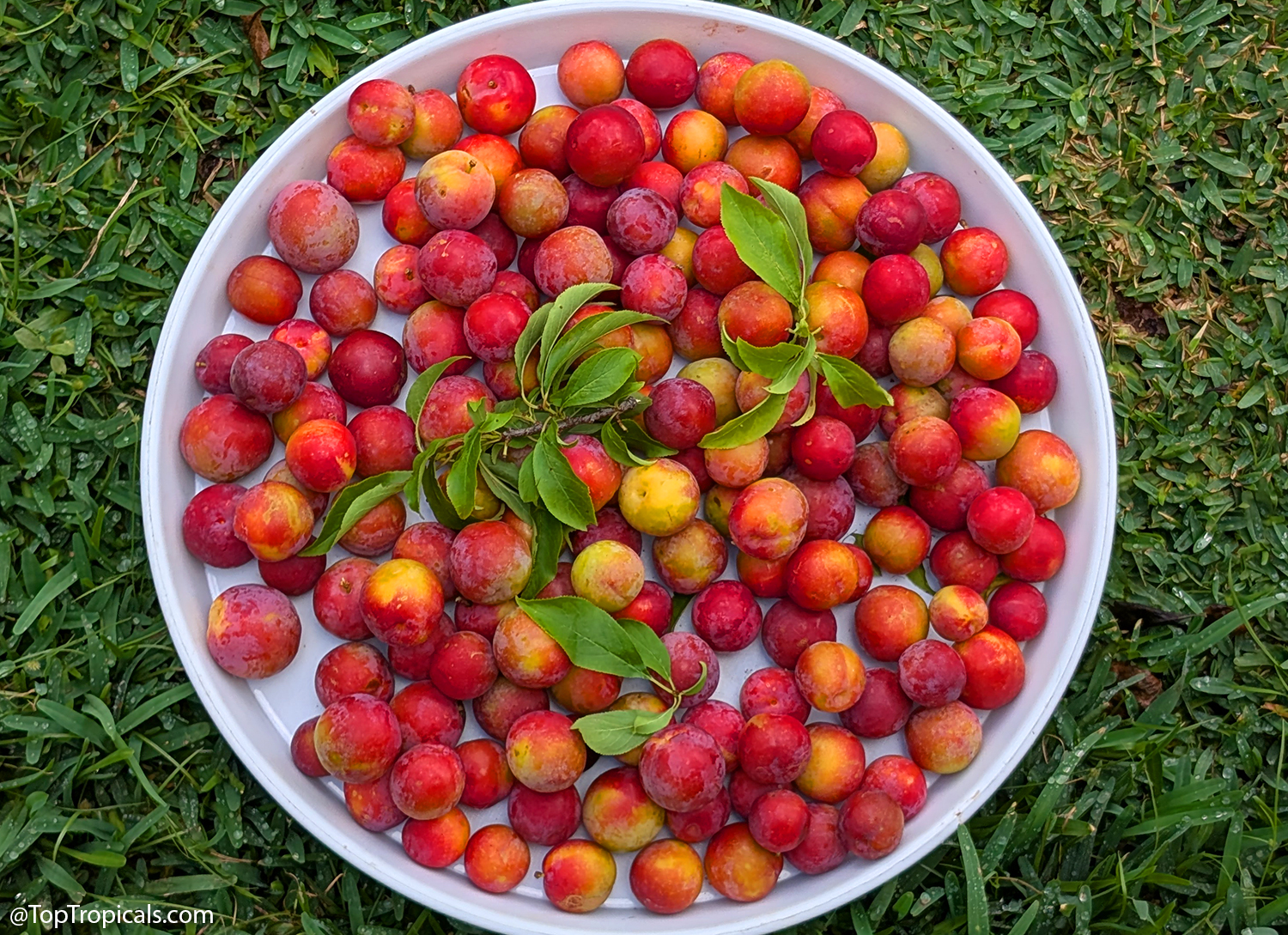
🛒 Plant a sweeter world: grow color and flavor
Date: 13 Jun 2026
Why June Is the Most Important Month for Potted Tropical Plants

Why June Is the Most Important Month for Potted Tropical Plants
For many tropical plants, June is the start of peak growing season. Days are longer, temperatures are warmer, and plants that spent winter indoors or in a greenhouse are suddenly growing at full speed.
A few simple tasks now can mean stronger growth, more flowers, and better fruit later in the season.
Sunshine: I'm testing a new growth formula.
Smokey: Based on what research?
Sunshine: Based on a highly controlled breakfast study. I call it Hibiscus Turbo Boost Deluxe.
✅ 1. Repot Before Plants Become Root-Bound
· If roots are circling the pot, growing through drainage holes, or the soil dries out unusually fast, it's time to move up one pot size.
· Fresh potting mix provides new space, better drainage, and access to nutrients that older soil may no longer contain. Use professional soilless mix Abundance for best results.
· Don't jump from a small pot to an oversized container. One size larger is usually enough.
✅ 2. Feed Hungry Summer Growth
· Tropical plants are no longer resting. They are actively producing roots, leaves, flowers, and fruit.
· June is the perfect time to begin regular feeding.
· A balanced fertilizer program helps support strong growth, while products such as Green Magic and Sunshine Boosters provide additional nutrients that fast-growing tropicals can quickly use during summer.
· A well-fed plant grows faster, recovers from stress better, and flowers more heavily.
✅ 3. Acclimate Plants to Full Sun
One of the most common mistakes is moving a plant directly from indoors or a greenhouse into full summer sun. Leaves that developed in shade can burn within hours.
Start with bright shade or morning sun, then gradually increase exposure over one to two weeks. Even sun-loving plants benefit from a transition period.
✅ 4. Prune for Shape and Strength
June is an excellent time to remove weak, damaged, or overly long branches.
Light pruning encourages branching and creates a fuller, stronger plant.
For fruit trees, selective trimming can also help maintain a manageable size for container growing.
✅ 5. Check for Pests Before They Multiply
· Warm weather brings rapid plant growth - and rapid pest growth.
· Inspect new leaves, stems, and undersides of foliage for aphids, scale, spider mites, mealybugs, and whiteflies.
· Treat problems early before populations explode during the heat of summer. We recommend Sunshine NoBug all-natural pesticide.
✅ 6. Add Stakes, Trellises, and Supports
· Many tropical plants can double or triple their size during summer.
· Climbing plants, vanilla orchids, passion fruit, dragon fruit, mandevilla, and many vining species appreciate support before they become tangled.
· Installing stakes or trellises now is much easier than trying to do it later.
✅ 7. Water for Active Growth
· A tropical plant that needed water once a week in spring may need it every day during summer.
· Higher temperatures mean faster growth, greater water use, and more nutrient uptake.
· Check containers frequently, especially during hot or windy weather. Water thoroughly and allow excess water to drain away.
✅ 8. Refresh Mulch and Clean Up Pots
· Remove weeds, old leaves, and debris from containers.
· A thin layer of mulch helps moderate soil temperatures and slows moisture loss during the hottest months.
· Clean pots also reduce hiding places for pests and disease.
✅ The Bottom Line
June is when potted tropical plants shift into high gear. Repot if needed, fertilize regularly, inspect for pests, provide support, and keep up with watering. A little attention now often produces the biggest growth, best blooms, and heaviest fruiting of the entire year.
🛒 Get fresh soilless mix and real food for your plants
📚Learn more:
Sunshine Boosters: Complete Plant Nutrition System
Why young trees need staking?
The SECRET growers never tell you: simple trick how to bring plants back to life and keep green
How to re-pot a plant properly?
#Discover #How_to
🟢 Join 👉 TopTropicals
Date: 18 Feb 2026
🔥 Blazing into the 2026 with hot jasmines

Smokey: It's jasmine, Tiger. A shrub. Not Wembley. Calm down.
💮 2026 Year of the Horse - and the Plant I Trust Most
By Tatiana Anderson, Horticulture Expert at Top Tropicals
Every new year carries its own energy.
2026 is the Year of the Horse - a year of movement, fire, momentum, and bold decisions. It is not a quiet year. It pushes us forward.
When fellow gardeners ask me what to grow in a year like this, my answer
is simple:
Grow something that balances strength with grace.
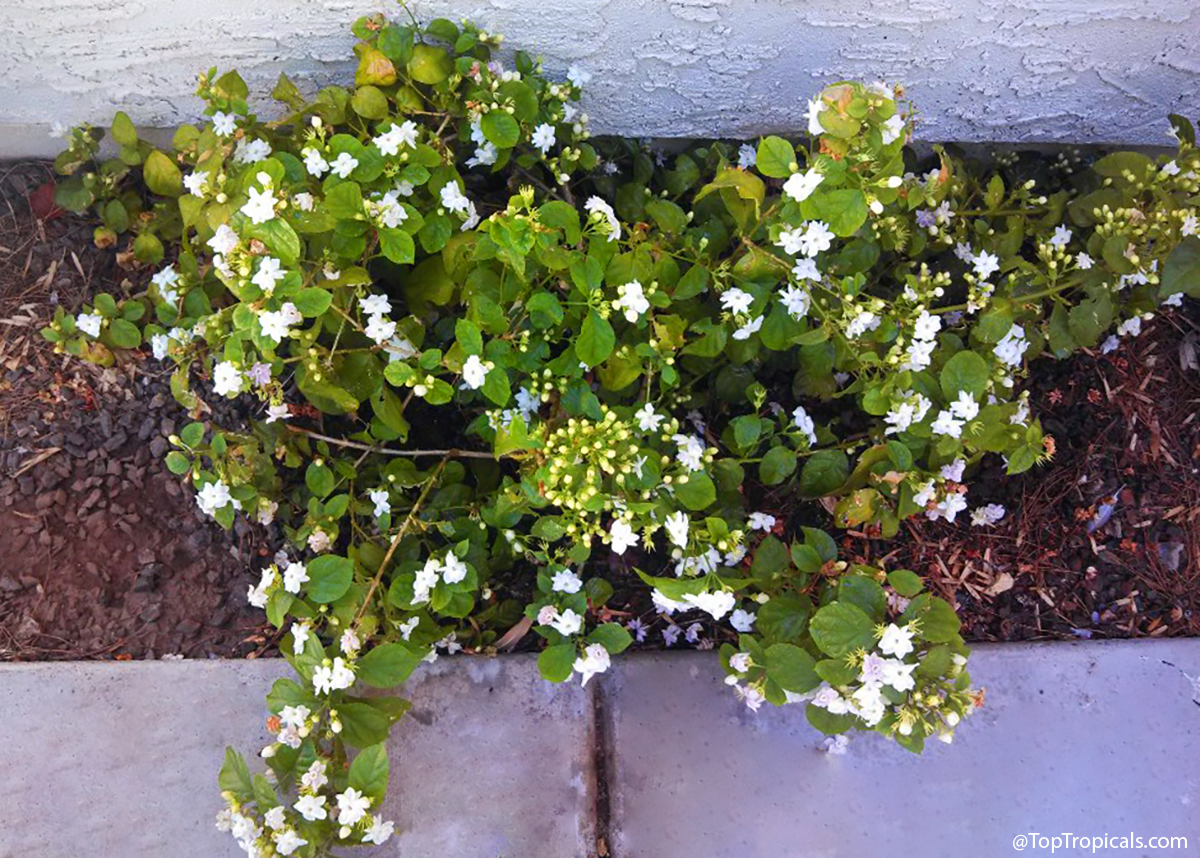
For me, that plant is Jasmine Sambac.


In many cultures, Sambac represents devotion, purity, and deep affection. In the Philippines it is the national flower - Sampaguita - woven into garlands for weddings and sacred ceremonies. In Hawaii, it becomes leis - a symbol of welcome and connection - Pikake. In India, it perfumes temples and homes.
This is not just a fragrant shrub.
It is a plant tied to love, loyalty, and continuity.
The Horse runs forward.
Jasmine anchors the heart.
In a fiery year like 2026, I believe we need both.
And that is why I always return to Jasminum sambac.
✅ Why Jasmine Sambac?
Over the years I have grown thousands of plants, but very few have the staying power of Jasmine Sambac.
It is not just fragrant. It is intensely, unmistakably fragrant. One open flower can perfume an entire patio. In the evening, the scent becomes deeper and richer.
But what makes Sambac truly special is its adaptability.
It can grow as a compact patio shrub, a flowering hedge, or a climbing vine. It performs beautifully in containers. It tolerates both full sun and partial shade. The more light you give it, the more flowers it rewards you with.
And unlike many tropicals, Sambac does not bloom just once. With proper care, it flowers in cycles throughout the warm season.
For gardeners, that combination is rare: beauty, perfume, flexibility, and repeat bloom.
That is why it has remained one of the most wanted fragrant plants in cultivation.
Date: 15 Aug 2021
How to grow Cerbera and make it flower
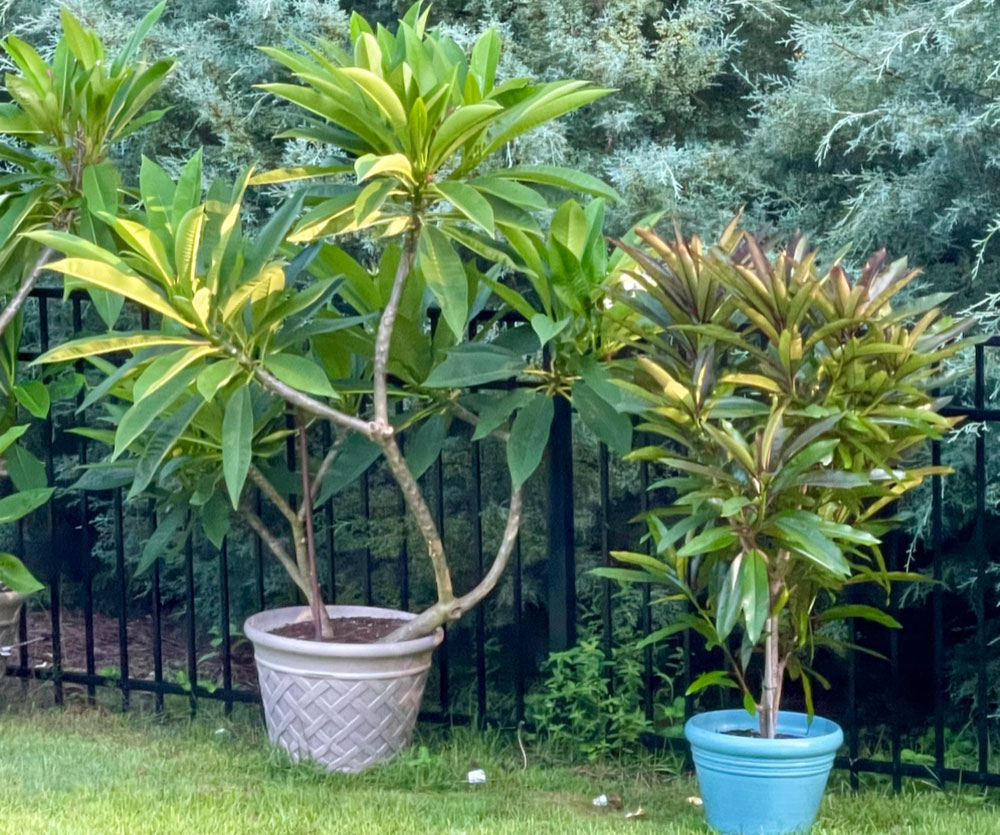
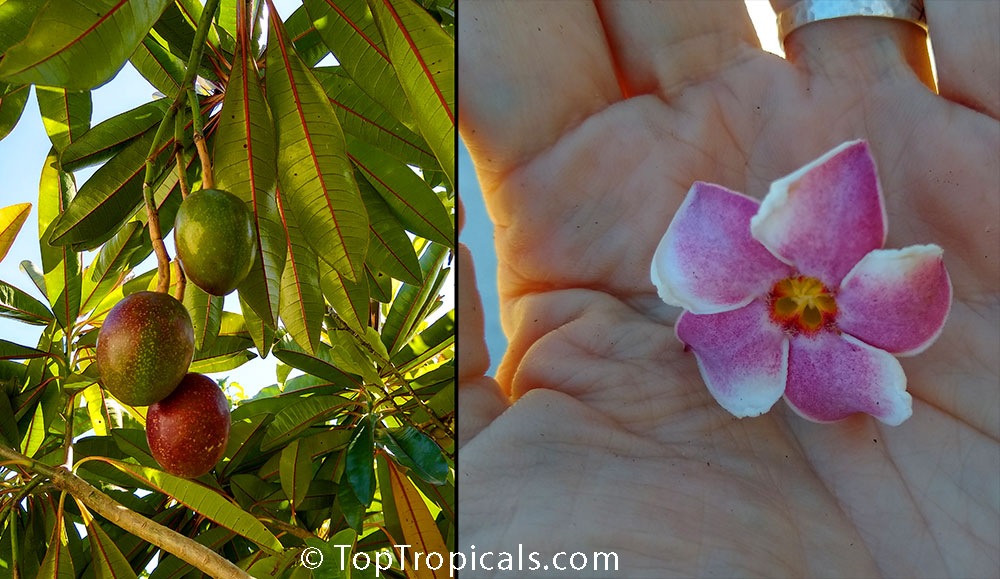
Q: I purchased Cerbera manghas - Enchanted Incense a year ago. As you see from the photo, it's doing great however, no blooms. I fertilize properly and very often and use worm castings for micronutrients. Yes it's not "your" fertilizer, but my plumerias, that are also in pots they are over 5 feet tall and blooming like crazy. I don't see any inflows coming on the Cerbera at all and it is hot and humid here in North Carolina, so it's happy but no sign of blooming. What is your advice?
A: Top Tropicals first brought Cerbera manghas into the US plant market a few years ago, it was recommended to us by our friend, plant taxonomist John Mood who visited Thailand, and among other exotic plants noted this fragrant beauty. Since then we've been successfully growing this plant, it has become one of everybody's favorites.
Generally speaking, Cerbera culture is very similar to Plumerias. These plants are closely related. So if you know how to grow Plumeria, you sure will succeed with Cerbera. Hot and sunny location, well-drained mix, moderate water and bloom boom fertilizer will do the trick. However, we have noticed a few distinctive features that make this plant somewhat challenging at times.
1) Flowers
For past years, we've been studying what triggers its flowering.
Sometimes these plants start flowering in 1 gal pot, 1 ft tall. Other times a large
developed tree 5-6 ft tall, in 5-7 gal pot, grows beautiful foliage with no
signs of flowers. Eventually all of them bloom, no matter how stubborn they
are, it's just some individual plants start flowering sooner than others, all
grown in the same conditions.
One of our plants in the ground, a well-branched tree, was covered with
flowers for a few months, but only on the 3d year after planting. Before that,
it only produced a few random blooms. Others bloomed in pots at very young
age.
The following factors benefit to Cerbera flowering:
- full sun at least 10 hours a day
- hot temperatures above 85F
- regular water but not heavy rains
- regular fertilizer - Bloom Booster type
- very good drainage and drying out before waterings. If root ball stays
moist, the plant may look healthy but won't set flower buds. Keeping on a dry
side will encourage flowering. Very similar to Jasmines: they bloom like crazy
in April while it's hot and dry in Florida, but once our summer rainy season
starts, they reduce blooming.
We highly recommend using Sunshine Megaflor bloom booster or SUNSHINE Pikake in combination with micro-element supplements Sunshine Honey (B-Mo) and Sunshine Superfood (complex micro) that induce flowering. Dry and granulated fertilizers may not supply exactly what a plant needs: certain elements that trigger flowering may be missing. Sunshine Boosters formulas are scientifically balanced, they contain precise amounts of nutrients needed for setting flowers. Besides, excessive salts from regular dry fertilizers create nutrient lock up that may retard plant metabolism; with liquid amino-acid based Sunshine boosters, plants consume the whole menu of elements without building them up in the soil.
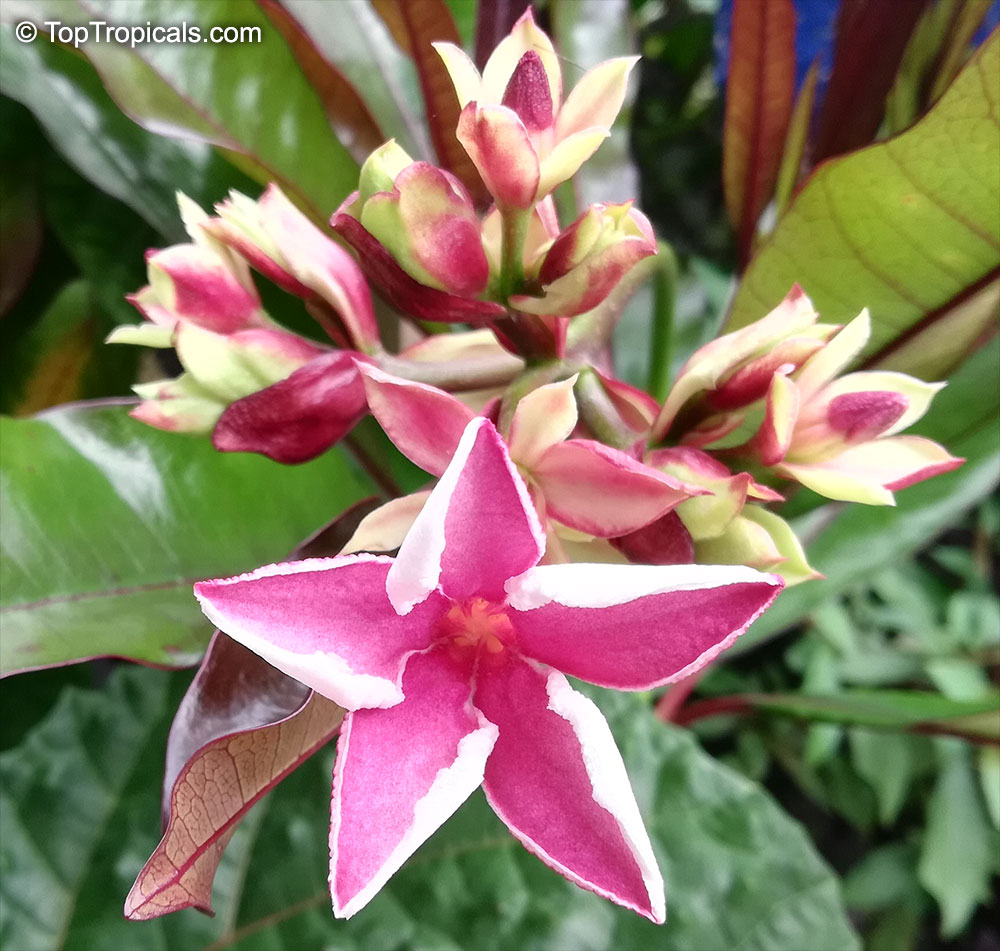
2) Fruit
Fruit of Cerbera are very pretty and cover the tree after profuse flowering. To inexperienced eye they may look very much like small mango or avocado fruit - so make sure kids or visitors don't try to eat them! Cerbera seeds are extremely poisonous.
3) Leaves
If you ever grew Passiflora or Milkweed, you know how leaves can be
eaten by caterpillars overnight. This may happen to Cerbera too, as we
discovered. In Florida environment this exotic plant doesn't have natural predators for
protection from certain insect species that may feed on it. So watch out and
if noticed first signs of leaves damage - its time for insect control.
Other than that, Cerbera foliage is usually beautiful and colorful, here in
Florida it looks much healthier than that of Plumerias often affected with
rusty residue during high humidity months.
Hope this helps. The Cerbera fragrance is enchanting, it is worth the efforts and waiting!

Date: 6 Jun 2025
Bring Sunshine to your garden - no forecast needed!
Adenium Sunshine
☀️ Bring Sunshine to your garden - no forecast needed!
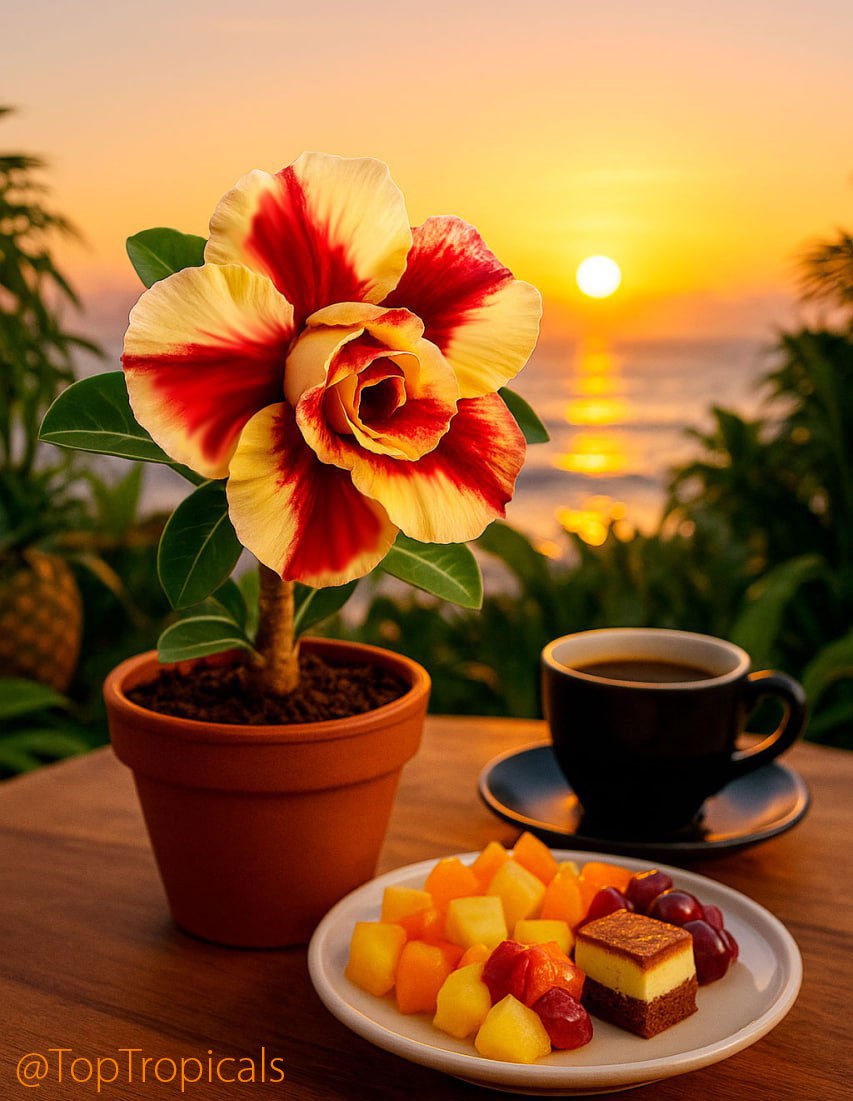
☀️ Adenium Sunshine is a radiant beauty that lives up to its name!
☀️ With mauve and yellow swirls across its multi-layered blooms, this flower glows like a warm summer day. The soft blending of colors creates a dynamic, cheerful display that feels like Happiness and Sunshine rolled into one.
☀️ A joyful, uplifting addition to your garden that brightens every glance.
See photos of the actual Adenium Sunshine in next post 👇
🛒 Shop the Sunshine Bloom
📚 More adeniums
#Nature_Wonders #Container_Garden #Fun_Facts #Adenium
🟢 Join 👉 TopTropicals