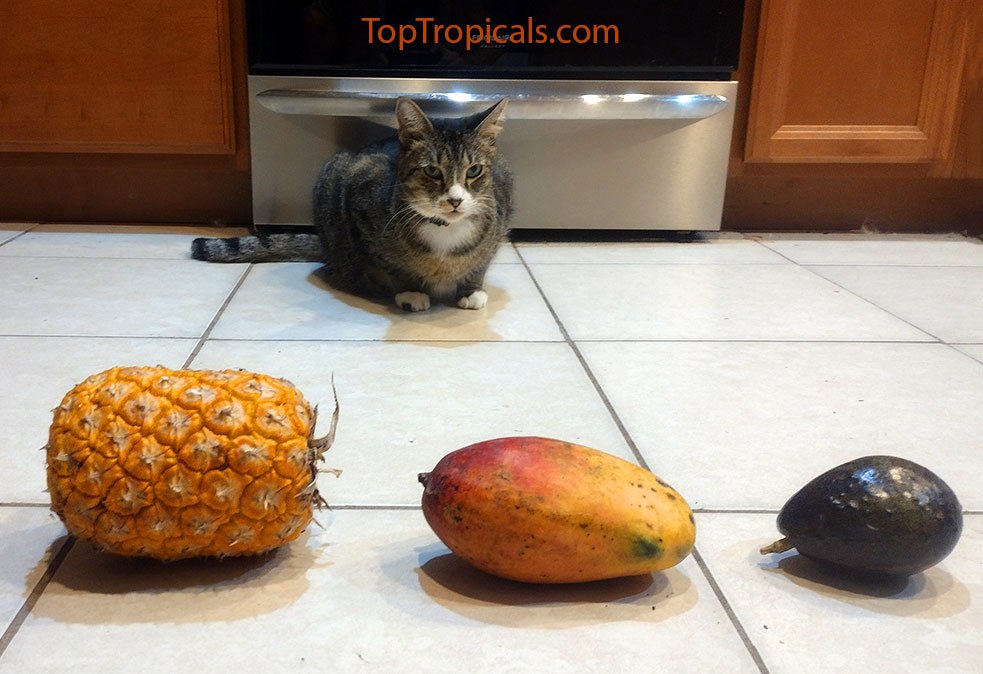
🍍Pineapple is a tropical favorite that's incredibly easy to grow, making it a perfect choice for beginners. With minimal care, Pineapples don't take mush space, you can grown them underneath other fruit trees. Plant good varieties, and when you get your crop, plant the tops and you will have your little Pineapple plantation in no time: you'll enjoy sweet, juicy fruit from those little babies in about 18-24 months. Freshly harvested pineapples are delightful in smoothies, salads, or grilled, adding a tropical flair to your garden.
🥭 Mango trees are not only a staple in tropical gardens but are also easy to cultivate. They flourish in sunny spots and well-drained soil, requiring little maintenance once established. These vigorous trees can yield an abundance of juicy, flavorful fruit in just a few years. They are perfect for fresh eating or adding to salsas and chutneys. Condo varieties are dwarf trees and can be grown in containers.
Avocado trees are fun to grow and add both beauty and nutrition to tropical gardens. Grafted cultivars start yielding fruit within a few months with proper care. The rich, creamy avocados are a culinary favorite, perfect for salads, spreads, and smoothies. With their lush foliage and bountiful harvests, avocado trees are a fantastic choice for gardeners looking for ease and abundance.
Winter can be tough on plants, especially on tropical varieties. But with a little preparation, you can protect your garden and keep your plants safe from the cold. Here's how:
Winter Care Tips for Tropical Plants
Cut watering: Reduce watering to prevent root rot. Cold + wet = dead roots.
Water before frost: Thirsty plants are more vulnerable. Water them before a cold night to prevent damage.
Wind protection: Wind is more harmful than temperature drops. Plant near structures like houses or trees for shelter.
Prepare for long cold periods: If cold weather lasts for hours, use all available protection, including Christmas lights and propane heaters.
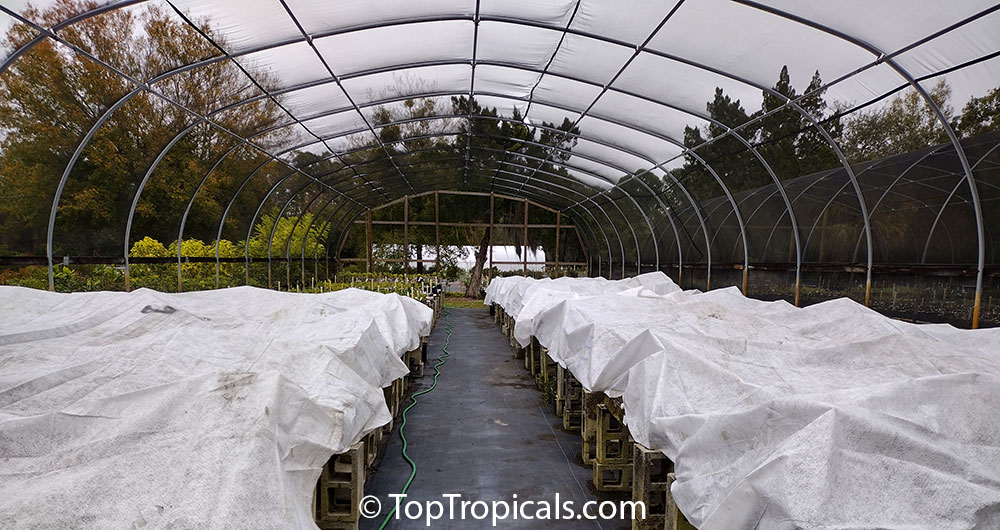
Don't use dry fertilizer in winter: Heavy fertilizing encourages tender growth, which is more susceptible to cold damage. Sunshine Boosters liquid fertilizers are safe to use year around as their intake is controlled by reduced watering. Use fabric covers, not plastic: Plastic can cook plants in the sun, while fabric allows better ventilation.
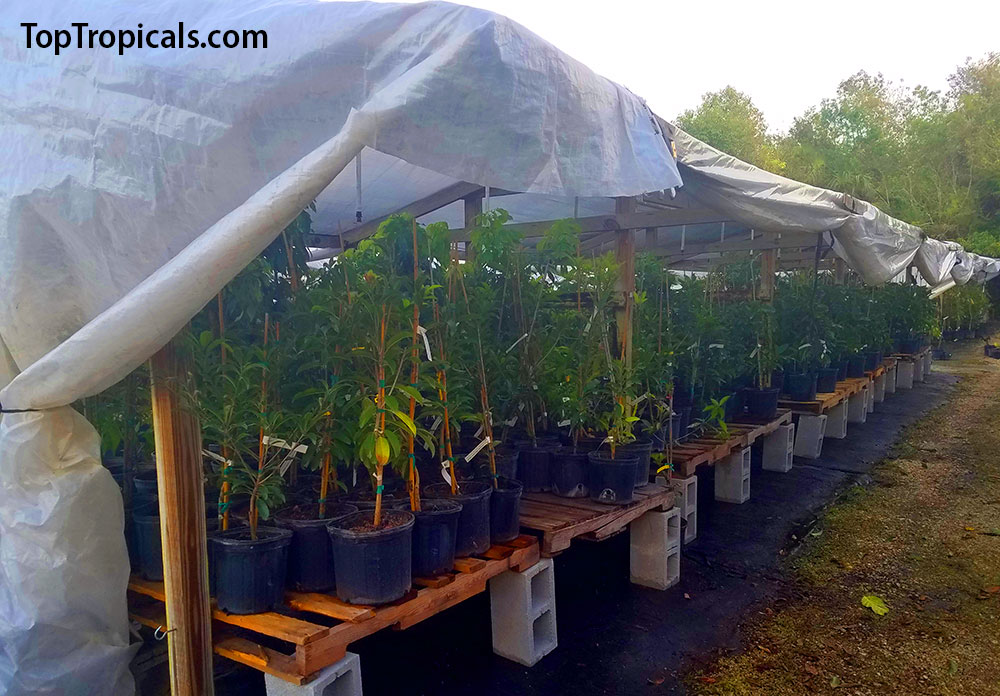
Photo above: we cover our plants in the nursery with a thin synthetic fabric (sintepon) called "frost cloth" or "strawberry cloth". It is light, breathable and allows light and water to go through unlike plastic that creates heavy water pockets.
Prepare for Cold Nights
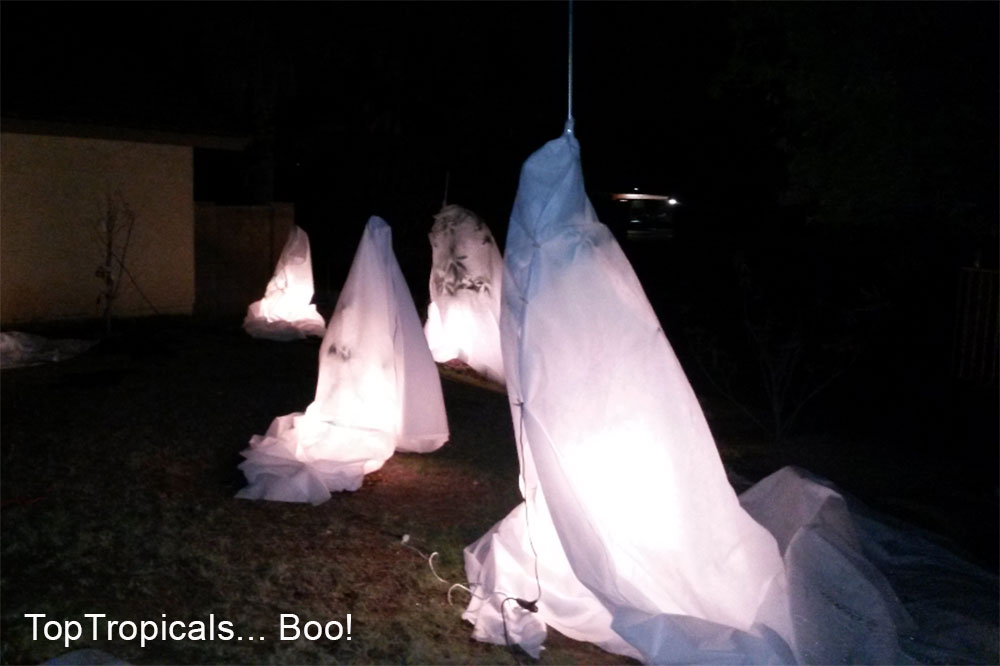
Wrap plants: On cold nights, cover individual plants or trees with sheets or blankets to shield them from wind chill.
Use Christmas lights: A simple string of lights can add extra warmth, protecting your plants during frosty nights.
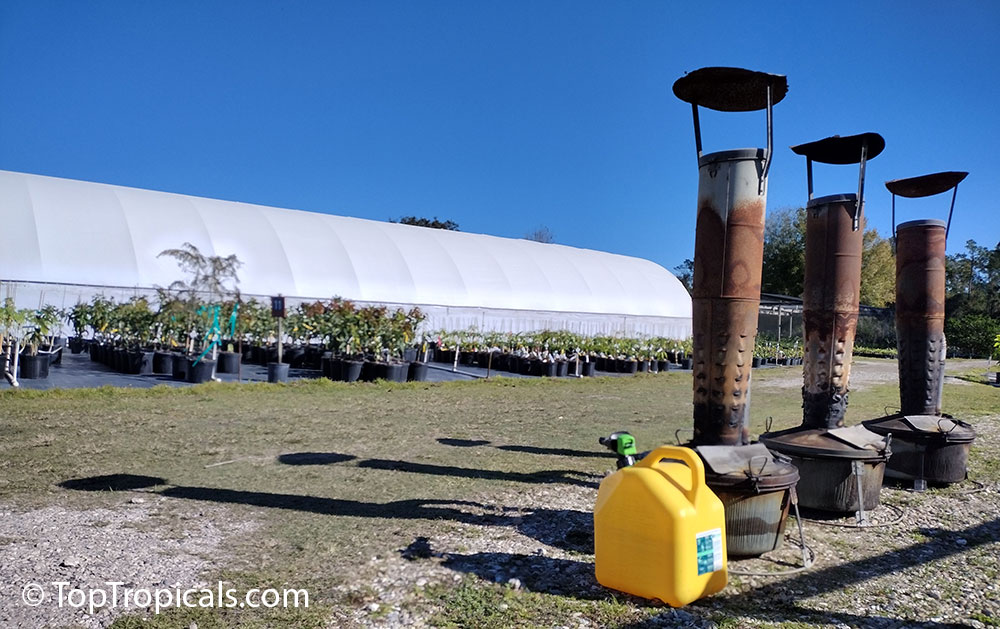
Use propane heaters: For added warmth in a larger area, place a propane heater near your plants. Make sure to follow safety guidelines and keep the heater at a safe distance from flammable materials. This can help maintain a few extra degrees of warmth, especially in more open garden spaces or temporary greenhouses. Always ensure proper ventilation to avoid harmful gas buildup.
Photo above: we use both propane and kerosene heaters at the nursery
Large Collections? Build a Temporary Greenhouse
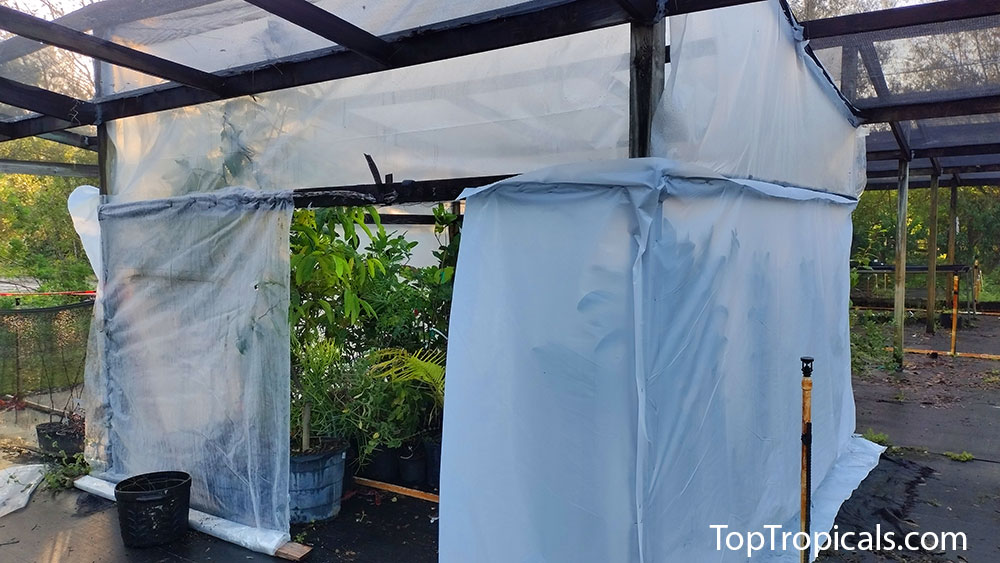
Affordable winter greenhouse: For large plant collections, you don't need an expensive greenhouse. A mobile carport with plastic or fabric covering, costing around $200, can house up to 100 plants!
Photo above: Temporary wrapping around plant collection with a plastic or frost cloth protects from a windchill. It may also win you a few degrees even without a heater. In this particular case, according to our temp sensors, with 30F outside, it was 41F inside this "dome", no heaters used.
Southern Exposure and Garage Storage
Southern windowsills: Compact tropicals can thrive on southern-facing windowsills, getting plenty of sunlight during the day.
Move plants inside: If you have larger collections, move them into a well-lit garage for the colder nights or longer periods.
Photo above: using Christmas lights around plants while wrapping with frost cloth.
Key Factors for Survival
Cold duration: Tropical plants can survive brief cold spells but long durations, even above freezing, can be deadly.
Wind-chill: Wind chill can be harsher than the temperature itself.
Exposure: Southern-facing slopes hold heat longer, making them ideal for your plants.
Humidity: Proximity to lakes or oceans can create a milder micro-climate.
Gradual temperature Drops are safer. Plants adjust better to slow temperature changes than sudden cold blasts. Gradual cooling allows plants to prepare, reducing the risk of damage.
Strengthen Plant Hardiness
Health and maturity: Well-established, healthy plants are more cold-hardy. Boost plant immunity: Use products like SUNSHINE-Epi to improve cold resistance. Apply it before and during cold snaps to protect your plants. Healthy plant is hardy. Make sure to fertilize your plants on regular basis - healthier and stronger plants are more cold hardy.
With these steps, you can protect your plants and help them survive the winter months. Stay
warm and keep your garden thriving!
Podcast with Horticulturist Mark Hooten:
How to Protect Tropical Plants in Winter
Strobilanthes cusia (flaccidifolius) - Chinese Rain Bell
🔔 Why you need these pretty bells in your garden
💕 Strobilanthes cusia (flaccidifolius) - Chinese Rain Bell - Very showy, charming little shrub that will bring a touch of elegance and color to your garden.
💕 Impressively statured herbaceous shrub with graceful, arching branches and lovely pink, bell-shaped flowers that bloom from fall to spring, like a natural fountain of beauty.
💕 Not only is it eye-catching, but it also has a fascinating history - used to make the famous Assam Indigo dye and even for treating common ailments in traditional medicine.
💕 This fast-growing, cold-hardy plant is also great for containers
💕 Those delicate bells will attract butterflies. Add some charm and whimsy to your outdoor space!
Q: What tropical trees are fruiting and flowering
in March?
A: There's always something blooming and
fruiting, especially with spring on the way! Our garden is buzzing with bees and
butterflies, and in the nursery, you'll always find plants in bloom or bearing
fruit. Here are a few standout winners of the season.
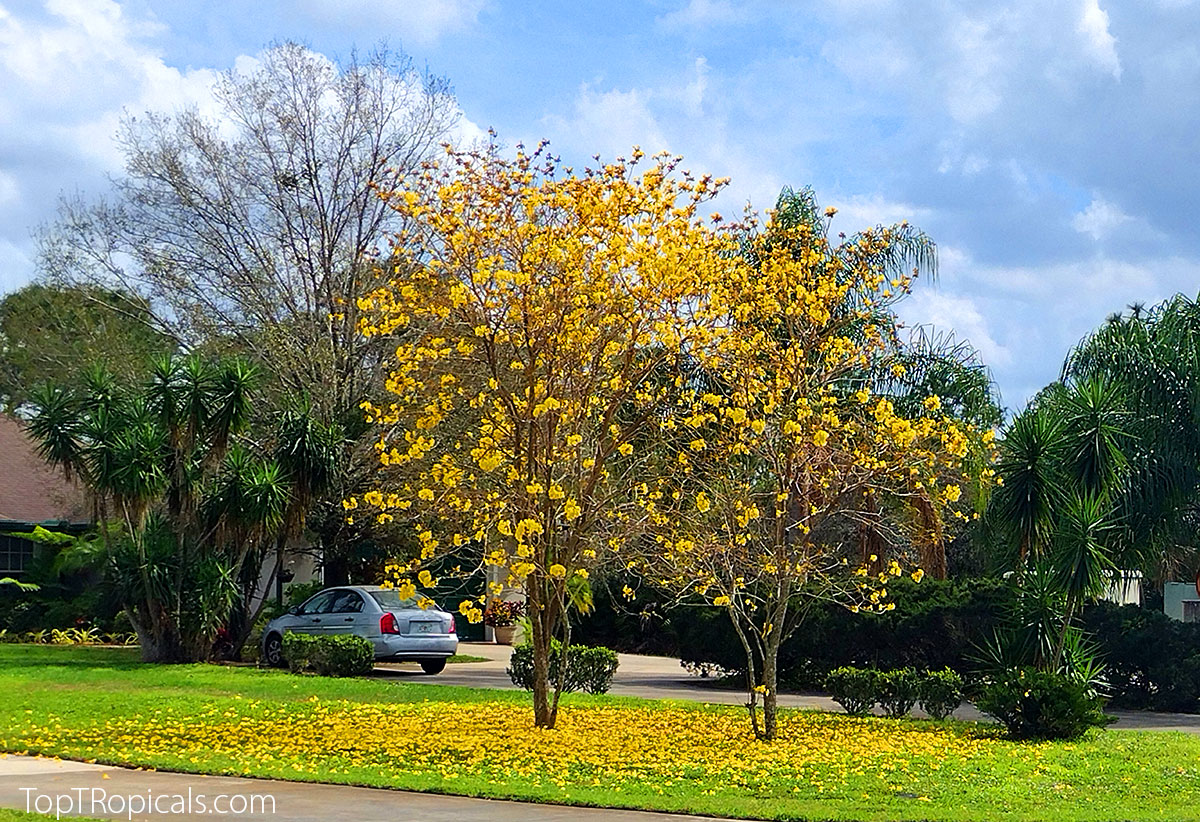
Orchid Trees
Orchid
trees are among the most spectacular trees in Florida, flowering from late
winter through spring. They are fast-growing, not fussy about soil or water,
and bloom for several weeks in a stunning display of white, purple, pink, or
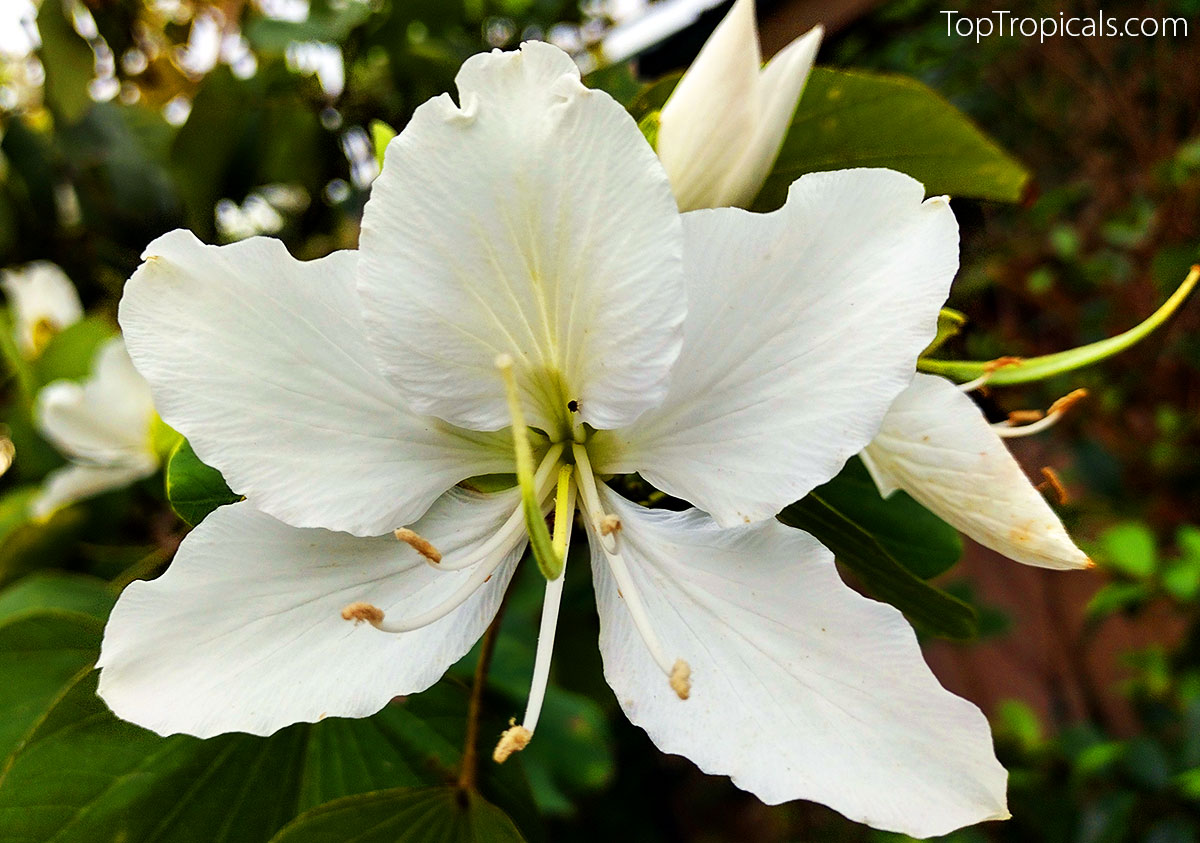
red flowers. In the photo: Bauhinia alba (candida) - White Orchid Tree - the most cold-hardy of
all Bauhinias, tolerating temperatures as low as 26F. You can see them in full
bloom across Florida right now!
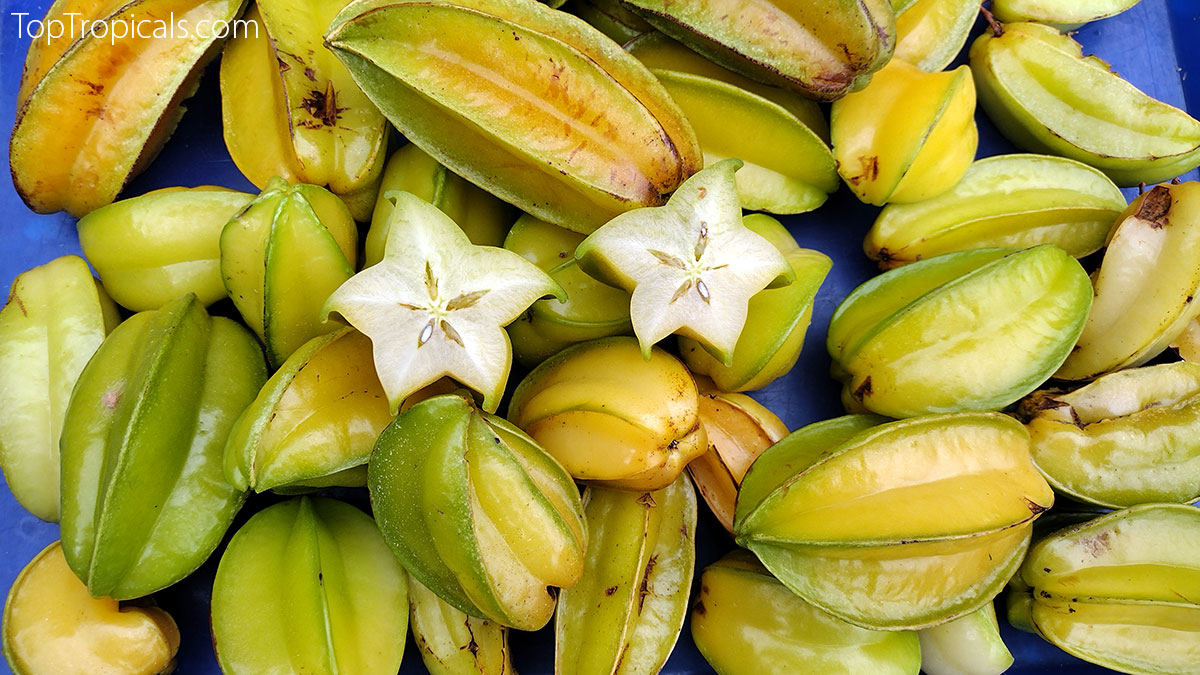
Starfruit trees (Averrhoa carambola) have been fruiting in our garden since fall,
and they just keep producing! We've had so many starfruits that we ended up
making lots of jam.
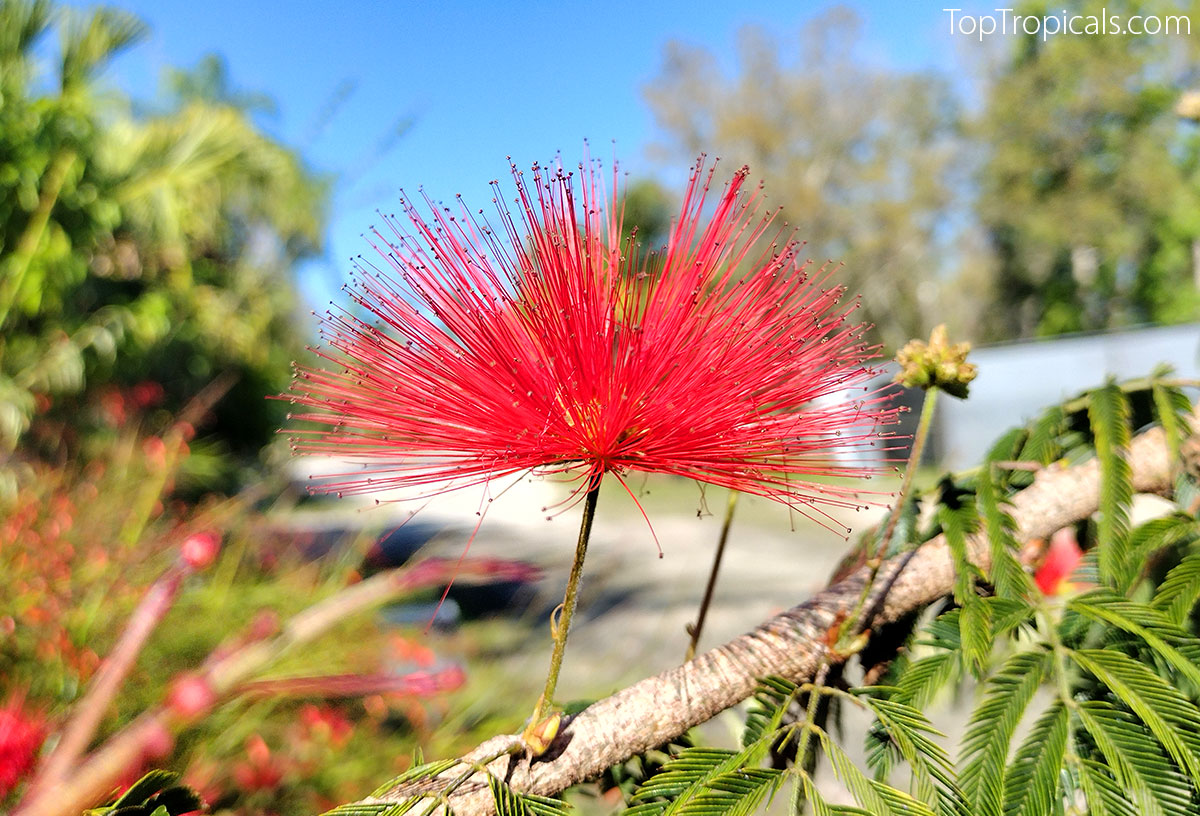
Calliandras are known to be spectacular winter bloomers, but in our garden, they
seem to flower year-round. They make fantastic ever-blooming hedges or
striking small specimen trees.
In the photo: red-flowering Calliandra tweedii "With Love" - Red Tassel Flower, yright now, this
beautiful bush is covered in red blooms in front of our office at Sebring
Farm.
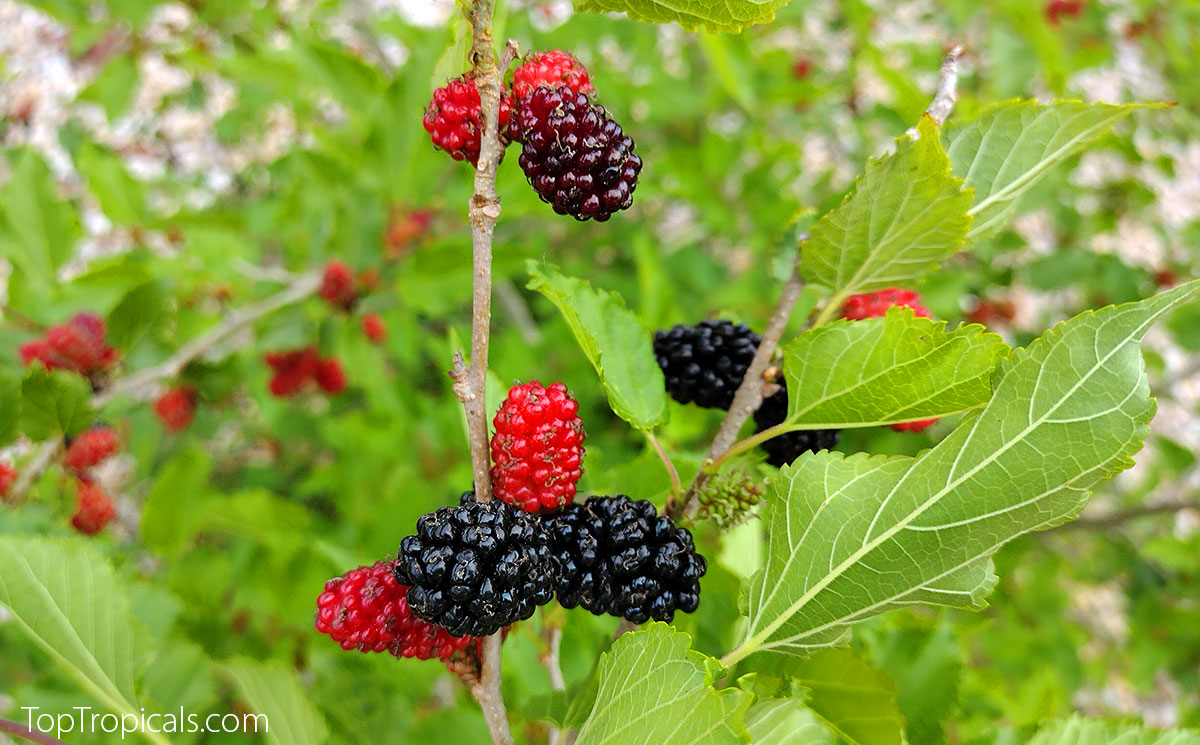
Yes, it's
Mulberry season! Some varieties have already ripened, while others are just
about to. We're competing with the birds to see who gets the first fruit,
but honestly, there's plenty for everyone! These trees are very cold hardy and
highly productive.
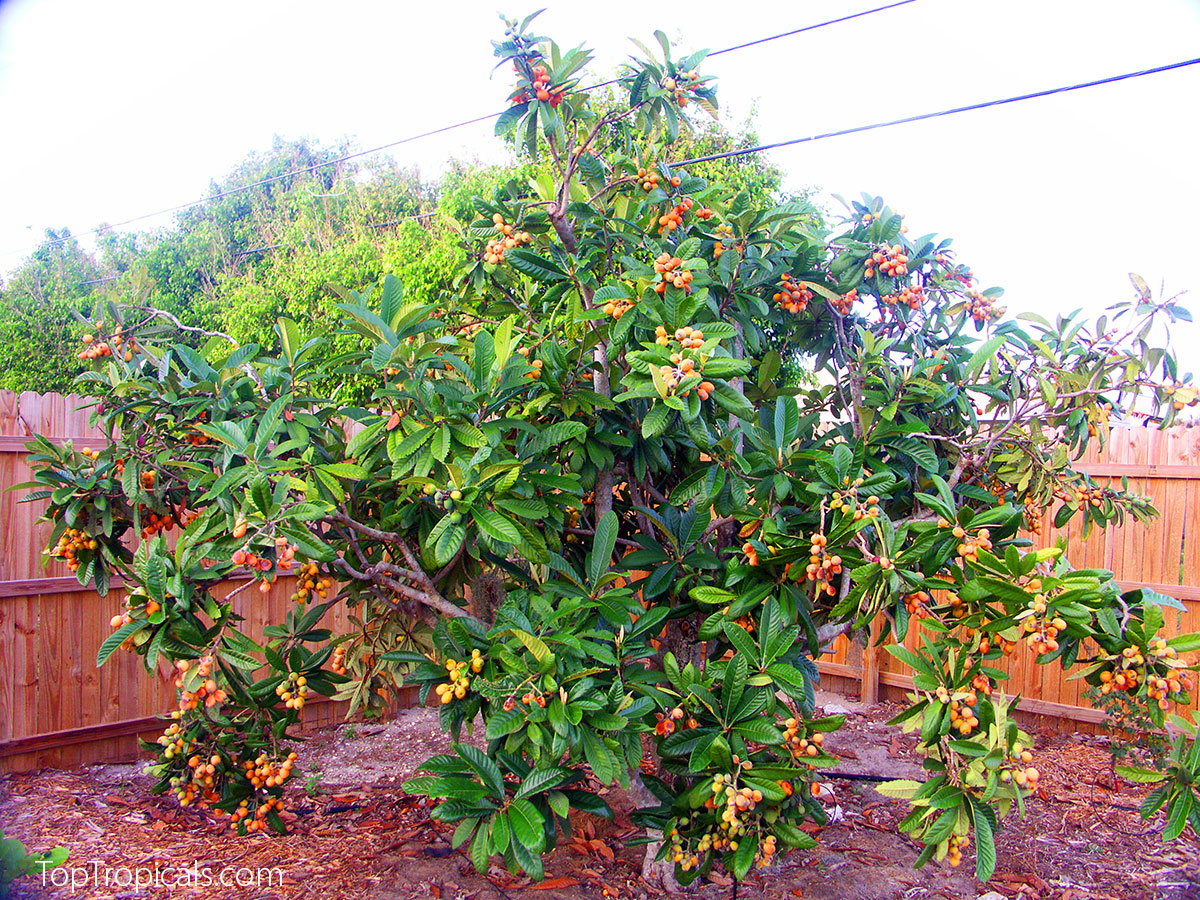
Loquat
trees (Eriobotrya japonica) are loaded with fruit right now! We've started
picking them and have already made some delicious preserves - you can only eat
so many fresh. Loquats continue fruiting through April and May, making them
one of the most rewarding, easy-to-grow, and productive fruit trees.
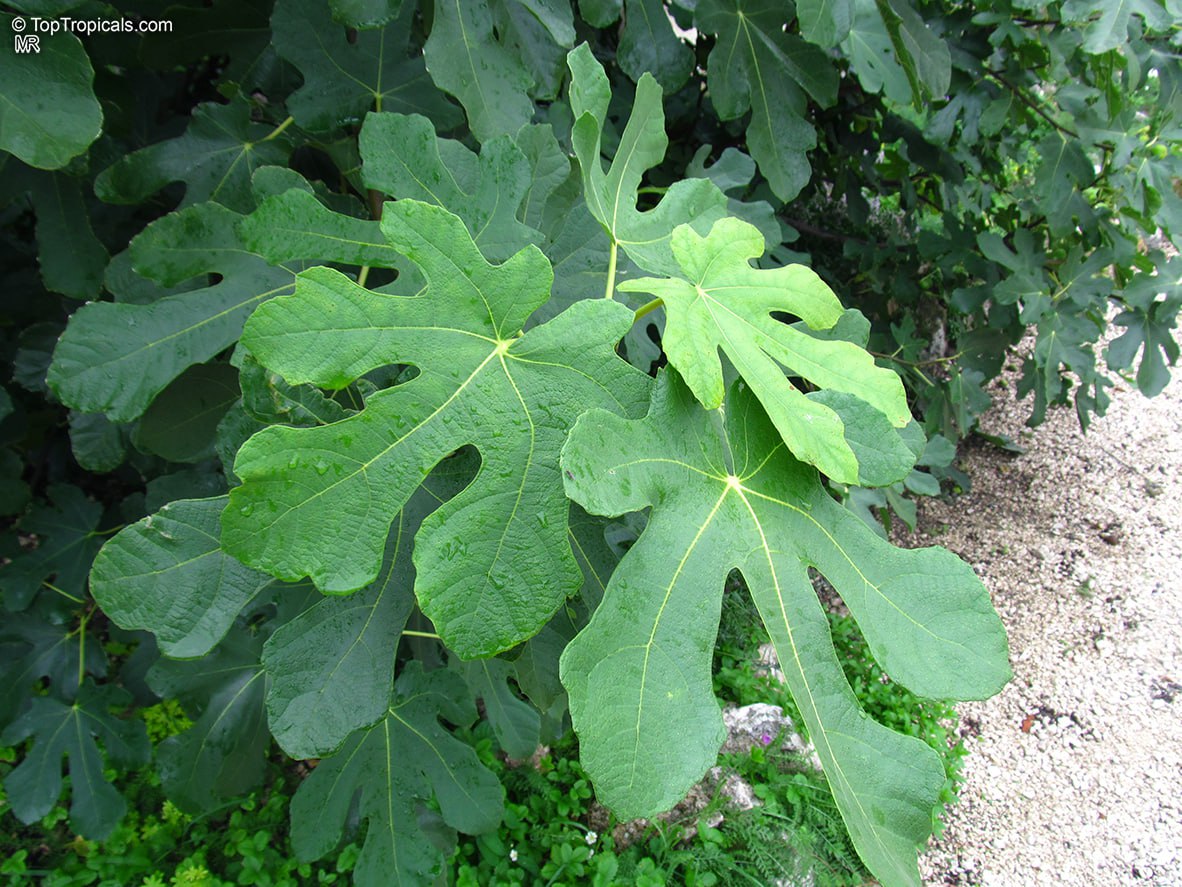
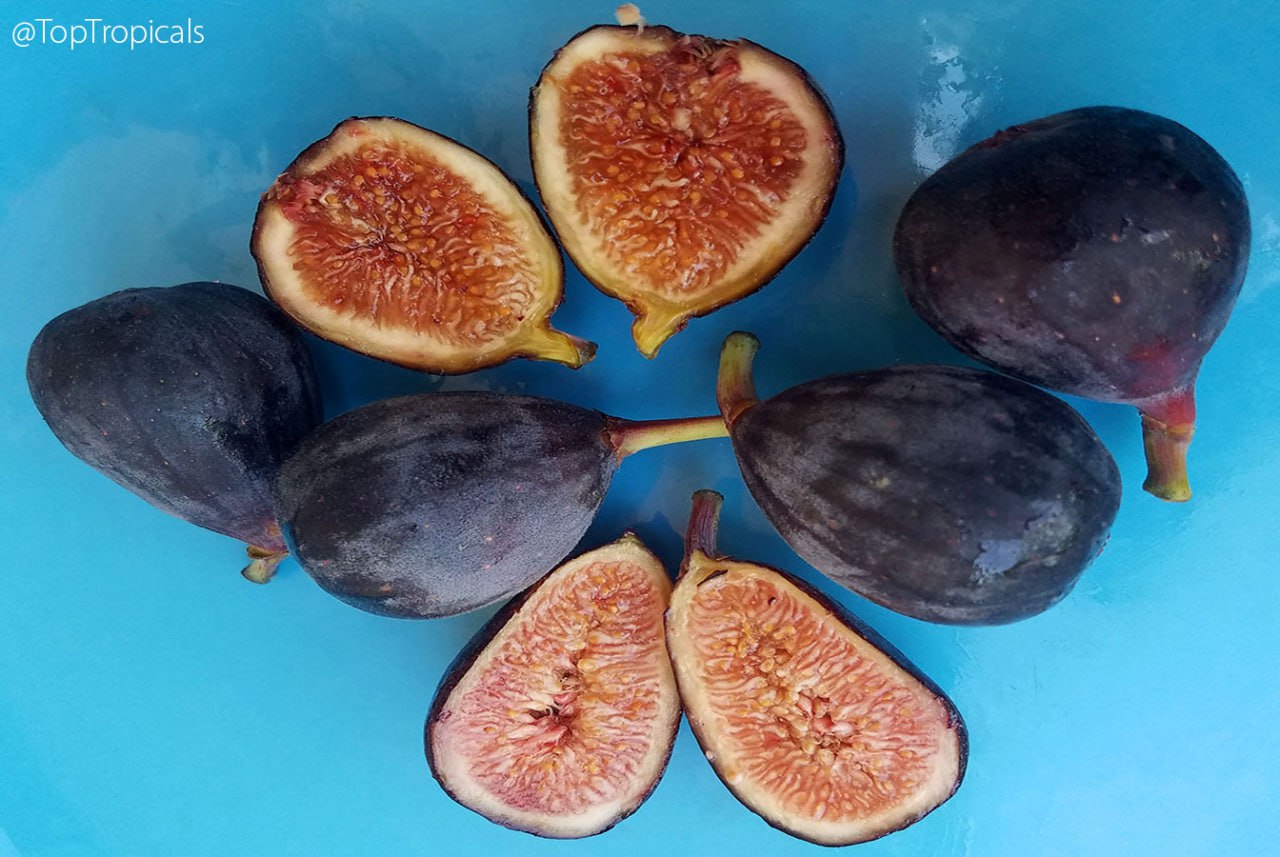
🍎 Fig Tree (Ficus carica) is a great addition to your garden or patio, offering delicious fruit and attractive, lobed leaves with minimal care.
🍎 Delicious Fruit: Figs come in violet, brown, or black colors, offering a sweet flavor with health benefits.
🍎 Nutrient-Rich: High in Iron, Fiber, Potassium, and Calcium - perfect for a healthy treat!
🍎 Beautiful Leaves: Large, lobed, green leaves provide landscape value even when the tree isn’t fruiting.
🍎 Cold Hardy: Sensitive to frost during active growth but can withstand up to 10°F when dormant.
🍎 Low Maintenance: Grows easily with minimal attention, prefers alkaline soil (unlike most tropical plants!), and can tolerate wet conditions.
🍎 Prolific: Bears fruit from early summer to late fall, with fruits maturing quickly. It is self-fertile and low-maintenance, perfect for growing at home.