Q: When is a proper time to start fertilizing my garden in Spring? Also, when can I cut back cold damaged branches? Should I wait until end of April?
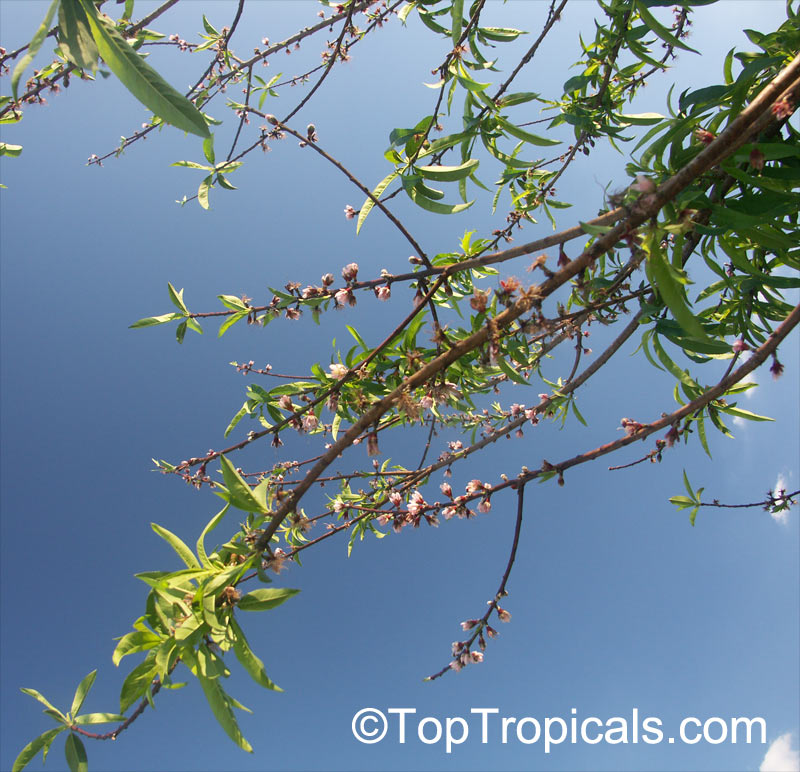
A: As a rule of thumb, fertilizer can be applied during period of active growth, when a plant needs additional nutrients. With indoor plants, you can fertilize pretty much year round as long as the plant continues growing and not dormant. For in-ground tropical plants, start fertilizing when new growth appears. In subtropical areas, with cooler winter months, most tropical plants slow down their metabolism when temperature drops below 65F. Many of them become dormant, and may even lose leaves (especially deciduous plants like Annona, or Peaches/Plums). In spring, tropical plants wake up as soon as outside temperature stays above 65F for at least one week (including night time). Once you see new growth, this is a signal for you to start fertilizing.
As far as trimming dead branches - wait until you see new leaves completely opened up. This way you won't cut too much, as some parts of the plant may take longer to re-leaf than others.
Date: 6 Feb 2023
How to make your Olive tree grow faster
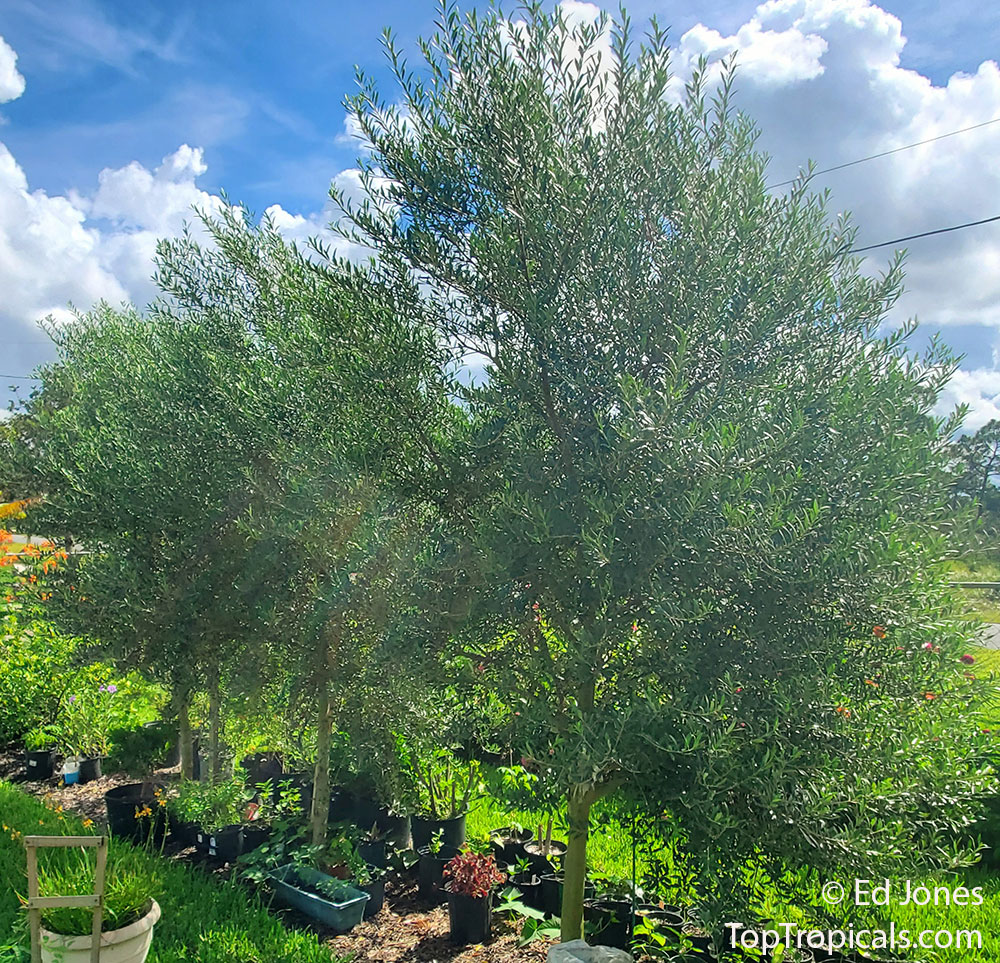
In past blog posts, Ed Jones shared his insights on cultivating olives in Central Florida using Sunshine Boosters. Despite olives
having a reputation for slow growth and being uncommon in Florida gardens, Ed has
successfully grown not only productive but also aesthetically pleasing trees
in just two years. As seen in this winter photo, the trees are thriving!
Encouraged by Ed's success, we have decided to plant olive trees as well. They are low maintenance and tolerant to cold
temperatures. Simply heed Ed's advice, and you too can have a beautiful tree that produces your
own olives in the future.
Smokey: "December is for planning, not planting."
Sunshine: "Gift card now. Perfect plants later."
Smokey: "You surprise me sometimes. Must be the donuts."
This time of year always feels special to us. The days are shorter, the
garden slows down, and we finally have a moment to pause, look at our wish
lists, and dream a little about spring.
As gardeners, we know winter is not really planting season.
It is choosing season.
It is when ideas take shape. When we think about what we want to grow
next, what we want to add, and what we want to do differently when warm days
return. That is why, in winter, the best plant gift is not a plant itself.
It
is the promise of one.
Cold weather and holiday shipping can make winter plant deliveries
stressful, especially for tropical plants traveling north. A gift card lets
plants
wait for the right moment, and lets the gardener enjoy the fun part now:
planning, choosing, and imagining.
It also solves something we all know too well. Every gardener is
wonderfully different. Some dream of fruit trees, others of flowers, rare
collectors, or easy growers. Some plant in containers, some in the ground.
Guessing is
hard. A gift card lets them choose exactly what fits their garden and their
vision.
🎁
Holiday Gift Card Bonus
To make the season a little brighter, we are offering a holiday gift
card bonus through 12/31/2025.
When you purchase a gift card, we add 15%
extra value. Just add Christmas greeting in gift card message
field.
For example, a $100 gift card becomes $115 to spend.
The bonus value is not valid with other promotions
or discounts.
Gift cards cannot be used to purchase other gift cards.
Bonus value is added at the time of purchase.
Ordering plants in winter is often easier than people expect - and for
many plants, it is actually better. Lush foliage plants like philodendrons
and medinilla,
fine-leaved trees such as moringa, jacaranda,
and poinciana,
and even sensitive fruit trees like papaya, jackfruit
or starfruit
ship more safely in cool weather without
overheating stress.
Winter is also ideal for subtropical and cold-tolerant plants, dormant or
deciduous plants like plumeria and adenium, orchids - including ground
orchids and vanilla
orchids, and winter bloomers that flower their best right now. Winter
care is simple: water less, use gentle liquid amino-acid fertilizers like Sunshine
Boosters, and monitor insects.
In mild climates, many tropicals can be planted anytime, while
extra-tender plants can stay potted until spring. Winter is a
perfect time to bring tropical warmth indoors and enjoy greenery when you
need it most.
By Tatiana Anderson, Horticulture Expert at Top
Tropicals
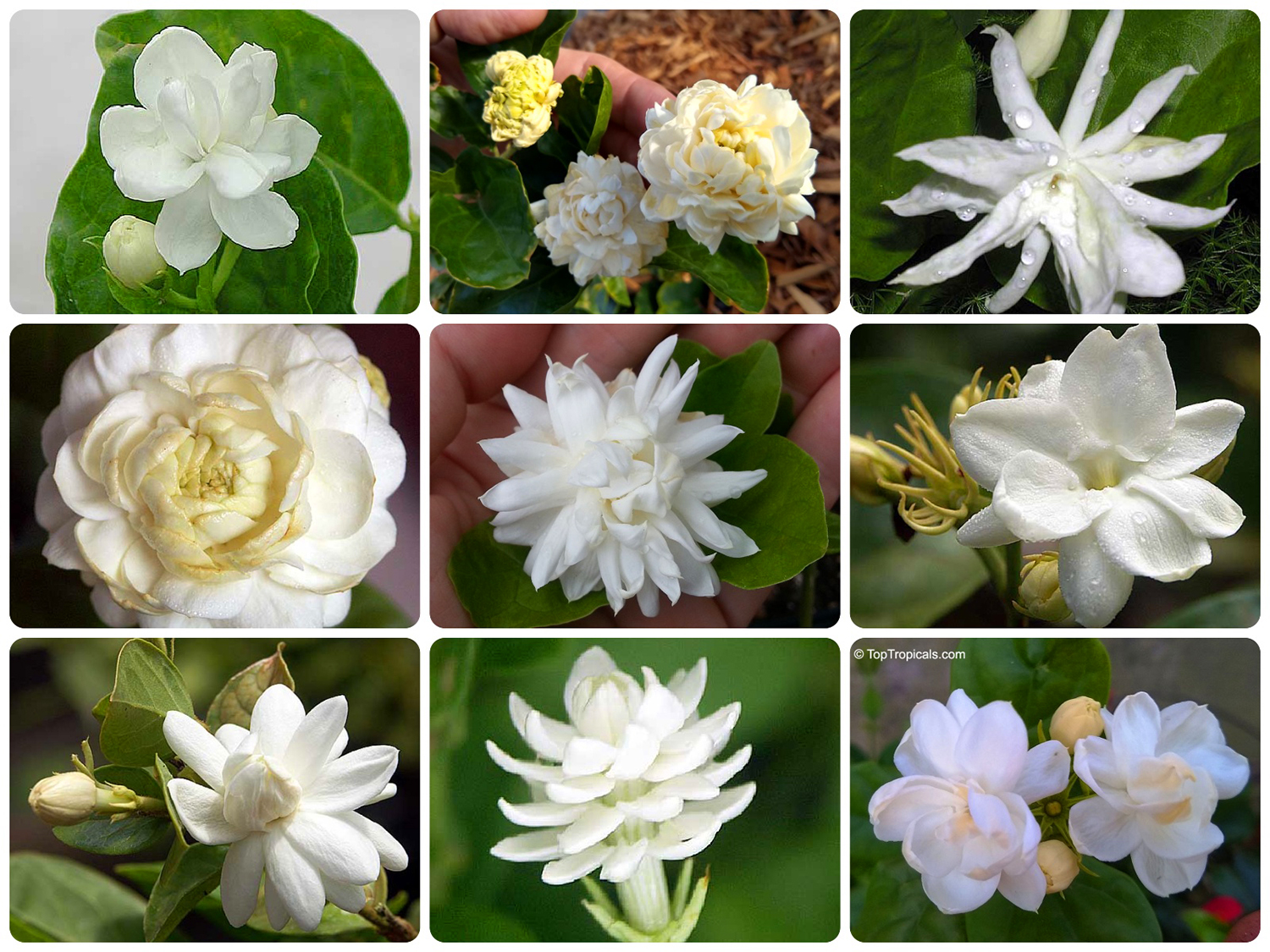
Jasmine Sambac varieties: Arabian
Nights, Little Duke, Belle of India, Grand Duke, Duke Supreme, Maid of
Orleans, Mysore Mulli, Malichat, Gundu Mallii
One of the reasons Jasmine Sambac is so fascinating is that it does not
come in just one form. Each variety has its own personality.
If you want a compact patio plant, Arabian Nights or Little
Duke are excellent choices. They stay tidy, bloom generously, and are
easy to manage in containers.
If you prefer elegant, elongated petals and a refined look, Belle of
India is a favorite. It can be grown as a small bush or trained lightly
as
a vine.
For those who love full, carnation-like double flowers, Grand Duke of
Tuscany and Grand Duke Supreme are classic
selections. They are vigorous and make impressive shrubs in warm
climates.
If you need a stronger climber for fences or hedges, Maid of
Orleans performs beautifully in full sun while Mysore Mulli
prefers semi-shade.
Collectors often enjoy rare forms like Mali Chat or newer hybrids
such as Gundu Malli, which combine traits from different lines.
How to Grow Jasmine Sambac Successfully
Sambac is not difficult, but it responds best to consistency.
Light: Full sun produces the most flowers. In very hot
climates, light
afternoon shade is acceptable. Indoors, place it in the brightest window
available.
Soil: Use a well-draining potting mix such as Sunshine
Abundance. Sambac does not
like heavy, constantly wet soil.
Water: Water thoroughly, then allow the top layer to dry
slightly before watering
again. Reduce watering during cooler months.
Pruning: Light trimming after a bloom cycle encourages
branching. More branches mean more flower buds.
Feeding: Sambac is a heavy bloomer, and fragrance takes
energy. During active growth, feed regularly with a balanced fertilizer that
supports flowering such as Green Magic (controlled release every 6 months) or liquid Sunshine
Boosters Pikake (formulated especially for fragrant flowers) - with
every watering. I prefer formulas slightly higher in potassium to encourage
stronger bud formation and richer bloom cycles. Consistent feeding during
warm months makes
a visible difference in both flower count and intensity of scent.
With proper care, Jasmine Sambac will reward you not just with flowers,
but with perfume that changes the atmosphere of your entire garden.
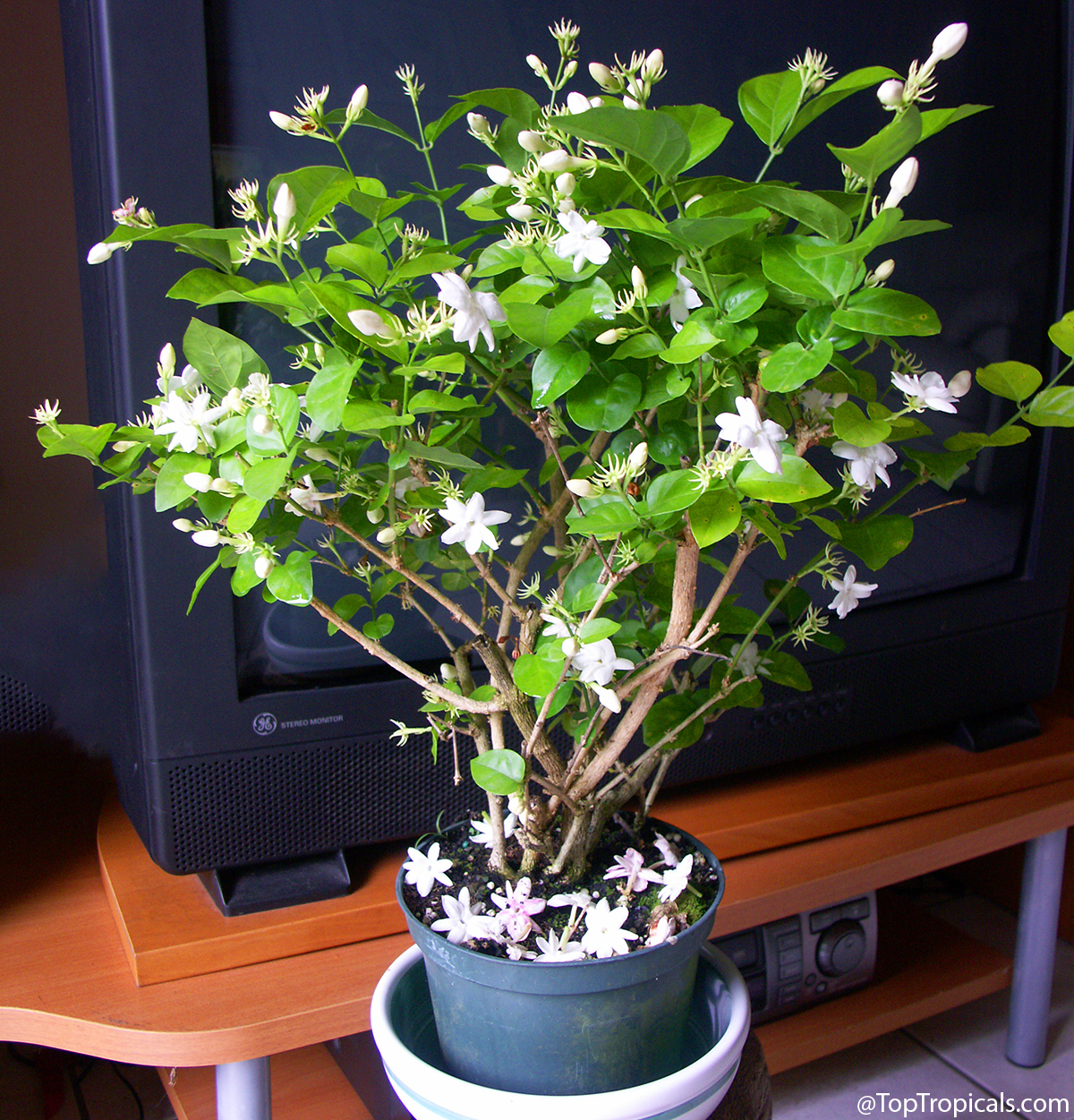
Jasmine Sambac Maid of
Orleans flowering indoors in a container under bright light.
❓Frequently Asked Questions About Jasmine Sambac
Does Jasmine Sambac need full sun?
It flowers best in full sun. In very hot climates, light afternoon shade
is acceptable. Indoors, give it the brightest window possible.
Can I grow it in a pot?
Yes. Sambac performs beautifully in containers. Many gardeners prefer pots
because it is easier to control size and move during cold weather.
How often does it bloom?
With proper light and feeding, it blooms in cycles throughout the warm
season. Consistency in care makes flowering more reliable.
Why is my plant not blooming?
The most common reasons are insufficient light or irregular feeding.
Increase light first, then review your fertilizing routine.
Is it difficult to grow indoors?
Not if you provide strong light and good air circulation. Compact varieties
adapt especially well.
Is it frost tolerant?
No. Jasmine Sambac is tropical. Protect it from temperatures below 40F and
bring it indoors before frost.
🌸 Year of
the Horse Special – Jasmine Bonus
Celebrate 2026 with the fragrance of Jasmine plants. For a limited time,
enjoy special savings when you grow one of
the most wanted perfume plants in cultivation.
Jasmine Sale - 15% Off
Save 15% on all Jasmine plants.
Discount is already applied in the online store - no code needed.


 How to Grow Jasmine Sambac Successfully