Date: 22 Dec 2024
What are the easiest, low maintenance plants?
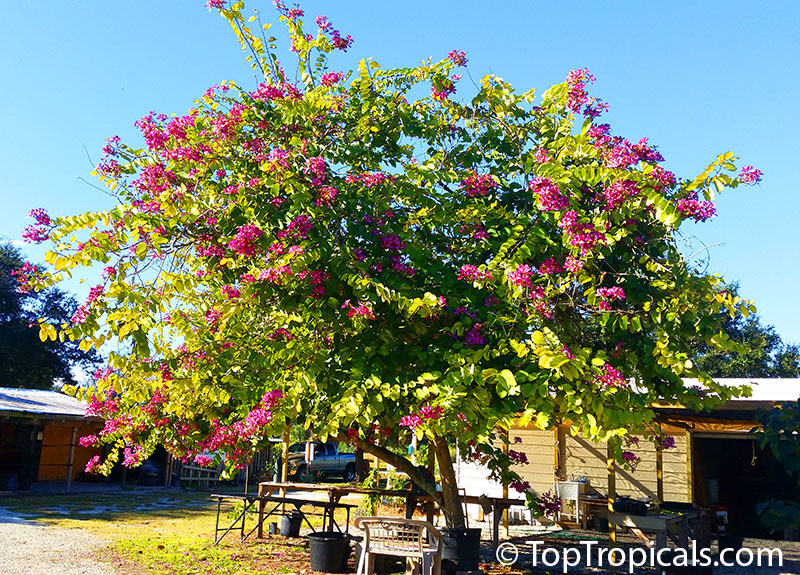
Photo above: Bauhinia blakeana - Hong Kong Orchid Tree. The most beautiful of all orchid trees. This winter bloomer starts flowering in very small size, when only 2-3 ft tall, and grows fast. (Bonus plant: makes it 7 easy plants!)
Six easiest to grow, effortless plants
Q: I'm seeking low-maintenance, tropical plants for my yard since I have limited time for gardening. Could you recommend some easy-to-care-for options that will still give my outdoor space a tropical feel?
A: Tropical plants don't necessarily require extensive care. Many options are low maintenance, effortless, and easy to grow, including a variety of plants, trees, shrubs, and vines that demand minimal upkeep. They are fast growing, not fussy about soil, cold- and heat- resistant, and can rely on regular sprinkler irrigation. Below are six our favorites - the easiest and most effortless tropical plants for your Southern landscape. You can find the full list here.
1. Fruit tree: Lolita Cherry
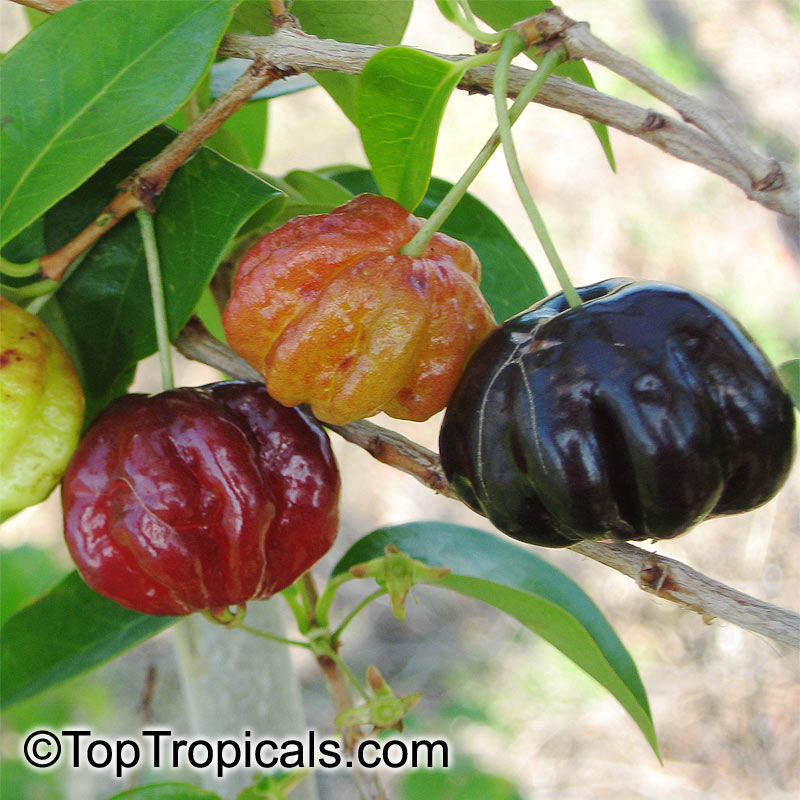
Eugenia uniflora - Black Surinam Cherry Lolita. The plant is vigorous and ready to fruit the same year. The fruit has exceptional flavor, very sweet, without aftertaste, large 1-1.2 inch, very juicy. Reliable producer. These cherries are cold hardy and can take short periods of frost.
2. Flowering tree: Shaving Brush Tree
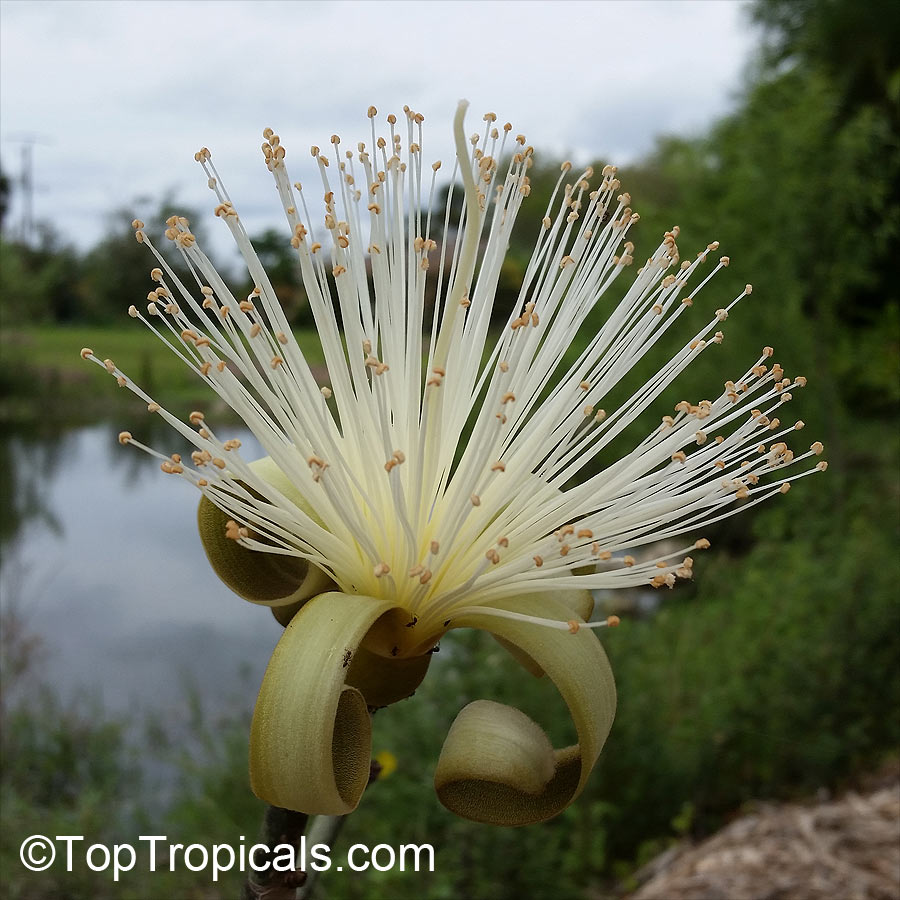
Pseudobombax ellipticum - Shaving Brush Tree is one of the coolest looking flowering trees, this fast-growing tree bears spectacular showy staminate flowers in the spring. It usually has no leaves at that time, which serves to show off the large and striking blooms. Very low water needs, grows fast!
3. Flowering shrub: Firespike
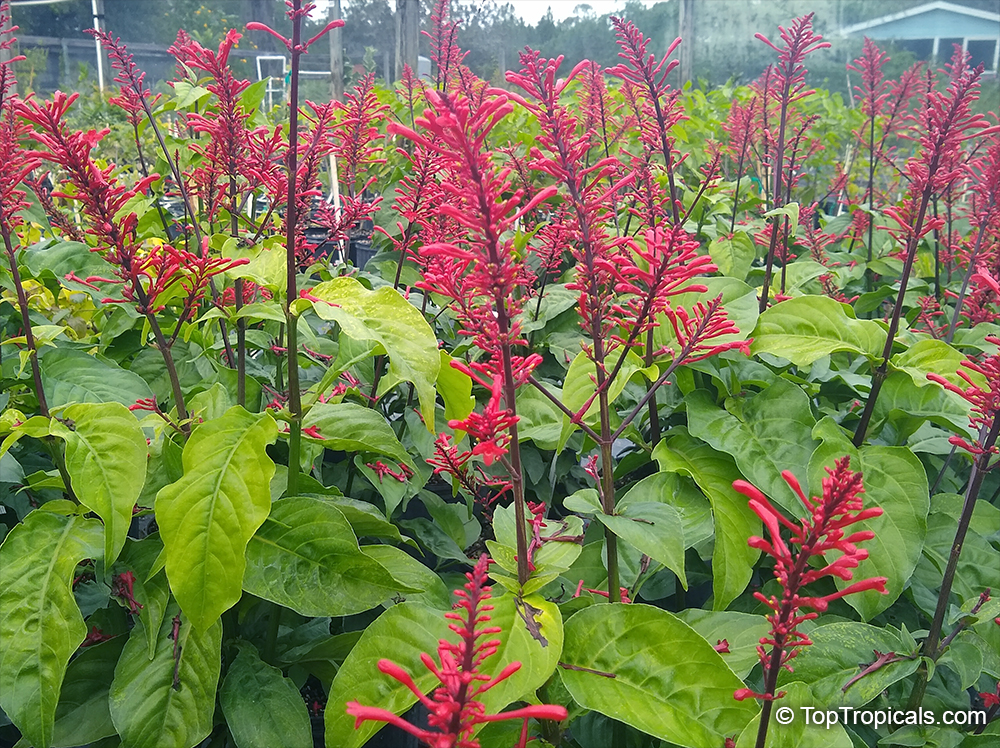
Odontonema cuspidatum - Firespike - ultimate butterfly magnet with showy bright red flowers. Will take sun or shade. Very easy and happy plant!
4. Flowering vine: Bleeding Heart
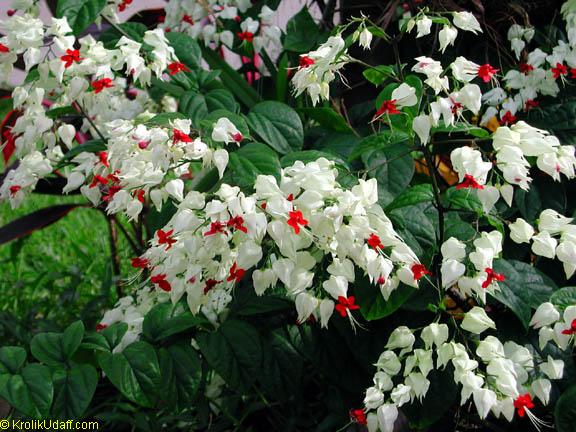
Clerodendrum thomsoniae - Bleeding Heart. One of the most spectacular blooming vines. Spectacular, dramatic flowers are slightly flat, they have white sepals on either side of bright crimson petals. The appearance may be liken to a line of dangling hearts, each emerging from the other. Very easy to grow and undemanding plant. Blooms in both sun or shade!
5. Small perennial: Ground Orchids - many colors!
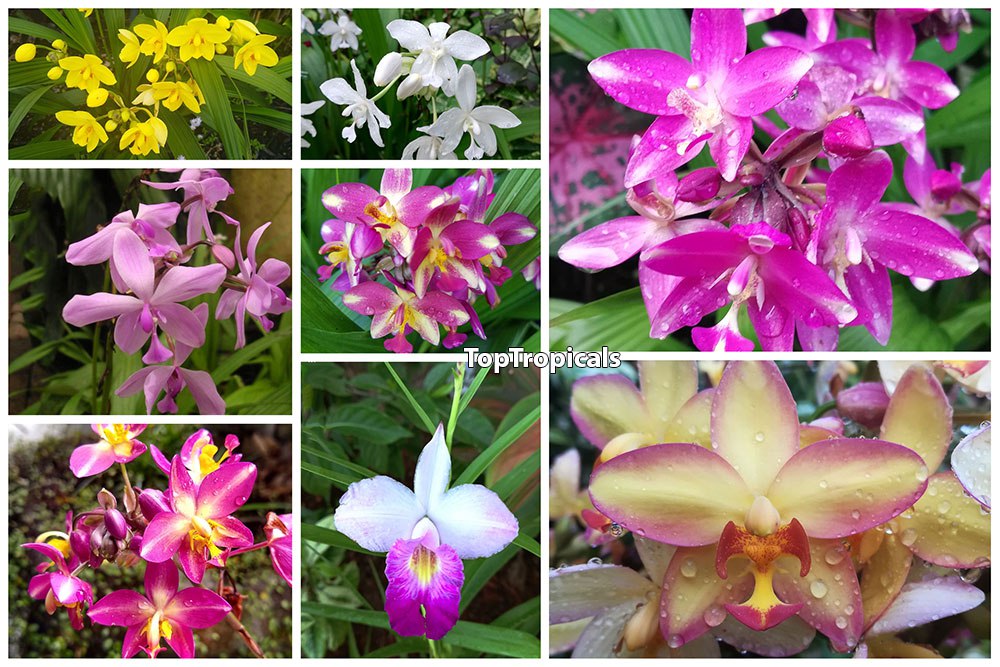
Ground orchids are the easiest and most rewarding flowers for a tropical garden. They thrive in regular garden soil or potting mix, tolerate both sun and shade, and bloom nearly year-round. They take both sun or shade, are cold-resistant and carefree. And look at these colors! From vibrant purples to soft pinks and yellows, ground orchids bring a splash of tropical beauty with minimal effort. Their consistent blooming makes them a must-have for gardeners seeking color all year.
6. Fragrant exotic: Queen of the Night
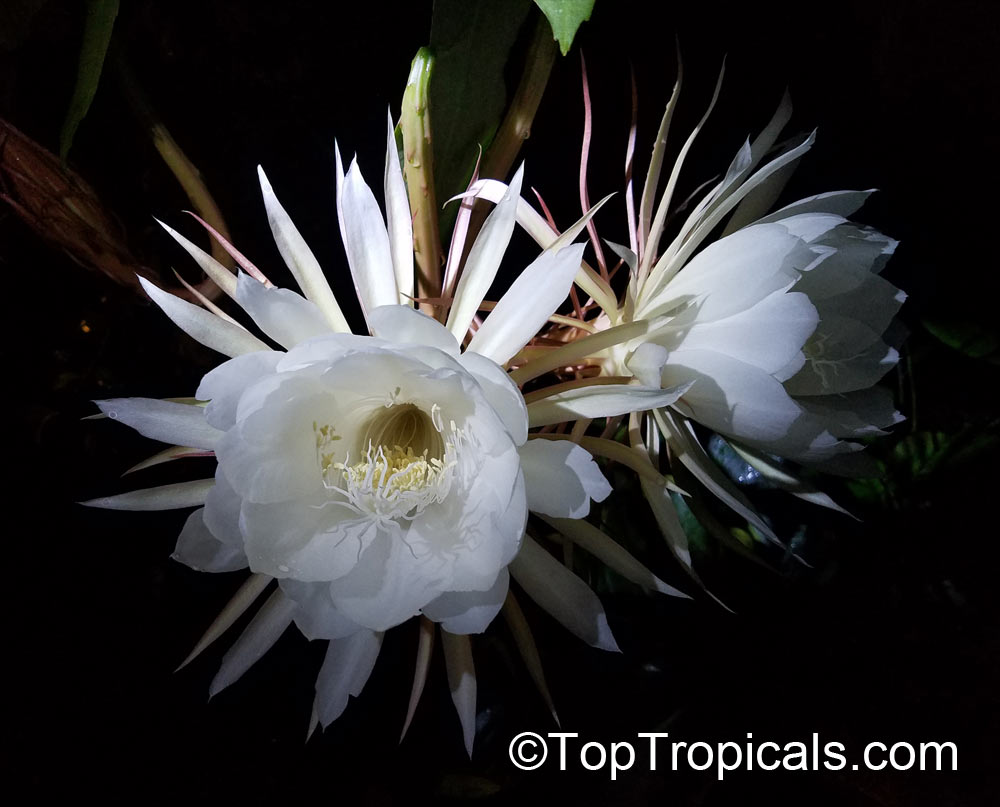
Epiphyllum oxypetalum - Queen of the Night - powerfully fragrant at night! This special cactus grows in tropical rainforests and has large wide meaty leaves. The flower is huge, white, and nocturnal. Blooms at night hours, hence the name. One of the most exotic indoor plants, great shade garden specimen. Easy to care, very low maintenance. Very low water needs.