Garden Blog - Top Tropicals

Date: 25 Jan 2026

Collecting clerodendrums: big color, little effort

Clerodendrum collage

Clerodendrum collage

🎨 Collecting clerodendrums: big color, little effort

  • 🎨 Collector hook


    If you love plants that look rare, unusual, and a little dramatic - but do not want high-maintenance divas - Clerodendrums belong in your collection.
    Clerodendrums are a surprisingly diverse group of plants, ranging from flowering vines to shrubs and even small trees. What they all share is bold, colorful blooms and an easygoing nature that makes them far less fussy than they appear. This combination of exotic looks and forgiving care is exactly why collectors gravitate toward them.
    Many clerodendrums bloom repeatedly through the year in warm climates, and several tolerate lower light better than most flowering plants. That makes them flexible - happy in the garden, in containers, on patios, or even indoors near a bright window. Their flowers come in striking combinations of red, white, blue, pink, and purple, often with unusual shapes that stop people mid-walk.
  • 🎨 Why clerodendrums earn collector status


  • ✦ Uncommon, eye-catching flowers
  • ✦ Long or repeat bloom cycles in many varieties
  • ✦ Vines, shrubs, and small trees in one genus
  • ✦ Excellent performance in containers
  • ✦ More tolerant of lower light than expected


🎨 Clerodendrum care made simple


Give clerodendrums bright filtered light to partial sun, regular watering with good drainage, and light feeding during active growth. A little pruning keeps them tidy and encourages fresh blooms. That is it. No complicated routines, no constant fixing.

For collectors who want maximum visual payoff without constant effort, clerodendrums deliver exactly what the title promises - big color, very little work.

🛒 Start your Clerodendrum collection

📚 Learn more:
#Butterfly_Plants #Shade_Garden #How_to #Hedges_with_benefits #Container_Garden

Plant Facts

Clerodendrum bungei
Cashmere (Cashmir) bouquet, Glory Bower, Clerodendron
USDA Zone: 9-11
Large shrub 5-10 ft tallSemi-shadeFull sunRegular waterRed, crimson, vinous flowersPink flowersPlant attracts butterflies, hummingbirdsDeciduous plantFragrant plantSubtropical plant. Mature plant cold hardy at least to 30s F for a short time
🟢 Join 👉 TopTropicals

Date: 18 Feb 2026

🔥 Blazing into the 2026 with hot jasmines

Sunshine  the  orange  tabby  wearing  a  red,  white,  and  blue  wristband  sits
    laughing  on  a  jasmine-covered  horse  topiary  during  the  2026  Year  of  the 
 Horse,  while  Smokey  the  tuxedo  cat  trims  the  greenery  at 
 sunset.
Sunshine: I'm blazing into the 2026 Year of the Horse! Call me Mister Fahrenheit. Don't stop me now! 'Cause I'm having a good time — I'm a shooting star, leaping through the sky like a tiger, defying the laws of gravity!
Smokey: It's jasmine, Tiger. A shrub. Not Wembley. Calm down.

💮 2026 Year of the Horse - and the Plant I Trust Most

By Tatiana Anderson, Horticulture Expert at Top Tropicals

Every new year carries its own energy.

2026 is the Year of the Horse - a year of movement, fire, momentum, and bold decisions. It is not a quiet year. It pushes us forward.

When fellow gardeners ask me what to grow in a year like this, my answer is simple:
Grow something that balances strength with grace.

For me, that plant is Jasmine Sambac.

In many cultures, Sambac represents devotion, purity, and deep affection. In the Philippines it is the national flower - Sampaguita - woven into garlands for weddings and sacred ceremonies. In Hawaii, it becomes leis - a symbol of welcome and connection - Pikake. In India, it perfumes temples and homes.

This is not just a fragrant shrub.
It is a plant tied to love, loyalty, and continuity.

The Horse runs forward.
Jasmine anchors the heart.

In a fiery year like 2026, I believe we need both.

And that is why I always return to Jasminum sambac.

🛒 Explore Jasmine varieties

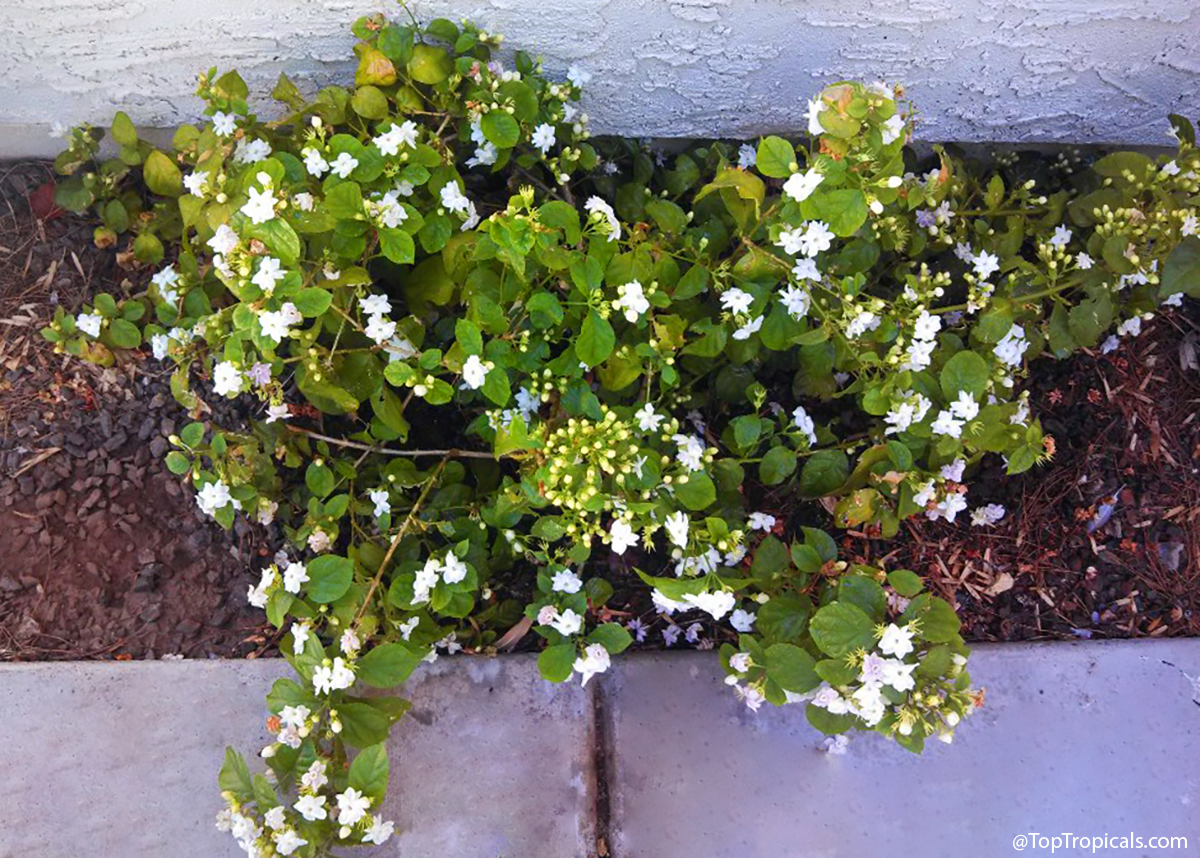
Jasmine  Sambac  Maid  of  Orleans  plant  growing  along  a  wall  with  clusters
    of  white  fragrant  flowers  in  bloom.

Jasmine Sambac thrives in hot, sunny locations

✅ Why Jasmine Sambac?

Over the years I have grown thousands of plants, but very few have the staying power of Jasmine Sambac.

It is not just fragrant. It is intensely, unmistakably fragrant. One open flower can perfume an entire patio. In the evening, the scent becomes deeper and richer.

But what makes Sambac truly special is its adaptability.

It can grow as a compact patio shrub, a flowering hedge, or a climbing vine. It performs beautifully in containers. It tolerates both full sun and partial shade. The more light you give it, the more flowers it rewards you with.

And unlike many tropicals, Sambac does not bloom just once. With proper care, it flowers in cycles throughout the warm season.

For gardeners, that combination is rare: beauty, perfume, flexibility, and repeat bloom.

That is why it has remained one of the most wanted fragrant plants in cultivation.

✍️ More About Jasmines from Blog

🛒 Explore Jasmine plants

Date: 5 Feb 2026

How to get three colors on the same plant: Yesterday, Today, and Tomorrow

Brunfelsia grandiflora - Yesterday, Today, and Tomorrow

🌸 How to get three colors on the same plant: Yesterday, Today, and Tomorrow

  • 💜 Brunfelsia is one of those plants that makes people stop mid-sentence.
  • It blooms in shade, smells incredible at night, and then does something unexpected - the flowers change color over just three days.
  • 💜 Purple. Lavender. White.
  • All at the same time, on one plant.
  • 💜 It is easy to grow, loves warm weather and part shade, and turns any garden path or patio into an instant conversation starter. Once it starts blooming, it just keeps going.
  • 💜 These are the most interesting varieties known as Yesterday-Today-Tomorrow for their magical color transformation from purple to lavender to white over three days: B. grandiflora, B. paucifolia, B. australis.


🛒 Explore Brunfelsias - the ultmate shade flowers

📚 Learn more:

Plant Facts

Brunfelsia grandiflora
Yesterday -Today -Tomorrow, Kiss-me-quick, Royal Purple Brunfelsia
USDA Zone: 9-11
Large shrub 5-10 ft tallSmall plant 2-5 ftSemi-shadeShadeRegular waterBlue, lavender, purple flowersWhite, off-white flowersPink flowersToxic or PoisonousPlant attracts butterflies, hummingbirdsFragrant plantSubtropical plant. Mature plant cold hardy at least to 30s F for a short time
  • Brunfelsias in Plant Encyclopedia
  • When Brunfelsia is in bloom? Yesterday, Today and Tomorrow!
  • The number one flower for shady spots
  • Yesterday-Today-Tomorrow, Brunfelsia from Brazil

  • #Perfume_Plants #Hedges_with_benefits #Container_Garden #Shade_Garden

    🟢 Join 👉 TopTropicals

    Date: 18 Mar 2026

    The Alien Lily: why this rare Peruvian bulb is taking over garden feeds

    Eucrosia bicolor - Peruvian lily

    The Alien Lily: why this rare Peruvian bulb is taking over garden feeds 🔥

    Most bulbs are predictable, but Eucrosia bicolor is a total showstopper. Discover why this rare Peruvian lily looks like a firework and how to grow it.
    • 💥 I planted a simple, nondescript bulb and honestly? I wasn’t prepared for what came out of the soil. This one feels like it belongs in a museum, or on a tiny stage with spotlights!
    • 💥 Eucrosia bicolor is not your typical garden plant - it’s a rare bulb from the dry regions of Peru, and when it blooms, it puts on a theatrical performance. It’s rare, it’s a bit dramatic, and it looks like something designed for a sci-fi movie set.
    Picture this: you’ve got a simple tulip-like bulb sitting quietly for months. Then suddenly, a flower stalk shoots up, and out comes this wild bloom - bright red base with long, thin golden “whiskers” sticking out like fireworks frozen mid-burst. It doesn’t even look real at first glance.
    • 💥 Move over, Orchids: why Peruvian Lily is the ultimate conversation starter


      The Eucrosia bicolor is a rare bulb from the dry forests of Peru. For months, it sits quietly in its pot, looking like a plain onion. But then, the magic happens:

    • · The "Fireworks" Bloom: A tall stalk shoots up, topped with bright red flowers and impossibly long, golden-tipped "whiskers.
    • · The"Museum"Look: The stamens are so long and delicate they look like frozen explosions or a tiny botanical chandelier.
    • · Lush Foliage: Even when it isn't blooming, its broad, soft leaves offer a"Lily of the Valley"elegance that keeps your shelf looking green.


    💥 The"introverted"bulb: why you should stop watering this plant to make it bloom


    Being part of the Amaryllis family, Peruvian Lily has a unique quirk: it craves a"disappearing act."
    It requires a dry dormancy period where it completely dies back.
    It’s essentially a"don't call me, I'll call you"plant.
    But when it decides it's time? It comes back stronger every year.

    💥 Quick Care Guide for Collectors


    How to Master the"Peruvian Performance"? Caring for this rarity is actually quite simple once you understand its rhythm.
    • · Light. Yes, it blooms in shade! To get those museum-quality blooms, you’ll want to place it in a spot with warmth and bright, indirect sunlight - a sunny windowsill is usually its happy place.
    • · Water. During its active growing season, keep the soil moist, but here is the"secret sauce": once the leaves begin to yellow, stop watering entirely. This mimics the dry season in Peru and allows the bulb to rest.
    • · Placement. Because of this specific"on/off"cycle, it’s best kept in a container where you can easily control its environment and move it to a place of honor the moment those firework-like stalks appear.
    • · The Verdict: It’s not a constant bloomer, and that’s exactly why it's special. When that stalk finally appears, it feels like an event. It’s the kind of plant that makes you run to the living room every morning just to see if"today is the day."


    🛒 Find the Peruvian Lily here

    🎥 Close-up of Eucrosia bicolor flower with long golden stamens
    📚 Eucrosia bicolor in Plant Encyclopedia

    #Container_Garden #How_to #Discover

    Plant Facts

    Eucrosia bicolor
    Peruvian Lily
    USDA Zone: 9-11
    Groundcover and low-growing 2ft plantSmall plant 2-5 ftSemi-shadeFull sunModerate waterRed, crimson, vinous flowersSubtropical plant. Mature plant cold hardy at least to 30s F for a short time
    🟢 Join 👉 TopTropicals

    Date: 24 Feb 2017

    TopTropicals news, sales and updates

    Extended sale 15% off on all fruit trees! Take advantage of our "Spring is coming!" fruit tree sale extension 15% off on all fruit trees and spices, including mango new exclusive varieties. No minimum order required. Hurry up, sale extension ends on Saturday, Feb 25.

    Radio Top Tropicals Live Webcast upcoming event: Saturday February 25, at 11 am EST.
    Topic: GROW YOUR OWN! DUDE!
    1) Herbs, both annual and perennial.
    2) Fruit trees.
    3) Foods once thought to be only ornamental.
    Our Host Robert Riefer - Internationally Certified Crop Adviser - answering all your questions.

    Listen to Radio Top Tropicals, every Saturday, at 11 am EST! You may use our website radio player DURING AIR TIME and see the pictures of plants we are talking about. To ask questions using live chat, you need to log in at Mixlr.com or simply call our office 239-887-3323 during air time!
    If you missed a live webcast, you may listen to recording by following Showreel item link.

    Check out our upcoming radio shows and get your gardening questions ready!

    Pisces Zodiac lucky plants

    Pisces- 2/19 - 3/20. As a WATER sign ruled by both Jupiter and Moon (and Neptune, that was not discovered until 1846, after the plant correspondences were established; Neptune is considered a "higher octave" of the Moon), Pisces plants are often large but hard to find, and may grow near the ocean. The most healing plants for Pisces are those that strengthen the immune system or have an antibacterial effect. Pisces plants may also catalyze expanded states of awareness and be helpful in dream work.
    Herbs connected to Pisces are ruled by its former ruler, the Moon (Neptune, the current ruler, was not discovered until 1846, after the plant correspondences were established; Neptune is considered a “higher octave” of the Moon). Diseases of Pisces have traditionally included psychotic disorders, various forms of substance addiction, lung diseases such as tuberculosis, and ailments of the foot; contemporary herbalists also add immune system diseases. Pisces is strengthened by rosemary's ability to promote an aura of centered grounding. This protective herb helps strengthen boundaries and cultivate a closer connection to the physical realm.

    Pisces Zodiac lucky plants: Water lily, Lotus, Clematis, Wisteria, Lisianthus, Brunfelsia, Echinacea, English Lavender, Rosemary, Coconut palm, Cranberry, Clove, Coccoloba, Sea Oats, Mangroves, Ochrosia, Aquatic plants, Colocasia, Alocasia, Aralia, Ficus trees, Banyan, Peepal, Banana, Mango, Mimosa, Olive, Anise, Vilca and Yopo, Kava-kava, Nutmeg, Anthuriums, Eucalyptus, Bauhinia, Clusia, Caesalpinia, Callistemon, Bucida, Cassia fistula, Cordia, Calabash, Lipstick palm , Delonix, Elaeocarpus, Erythrina, Fatsia, Guaiacum, Mahoe, Koelreuteria, Kopsia, Macaranga, Pandanus, Peltophorum, Psychotria,Banesteriopsis, Tabebuia.


    For links to these plants and other signs information, see full Plant Horoscope