Garden Blog - Top Tropicals

Date: 25 Feb 2026

A Miracle in the Garden: Watching a Tiger Swallowtail Rebuild Itself on a Magnolia Champaka - Joy Perfume Tree

Tiger Swallowtail Butterfly

A Miracle in the Garden: Watching a Tiger Swallowtail Rebuild Itself on a Magnolia Champaka - Joy Perfume Tree 🐯

Tiger Swallowtail Metamorphosis: From Cocoon to Joy

🏼 Nature’s most mind-blowing magic trick happened right here on a branch of our Magnolia champaka - the Joy Perfume Tree. Did you know that when a caterpillar enters its chrysalis (cocoon), it literally dissolves its body and rebuilds it from scratch?

🏼 This Tiger Swallowtail chose the legendary Joy Perfume Tree as its nursery. It’s a match made in heaven—the "flying tiger" of North America born on a tree famous for the world’s most expensive perfume scent. While most people know the Champaka for its intensely fragrant flowers, few realize that even the leaves release a soft, sweet aroma when brushed against.

🏼 In this video, you’ll see the rare moment of eclosion - where the butterfly emerges with soft, wrinkled wings and begins the slow process of pumping life into them before its first flight.

🏼 It is a real gem in your garden - not just for fragrance lovers, but for wildlife that clearly loves it too.
Watch this Tiger Swallowtail butterfly being born on a Champaka - Joy Perfume tree!

🛒 Bring the miracle Joy to your garden - the perfume Champaka tree

📚
Everything You Need to Know About the Joy Perfume Tree:
🟡Magnolia (Michelia) champaca - Joy Perfume Tree, Champaka in Plant Encyclopedia

🟡 Growing Guide:


· How to grow Magnolia champaca and get some Joy
· What does a mature Champaka Tree look like? Practical Growing Guide
🟡The Fragrance: What does Joy Perfume flower smell like?
🟡Troubleshooting: Why is my Champaka Tree dropping leaves?

🟡 Comparison:


· Which Champaka tree is better - White or Golden?
· Golden and White Champaka side-by-side
· White Champaka
🟡More:
· When does Champaka tree start blooming?
· Why Champaka is such a popular perfume tree
· Flower of the most expensive perfume
· Article about Champaka

🎥

#Perfume_Plants #Container_Garden #Trees #Discover

Joy Perfume Tree Plant Facts

Botanical name: Magnolia champaca, Michelia champaca
Also known as: Joy Perfume Tree, Huang Yu Lan, Safa
USDA Zone: 9 - 11
Highligths Small tree 10-20 ftFull sunWatering: Regular. Let topsoil dry slightlyYellow, orange flowersPlant attracts butterflies, hummingbirdsFragrant plantSubtropical plant. Mature plant cold hardy at least to 30s F for a short time
Get personalized tips for your region
🟢 Join 👉 TopTropicals

Date: 23 Feb 2026

❄️ The Hardiness Report: February 2026 ❄️

🐾 Smokey & Sunshine’s real-world survival data from our Sebring, Florida Research Gardens. Smokey analyzed the data. Sunshine just stayed happy. Here is what they found.

Macadamia  tree  surviving  25F  freeze  as  Smokey  inspects  leaves  and 
 Sunshine  holds  steaming  coffee  in  frosty  garden.
Sunshine: Twenty five degrees. Wind chill fourteen. And it is still standing... like nothing happened?
Smokey: This is macadamia strength.
Sunshine: I should put a macadamia nut in my coffee and borrow some of that strength.
Smokey: Do not get too nutty yet. It still needs curing and cracking.

📊 Weather Data – February 1–6, 2026

Sebring, Florida – 132 years of recorded observations
This was not a light frost. It was a prolonged, windy, penetrating hard freeze.

  • 🌡 Minimum temperature: 25F
  • ❄️ Wind chill: 14F
  • ⏳ Duration: 3 nights of 8–10 hour hard freeze
  • ☀️ Daytime temperatures: around 50F for 7 days
  • 🌀 Wind: sustained 20 mph, gusts 40–50 mph

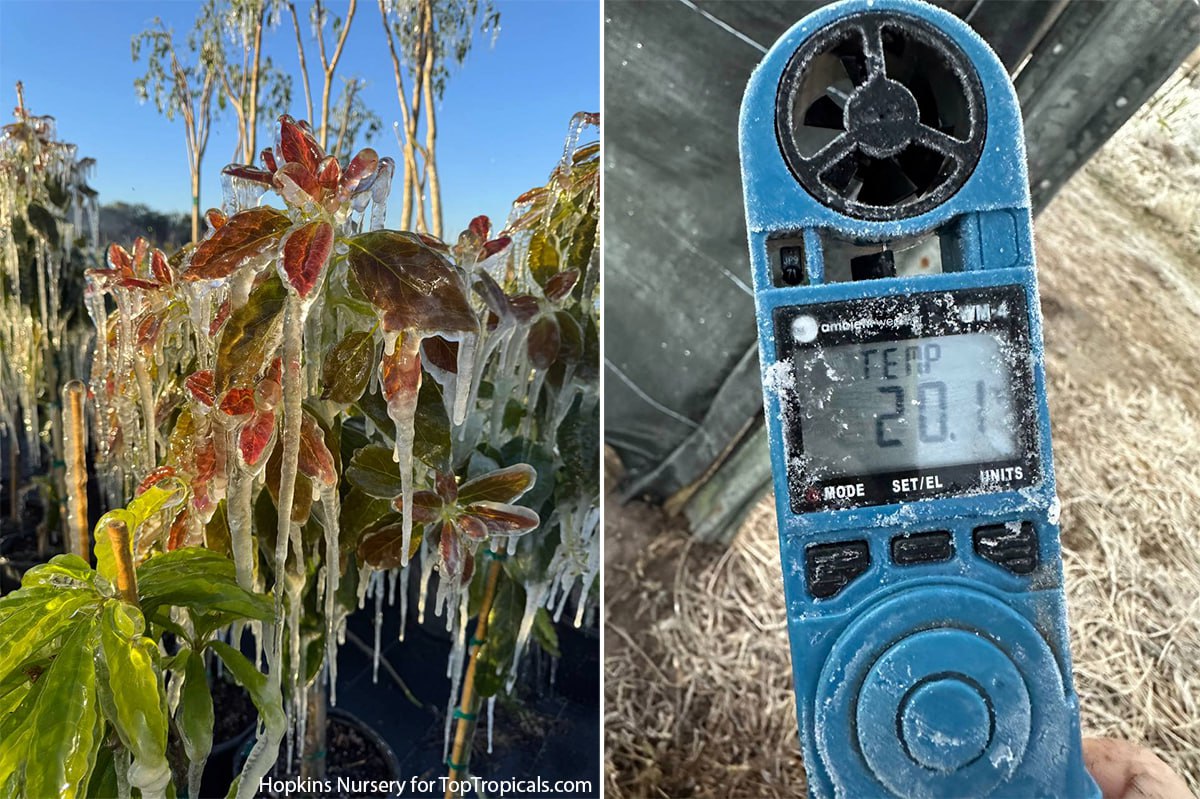
While all our plants in pots were protected in greenhouses, our in-ground plantings faced the freeze outdoors. We covered what we could. Even so, some plants were damaged, some died, and some surprised us by surviving.

In the next few newsletters, we will share the real survivors - the plants that proved themselves in the ground, under real conditions. Smokey and Sunshine have been out in the fields assessing the damage from the February 1–6 freeze. While many plants struggled, the Macadamia proved to be a true standout. This is how we grow them to handle the tough years.

Why does this matter? Because we have gotten used to warm winters, and this freeze was a rude awakening. Not everyone lives in Miami. If you garden in places where a real cold event can happen, you have to be prepared - and you have to plant what can take it.

🌰 Macadamia: Freeze Tested and Standing

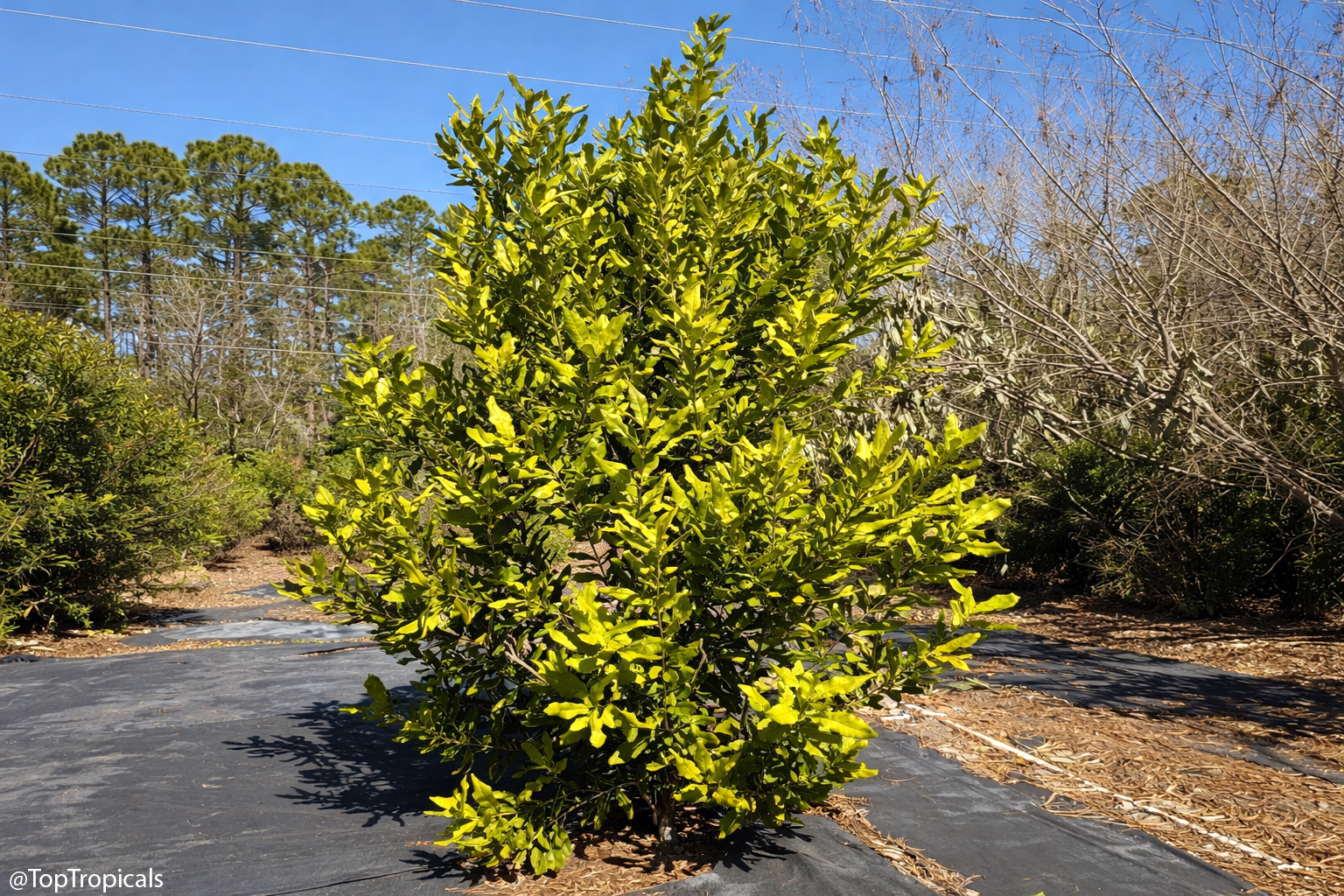
Three  year  old  macadamia  tree  after  three  nights  of  25F  hard  freeze  in 
 February  2026,  showing  healthy  foliage.

3 year old macadamia tree after 3 nights of hard freeze in February 2026 - standing strong.

When temperatures dropped to 25F with wind chill near 14F, our established macadamia trees remained upright, green, and structurally intact. Leaves held. Branches stayed firm. No collapse, no panic.

That is not luck. That is macadamia hardiness.

Often considered a "tropical luxury nut," macadamia proved it can handle more than many gardeners expect. In USDA Zones 9b-11, with proper drainage and site selection, it is not just ornamental - it is a long-term food tree with real resilience.

In a winter that reminded us not to take warmth for granted, macadamia earned its place on the survivor list.

The nut itself is famous for its strength. The shell is among the hardest in the nut world, requiring serious pressure to crack. Inside, the kernel is creamy, buttery, rich, and deeply satisfying. High in monounsaturated fats and naturally low in sugar, macadamias have long been valued both for flavor and for nutrition.

The tree is equally impressive. An evergreen with tough leaves and elegant spring flowers, it matures into a productive, manageable canopy. Nuts develop slowly over six to seven months. Production begins in a few years and increases steadily as the tree matures. Plant it once, and it can reward you for decades.

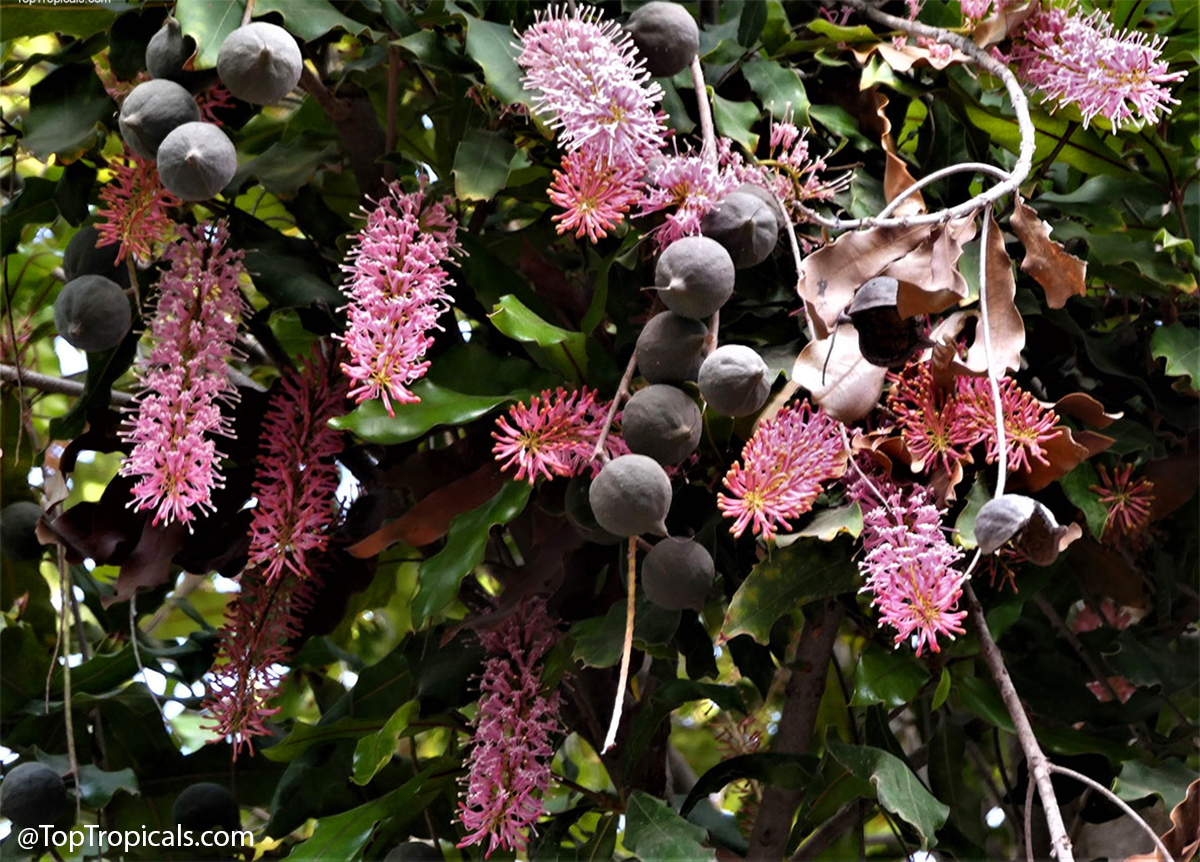
Macadamia  tree  with  pink  flower  racemes  and  developing  round  green  nuts
   on  branches.

Macadamia flowers and developing nuts on the tree.

Cold will come again. It always does. The question is not whether winter will test your garden. The question is whether your trees are ready. Macadamia proved it is. If you are building a garden that feeds you for decades, this is a tree worth planting.

🛒 Add Macadamia Tree to your garden

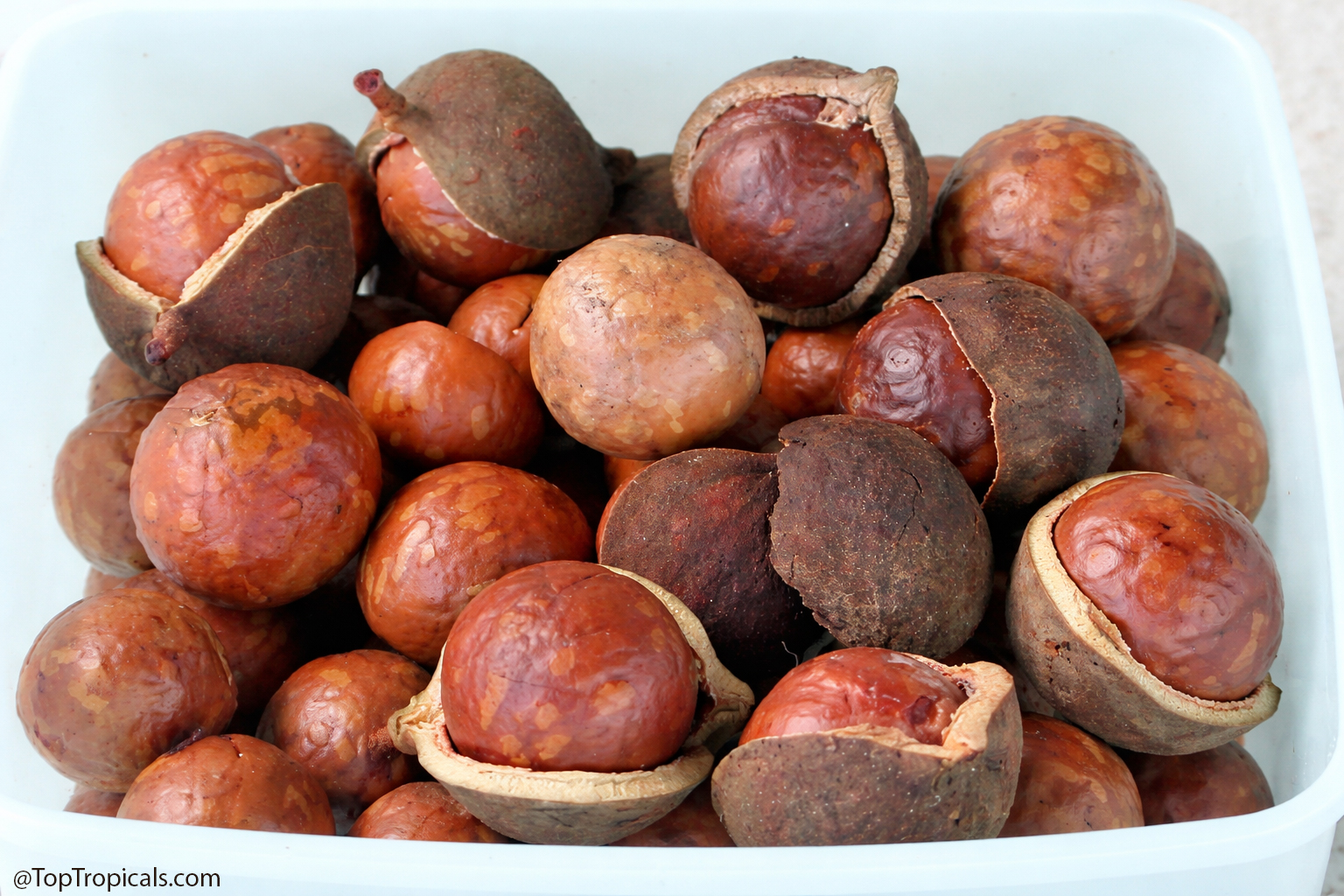
Fresh  macadamia  nuts  with  outer  husks  removed  and  hard  brown  shells 
 exposed  in  a  container.

Freshly harvested macadamia nuts with husk removed and hard shells visible.

Date: 14 Feb 2026

🍭 From Vine to Bean: A Practical Guide

Vanilla  planifolia  vine  climbing  a  support,  close-up  of  vanilla  flower,
   and  cured  vanilla  beans

Vanilla planifolia Vine, Flower, and Cured Vanilla Beans

Madagascar Bourbon Vanilla Bean Plant Facts

Botanical name: Vanilla planifolia, Vanilla fragrans
Also known as: Madagascar Bourbon Vanilla Bean, French Vanilla, Vanilla Orchid
USDA Zone: 9 - 11
Highligths Vine or creeper plantSemi-shadeWatering: Regular. Let topsoil dry slightlyYellow, orange flowersEdible plantSpice or herb plantFragrant plantSubtropical plant. Mature plant cold hardy at least to 30s F for a short time
Get personalized tips for your region

How to Grow Vanilla: quick how-to

Vanilla is not complicated, but it does have preferences. Start with a pot and regular, well-draining mix. It does not need anything exotic. Give it:

  • Bright, indirect light
  • Warm temperatures
  • Good humidity
  • Air movement

Most importantly, give it something solid to climb. A wooden trellis, a log, or a burlap-covered board works well. The surface should be porous so the aerial roots can grip.

As it grows, guide the vine gently. You can prune it to control size. Vanilla is slow to mature. That is normal.

The Bloom Secret

Vanilla does not bloom just because it looks healthy. It blooms when it feels secure.

This is a climbing orchid. It must attach firmly to a solid, porous support such as a wood log, trellis, or burlap-covered board. When the aerial roots grip and the plant reaches maturity, flowering becomes possible.

Once the flowers appear, they usually need to be hand pollinated to produce pods. Each flower stays open for only a short time, so timing matters.

How to pollinate vanilla: In this video, we show you exactly how to pollinate vanilla step by step

❓Vanilla care: quick FAQ

  • Does Vanilla planifolia really produce vanilla beans?
    Yes. Vanilla planifolia is the commercial source of vanilla. After flowering, it can form long green pods (vanilla beans). The aroma develops later during curing.
  • What is the secret to getting vanilla to bloom?
    Let it climb. Vanilla is a climbing orchid and usually will not bloom until its aerial roots attach firmly to a solid, porous support like a wood log, trellis, or burlap-covered board.
  • Do I need to pollinate vanilla flowers?
    Yes. In most home growing conditions, vanilla flowers must be hand pollinated to produce pods. Each flower is open for only a short time, so timing matters.
  • Can I grow vanilla indoors?
    Yes, if you can provide bright, indirect light, warmth, humidity, and a support to climb. A sunny room with filtered light and a trellis or log can work well.
  • What should I use for support?
    Use a sturdy trellis, a wood log, or a burlap-covered board. The key is a porous surface that aerial roots can grip. Avoid chemically treated wood. Check out this very unusual way to grow Vanilla Orchid over a wall.
  • What potting mix should I use for Vanilla plant?
    Start in a pot with a regular, well-draining potting mix such as Sunshine Abundance. As the plant matures, it relies more on its support and aerial roots than the soil.
  • What fertilizer should I use?
    Sunshine Boosters Orchidasm is formulated specifically for orchids and will work perfecty for Vanilla orchid as well.
  • How big will it get?
    As big as you let it. Train it and prune it. Vanilla grows according to the structure and space you provide.
  • How long until it flowers?
    Typically a few years. Vanilla is a long-term project, but it is very rewarding once established.

For Collectors and Enthusiasts:

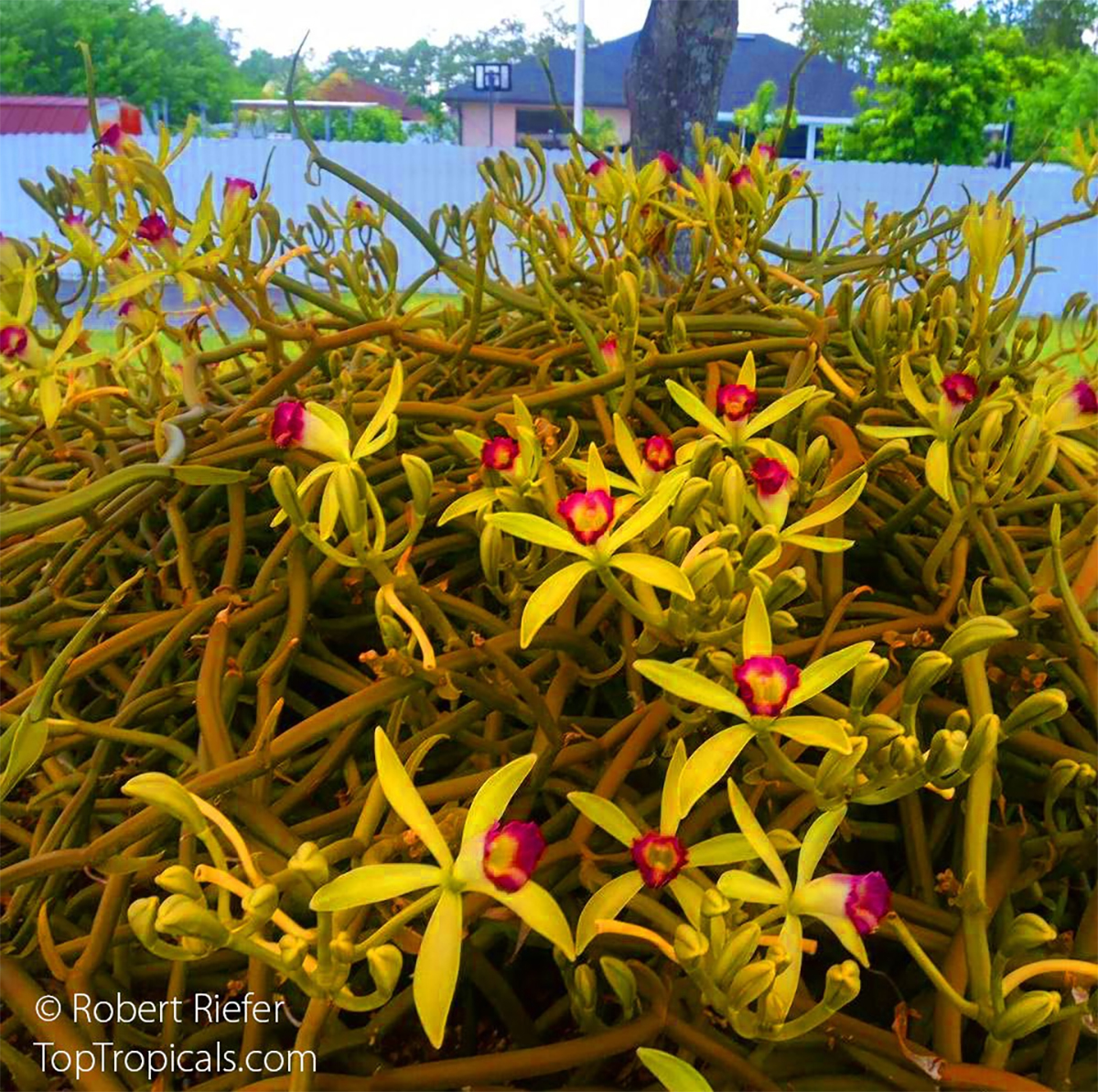
Vanilla  dilloniana  vine  covered  in  yellow-green  flowers  with  red 
 centers  growing  outdoors  in  100  gal  pot

Vanilla dilloniana in Bloom - Rare Florida Native Orchid

Leafless Vanilla Orchid Plant Facts

Botanical name: Vanilla dilloniana
Also known as: Leafless Vanilla Orchid, Dillons Vanilla
USDA Zone: 9 - 11
Highligths Vine or creeper plantSemi-shadeShadeWatering: Moderate. Water when top soil feels dryEpiphyte plantWhite, off-white flowersPlant attracts butterflies, hummingbirdsSpice or herb plantSubtropical plant. Mature plant cold hardy at least to 30s F for a short time
Get personalized tips for your region

We also offer Vanilla dilloniana, a rare Florida native species with distinctive flowers.

One remarkable specimen of this species, grown by our friend Robert Riefer, became so vigorous over many years that it outgrew a 100 gallon container and was eventually moved into a 250 gallon pool on wheels.

The plants we offer are propagated from that very specimen:

That kind of growth reflects deliberate cultivation and ideal conditions - not something that happens unintentionally.

Vanilla grows according to the space and structure you provide.

For gardeners focused on producing real vanilla beans for the kitchen, Vanilla planifolia remains the right place to start.

✍️ More About Vanilla Orchids from Blog

🎁 Shop Vanilla Orchids

Date: 10 Feb 2026

Cold-hardy avocado varieties - what freezing they really survive

Avocado leaves covered with ice

Avocado leaves covered with ice

❄️ Cold-hardy avocado varieties - what freezing they really survive


Avocado trees are usually associated with warm, frost-free climates, so every winter freeze raises the same question - which avocados actually survive cold weather? After recent freeze events, interest spikes as gardeners look for real answers, not guesses. The truth is, avocado cold hardiness is not just about the lowest temperature. Duration, moisture, wind, and tree maturity matter just as much - sometimes more.

Avocado Plant Facts

Botanical name: Persea americana, Persea gratissima
Also known as: Avocado, Alligator Pear, Aguacate, Abacate
USDA Zone: 9 - 11
Highligths Large tree taller than 20 ftSmall tree 10-20 ftFull sunWatering: Regular. Let topsoil dry slightlyEdible plantSubtropical plant. Mature plant cold hardy at least to 30s F for a short time
Get personalized tips for your region


What cold hardiness really means for avocados


Cold hardiness does not mean an avocado tree escapes winter untouched. It simply means the tree survives a freeze without being killed.
Leaf burn, branch dieback, or temporary growth setbacks can still occur. Survival is the key distinction.

Cold tolerance is influenced by:


· Tree age and establishment. Young avocado trees are always more vulnerable. Once established, tolerance improves significantly.
· Length of the freeze
· Wind exposure
· Daytime sun and heat retention
· Drainage and soil moisture
· Overall tree health going into winter

Where cold-hardy avocados come from


The most cold-hardy avocados are of Mexican origin. These types evolved in cooler, higher-elevation regions and differ genetically from West Indian and Guatemalan avocados.
These varieties are widely grown around San Antonio, Texas (USDA Zone 8b), where trees have been damaged but not killed by temperatures near 10F. As a general rule, established Mexican-type avocados can tolerate short freezes (about 3-6 hours) down to roughly 15F with little or no permanent damage. Temperature estimates apply to established trees under favorable conditions. The best results come from combining the right genetics with smart planting, good drainage, and thoughtful winter care.

Why cold tolerance varies so much


Cold ratings are never absolute. The same variety can survive very different temperatures depending on conditions such as tree maturity, freeze duration, wind, microclimate, and humidity. For example, an avocado may tolerate 10-15F in dry Texas winters but only 15-20F in wetter East Coast conditions.

Planting and protection tips for colder climates


· Plant in the warmest available location, ideally near a south or southeast wall
· Protect trees from cold wind
· Ensure excellent drainage; standing water during cold weather is deadly
· Use raised mounds in poorly drained areas
During freezes, small trees should be covered, mulched heavily, and protected with frost cloth. In severe cold, gentle heat under covers may help. Mature trees often need little to no protection.

Avocado varieties known for the best freeze survival


These varieties are among the more reliable choices for colder regions once established, reported tolerance near 15F:
· Brazos Belle - medium to large purple-black fruit, season October-November
· Fantastic - green fruit with paper-thin skin, creamy texture, the most cold tolerant
· Joey - selected in Uvalde, Texas; purple-black fruit, excellent flavor, heavy producer, season September-October
· Lila - medium green fruit, season September-October (not to be confused with Lula)
· Poncho - medium to large green fruit

Cold-hardy avocados make growing this fruit possible beyond the tropics, but expectations must stay realistic. Survival does not mean zero damage, and protection still matters during extreme weather.

🛒 Explore cold hardy Avocado varieties

📖 Our Book: Avocado Variety Guide, Snack or Guacamole?
·
Hard copy · PDF File Download

📚 Learn more:


· Avocado Variety Guide
· How to protect Avocado from cold and how hardy is it?
· Avocado that laughs at frost: Mexicola Grande for cooler climates
· Cold hardy Avocado Joey - you eat it with the skin
· Cold-hardy avocados: how cold-hardy are they?
· Cold-hardy avocado survival groups - what the numbers really mean

🎥 Avocados survived 25F hard freeze 3 nights of Florida Record Freeze

#Food_Forest #Avocado #Discover #How_to

🟢 Join 👉 TopTropicals

Date: 8 Feb 2026

How to grow Chinese Hat Flower

Holmskioldia sanguinea - Chinese Hat Flower

🎩 How to grow Chinese Hat Flower - when winter colors most needed


The Holmskioldia sanguinea, better known as the Chinese Hat Flower, gets its name honestly. Each bloom looks like a tiny hat or parasol - a little tube backed by a flat, round disc. Once you notice it, you cannot unsee it!

Chinese hat Plant Facts

Botanical name: Holmskioldia sanguinea
Also known as: Chinese hat, Cup and Saucer, Parasol Flower, Mandarins hat
USDA Zone: 9 - 11
Highligths Large shrub 5-10 ft tallVine or creeper plantSemi-shadeFull sunKeep soil moistRed, crimson, vinous flowersPlant attracts butterflies, hummingbirdsSubtropical plant. Mature plant cold hardy at least to 30s F for a short timeSeaside, salt tolerant plant
Get personalized tips for your region


What really makes this plant special is when it blooms. While most gardens slow down, Chinese Hat Flower kicks into gear from winter through early spring. The branches fill with flowers first, and the leaves follow later. It is one of those plants that quietly steals the show when everything else is taking a break.

More than one color


Most people know the classic red form, but there are several color varieties worth mentioning:
🔴 Red - the most common and bold
🟡 Yellow - Holmskioldia citrina, bright and cheerful, harder to find
🟠 Bronze / orange-bronze - warm tones that glow in winter light
Having different colors makes it easy to mix them or use just one as a winter focal point.

How it grows and where it works best


Chinese Hat Flower is a fast-growing, scrambling shrub. It is not stiff or formal. Think loose, graceful branches that like support. It does great when trained on:
· Trellises
· Fences
· Arbors
· Large containers with a support
· You can also let it grow as a free-form shrub and lightly prune to keep it tidy.

Care, the practical version


· Light: Full sun to light shade
· Water: Regular watering, especially while establishing
· Soil: Well-drained, not picky
· Pruning: After flowering to shape and encourage new growth
Once established, it is easygoing and forgiving.

Bonus points


· Blooms when the garden needs color most
· Attracts butterflies and hummingbirds
· Works as a flowering screen or accent plant
· Looks tropical without being high-maintenance

If you like plants that earn their space and do something interesting in winter, Chinese Hat Flower is one to keep in your garden.

🛒 Explore varieties of winter-blooming Chinese Hats

📚 Learn more:


· Holmskioldia - Chinese Hat - in Plant Encyclopedia
· This is the bush you should let flower for you: Chinese Hat is in bloom
· Why is it called Chinese Hat Flower
· Colorful varieties of Holmskioldia sanguinea - Chinese Hat Flower
· 13 festive shrubs with bright flowers that bring color to your Winter Garden when everything else is dormant
· Ten shrubs you need to have for winter colors

#Butterfly_Plants #How_to #Hedges_with_benefits

🟢 Join 👉 TopTropicals