Date: 24 Jun 2018
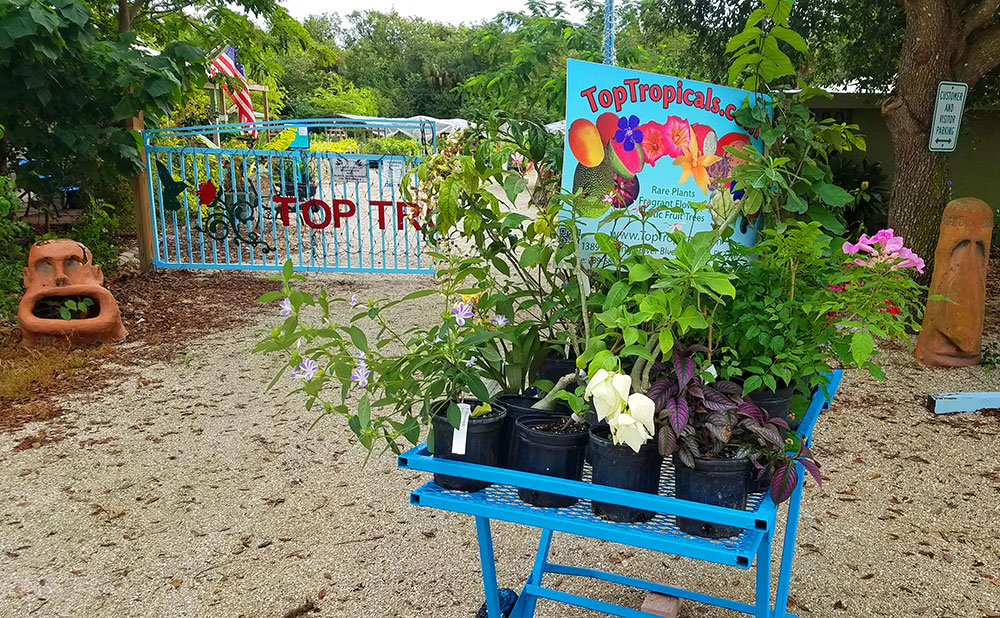
Winter Flowering Plants
Take advantage of the late season tropicals! Brighten up your winters with spectacular flowers and winter producing fruit trees!
Many Floridians move up North during hot summer months,
our snow-bird season usually starts late September and
ends by Mother's Day in May. Many of our local seasonal
customers planting those flowering and fruiting species
that they can fully enjoy while staying in Florida. Below
you will find a few specials that are in bloom right now.
Check out full list of winter bloomers and
late season plants, and download a PDF chart of the most
interesting tropical plants that will flower and fruit for
you in Fall, Winter and early Spring. Some of them are
ever-blooming, others are late- or early season.
Visit our Garden Center in Ft Myers FL
Date: 24 Jun 2018
SUNSHINE-SuperFood for your plants health
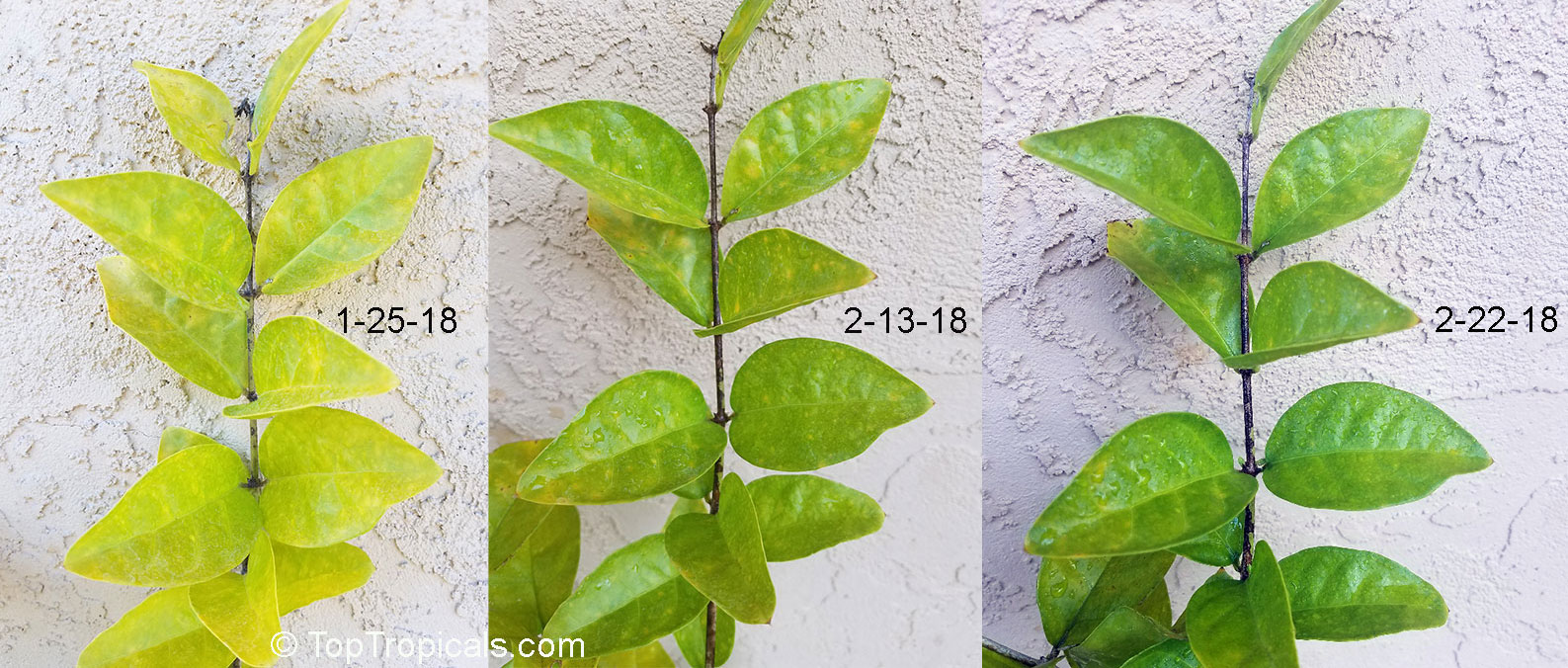
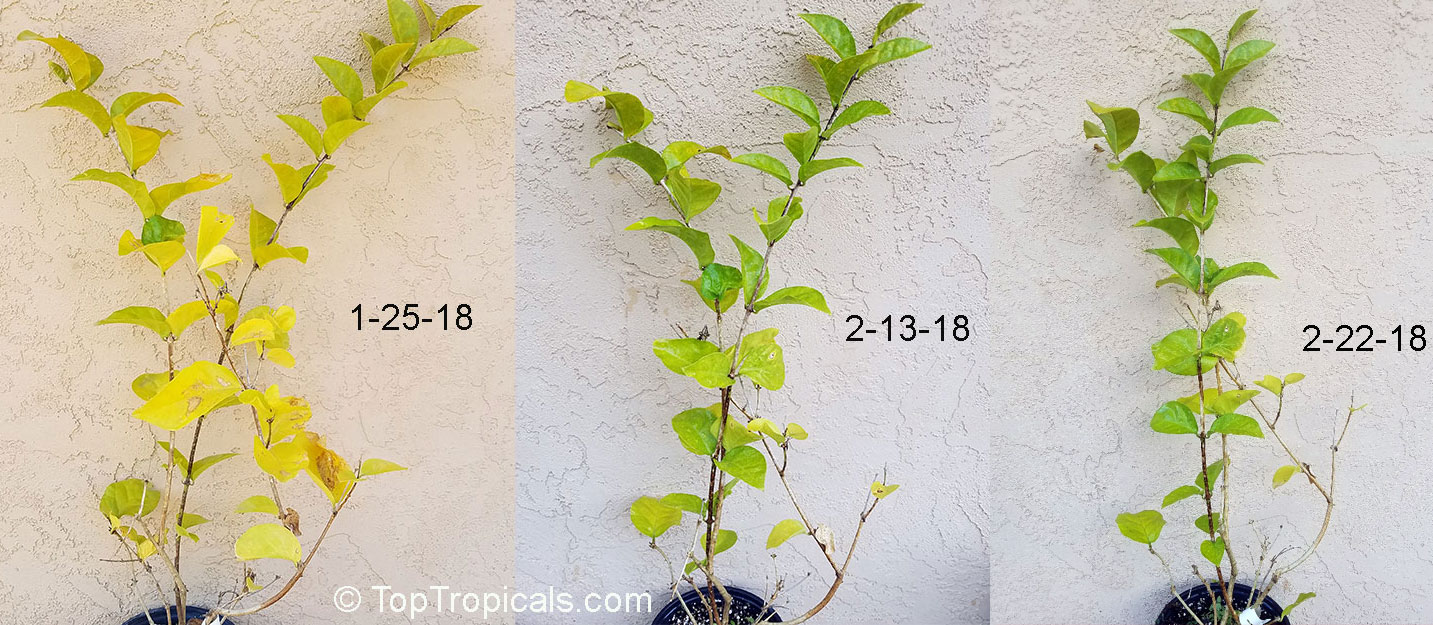
We are getting very high interest from our customers to our new plant booster SUNSHINE-SuperFood as well as many questions. We continue experimenting with the Jasmine that you saw in our previous newsletter, that had pale yellow leaves and numerous deficiencies. Right now, after only 2 applications, it looks healthy green again. Click on the picture to zoom in and see leaves turning from yellow to green within less than a month. See also full plant photo of this jasmine.
Q: Is SUNSHINE-SuperFood a fertilizer?
A: Traditionally we call a fertilizer macro-elements (NPK - nitrogen, phosphorus, and potassium). Technically, SUNSHINE-SuperFood is a complex of micro-elements that are essential for plant's health. It provides such elements as Mg, Fe, Mn, Zn, Cu, B, Mo, S, and Amino-acids that our soils are usually poor of. These elements are responsible for proper development of leaves, roots, flowers, and overall plant vigor. Read more about role of these micro elements.
Q: Can I just get these additional elements in a dry form and add to soil like a fertilizer?
A: No. Some of these elements must present in extremely low concentrations (this is why they are called micro-). SUNSHINE-SuperFood is a liquid substance with very high bioavailability that has very complicated formula; it is not just a mix of the elements. The formula is developed with the maximum efficiency for a plant to absorb through leaves and a root system.
Q: Is it better to spray leaves or water the plant with the solution?
A: Foliar applications are always most efficient in regards of seeing a quick result. However, we recommend to also drench the root ball with SUNSHINE-SuperFood solution to deliver the necessary elements evenly to all parts of the plant through its natural metabolism.
Q: My gardenia looks very sad after winter - most leaves are yellow and some have pale spots. Should I use SUNSHINE-SuperFood more often and in higher concentrations?
A: We recommend to apply SUNSHINE-SuperFood once a month to maintain a general plant health. In difficult cases like with this jasmine on the photo, you can do twice a month. However do not exceed recommended concentration. The rule of thumb is, you can apply water soluble fertilizers and supplements more often, but with lower concentrations - this way a plant will be more responsive. Plant metabolism in general is rather slow, changes take days and weeks - don't try to speed it up. Your patience will be rewarded.
Try SUNSHINE SuperFood on sick looking plants, especially with leaves that are yellowing, deformed or have spots (see photos of different deficiencies). There are no miracles, but this one works like a Miracle! All you need is a few drops of SUNSHINE SuperFood - item 6000! We also have bottles 50 ml and 100 ml for large plant collections and yard/landscape applications. Read more about SUNSHINE SuperFood...
Date: 24 Jun 2018
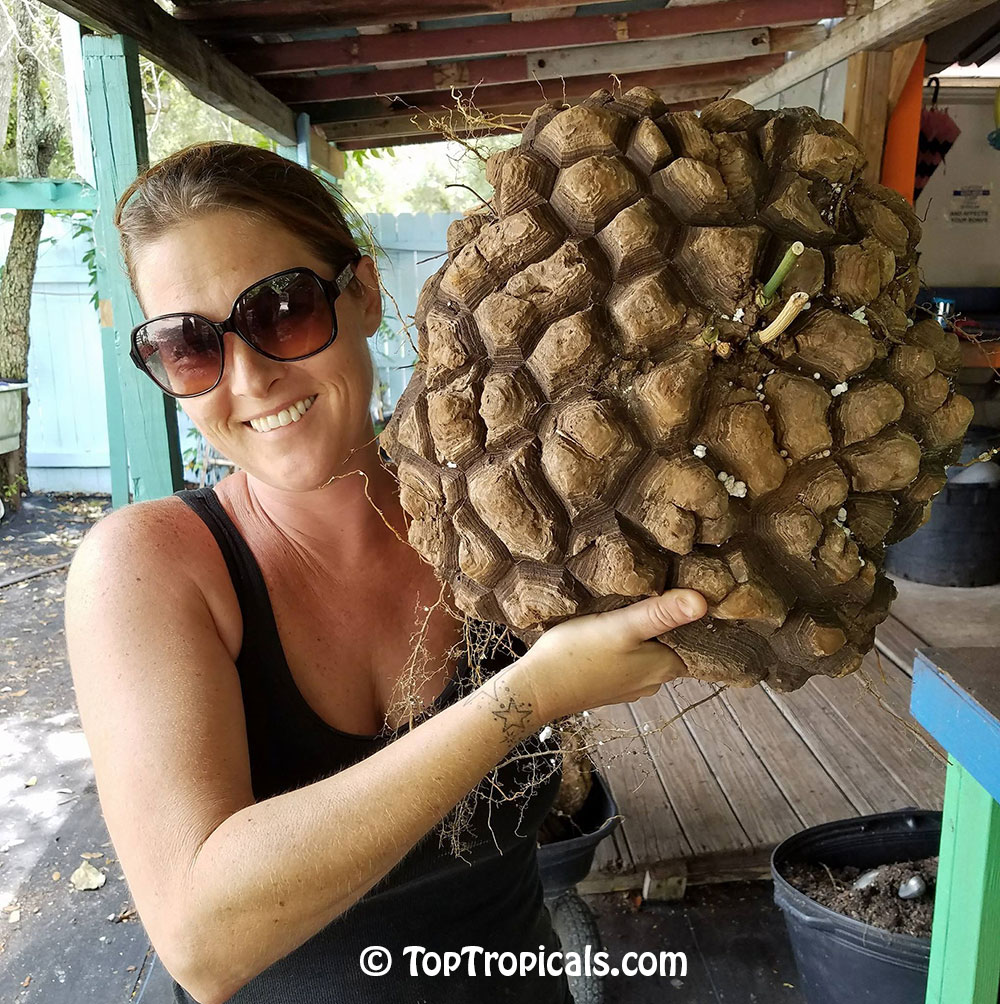
Elephant Foot, Turtle Shell - back in stock!
Dioscorea
elephantipes.
Dioscorea is a curious plant
with tuber above ground level covered with layers of corky
bark, resembling a caudex. It is a slow growing, very
unusual succulent. Tuber contains saponins, originally
cooked and eaten as a famine food by the Hottentots.
Caudex that grows up to 6' in nature, resembling an
elephant's foot and looks as if it is segmented into
geometric patterns (smaller plants look like tortoises)
and looks dead but is actually a living tuber. A plant
with 18"caudex can be almost 100 years old! The plant
grows into a vine with attractive heart-shaped leaves and
small yellow flowers. Culture is relatively easy. The
vines may die back and regrow several times a year,
depending on the particular plant and your region. The
plant doesn't send down deep roots, so plant in a shallow
pot about 1" larger than the diameter than the caudex. Potting soil should be very
porous/loose so that there is easy drainage. Water
well around the edges. Keep in a warm area and wait for
the first shoots of the vine to appear. Water regularly
from that point on. The plant should not be kept damp as
with other tropical plants. Allow it to dry before
watering again. Many books will say that they are winter
growers, because they are native to the southern
hemisphere. In fact, they grow in all seasons! Let the
plant be your guide. You cannot force them to grow, and
over watering will simply cause them to rot.
Elephant Foot is a collectors item, but remarkably easy to
grow. It will be with you for years with no effort. It is
a wonderful conversation piece! See more info about Dioscorea
elephantipes.
We have limited stock, while supply lasts, hurry up!
*** 4-6"caudex *** 6-8" caudex *** 10-12"caudex *** Seeds. Don't forget special TopTropicals Adenium Soilless Mix
Date: 13 May 2022
New Video:
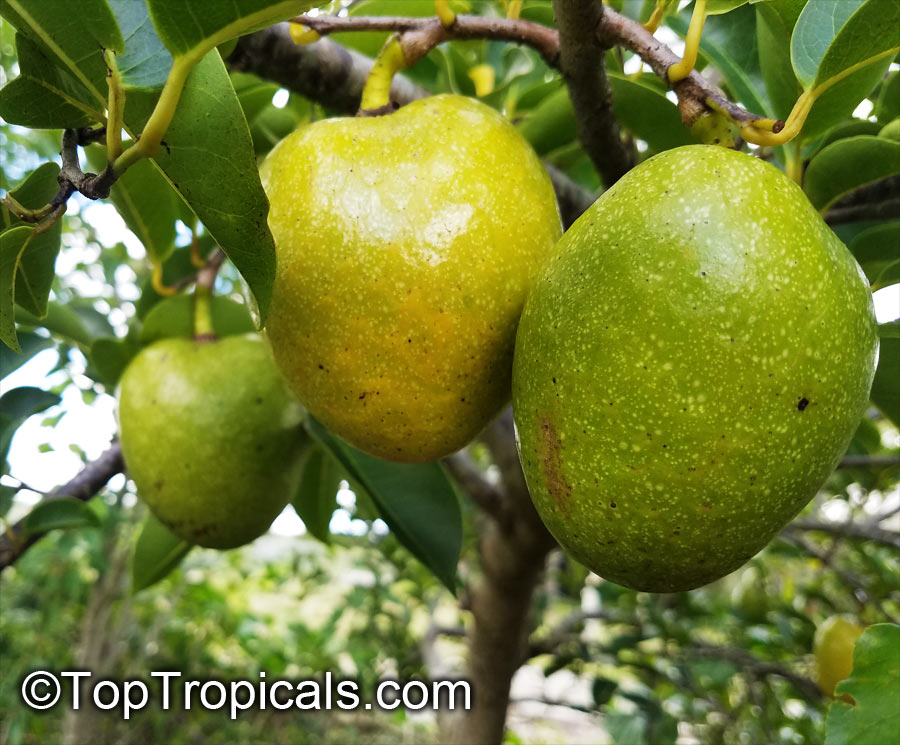
Golden Sugar Apple - Pineapple Annona
In this video we talk about a rare hybrid of Annona - Golden Sugar
Apple. This rare Annona is a species originally brought to us from Costa Rica. We
believe it to be a natural hybrid between A. muricata and A. glabra...
Fast growing, it forms a nice bushy specimen. It has a large, up to 1 lb
fruit, green when unripe, turning dark yellow to orange on ripening. The pulp
is golden to orange when ripe, with a strong Pineapple scent, and resembling
Jackfruit in texture. Flavor is like the custard apple but with pineapple,
papaya, apricot and melon overtones. Note that some people dislike the taste,
others find it good...
The tree tolerates flooding. It is also cold hardy! The plant would be very
interesting for rare fruit collectors as it offers a large, exotic fruit of
unusual color and taste, and appears to be much more hardy and water tolerant
than similar looking but sensitive A. muricata, A. montana and Rollinia.
Subscribe to our Channel:
Stay updated with TopTropicals Videos by subscribing to our channel at YouTube.com/TopTropicals and get our latest video news of what is fruiting and blooming!
Date: 12 Jul 2022
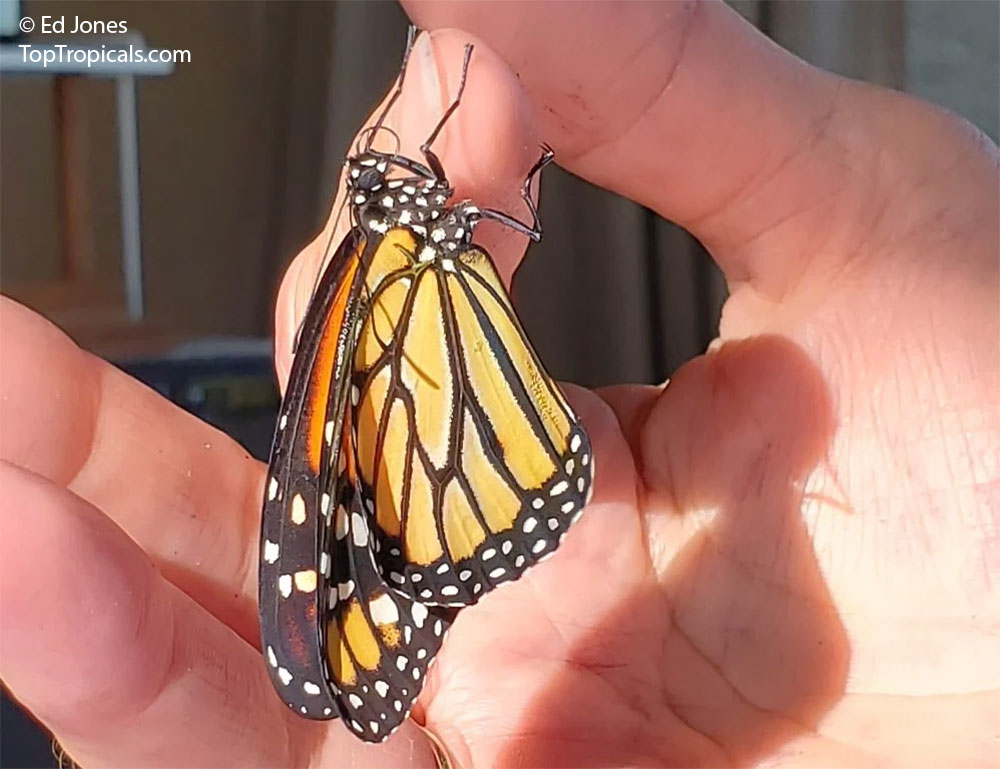
The Milkweed and the Monarch, how to raise your own
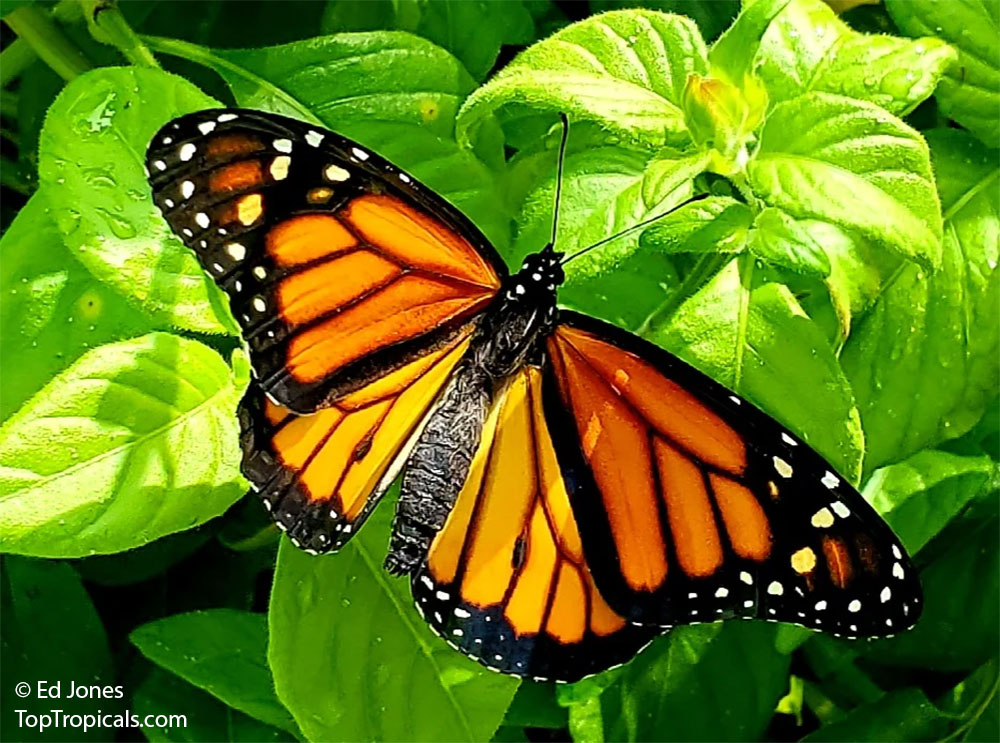
by Ed Jones, the Booster Guy
...How to attract butterflies in your garden? What plants do butterflies
love? How to grow those plants when butterfly larvae keep eating them?...
Many gardeners ask these questions and butterfly attracting plants always
have been very popular. But did you know that you could actually turn your
garden into a little butterfly farm?...
Find out from Ed and Juvonda's butterfly mini-farm experience!
CONTINUE READING >