Garden Blog - Top Tropicals

Date: 26 Jan 2026

Why Turmeric was named the 2026 Herb of the Year
Turmeric - Curcuma

Turmeric - Curcuma

🌷 Why Turmeric was named the 2026 Herb of the Year

  • 🌷 Turmeric was named the 2026 Herb of the Year by the International Herb Association, and it is easy to see why gardeners are paying attention. This tropical plant from the ginger family is best known for its bright orange underground rhizomes, used for centuries as a spice, natural dye, and traditional remedy.
  • 🌷Native to India, Turmeric (Curcuma longa) is closely related to Ginger and Cardamom. Its rhizomes are a staple in curry and widely used in Asian, African, and Caribbean cuisines. In recent years, turmeric has also gained attention for potential anti-inflammatory properties.
  • 🌷 Herb, spice or flower?


  • • Botanically, turmeric is a spice, since it comes from the plant’s rhizomes rather than its leaves. In the kitchen, however, it often functions like an herb. Fresh turmeric can replace powdered turmeric in most recipes and delivers brighter flavor and color.
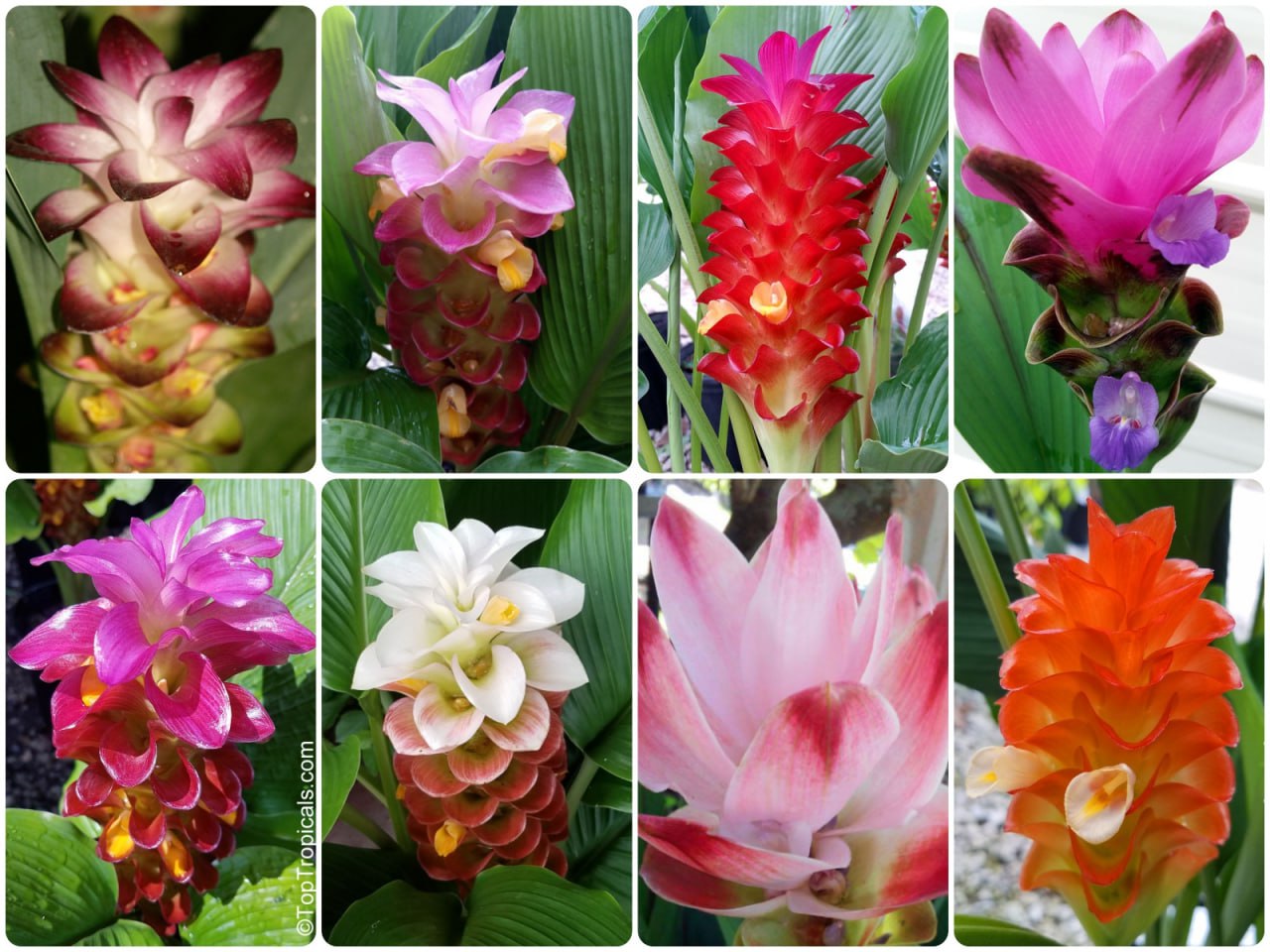
  • • Beyond edible Turmeric, there are many Curcuma hybrids grown purely for ornament. These selections produce striking, long-lasting flower spikes in shades of pink, white, orange, red, and purple, rising above lush tropical foliage. Ornamental curcumas are popular as patio plants and indoor accents, adding dramatic color and texture even where they are grown strictly in containers.


🌷 Growing turmeric anywhere - even in cool climates


Although Turmeric is a tropical perennial, it grows very well in containers, making it suitable for gardeners everywhere. When grown in pots, turmeric is treated as a warm-season plant that can be moved indoors as temperatures cool.
  • 🌷 How to grow Turmeric


    Turmeric is a compact, but bold plant, reaching 3-4 feet tall and wide, so it needs a roomy container. It prefers:

  • • Rich, well-drained soil
  • • Slightly acidic conditions (around pH 6–6.5)
  • • Consistent moisture
  • • Warm temperatures and bright, indirect light

The plant produces flowers that do not set seed, so turmeric is grown entirely from rhizomes.

🌷 Harvesting and using Turmeric


As the season ends, turmeric naturally goes dormant and the leaves yellow and dry. This signals harvest time. Dig the rhizomes, clean them, and dry them in a cool, shaded place.

Rhizomes can be:
  • • Boiled, dried, and ground into powder
  • • Frozen whole and grated as needed
  • • Pickled for long-term storage

Some healthy rhizomes can also be saved and replanted the following season, making turmeric both productive and renewable.

Compact, bold, and useful, turmeric proves that tropical plants can thrive well beyond the tropics - especially when grown in pots.

🛒 Plant Curcuma for both flowers, spice and herb

📚 Learn more :

Plant Facts

Boesenbergia rotunda, Curcuma rotunda
Chinese Keys, Fingerroot, Lesser Galangal, Chinese Ginger
USDA Zone: 9-11
Small plant 2-5 ftSemi-shadeModerate waterRegular waterWhite, off-white flowersPink flowersEdible plantSpice or herb plantEthnomedical plant.
Plants marked as ethnomedical and/or described as medicinal, are not offered as medicine but rather as ornamentals or plant collectibles.
Ethnomedical statements / products have not been evaluated by the FDA and are not intended to diagnose, treat, cure, or prevent any disease. We urge all customers to consult a physician before using any supplements, herbals or medicines advertised here or elsewhere.
  • Turmeric (Curcuma) in Plant Encyclopedia
  • Curcuma - the tropical tulip with a secret spice twist
  • Curcuma: one plant, two powers - color and spice!
  • How Curcuma Turmeric keeps blood pressure in balance.
  • Turmeric Curcuma: Grow Your Own Brain Boosters
  • The most interesting edible gingers?

  • #Food_Forest #Container_Garden #Remedies #Discover

    🟢 Join 👉 TopTropicals

    Date: 25 Jan 2026

    Collecting clerodendrums: big color, little effort

    Clerodendrum collage

    Clerodendrum collage

    🎨 Collecting clerodendrums: big color, little effort

    • 🎨 Collector hook


      If you love plants that look rare, unusual, and a little dramatic - but do not want high-maintenance divas - Clerodendrums belong in your collection.
      Clerodendrums are a surprisingly diverse group of plants, ranging from flowering vines to shrubs and even small trees. What they all share is bold, colorful blooms and an easygoing nature that makes them far less fussy than they appear. This combination of exotic looks and forgiving care is exactly why collectors gravitate toward them.
      Many clerodendrums bloom repeatedly through the year in warm climates, and several tolerate lower light better than most flowering plants. That makes them flexible - happy in the garden, in containers, on patios, or even indoors near a bright window. Their flowers come in striking combinations of red, white, blue, pink, and purple, often with unusual shapes that stop people mid-walk.
    • 🎨 Why clerodendrums earn collector status


    • ✦ Uncommon, eye-catching flowers
    • ✦ Long or repeat bloom cycles in many varieties
    • ✦ Vines, shrubs, and small trees in one genus
    • ✦ Excellent performance in containers
    • ✦ More tolerant of lower light than expected


    🎨 Clerodendrum care made simple


    Give clerodendrums bright filtered light to partial sun, regular watering with good drainage, and light feeding during active growth. A little pruning keeps them tidy and encourages fresh blooms. That is it. No complicated routines, no constant fixing.

    For collectors who want maximum visual payoff without constant effort, clerodendrums deliver exactly what the title promises - big color, very little work.

    🛒 Start your Clerodendrum collection

    📚 Learn more:
    #Butterfly_Plants #Shade_Garden #How_to #Hedges_with_benefits #Container_Garden

    Plant Facts

    Clerodendrum bungei
    Cashmere (Cashmir) bouquet, Glory Bower, Clerodendron
    USDA Zone: 9-11
    Large shrub 5-10 ft tallSemi-shadeFull sunRegular waterRed, crimson, vinous flowersPink flowersPlant attracts butterflies, hummingbirdsDeciduous plantFragrant plantSubtropical plant. Mature plant cold hardy at least to 30s F for a short time
    🟢 Join 👉 TopTropicals

    Date: 6 Feb 2026

    💕How would you like to give a Valentine plant gift?

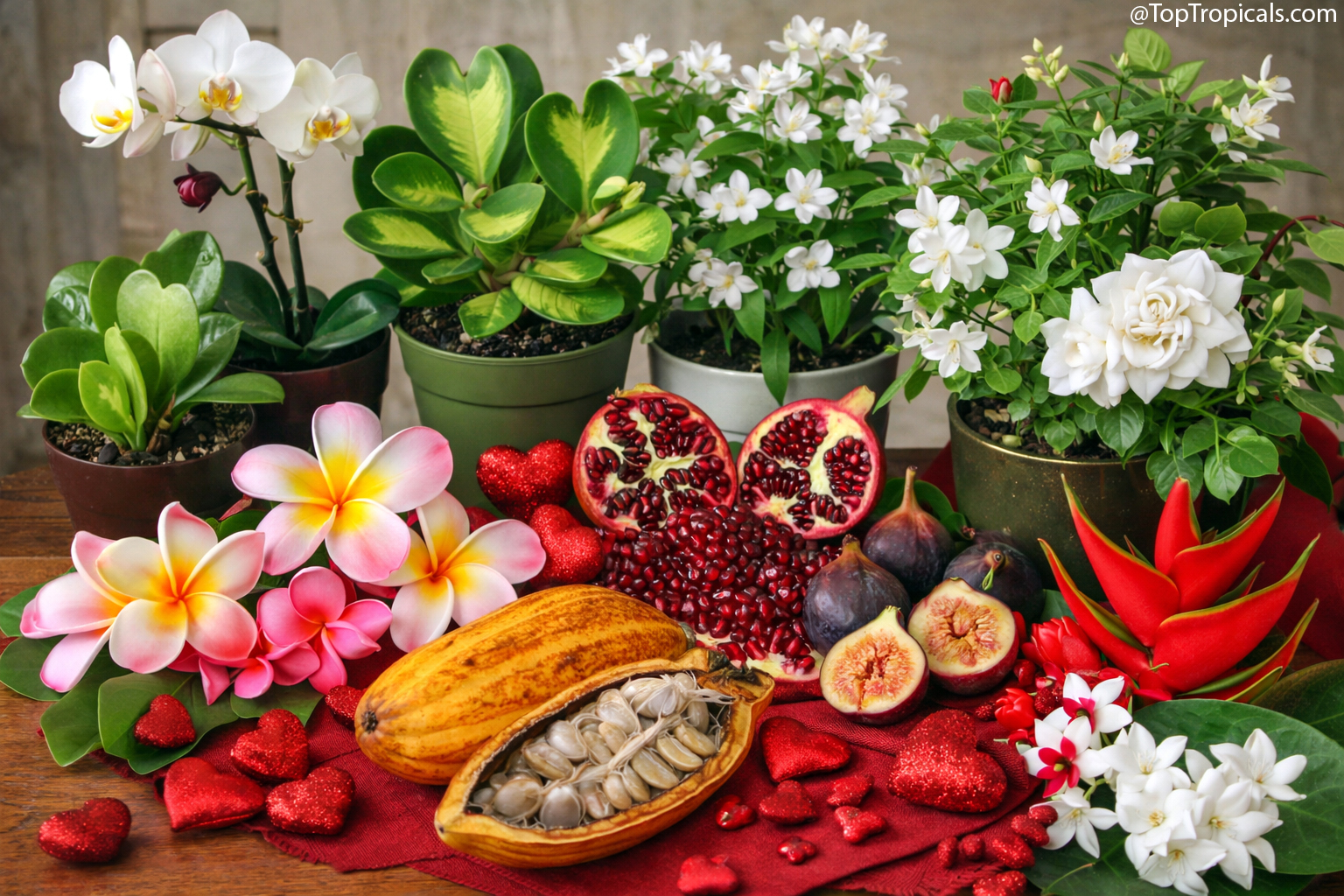
    Valentines  themed  arrangement  of  tropical  plants  and  fruits  including 
 heart  shaped  hoya,  orchids,  gardenia,  jasmine,  cacao  pod,  figs,  and 
 pomegranate  with  red  heart 
 decorations

    Choose the plant

    If you already know what feels right, choose the plant now. Sweetheart Hoya is a favorite for a reason, and there are other Valentine plants to explore if you want options.

    A good choice when you feel confident, love plants, or are gifting something meant to live indoors.

    Let your Valentine choose

    If timing, weather, or choice feels uncertain, a Gift Card keeps the moment simple. Your Valentine can choose the perfect plant when the time is right.

    Especially helpful for gardeners up north, or when you want the gift to unfold later.

    About shipping and timing

    We ship live plants with care and pay close attention to weather along the way. If conditions are not right, we may hold a shipment briefly to keep plants safe.

    If timing or weather makes you hesitate, a Gift Card is an easy way to give a Valentine gift now and choose the plant later, when conditions are perfect.

    Valentine Day Gift Card Bonus
    To make Valentines Day a little sweeter, we are offering a special gift card bonus for a limited time. When you purchase a gift card, we add 15% extra value. Just add Valentine greeting in gift card message field. For example, a $100 gift card becomes $115 to spend.
    Offer valid through 02/15/2026.
    The bonus value is not valid with other promotions or discounts. Gift cards cannot be used to purchase other gift cards. Bonus value is added at the time of purchase.

    🎁 Buy Gift Card

    More Valentines Gift Plants

    • Valentines plants from around the world that symbolize love, connection, and appreciation. 👉Learn
    • Top nine plants of love, desire, and the senses: aphrodisiacs and sensory connections. 👉Learn
    • Four popular plants of friendship, appreciation, and shared connection. 👉Learn
    • Eight favorite plants of romance, affection, and emotional connection. 👉Learn
    ✍️ More About Velentines Gift Plants from Blog

    🎁 Shop Gift Plants

    Date: 14 Feb 2026

    🍭 From Vine to Bean: A Practical Guide

    Vanilla  planifolia  vine  climbing  a  support,  close-up  of  vanilla  flower,
    and  cured  vanilla  beans

    Vanilla planifolia Vine, Flower, and Cured Vanilla Beans

    How to Grow Vanilla: quick how-to

    Vanilla is not complicated, but it does have preferences. Start with a pot and regular, well-draining mix. It does not need anything exotic. Give it:

    • Bright, indirect light
    • Warm temperatures
    • Good humidity
    • Air movement

    Most importantly, give it something solid to climb. A wooden trellis, a log, or a burlap-covered board works well. The surface should be porous so the aerial roots can grip.

    As it grows, guide the vine gently. You can prune it to control size. Vanilla is slow to mature. That is normal.

    The Bloom Secret

    Vanilla does not bloom just because it looks healthy. It blooms when it feels secure.

    This is a climbing orchid. It must attach firmly to a solid, porous support such as a wood log, trellis, or burlap-covered board. When the aerial roots grip and the plant reaches maturity, flowering becomes possible.

    Once the flowers appear, they usually need to be hand pollinated to produce pods. Each flower stays open for only a short time, so timing matters.

    How to pollinate vanilla: In this video, we show you exactly how to pollinate vanilla step by step

    ❓Vanilla care: quick FAQ

    • Does Vanilla planifolia really produce vanilla beans?
      Yes. Vanilla planifolia is the commercial source of vanilla. After flowering, it can form long green pods (vanilla beans). The aroma develops later during curing.
    • What is the secret to getting vanilla to bloom?
      Let it climb. Vanilla is a climbing orchid and usually will not bloom until its aerial roots attach firmly to a solid, porous support like a wood log, trellis, or burlap-covered board.
    • Do I need to pollinate vanilla flowers?
      Yes. In most home growing conditions, vanilla flowers must be hand pollinated to produce pods. Each flower is open for only a short time, so timing matters.
    • Can I grow vanilla indoors?
      Yes, if you can provide bright, indirect light, warmth, humidity, and a support to climb. A sunny room with filtered light and a trellis or log can work well.
    • What should I use for support?
      Use a sturdy trellis, a wood log, or a burlap-covered board. The key is a porous surface that aerial roots can grip. Avoid chemically treated wood. Check out this very unusual way to grow Vanilla Orchid over a wall.
    • What potting mix should I use for Vanilla plant?
      Start in a pot with a regular, well-draining potting mix such as Sunshine Abundance. As the plant matures, it relies more on its support and aerial roots than the soil.
    • What fertilizer should I use?
      Sunshine Boosters Orchidasm is formulated specifically for orchids and will work perfecty for Vanilla orchid as well.
    • How big will it get?
      As big as you let it. Train it and prune it. Vanilla grows according to the structure and space you provide.
    • How long until it flowers?
      Typically a few years. Vanilla is a long-term project, but it is very rewarding once established.

    For Collectors and Enthusiasts:

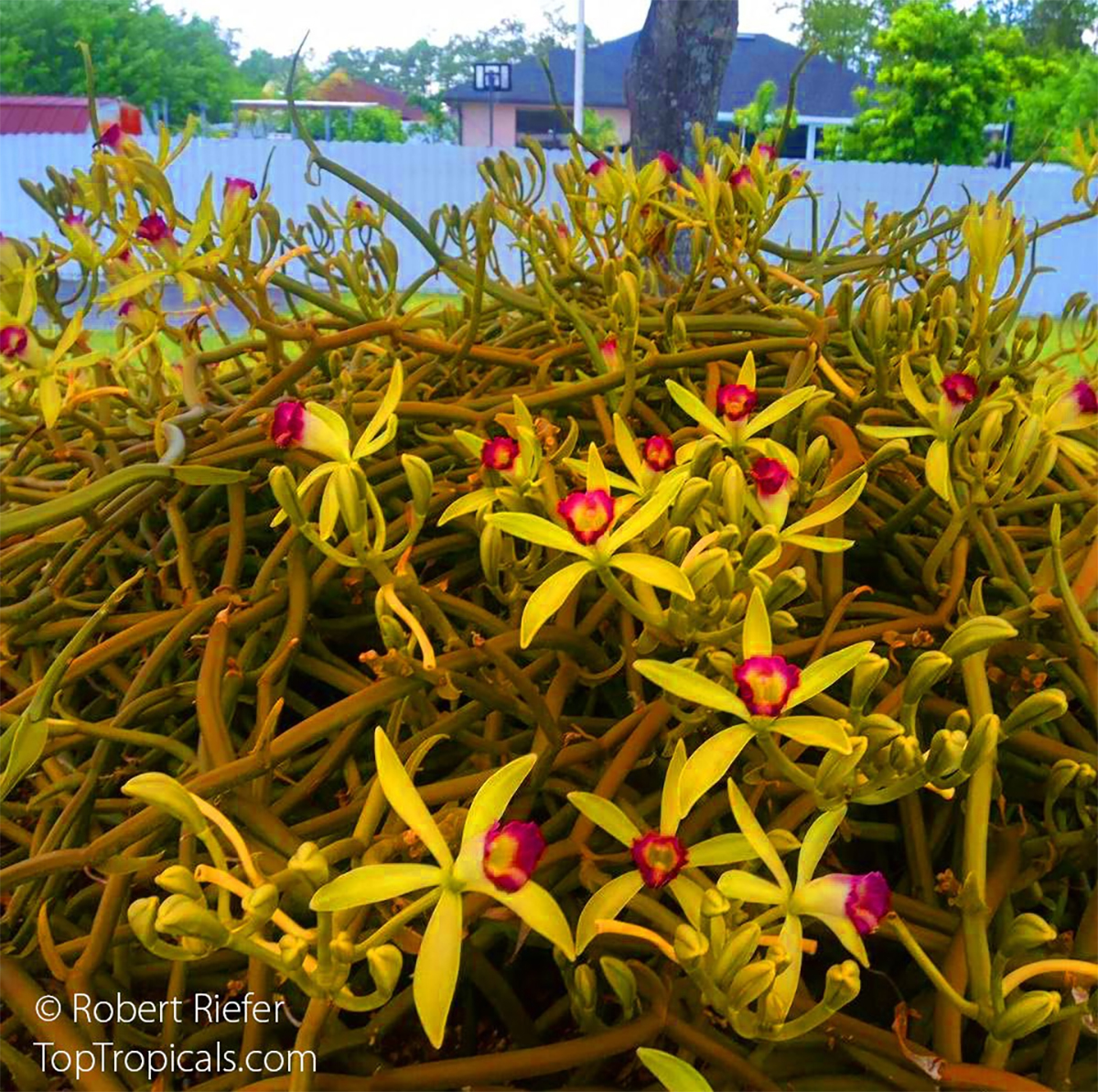
    Vanilla  dilloniana  vine  covered  in  yellow-green  flowers  with  red 
 centers  growing  outdoors  in  100  gal  pot

    Vanilla dilloniana in Bloom - Rare Florida Native Orchid

    We also offer Vanilla dilloniana, a rare Florida native species with distinctive flowers.

    One remarkable specimen of this species, grown by our friend Robert Riefer, became so vigorous over many years that it outgrew a 100 gallon container and was eventually moved into a 250 gallon pool on wheels.

    The plants we offer are propagated from that very specimen:

    That kind of growth reflects deliberate cultivation and ideal conditions - not something that happens unintentionally.

    Vanilla grows according to the space and structure you provide.

    For gardeners focused on producing real vanilla beans for the kitchen, Vanilla planifolia remains the right place to start.

    ✍️ More About Vanilla Orchids from Blog

    🎁 Shop Vanilla Orchids

    Date: 18 Feb 2026

    🔥 Blazing into the 2026 with hot jasmines

    Sunshine  the  orange  tabby  wearing  a  red,  white,  and  blue  wristband  sits
    laughing  on  a  jasmine-covered  horse  topiary  during  the  2026  Year  of  the 
 Horse,  while  Smokey  the  tuxedo  cat  trims  the  greenery  at 
 sunset.
    Sunshine: I'm blazing into the 2026 Year of the Horse! Call me Mister Fahrenheit. Don't stop me now! 'Cause I'm having a good time — I'm a shooting star, leaping through the sky like a tiger, defying the laws of gravity!
    Smokey: It's jasmine, Tiger. A shrub. Not Wembley. Calm down.

    💮 2026 Year of the Horse - and the Plant I Trust Most

    By Tatiana Anderson, Horticulture Expert at Top Tropicals

    Every new year carries its own energy.

    2026 is the Year of the Horse - a year of movement, fire, momentum, and bold decisions. It is not a quiet year. It pushes us forward.

    When fellow gardeners ask me what to grow in a year like this, my answer is simple:
    Grow something that balances strength with grace.

    For me, that plant is Jasmine Sambac.

    In many cultures, Sambac represents devotion, purity, and deep affection. In the Philippines it is the national flower - Sampaguita - woven into garlands for weddings and sacred ceremonies. In Hawaii, it becomes leis - a symbol of welcome and connection - Pikake. In India, it perfumes temples and homes.

    This is not just a fragrant shrub.
    It is a plant tied to love, loyalty, and continuity.

    The Horse runs forward.
    Jasmine anchors the heart.

    In a fiery year like 2026, I believe we need both.

    And that is why I always return to Jasminum sambac.

    🛒 Explore Jasmine varieties

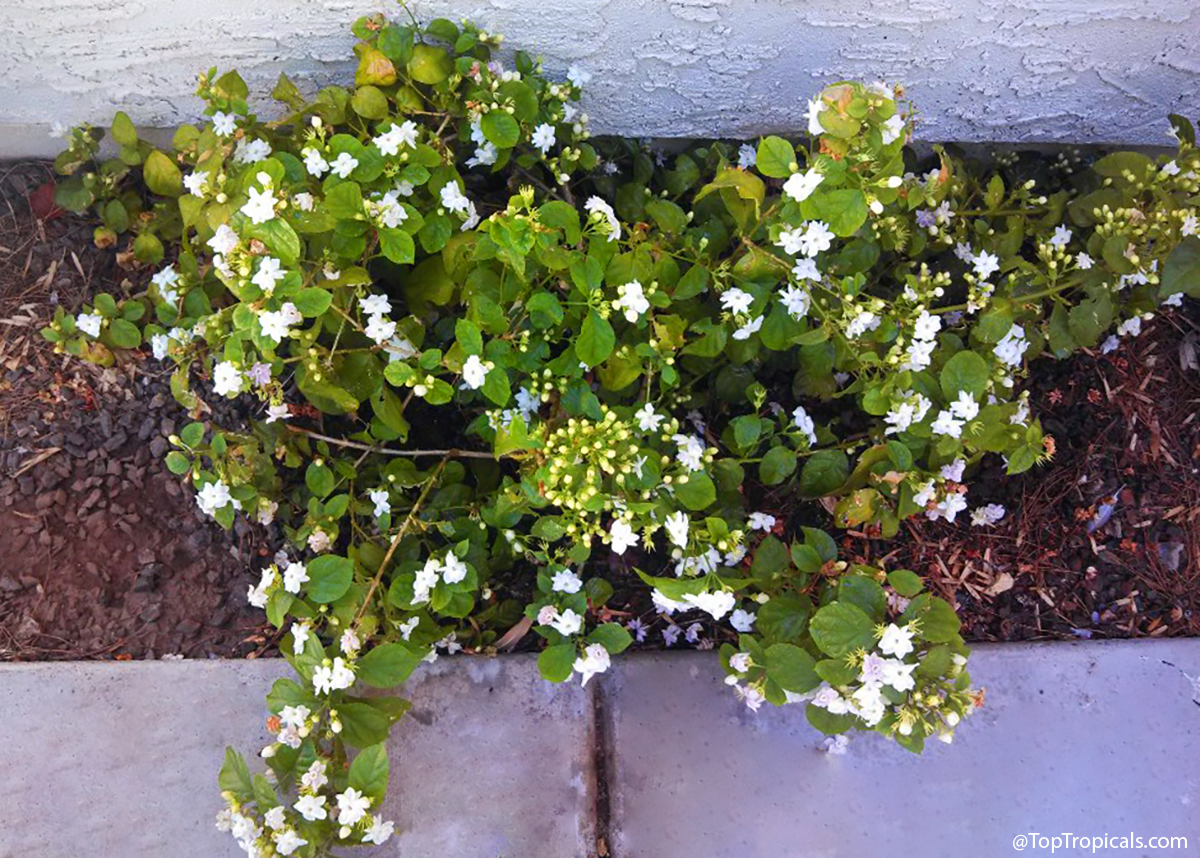
    Jasmine  Sambac  Maid  of  Orleans  plant  growing  along  a  wall  with  clusters
    of  white  fragrant  flowers  in  bloom.

    Jasmine Sambac thrives in hot, sunny locations

    ✅ Why Jasmine Sambac?

    Over the years I have grown thousands of plants, but very few have the staying power of Jasmine Sambac.

    It is not just fragrant. It is intensely, unmistakably fragrant. One open flower can perfume an entire patio. In the evening, the scent becomes deeper and richer.

    But what makes Sambac truly special is its adaptability.

    It can grow as a compact patio shrub, a flowering hedge, or a climbing vine. It performs beautifully in containers. It tolerates both full sun and partial shade. The more light you give it, the more flowers it rewards you with.

    And unlike many tropicals, Sambac does not bloom just once. With proper care, it flowers in cycles throughout the warm season.

    For gardeners, that combination is rare: beauty, perfume, flexibility, and repeat bloom.

    That is why it has remained one of the most wanted fragrant plants in cultivation.

    ✍️ More About Jasmines from Blog

    🛒 Explore Jasmine plants