Garden Blog - Top Tropicals

Date: 6 Dec 2025

See how Golden Rain turns pink overnight!

Golden Rain tree, Koelreuteria paniculata

🌸 See how Golden Rain turns pink overnight!


🌸 Golden Rain tree, Koelreuteria paniculata, is one of those plants you can drive past a hundred times without realizing you’re looking at a seasonal firework show. In early summer it loads itself with long, bright yellow flower clusters that drip from every branch. Then, just when you think the show is over, the tree shifts into its second act: paper-thin pink seed lanterns that cover the canopy through fall.

🌸 It’s surprisingly tough for such a delicate-looking tree. Cold hardy, drought tolerant, and fast growing, it fits easily into Florida and other warm climates where people want a shade tree that also puts on a real spectacle. The foliage stays elegant and airy, and the lantern pods look good long after the flowers fade.

🌸 If you’re into trees that change looks through the seasons and don’t need pampering, Golden Rain tree is one of the most rewarding additions you can plant.

🛒 Plant impressive Golden Rain tree - hardy and beautiful

📚 Learn more:

Golden Rain Tree Plant Facts

Botanical name: Koelreuteria paniculata
Also known as: Golden Rain Tree, Varnish tree, Chinese Flame
USDA Zone: 6 - 11
Highligths Small tree 10-20 ftSemi-shadeFull sunWatering: Moderate. Water when top soil feels dryYellow, orange flowersPlant attracts butterflies, hummingbirdsEthnomedical plant.
Plants marked as ethnomedical and/or described as medicinal, are not offered as medicine but rather as ornamentals or plant collectibles.
Ethnomedical statements / products have not been evaluated by the FDA and are not intended to diagnose, treat, cure, or prevent any disease. We urge all customers to consult a physician before using any supplements, herbals or medicines advertised here or elsewhere.Subtropical plant. Mature plant cold hardy at least to 30s F for a short timeSeaside, salt tolerant plant
Get personalized tips for your region

More about Golden Rain tree - Koelreuteria paniculata - from Plant Encyclopedia
Time to plant the Golden Rain Tree
#Trees

🟢 Join 👉 TopTropicals

Date: 28 Dec 2025

🎉 2026 Gardening Resolution That Actually Works

According to our experts: Smokey and Sunshine. When we say experts, we do not mean consultants or trend writers. We mean two real gardeners. Smokey watches patterns. Sunshine notices when people rush. Together, they explain what actually works.

Smokey  the  tuxedo  cat  writes  gardening  plans  for  2026  at  a  table  while 
 Sunshine  the  ginger  cat  rides  a  hobby  horse  holding  coffee,  with  donuts, 
 plants,  and  a  fireplace  in  a  winter 
 room.
Sunshine: Smokey, thank you for the Christmas present. I am riding this hobby horse straight into the Year of the Horse!
Smokey: I am making the plans for 2026. Planning makes gardening successful.
Sunshine: Coffee and donuts help too, so please include them in your plan.

Smokey: Hello gardeners. 2026 is the Year of the Horse.

Sunshine: Horses do not garden.

Smokey: Please do not interrupt me. No, they do not. That is just the calendar. What matters is what gardeners do at the start of every new year. They often rush and repeat the same mistakes.

Sunshine: The biggest one is rushing the garden before morning coffee.

Smokey: Correct. Rushing looks like effort, but it is usually just impatience. Gardens punish impatience very reliably.

Most early-season problems come from doing things too soon:
- watering before roots are active
- fertilizing before growth begins
- planting before conditions settle
- poking plants daily to check how the roots are growing

Sunshine: If you are poking the roots, the plant was fine until you started poking it.

Smokey: Good gardening is not constant action. It is knowing when to act and when to stop interfering.
- Plant when the timing is right.
- Let roots work quietly.
- Leave resting plants alone.

Sunshine: Coffee first. Donuts optional, but highly recommended.

Smokey: One last thing, while you are not rushing.

Our gift cards are still on promotion. They do not need planting, watering, or timing decisions today.

A gift card is a symbol of patience. Buy it now. Use it when the moment is right.

Smokey and Sunshine:
Our resolution for 2026 is simple: stop rushing the garden. Wishing you a calm, steady, coffee-fueled 2026 garden 🐾🌿

Date: 4 Dec 2025

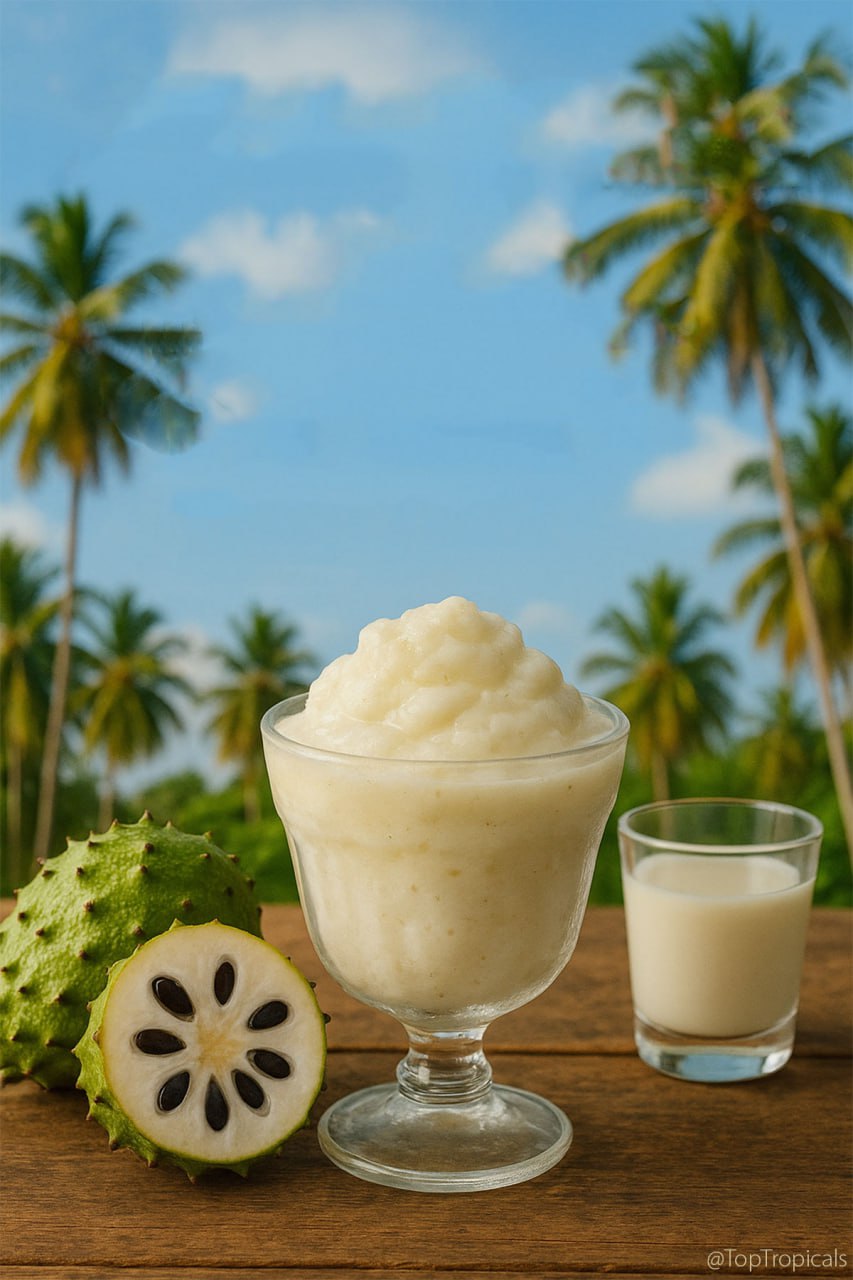
Soursop freezer whip: quick-n-fun exotic recipes

Soursop freezer whip

Soursop freezer whip

Guanabana, Soursop (Annona muricata)

Guanabana, Soursop (Annona muricata)

🍴 Soursop Freezer Whip

🔵Perfect for a hot day, this whip is instantly refreshing and cooling, like a little tropical breeze in a bowl.
🔵And on a cold winter day? It still tastes amazing - like a quick escape to the tropics!

Ingredients

  • 1 cup frozen soursop (guanabana) pulp
  • 2 to 3 tablespoons coconut milk

Instructions

  1. Place frozen soursop pulp into a blender.
  2. Add coconut milk and blend until smooth and thick.
  3. Transfer to a bowl and freeze for 15 minutes.
  4. Stir well to create a soft, slushy whip and serve immediately.

🛒 Grow your own delicious Guanabana Soursop

📚 Learn more:

Soursop Plant Facts

Botanical name: Annona muricata
Also known as: Soursop, Guanabana, Graviola, Korosol, Corosol
USDA Zone: 10 - 11
Highligths Large tree taller than 20 ftSmall tree 10-20 ftFull sunWatering: Moderate. Water when top soil feels dryWatering: Regular. Let topsoil dry slightlyEdible plant
Get personalized tips for your region

Annona muricata in Plant Encyclopedia
Guanabana - Soursop fruiting in apartment
The most delicious Annona fruit: Guanabana

#Food_Forest #Recipes

🟢 Join 👉 TopTropicals

Date: 28 Dec 2025

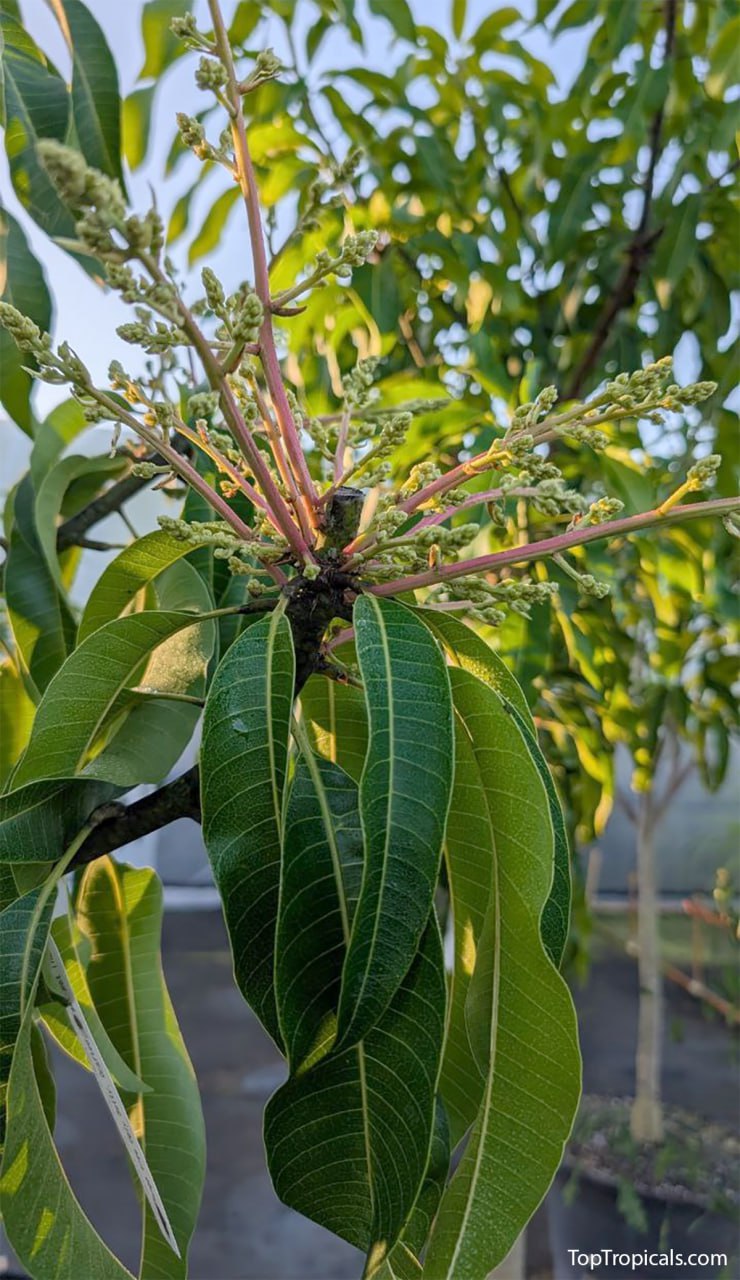
Mango tree tipping - Quick Field Guide: why it improves flowering and production

Mango tree tipping - Quick Field Guide

Mango tree tipping - Quick Field Guide

🥭 Mango tree tipping - Quick Field Guide: why it improves flowering and production


📊 Mango Tree Tipping - Quick Field Guide


It is mid-winter. While early mango varieties like Nam Doc Mai are already flowering, late varieties still have a month or two before they start. Trees such as Keitt, Honey Kiss, Kent, Venus, Beverly, Palmer, and Neelam bloom later in the season. In warm climates without expected cold snaps, this is still a good window for tipping before flowering begins. Tipping encourages more branching, more flower tips, and better fruit production. If cold weather is still possible, save this guide and tip after the risk of cold has passed - but always before the tree enters the flowering stage.

✔️ What tipping is


Tipping is the removal of the soft growing tip of a mango branch once it reaches about 20 inches long. This simple cut stops straight upward growth and forces the branch to split into multiple side shoots.

✔️ When to tip


· Young, actively growing trees
· After a flush hardens slightly (not brand-new soft growth)
· Warm weather when the tree is growing strongly
· Best during the training years, not heavy fruiting years

✔️ How to tip (step-by-step)


· Let a branch grow to about 20 inches
· Using clean pruners, remove 1-2 inches from the tip
· Cut just above a node (leaf joint)
· Do not cut into thick woody growth - this is a light heading cut

✔️ What happens next


· 2-4 new branches usually form below the cut
· The tree becomes shorter, wider, and stronger
· More branch tips = more flowering points
· Better light penetration inside the canopy

✔️ Why it improves flowering and production


· Mango flowers form at branch tips
· More branches = more tips
· A well-shaped tree puts energy into fruiting, not height
· Easier harvesting and long-term structure

❌ Common mistakes to avoid


· Letting branches get too long before tipping
· Tipping weak or stressed trees
· Over-tipping all at once (stagger cuts)
· Doing it right before cold weather
· Doing it too close to flowering

✍️ Simple rule to remember


→ grow 20 inches → tip → repeat
This builds a compact, productive mango tree from the start.

🛒 Explore mango trees

📚 Learn more:


Tipping mango trees
📱 Why tipping mango trees makes them fruiting machines (DIY Garden Tip)

#Food_Forest #Mango #How_to

🟢 Join 👉 TopTropicals

Date: 24 Oct 2016

Overwintering Adeniums outside of tropics

Q: We bought several adenium plants from you. We are moving to the Denver area of Colorado. How can we make sure the plants survive? Should we use a green house?

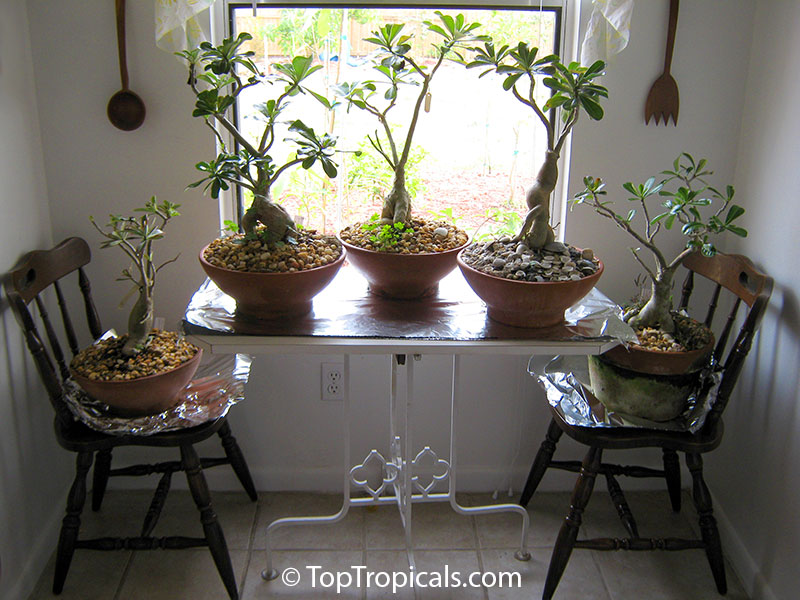
A: Adeniums are perfect container plants, and house plants. They can be easily grown outside of tropical climate. During winter, Adeniums drop leaves and go into dormancy which makes it easy to keep these plants in a dormant stage in a warm location of your house, or possibly even in well-lit spot of garage (with a window), with temperatures above 50-60F.
Here in South Florida, during time of cold, when chances of freeze are high, we move our own Adenium collection into lanai, with plastic sheet protection around lanai.

In colder climates, Adeniums can be kept indoors as house plants during winter. There are some requirements/tips for you:

  • Temperature. Move Adeniums indoors when temperature starts dropping below 45F.
  • SUNSHINE. Use SUNSHINE boosters to improve cold resistance of Adeniums, and essure healthy plant throughout winter. SUNSHINE-BC formula is specifically designed for plants with caudex, and bonsai.
  • Water. Reduce watering to minimum, especially when plants drop leaves - this means they went into dormancy. Once a week light watering is enough. Water very carefully during cooler months. When it is hot (85-100F), excessive water usually won't harm adeniums: it will be partially used by a plant, and partially will evaporate. Especially be careful with water when temperatures drop below 65F - then tropical plants simply stop growing process and go dormant. Once adeniums start losing leaves, this is a sign to reduce watering to once a week to once a month, and in very small quantity (couple tablespoons per pot).
  • Light. Bright light is not necessary, but do not keep them in dark either, even if all leaves dropped. Good light is necessary to maintain healthy stems and caudex. Keep in mind, the less light, the less watering too. Ideal spot is a windowsill, however if your space is limited and all windows occupied by other "leafy" plants, location close to window will be enough as long as watering is reduced, to avoid rot. We keep our big collection specimens on a roofed porch during winter, where level of light is very low. Last winter we haven't lost a single plant due to low light. They take shade pretty well considering minimum or no water. However bright light is always better - it creates healthier environment for a plant. We all know about space limitations for our large collections, especially in winter. So if you can afford a bright spot for adenium during winter - the plant will be lucky!
  • Soil. Use only well drained mix with much higher content of perlite than you would use for most tropical plants. For adeniums, we use mix with 30-40% of perlite in it, while regular mix has 10-15%. Adeniums like alkaline soil, unlike most of tropical plants (hard to say what else likes alkaline... Ficus for sure!). This means, regular mix with high content of peat moss may cause root rot. To increase alkalinity, you may add dolomite. Here in Florida where we have natural supply of shell rock handy, it is easy to add some shell to a potting mix (shell sand, rather than quartz sand). We always add a few large shells on top of a pots with a big specimen. Besides increasing soil pH (making it more alkaline), shells look very decorative.
  • Fertilizer. No fertilizer until Spring when plants start showing new growth and new leaves.
  • Move your Adeniums outside in Spring, when chances of freeze are zero. More sunlight and air circulation is beneficial for breaking the dormancy and providing plants with a quick growth start.