Date: 18 Aug 2023
Does Size Matter?
TopTropicals plants vs other mail order plants
Q: I purchased various plants via mail order (including a Coffee tree and some flowering vines) from companies *** and ***, but they did not survive, possibly due to their small size and the stress of shipping. Could you provide information about the size of your plants, their resilience to shipping stress and the time required for establishment?
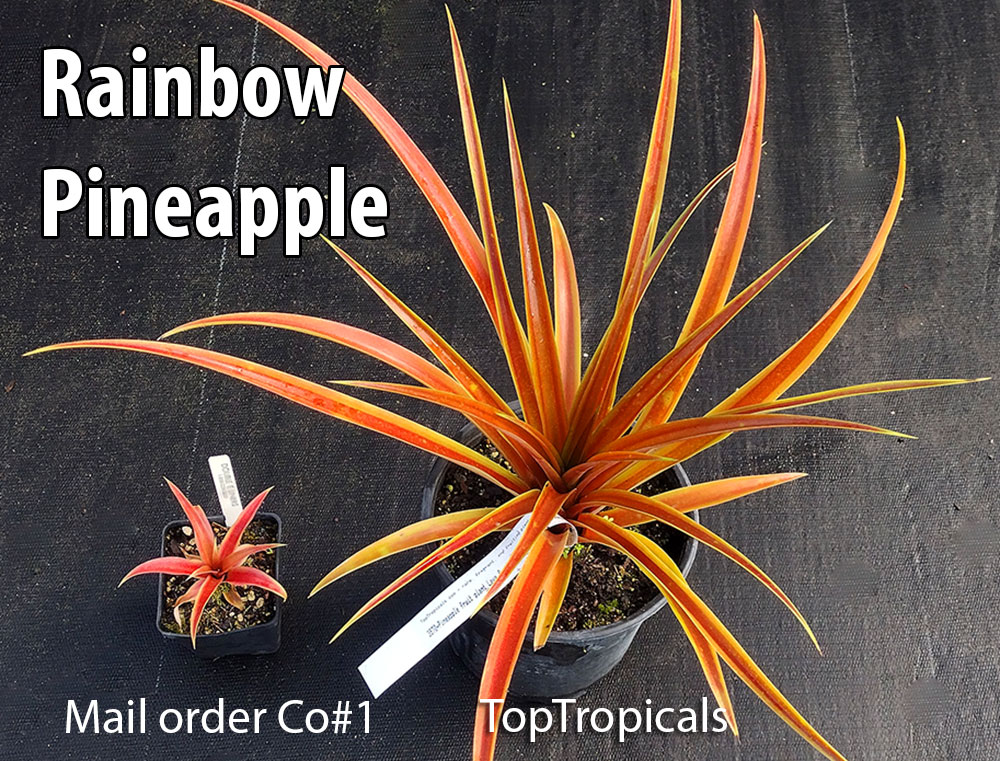
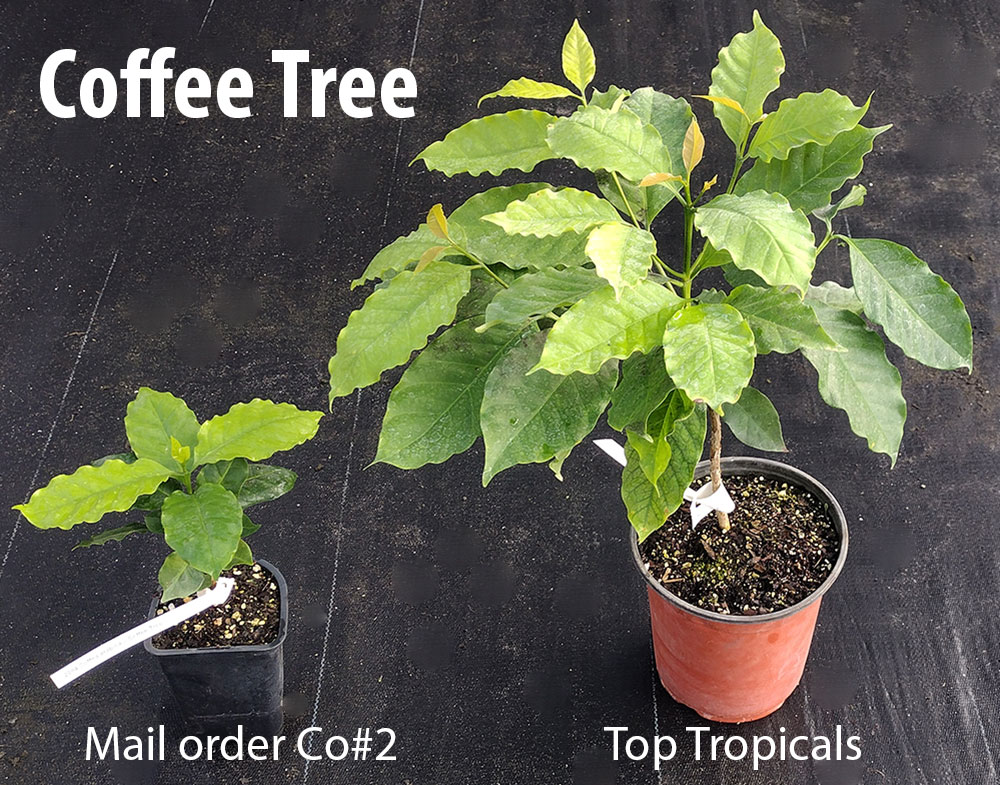
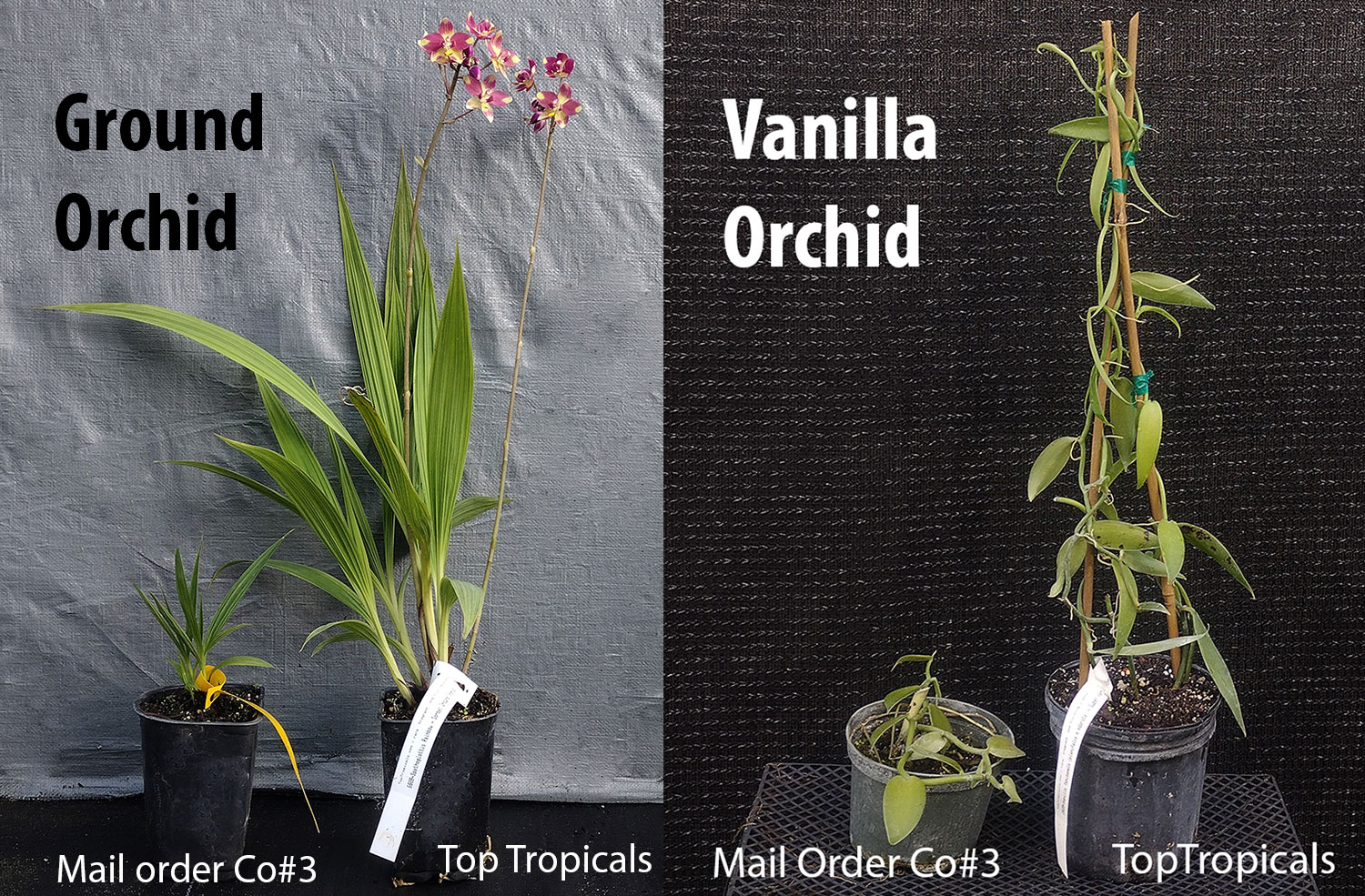
A: Plants, as living beings, may experience stress during a few days of travel in a dark box. However, the critical factor influencing their survival is the plant's size. Most of our plants are grown in pots ranging from 1 to 3 gallons, have established root systems and developed branches. Some even feature flowers and fruit, although these may drop during transit. We've included images comparing our 1 gallon size plants with those from other mail-order firms we previously obtained for our own collection.
Understanding that post-shipping plant establishment is a gradual process is crucial. Yet, most plants handle shipping well and commence new growth within days to a couple of weeks post-arrival. Here are some success pointers:
1) Opt for a container matching the root ball size, avoiding excessive
sizing until growth initiates.
2) Begin in a shaded area, progressively transitioning to brighter
spots.
3) Apply
Sunsine Epi spray to lessen stress and enhance vitality.
4) Initiate fertilization once the plant displays fresh growth.
For more information on how to establish mail order plants, simply download our Plant Care Guide.
Date: 22 Feb 2022
How to survive Winter in South Central Florida
A touching story
by Ed Jones, the Booster Guy
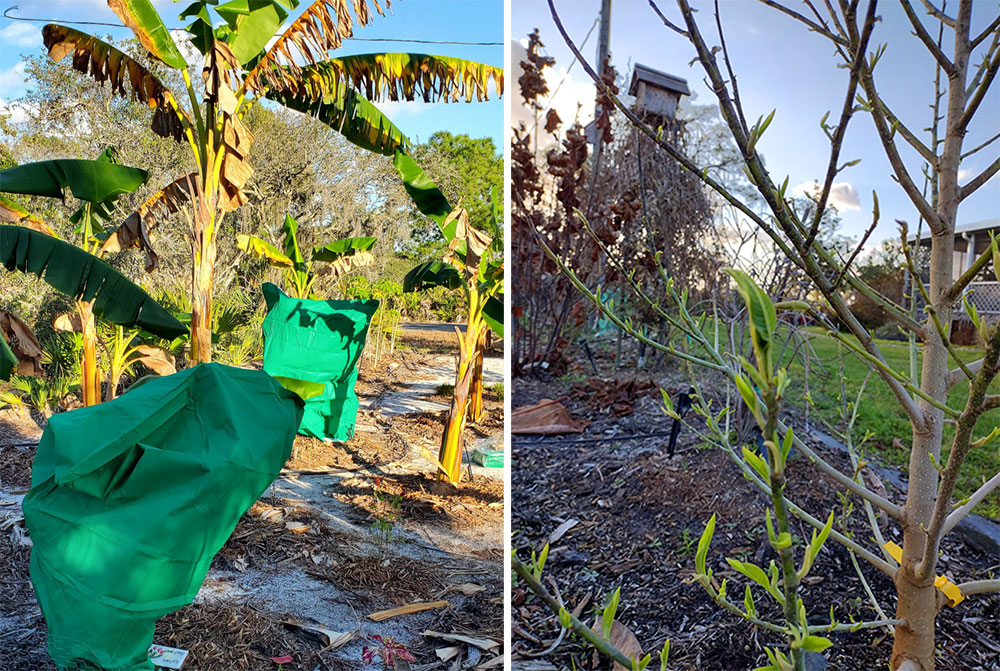
...As much of the country is still in the midst of winter, I believe the
worst has passed for us here in the South Central part of Florida...
...This Winter, almost all of zone 9b and some of zone 10a had frost and
many had a hard freeze...
...Now, many of us here in this part of the state enjoy growing subtropical
plants and trees. There are many that grow well here and most can handle a
frost or even a dip to the high 20s for a short time. Smaller and more
recently planted trees and bushes are most at risk...
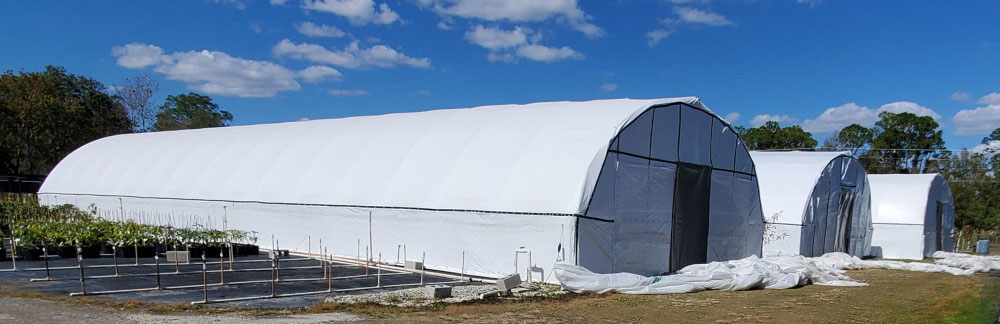
...At the Top Tropicals nursery here in Sebring, home to over 20,000
plants, we scrambled for several days to try to protect as many of our plants as
possible. We moved smaller plants into some of our hoop houses that had propane
heaters...
...After 2 weeks of moving plants in and out of protection, we were all
pretty worn out; happy that everything survived and hoping that we would not
have to do that again anytime soon. Slowly, things at the nursery are beginning
to resemble our old normal. Seeds are being planted, cuttings are continuing
to grow and grafting season will be upon us soon. We are all very happy for
that...
...What to do and not to do when the freeze is coming and you have mango,
avocado, and other tropical fruit trees and tender tropicals? Here is some
news from the Orchard and many more coming... check it out and stay with our
updates to learn more!

Date: 8 Jan 2026
Is winter killing your mango flowers? 33 winter-proof mid-season mango varieties in 90-sec tour
33 winter-proof mid-season mango varieties
❄️ Is winter killing your mango flowers? 33 winter-proof mid-season mango varieties in 90-sec tour
- 🥭 Mid-season mango varieties make up the heart of the mango harvest. They are not as early as the first winter bloomers and not as late as the extended-season types, but they fill out most of the season.
- 🥭 Mango trees are winter bloomers, but freezing temperatures can damage them, especially when the trees are still young.
- 🥭 Right now it is January, and many mid-season mango trees are in bloom or just starting to bloom. While a winter cold snap can damage flowers, mango trees are resilient and often re-bloom once warmer weather returns.
🥭 A list of winter-proof mid-season mango varieties in Top Tropicals garden - Winter 2026
Blooming time: late December - January, may re-bloom February-March
- · All Summer
- · Alphonso
- · Angie
- · Baptiste
- · Carrie
- · Cogshall
- · Creme Brulee
- · Cushman
- · East Indian
- · Edward
- · Florigon
- · Fralan
- · Fruit Cocktail
- · Fruit Punch
- · Gary
- · Glenn
- · Gold Nugget
- · Harvest Moon
- · Julie
- · Juliette
- · Lemon Zest
- · Madame Fransis
- · Maha Chinook
- · O-15 (OMG)
- · Pim Seng Mun
- · Pineapple Pleasure
- · Rapoza (Dwarf Hawaiian)
- · Super Julie
- · Suvarnarekha (Sundari)
- · Triplesec (Seacrest, 40-36)
- · Ugly Betty
- · Venus
- · Venus
- · Wise
🛒 Explore Mango varieties
📚 Learn more:
- · #Mango_Rainbow - varieties you should try
- · How to take care of a mango tree in winter
- · Mango winter tips
#Food_Forest #Mango #How_to
🟢 Join 👉 TopTropicals
Date: 25 Jun 2019
True love of Night Blooming Jasmine
By Onika Amell, tropical plant specialist
Q: I live in New Cumberland, West Virginia. I love the smell of Night-Blooming jasmine. Is it possible to grow it in the northern panhandle of West Virginia? Do I have to plant it every year or do I keep it in a pot and take it inside during the winter months?
A: Technically, Night Blooming Jasmine is not a true jasmine
(those plants belong to Oleaceae, or Olive family). Night Blooming Jasmine
belongs to the Solanaceae family, also known as the Nightshade or "Potato" family
of plants. Yes, this sweet fragrant flower called Jasmine for its perfume is
related to potatoes and tomatoes!
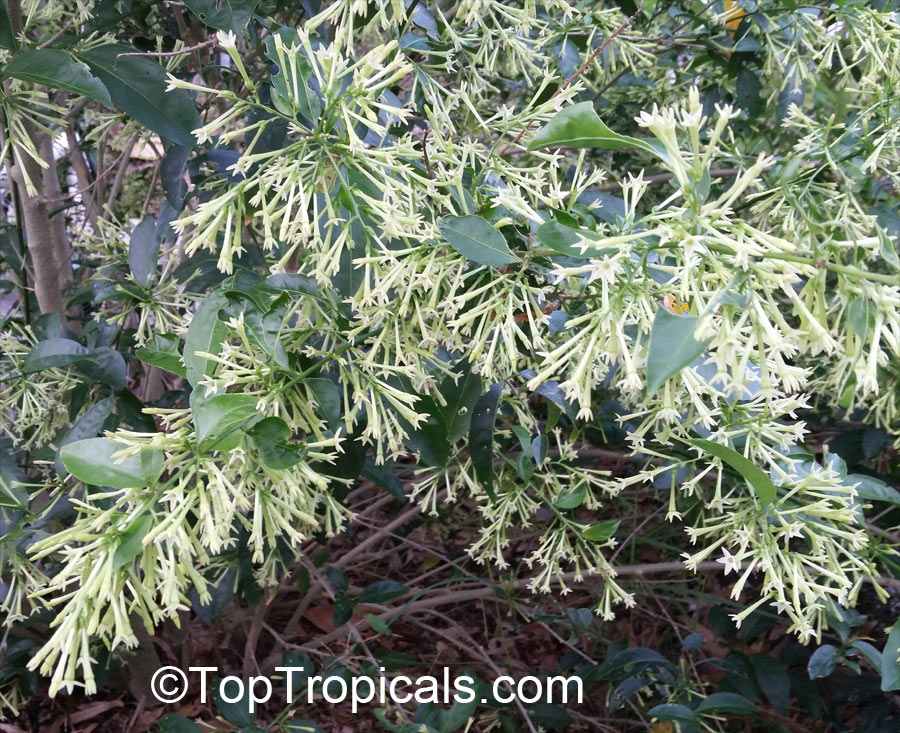
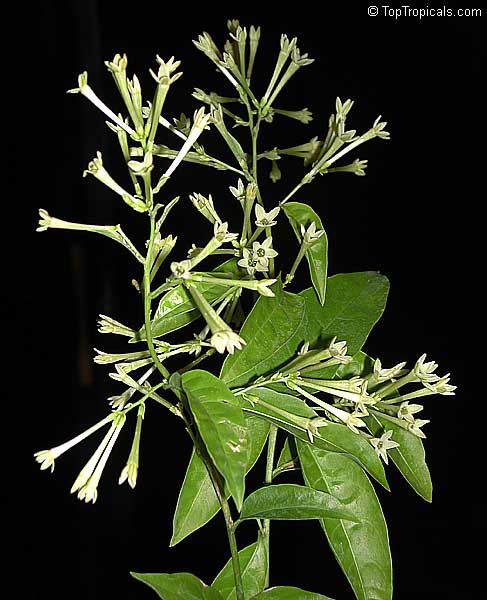
Night Blooming Jasmine - Cestrum nocturnum - is loved by many gardeners for its beautiful
fragrance at night. It is one of the most fragrant tropical evergreen shrubs
available. Cascading clusters of tiny, tubular pale yellow to white flowers open at
night and release a heavenly fragrance throughout the garden, especially on
warm summer evenings. The fragrance is much lighter during the day.
Night Blooming Jasmine is grown year-round in zones 9-11. It is at its
happiest in a sunny to a partially sunny spot in your garden in well-drained soil
but can be grown in cooler climates as a container or greenhouse plant.
You would absolutely be able to enjoy this plant during the warm months
in West Virginia, but it will most certainly not survive outside during the
winter. You will have to bring it inside. Take it outside again only once you
are confident there is no more possibility of frost. When grown indoors, be
sure to give it the sunniest, South facing window in your home. When grown in
a container, you will need to re-pot it every two to three years so it
doesn't become root-bound.
For those who are lucky to live in frost-free areas, in ideal growing
conditions outside, it can easily reach 8 feet with a spread of 5 feet. It has
a lovely informal look that can soften a more manicured garden. Add organic
matter to the planting hole when you plant to enrich the soil around the root
ball. Water well in the summer, but allow them to dry out a bit between
watering in the winter. Plant this Jasmine near pools, porches, doors, windows,
and walkways where its lovely fragrance can be enjoyed. The shrub is also an
excellent plant for privacy hedges and screens. When grown as a hedge, plant 3
feet apart.
Trim lightly after a bloom cycle to shape and then do a hard pruning in
fall or spring to control the size of this plant. Fertilize 3 times a year -
in spring, summer, and autumn - with a good quality granular fertilizer.
Recommended fertilizers:
Pink N Good Daily Plant Food - Flower Booster
Tropical Allure - Smart-Release Booster
Interesting facts:
Night-blooming jasmine is an excellent mosquito repellent. The powerful
scent of the flowers attracts moths and bats that feed on mosquitoes and
other small insects.
The flowers of the Night Blooming jasmine are widely used in India and
other countries of South Asia for perfumery, medicinal applications and in
religious ceremonies.
Limited time special offer:
Instant $5 off Night Blooming Jasmine

Date: 13 Jan 2023
Secrets of Winter planting:
Tropical Planting Breaks the Rules
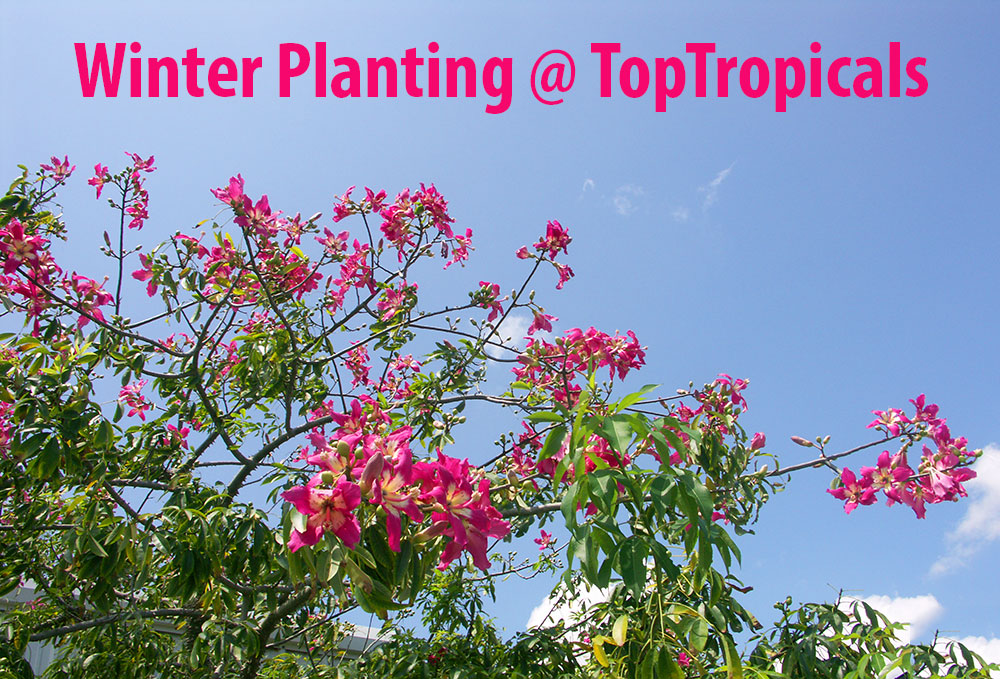
by Murray Corman, Garden of Delights
Wintertime does not just mean hard work for tropical gardeners. It is
also a time to enjoy the fruits of our labor. Winter-blooming plants and the visitors they attract - birds, bats and
butterflies - make the garden as enjoyable in winter as any other time of
year.
What a welcome relief: January daytime temperatures in the 70s, dropping to
the 60s at night. This is why I came to live in the subtropics of southern
Florida. The balmy climate of South Florida represents one of the few places
on the mainland United States where tropical plants thrive unprotected
outdoors.
But just as I had to leave behind so many of my favorite northern trees, so
too did I have to put behind me many of the so-called "rules" of
horticulture. These had worked well for me up north and I thought they would hold true
anywhere in the world. Florida's subtropical climate posed new challenges and
I soon realized that gardening in the Sunshine State would not be business as
usual...
CONTINUE READING >>
See also: A Guide to Cold Hardy Tropical Fruit Trees and Avoicado Varieties (pdf download)
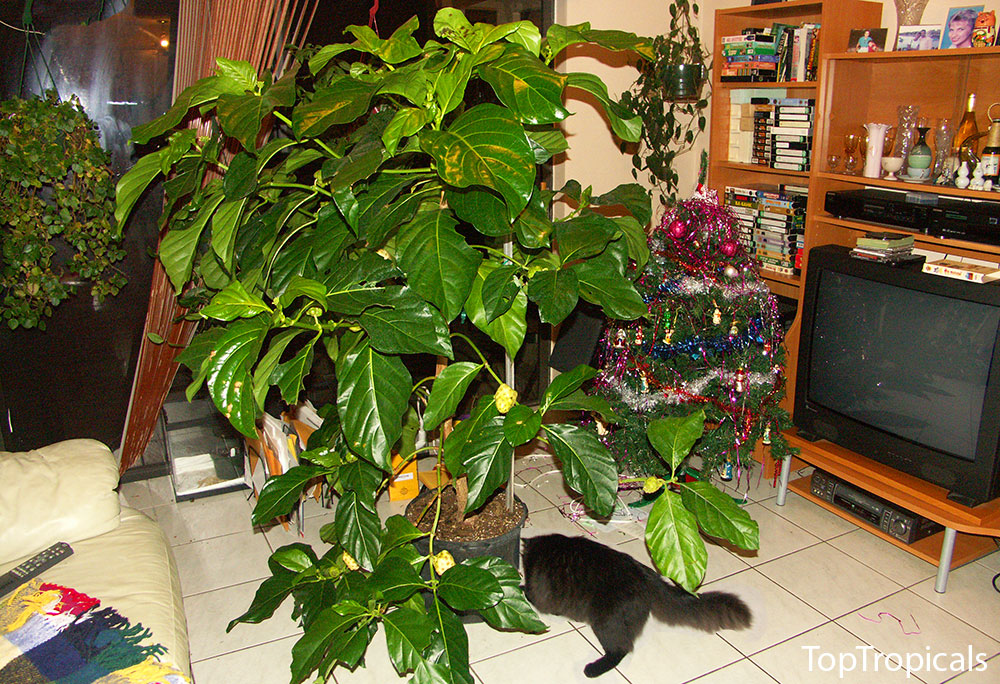
Photo above: Noni is not just a useful fruit tree, but also a great ornamental for
both sun or shade. It is also great for interior floral design or as an exotic
addition to your room decorations in Winter! It fruits year round even
indoors!
Order Noni
online.