Garden Blog - Top Tropicals

Date: 2 Jul 2016

Cancer Zodiac lucky plants

Cancer - 6/21-7/22. Cancer is a WATER sign and is ruled by the Moon. Cancer's plants generally have soft or Moon-shaped leaves, contain a lot of moisture, or are found near water. Oftentimes they have white, pale blue or pale yellow flowers. Cancer rules the stomach, diaphragm, and liver, so plants that aid digestion or affect the subconscious are associated with the sign of the Crab. Maternal Cancer also governs the breasts, the womb, and the ovaries. It rules all fluid secretions, including menstrual blood, fluids in the eye, and tears. The moon is often associated with conditions involving irregular periodicity: irregular menstruation and related moods, epilepsy, insomnia, hysteria. Lunar herbs tend to have white or yellow flowers and soft, juicy leaves. They often live in or near water. As they are so nurturing and warm, Cancer loves the homey smell of cinnamon. This sweet spice is good for gently heating things up; it also promotes movement and flow in life. Its familiar scent is soothing and calming for those who need a little retreat every now and again.

Cancer Zodiac lucky plants: Lilies, Eucomis, Magnolia, Nicotiana, Brugmansia, Dombeya, White flowers, Water lilies, Lotus, Maidenhair fern, Monstera, Cinnamon, Sage, Aloe, Lemon Balm, Bay leaf, Palasa - Butea monosperma, Acai, Mahogany, Mango, Banana, Apple, Pear, Geranium - Pelargonium, White roses, Solandra Chalice Vine, Butter Cup, Acalypha, Cornutia, Ruda, Oregano, Camphor plant, Grapes, Brunfelsia, Alocasia, Colocasia, Canna, Cyperus, Iris, Equisetum, Mangroves.

For other signs information, see full Plant Horoscope.

Date: 22 May 2016

Plant Horoscope. Gemini Zodiac lucky plants: Anthurium and Philodenron

Gemini - 5/21-6/20. Ruled by the mutable, changeable planet Mercury (also patron of the art of medicine), Gemini is an AIR sign. Plants ruled by Mercury tend to have ferny or highly-divided leaves or stems (like the bronchi of lungs), hairy or fuzzy leaves (related to the cilia in the lungs), or subtle odors.

Gemini rules the lungs, shoulders, arms, and hands. Its plants help to strengthen the lungs and respiratory system, relax the nervous system, strengthen ears and hearing, the tongue and speaking, the vocal cords, lungs and thyroid, as well as the shoulders, arms, and hands. Gemini has so much going on mentally that they may need a little help to digest all the information they're constantly absorbing. Herbs that have clean, pure flavor not only help physical digestion, but assist spiritual and mental intake as well.

Gemini Zodiac lucky plants: Ferns, Blechnum, Tree ferns and Cyatheas, Fern Tree, Aralias, Jackfruit and Breadfruit, Paulownia, Anthurium, Philodendron, Philadelphus, Clerodendrums, Anise, Lavender, Myrtle, Nut trees, Macadamia, Ficus, Piggyback plant - Tolmiea menziesii, Aloe vera, Fig, Honeysuckle, Azalea, Mint Tree Satureja, Vitex, Ironwood, Mulberry, Osmoxylon, Acalypha, Allamanda, Aphelandra, Iboza, Ruda, Kiwi, Caesalpinia, Cyphomandra, Monstera, Kalanchoe, Magnolia, Oregano, Ocimum, Naranjilla, Zamia, Delionix, Acacias, Calliandra, Patchoili, Palms, Geranium, Grevillea, Eucalyptus.

For other signs information, see full Plant Horoscope.

Date: 22 Apr 2016

Plant Horoscope. Taurus Zodiac lucky plants: Fragrant Cananga odorata and Chonemorpha

Taurus - 4/20-5/20. Taurus is an EARTH sign ruled by the planet Venus. Venus is the planet that represents desire and beauty, regarded as the female embodiment of sexual love and human appetite, so Taurus plants often have gorgeous flowers and enticing fragrances and, occasionally, red fruit. It rules the internal sexual organs, the nose and sense of smell.

Because Taurus rules the throat and ears, the best plants for the Bull are often soothing to the throat, or may calm the digestive system after overindulging in the finest foods. Taurus is related to those things we want and value. It harmonizes various body systems, and influences the complexion and facial appearance. Also under Venus's dominion are the abdomen, kidney, thymus, and breasts. Venus-governed herbs are soothing and help to regulate the body's metabolism through the endocrine system. Taurus herbs are traditionally used to attract money and resources. Earthy Taurus sign is all about building a stable and comfortable foundation and can help you generate greater abundance and prosperity in your life.

Taurus Zodiac lucky plants - Aglaia, Cananga odorata (Ylang-Ylang), Artabotrys (Climbing Ylang-Ylang), Cerbera, Night blooming jasmine, Chonemorpha, Erblichia, Euodia, Hiptage, Iboza (Musk Bush), Anise, Lavender, Lonchocarpus Lilac Tree, Nutmeg, Parijat, Camphor Basil, Osmanthus, Funeral tree, Quisqualis, Satureja (Kama Sutra Mint Tree), Viburnum, Carissa, Murraya, Curry Leaf, Bunchosia (Peanut butter fruit), Eucalyptus, Lily, Vitex agnus castus (Blue Chaste Tree), Alstonia scholaris (Sapthaparni), Papaya, Maple, Jasmine, Guaiacum, Camellia, Ephedra, Fuchsia, Geranium, Spider lily, Gardenia, Magnolia, Plumeria, Paeonia,  Verbena, Clerodendrums, Apple, Pear, Apricot, Peach, Plantain, Olive, Grape, Pomegranate, Mango, Neem Tree, Cherry, Cypresses, all Berries, Raspberry, Asparagus, Mint, Clove, Roses, Stagshorn fern, Catnip.

For other signs information, see full Plant Horoscope.

April 22 Earth Day discount - 15% off fragrant plants! Earth Day is more than just a single day â€"April 22, 2016. It's bigger than attending a rally and taking a stand. Plant one tree at a time to make our Planet better! This Earth Day and beyond, let's make big stuff happen. - See more at: www.earthday.org

Check out our Fragrant Plants for 15% off! 1-day deal only!

Date: 16 May 2026

🔮 When the World Around Becomes Too Gray: Plant a Tree. Eat a Donut. Keep going.

When  the  world  feels  gray,  plant  another  tree.  Smokey  brings  the 
 jaboticaba.  Sunshine  brings  donuts  and 
 encouragement.
Sunshine: Smokey, what do we do when the world around becomes too gray?
Smokey: Plant a tree.
Sunshine: And if that does not help?
Smokey: Plant another one.
Sunshine: And eat a donut.
Smokey: Not strictly necessary, but statistically beneficial.

If you have been feeling a little worn down lately, you are not alone.

You already know about the headlines. We do not need to list them. You have probably seen them today before breakfast.

We are not here to pretend that is not happening. It is happening. And it is a lot. But here is the thing we keep coming back to, the thing that has been true for as long as people have had hands and a patch of ground: when the world feels out of control, you can still plant something.

Gardening is not an escape. It is an answer. When you put a tree in the ground, you are making a quiet statement. You are saying that you expect there to be a future. That you intend to be in it. That shade and fruit and flowers still matter, and you are going to make sure they exist in your corner of the world.

That is not naive. That is courageous in the most ordinary and underrated way.

One tree, planted this season, might give you fruit in a few years. It might give butterflies somewhere to stop. It might give a bird a place to nest. It will almost certainly give you something to look at on a hard day that reminds you the world still contains beauty, and that you put some of it there. And if one tree does not quite do it? Plant another one.

Dostoevsky said beauty will save the world. We think a mango fruiting in your backyard counts. So does a Magnolia opening on a quiet morning.

Do not skip the donut.

A donut is a small, simple, completely unnecessary thing. That is exactly the point. It is not productive. It does not solve anything. It is just good, and sometimes that is the whole reason. In a world that constantly demands you be useful and informed and concerned, eating a donut is a quiet act of being human. You are allowed to enjoy a small thing on a hard day. You do not have to earn it.

Rest a little. Then go put something in the ground. Anything that will grow and flower and remind you that beautiful things are still happening whether the headlines mention them or not.

We have the plants. You bring the donuts.

🛒 Plant a sweeter world: grow color and flavor

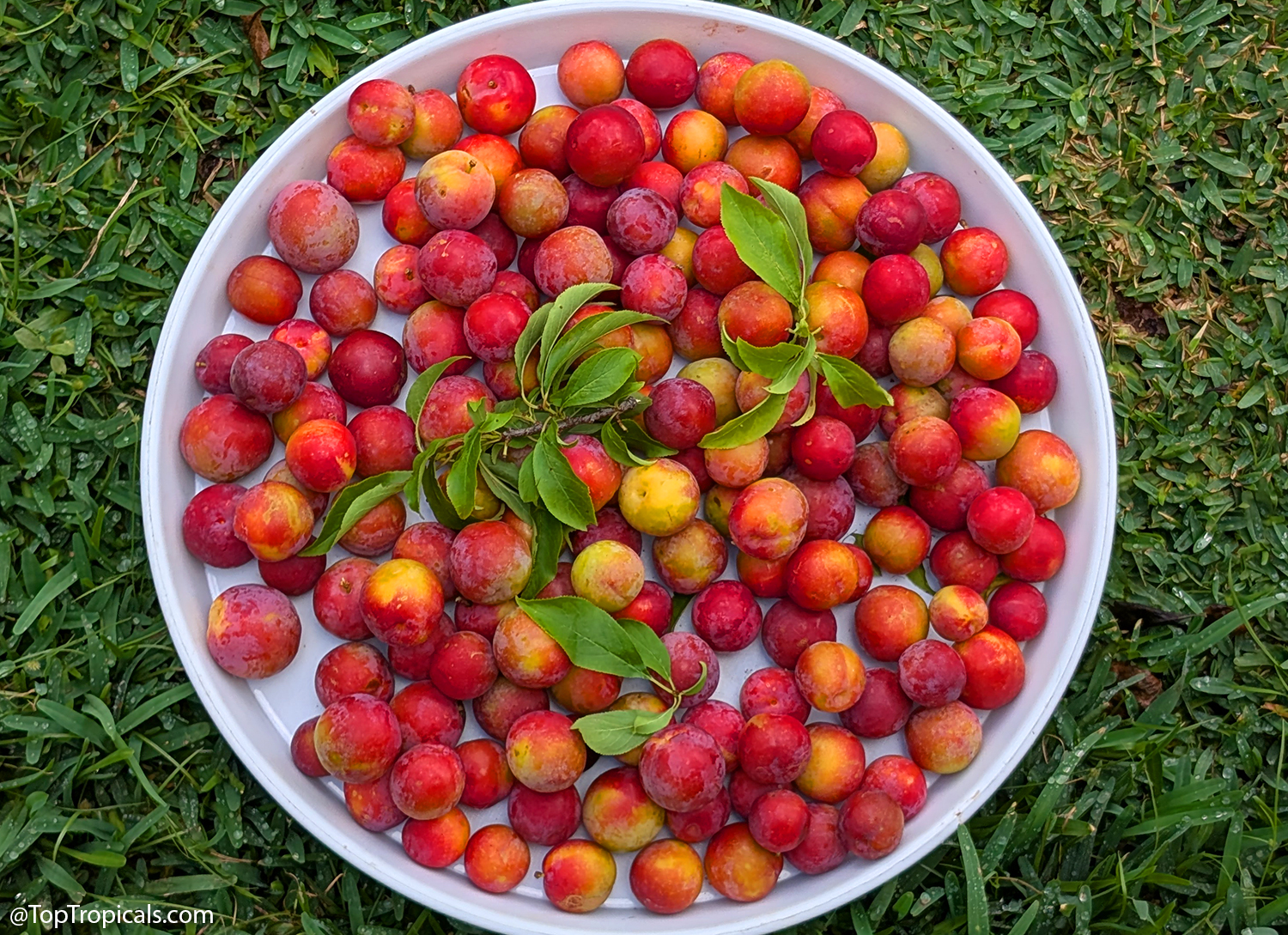
Tray  filled  with  freshly  harvested  tropical  plums  in  shades  of  red, 
 orange,  and  yellow  resting  on  green  grass,  with  a  few  leafy  branches  placed 
 on  top  of  the 
 fruit.

We just finished harvesting loquats and mulberries, and now another wave is coming in - low chill plums, peaches, and nectarines fresh from the garden. This is one of the most rewarding times of the year, when every season brings the fruit of your labor and all that work finally turns into something sweet.

📚 Learn more from our garden Blog

Date: 20 Feb 2026

Florida freeze damage - what to replant after a record cold winter

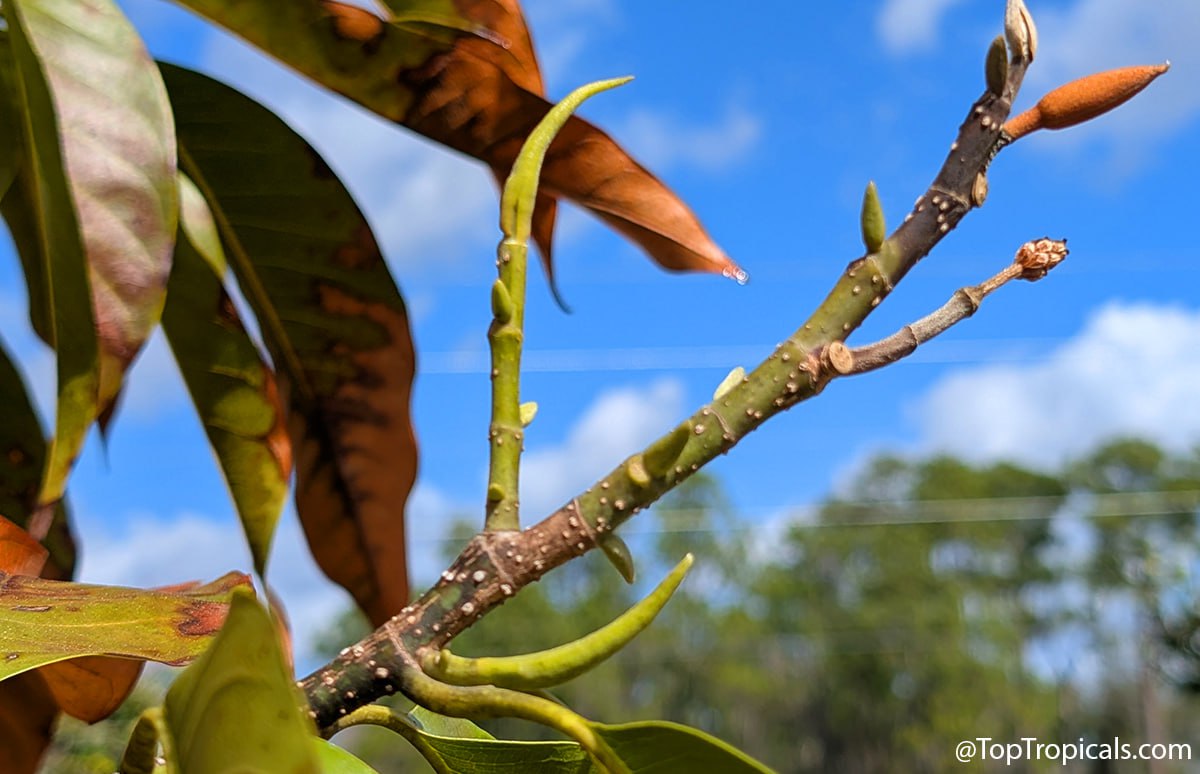
Magnolia champaka new shoots
Magnolia champaka new shoots

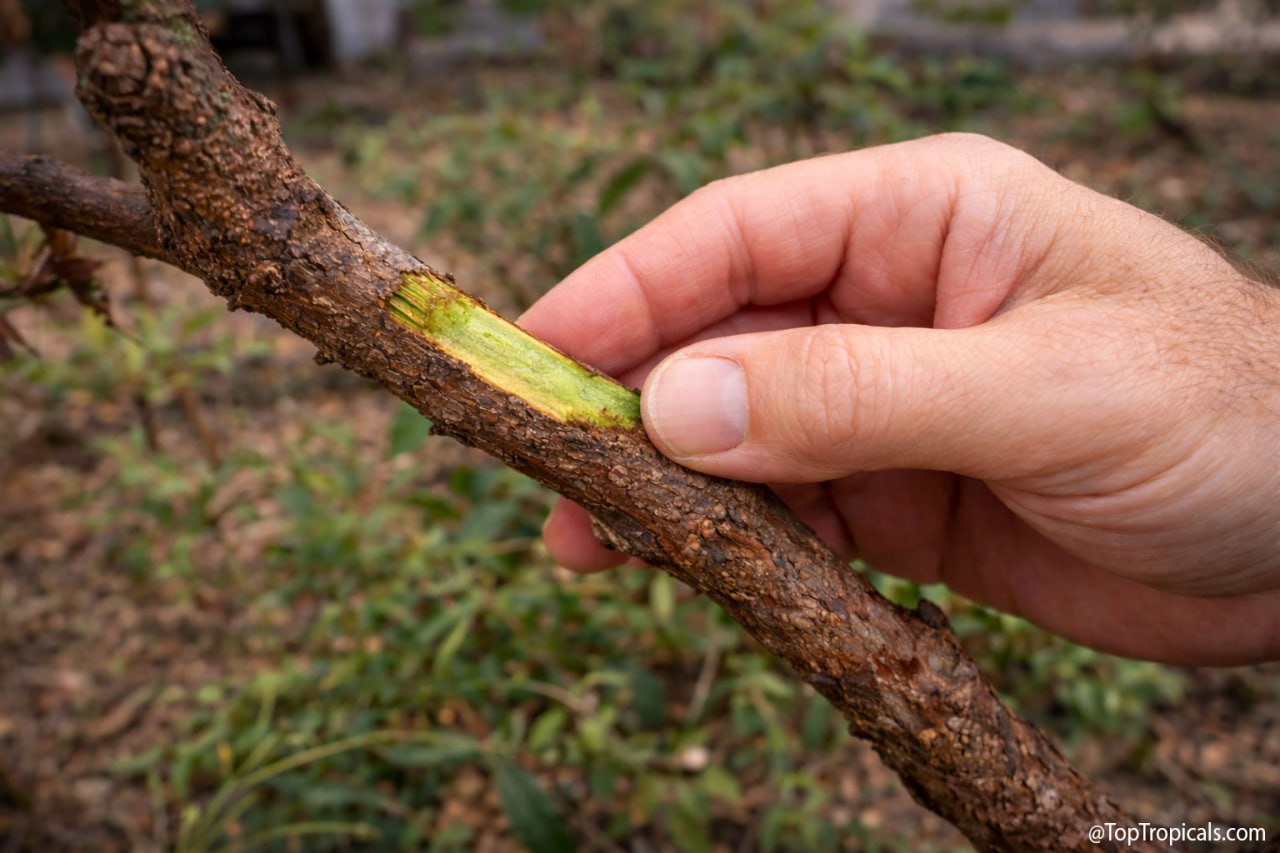
Scratch test on a bark

Scratch test on a bark

❄️ Florida freeze damage - what to replant after a record cold winter


🌱 A record freeze changed Florida gardens


After the recent record cold across Florida, many gardeners are now seeing the real damage - browned leaves, split stems, collapsed shrubs, and fruit trees that may not recover.
Some plants surprised us with new growth. Others are clearly gone.
The practical question is simple: what should you replant so it does not happen again next winter?
The good news - you can build a more frost-resilient garden without giving up beauty or fruit.

🌱 First - do not rush to rip everything out


Before replacing anything, check carefully:
Scratch the bark lightly - green underneath means the branch is alive.
Wait for consistent warm weather - some plants re-sprout weeks or even months later.
Look for growth higher on the stem, not just at the base.
After freezes, many tropicals look worse than they are. Patience often saves money.

🌱 Why some plants survived and others did not


Freeze survival depends on several factors:
Duration of cold - 2 hours vs 8 hours makes a major difference
Microclimate - south-facing walls, wind protection, canopy cover
Plant maturity - established roots handle stress better
Pre-freeze health - overfertilized, soft growth freezes faster
This explains why two identical plants in the same yard can perform very differently.

🌱 What to replant for a frost-resilient garden


Instead of replacing losses with the same tender species, consider:
Cold-hardy fruit trees
Proven freeze survivors from this winter
Shrubs that tolerate brief dips below freezing
Layered planting for wind protection

When redesigning:
Plant tender species closer to structures.
Use hardy trees as windbreaks.
Avoid low frost pockets.
Improve drainage - wet roots freeze faster.
You do not have to remove tropical character. You just have to plant smarter.

✍️ Check the list of freeze survivors:


What tropical plants survived Florida's historic freeze without protection

🌱 Rebuild with strategy, not emotion


After freeze damage, many gardeners replant quickly - only to repeat the same losses.
A better approach:
Identify what truly died.
Learn which species survived locally.
Choose varieties proven in your climate zone.
Design with cold in mind.
One freeze can become a turning point. Many Florida gardens become stronger after a hard winter because the plant list gets refined.

🌱 Spring Equinox - a natural reset


The Spring equinox marks equal day and night and the astronomical start of spring. From this point forward, daylight increases and active growth accelerates.
For Florida gardeners, it is a natural reset.
New growth begins. Roots wake up. Replacement planting becomes safer.
This is the right time to rebuild.

🛒 Explore cold tolerant tropical plants and cold hardy Avocados

🎥 What tropical plants survived Florida's historic freeze without protection
🎥 These Avocados survived 3 nights of 25F hard freeze, Florida Record Freeze

📚 Learn more:


· Top Ten Fruit Tree Winners of Florida 2026 Record Freeze
· Top Ten Flowering Tree Winners of Florida 2026 Record Freeze
· To trim or not to trim? When and how to trim damaged plants after winter
· Cold-hardy avocado varieties - what freezing they really survive

Avocado Plant Facts

Botanical name: Persea americana, Persea gratissima
Also known as: Avocado, Alligator Pear, Aguacate, Abacate
USDA Zone: 9 - 11
Highligths Large tree taller than 20 ftSmall tree 10-20 ftFull sunWatering: Regular. Let topsoil dry slightlyEdible plantSubtropical plant. Mature plant cold hardy at least to 30s F for a short time
Get personalized tips for your region

· Cold-hardy avocado survival groups - what the numbers really mean

#Discover #How_to

🟢 Join 👉 TopTropicals