Garden Blog - Top Tropicals

Date: 7 May 2026

3 Best Trees for a Fast-Fruit Garden
3 Best Trees for a Fast-Fruit Garden
3 Best Trees for a "Fast-Fruit" Garden 🍒

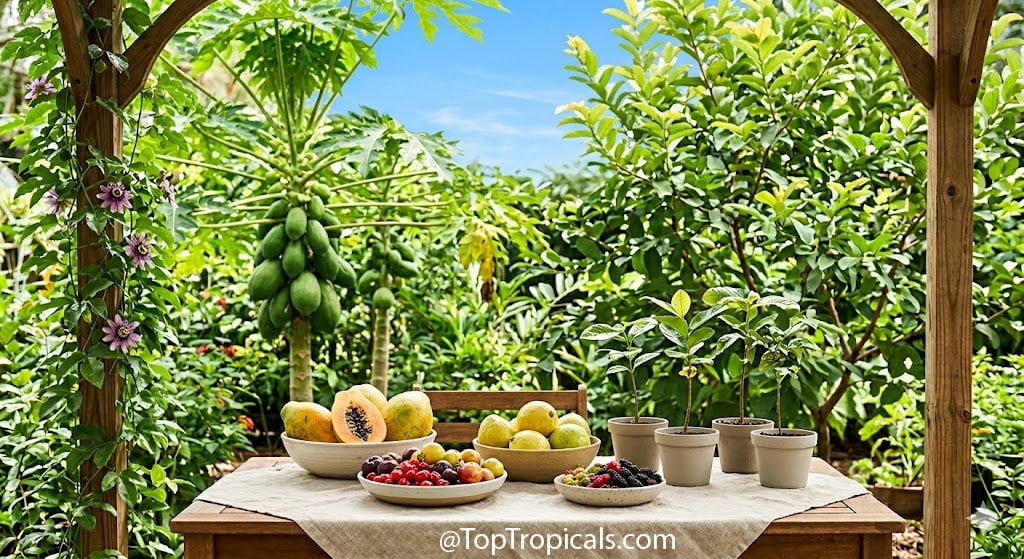
Want fruit without the wait? These tropical powerhouses deliver a "fast-food" garden in record time.

  • 🍓 The Top 3 Speed Demons


1. The Favorite: Papaya 🍊
If you want speed, Papaya is king. It can go from a small seedling to heavy fruit in 6-10 months. It behaves more like a giant herb than a tree: it is fast, has shallow roots, and is incredibly responsive to water and fertilizer. In warm climates, it is a plant it and watch it go legend. 👉 More

2. The Reliable: Guava 🍉
Guava is the most forgiving fruit tree you can own. It handles heat, poor soil, and the occasional week of neglect without missing a beat. Most varieties begin producing in just 1-2 years, staying compact enough for small yards or large pots. 👉 More

3. The Surprise: Eugenias 🍒
This family (including Surinam Cherry, Grumichama, Cherry of the Rio Grande, and Pitomba) often flies under the radar. They look like ornamental shrubs, but they establish quickly and can fruit within year two. They handle pruning beautifully, making them perfect for edible hedges. 👉 More

  • 🍓 The Fast-Fruit Honor Roll


  • 🍓 Ultra-Fast (Under 1 Year)

Papaya and Banana: The heavyweight champions of speed.
Strawberry Tree (Muntingia calabura): Non-stop cotton candy berries.
Grafted Favorites: High-quality Mango, Avocado, Peach, Nectarine, and Persimmon.

  • 🍓 Very Fast (1-2 Years)

The Berries: Mulberry (especially Everbearing), Fig, and Barbados Cherry.
The Exotics: Strawberry Guava, Loquat, and the curious Peanut Butter Tree (Bunchosia).
The Sweet Treats: Blackberry Jam Fruit (Randia formosa).

  • 🍓 Tropical Staples (2-3 Years)

Starfruit (Carambola): A heavy producer that looks stunning in the garden.
Annona Family: Sweet Sugar Apples and creamy Atemoyas.
Macadamia Nut: A long-term investment that starts surprisingly early.

🍓 Fast Climbers and Bush Fruit


Passionfruit: Will cover a fence and fruit in a single season.
Berries: Mysore Raspberry and classic Blackberries for quick returns.

🛒 Ready to harvest? Shop the "Fast-Fruit" Collection

📚 Learn more:

Murta Plant Facts

Blepharocalyx salicifolius, Eugenia salicifolia
Murta
USDA Zone: 9-11
Small tree 10-20 ftSemi-shadeFull sunRegular waterWhite, off-white flowers

#Food_Forest #How_to #Discover

🟢 Join 👉 TopTropicals

Date: 16 May 2026

🔮 When the World Around Becomes Too Gray: Plant a Tree. Eat a Donut. Keep going.

When  the  world  feels  gray,  plant  another  tree.  Smokey  brings  the 
 jaboticaba.  Sunshine  brings  donuts  and 
 encouragement.
Sunshine: Smokey, what do we do when the world around becomes too gray?
Smokey: Plant a tree.
Sunshine: And if that does not help?
Smokey: Plant another one.
Sunshine: And eat a donut.
Smokey: Not strictly necessary, but statistically beneficial.

If you have been feeling a little worn down lately, you are not alone.

You already know about the headlines. We do not need to list them. You have probably seen them today before breakfast.

We are not here to pretend that is not happening. It is happening. And it is a lot. But here is the thing we keep coming back to, the thing that has been true for as long as people have had hands and a patch of ground: when the world feels out of control, you can still plant something.

Gardening is not an escape. It is an answer. When you put a tree in the ground, you are making a quiet statement. You are saying that you expect there to be a future. That you intend to be in it. That shade and fruit and flowers still matter, and you are going to make sure they exist in your corner of the world.

That is not naive. That is courageous in the most ordinary and underrated way.

One tree, planted this season, might give you fruit in a few years. It might give butterflies somewhere to stop. It might give a bird a place to nest. It will almost certainly give you something to look at on a hard day that reminds you the world still contains beauty, and that you put some of it there. And if one tree does not quite do it? Plant another one.

Dostoevsky said beauty will save the world. We think a mango fruiting in your backyard counts. So does a Magnolia opening on a quiet morning.

Do not skip the donut.

A donut is a small, simple, completely unnecessary thing. That is exactly the point. It is not productive. It does not solve anything. It is just good, and sometimes that is the whole reason. In a world that constantly demands you be useful and informed and concerned, eating a donut is a quiet act of being human. You are allowed to enjoy a small thing on a hard day. You do not have to earn it.

Rest a little. Then go put something in the ground. Anything that will grow and flower and remind you that beautiful things are still happening whether the headlines mention them or not.

We have the plants. You bring the donuts.

🛒 Plant a sweeter world: grow color and flavor

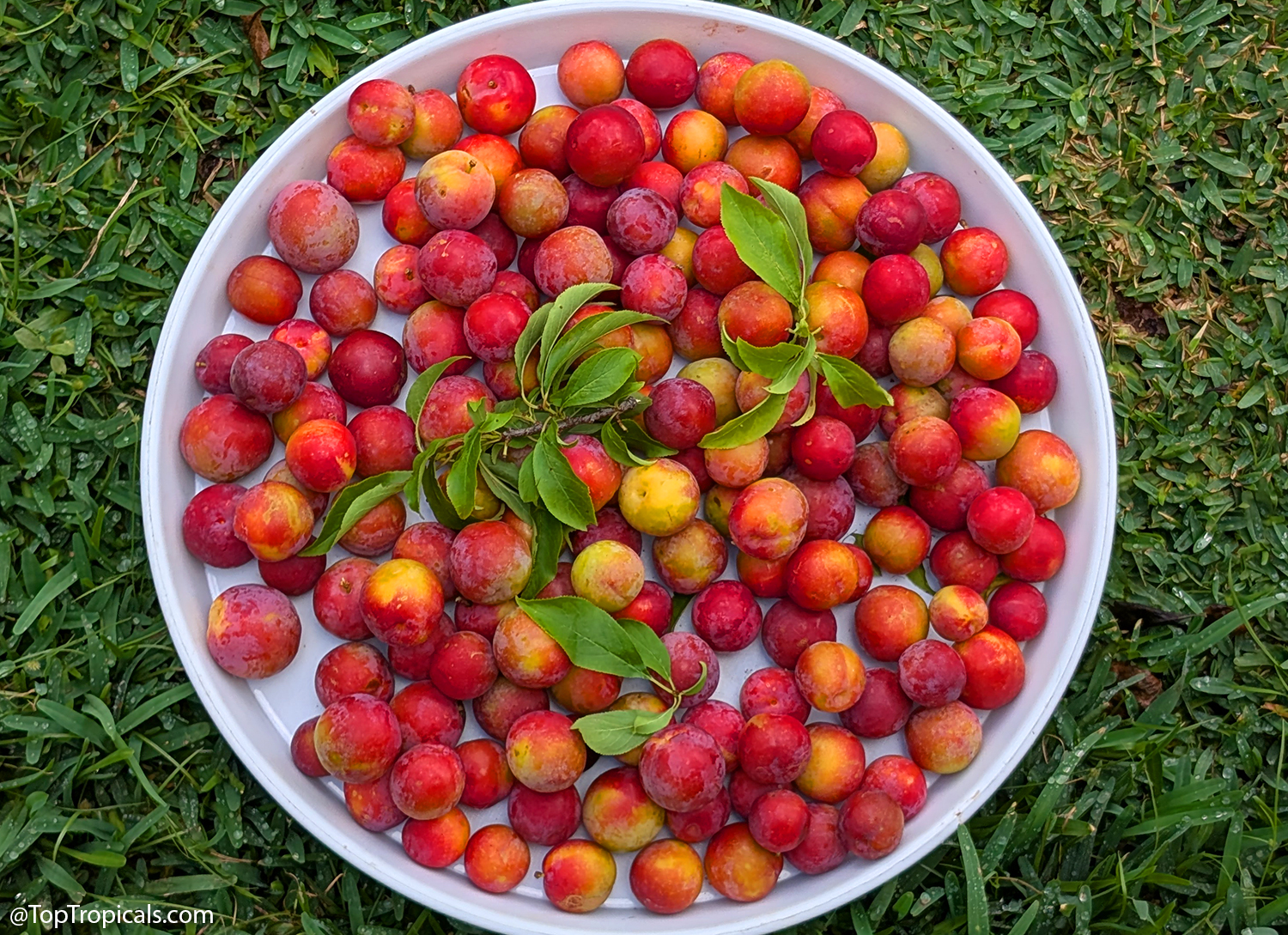
Tray  filled  with  freshly  harvested  tropical  plums  in  shades  of  red, 
 orange,  and  yellow  resting  on  green  grass,  with  a  few  leafy  branches  placed 
 on  top  of  the 
 fruit.

We just finished harvesting loquats and mulberries, and now another wave is coming in - low chill plums, peaches, and nectarines fresh from the garden. This is one of the most rewarding times of the year, when every season brings the fruit of your labor and all that work finally turns into something sweet.

📚 Learn more from our garden Blog

Date: 20 Sep 2025

How to make lots of Insulin Ginger plants quickly and get more health benefits

Costus igneus (Chamaecostus cuspidatus) - Fiery Costus or Spiral Flag

💚 How to make lots of Insulin Ginger plants quickly and get more health benefits

  • Costus igneus (Chamaecostus cuspidatus) - Fiery Costus or Spiral Flag is believed to help lower blood glucose levels naturally and managing diabetes.
  • Have you heard of Insulin Ginger? Everyone wants to have it in the garden!
  • Gardeners in India grow it not just for its pretty spiral leaves, but for what those leaves do. People with diabetes often chew them fresh or brew them into tea, saying it helps keep their blood sugar under control.
  • Researchers have found something interesting: the leaves contain an insulin-like compound, along with antioxidants and anti-inflammatory properties. In animal studies, extracts from the plant lowered blood sugar, protected the liver and kidneys, and even made the body more sensitive to insulin.
  • The way folks use it is simple. You can chew a leaf right off the plant, steep dried leaves for tea, or find it in powders and capsules. It's one of those plants that shows how tradition and science sometimes meet in the garden.
  • Its lush, turmeric-like leaves spiral around upright stems, with a glossy dark green top and a striking light purple underside. In warm months, it produces bright orange, cone-like flowers that stand out beautifully in the garden.
  • Beyond its beauty and natural insulin effects, the insulin plant is credited with aiding digestion, reducing cholesterol, boosting energy, improving skin health, supporting weight loss, relieving stress, and promoting heart wellness. A real botanical multitasker!


🎥 In this video, we’ll show you how to multiply Insulin Ginger fast, so you’ll have plenty of plants for yourself and even extras to share with friends and family.

✅ Don’t forget to use Green Magic fertilizer for the best results. Gingers absolutely love this plant food - they thrive on it and respond better than any other plant, with vigorous growth, lush foliage and loads of leaves you’ll need for all the benefits.

🛒 Grow your own sugar-fighter - the Insulin Ginger

📚 Learn more:


#Food_Forest #Remedies #Shade_Garden #Discover

🟢 Join 👉 TopTropicals
Date: 25 Feb 2024

Avocado pollinating and crops

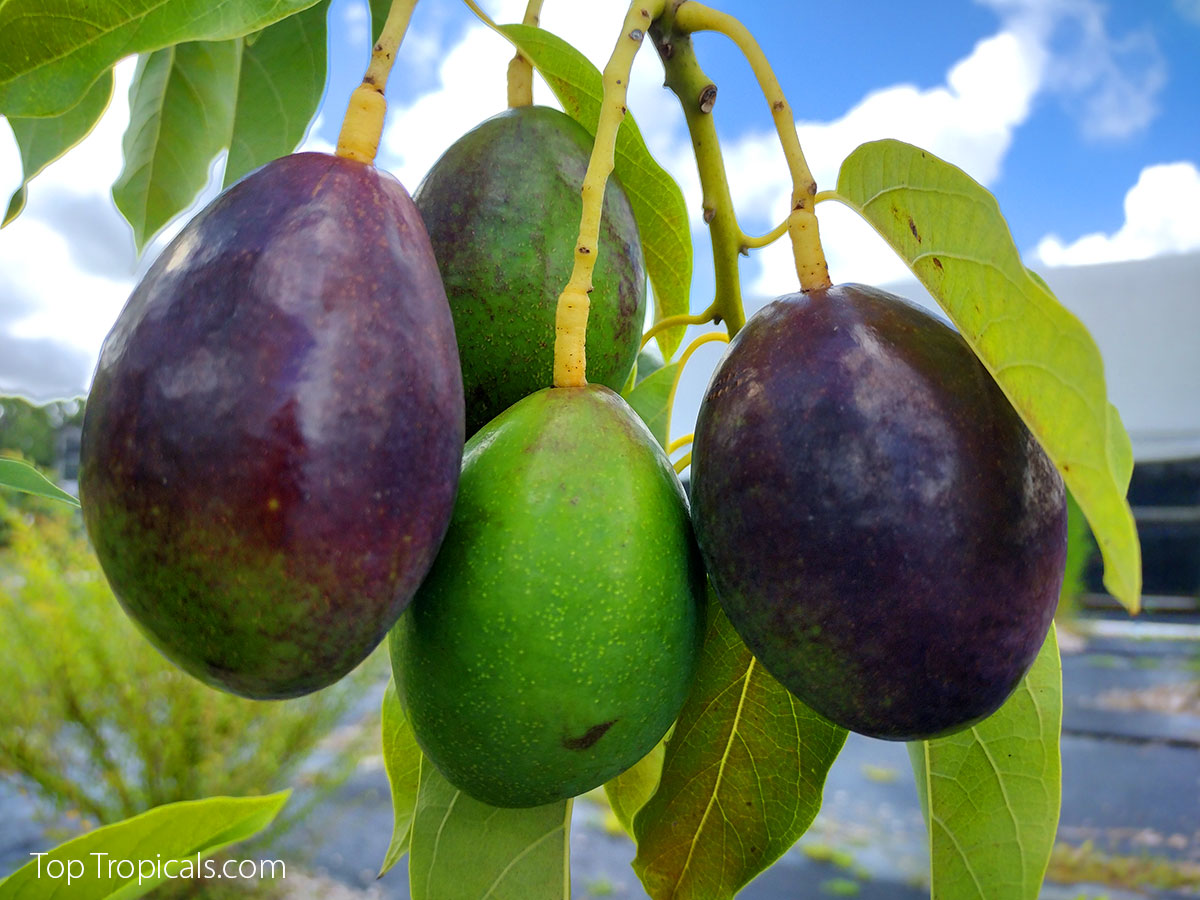
Avocado  fruit

Photo above: Avocado Joey - very buttery fruit, cold hardy variety.

Q: I bought an anise leaf-scented avocado from you, and it is finally quite large and doing great. I live in California, the coldest temperatures we seem to get in some winters is around 25 to 28F, and it never lasts long. The tree might get a bit of frost nipping on the new growth, but it has done very well. It has flowered profusely for the last two years but hasn't set any fruit. What variety you might recommend to help with pollinating?

A: We are glad your avocado is doing great. Anise is one of our favorite varieties, with the wonderful smell of leaves and tasty fruit.

Cold hardiness and flower quality

It is true that cold damage may affect avocado production, especially in setting fruit. To improve the tree's cold hardiness, make sure to provide balanced plant food, especially during the season of active growth. For our avocado trees, we use Sunshine C-Cibus year-round.

If you prefer to use dry (granulated, slow-release) fertilizers, make sure they contain micronutrients, or apply Sunshine Superfood microelement complex once a month.

To improve flower quality (including the ability to set fruit), we recommend a special micronutrient supplement called Sunshine Honey. It contains Boron and Molybdenum - elements that are responsible for setting fruit and for developing fruit (meaning not dropping at the early stage of development).

Cross-pollination and crop

In general, every avocado tree is self-fertile, meaning it can produce some fruit with its own pollen and doesn't necessarily require a second tree for pollination. So even if you don't do anything, sooner or later your tree will set fruit. However, it is also true that the amount of fruit and crop reliability depends on pollination factors. One type of avocado classification is by flowering and pollination behavior - type A or B.

When both types of trees are grown in proximity to each other, their overlapping flowering patterns significantly enhance the chances of cross-pollination. This can lead to improved fruit set and higher yield, making it especially important for commercial production and, to a lesser extent, for home growers.

Therefore, it's advisable to plant different varieties of avocado in your garden - the more, the merrier! The greater the diversity of avocado trees with overlapping flowering periods, the better your crop is likely to be. If you're growing an avocado tree without other avocados nearby, it becomes helpful to have more than one tree with different flowering patterns (A and B) to increase yield in your garden.

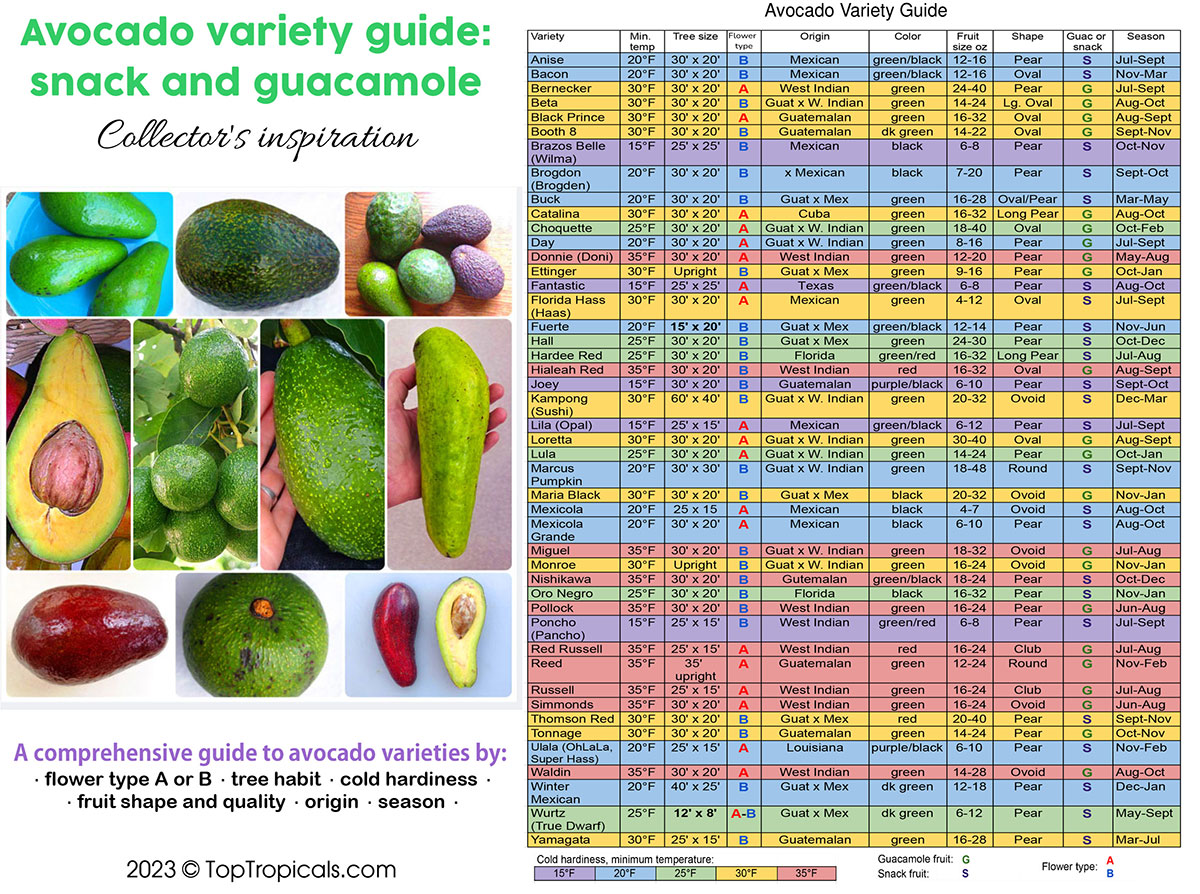
Anise Avocado is type B. So to increase your crop, you may consider planting type A variety from the list: Bernecker, Black Prince, Catalina, Choquette, Day, Donnie, Fantastic, Florida Hass, Lila, Loretta, Lula, Mexicola, Mexicola Grande, Red Russell, Reed, Russell, Simmonds, Ulala , Waldin .

To learn more about avocado types, fruit characteristics, cold hardiness and much more, refer to our Avocado Variety Guide - a page with very convenient interactive chart allowing you to quickly sort types of avocado by requirements of your choice (just click on column header to sort data). You may also buy a Book or download a PDF.

PAvocado  Variety  Guide  Book

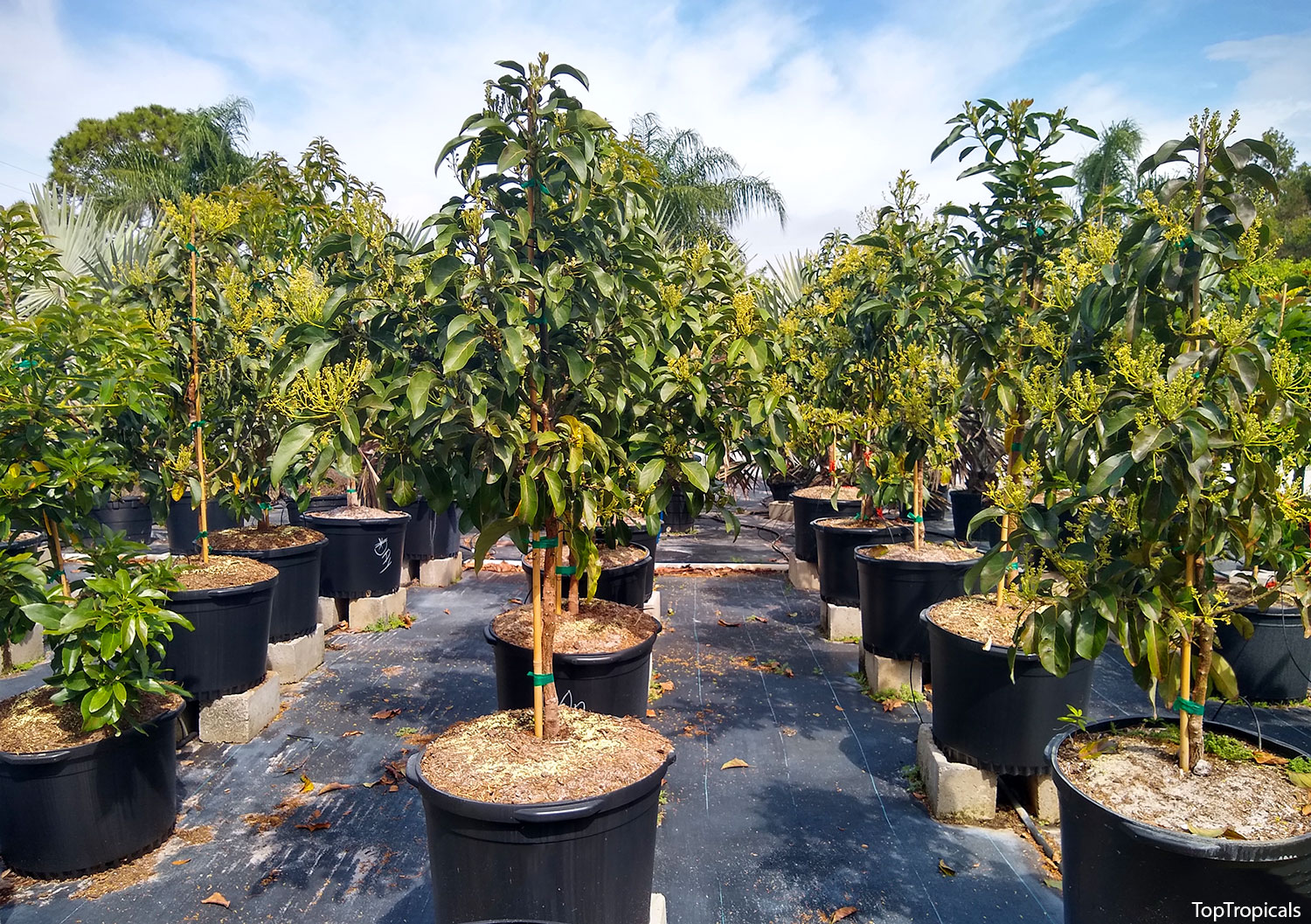
Avocado  trees  in  pots

Photo above: 15 gal Avocado trees for local pick up. Delivery and installation available!

Date: 6 Jan 2024

Sunshine Boosters
Winter use... and discount!

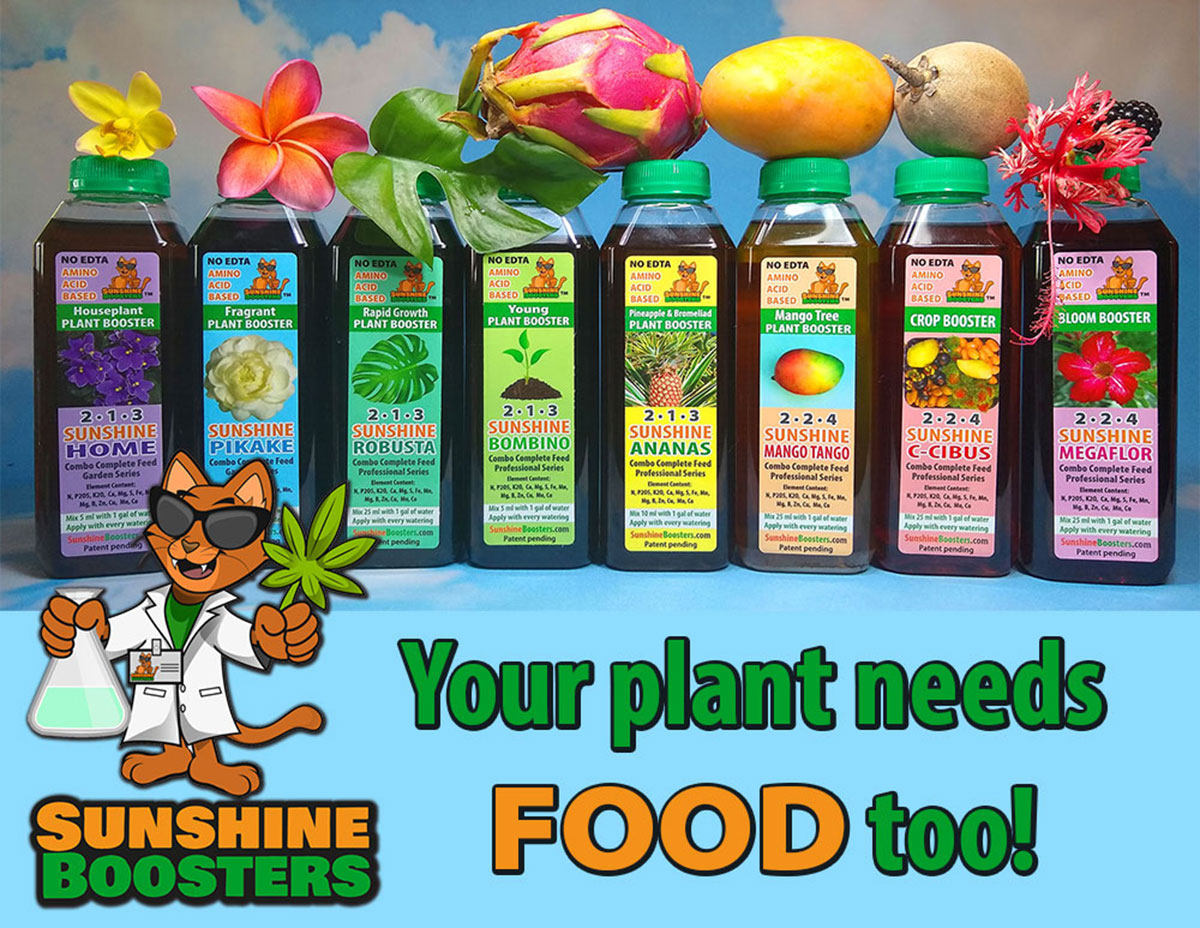
Sunshine  Boosters  different  formulas

Do you remember that Sunshine Boosters fertilizers can be applied year-round?

As natural fertilizers, their scientifically created formulas provide perfectly balanced nutrition for your plants throughout the year. Follow the instructions on the labels and apply Sunshine Boosters with every watering. Give your plants extra boost during winter months! The fertilizer amount is balanced, adjusting proportionally to the water amount, which is tailored to the plant's winter needs. Unlike dry fertilizers, Sunshine Boosters can be used all year without fear of burning plants with excessive nutrient lockup.

Take advantage of the winter sale and stock up on this perfect plant food. You'll need plenty by Spring when your plants begin active growth! Use the code below for 20% off all Sunshine Boosters products. Hurry up, the sale will end in a few days!

SBOOSTERS20

Min order $20, excluding S/H. Exp. 1-12-24

Sunshine  Boosters  effect  in  the  garden

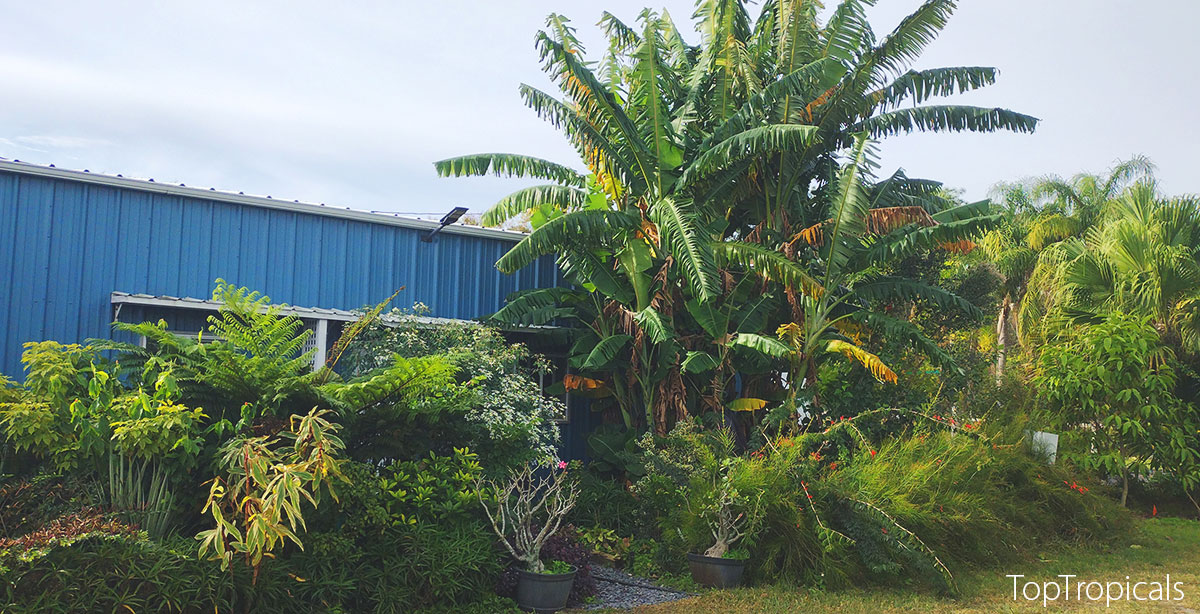
In the photo above: This picture was taken on Christmas Eve, December 24, 2023. The little garden by our B-farm office, irrigated automatically with Sunshine Boosters using the Robuster injector, is thriving in spite of cool nights. Look at this crazy banana, it is taller than the building, we honestly have never seen a banana of that size! The solution we are using there is Sunshine Robusta; now available for pick up in 2.5 gal jugs!