Date: 4 Feb 2021
2021: White Cow with a Golden Udder... not an Ox!
by Alex Butova, the Witch of Herbs and Cats
In China, the zodiac system calculations are quite complicated... Learn
the science of the Chinese horoscope and find out why the symbol of Year 2021
is actually the Metal Cow - not an Ox!..
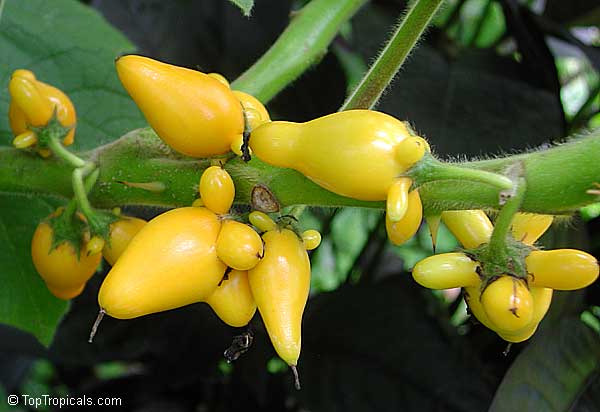
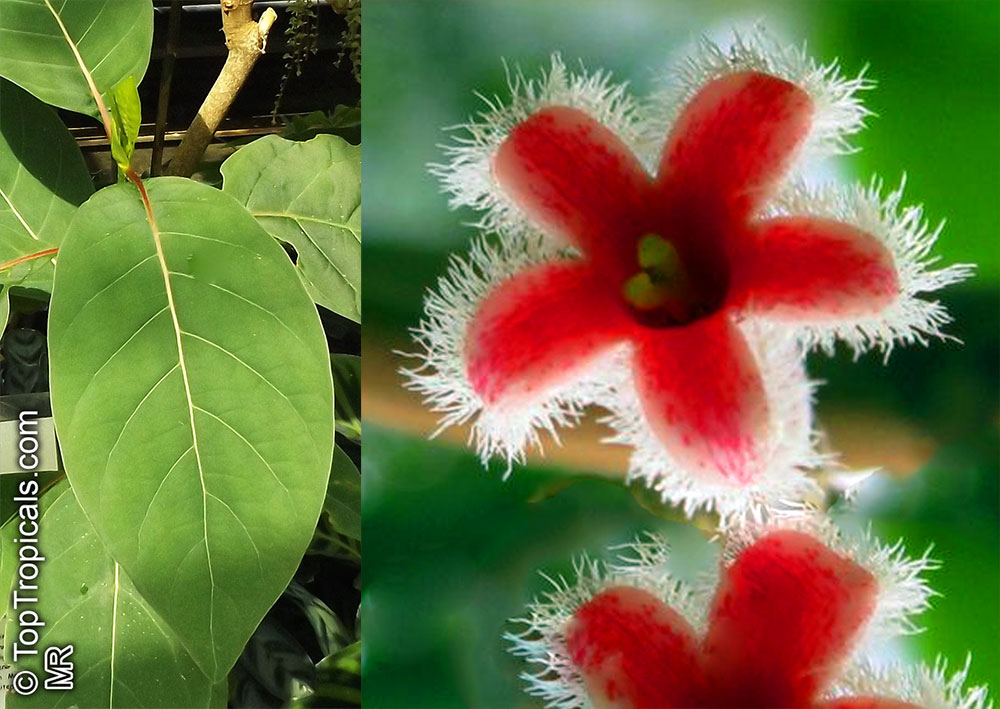
...See what lucky flowers this year brings you and meet the most bizarre
plant - Nipple Fruit, or Cow's udder!..
CONTINUE READING >>

Date: 28 Dec 2020
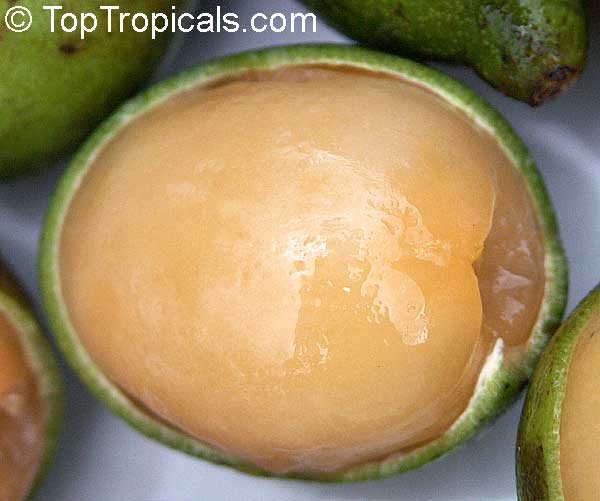
Spanish Lime Tree
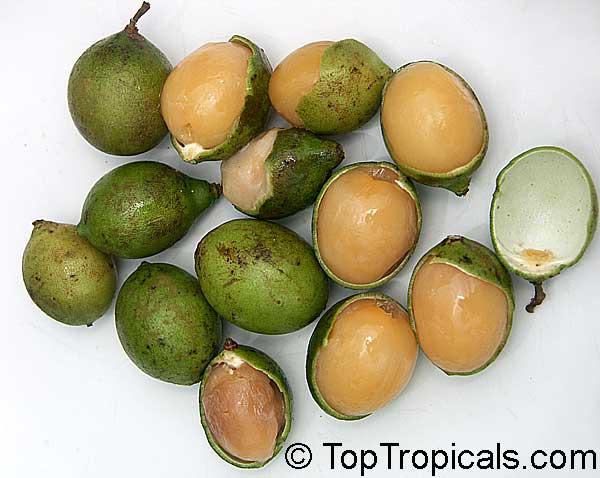
Q: Do I need two plants of the Spanish lime to have fruits? Do you have a grafted tree that I would only need one plant?
A: From our experience with Spanish Lime trees - Melicoccus bijugatus, fruiting habit really depends on variety. There
are self-pollinating varieties that only require one tree. Seedling usually
require cross-pollination between two trees for better production. It doesn't
mean that one tree won't bloom or fruit - it will, but production may be lower
than if they were cross-pollinated.
The Spanish Lime trees we currently have in stock are seedlings from a
good, self-pollinating variety Key West, however, only grafted trees are
precisely true to variety since they are technically clones. Seedlings normally take
a few years (3-4) until they start fruiting. Spanish Limes don't have to be
grafted to produce quality fruit, however, grafted trees may take less time
till they fruit.
This species is really hard to obtain and we do not have any grafted trees
now, and probably not for another year. So if you really want this fruit
tree, you may want to try at least with a seedling.
We only have a few left in stock and many people want them. Otherwise, you
may sign up for the wish list and wait until we (hopefully) have grafted specimens (enter
Melicoccus bijugatus in wish list).

Date: 22 Dec 2020
The Blue Tea Remedy from the Magic Clitoria

By Alex Butova, the Witch of Herbs and Cats
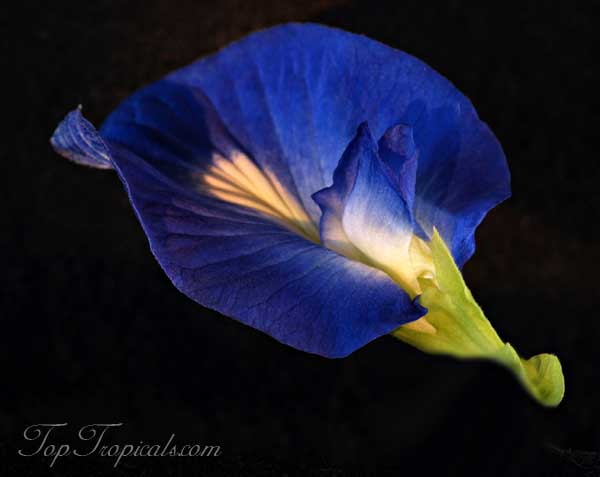
Butterfly-pea flower tea commonly known as Blue Tea is a caffeine-free herbal tea, or tisane, a beverage made from a decoction or infusion of the flower of the Clitoria plant. There are not many who know about the benefits of blue tea. For centuries the butterfly-pea flower tea was only known in South East Asia... The bright blue petals from the flowers of the butterfly-pea plant have been used as an ingredient in herbal tea drinks throughout the region for centuries as well as used in cooking...
CONTINUE READING >>
Date: 20 May 2020
How to prevent Jasmine flower drop
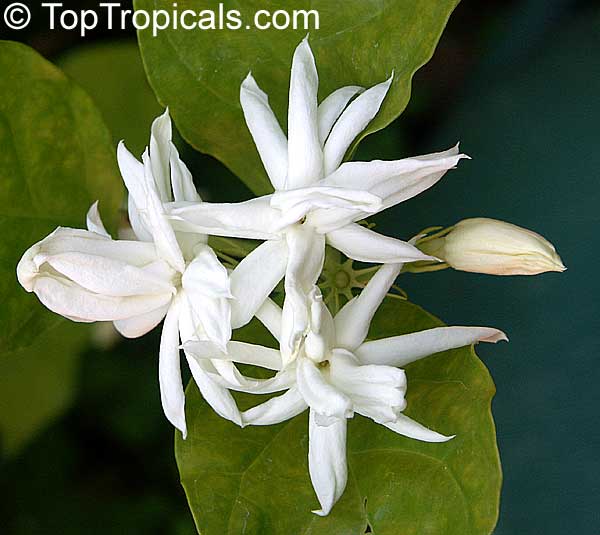
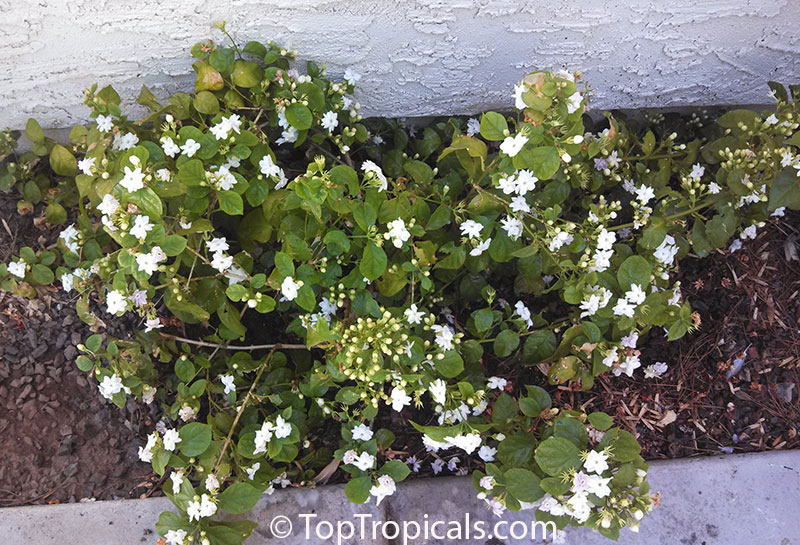
Q: My jasmine buds turn purple to brown and drop before it blooms. What should I do to get the jasmines to bloom fully. Appreciate your help & suggestions.
A: At this time of the year in Florida, jasmines may drop flowers because of the sudden hot weather. The plants
didn't have a chance yet to change their metabolism to summer type. The high
temperatures promoted early bloom, but the plant is not strong enough to
support the flowers. It needs extra food. To improve flower quality and reduce
bud drop, we recommend these supplements:
SUNSHINE Pikake - Fragrant Plant Booster
Sunshine Honey
and Sunshine Superfood
Date: 26 Mar 2020
Nature's farmacy: Coronavirus cure discovery? Cinchona - Fever Tree
by Alex Butova
As the world's health experts race to find a cure for the novel
coronavirus, this drug have jumped to their attention - Chloroquine. It contains
alkaloid Quinine, extracted from the bark of the Cinchona, or Fever Tree.
We receive many questions from our customers if we carry this plant.
Although we do not offer it at the moment, we definitely can tell you more about
this interesting medicinal plant!
If you like gin and tonic, you will be familiar with the bitter taste of
the tonic which is provided by quinine. While it is now mainly used
to add a flavor to our favorite tipple, the Cinchona tree bark once held a
place as one of the most important drugs in history.
Cinchona was discovered in the 1630s as a treatment for malaria and, for
350 years, was the only effective cure known in Europe until synthetic
replacements were developed in the 1940s. Malaria remains today one of the deadliest
diseases known throughout the tropics, but up until the 20th century the
disease was prevalent throughout Europe, including Britain.
The Cinchona tree is native to the Eastern slopes of the Andes with a range across Ecuador, Peru and Bolivia. Once the bark became an established medicine, particularly in the 18th and 19th centuries, demand started to outstrip supply. Threats of overharvesting and the desire to control the source of this precious bark drove various competing empires to source this plant for themselves. Understandably, the Spanish, who were in control of this area of South America, actively tried to prevent this, but failed to establish successful plantations themselves. A race to source and cultivate Cinchona ensued, and eventually both the Dutch, in Indonesia, and the British, in India, founded government controlled plantations for the mass production of quinine.
Chloroquine appears to have "broad-spectrum antiviral properties" and effects on immune response, and to be effective against severe acute respiratory syndrome... As the rest of the world, we are looking forward to the research results and hope the cure will be found soon!
In the meantime, let's just have more Gin-n-Tonic!