Garden Blog - Top Tropicals

Date: 27 Dec 2025

Stop planting shade plants until you see this one!

Megaskepasma erythrochlamys - Brazilian plume or Red Cloak

Stop planting shade plants until you see this one!

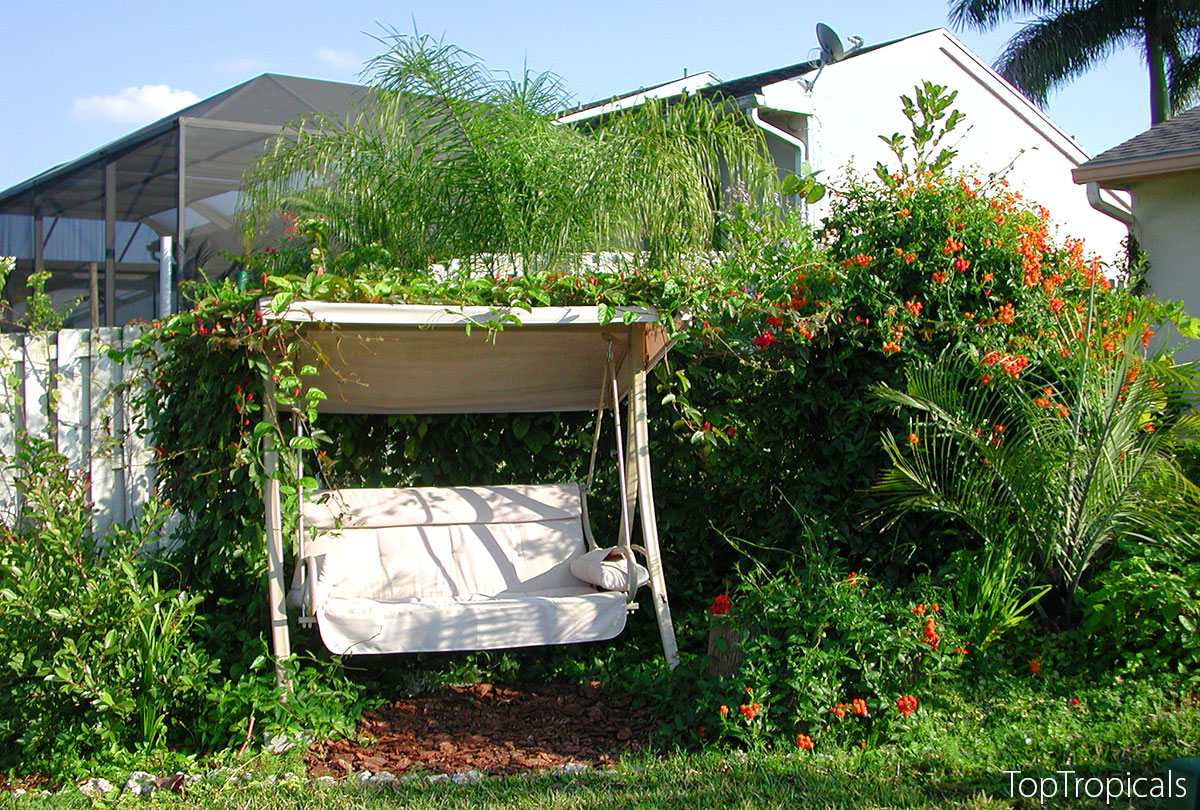
  • 🚩Megaskepasma erythrochlamys - Brazilian plume or Red Cloak is one of my favorite winter colors in the garden. It comes from a plant most people overlook.
  • It keeps pushing bold red flower spikes when many plants slow down.
  • 🚩It handles sun or shade, attracts butterflies and hummingbirds, and even surprises people with light cold tolerance. Big leaves, strong structure, and steady color make it a solid choice for beds, fences, or large containers.
  • 🚩If your garden needs color that does not quit when the season changes, this one earns its space.


🛒 Get the winter bloomer most gardens are missing

📚 Learn more:

Plant Facts

Megaskepasma erythrochlamys
Brazilian Plume, Brazilian Red Cloak
USDA Zone: 9-11
Large shrub 5-10 ft tallSemi-shadeFull sunRegular waterPink flowersPlant attracts butterflies, hummingbirdsSubtropical plant. Mature plant cold hardy at least to 30s F for a short time
  • Megaskepasma_erythrochlamys in Plant Encyclopedia
  • Turn up the color in your garden with the bold everblooming Brazilian plume

  • #Hedges_with_benefits #Butterfly_Plants

    🟢 Join 👉 TopTropicals

    Date: 9 Jan 2026

    Moringa leaves made simple - daily benefits and 6 easy recipes

    Moringa oleifera leaves and flowers

    Moringa oleifera leaves and flowers

    Moringa oleifera leaves on a branch

    Moringa oleifera leaves on a branch

    🌳 Moringa leaves made simple - daily benefits and 6 easy recipes


    Moringa tree is called the Tree of Life for a reason. Moringa leaves, often called miracle greens, are packed with vitamins A, C, and E, calcium, iron, potassium, and plant protein. Regular use supports immunity, digestion, skin health, energy levels, and overall vitality. Traditionally, moringa has also been used to support blood sugar balance, heart health, and inflammation control thanks to its rich supply of antioxidants and bioactive compounds like flavonoids and polyphenols.

    ❤️ Key benefits of eating moringa leaves daily:

    • 🌿 Supports blood sugar balance


      Moringa may improve insulin sensitivity and help stabilize blood sugar, reducing sudden energy crashes. Regular intake has been linked to better glycemic control and reduced inflammation.
    • 🌿 Improves digestion


      High fiber supports gut health, while natural detoxifying compounds help liver function. Moringa may also promote healthy gut bacteria and improve digestion regularity.
    • 🌿 Fights inflammation


      Moringa leaves contain compounds that help reduce inflammatory markers in the body, supporting joint, heart, and overall cellular health.


    6 easy moringa recipes to try

    • 🌿 Moringa laddoo


      Roast whole wheat flour in ghee, add fresh moringa leaves, jaggery, nuts, sesame seeds, and cardamom. Shape into laddoos and store airtight.
    • 🌿 Moringa smoothie


      Blend fresh moringa leaves, banana, curd, honey, and water. Top with soaked chia seeds and drink fresh.
    • 🌿 Moringa dal


      Cook toor dal with turmeric. Saute moringa leaves, onion, tomato, garlic, and chilies in ghee, mix into dal, and finish with cumin and asafoetida tempering.
    • 🌿 Moringa paratha


      Knead wheat flour with moringa leaves, onion, spices, and salt. Roll and cook on a hot tawa with oil or ghee.
    • 🌿 Moringa chutney


      Grind moringa leaves with coconut, green chilies, ginger, lemon juice, and salt. Serve fresh.
    • 🌿 Moringa tea


      Simmer fresh or dried moringa leaves in water for a few minutes, strain, and enjoy warm with honey or lemon if desired.


    🛒 Grow your own Tree of Life - Moringa

    📚 Learn more:

    Plant Facts

    Moringa oleifera, Moringa pterygosperma
    Horseradish tree, Ben Oil Tree, Coatli, Drumstick tree, Bridal veil, Miracle Tree
    USDA Zone: 9-11
    Plant used for bonsaiLarge tree taller than 20 ftSmall tree 10-20 ftFull sunModerate waterWhite, off-white flowersEdible plantPlant attracts butterflies, hummingbirdsDeciduous plantEthnomedical plant.
Plants marked as ethnomedical and/or described as medicinal, are not offered as medicine but rather as ornamentals or plant collectibles.
Ethnomedical statements / products have not been evaluated by the FDA and are not intended to diagnose, treat, cure, or prevent any disease. We urge all customers to consult a physician before using any supplements, herbals or medicines advertised here or elsewhere.Fragrant plantSubtropical plant. Mature plant cold hardy at least to 30s F for a short time
  • · Moringa oleifera in Plant Encyclopedia
  • · Moringa omelet recipe
  • · Moringa vs spinach: which one wins for nutrition?
  • · What edible plants and herbs can reduce your blood pressure
  • · Top 12 Eye-Supporting Fruit and Plants for Vitamin A - Retinol
  • · Memory & Cognitive Support (Brain Boosters) Edible Plants and Herbs
  • · How to grow drumsticks on a tree
  • · What is the most useful tree in the world?
  • · How to grow a happy Moringa Tree

  • #Food_Forest #Remedies #Discover #Trees #Recipes

    🟢 Join 👉 TopTropicals

    Date: 14 Jan 2026

    How to clone yourself: Diplazium baby tricks

    Peacock Fern (Diplazium proliferum)

    👀 How to clone yourself: Diplazium baby tricks

    • 🌿 This fern looks normal at first glance - until you look closer. Peacock Fern (Diplazium proliferum) does something unbelievable: it grows tiny baby plants right on its own fronds! Those little clones are called bulbils, and they develop while still attached to the leaf, ready to root and become new ferns. And once those baby plantlets get big enough, you can pin them to soil and they root into brand-new ferns.
    • 🌿 In fern books, you might also hear this called a "viviparous" or "proliferous" frond - because the new plants start developing right on the leaf. Basically, the fern is cloning itself in public!
    • 🌿 And it gets even better. When new fronds emerge, they curl up tightly and slowly unfurl like tiny baby dragons waking up. This classic fern move is called circinate vernation, and on Peacock Fern it looks especially wild.
    • 🌿 A rare, collectible fern and a conversation piece that feels more like a science experiment than a houseplant!
    • 🌿 Perfect for shaded, humid spaces and anyone who loves plants that do something unexpected.


    🛒 Get the fern that clones itself

    📚 Learn more:

    Plant Facts

    Diplazium proliferum, Asplenium proliferum
    Peacock Fern
    USDA Zone: 9-11
    Small plant 2-5 ftSemi-shadeShadeRegular water
  • Diplazium proliferum - Peacock Fern in Plant Encyclopedia
  • Australian Tree Fern rainforest for your yard

  • #Nature_Wonders #Shade_Garden #Container_Garden

    🟢 Join 👉 TopTropicals

    Date: 25 Jan 2026

    How to grow Winter blooms without sun, indoors or out

    Clerodendrum wallichiii - Bridal Veil

    ✨ How to grow Winter blooms without sun, indoors or out

    • ⭐️ Clerodendrum wallichii - Bridal Veil, is one of those plants that quietly steals the show. It is a graceful shrub that drapes itself in long, hanging sprays of white, lightly fragrant flowers just when many gardens are slowing down. Around fall and into winter, it suddenly comes alive with cascading blooms that really do look like a veil.
    • ⭐️ One of the things that makes Bridal Veil really special is that it blooms beautifully in bright shade, which is rare - not many flowering shrubs are happy without direct sun. Because it tolerates lower light so well and stays elegant in a container, it also makes a surprisingly great indoor plant in a bright room or sunroom.
    • ⭐️ What you will love most is how elegant but easygoing it is. The plant grows upright with soft, arching branches, usually topping out around 6–7 feet, with narrow, pointed leaves that stay neat and refined. The green stems set it apart from some other clerodendrums, giving it a lighter, airier look even when it’s not in flower.
    • ⭐️ Bridal Veil does best when you treat it gently. It likes bright light but not harsh afternoon sun, and it really appreciates protection from wind. Give it a spot with morning sun or bright shade, keep the soil evenly moist but well drained, and it rewards you without much fuss. It’s a great choice for containers, patios, or sheltered garden beds where you can enjoy the flowers up close.
    • ⭐️ Another bonus - it blooms when you want it most. While many plants rest, Bridal Veil puts on its show from fall through spring, making it a favorite for winter-interest gardens in warm climates. Pollinators notice it too, especially when little else is blooming.
    • ⭐️ If you like plants that feel a bit romantic, bloom off-season, and don’t need constant attention, this one earns its place fast. Bridal Veil is quiet, graceful, and unforgettable once you’ve grown it.


    🛒 Start your Clerodendrum collection

    📚 Learn more:
    #Shade_Garden #How_to #Hedges_with_benefits #Container_Garden

    Plant Facts

    Clerodendrum laevifolium, Clerodendrum wallichii, Clerodendrum nutans
    Bridal veil, Nodding Clerodendron
    USDA Zone: 9-11
    Large shrub 5-10 ft tallSmall plant 2-5 ftSemi-shadeModerate waterWhite, off-white flowersPlant attracts butterflies, hummingbirdsFragrant plantSubtropical plant. Mature plant cold hardy at least to 30s F for a short time
    🟢 Join 👉 TopTropicals

    Date: 25 Jan 2026

    Collecting clerodendrums: big color, little effort

    Clerodendrum collage

    Clerodendrum collage

    🎨 Collecting clerodendrums: big color, little effort

    • 🎨 Collector hook


      If you love plants that look rare, unusual, and a little dramatic - but do not want high-maintenance divas - Clerodendrums belong in your collection.
      Clerodendrums are a surprisingly diverse group of plants, ranging from flowering vines to shrubs and even small trees. What they all share is bold, colorful blooms and an easygoing nature that makes them far less fussy than they appear. This combination of exotic looks and forgiving care is exactly why collectors gravitate toward them.
      Many clerodendrums bloom repeatedly through the year in warm climates, and several tolerate lower light better than most flowering plants. That makes them flexible - happy in the garden, in containers, on patios, or even indoors near a bright window. Their flowers come in striking combinations of red, white, blue, pink, and purple, often with unusual shapes that stop people mid-walk.
    • 🎨 Why clerodendrums earn collector status


    • ✦ Uncommon, eye-catching flowers
    • ✦ Long or repeat bloom cycles in many varieties
    • ✦ Vines, shrubs, and small trees in one genus
    • ✦ Excellent performance in containers
    • ✦ More tolerant of lower light than expected


    🎨 Clerodendrum care made simple


    Give clerodendrums bright filtered light to partial sun, regular watering with good drainage, and light feeding during active growth. A little pruning keeps them tidy and encourages fresh blooms. That is it. No complicated routines, no constant fixing.

    For collectors who want maximum visual payoff without constant effort, clerodendrums deliver exactly what the title promises - big color, very little work.

    🛒 Start your Clerodendrum collection

    📚 Learn more:
    #Butterfly_Plants #Shade_Garden #How_to #Hedges_with_benefits #Container_Garden

    Plant Facts

    Clerodendrum bungei
    Cashmere (Cashmir) bouquet, Glory Bower, Clerodendron
    USDA Zone: 9-11
    Large shrub 5-10 ft tallSemi-shadeFull sunRegular waterRed, crimson, vinous flowersPink flowersPlant attracts butterflies, hummingbirdsDeciduous plantFragrant plantSubtropical plant. Mature plant cold hardy at least to 30s F for a short time
    🟢 Join 👉 TopTropicals