Garden Blog - Top Tropicals

Date: 24 Jun 2018

Cold hardy tropical fruit trees for Luisiana
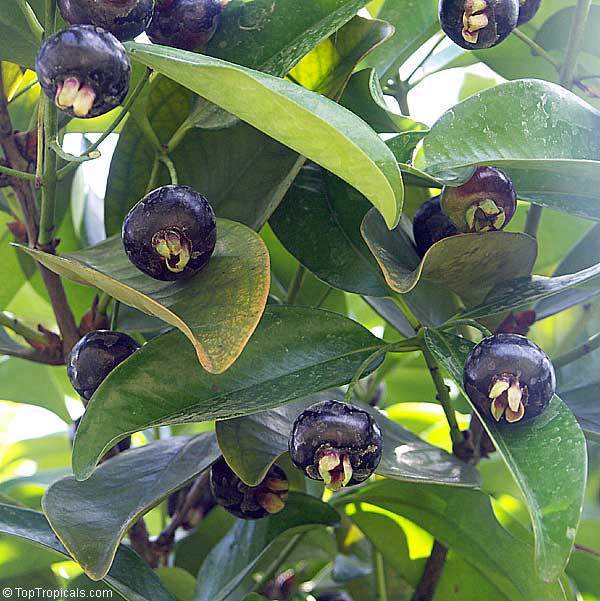
Q: I've just moved to Louisiana and have been wondering whether it would make sense to plant some tropical fruit trees in our garden. Average lows in New Orleans are 41 deg F in January and February, although we did hit 25 once with the Arctic vortex. I'm interested in litchi, longan, rambutans, and persimmons. Do you have varieties that can tolerate Louisiana's temperature range? I'd love mangosteen but I don't suppose they will survive. Do you have any suggestions on tropical fruit trees that I could try?

A: Average temperatures are for statistics only; it is actual temperatures that may hurt your cold sensitive plant. This is what you should keep in mind when starting your tropical fruit collection:
1) Ultra-tropical plants like Rambutan can not survive winters below 45-50F. However, they can be successfully grown in containers in a greenhouse or moved indoors into a sun room during cold periods.
2) Tropical plants like Litchi and Longan may take some light frost once established. Still, for areas with freeze our advice is - keep them in pots and move inside in case of cold.
3) There is a number of subtropical fruit trees that are hardy enough to take some freeze. Persimmon, Feijoa, Fig, Cattley Guava, Jujube, Kiwi, some Eugenias and others. Please refer to our Tropical Fruit Sensitivity Chart.
4) Remember that plant's ability to survive winter depends on several factors, not only temperature itself. Important factors are: wind protection (chill wind kills rather than low temperature itself), exposure, how close the tree is planted to the house, plant maturity and its overall strength and health. If a plant had received good nutrients during summer, has well established root system, planted in enclosed area protected from winds and has plenty of bright sunlight - it has better chances to survive than a weak plant in warmer conditions.
5) Use SUNSHINE plant boosters for improving cold tolerance of your tropical plant. It only takes a few drops, and only costs $5!

Date: 7 Feb 2017

After Super Bowl Sale

Chill out and relax by planting a tree! We just watched the most exciting Super Bowl ever... What a game! It was the greatest comeback in Super Bowl in history. Now it is time to let Top Tropicals help give your garden a great comeback too. Relax, have some peaceful happy time, and nothing can be better than planting a tree!

The best tree ever, by many features is a Mango tree. Here at least 5 reasons why:
1. Mango tree is good for beginners since it has low maintenance requirements, including low water needs.
2. Mango tree is easy to ship.
3. Mango tree is a great present.
4. Mango tree is a rewarding fruit tree that will produce fruit for you the same or next year - all our varieties are grafted and ready to bloom.
5. Mango tree produces the most delicious fruit in the world. The sweetest, flavorful, fiberless varieties can be only tasted from home gardens - they simply are not available from grocery stores due to transportation reasons (only fiborous low quality fruit can be safely shipped and stored).

Take advantage of this generous 25% off offer and get yourself a mango tree:
- Dwarf varieties, "Condo" mangoes, great for containers: Carrie, Cogshall, Ice Cream, Julie, Lancetilla, Lemon Meringue, Mallika, Nam Doc Mai, Pickering.
- Large, fast growing, vigorous trees that will quickly create shade and comfort in your garden: Bailey's Marvel, East Indian, Haden, Jakarta, Philippine, Southern Blush, Valencia Pride.
- Exotic collectibles that are hard to find and almost nobody has, be a proud owner of delicious exotic flavors: Alampur Baneshan, Alphonso, Choc Anon (Miracle), Heidi, Maha Chinook, Pim Seng Mun.

Happy planting, end enjoy your fruit soon! See all varieties (for backorder items, add to your wishlist and you will be notified when available, very soon!)

Hurry up, WHILE THE STOCK LASTS! Offer is valid 2 days only, and expires February 9. Offer not valid for previous purchases.

Date: 25 Jan 2021

Healthy Plants: Q&A from Mr Booster

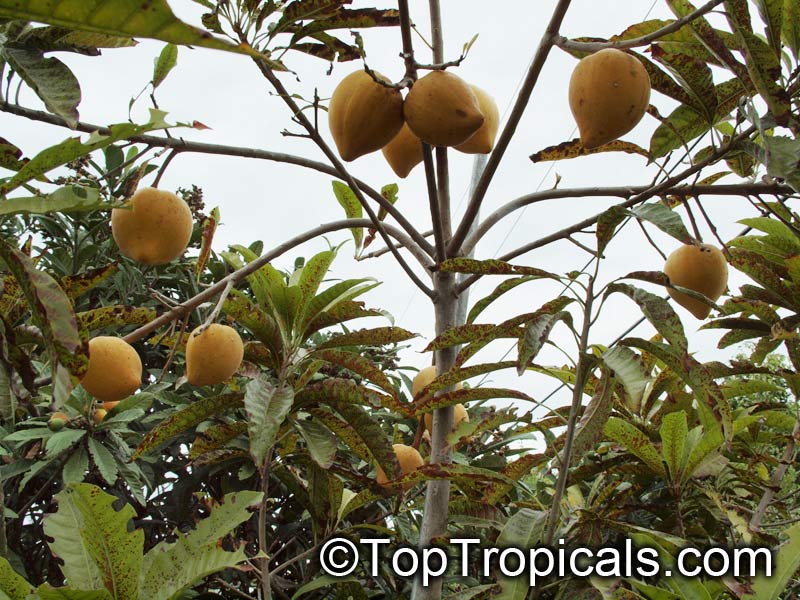
How to get Canistel tree to produce
without dropping flowers and fruit

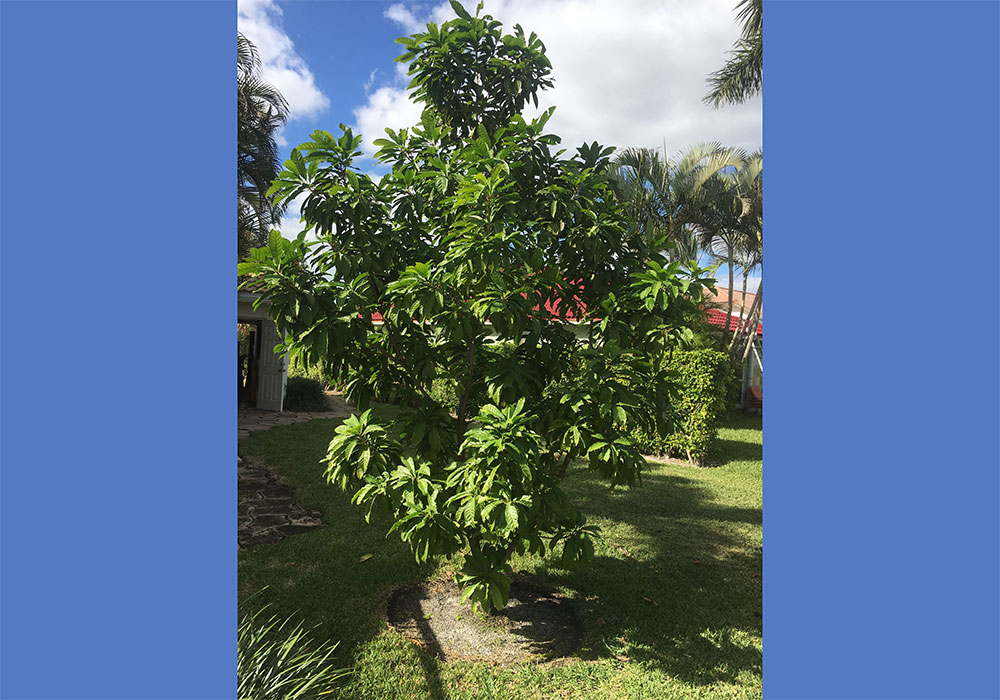
Q: My Canistel tree is 3 1/2 years old and is growing very well, see the picture below. It gets hundreds of pea sized "berries" but then they fall off. No canistel fruit. What's wrong?

A: You have such a nice looking tree, it is a shame you can't get any fruit to ripen.
In our experience, Pouteria trees dropping fruit prematurely is a very common problem. There may be one of the following reasons, or a combination of them:
- Cold winters may affect production, and while Canistel is generally pretty hardy tropical plant that can easily withstand short periods of chill, the fruit may never form properly if it had a cold winter.
- Lack of water. Canistel tree is pretty drought tolerant, but for the proper production cycle it needs regular irrigation. Especially during hot summer.
- The tree may be not strong enough; young trees drop fruit very often when they don't have enough "fruiting energy" built up in their system.
Your tree looks well established and vigorous, however, flower/fruit drop is often a sign of insufficient nutrients of particular kind, usually Boron (B) and/or Molybdenum (Mo): either when a tree is too young and not strong enough, or because of poor soils and lack of necessary elements.

Here is what can be done, considering you live in a warm, frost-free climate.

1. Provide regular fertilizing program. We recommend liquid fertilizers Sunshine Boosters that are safe to use with every watering and year around. It is beneficial to switch plants from traditional "slow-release" fertilizer to the liquid one because it makes a huge difference in plant growth and flower/fruit quality and quantity. See also:
- Why liquid fertilizers are better than dry
- Article about benefits of liquid fertilizers.

Use this plant food for your Canistel tree:
SUNSHINE C-Cibus - Crop Nutrition Booster

2. Apply micro-element remedies that are very effective for improving fruit production, especially when flower or fruit drop occurs:

SUNSHINE Honey - promotes more efficient blossoming and pollination, makes flowers bigger and reduces bud drop.
SUNSHINE SuperFood - improves plant vigor and quality and size of flowers These are all natural, eco-friendly supplements that work great for fruit trees and other edibles.

Date: 7 Oct 2025

🌸 Caring for Winter-Blooming Trees

Smokey  the  tuxedo  cat  plants  a  young  Bauhinia  blakeana  tree  in  the 
 ground  while  Sunshine,  a  ginger  cat,  relaxes  in  a  wicker  recliner  with  a  cup
    of  pumpkin  latte.  A  Callistemon  Little  John  bottlebrush  blooms  beside  him, 
 surrounded  by  pumpkins,  autumn  leaves,  and  warm  golden 
 light.

Tips from Top Tropicals Plant Expert - Tatiana Anderson

When northern gardens fade into gray, our tropicals wake up. Winter is color season here - and even if you live up north, you can still enjoy these same flowering trees indoors or on a sunny patio.

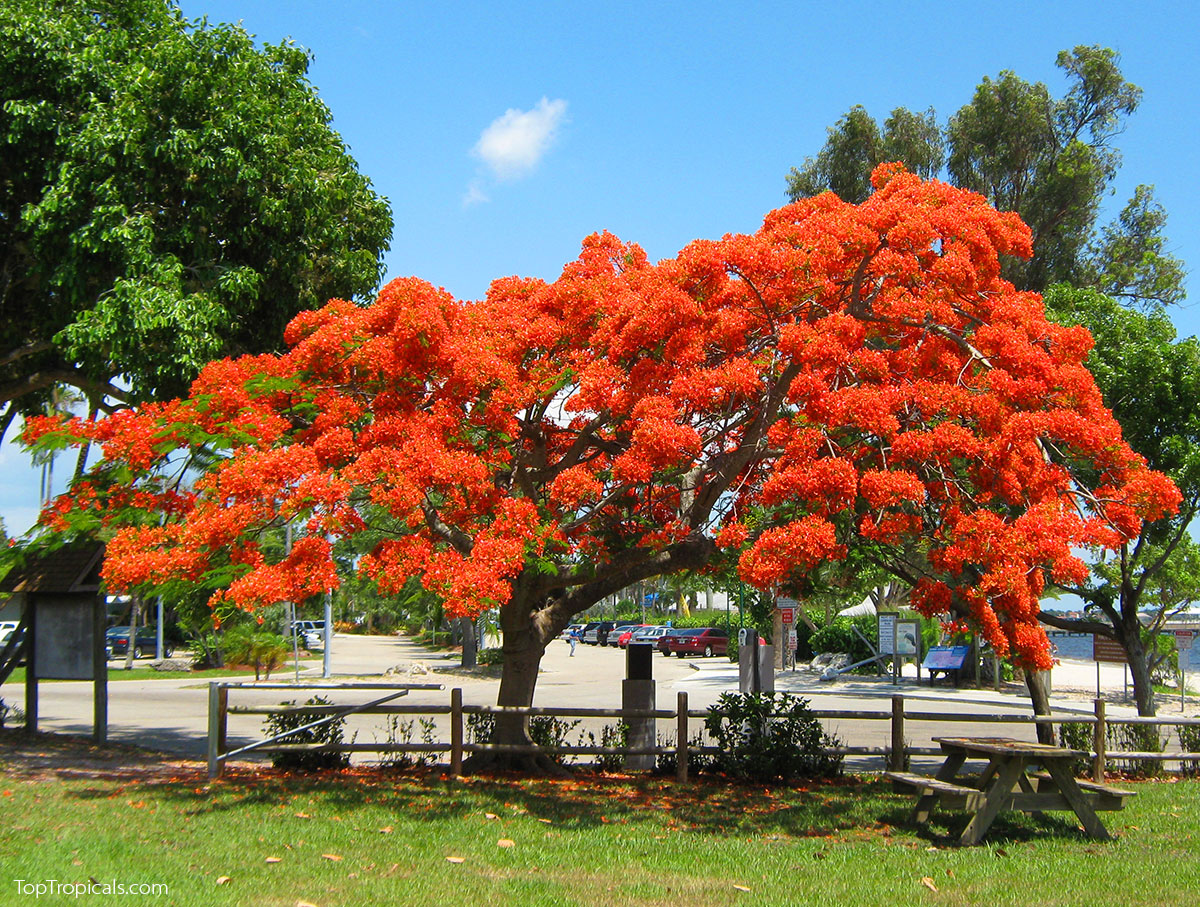
From the fiery Royal Poinciana to the golden Tabebuia and violet Jacaranda, these eight trees prove that winter can bloom anywhere

How to Care for Winter-Flowering Trees

We're often asked, at Top Tropicals, “Can I really grow tropical trees in winter?” Yes — with the right light and care, you can. Here’s what works best both outdoors and indoors, according to our expert, Tatiana Anderson.

🌡️ Fall Planting Guide

Let’s talk about timing, because that’s the part most people get nervous about. Everyone asks: “Isn’t it too cool to plant now?” — and the answer is no! Fall and early winter are actually the best months for tropicals in Zones 9 to 11.

Here’s why: the air has cooled off, but the soil is still warm. Roots love that combination. They quietly spread underground while the rest of the plant takes a break. By spring, those roots are ready to feed a burst of new growth — and that’s when you’ll see the first big flush of flowers.

Pick a sunny spot that gets plenty of light — six to eight hours if you can. Loosen the soil and mix in compost or pine bark so it drains well. Dig a hole about twice as wide as the pot and just as deep. Set the plant level with the ground, backfill, and water it deeply to settle everything in. Then add mulch — two or three inches is plenty — but keep it away from the trunk so it can breathe.

Tatiana’s tip: “Fall planting builds roots while everyone else is resting. By spring, your tree wakes up ready to grow.”

🌳 Outdoor Care (Warm Climates Zones 9–11)

Now, let’s talk about what happens after planting — because real gardening starts once the plant is yours. Tropical trees thrive on routine: steady sunlight, deep watering, and just a bit of attention.

Water them about once a week when the weather is mild, more often if it’s dry or windy. Always check the soil first — if it feels dry two inches down, go ahead and water. Mulch helps more than most people realize — it keeps roots cool in summer and warm in winter, and it saves you from watering as often.

Now, for those of you in Zone 9, here’s the truth: your trees can take a chill, but they don’t love surprises. A quick night in the upper 20s F won’t hurt mature plants, but young ones appreciate a little help — a frost cloth or being planted at the south side.

And don’t underestimate the wind. Cold, dry gusts can burn leaves faster than frost. Use fences, hedges, or taller shrubs as windbreaks, and take advantage of microclimates — those warm pockets next to the house, brick patios, or corners that get extra afternoon sun.

Tatiana’s tip: “A tropical garden in Zone 9 isn’t about fighting nature — it’s about cooperating with it. Find the warm corners, protect from the cold wind, and your trees will thank you with flowers all winter.”

🏚️ Indoor & Patio Care (Cooler Climates)

For our northern friends — yes, you can grow tropicals indoors! You just need good light, warm air, and a little attention.

Pick a large pot, with drainage holes and a light tropical soil mix. Place it in a bright window — south or southwest if you can — or under grow lights for about 12–14 hours a day. Keep temperatures between 65 and 85 F, and water when the top inch of soil dries out.

Misting helps keep leaves clean and adds humidity. Rotate the pot every couple of weeks so all sides get sun. In summer, move your plant outdoors gradually so it can enjoy real sunlight — then bring it back in before nights drop below 40 F.

Tatiana’s tip: “Don’t be afraid of growing trees in pots. They adapt beautifully — just select the right trees and pay attention to their needs.”

✔️ Learn more: Secrets of Winter planting - tropical planting breaks the rules.

🎥 Watch short videos about Winter Bloomers:

Royal  poinciana,  Flamboyant  tree,  Delonix  regia

💲 Special Offer – 20% off Winter Bloomers!

Get 20% OFF winter bloomers with code

BLOOM2025

Min order $100. Excluding S/H, valid online only, cannot be combined with other offers.

Hurry, offer expires October 13, 2025!

👉 Explore Winter Flowering Plants

Date: 6 Dec 2025

🌿 Bring the Jungle Inside: Winter Survival Guide Part 1: Lighting ❄️

Smokey  the  taxedo  cat  adjusts  an  indoor  grow  light  while  Sunshine  the 
 ginger  tabby  sits  holding  a  hygrometer  he  does  not 
 understand.

Smokey: "Winter lighting must be precise. I need this light exactly at 14 inches."
Sunshine: "Sure. I am holding this… little number thing."
Smokey: "It reads humidity. Your main job is to look cute."

🌞 LIGHT, TEMPERATURE, PLACEMENT

Winter indoors is a different kind of battlefield. Dark rooms. Dry air. Cold windows. Random drafts. Weak light. Sad plants. We've been talking about keeping your tropicals alive outdoors previously. But some of you have no choice this time of year. You have to bring the jungle inside.

If that is you, then this is your plant survival guide.

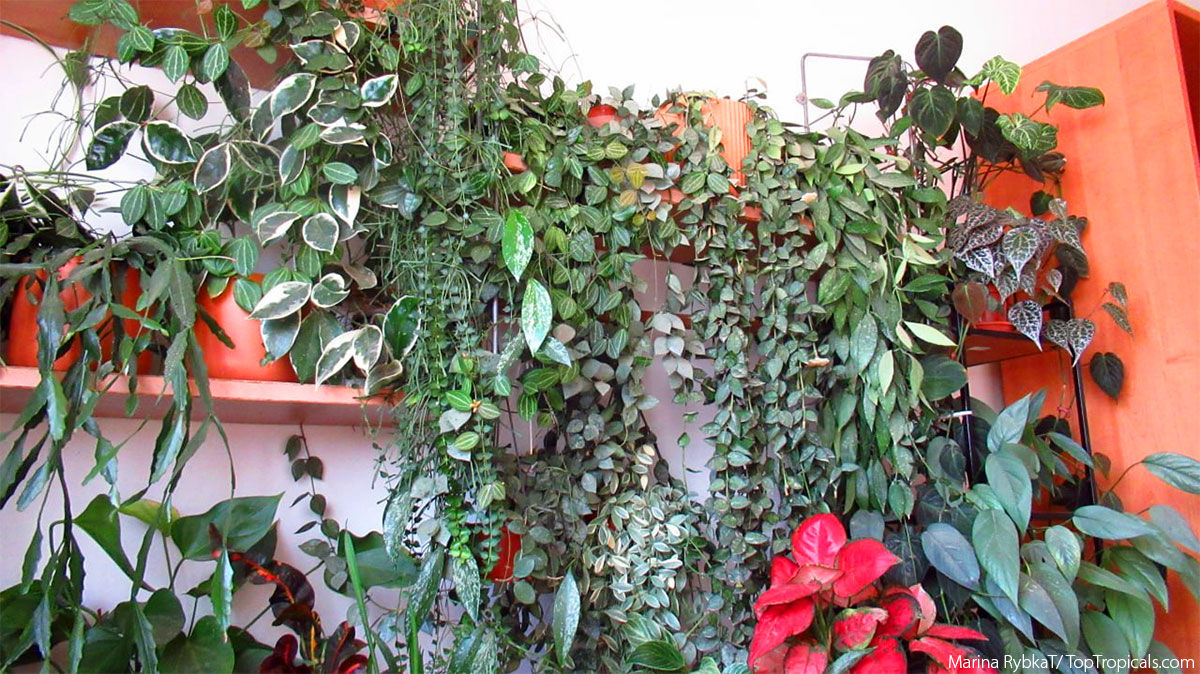
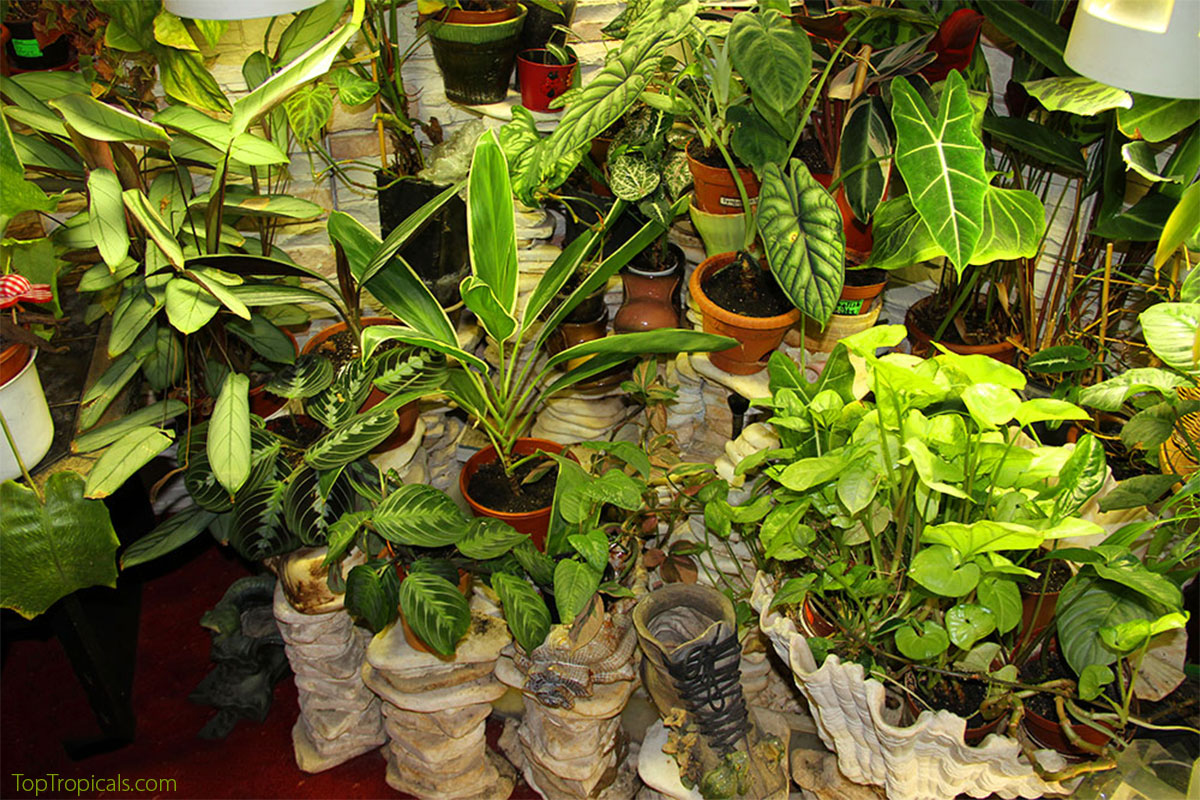
Indoor  wall  of  tropical  houseplants,  including  cascading  vines,  variegated  foliage,  and  mixed  aroids  arranged  on  shelves.

☀️ LIGHT: THE WINTER LIFELINE

Light advice here comes straight from our in-house expert, Michael Dubinovsky, a high-tech lighting engineer with over 30 years of hands-on experience. If he says brightness beats hours, trust him.

Here is the truth: Indoor light in winter is 10 to 50 times weaker than outdoors. Short days. Low-angle sun. Windows filtering half the useful light. It all adds up.

Tropicals need 10 to 12 hours of real brightness. Winter sun cannot do that on its own. Not even in a big window. So we help them.

Use bright LED shop lights or utility lights. 5000K to 6500K CCT. High lumen output. Skip decorative bulbs. Skip purple grow fancy toy lights. If you want a single plant light, even a clamp lamp is fine if you screw in a bright daylight LED bulb.

Panels work best for plant clusters. Bars for shelves. Bulbs for single plants. And grouping plants under one bright panel always beats spreading them out.

Distance matters: keep LEDs about 12 to 18 inches above the leaves. Too close: leaf burn. Too far: stretching, weak stems.

Leaves reaching up? Light is too high or too weak. Leaves curling down? Light is too close.

If you want a reality check, download any smartphone lux meter app. Most indoor corners are 50 to 200 lux without supplemental light. Tropicals want much more

And a quick tip about windows: winter sun comes in sideways. A spot that looks bright at noon can go dull by 2 PM. Don't count of window light

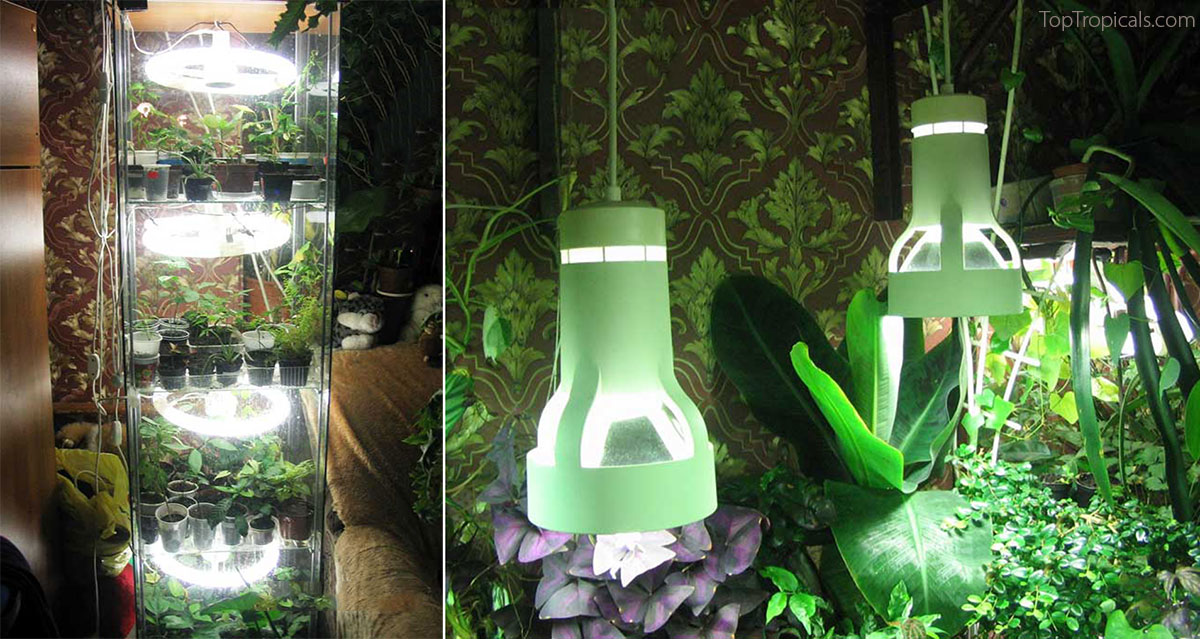
Indoor  grow  setup  with  bright  LED  lights  illuminating  shelves  of  tropical  plants.

Bright light or long hours

People try to fix weak light by running it for 16 or 18 hours. That does not work. Plants care more about light intensity. A few hours of strong light beats all-day dim light. If the light is weak, adding more hours will not change anything except your electric bill.

Simple rule: Short duration but bright is always better than long duration but weak. - by Michael, Top Tropicals lighting expert

No need for fancy horticultural panels

You do not need purple grow lights. You do not need special horticultural fixtures. You do not need expensive panels unless you want real winter growth.

For winter plant holding till spring, the inexpensive solution works great:

  • Bright LED daylight bulbs (5000K to 6500K) from hardware store
  • High lumen output
  • Inexpensive clamp lamps
  • Aim directly at the plant from 12 to 18 inches

This setup keeps tropicals happy until spring without buying anything fancy. Save the money for soil, pots, or your next plant.

Indoor plant lighting safety note:

  • Use timers. Keep cords dry. Do not overload outlets.
  • Do not hang lights over humidifiers.
  • And do not put fixtures on piles of books to raise them. People do this.

Indoor  plants


✔️ WINTER INDOOR FAQ: TEMPERATURE AND PLACEMENT

Q: I am in Home Depot. Which light do I buy?
A: LED shop light, daylight color (5000K to 6500K), high lumens. Skip fancy plant bulbs.

Q: Can I use clamp lamps or floor lamps for plants?
A: Yes. Clamp lamps with a bright daylight LED bulb work great for winter holding.

Q: Do I need special horticultural grow lights?
A: No. A bright LED daylight bulb works fine for winter. Save the fancy lights for real growth projects.

Q: How far should the light be from the plant?
A: About 12 to 18 inches above the leaves. Too close burns. Too far stretches.

Q: Can I run weak lights for 18 hours to compensate?
A: No. Weak light plus long hours still equals a weak plant. Brightness matters more than hours.

Q: How do I know if a spot is bright enough?
A: Use a free phone lux app. Most indoor corners are much too dim for tropicals.

Q: I have a huge window. Why do I still need LEDs?
A: Indoor winter light is weak, short, and filtered by glass. Plants want intensity, not just a big window.

Q: My window faces north. Now what?
A: North windows are decorative only. Use supplemental lighting or move the plant.

📚 Learn more: