Date: 23 Feb 2026
 Macadamia Tree Care
By Tatiana Anderson, Horticulture Expert at Top Tropicals with Smokey & Sunshine help
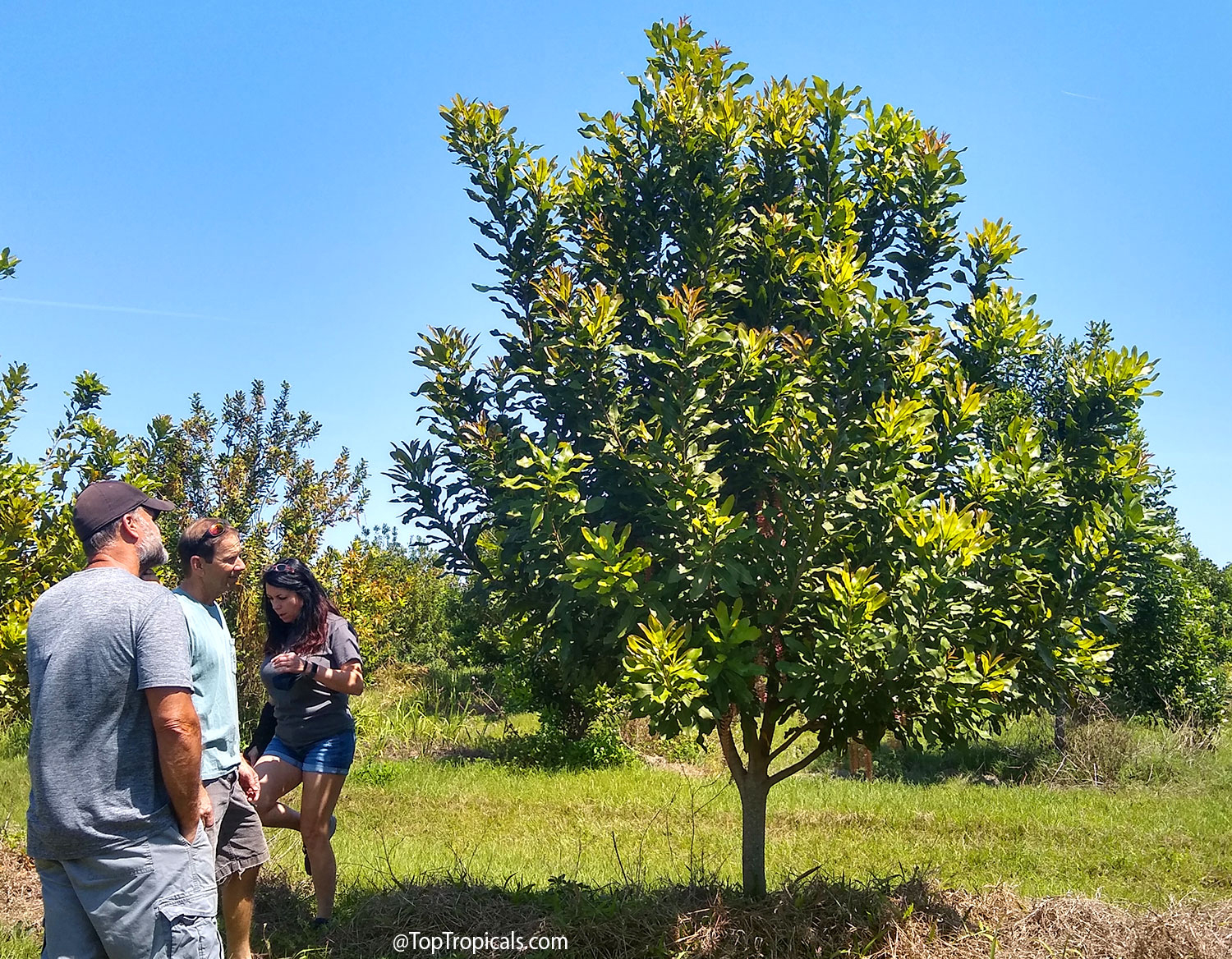
🌳 Growing Macadamia Tree
Macadamia is not a fragile tree, but it does have preferences. If you respect them from the beginning, the tree rewards you for decades.
- Start with the site. Drainage is everything. Macadamia will tolerate cool weather better if planted in a well-drained area. Avoid low spots where water sits after rain. If your soil is dense or clay-like, build a mound or improve drainage before planting.
- Choose full sun whenever possible for the best nut production.
- Planting location matters. A south or southeast exposure near a wall can create a warmer microclimate that buffers cold nights. Freeze plus wind is more damaging than temperature alone. Macadamia handles cold better when protected from winter wind.
- Dig a hole about twice as wide as the container, but no deeper than the root ball. Set the tree level with the surrounding soil. Do not bury the trunk.
- Water regularly during the first three months while the tree establishes roots.
- Fertilize lightly. Macadamia does not respond well to over-fertilizing. Macadamias prefer mild liquid fertilizers, SUNSHINE Boosters Robusta is ideal for it. You may also use controlled release Green Magic every 6 months, it is especially formulated for hot climate. To keep leaves healthy deep green without yellowing, micro elements must be applied on regular basis, we recommend to always have handy Sunshine Superfood micro nutrients complex.
- Young trees should be protected if temperatures drop below freezing. Once established, they become far more resilient.
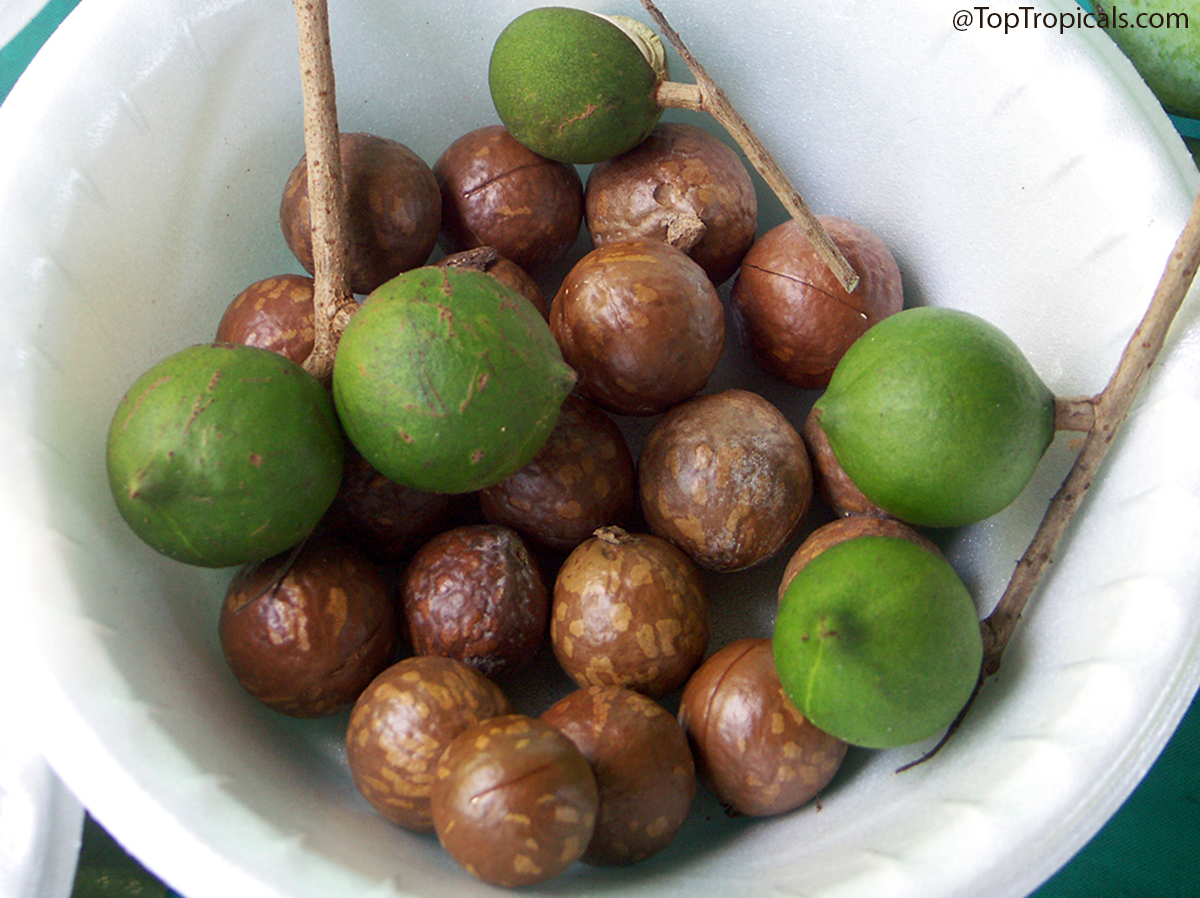
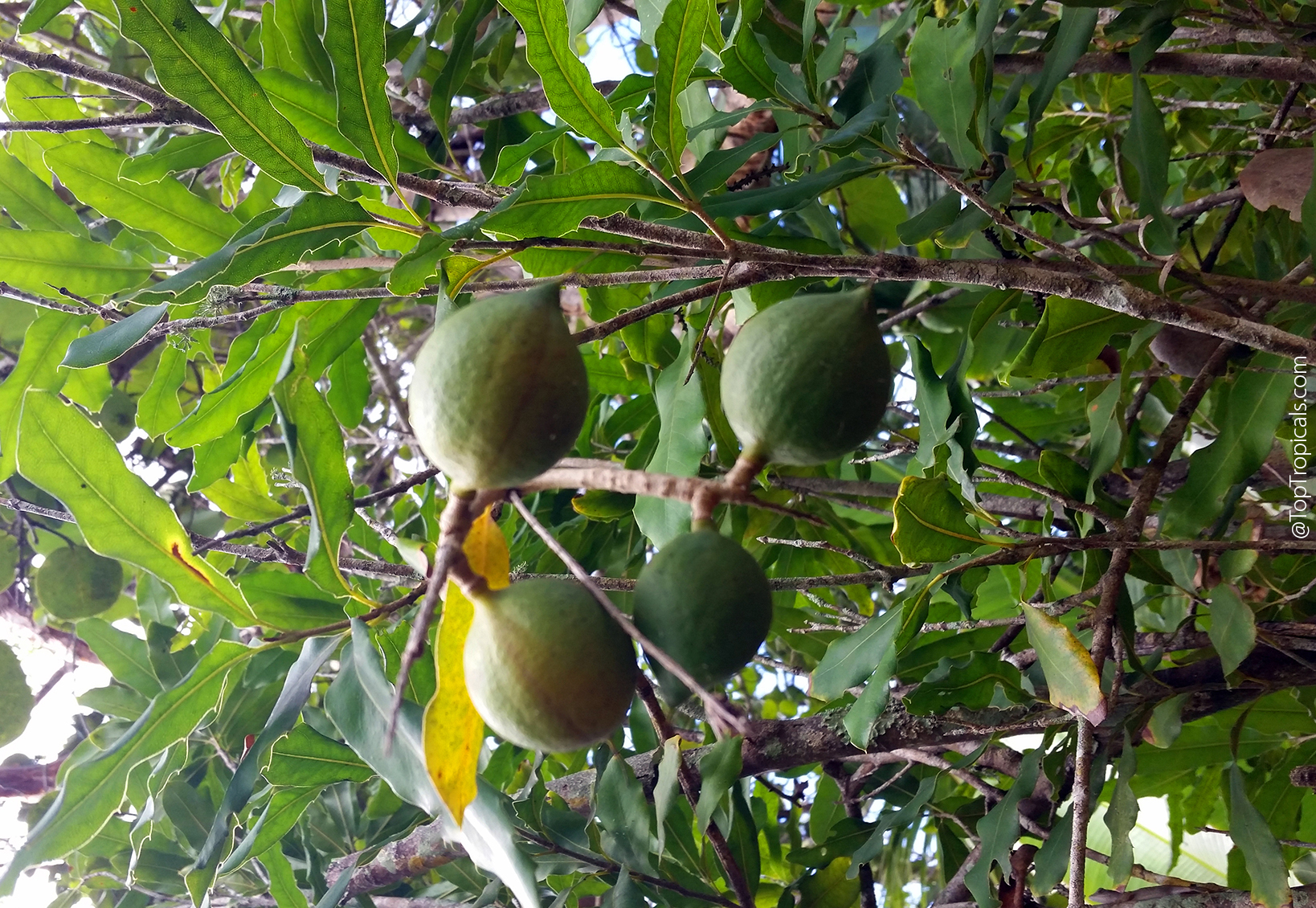
- Harvest timing: Nuts mature 6-7 months after flowering. Husk splits naturally when ready. Fallen nuts should be collected quickly.
- Flower and Nut Drop: Many gardeners panic when they see flowers or small nuts drop, but Macadamia naturally sheds excess fruit. It does not mean failure; the tree simply keeps what it can afford to feed.
- Macadamia is relatively low-maintenance, but watch for squirrels and rats. They love the rich nuts as much as humans do, so be sure to collect fallen nuts quickly.
- Root Sensitivity: Macadamia roots dislike disturbance. Transplant carefully. Avoid root damage.
- Macadamia is not a fast-return crop. It begins producing a few years and increases gradually. But once mature, it becomes a steady, reliable part of your garden.
Learn more: Macadamia - Hard Sweet Nut and Hardy Tree
🌱 Growing Macadamia in a Pot
- Container size: Start large. A 15-25 gallon pot is ideal for long-term growth.
- Drainage: Critical. Use a container with multiple drainage holes.
- Soil mix: Use a high-quality, well-draining container mix. Avoid heavy garden soil. Top Tropicals Abundance soil-less mix is specially formulated for pot growing
- Light: Full sun is best. Strong light improves flowering and nut production.
- Watering: Water deeply, then allow the top layer to dry slightly before watering again. Avoid constant saturation.
- Feed lightly and consistenly. SUNSHINE Boosters Robusta liquid fertilizer is safe to use with with every watering. During hot season you may add controlled release Green Magic every 6 months. It is essential to apply micro elements on Macadamias: Sunshine Superfood micro nutrients complex.
- Cold protection: If temperatures drop below freezing, move the container to a protected area such as a garage or greenhouse.
- Pruning: Prune lightly to control size and maintain airflow within the canopy.
- Expectations: Container trees may produce fewer nuts than in-ground trees, but they offer mobility and climate control.
- Smokey says: Container trees offer mobility and climate control so you never have to worry about a freeze!
✍️ More About Macadamia from Garden Blog
🚫 Common Mistakes When Growing Macadamia
-
Planting in poorly drained soil:
The most common mistake. Macadamia will decline quickly in heavy, waterlogged ground. If drainage is questionable, plant on a mound. -
Overwatering young trees:
Newly planted trees need consistent moisture, not constant saturation. Wet roots lead to root problems. -
Over-fertilizing:
Too much fertilizer causes weak growth and nutrient imbalance. Feed lightly and avoid heavy nitrogen applications. -
Planting too deep:
The top of the root ball should sit level with or slightly above the surrounding soil. Do not bury the trunk. -
Ignoring micronutrients:
Macadamia is very prone to iron, zinc, and copper deficiencies. Yellowing leaves may signal a micronutrient issue. Applly Sunshine Superfood on regular basis. -
Expecting instant production:
Macadamia takes time. Early years build structure. Patience is part of success. -
Skipping cold protection for young trees:
Established trees are tougher, but young plants should be protected below freezing.
❓Frequently Asked Questions (FAQ)
- Is Macadamia toxic to pets? While the nuts are a superfood for humans, they are toxic to dogs. If you have a dog that tends to forage in the garden, ensure you harvest fallen nuts promptly or fence the base of the tree during the drop season.
- Which varieties are best for the "Survivor" garden? Look for Macadamia integrifolia (smooth-shell) or hybrids like 'Beaumont' (M. tetraphylla x M. integrifolia). Hybrids often show slightly better cold tolerance and more consistent "home garden" production.
- How tall will my tree get? In the ground, an unpruned Macadamia can reach 20–30 feet. However, they respond very well to "heading back" (pruning the top) to keep them at a manageable 12–15 feet for easy harvesting.
- Do I need two trees for cross-pollination? Macadamias are self-fertile, meaning one tree will produce nuts. However, planting two varieties near each other often results in a significantly heavier "nut set" due to cross-pollination.
- Why are the leaves on my Macadamia prickly? Don't panic—this is normal! Some species, particularly M. tetraphylla, have serrated, holly-like leaves. This actually makes them a great "defensive" hedge against intruders or deer.
- When exactly should I harvest? The tree tells you when it's ready. Don't shake the tree; wait for the nuts to fall naturally. In Florida, this usually happens between August and November. If the green outer husk hasn't split yet, let them sit in a shaded, dry spot until they do.
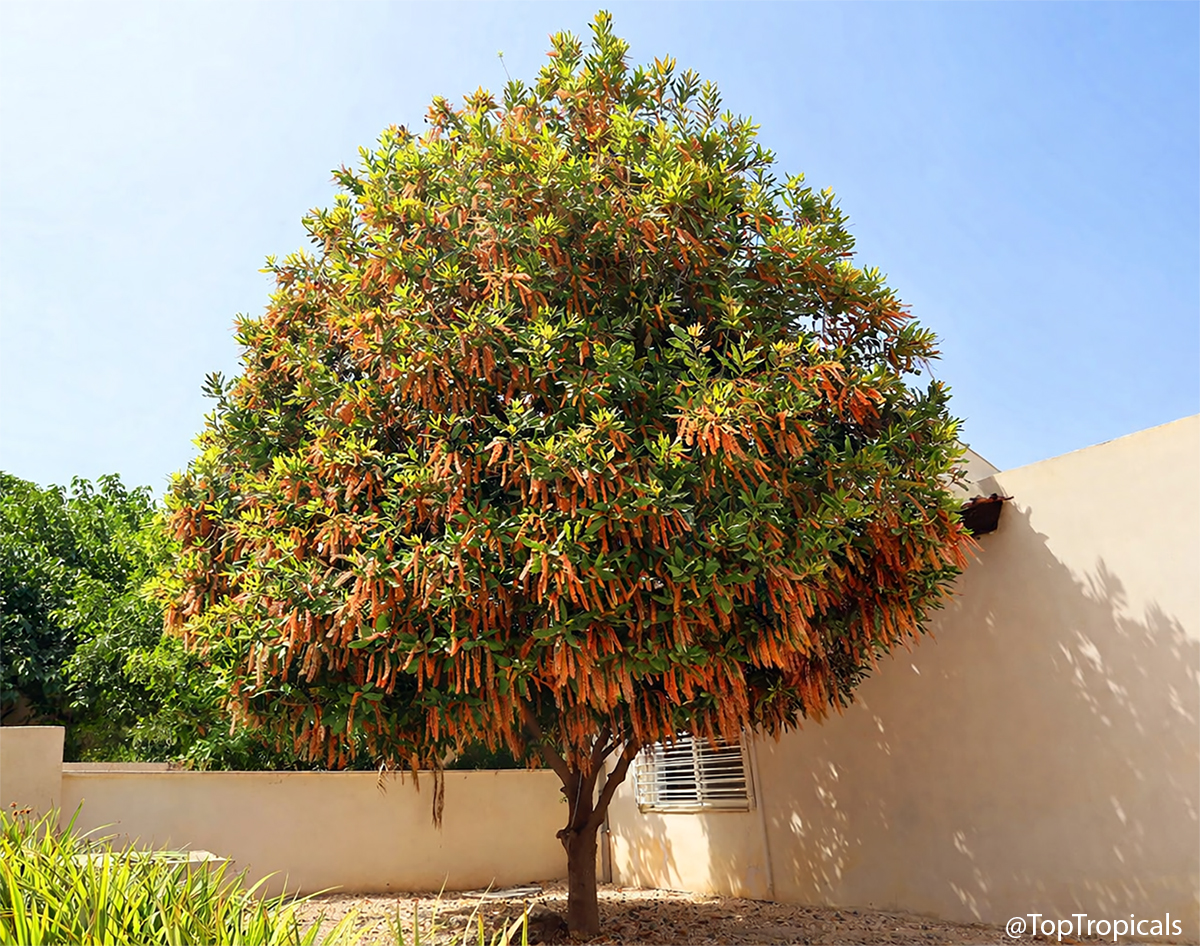
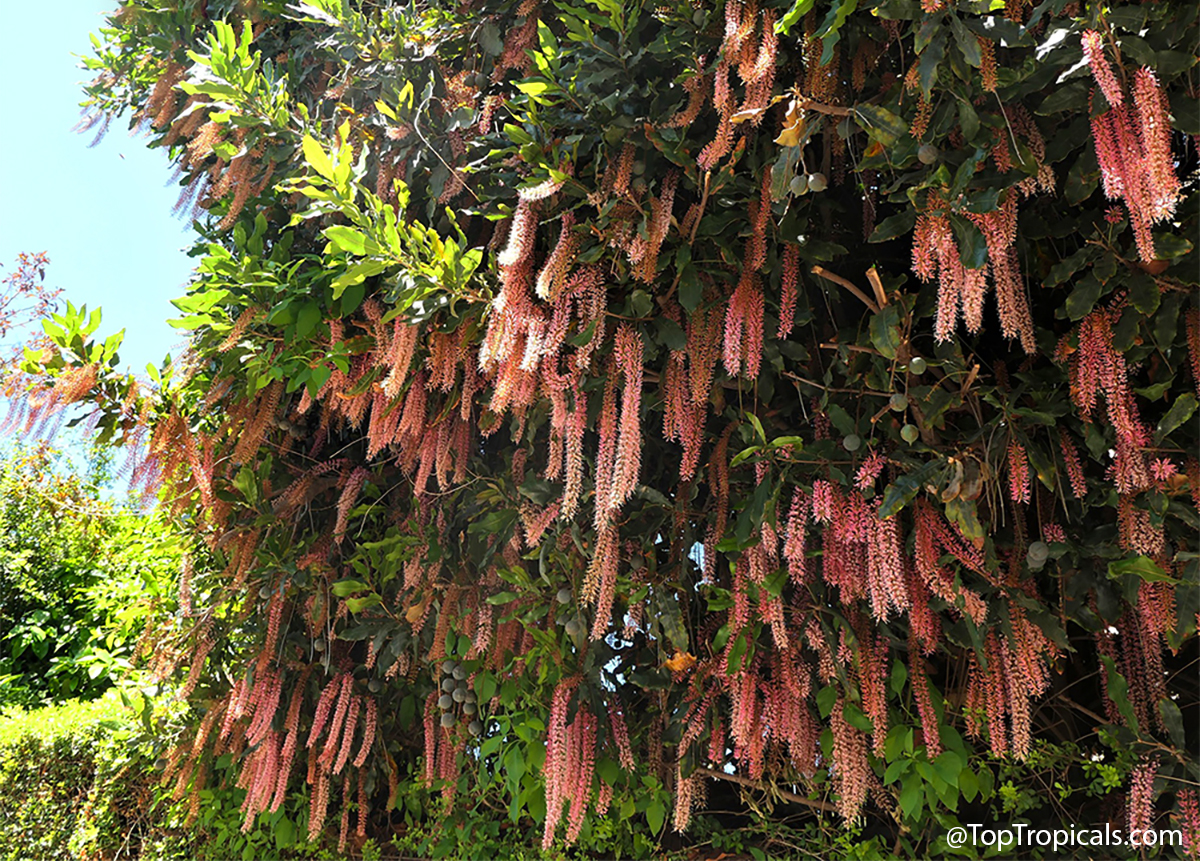
- My tree has "clusters" of flowers but no nuts. What happened? Macadamias produce long racemes (flower spikes) with hundreds of tiny blooms. It is normal for 90% of these to fall off. The tree only keeps what it can afford to "feed." Boost your success by using a combination of Sunshine C-Cibus liquid fertilizer and SUNSHINE Superfood micro element supplement during the flowering stage to help the tree retain more fruit.
- Can I grow them from a nut I bought at the store? Unlikely. Commercial nuts are usually roasted or dried at high heat, killing the embryo. Even if a raw nut sprouts, it may take 10–12 years to fruit and the quality is a gamble. Buying a grafted tree saves you a decade of waiting.
We don’t just sell plants; we test them. The data from this February freeze proves that with the right selection and proper drainage, 'tropical' doesn’t have to mean 'fragile.' Don’t wait for the next cold front to find out what in your garden is vulnerable. It is time to replace those empty spots with proven survivors that offer both beauty and a premium harvest. If it can stand up to 25F in our fields, it’s ready for your backyard.
Coming in Part 2...
Smokey is already crunching the numbers on our next survivor, and Sunshine found another tree that stayed perfectly green in the wind. Stay tuned to see which fruit tree made the cut!
Date: 22 Sep 2025
When do I get the fruit from my Dragon Fruit?
Dragon fruit varieties
🍉 When do I get the fruit from my Dragon Fruit?
- 🌵Dragon Fruit (Pitaya) is one of the most rewarding exotic fruits to grow. Sweet pulp, striking looks, and plenty of health benefits make it a favorite. You'll see it in three main types: white-fleshed (Hylocereus undatus), red-fleshed (Hylocereus costaricensis), and yellow-skinned (Hylocereus, or Selenicereus megalanthus).
- 🌵Don't want to wait years for fruit? Here’s the good news: unlike many tropical trees that test your patience, dragon fruit is a fast-fruiting, easy-going cactus. With the right care, you can harvest in just 1-2 years from a cutting - or even the same season if you plant a well-established specimen.
🌵 How to get Dragon Fruit faster
- Give it strong support - trellis, fence, or post. This cactus loves to climb.
- Full sun and good drainage - sandy or well-draining soil works best.
- Smart watering - water deeply in hot weather, then let the soil dry. Dragon fruit loves water during active summer growth, but remember it's still a cactus - don’t keep soil soggy.
- Pollination matters - flowers open at night. Some varieties are self-fertile, but planting a few different types boosts fruit set. This is why it helps to keep several varieties close together.
- Feed well - use organic liquid fertilizers like Sunshine Boosters C-Cibus with every watering, or Green Magic controlled-release fertilizer every 6 months.
With these steps, dragon fruit quickly rewards you with flowers, followed by colorful, delicious fruit. Few exotics are this easy - or this fast!
🛒 Start your fast-growing Dragon Fruit production
📚 Learn more:
- · Pitaya vs Dragon fruit - what is the difference and how to grow it. Varieties.
- · The secret to abundant dragon fruit harvests
- · How to grow Dragon Fruit from a cutting - Quick Guide
- · How to grow Dragon Fruit 📱
- · Planting your own Dragon Fruit plantation
- · Do-It-Yourself Support Structure for Dragon Fruit
- · Grow Your Own Exotic Dragon Fruit Garden
- · Top 10 fruit you'll ever need for your health benefits: Dragon fruit
- · What does Dragon Fruit Flower look like?
- · Why you need to grow your own dragon fruit
- · Do red, white and yellow Dragon fruit taste differently?
- · What to do with a lot of Dragon Fruit
#Food_Forest #How_to #Dragon_Fruit
🟢 Join 👉 TopTropicals
Date: 24 Sep 2025
Green Magic effect: before and after
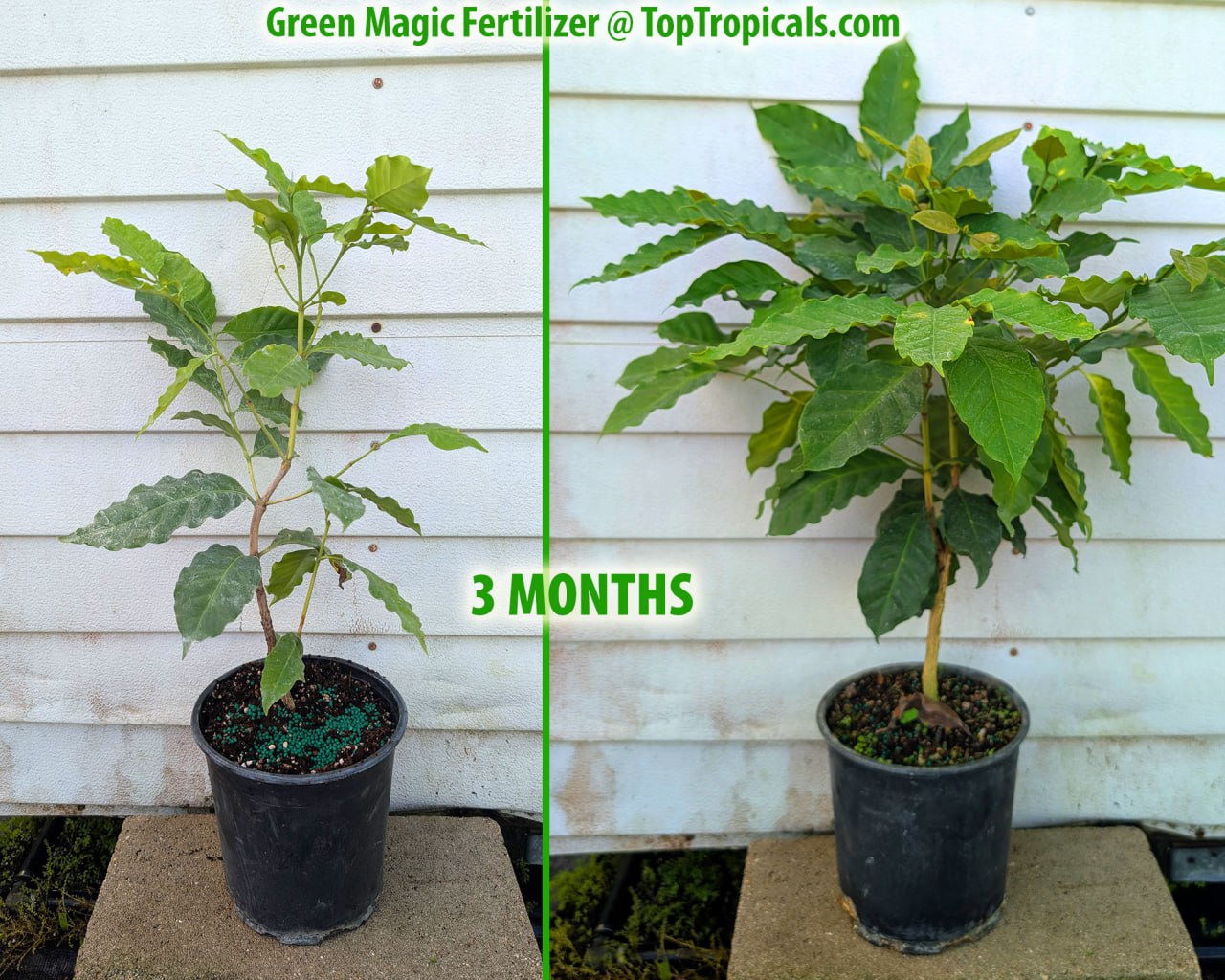
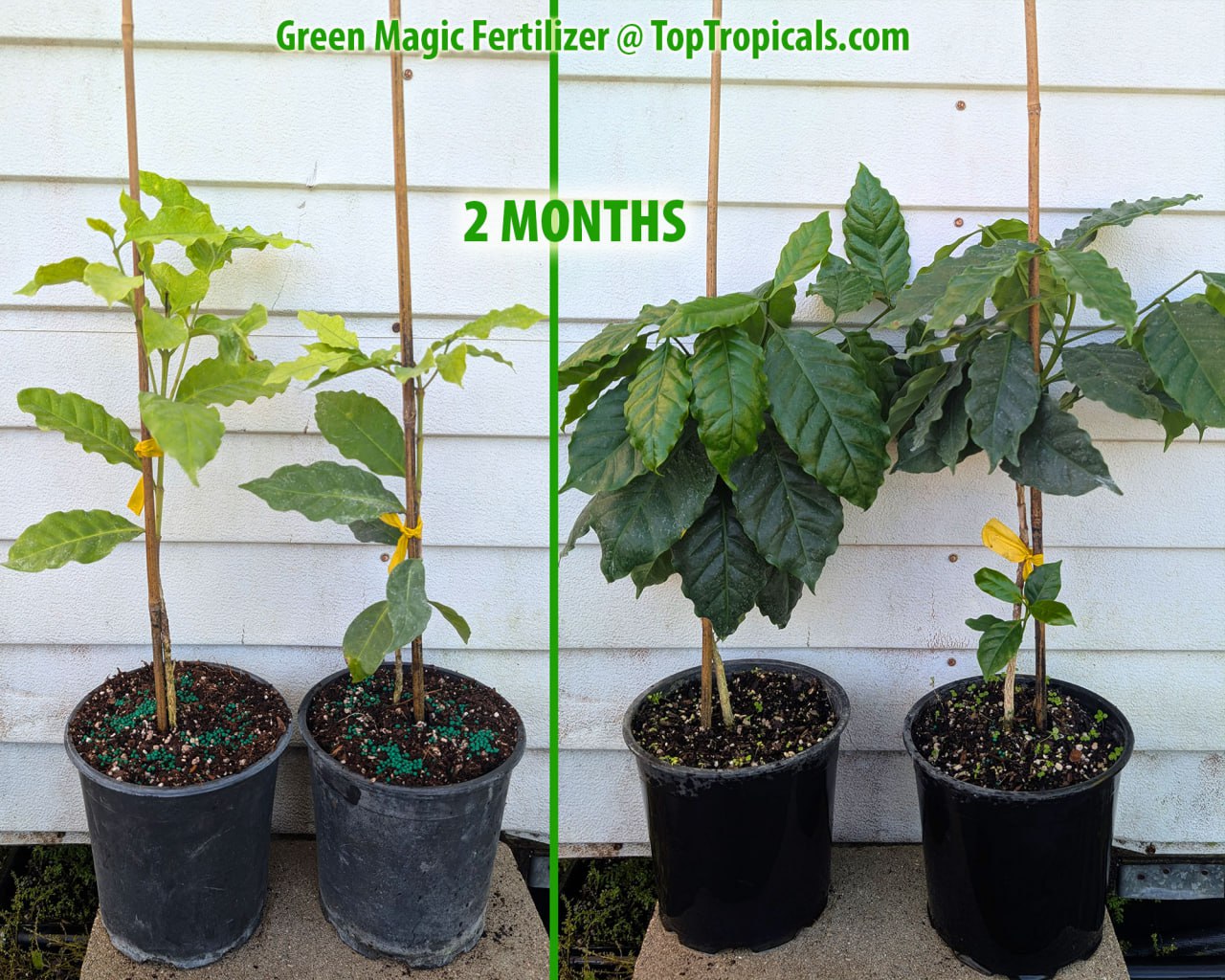
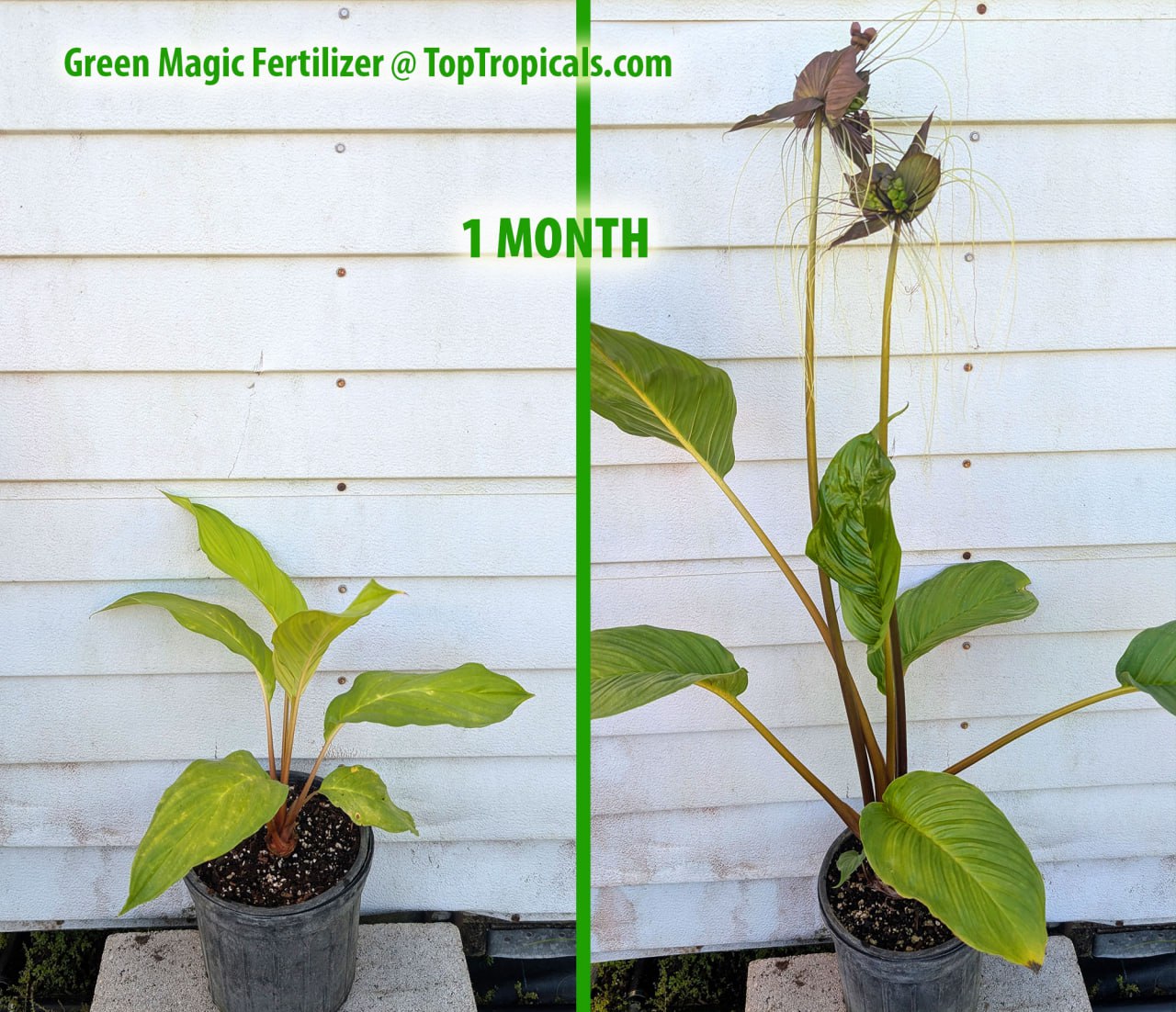
🌳 Green Magic effect: before and after
Green Magic test results: before and after application.
Are you still thinking? Try it out! (Sample here)
#Fertilizers #How_to
🟢 Join 👉 TopTropicals
Date: 23 Jan 2025
Discover 10
best fruit trees to grow
in Florida and Southern landscapes
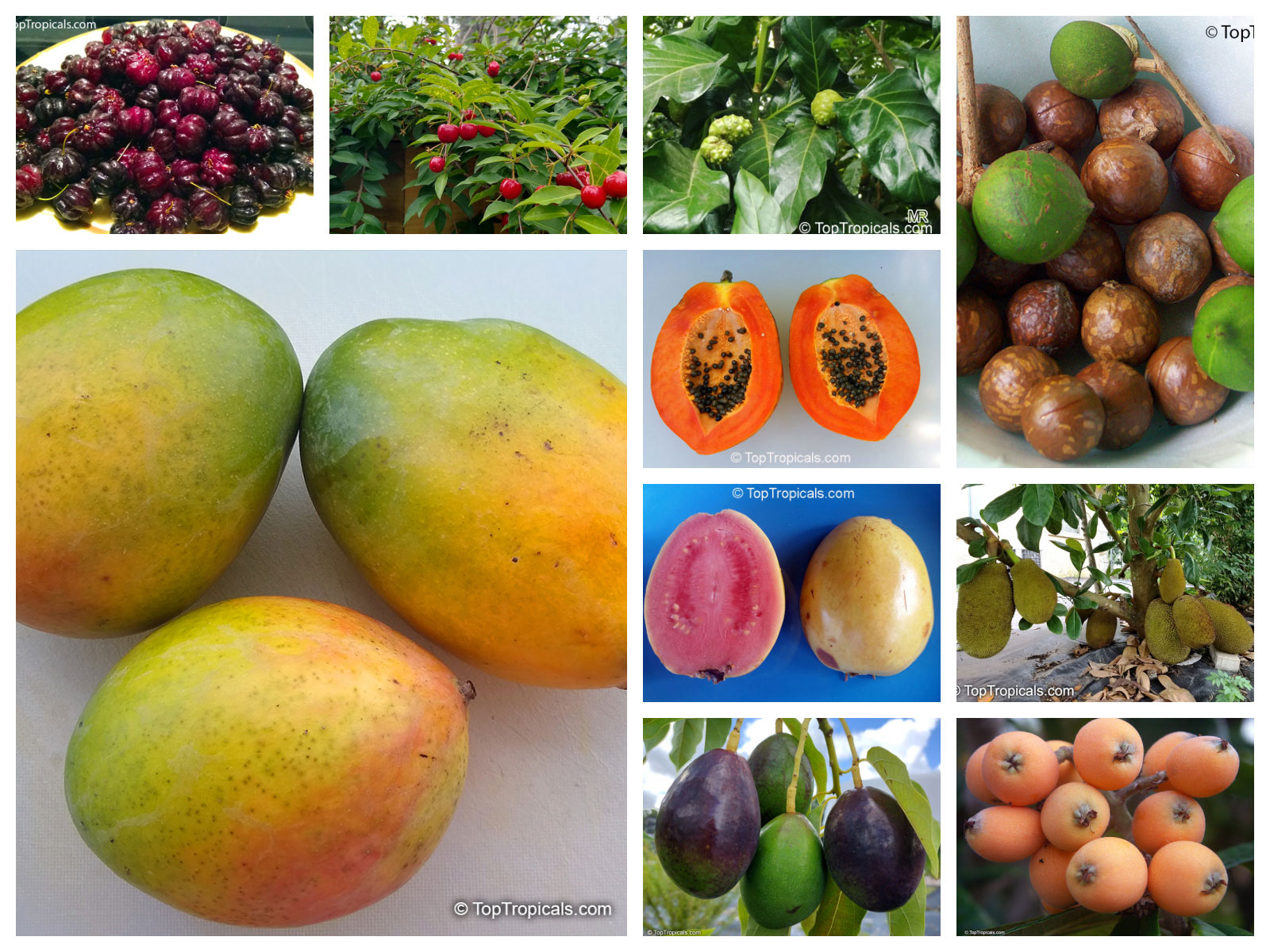
Q: We recently moved into our new home in Florida, and the property is a great size - 5 acres - but it currently has no trees, just a few palms. I'm looking to plant some productive fruit trees to start building our own Food Forest. What fruit trees would you recommend as a good starting point?
A: With five acres of space, you have a fantastic opportunity to create a fruitful garden that can provide for your family for many years to come. Below are our top recommendations for must-have, easy-to-grow fruit trees that thrive in Florida's climate, grow quickly, and start producing right away.
1. Mango Tree
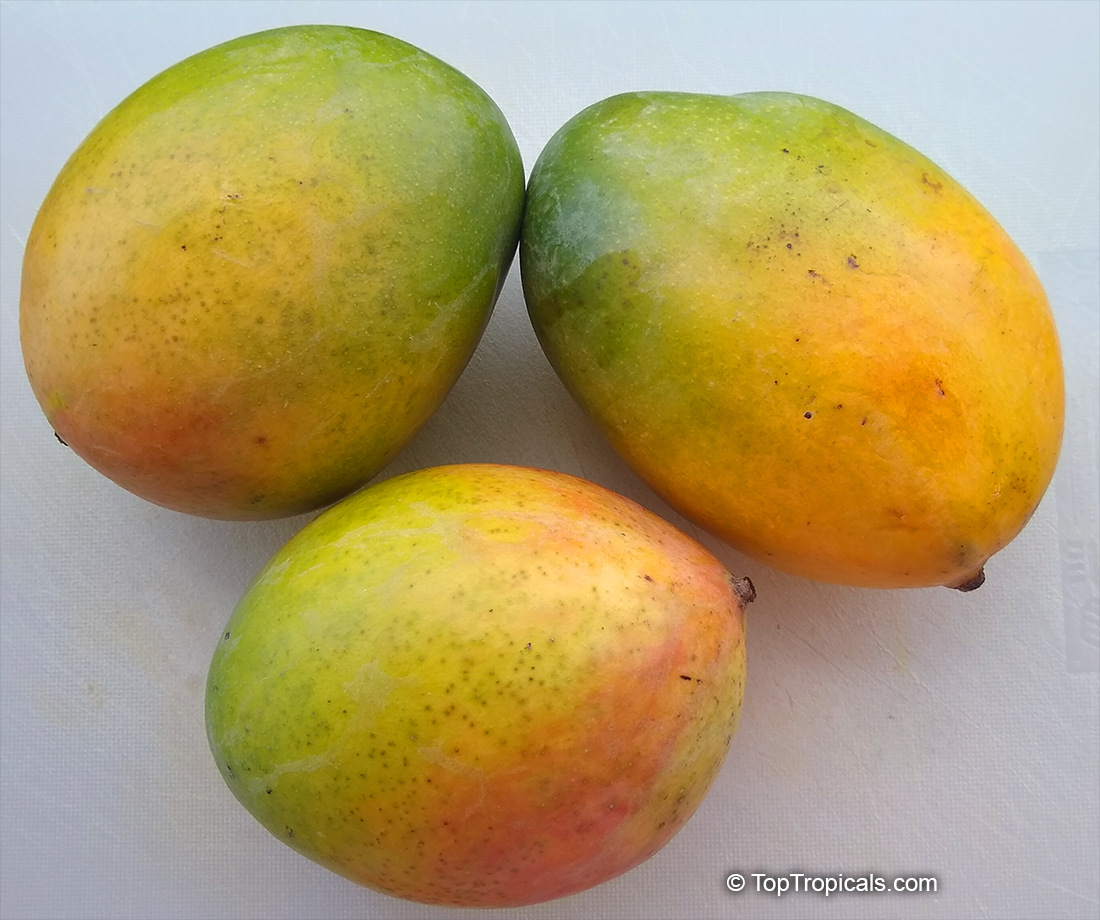
Mango trees (Mangifera indica) are a must-have for any Florida garden, embodying the essence of the Sunshine State with their delicious and nutritious fruit packed with vitamins and fiber. These fast-growing, low-maintenance trees thrive with minimal water and are heat-tolerant. Grafted varieties produce high-quality, fiberless fruit in just 2-3 years, while dwarf "condo" mangoes are perfect for smaller spaces or containers. While young trees need frost protection, mature trees handle cold better. Grafted mangoes offer rich taste that you won't find in commercially grown, fibrous varieties, ensuring a sweet and vibrant harvest from your own garden.
2. Avocado Tree
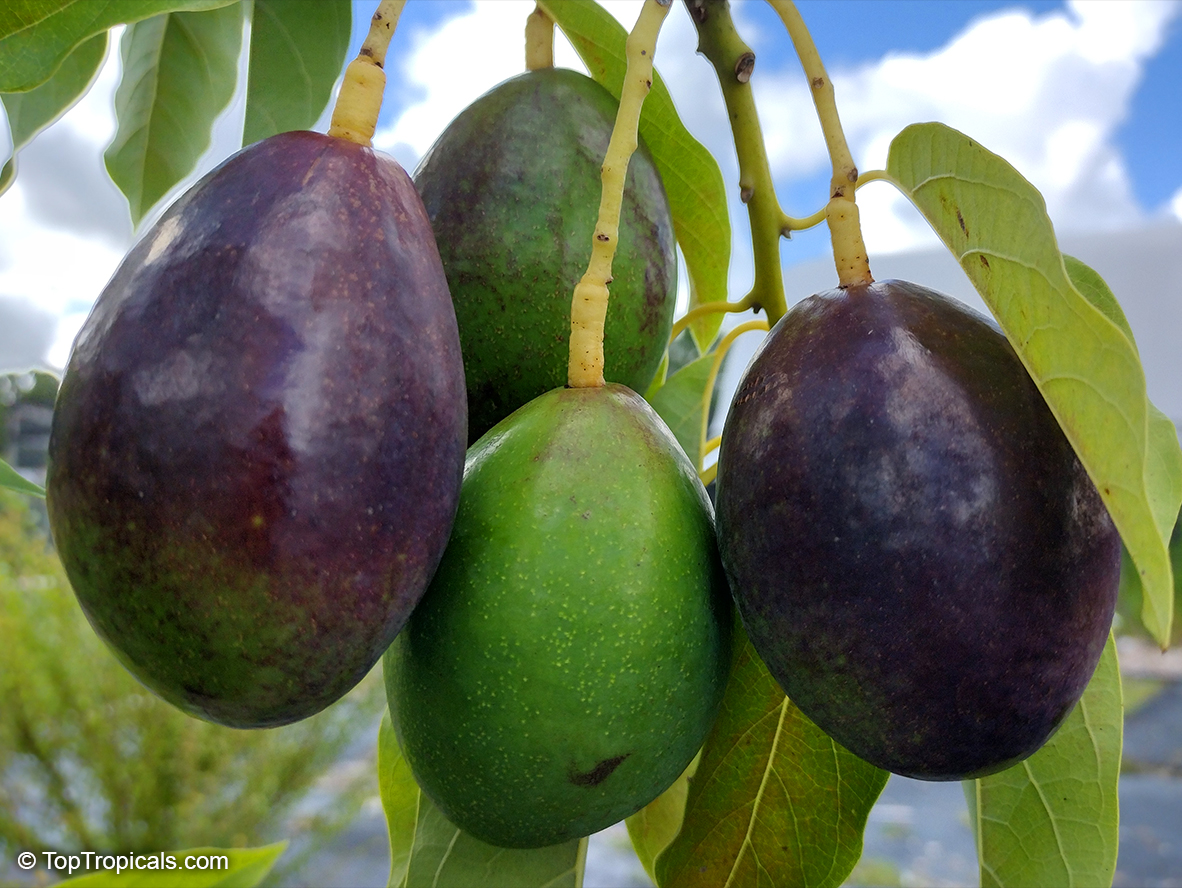
The Avocado tree (Persea americana) is an essential addition to any tropical or subtropical garden. Known for its health benefits and superfood status, it's a favorite fruit that's not only productive but also a beautiful ornamental tree. Some avocado varieties are more cold-tolerant than mango trees, with the ability to survive temperatures below 25F. While many enjoy growing avocado from seed, only grafted trees guarantee quality fruit and immediate production, as seedlings can take 7-8 years to bear fruit. To successfully grow avocado, ensure good drainage by planting on a raised mound (4-6 inches) and keep the soil consistently moist. There are also compact varieties like Wurtz and Fuerte that thrive in containers or small spaces, making them ideal for patios and small gardens.
3. Tropical Cherries
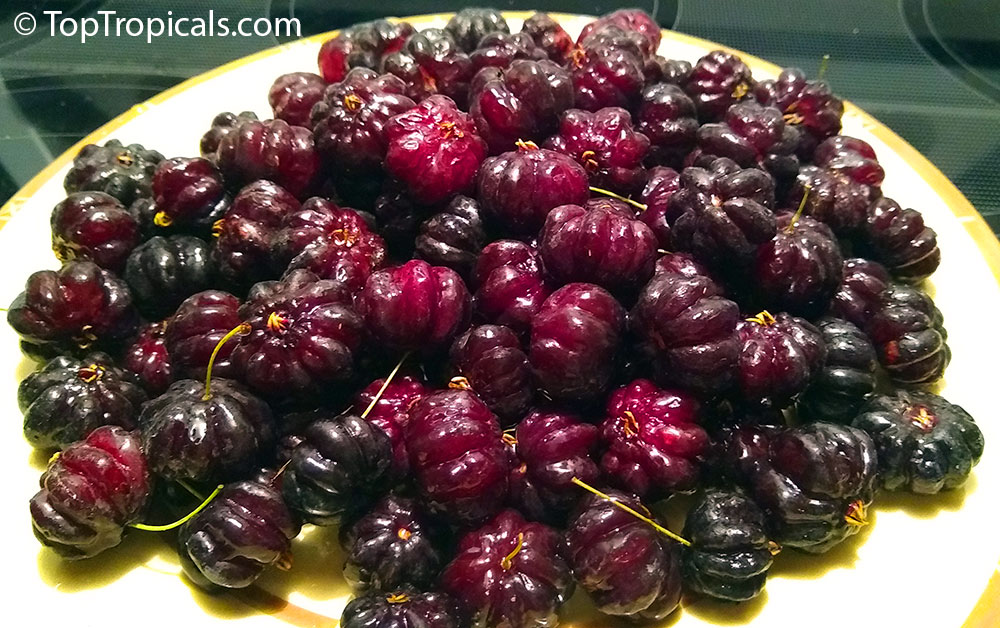
Tropical cherries, such as Cherry of the Rio Grande (Eugenia aggregata), Grumichama (Eugenia brazilensis), Pitomba (Eugenia luschnathiana), and Black Surinam Cherry (Eugenia uniflora var. Lolita), are popular and easy-to-grow fruit trees that offer fast growth and excellent fruit production. These compact, versatile trees thrive in both the ground and containers, starting to produce fruit almost immediately. Eugenias are low-maintenance, requiring minimal water, thriving in various soil types, and being pest-free. They are heat-tolerant and can endure cool winters, surviving light frosts. Birds love the fruit, but don't worry - there will always be plenty for everyone.
4. Barbados Cherry Tree
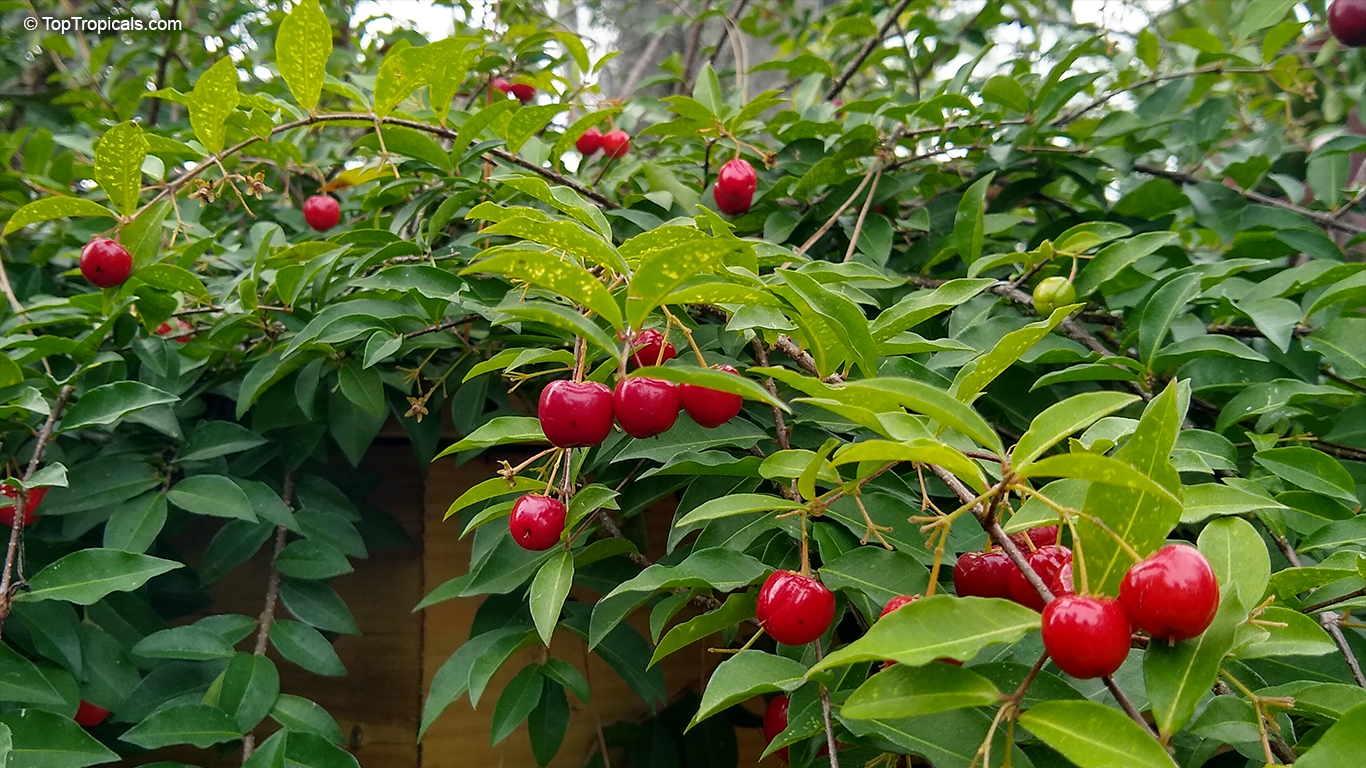
Barbados Cherry (Malpighia glabra), also known as Acerola, is a tropical cherry renowned for having the highest vitamin C content of any fruit. This nutrient-packed fruit is perfect for jellies, jams, and freezing without losing its vitamin C. The Barbados Cherry is a fast-growing, dense shrub that fruits multiple times a year, providing abundant harvests for gardeners seeking quick results. It thrives in alkaline soil, tolerates drought, and is relatively cold-hardy, withstanding light freezes. Birds love the fruit, making it a great addition to wildlife-friendly gardens. The dwarf variety, Nana, with its small leaves and fruit, is perfect for containers, borders, or even bonsai, adding ornamental value to any space.
5. Noni Tree
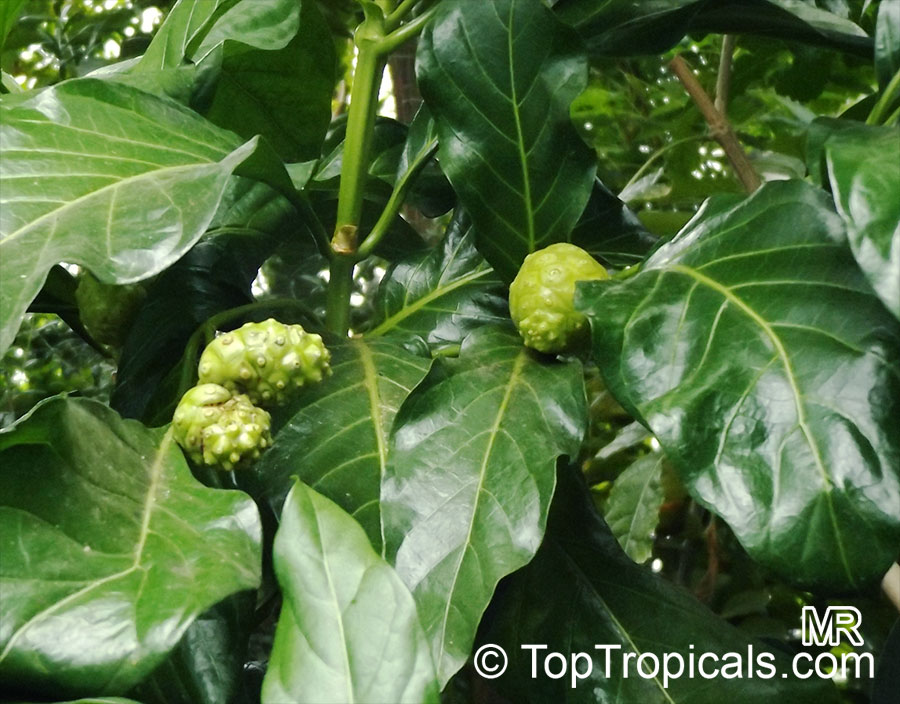
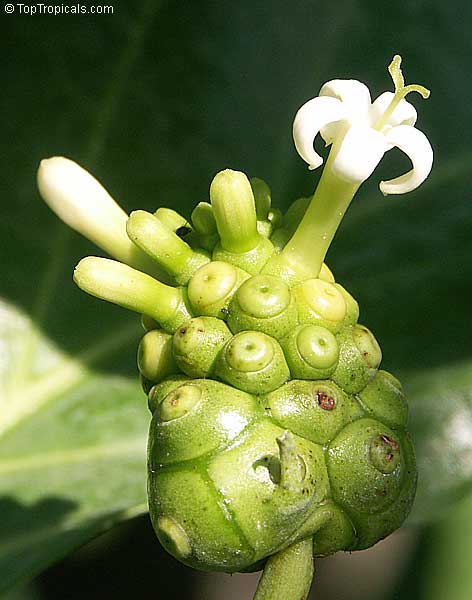
The Noni Tree (Morinda citrifolia) is a top superfood plant that makes a fantastic addition to any Southern garden. Known for its numerous medicinal benefits, Noni fruit offers anti-inflammatory properties, relief from arthritis, and support for conditions like diabetes, metabolism, and weight loss. It's even believed to help fight cancer. Noni trees grow quickly and begin producing fruit within 2 years from seed. This tough, resilient plant thrives in poor soil, endures summer heat, and withstands drought conditions. Despite its tropical appearance, Noni is surprisingly cold-hardy, recovering well after leaf damage in cooler weather. In addition to its health benefits, the Noni tree has ornamental value, with large, waxy leaves and unique fruit, where the flower appears to grow directly on the fruit!
6. Macadamia Nut Tree
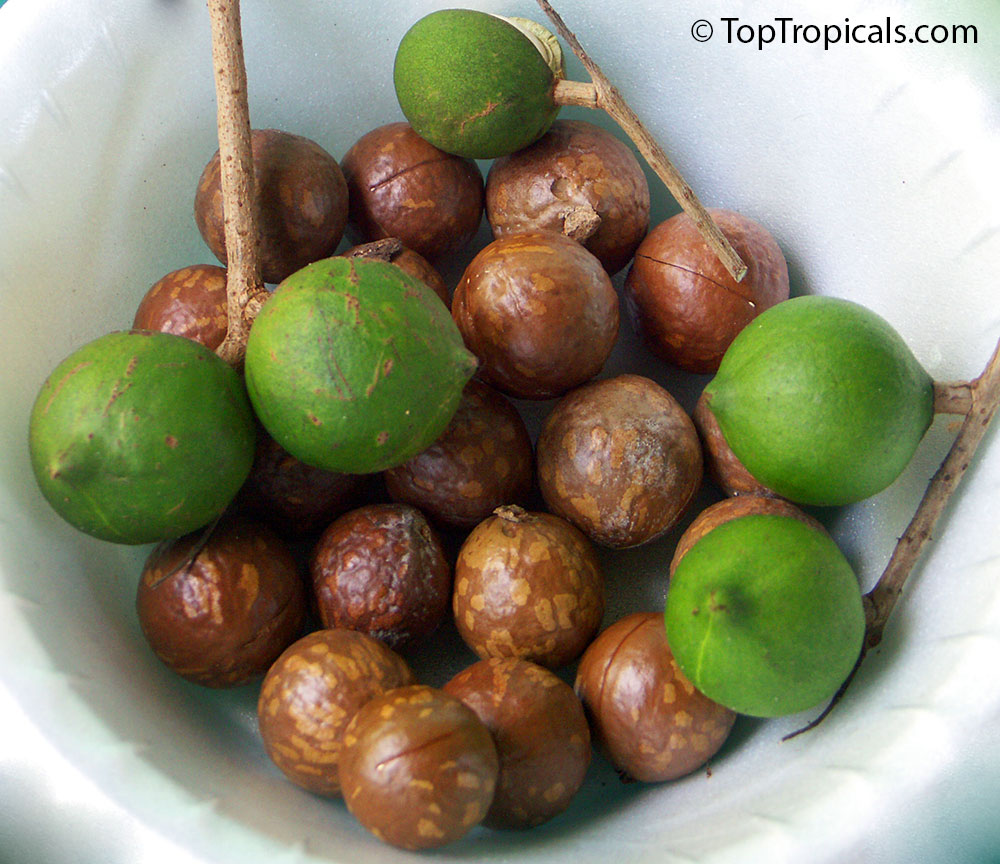
The Macadamia Nut Tree (Macadamia integrifolia) is a fantastic addition to any garden, allowing you to grow these delicious, high price tag, nutrient-rich nuts right at home. These trees are cold-hardy, grow quickly, and thrive in all Florida soil types. Once established, they are productive and can tolerate both flooding and drought. Older trees can survive colder winters, while young trees need protection from temperatures below 25-26F. Macadamia trees like plenty of water and a special fertilizer program, including liquid fertilizers and microelements, to ensure healthy root development and optimal production. Aside from being rich in healthy fats, vitamins, and minerals, macadamia nuts offer numerous health benefits, such as improved digestion, heart health, weight management, and blood sugar control. They are also packed with tocotrienols - antioxidants which may protect against cancer and brain diseases.
7. Papaya Tree
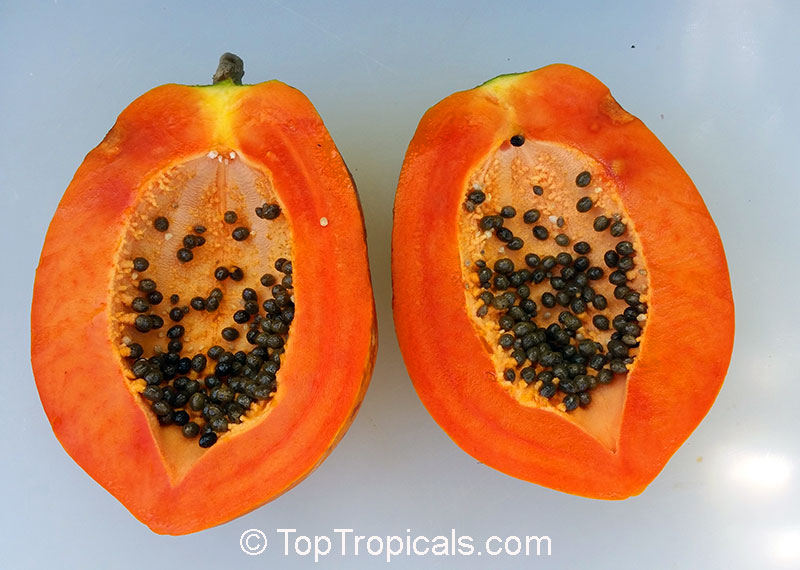
Papaya trees (Carica papaya) are resilient, easy to grow, and produce fruit year-round. Rich in papain, a digestive enzyme, papayas are a superfood that promotes gut health. These fast-growing trees often begin producing fruit within the same year they're planted, providing quick rewards for gardeners. Many varieties, especially dwarf papayas, are space-efficient, reaching only 6-8 feet tall while still yielding large crops, making them perfect for small gardens. Surprisingly hardy for a tropical plant, papayas can withstand light freezes and strong winds (tested in hurricanes!). While they are self-fertile, planting 2-3 different cultivars improves pollination and increases yields. "Solo" cultivars, with their smaller, round or oval fruits, are sweet and less susceptible to fruit flies.
8. Guava Tree
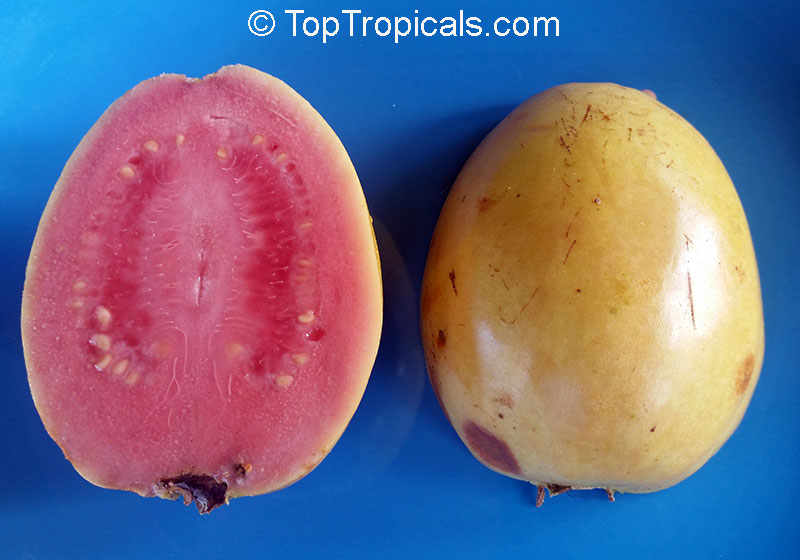
Guava trees are beloved for their flavorful fruit, commonly used in juices, drinks, and desserts. Popular varieties include Tropical Guava (Psidium guajava), Cattley Guava (Psidium littorale), Cas Guava (Psidium friedrichsthalianum), and Pineapple Guava (Feijoa sellowiana). Despite their tropical nature, guavas are surprisingly cold-hardy, suitable for cooler climates and occasional frost. These trees thrive in moist conditions and can tolerate some flooding, while their compact growth makes them easy to maintain at any height or shape. Guavas are fast-fruiting, often producing fruit within a year of planting, and even some varieties in 1 gal containers. The dwarf Nana variety is perfect for container culture, producing full-sized fruit in a compact form. Guava trees are mostly pest-resistant, though mealybugs may require occasional treatment with neem oil in humid, rainy areas. Planting multiple guava trees ensures a continuous supply of fresh, juicy fruit and delicious guava juice for everyone to enjoy.
9. Jackfruit Tree
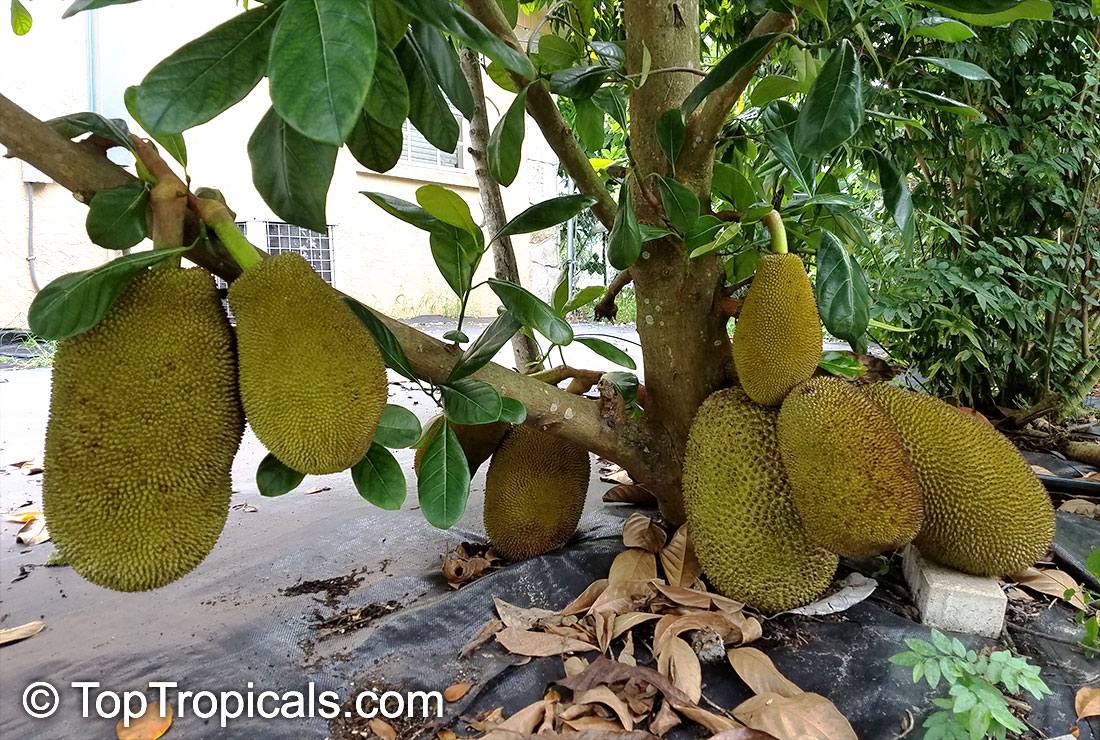
The Jackfruit tree (Artocarpus heterophyllus) is a striking, fast-growing tree known for producing the largest fruit grown on a tree, making it a showstopper in any garden. Nutrient-packed and often used as a meat substitute in South Asian cuisine, Jackfruit is also delicious in curries, chutneys, and as dehydrated chips. These trees grow quickly, have large waxy leaves, and can be maintained at a compact height of 7-8 feet, making them ideal for smaller spaces and easier cold protection. Despite being a tropical species, Jackfruit trees are relatively cold-tolerant and can survive light frost (although on the account of production volume), with established trees being more hardy than seedlings. Jackfruit trees begin producing fruit within 3-4 years from seed, and varieties come true to seed, eliminating the need for grafting, though it can be done for specific varieties.
10. Loquat Tree
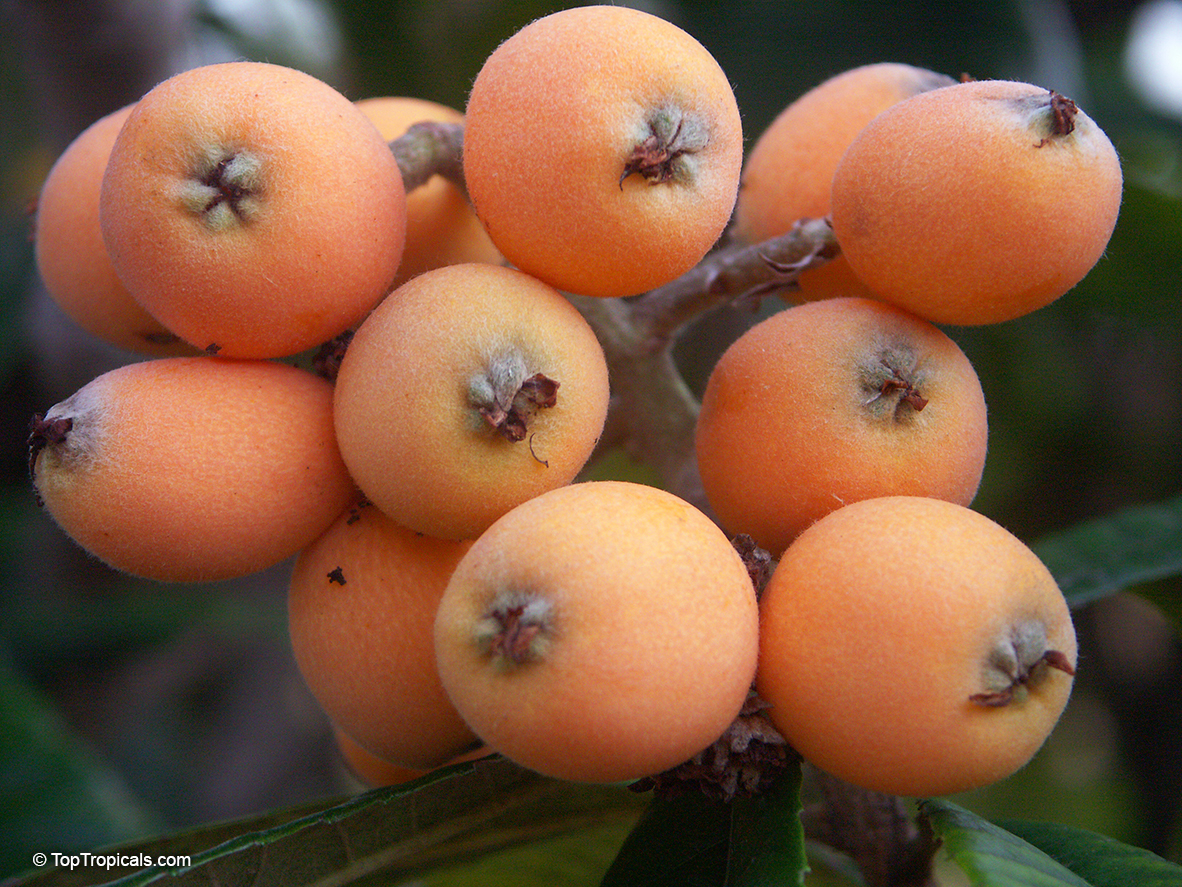
The Loquat tree (Eriobotrya japonica) is a fast-growing, drought-tolerant, and highly cold-hardy tropical fruit tree that thrives in Florida gardens. Loquats are heavy producers, with juicy, aromatic fruit that ripens from early spring to early summer, offering a delicious apricot-like flavor. This compact tree is perfect for small gardens, beginners, and those with limited space. Loquats are undemanding, thriving in any soil and withstanding summer heat, winter cold, heavy rains, and occasional flooding. Nutrient-rich, they are high in sugar, acids, vitamins B and C, minerals, and pectin. Loquats are versatile, enjoyed fresh or used in fruit salads, jams, jellies, chutneys, pies, sauces, and even wine-making, and they are often used as a natural sweetener.
Date: 25 Feb 2024
Avocado pollinating and crops
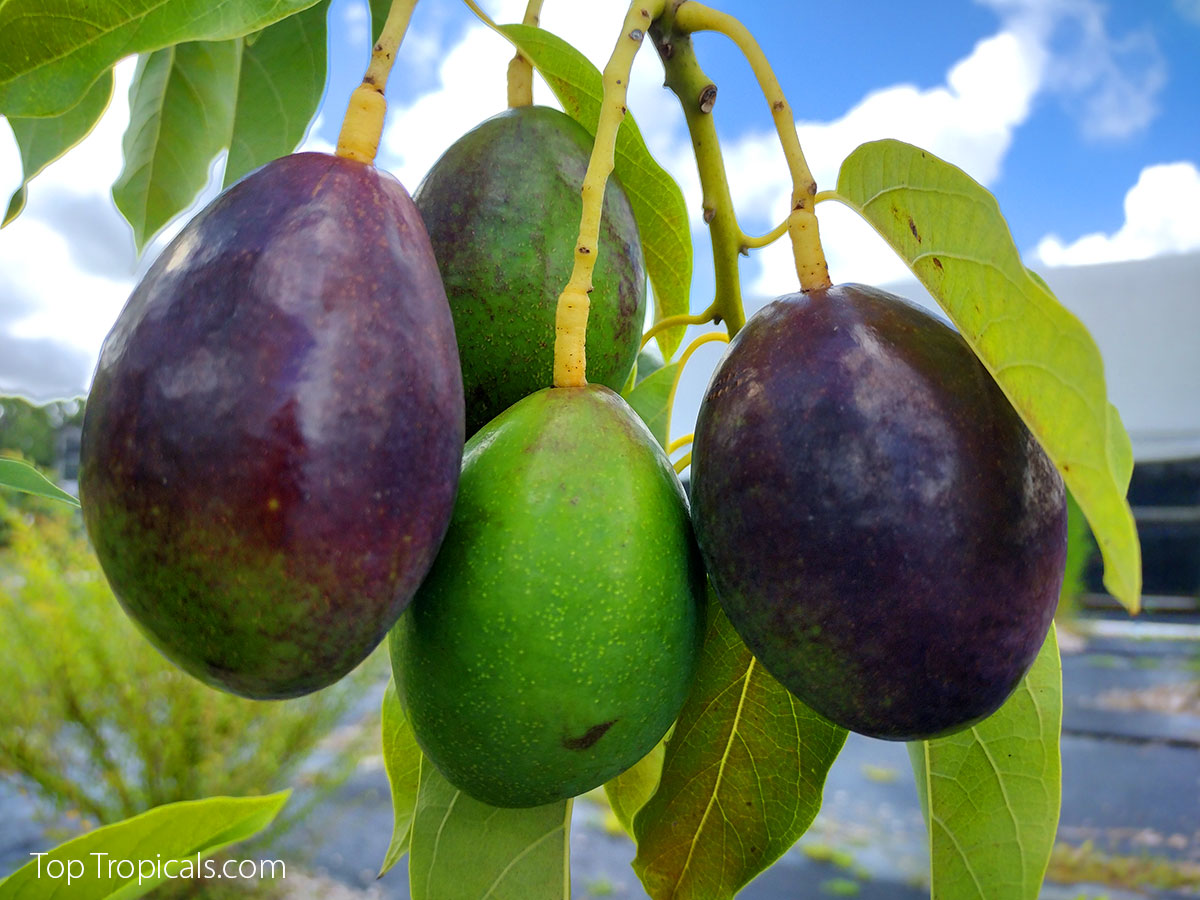
Photo above: Avocado Joey - very buttery fruit, cold hardy variety.
Q: I bought an anise leaf-scented avocado from you, and it is finally quite large and doing great. I live in California, the coldest temperatures we seem to get in some winters is around 25 to 28F, and it never lasts long. The tree might get a bit of frost nipping on the new growth, but it has done very well. It has flowered profusely for the last two years but hasn't set any fruit. What variety you might recommend to help with pollinating?
A: We are glad your avocado is doing great. Anise is one of our favorite varieties, with the wonderful smell of leaves and tasty fruit.
Cold hardiness and flower quality
It is true that cold damage may affect avocado production, especially in setting fruit. To improve the tree's cold hardiness, make sure to provide balanced plant food, especially during the season of active growth. For our avocado trees, we use Sunshine C-Cibus year-round.
If you prefer to use dry (granulated, slow-release) fertilizers, make sure they contain micronutrients, or apply Sunshine Superfood microelement complex once a month.
To improve flower quality (including the ability to set fruit), we recommend a special micronutrient supplement called Sunshine Honey. It contains Boron and Molybdenum - elements that are responsible for setting fruit and for developing fruit (meaning not dropping at the early stage of development).
Cross-pollination and crop
In general, every avocado tree is self-fertile, meaning it can produce some fruit with its own pollen and doesn't necessarily require a second tree for pollination. So even if you don't do anything, sooner or later your tree will set fruit. However, it is also true that the amount of fruit and crop reliability depends on pollination factors. One type of avocado classification is by flowering and pollination behavior - type A or B.
When both types of trees are grown in proximity to each other, their overlapping flowering patterns significantly enhance the chances of cross-pollination. This can lead to improved fruit set and higher yield, making it especially important for commercial production and, to a lesser extent, for home growers.
Therefore, it's advisable to plant different varieties of avocado in your garden - the more, the merrier! The greater the diversity of avocado trees with overlapping flowering periods, the better your crop is likely to be. If you're growing an avocado tree without other avocados nearby, it becomes helpful to have more than one tree with different flowering patterns (A and B) to increase yield in your garden.
Anise Avocado is type B. So to increase your crop, you may consider planting type A variety from the list: Bernecker, Black Prince, Catalina, Choquette, Day, Donnie, Fantastic, Florida Hass, Lila, Loretta, Lula, Mexicola, Mexicola Grande, Red Russell, Reed, Russell, Simmonds, Ulala , Waldin .
To learn more about avocado types, fruit characteristics, cold hardiness and much more, refer to our Avocado Variety Guide - a page with very convenient interactive chart allowing you to quickly sort types of avocado by requirements of your choice (just click on column header to sort data). You may also buy a Book or download a PDF.
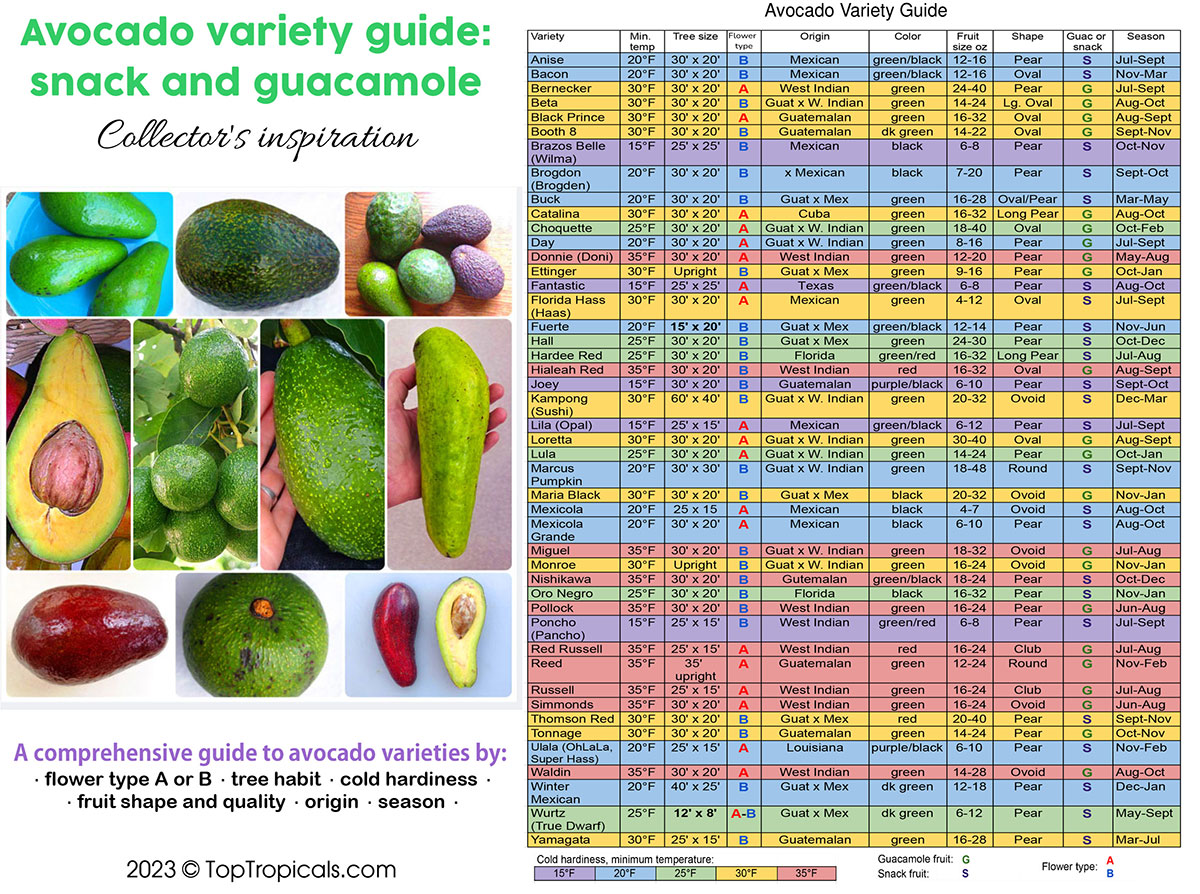
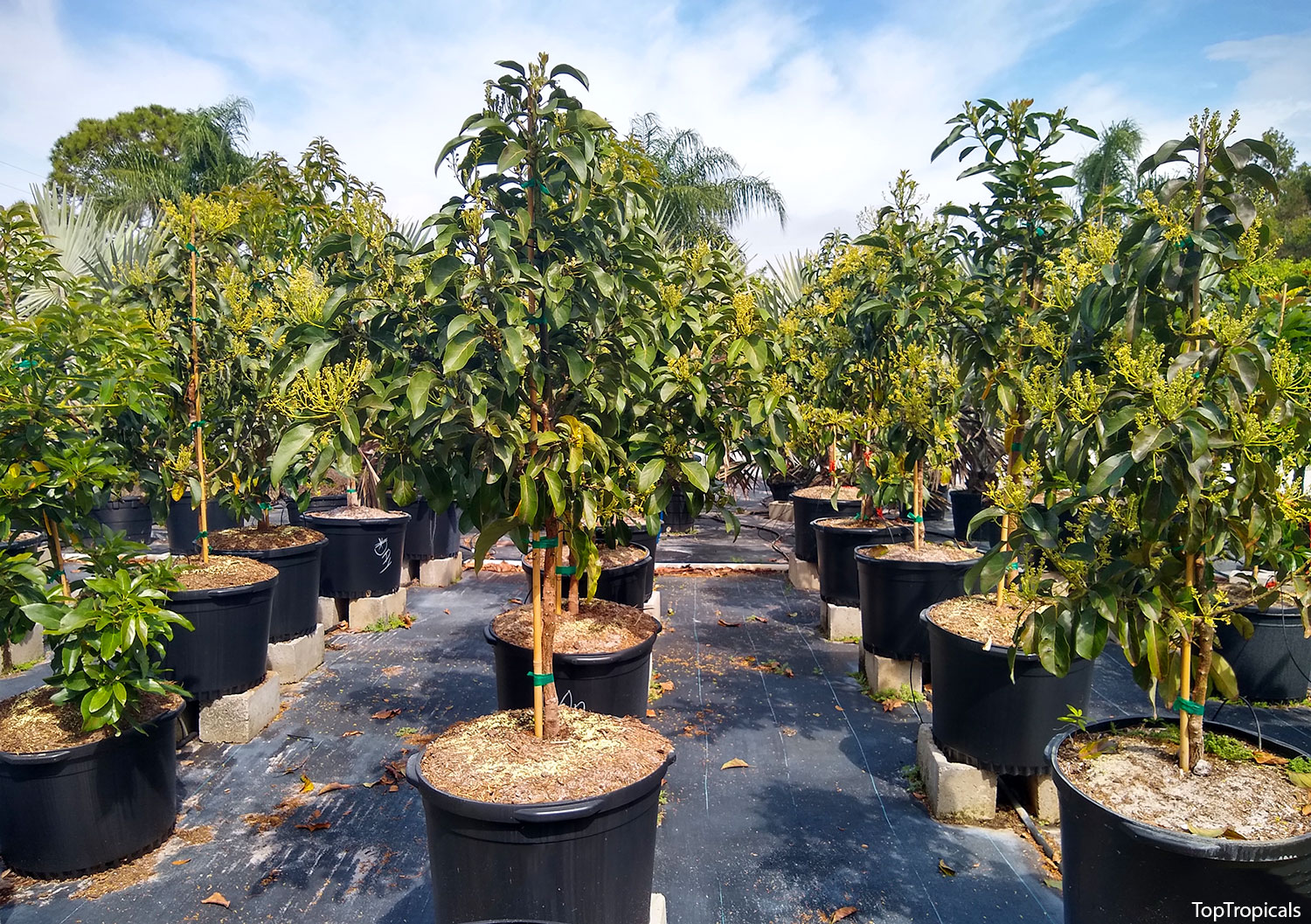
Photo above: 15 gal Avocado trees for local pick up. Delivery and installation available!