Garden Blog - Top Tropicals
Date: 25 Aug 2026
How to Plant an Avocado Tree and Get It Established
🌳 How to Plant an Avocado Tree and Get It Established
Avocados can be tricky to establish, but once established, they grow fast and vigorously.
Avocados like lots of water, but hate wet feet.
Their roots need consistent moisture AND excellent drainage. Dry them out and you can lose the tree. Keep the roots waterlogged and you can lose it just as easily.
Avocados in containers
Use a well-drained mix that also retains moisture. Our Top Tropicals Abundance Mix works well for avocados. If making your own, use plenty of pine bark and perlite.
Make sure the container drains freely and never sits in standing water.
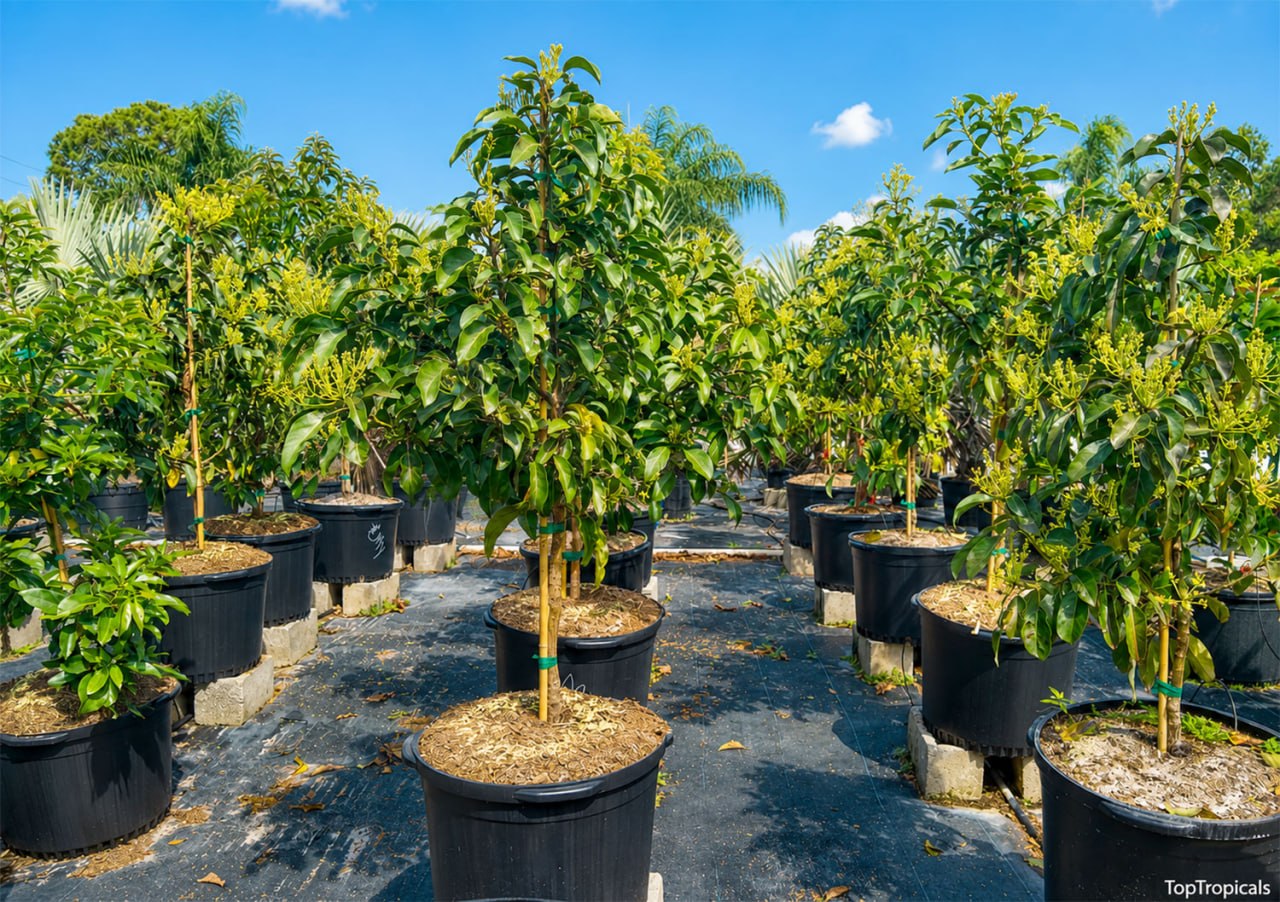
There is a reason avocado pots in professional nurseries are often placed on blocks (on the photo): excellent drainage underneath while receiving plenty of irrigation from above.
Plant high, not low
Choose the highest, best-drained location available. Never plant an avocado where water collects or occasional flooding occurs.
Plant on a gentle mound, with the top of the root ball about 4–6 inches above surrounding ground level. Poorly drained sites may require a larger mound.
Poor soil can be improved with finished compost or other organic matter, but mix it with the existing soil rather than creating a pocket of completely different soil around the roots.
Mulch
Apply plenty of mulch over the root zone. It conserves moisture, moderates soil temperature and gradually adds organic matter.
Keep mulch several inches away from the trunk.
Watering and the first 60 days
Water thoroughly when planting and never allow a young avocado to dry out. As a starting point:
First week: About every other day.
First 1–2 months: About 1–2 times per week.
Hot, dry or windy weather: Check more often.
Heavy rain or wet soil: Skip irrigation.
Adjust for your soil and weather. Sandy soil may dry quickly; heavier soil stays wet longer.
The goal is consistently moist, never waterlogged.
Stake young trees
Young avocado trunks are surprisingly fragile and flexible, especially compared with mango. Stake them to prevent wind from bending the trunk or rocking the root ball. Remove the support once the tree is strong enough.
Be patient
Avocados can be slow to establish after transplanting. A new tree may pause growth or drop some leaves.
Don't panic. Maintain proper moisture and drainage and give it time. Once established, avocados can grow remarkably fast.
Fertilizing
We use Green Magic controlled-release fertilizer for steady nutrition and Sunshine Boosters C-Cibus as a liquid supplement.
Don't try to force a newly planted avocado with excessive fertilizer. Let it establish first.
Pruning
Avocados tend to send vigorous branches in all directions. Pruning helps develop a balanced, manageable canopy.
For fruiting trees, prune after harvest and before the next flowering cycle. Shorten overly vigorous shoots and shape the tree.
Choose the right avocado for your climate
Varieties differ enormously in cold tolerance. Tropical West Indian types are much more cold-sensitive, while Mexican and Mexican-hybrid varieties can tolerate considerably lower temperatures.
Our Complete Avocado Variety Guide covers Mexican, Guatemalan and West Indian types; cold hardiness; variety selection; rootstocks; A and B flowering types and pollination; container growing; irrigation and nutrition; soil pH; freeze protection and recovery; fruit production and common problems.
If you're deciding which avocado to grow in your climate, start with Avocado Knowledge Hub.
💡 The avocado rule to remember
Give an avocado plenty of water, but give that water somewhere to go.
Constant moisture + excellent drainage = a happy avocado.
🛒 Explore Avocado varieties
📚 Learn more:


· Avocado tree (Persea americana) in Plant Encyclopedia
· Avocado Knowledge Hub and Growing Guide: Cold Hardiness, Varieties, and Engineering Success
· Avocado Variety Guide
· Avocado Planting Guide (PDF)
· How to Plant a Tree - A Fun Guide
📖 Avocado Book:
· Hard copy · PDF File
#Food_Forest #Avocado #How_to
🟢 Join 👉 TopTropicals