Date: 24 Mar 2019
Featured plant. Heliconia rostrata - Lobster Claw
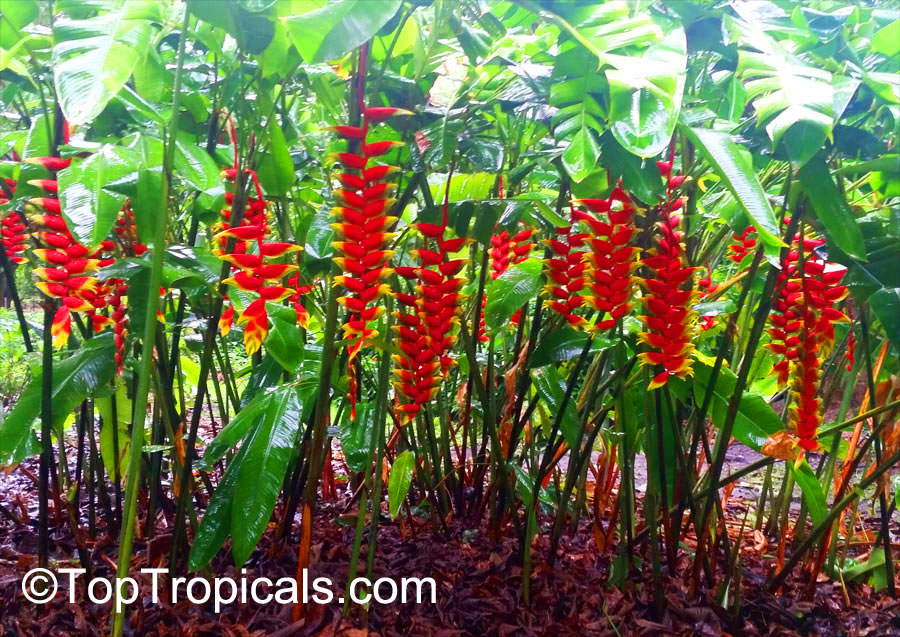
Heliconia rostrata - Lobster Claw
Lobster Claw, Parrot's beak... Tropical flowers never fail to astound and amaze with their forms and colors. Lobster Claw plant (Heliconia rostrata) is no exception, with large, brightly hued bracts that cluster up a stem. It is also called Parrot Beak and has inconsequential tiny flowers covered by the showy bracts. It is native to Central to South America and is one of the most recognized and widely grown species of showy heliconias, and one of the most beautiful! The inflorescence it produces is one of the most colorful you will ever encounter. Pendulous blooms of striking red and yellow bracts often reach 3' in length! The flowers last a long time and make an excellent cut flower. It is an easy grower in tropical areas but some room is required because the stalks can reach 7 feet in height. It can withstand temperatures in the high 20s. Can be grown in large pots, it starts blooming once the plant reaches 4-5' tall and the amazing inflorescences will appear one after another creating a spectacular show to enjoy. Grow in full to partial sun and rich soil with lots of water and fertilizer.

Date: 24 Mar 2019
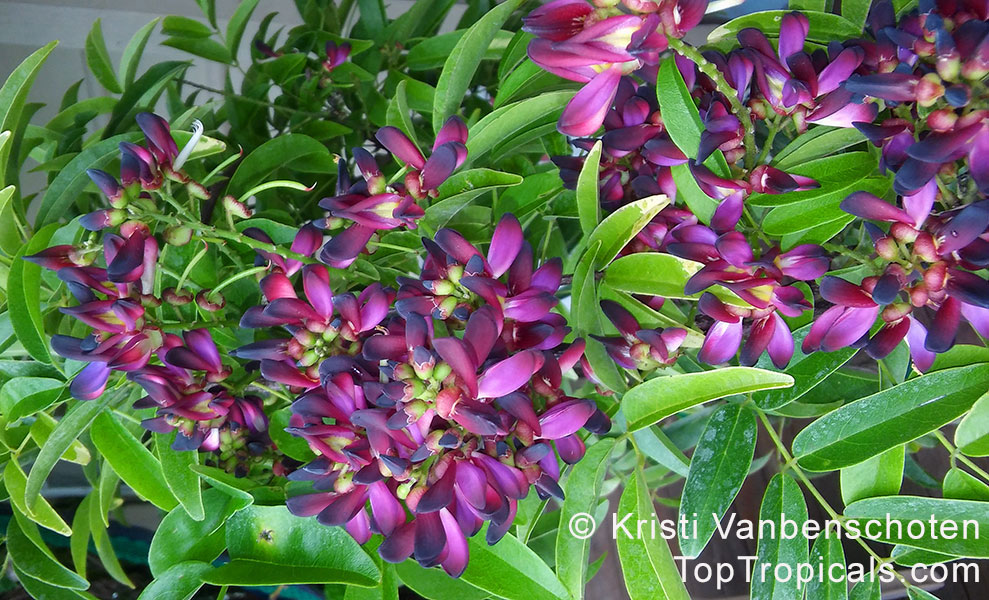
Spectacular Evergreen Wisteria
Q: When I was a child growing up in Virginia, my mother always had Wisteria growing around the house. It became one of my favorite plants growing up. I loved the beautiful cascading purple flowers. The highly fragrant and colorful flowers provided a feast for the senses. I have now re-located to Florida and understand the the Wisteria I knew as a child will not flower here in the warmer climate. Is there a vine similar to the wisteria that I can grow here in Florida?
A: There is a great alternative to the Wisteria sinensis you knew and loved as a child! Millettia reticulata - Evergreen Wisteria is a beautiful and highly fragrant vine. Unlike Wisteria sinensis, Millettia is not an invasive plant and can be maintained much more easily. The royal purple flowers completely cover the plant throughout the Spring and Summer.
Date: 18 Mar 2019
Featured plant. Sauromatum (Typhonium) venosum - Voodoo Lily
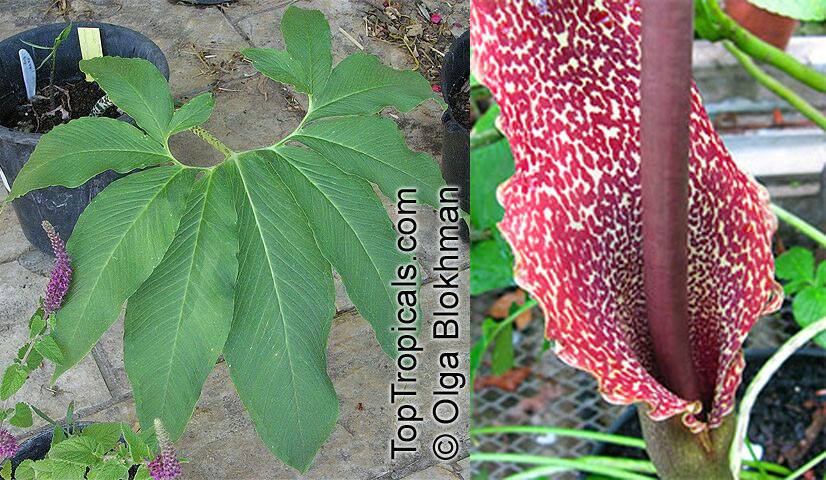
Sauromatum (Typhonium) venosum - Voodoo Lily
Rare Amorphophallus ralative, Typhonium venosum (Sauromatum venosum), is
a common shade-loving house or garden plant from temperate and tropical
Africa and Asia. This plant is also known as the Voodoo Bulb because of its
ability to flower from a corm without soil and water. Tuberous perennial with
solitary, segmented round leaf and strange, arum-like flower. Rare collectable,
it is a showy exotic container plant.
Typhonium grows to around 20 inches tall from an underground corm. A
large corm can spawn multiple new corms. Inflorescences emerge before the
leaves. An inflorescence has a purplish-brown-spotted, yellowish spathe and a
purplish-brown spadix which emit a strong odor perceived as similar to cow
manure, rotting flesh, or a dirty wet dog, depending on who smells the
inflorescence ;) The odor lasts only a day and attracts carrion-feeding insects which can
pollinate this plant.
Plants we have in stock, have tubers 1-2"in diameter. The plant goes
dormant in winter and starts sprouting in March-April. Keep soil slightly
moist but not wet, and wait for the magic leaf to pop up... The plant should
flower within a year or two.
Date: 18 Mar 2019
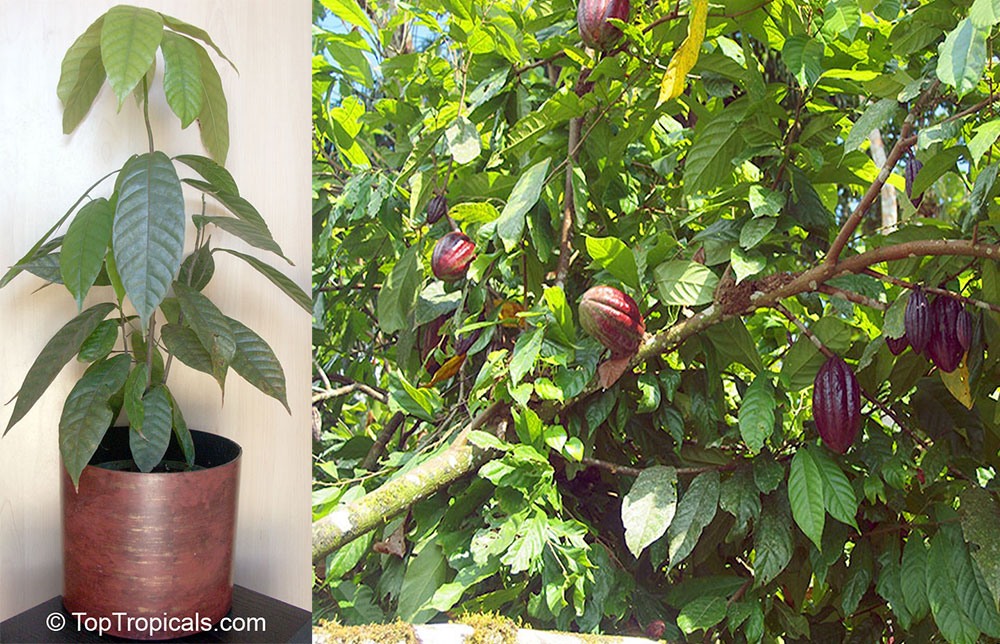
Date: 15 Mar 2019
Save Coffee from extinct!
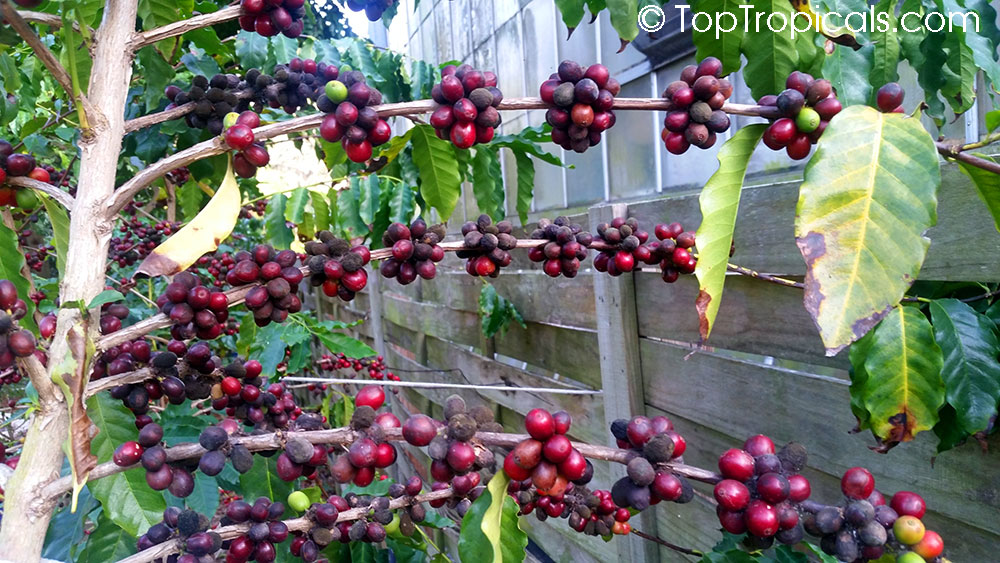
The most popular kind of coffee for commercial production, Coffea arabica, is already on the endangered species list. According to research, Coffea arabica plant could become extinct in as little as 60 years.
Coffee requires a forest habitat for its survival. With so much deforestation going on around the world, wild coffee species are being impacted at an alarming rate. Coffee plants grow in very specific natural habitats, so rising temperatures and increased rainfall brought by climate change can make coffee impossible to grow in places the plants once thrived.
Read the whole article
See video: Top Tropicals Showcase: Coffee plant
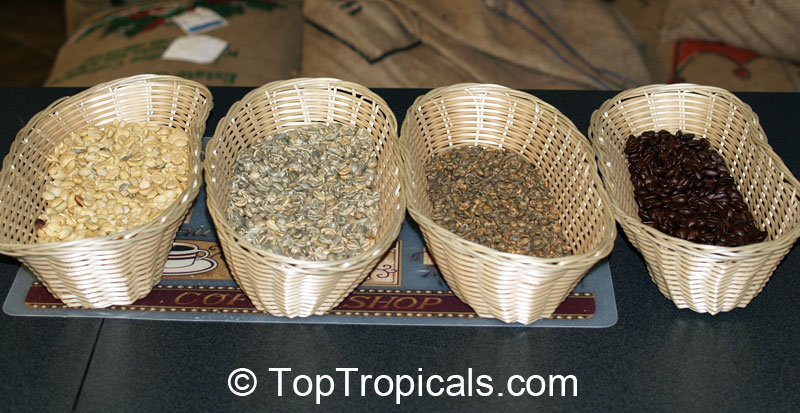
To reserve a cup of coffee for yourself and your children, plant the Coffee tree now!

Date: 12 Mar 2019
Spring tips
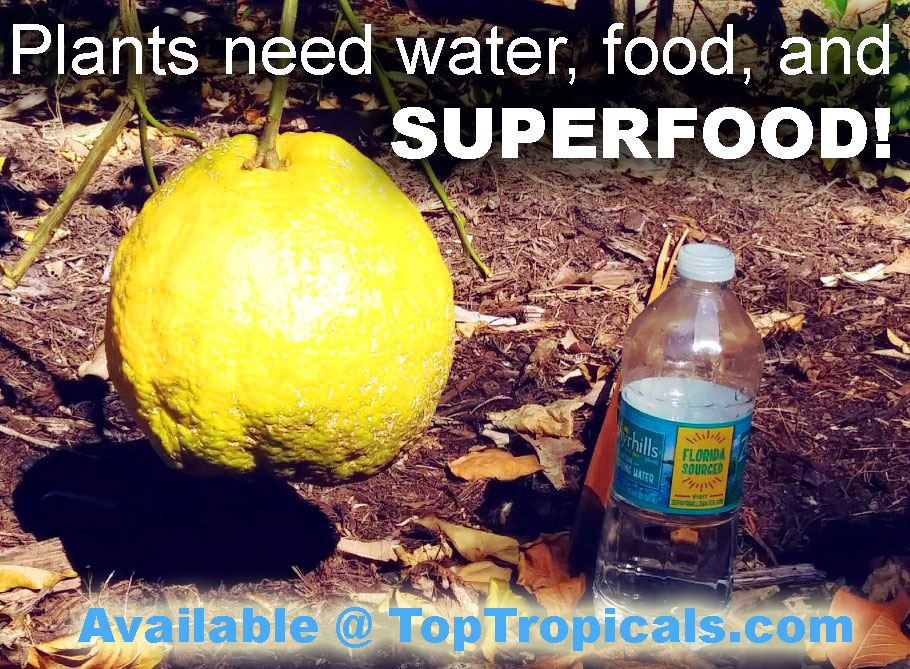
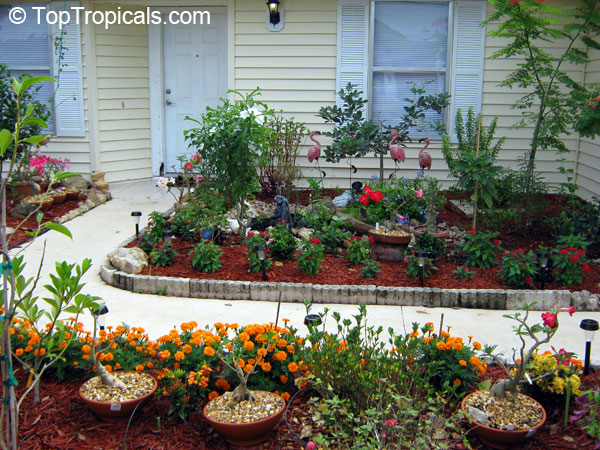
Once temperatures stay above 65F, growing season starts for tropical plants.
1. Increase watering as soon as you see new buds opening and new leaves growing
2. Trim all dead or damaged wood 1-2 inches above new growth
3. Apply the following treats to make your plants happy:
- granulated balanced fertilizer
- SUNSHINE Superfood microelements as foliar spray for healthy growth, profuse flowering, and disease/bug resistance
- SUNSHINE-E to help plants come out of dormancy faster and increase metabolism. 100 ml bottles and 50 ml bottles available for large plant collections.
Date: 12 Mar 2019
Fertilizing Ylang Ylang
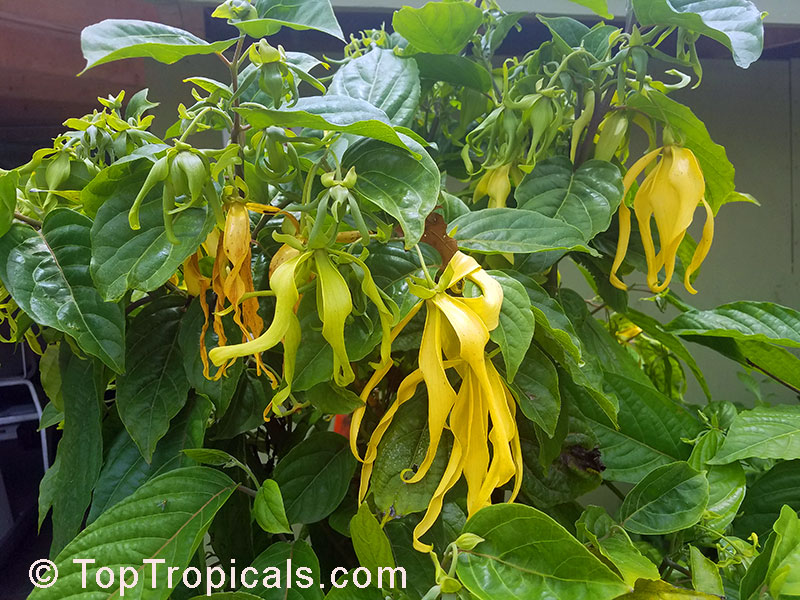
Q: What fertilizer should we be using for ylang ylang?
A: Ylang Ylang is a free-flowering tropical plant that requires regular
feeding during active growth period (March through November in Florida). We use balanced granulated fertilizer that contains micro-elements. Apply once a month 1 tsp per 1 gal of
soil. For in-ground plants, 1/2 cup once a month.
We also apply additional micro-element treat SuperFood as foliar spray which dramatically increases
growth rate and promotes flowering.
Check out our fertilizers, plant boosters, and garden supplies:
Date: 8 Mar 2019
RARE Featured plant, finally in stock!
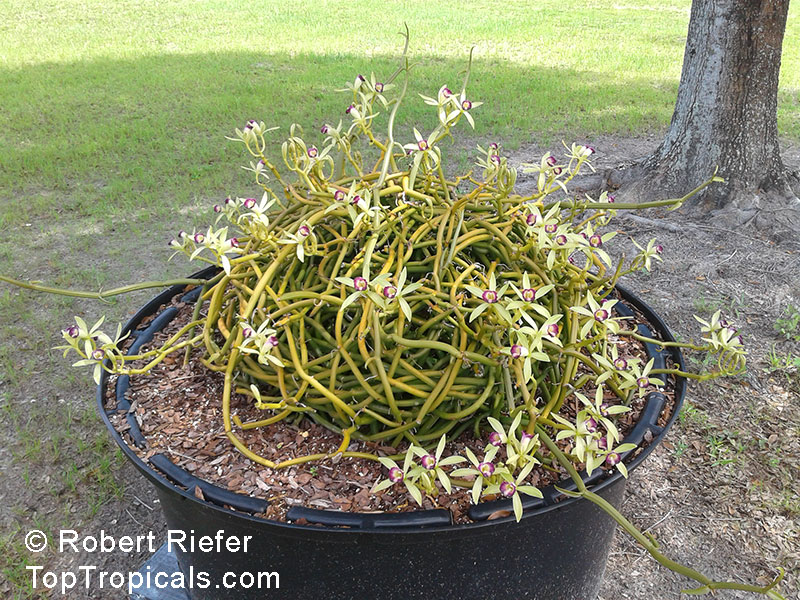
Vanilla dilloniana - Leafless Vanilla Orchid
Very rare, collectible and extinct species! This plant propagated at TopTropicals nursery from Robert Riefer's unique specimen, the biggest potted specimen in the World, grown in 100 gal pot, originated in 1927, awarded in 2011 with CHM certificate of Horticultural Merit by American Orchid Society. Leafless Vanilla Orchid is amazing exotic vanilla that forms a multi-branched, leafless vine reaching lengths up to 15 ft. The light green flowers are similar to Vanilla barbellata but the petals and sepals are longer and the fluted lip is a deep reddish-purple with a yellow crest. Vanilla dilloniana is distributed throughout the West Indies and had been reported on the banks of the Miami River in South Florida. Vanilla dilloniana is a very rare species and considered vulnerable, endangered across its range. Pieces of plants from the original colony have been shared and may be found in local collections.
See the .
Date: 8 Mar 2019
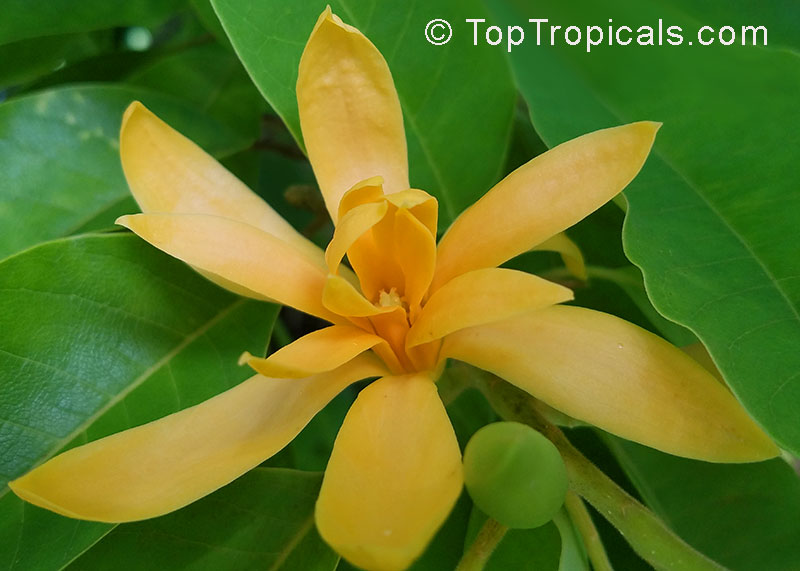
Champaca tree during Spring
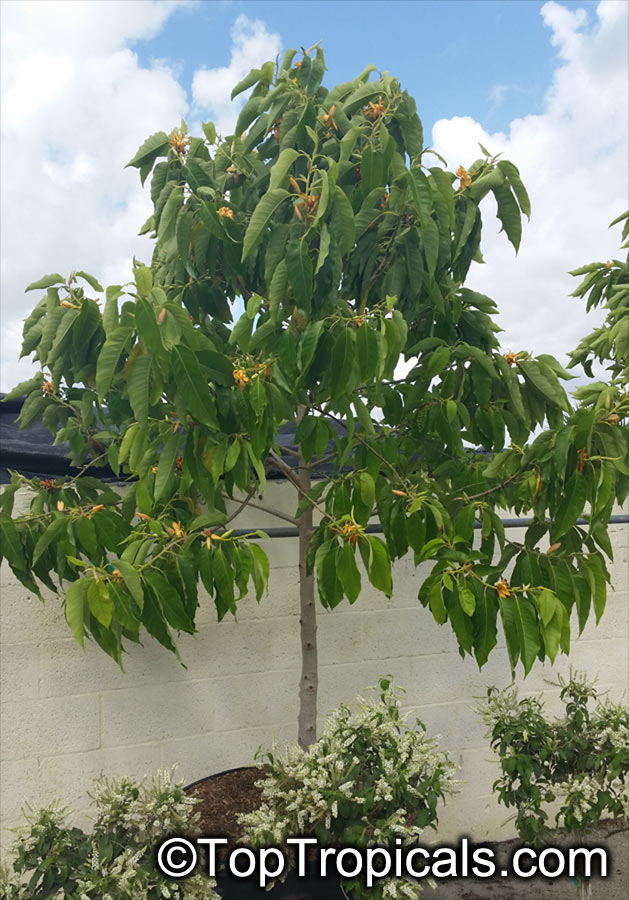
Q: The Joy Tree that I purchased from you is going fine but the leaves have brown tips that shriveled up. How can I avoid this?
A: All Magnolias prefer rich and moist soils. These are some
useful tips for growing Magnolia champaca:
- when planting in the ground, dig a big hole and replace sandy old
soil with a rich organic mix containing compost and lots of peat moss to retain
moisture.
- water daily for the first few months until the tree is
well-established and root system is large and strong.
- use a large amount of mulch around planting
- remember that during springtime (especially March through May)
champacas go through the semi-deciduous stage and lose a lot of leaves. Sometimes
the tree may start looking drying out - all the sudden, overnight. Give it a
few weeks and you will notice new light green re-leafing that will dress up
your tree when the time comes.
Check out Champaca trees: