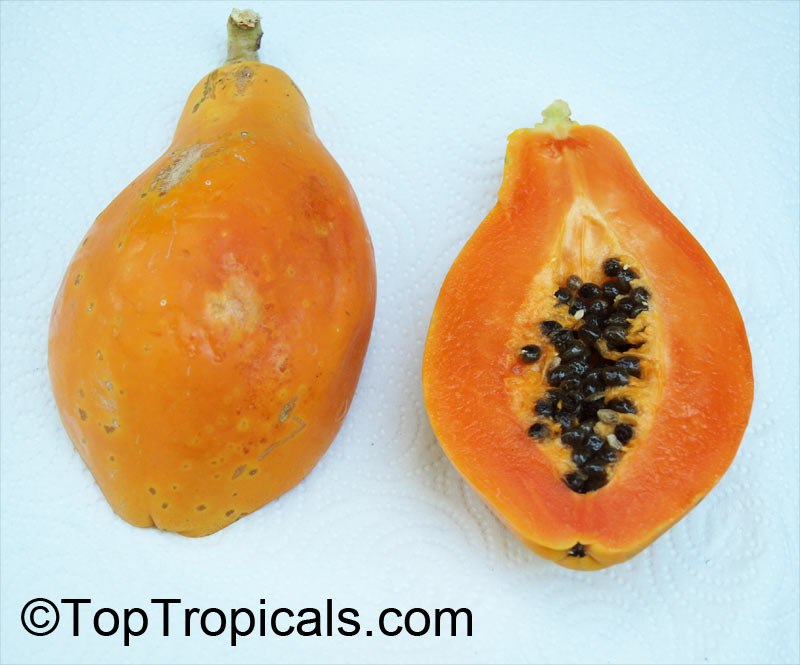
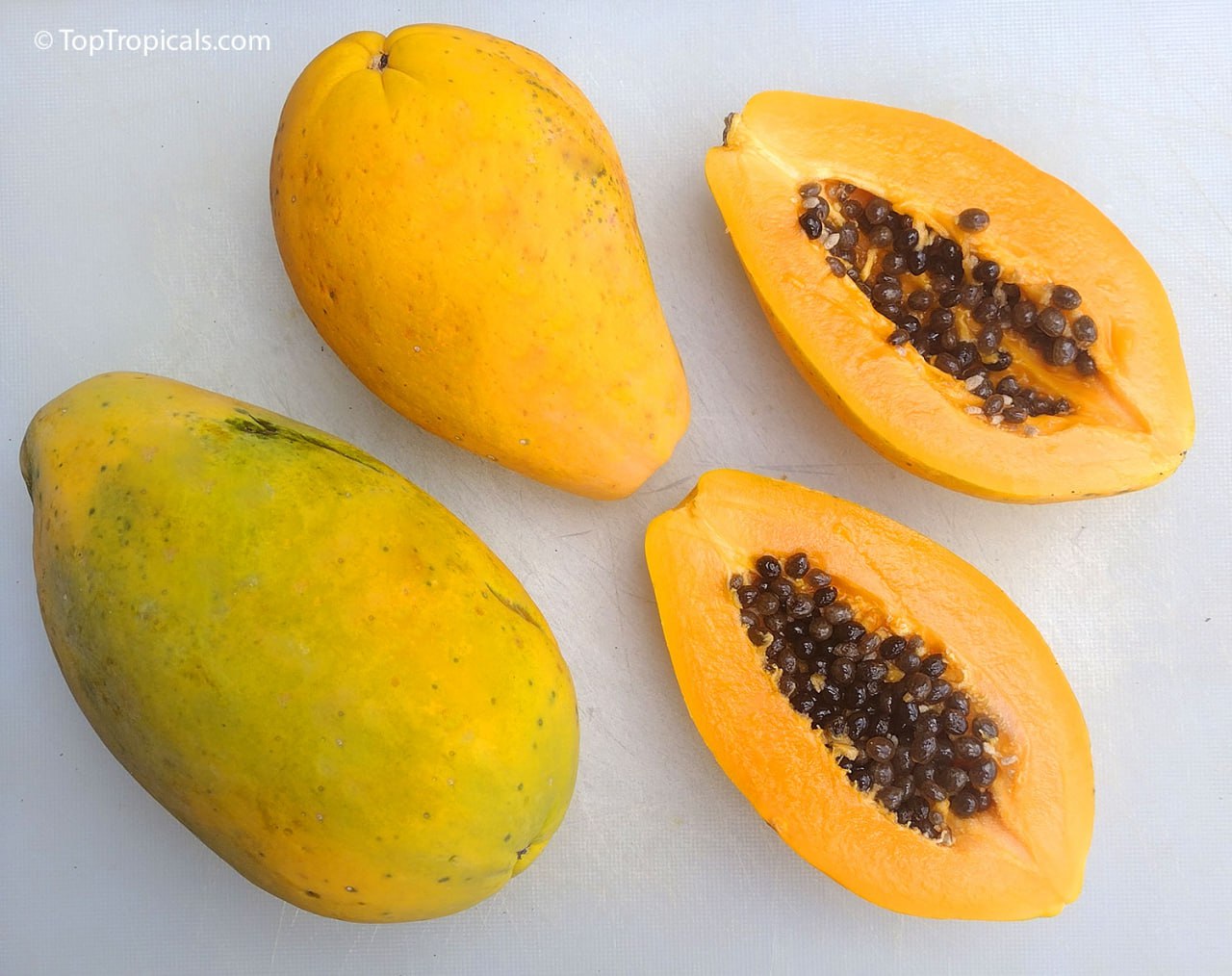
Papaya fruit is one of the superfoods as we mentioned earlier. Below are the top 3 most interesting varieties: a full size tree, a semi-dwarf and a dwarf.
Maradol. Vigorous full size plant with high yield. Commercially grown throughout Central Mexico, these papayas are 3 to 5 pounds in weight and the shape of an elongated melon. Soft and juicy, they have salmon pink or red flesh that is very sweet with a slightly perfumed, fruity flavor. Cut them in half lengthwise. Delicious and irresistible with a sprinkle of fresh lemon or lime juice.
Solo Sunset, Semi-Dwarf from Hawaii. Commercially grown primarily on Kauai, it has dark pink to reddish-orange flesh. The fruit is medium to small size, shape is somewhat round. This is the sweetest Papya variety we ever tasted!
Solo Waimanalo, Dwarf - oval, large size yellow fruit with dark yellow flesh. Low bearing tree makes harvesting easy. Grows wonderfully in Central Florida in both a container or in the ground. Will go from seed to fruit in just one year. Waimanalo has yellow-orange flesh.
❓Do you eat Papaya fresh or you also cook with it? Share in comments👇
What is the largest tree-borne fruit in the world?
Jackfruit (Artocarpus heterophyllus)
👀 What is the largest tree-borne fruit in the world?
🍈 Jackfruit (Artocarpus heterophyllus) reaches 80 pounds in weight and up to 36 inches long! It is one of the most fascinating fruit in the world.
✳️ The fruit consists of large edible bulbs of yellow, sweet, banana-flavored aromatic flesh.
✳️ The fruit is so large and heavy that the tree has a smart feature to produce only at the base of the trunk. So the tree can be (and should be) pruned annually to 7-12' producing as much as 200 lbs. of fruit per year!
✳️ Seedlings start fruiting within 3-4 years. Fruit ripen pretty quickly, 4-6 months from flower to maturity.
2. 🌳 Buy a grafted tree from a reputable nursery to ensure better fruit quality and faster fruiting.
3. 🏡 Planting site: choose a sunny location with well-draining soil. Ensure there is enough space for the tree to grow, as some varieties can become quite large.
4. ⛏️ Planting: dig a hole twice as wide and just as deep as the root ball. Mix in organic compost to enrich the soil. Place the tree in the hole, making sure the growth point is 1-2" above the soil line. Fill the hole with soil, pressing gently to remove air pockets. Water the tree thoroughly.
5. 💦 Watering: Water the tree regularly, especially during the first few weeks. Allow the soil to dry slightly between waterings to prevent root rot.
6. Mulch: apply mulch around the base of the tree to retain moisture and suppress weeds. Keep the mulch a few inches away from the trunk to prevent rot.
7. Fertilize: use a balanced fertilizer formulated for fruit trees. We recommend Sunshine Boosters Mango Tango formulated specially for mango trees.
8. ✂️ Prune to shape the tree to encourage good airflow and sunlight penetration, and to improve the yield.
.
9. 🕷 Pest and disease control: monitor for scale and mealybugs and treat them with systemic pesticides. Keep an eye out for fungal diseases and treat them promptly with copper spray.
10. Harvesting: Mangoes are ready to harvest when they change color and soften slightly.
2. 🌳 Buy a grafted tree from a reputable nursery to ensure better fruit quality and faster fruiting.
3. 🏡 Planting site: choose a sunny location with well-draining soil. Ensure there is enough space for the tree to grow, as some varieties can become quite large.
4. ⛏️ Planting: dig a hole twice as wide and just as deep as the root ball. Mix in organic compost to enrich the soil. Place the tree in the hole, making sure the growth point is 1-2" above the soil line. Fill the hole with soil, pressing gently to remove air pockets. Water the tree thoroughly.
5. 💦 Watering: Water the tree regularly, especially during the first few weeks. Allow the soil to dry slightly between waterings to prevent root rot.
6. Mulch: apply mulch around the base of the tree to retain moisture and suppress weeds. Keep the mulch a few inches away from the trunk to prevent rot.
7. Fertilize: use a balanced fertilizer formulated for fruit trees. We recommend Sunshine Boosters Mango Tango formulated specially for mango trees.
8. ✂️ Prune to shape the tree to encourage good airflow and sunlight penetration, and to improve the yield.
.
9. 🕷 Pest and disease control: monitor for scale and mealybugs and treat them with systemic pesticides. Keep an eye out for fungal diseases and treat them promptly with copper spray.
10. Harvesting: Mangoes are ready to harvest when they change color and soften slightly.
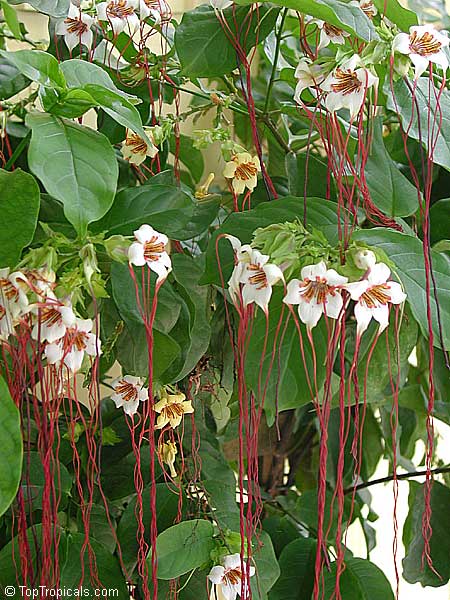
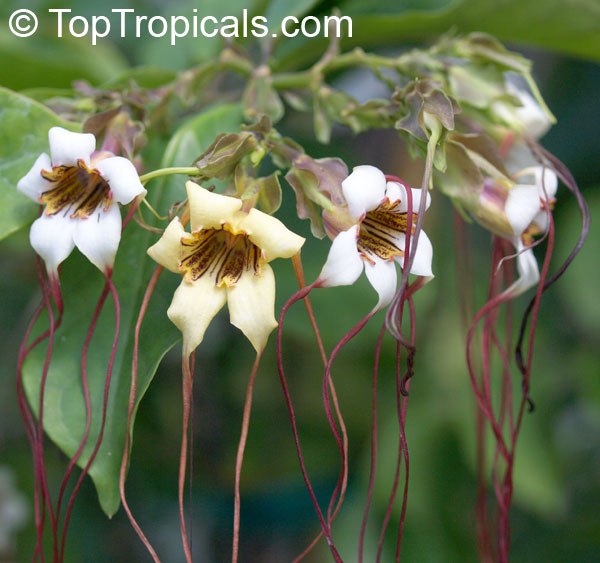
🐙 The faintly fragrant flowers have long, slender, and curly petals that resemble the snakes on Medusa's head from Greek mythology, giving it the nickname "Medusa Flower." The petals often extend and twist dramatically, creating an eye-catching appearance. The tips of the petals become narrowed and elongated, forming a twisting, sticky string that dangles down from the flower and touches lower leaves.
🐙 The flowers are brightly colored, often in shades of white, yellow, and red, which can attract pollinators and add to their striking visual appeal.
🐙 As suggested by another common name "Poison Arrow Vine," parts of the plant contain toxic compounds. Historically, the seeds were used by some African tribes to poison the tips of arrows for hunting. This gives the plant a certain mystique...
🐙 Interesting pollination mechanism: the elaborate design of the flowers is not just for show; it plays a role in the plant's pollination strategy. The intricate structure can help ensure that pollinators come into contact with the reproductive parts of the flower, thereby facilitating cross-pollination.
🐙 Blooms almost year around
❓ What bizarre plants do you have in your collection? Share in comments👇