Date: 20 Aug 2020
Coral Bean - Hummingbird Delight
Erythrina herbacea
by Onika Amell, tropical plant expert
Q: I am creating a natural, native garden on the southwest coast of Florida. In some of the far corners of my landscape, my soil unfortunately is poor and my irrigation does not reach these areas. I am hoping to find something unusual and native to grow in these challenging areas of my garden. Any luck of finding something tough that will also attract hummingbirds and/or butterflies?
A: Most of us have these areas in our gardens where the soil is sandy or where irrigation simply does not reach. It is always wise to choose tough, native plants that will grow in these areas with minimum care, fertilizer or the luxury of being watered regularly.
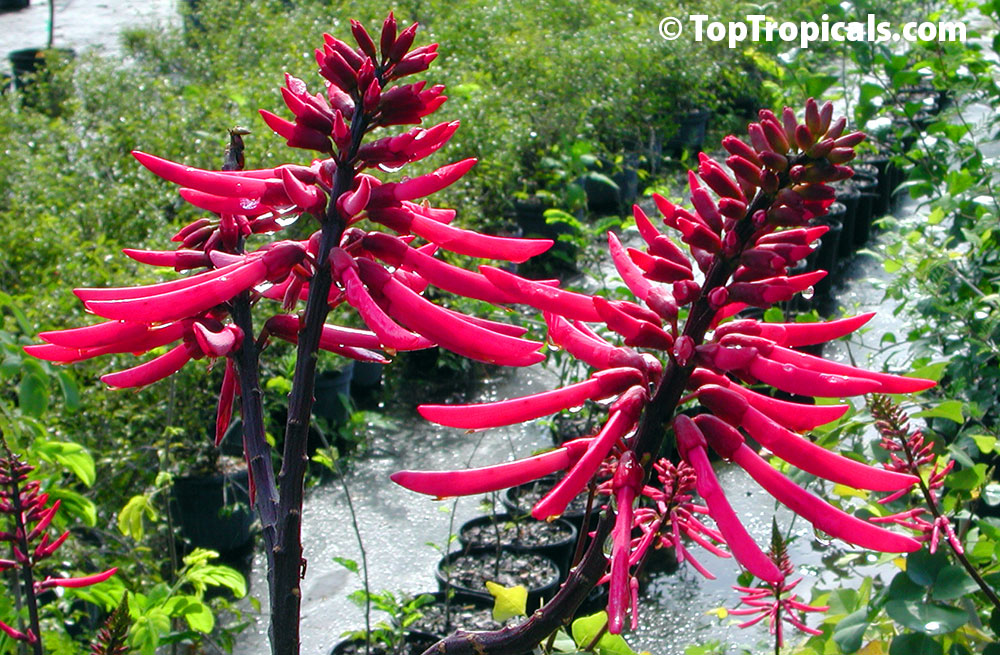
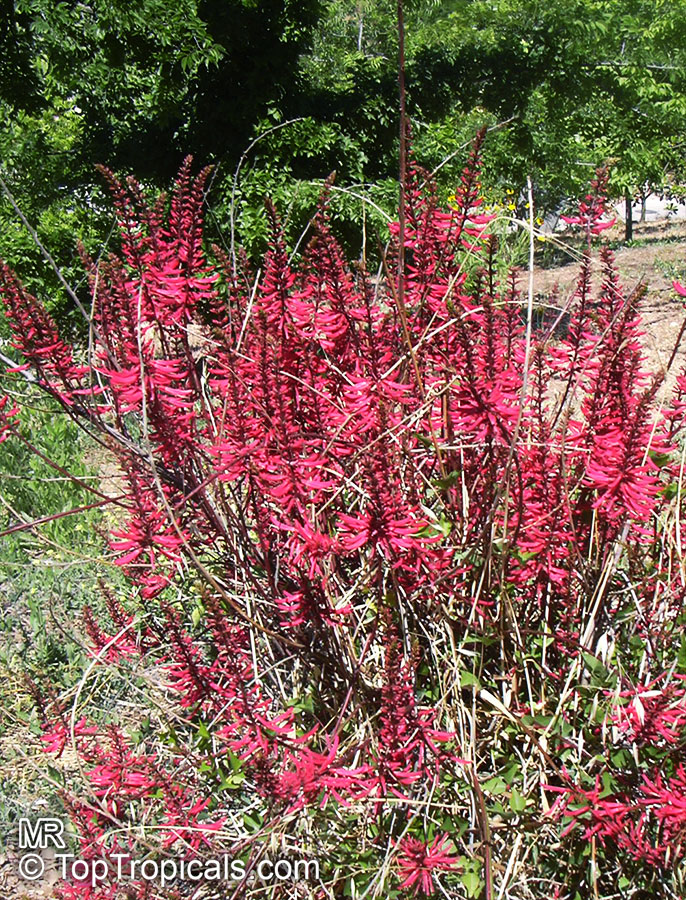
One plant to consider is the Coral bean or Erythrina herbacea. This legume, native to the southern portions of the United States, is Florida-friendly, unusual and a great choice for natural and informal planting. It will add interest to these challenging area(s) of your landscape from spring to fall...
CONTINUE READING >>


Date: 13 Aug 2020

Healthy Plant Food
Q&A from Mr Booster
Establishing Avocado Tree
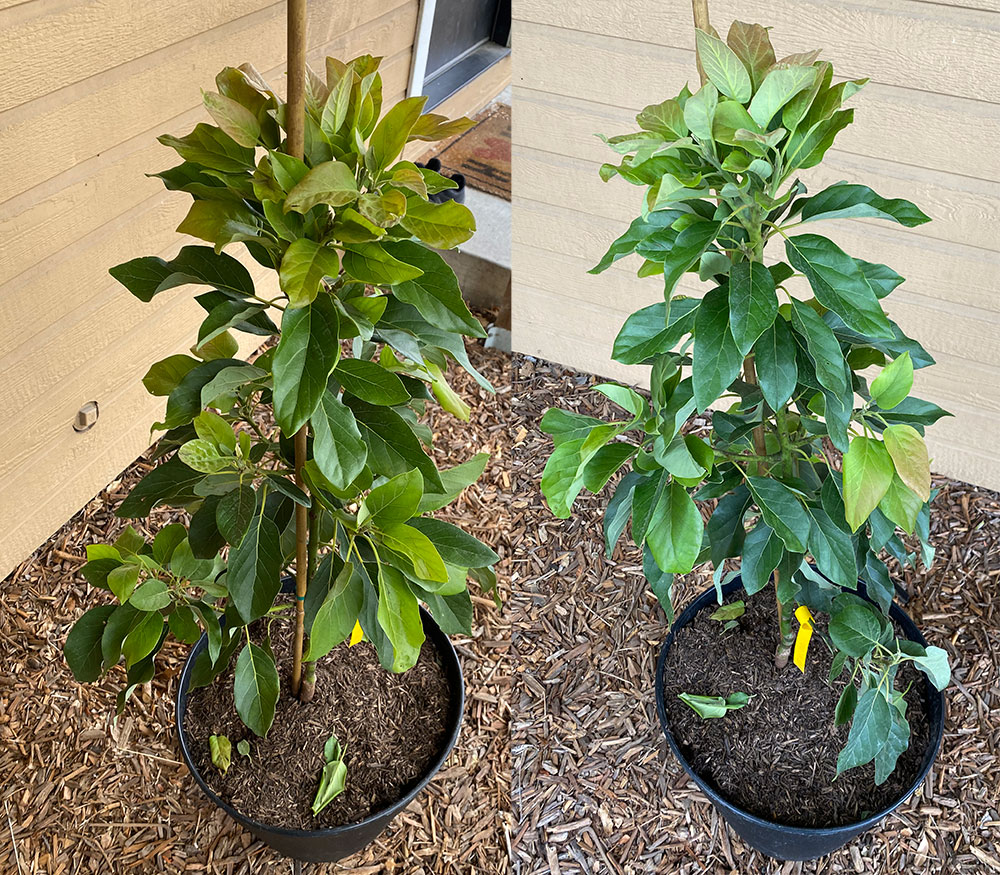
Q: I received my avocado Wurtz tree yesterday. Per instructions I have put the tree in a pot first. However I am having difficulty deciding what to trim off. Yesterday I removed obvious damaged leaves. However as you can see, the leaves are lighter in some areas and contain yellow and red in some spots. What would you advise? Given this is a critical state as I do not want to shock the tree after the trip, I would like to do everything possible to protect it and ensure viability.
A: Your Avocado tree looks great and healthy overall. You've done excellent job planting it. Wurtz is a good, vigorous variety, while the tree is somewhat dwarf,
great for containers.
You are right, it is the best for the tree to leave it alone and do not
trim or remove leaves any more, until it starts showing new growth. Then it will
be obvious what needs to be trimmed. Reddish/orange color of young leaves is
normal. If any spots or dots - no need to remove those leaves yet. Wait
until the plant grows more leaves. It needs them for photosynthesis, in order to
become stronger.
Keep the tree in bright shade and gradually move from filtered sun to
full sun. Water daily. Within a week or two after planting, you can start
applying mild fertilizer and micro-elements. We recommend at this growth stage:
SUNSHINE C-Cibus - Crop Nutrition Booster
SUNSHINE SuperFood - Micro-element Plant Booster
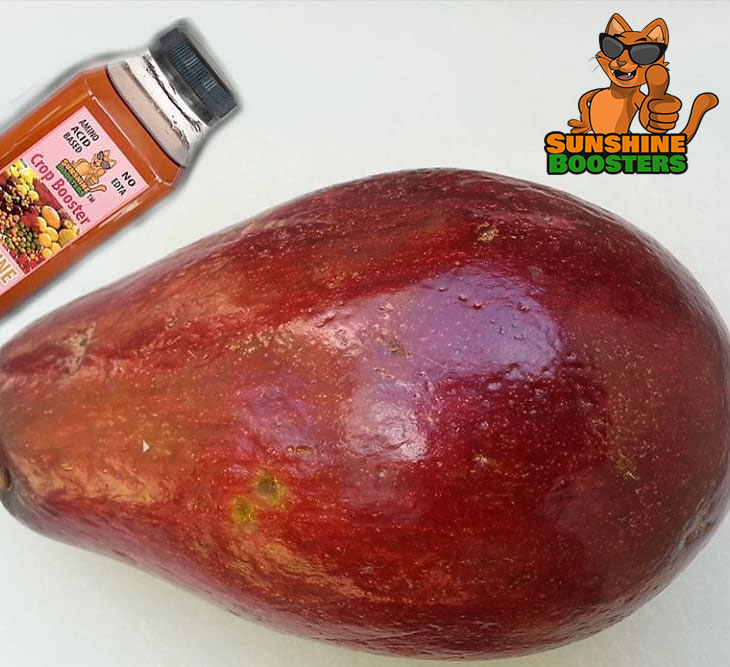
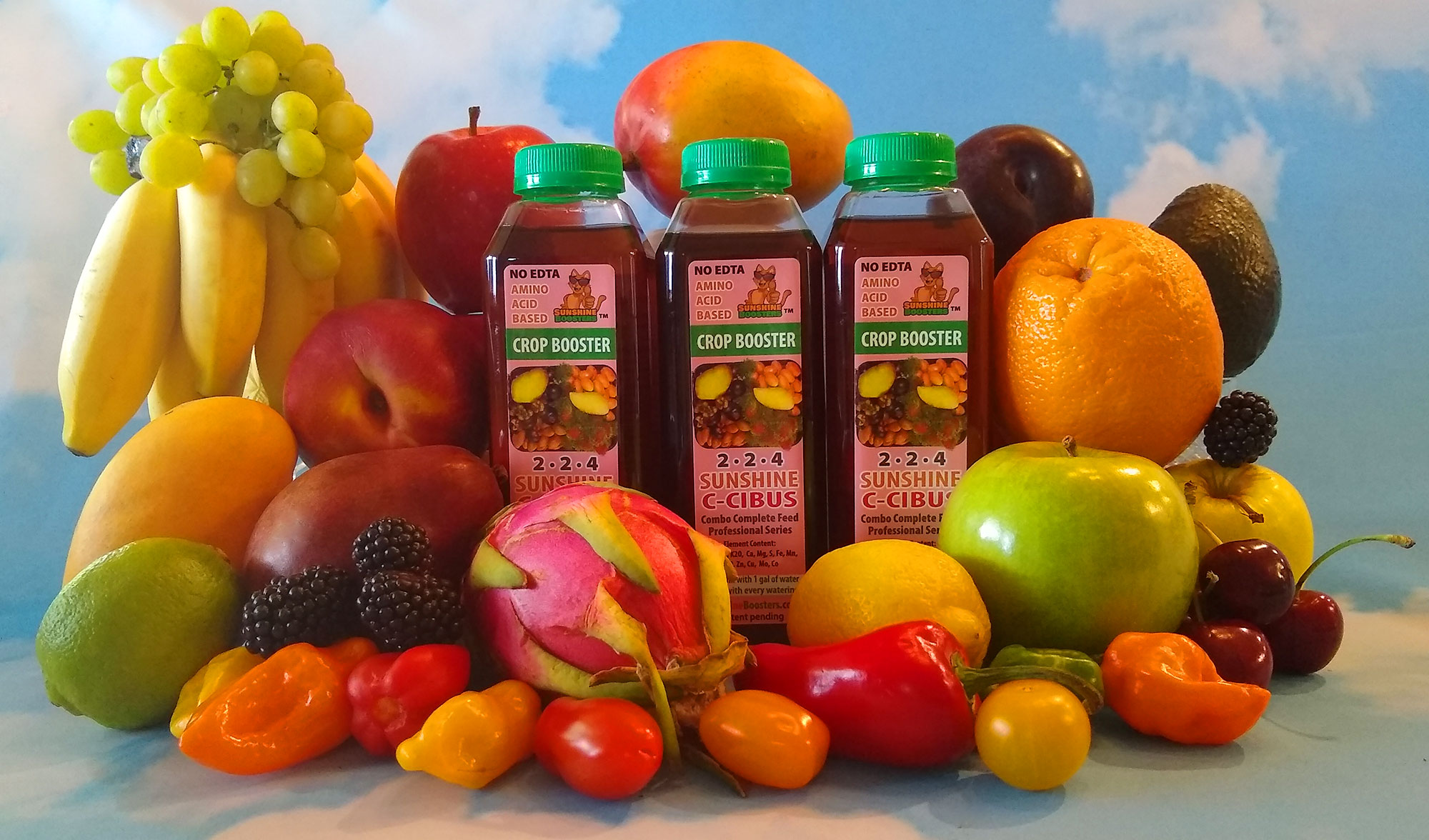
SUNSHINE C-Cibus - Crop Nutrition Booster from Garden Series, or Combo Total Feed Collection - all nutrients in just one bottle, for fruit trees and edibles.
Date: 13 Aug 2020
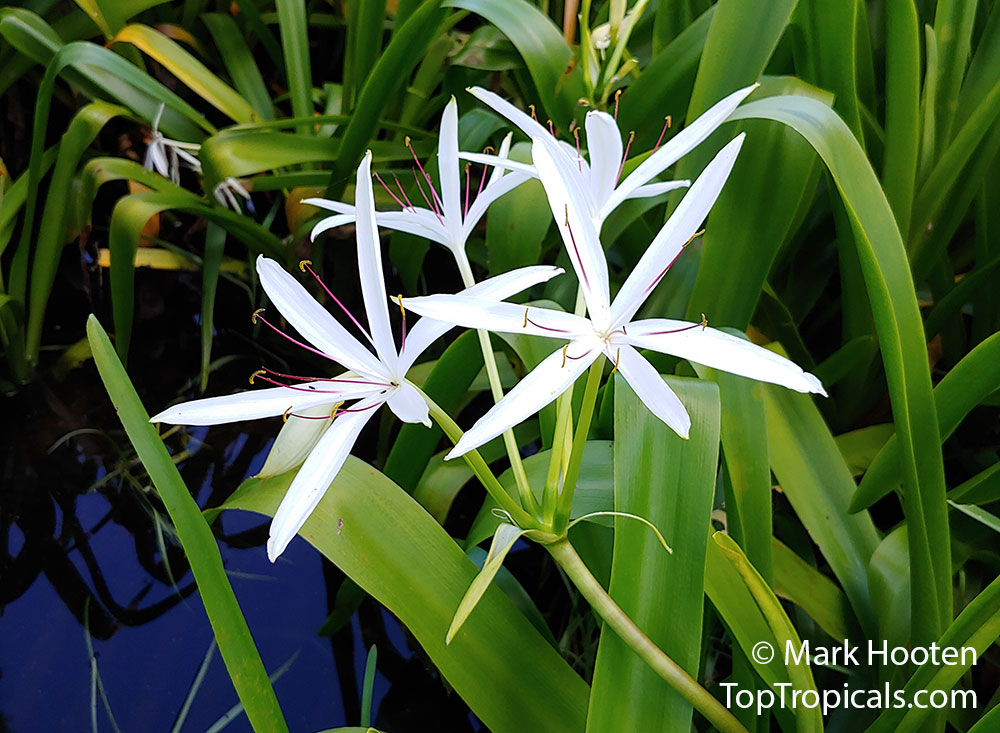
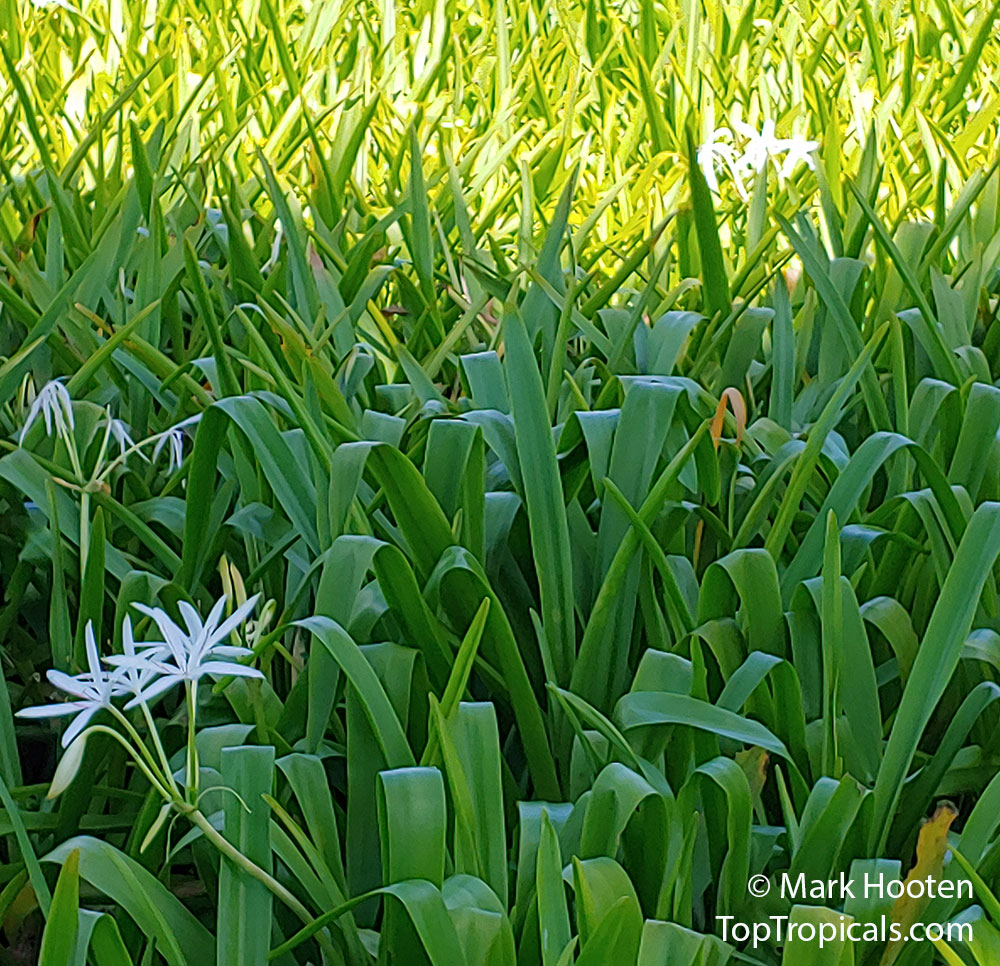
An unknown Florida native Swamp Lily?
Crinum americanum Punta Rassa Giant
by Mark Hooten, the Garden Doc
This unknown Florida native form of Crinum americanum might actually
represent an unpublished species! We have a few of these, they are very special
and now nearly 2 years old plants.
This most beautiful and fragrant of Florida's native lilies, most commonly
known simply as "Swamp Lily", has a very wide native range, extending from
the Everglades northward across all of the Gulf states. While being wide-spread
in distribution, natural colonies generally occur widely separated from one
another, often by miles. Because isolation of breeding populations often
leads to speciation due to intense in-breeding, many of these populations develop
traits which make them distinct...
CONTINUE READING >>
Date: 7 Aug 2020
Healthy Plant Food
Q&A from Mr Booster
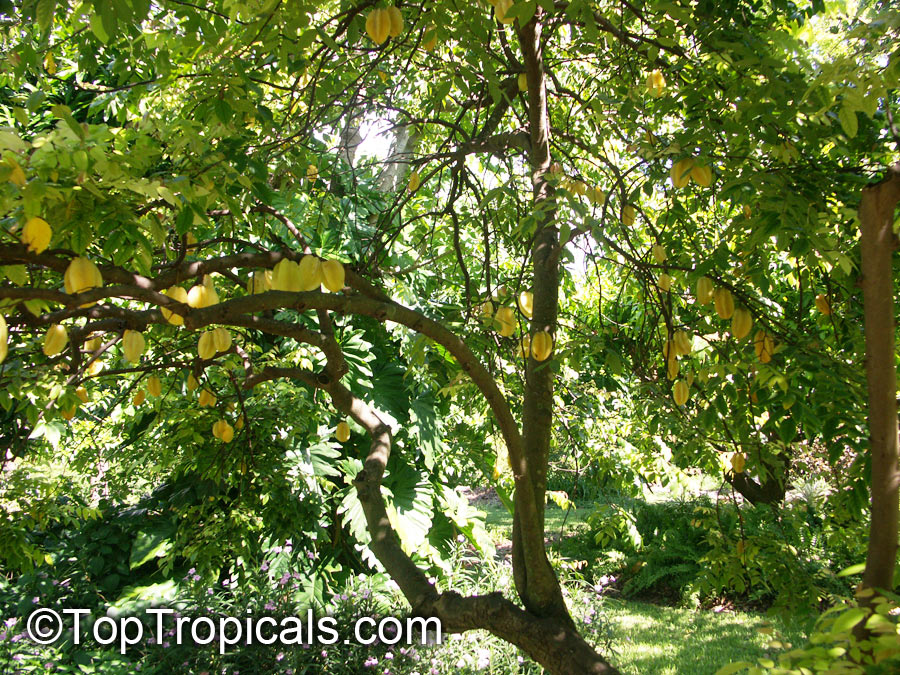
Plant food for a Star Fruit
Q: I have 2 Starfruit plants from you. One on the left is B10 has a lot of flowers but no fruit is developing. On the rite is Kenjeng. This one has no flowers at all. Both plants are growing very well. Plenty of sun and water. I am located in Boynton Beach Florida. So what to do?

A: Your trees on the pictures look very healthy, congratulations
with a great care!
Starfruit, as well as other grafted fruit trees (like mango, avocado, etc)
usually flower/fruit easily and readily while in pots in the nursery.
Sometimes, once planted in the ground, they may reduce flowering or even stop
flowering. What happened?
The answer is simple. In pots, we fertilize them on regular basis. In our
nursery, we have fertilizer injector inline with irrigation system that dozes
plant food with EVERY watering. In other nurseries, they may also use
slow-release fertilizers, but it is still a regular routine to provide plant food to
potted plants.
In the ground, especially in Florida poor soils, fruit trees may stop
flowering or delay fruiting due to lack of nutrients, or dis-balance of elements
in the ground. Without fertilizer, a tree may take extra time to develop
bigger root system to reach out for necessary elements, and eventually will start
fruiting anyway.
But we want it to fruit soon! The only way to fix the problem is to provide
fertilizer on regular basis for a young tree. It is especially important
during hot summer months when plant metabolism is fast due to high temperatures,
plus nutrients may get washed away with frequent summer rains (like we have
in Florida) even if you've added some fertilizer at time of planting.
You can use smart release fertilizer once a month during hot season,
this one or similar:
Mango-Food - Smart Release Fruit Tree Booster.
But the most effective way to get a tropical tree to flowering and
fruiting, is frequent applications of liquid fertilizer. We use Sunshine Boosters
with every watering on our plants. They work great even on hard cases and
weak plants, and you see the difference in a matter of weeks, sometimes even
days.
We recommend the following fertilizer that contains all necessary elements
for young fruit trees:
SUNSHINE C-Cibus - Crop Nutrition Booster
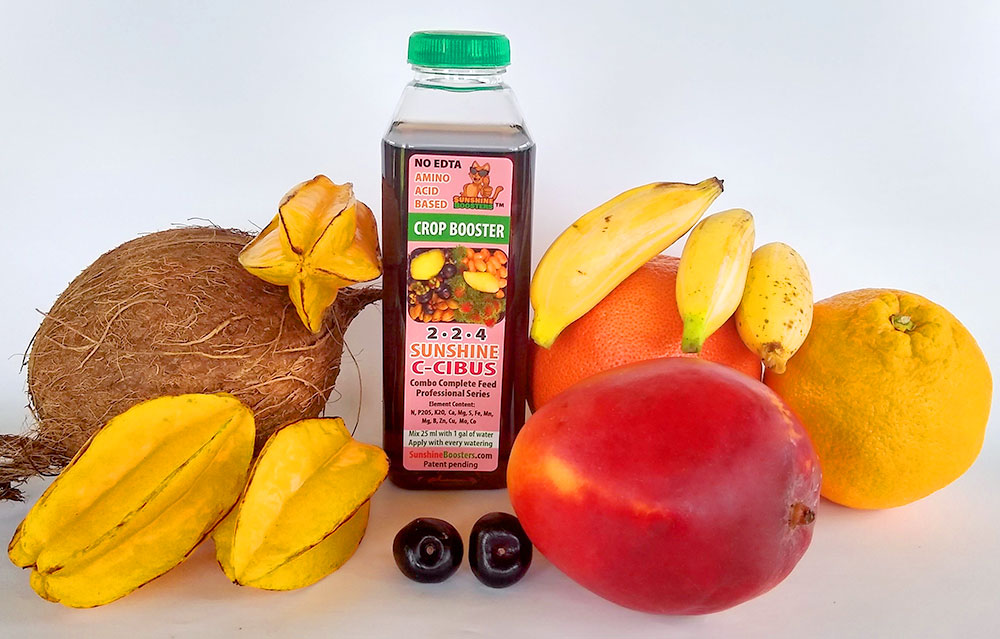
SUNSHINE C-Cibus - Crop Nutrition Booster from Garden Series, or Combo Total Feed Collection - all nutrients in just one bottle, for fruit trees and edibles.
Date: 7 Aug 2020
Top Tropicals Golden Reaper
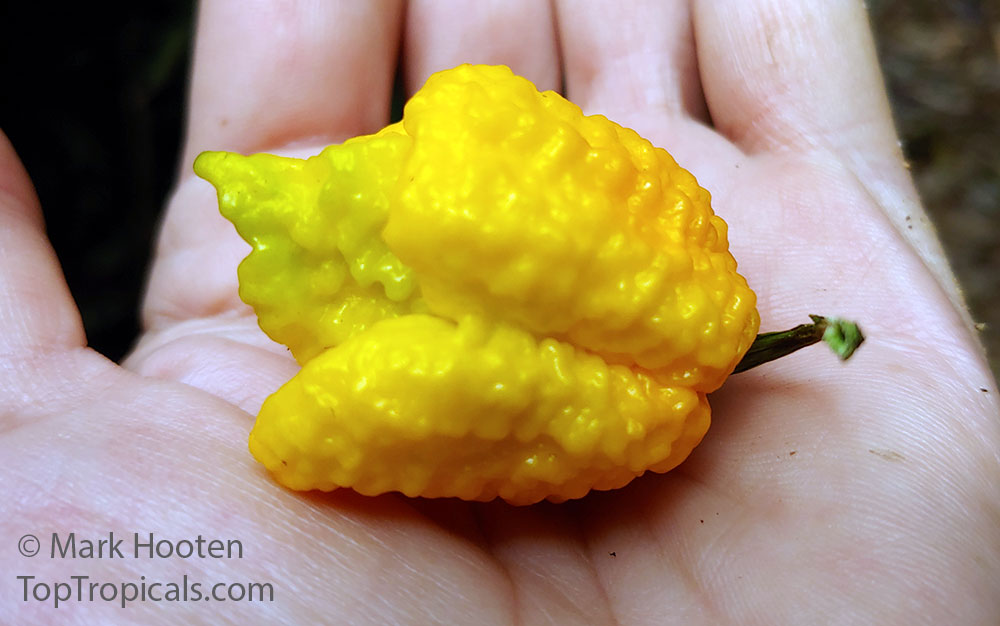
Gold Carolina Reaper pepper plants
by Mark Hooten, the Garden Doc
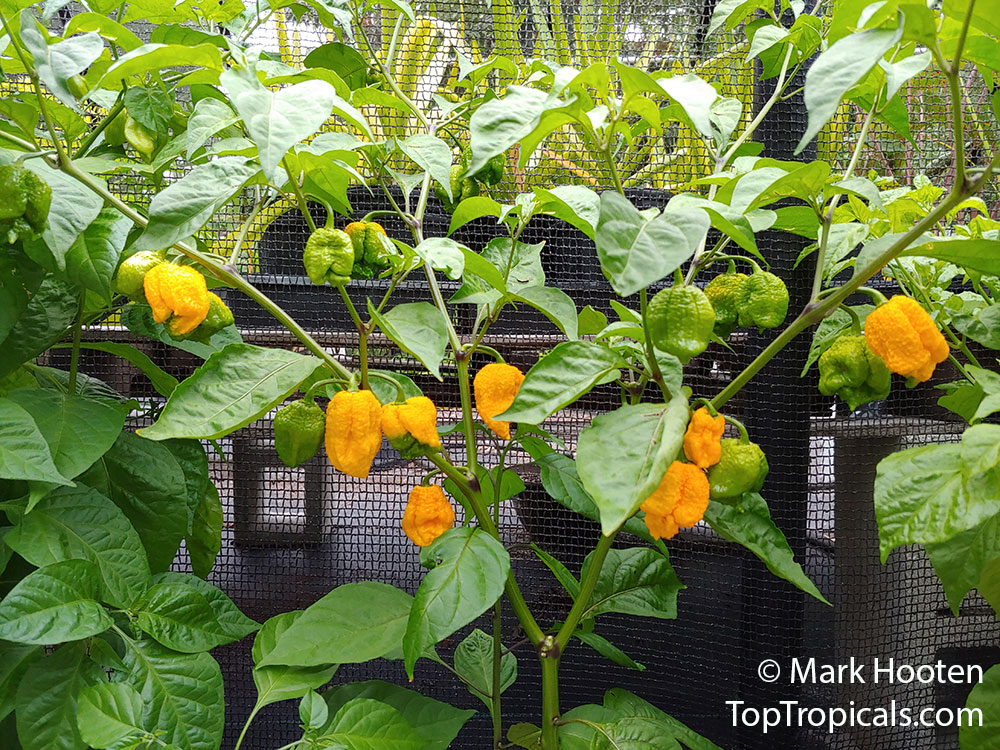
Because only people who are already well informed about SUPER HOT chili varieties are likely to be curious about these, there is no need for discussion about the history of what could be termed the "Hot Chili Wars"... Anyone reading this likely knows the chili variety which currently holds the official world's record for heat is a red one called 'Carolina Reaper'. They have a very unusual shape and texture.
Our distinct variety - Gold Carolina Reaper Pepper - originated from a batch of seeds of the
regular red fruited 'Carolina Reaper' (received directly from the breeder).
Out of the regular red fruited seedlings grew a plant producing truly brilliant
orange-gold colored fruits. As this plant was much more healthy, vigorous,
and productive than the normal red ones, (even producing considerably larger
fruits and just as searingly hot), we segregated and isolated that one. Seeds
from that specimen were then grown out to see the result, which, happily all
came out exactly identical to and as vigorous as the original gold parent.
Our plants have been grown from those.
We have very strong plants beginning to bud-up!