Date: 14 Nov 2018
Recovering Soursop after shipping and cold
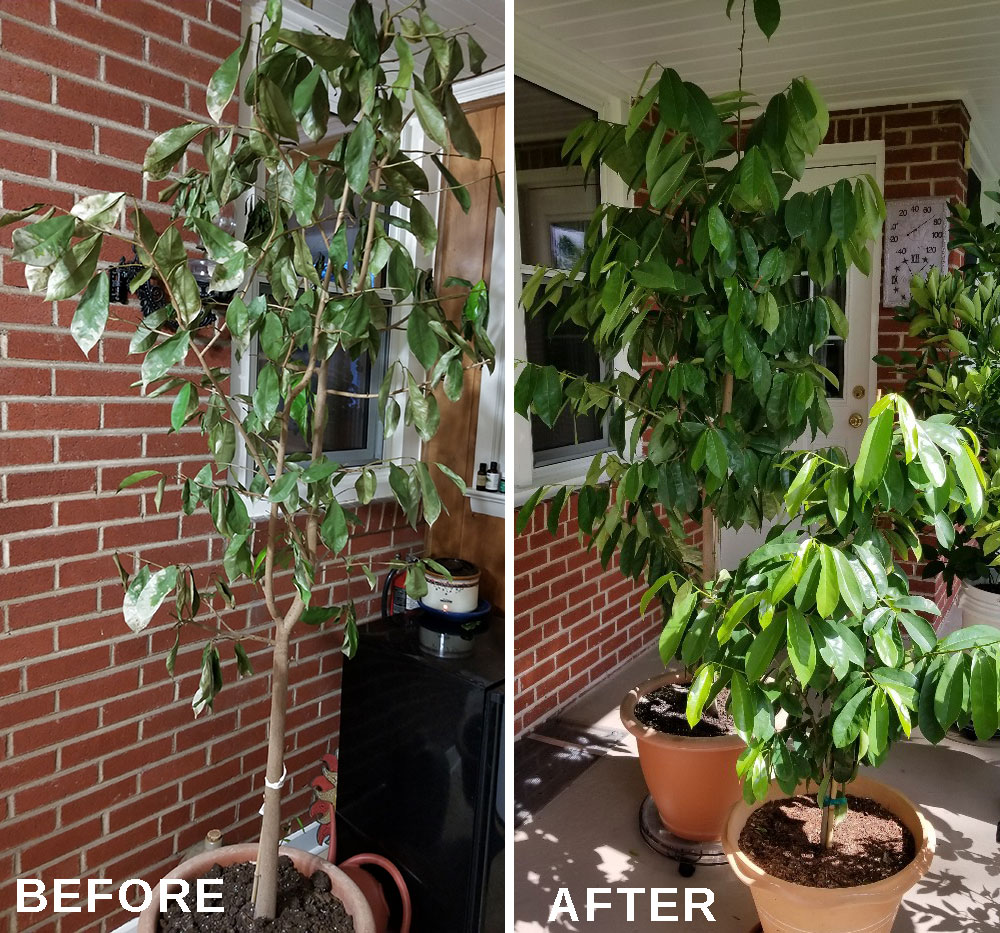
From Irene &
Marjorie, PA: We wanted to share our pics with you (after Summer). I
attached also the photo of the way the tree looked before your advice (back in
April). The big is the one we almost lost and you gave us these instructions and
it came back. These were your instructions:
"The soursop is one of my favorite fruits and I was so sad to hear
yours may be dead. Good news - the tree looks great! Yes, it does have some cold
damage but I'm surprised it still has leaves on it at all! In cooler weather,
they typically drop all of their leaves and stay that way until spring. You
can remove the damaged leaves and it will resprout new growth with the warmer
temperatures."
Taking care of
Soursop after shipping
Soursop - Annona muricata trees are very sensitive to temperature drops. This
always causes leaf loss. After shipping, do not water until the soil gets
slightly dry; keep it in bright shade. No fertilizer until the plant shows active
new growth. Be patient with your plant, and it should recover soon.
Soursop is an ultra-tropical tree and doesn't take any freeze. If you
live in a cooler climate, keep the plant in a pot (the good news is, Annonas,
in general, have a compact nature and are perfect for container culture).
Bring the tree indoors during the cold period, providing bright light.
We have a very interesting article about growing and fruiting Soursop
in an apartment. Check out 4534 Tropical Treasures Magazine # 7
Date: 9 Nov 2018
Taste of Mango
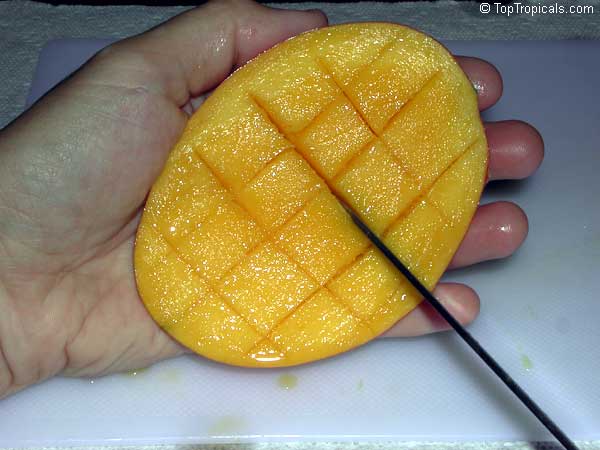
Mango harvest season is over, and now it's the time to plant young Mango trees for the next year season of flowering and fruiting. When choosing a mango tree, researching your location for proper growing conditions is relatively easy. But refining your decision-making process based on the taste of mango is both easy and fun (and filling)! However, since it is often difficult to find a convenient source for sampling a wide variety of mango fruits; we at Top Tropicals sat down and tasted a handful of varieties for you... Just another opinion on taste!
Pickering - Sweet, juicy, fiberless, with a hint of an apricot fragrance. (A universal favorite amongst the group.)
Nam Doc Mai - A slightly fibrous marmalade-like texture, with a sweet and floral flavor.
Cogshall - Very little fiber with a slightly tart and piney flavor.
Florigon - A mild, even flavor. Not too sweet, not too tart, and fiberless.
Mallika - A fiberless cantaloupe-like consistency. Slightly tart, with some semblance to non-acidic orange juice.
Valencia Pride - Slightly fibrous, with a tangy near citrus flavor.
Glenn - Very mild flavor, less sweet compared to other varieties, but very refreshing.
Read more about Mango varieties...

Date: 6 Nov 2018
Shopping for gifts is not an easy chore!

6 important steps for successful Holiday Gift Plant Shopping
1. Make a list of friends and family members that absolutely
require your special plant attention. Obviously, a live plant is the best
present!
2. Set deadlines for shipping gift plants. Remember good timing
is 50% of a good surprise!
3. Set a budget and call our Customer Service to help you pick the right plant that fits
your needs and finances. Check out current sales and deals to get more for your dollar, and low cost offers.
4. Buy plants for plant lovers, or simply for those who
appreciate the Nature, and the Beauty. Check out fragrant gift plants, fruit, and spice plants - these are always win-win! A gift certificate can be a great option so they can pick what they like,
and it is not time sensitive!
5. Prepare. Remember that live plant requires some attention.
Prepare pots, soil, and planting instructions beforehand so your beloved ones
can enjoy a happy plant for a long time.
6. Don't forget about yourself! Take advantage of BOGO deals
Date: 6 Nov 2018
Elephant Foot Yam seed production
Q: Very interesting information about Amorphophallus in your recent newsletter! (which I always enjoy BTW). I would like to purchase those fresh seeds, and I have a couple of questions. Did you have to hand pollinate that flower? I've heard it is not easy to set a fruit. Also, is this an edible variety?
A: From
Mark Hooten, the Garden Whiz. These Elephant Yam seeds were produced as
a result of hand pollination between two different Amorphophallus
paeoniifolius plants grown from entirely different sources. Both plants over ten years
old. One corm originated from a traditional Chinese market here in Ft. Myers,
while the other came from a Hindu market in Naples. As both were being sold
for eating (the prepared corms of the sweet types are a popular Asian
vegetable), we know they are of the "sweet" type, not the acrid type which is the
commonest in cultivation. The flowering occurred this last April, with the fruit
spike maturing in October which is very fast considering it may take up to a
year to mature this fruit!
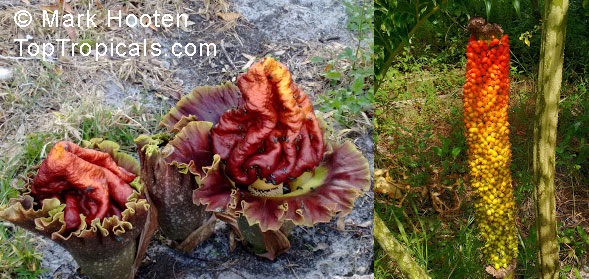
The flowering image shows three different flowers all emerging from a
single clump of the Chinese plant which has developed over the years, each
flower being a couple of days apart. This is the plant which made the
fruit-spike, one of its flowers having been hand pollinated by the Hindu store plant on
the other side of the property. Notice all of the large blue flies swarming
the fully mature and very stinky flower!
Check out Fresh seeds of Amorphophallus paeoniifolius. Only a few packs left!
Date: 2 Nov 2018
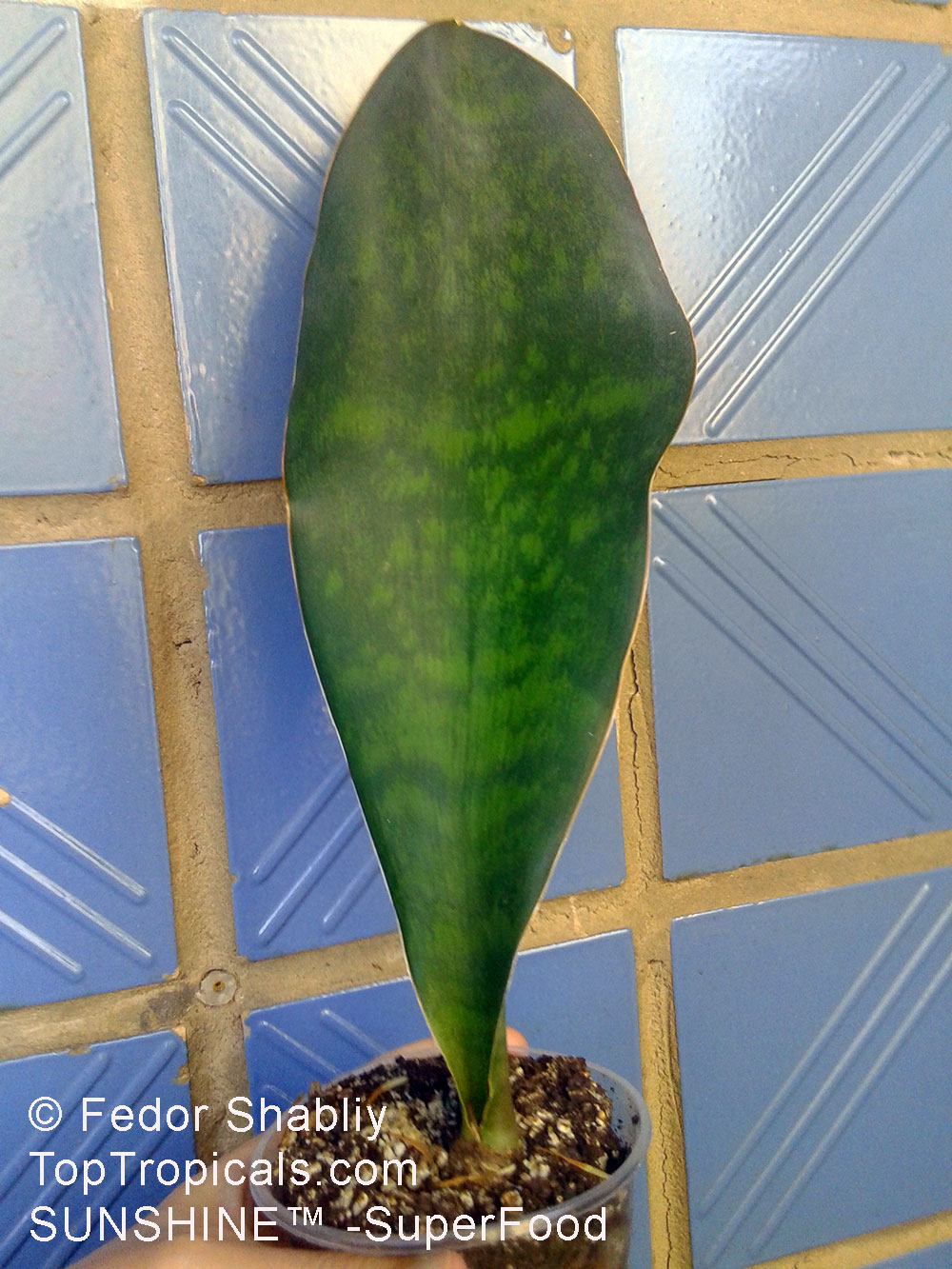
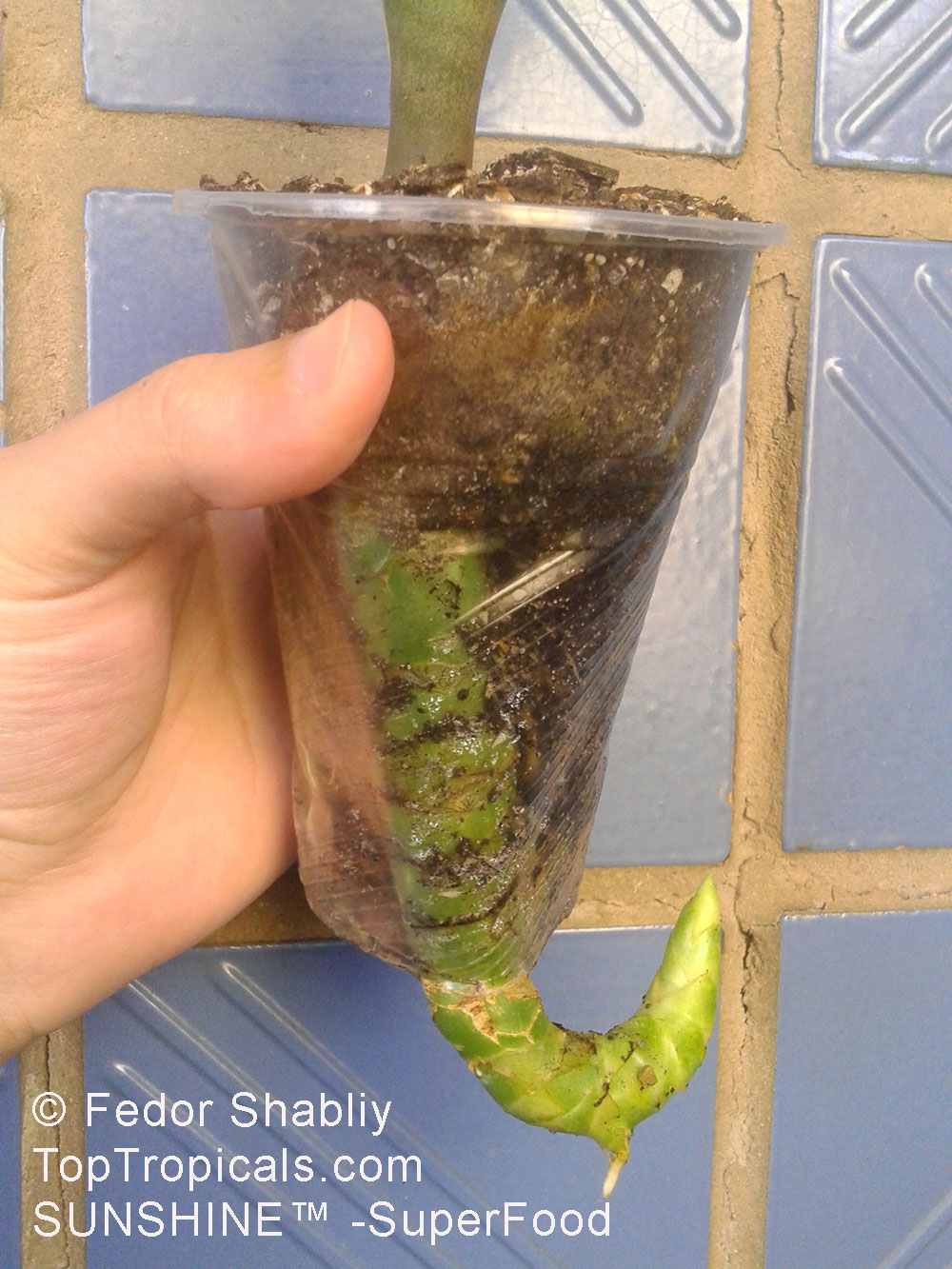
Amazing root growth after treatment of SUNSHINE-SuperFood!
This Sansevieria grandis leaflet planted indoors in a plastic cup was treated with SuperFood once a week, along with regular monthly N-P-K, for a couple of months. On the photo, you actually see not just a ginormous root but a whole new plant started forming through the colossal size root sucker trying to find its way out. A pretty impressive result for a small plastic cup! The cup was protected from the sunlight, sitting inside of a dark planter. The plant received filtered light sitting on a windowsill with Eastern exposure.