Date: 21 Mar 2026
Today: Spring Equinox Plant Festival 🌿
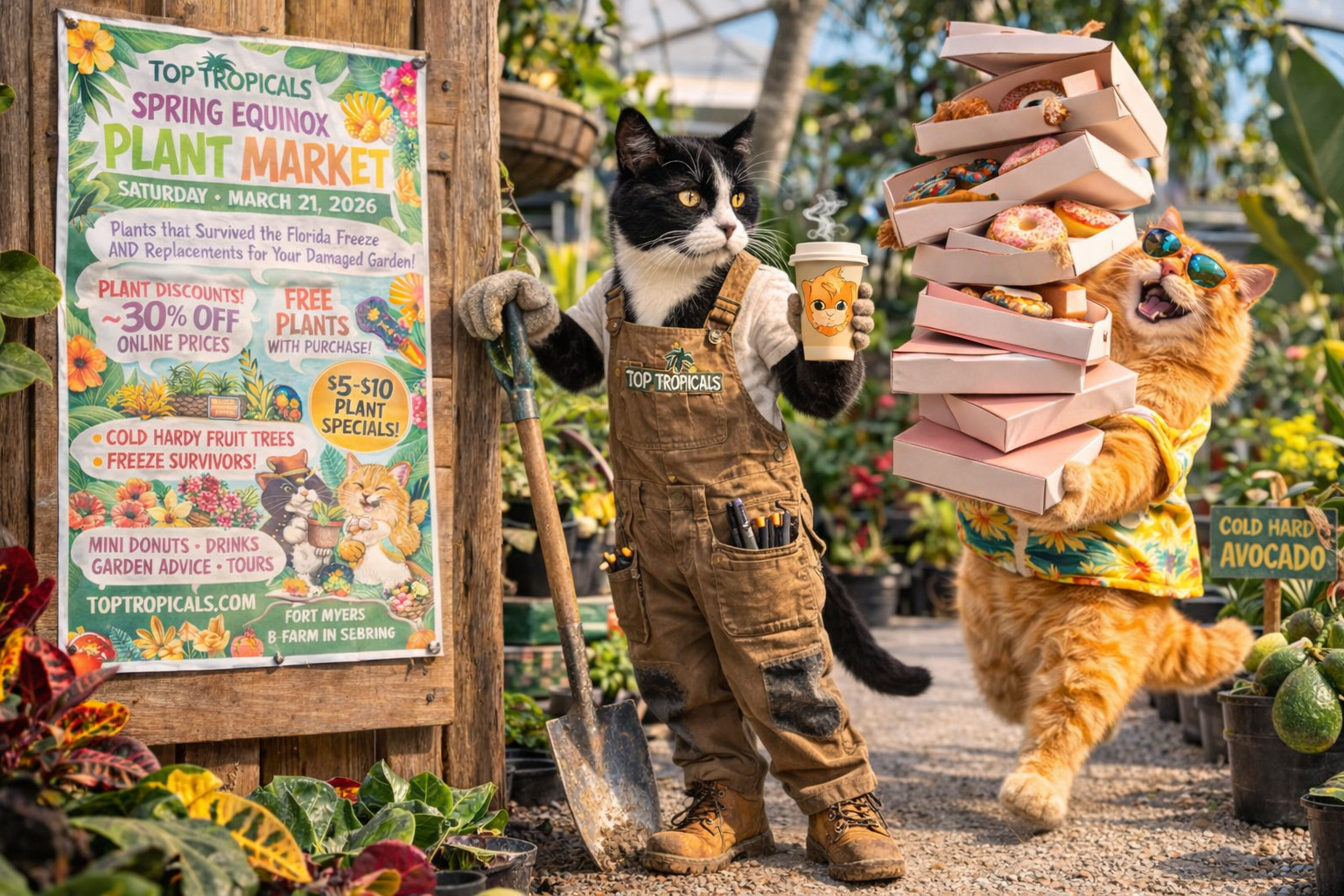
Smokey: Under control. Try not to drop half of them.
Both: Friends, come over today.
Everything is ready for today at our Spring Equinox Plant Festival. The garden is full and we would love to see you. Come over today and enjoy it with us. SEE FULL EVENT DETAILS
Date: 20 Mar 2026
Just in time for spring: Nun Orchid blooms for months!
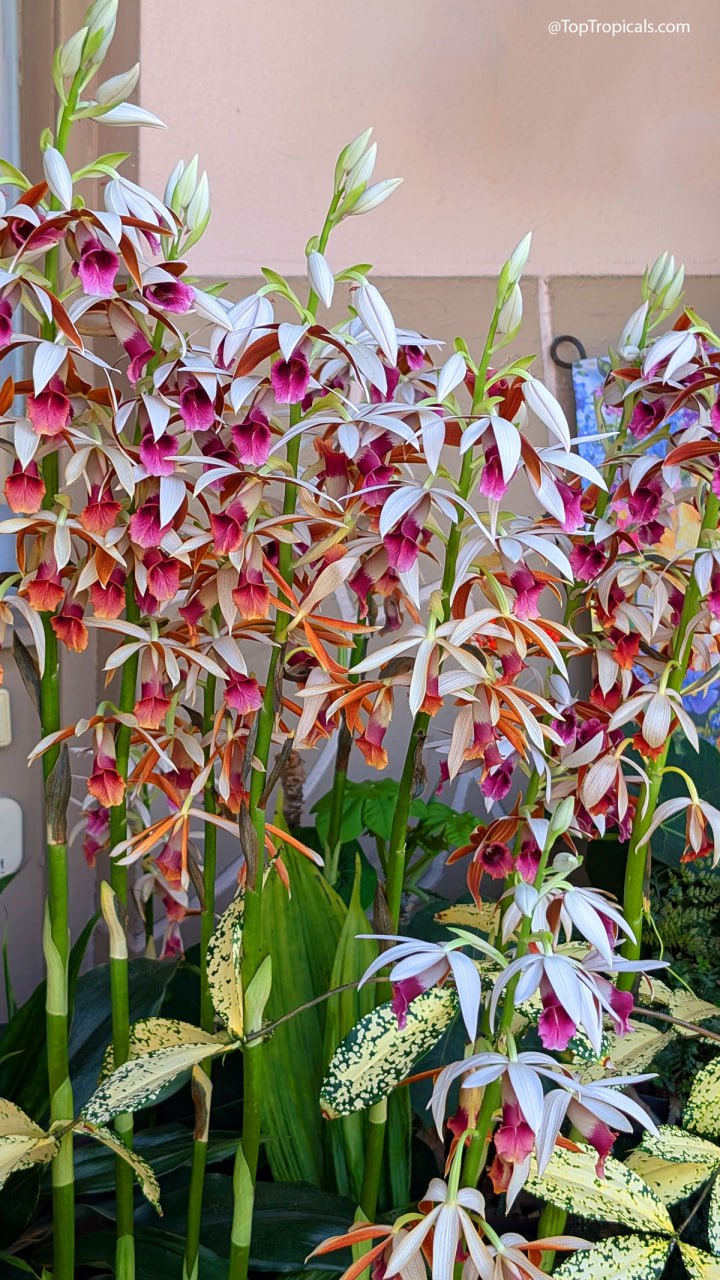
Phaius tankervilleae, Chinese Ground Orchid, Nut Orchid
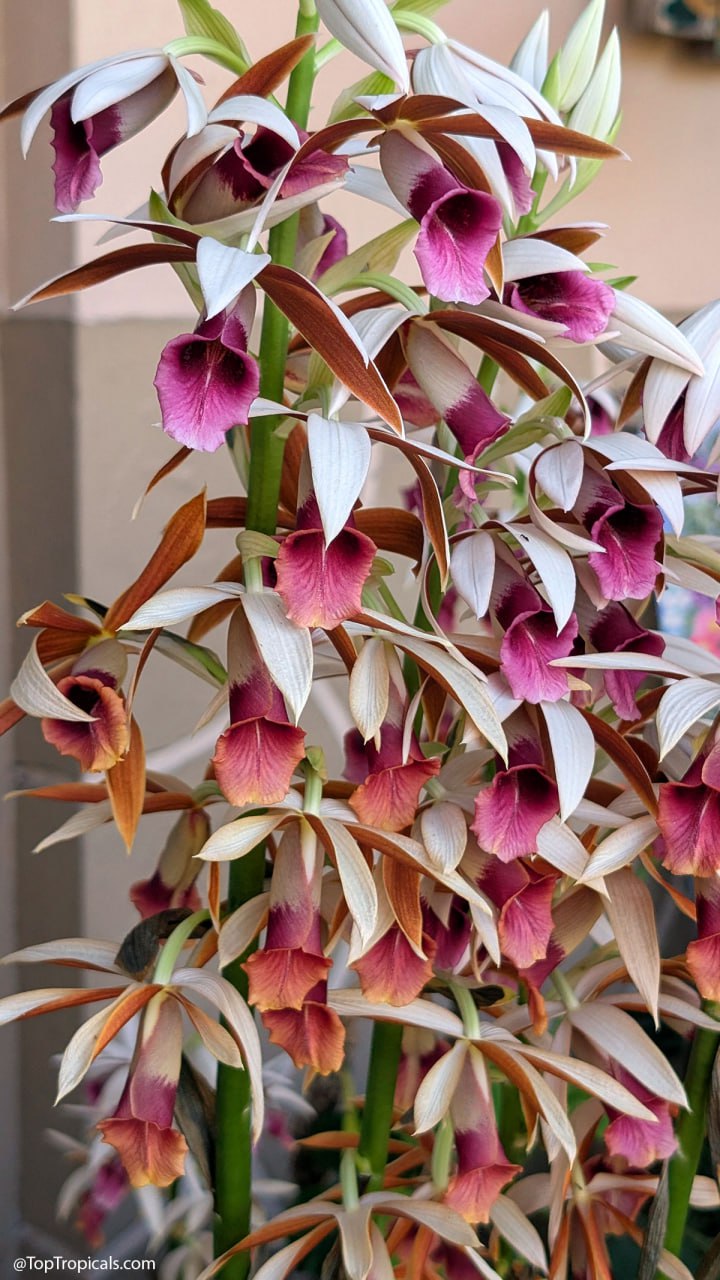
Phaius tankervilleae, Chinese Ground Orchid, Nut Orchid
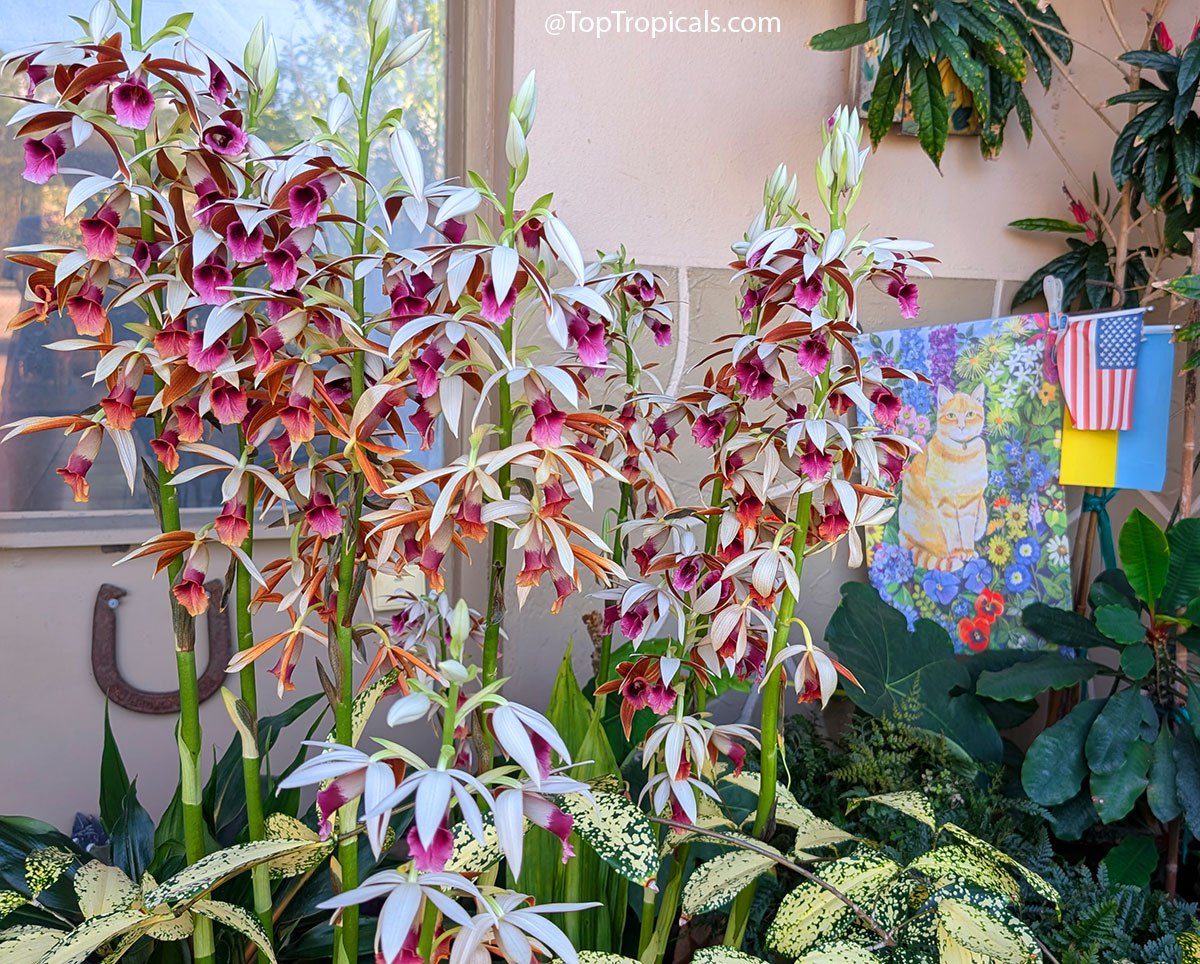
Phaius tankervilleae, Chinese Ground Orchid, Nut Orchid
- 🌷 What a wonderful treat after a long cold winter: Nun Orchid (Phaius tankervillea) is putting on a full show right now in the garden - and it’s been going strong since February.
- 🌷 These plants were already loaded with buds before our Record 25F Florida Freeze, so I moved the two pots into the garage to protect them. Totally worth it - they came through beautifully and didn’t miss a beat.
- 🌷 Now they’re in full bloom and should keep going well into April. This is one of those rare orchids that just keeps going.
- 🌷 Unlike most orchids, Nun Orchid grows in regular soil. Big lush leaves, tall flower spikes, and it’s perfectly happy in filtered light - great for patios, containers, or a shady spot in your garden.
What’s blooming in your yard today?
🛒 Plant beautiful Nun Orchid
📚 Learn more:


#Container_Garden #Shade_Garden
🟢 Join 👉 TopTropicals
Date: 19 Mar 2026
Guava chili glaze: quick-n-fun exotic recipes

Guava chili glaze
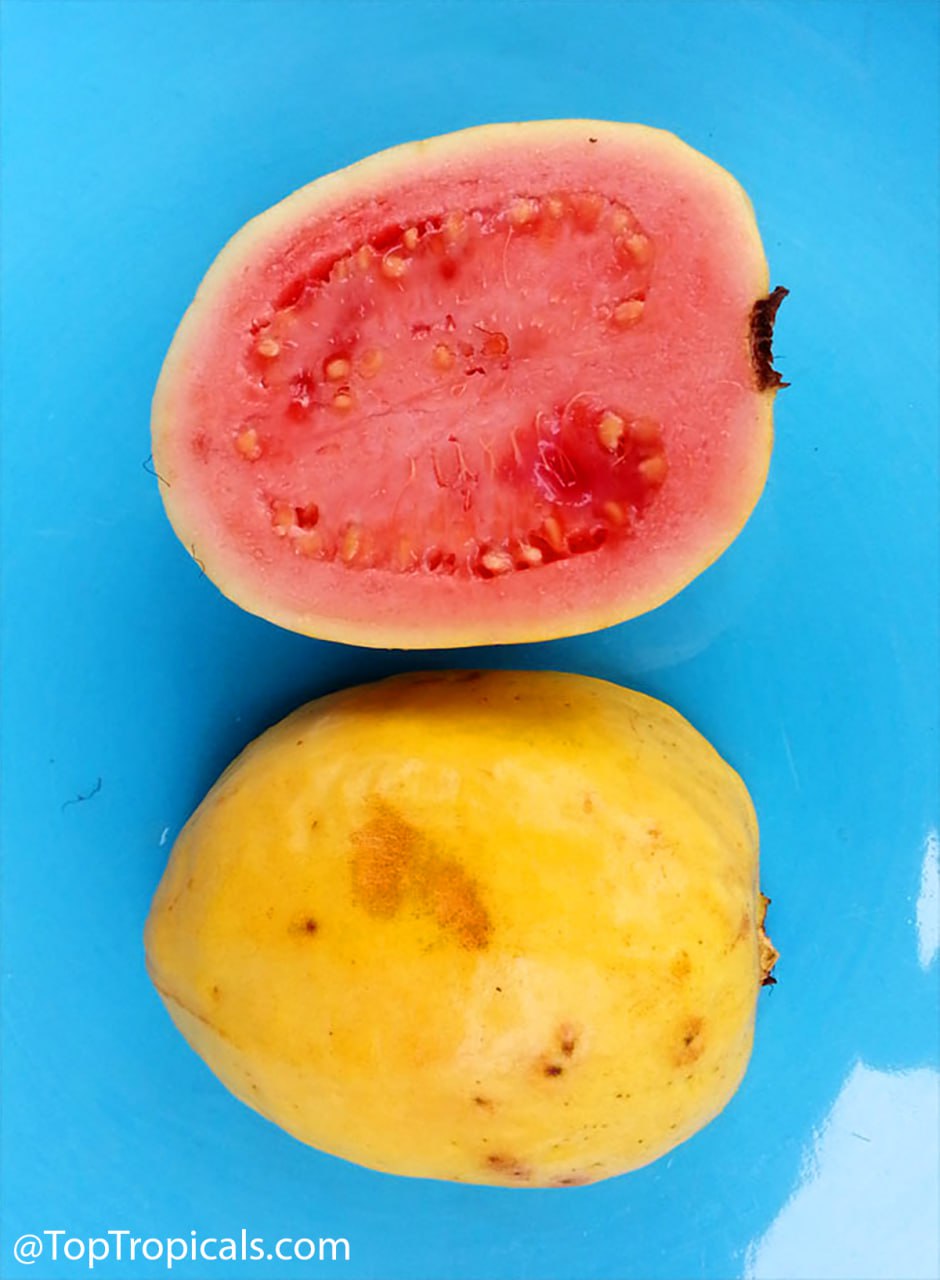
Guava fruit
🍴 Guava chili glaze: quick-n-fun exotic recipes
- 🔴Simmer guava puree with chili flakes and a squeeze of lime.
- 🔴Brush onto grilled chicken
🌿 About the plant:
Guava is a tropical tree with fragrant fruit rich in vitamin C and aromatic pulp.
🏡 In the garden:
Thrives in warm climates, tolerates some drought. Responds well to pruning and can be grown in containers.
🛒 Grow your own guava tree
📚 Learn more:


#Food_Forest #Recipes
🟢 Join 👉 TopTropicals
Date: 18 Mar 2026
The Alien Lily: why this rare Peruvian bulb is taking over garden feeds
Eucrosia bicolor - Peruvian lily
Most bulbs are predictable, but Eucrosia bicolor is a total showstopper. Discover why this rare Peruvian lily looks like a firework and how to grow it.
- 💥 I planted a simple, nondescript bulb and honestly? I wasn’t prepared for what came out of the soil. This one feels like it belongs in a museum, or on a tiny stage with spotlights!
- 💥 Eucrosia bicolor is not your typical garden plant - it’s a rare bulb from the dry regions of Peru, and when it blooms, it puts on a theatrical performance. It’s rare, it’s a bit dramatic, and it looks like something designed for a sci-fi movie set.
💥 Move over, Orchids: why Peruvian Lily is the ultimate conversation starter
The Eucrosia bicolor is a rare bulb from the dry forests of Peru. For months, it sits quietly in its pot, looking like a plain onion. But then, the magic happens:
- · The "Fireworks" Bloom: A tall stalk shoots up, topped with bright red flowers and impossibly long, golden-tipped "whiskers.
- · The"Museum"Look: The stamens are so long and delicate they look like frozen explosions or a tiny botanical chandelier.
- · Lush Foliage: Even when it isn't blooming, its broad, soft leaves offer a"Lily of the Valley"elegance that keeps your shelf looking green.
💥 The"introverted"bulb: why you should stop watering this plant to make it bloom
Being part of the Amaryllis family, Peruvian Lily has a unique quirk: it craves a"disappearing act."
It requires a dry dormancy period where it completely dies back.
It’s essentially a"don't call me, I'll call you"plant.
But when it decides it's time? It comes back stronger every year.
💥 Quick Care Guide for Collectors
How to Master the"Peruvian Performance"? Caring for this rarity is actually quite simple once you understand its rhythm.
- · Light. Yes, it blooms in shade! To get those museum-quality blooms, you’ll want to place it in a spot with warmth and bright, indirect sunlight - a sunny windowsill is usually its happy place.
- · Water. During its active growing season, keep the soil moist, but here is the"secret sauce": once the leaves begin to yellow, stop watering entirely. This mimics the dry season in Peru and allows the bulb to rest.
- · Placement. Because of this specific"on/off"cycle, it’s best kept in a container where you can easily control its environment and move it to a place of honor the moment those firework-like stalks appear.
- · The Verdict: It’s not a constant bloomer, and that’s exactly why it's special. When that stalk finally appears, it feels like an event. It’s the kind of plant that makes you run to the living room every morning just to see if"today is the day."
🛒 Find the Peruvian Lily here
🎥 Close-up of Eucrosia bicolor flower with long golden stamens
📚 Eucrosia bicolor in Plant Encyclopedia
#Container_Garden #How_to #Discover

Date: 17 Mar 2026
Green Magic - 15% Off This Week!
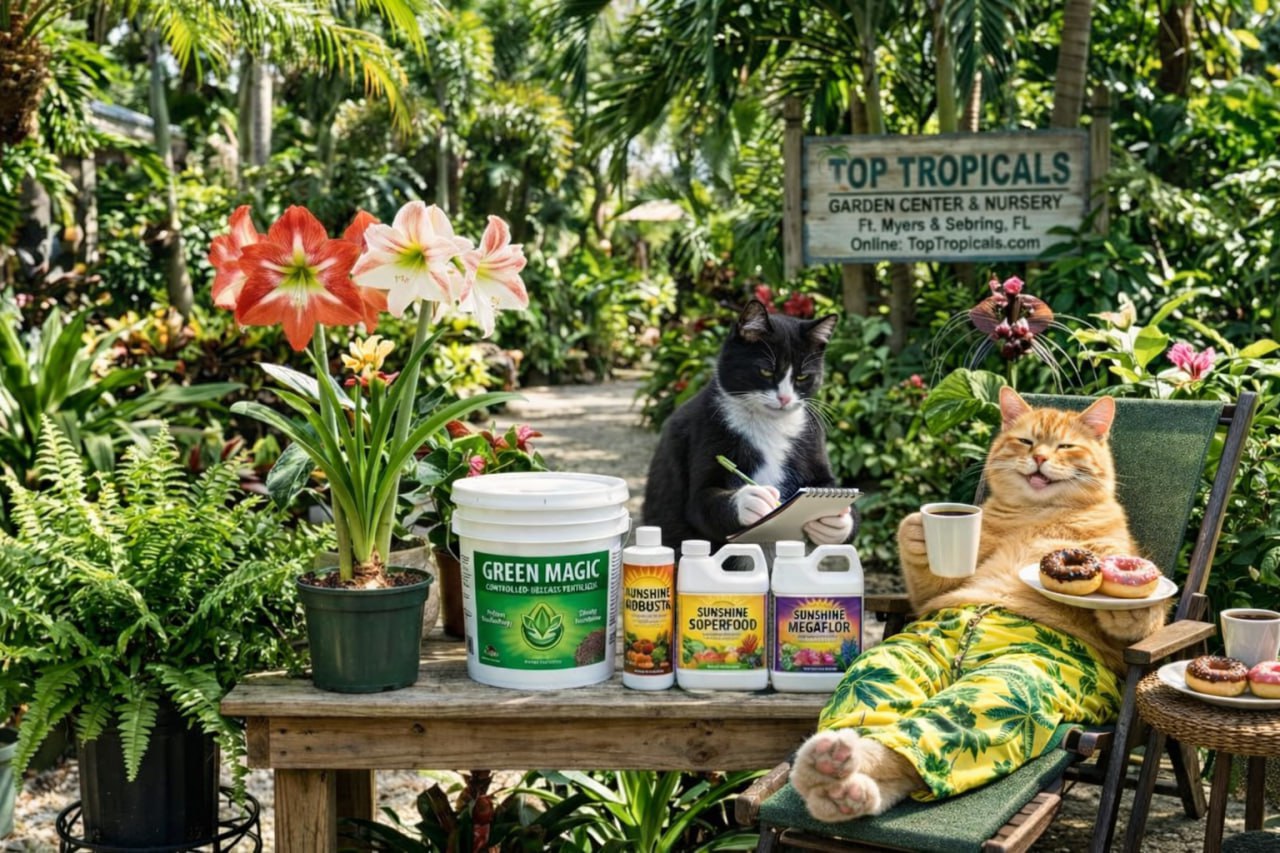
Smokey and Sunshine running a sale of fertilizers at Top Tropicals
Give Your Plants a Strong Start This Spring:
- 🟢Green Magic - 15% OFF 🟢
Build the foundation for the entire growing season with a steady, long-lasting nutrient base!
No coupon needed. The discount is automatically applied at checkout.
Offer valid through 03/21/2026.
Discount applies to Green Magic products only.
🛒 Get your plants some food
- 🐈 Sunshine: So Green Magic feeds the plant for months. Does that mean I can forget about Sunshine Boosters?
- 🐈 Smokey: Not quite. Green Magic is the steady base diet. Sunshine Boosters are the weekly power drink during active growth.
- 🐈 Sunshine: Ah. Like my regular meals and donuts on top.
- 🐈 Smokey: Exactly. Plants eat slowly from Green Magic, and once a week they get a fresh boost.
- 🐈 Sunshine: Sprinkle once, then boosters every week. The plant grows, I drink coffee, and nobody forgets anything important.
- 🐈 Smokey: Except where you left the donuts.
- 🐈 Sunshine: Smokey... nobody forgets donuts. Ever!
- 🐈🐈 More about Smokey & Sunshine
📚 Learn more about plant food:
- Frequently Asked Questions: Plant Nutrition & Fertilizer
- Green Magic + SUNSHINE Boosters: A Complete System for Strong Plant Growth
- Spring Nutrition Strategy: Is Your Garden Starving?
- How to keep your house plants beautiful all year by feeding them right
- Why do you need Sunshine Boosters?
- Which dry fertilizer to use - slow release or controlled release?
- Green Magic effect: before and after
- The SECRET growers never tell you: simple trick how to bring plants back to life and keep green
📱 What are Sunshine Boosters
#Fertilizers #PeopleCats
🟢 Join 👉 TopTropicals
Date: 17 Mar 2026
Move Over, Paddy: Why March 17th is Actually the International Day of the Cat Lady

March 17th - International Day of the Cat Lady, Gertrude with cats
When you think of March 17th, you probably think of green beer, shamrocks, and parades. But while everyone else is toasted to St. Patrick, a subset of gardeners and feline enthusiasts are celebrating a different icon: St. Gertrude of Nivelles. She 's the 7th-century abbess who skipped the noble marriage proposals to become the unofficial Patron Saint of Cats, Gardeners, and anyone who really, really hates mice.
🐾 From Noblewoman to Monastery Boss
Born in 626 AD (modern-day Belgium), Gertrude wasn't your average medieval teenager. When her family tried to marry her off to a rich duke, she famously told them she’d rather be a bride of Christ than any man on Earth.
She eventually ran the Nivelles monastery like a pro, turning it into a 5-star medieval hub for travelers, scholars, and pilgrims. But it isn't her hospitality that made her an internet icon 1,300 years later - it’s her "pest control" skills.
🐾 The Mouse-Hater’s Hero
Look at any medieval painting of Gertrude, and you’ll notice something weird: mice are literally climbing up her staff. In the Middle Ages, mice weren't "cute Disney sidekicks." They were grain-destroying, plague-spreading menaces. Gertrude became the go-to saint for:
Protecting the harvest from rodents.
Keeping the pantry mouse-free.
Calming the nerves of people with a serious case of musophobia (fear of mice).
The Logic: If you’re the saint of mice, you’re naturally the BFF of the creature that eats them.
🐾 How She Became the "Cat Lady Saint"
Interestingly, Gertrude wasn't "officially" the saint of cats for most of history. That title actually went viral in the late 20th century.
A 1981 Metropolitan Museum of Art catalog highlighted her rodent-fighting reputation, and the world’s cat lovers basically said, "Hold my catnip". The association stuck instantly. Today, she’s the patron saint of the "Original Cat Lady" aesthetic, celebrated by anyone who knows that a home isn't a home without a feline supervisor.
🐾 A Big Day for Green Thumbs
If you’re a gardener, March 17th is your "Green Flag" day. In European folklore, St. Gertrude’s feast day is the traditional start of the planting season.
- 👉 Pro-Tip from the Middle Ages: If the sun is out on March 17th, it’s a sign that your garden will thrive all year. If it’s raining? Well, maybe stay inside and pet the cat.
🐾 The Perfect Trio: Cats, Gardens, and Gertrude
There’s a reason plant people and cat people are often the same people. Cats love a good garden patrol - they nap in the mulch, stalk the butterflies, and ensure no chipmunk dares to touch your tomatoes.
At TopTropicals, we take this tradition seriously. Our PeopleCats are more than just pets; they are the furry CEOs of the nursery, supervising every seed we plant and every leaf we prune.
- 🐾 The Feline Patrol: For keeping our gardens mouse-free.
- 🐾 The Gardeners: For braving the dirt to grow something beautiful.
- 🐾 The Abbess: For being the coolest historical figure you'd never heard of.
🐾 Meet the PeopleCats:
The furry supervisors of the garden world!
🐾 This March 17th, Wear a Little Extra Fur
Whether you’re Irish or not, take a moment this March 17th to raise a glass (or a bag of treats) to St. Gertrude.
This year, let’s celebrate:
📚 Learn more:
St. Gertrude of Nivelles: Patron Saint of Cats, Gardeners, and Those Who Fear Mice!
#PeopleCats #Horoscope #Fun_Facts
🟢 Join 👉 TopTropicals and 🐈PeopleCats.Garden
Date: 16 Mar 2026
Can your cat snore this loud? Sound up
Cat Niki
Why listening to a cat snoring is good for your health 💤
- 😴 Scientists have studied many natural relaxation sounds - ocean waves, rain on the roof, forest wind. But one of the most overlooked therapeutic sounds may be much closer to home: a cat snoring next to you.
- 😴 When a cat snores, it produces slow, rhythmic vibrations that naturally encourage the human brain to relax. Similar to white noise, this gentle rumble can help calm racing thoughts and lower stress levels. The brain interprets the steady sound as a signal that everything around you is safe and peaceful - after all, if the cat is sleeping that deeply, the world can't be that dangerous.
- 😴 Studies on human-animal interaction show that simply being near a relaxed pet can reduce cortisol levels, lower blood pressure, and even improve mood.
- 😴 And unlike meditation apps or sleep machines, a snoring cat comes with additional health benefits: warmth, occasional purring, and the strong reminder that sometimes the best thing you can do for your health is exactly what the cat is doing - lie down, relax, and take a nap.
- 😴 Side effects include: Zero productivity and a sudden urge to cancel all your plans. 😴
🐈📸 Cat Niki is fast asleep and snoring at TopTropicals PeopleCats.Garden.
#PeopleCats #Discover
🟢 Join 👉 TopTropicals
Date: 16 Mar 2026
🌱 💪 Green Magic + SUNSHINE Boosters: A Complete System for Strong Plant Growth
By Tatiana Anderson, Horticulture Expert at Top Tropicals with Smokey & Sunshine help
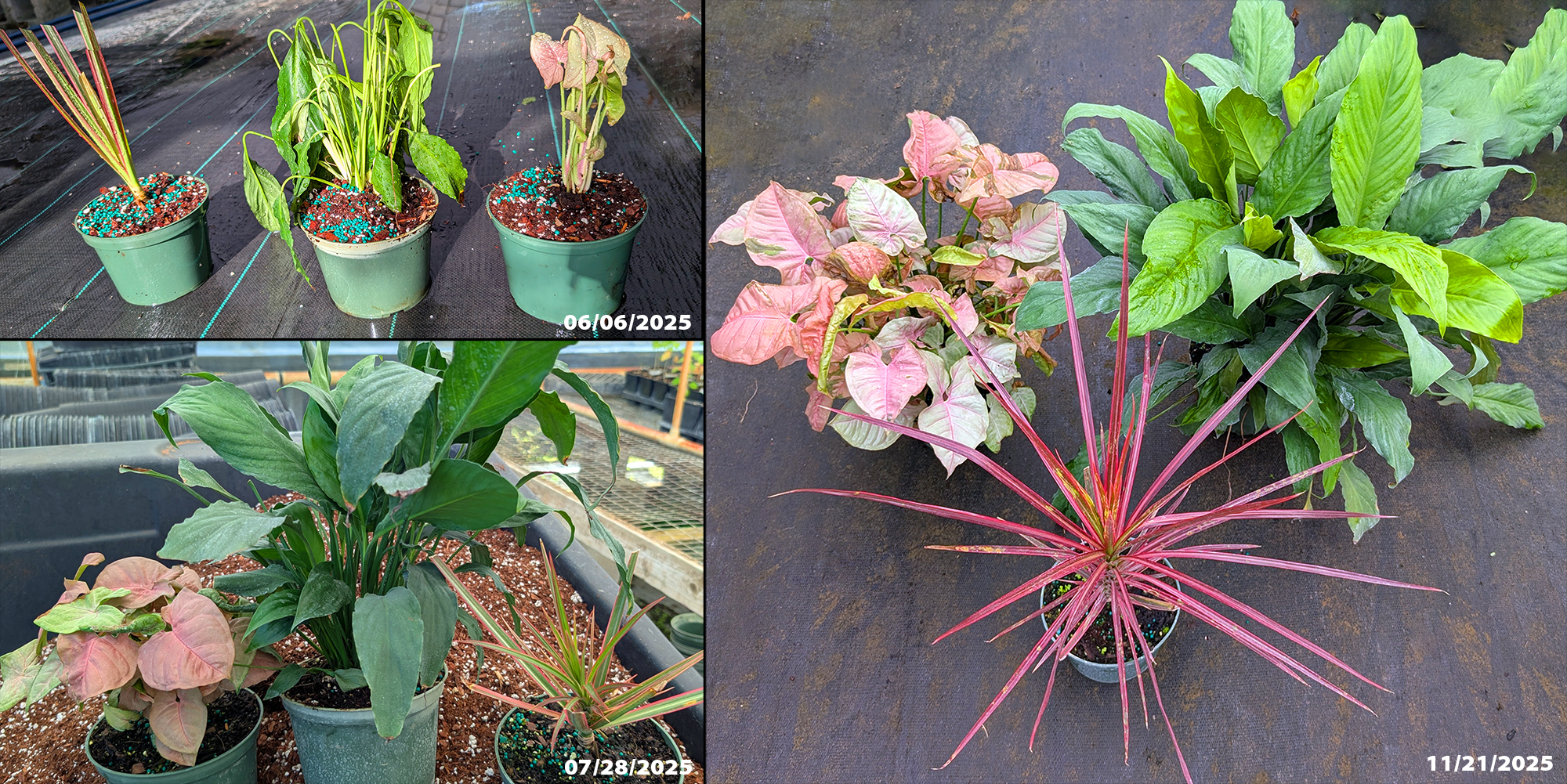
☀️🌱 Sunshine Boosters: Complete Plant Nutrition
Sunshine Boosters provide complete plant nutrition, including Calcium and micronutrients that plants need for strong growth. Because nutrients are delivered in liquid form, plants can absorb them quickly and respond almost immediately.
The Practical Problem
Liquid feeding works well, but it requires frequent application. In real gardens, many growers simply do not have time to add liquid fertilizer with every watering.
Green Magic: The Foundation
Green Magic solves this problem by providing steady background nutrition through controlled-release fertilizer. It feeds plants gradually, so they continue receiving nutrients even between liquid feedings.
Why This Combination Works
Together, this system provides both complete nutrition and steady feeding. Sunshine Boosters supply fast nutrients and Calcium, while Green Magic maintains a stable nutrient supply between feedings.
✍️ How to Feed Your Plants
📅 Step 1 – Start of the Growing Season
- Apply Green Magic around the root zone every 6 months.
In ground:- Small Shrubs (1–3 feet): Use approximately 1/4 to 1/2 cup per plant
- Established Trees: Use 1/2 lb to 1 lb of product per 1 inch of trunk diameter.
- Small In-Ground Ornamentals: A common "spoon" rate is roughly 1 teaspoon per gallon of estimated root volume (or per sq. ft. of surface area).
- Spread evenly around the dripline. Avoid piling the granules against the base or trunk of the plant. For best results, lightly rake the granules into the top 1–2 inches of soil.
- Apply 1 tea spoon per 1 gal of soil (mix in with soil) every 6 months during active growth period, or with every re-potting.
- Water normally after application.
- Adjustment for Temperature. Because Green Magic is
temperature-controlled, adjust your rate if your local climate is extreme:
- Cooler Climates (<60°F average): Increase the rate by 20% to ensure enough nutrients are released.
- Hot Climates (> 80°F average): Decrease the rate by 20% to prevent over-releasing as the heat speeds up the process.
☀️🌿 Step 2 – Active Growing Season
- Apply Sunshine Boosters during the growing season.
- Regular feeding (maintenance): Mix with tap water according to the ratio on the label. For SUNSHINE Robusta use 25 ml (5 tsp)per gallon of water and spray leaves every 5-7 days during active growth.
- Correction feeding ("medicine" dose): if plants show visible nutrient deficiencies, combine SUNSHINE Robusta with SUNSHINE Superfood and spray every 5–7 days until new growth appears healthy. All SUNSHINE Boosters products are compatible and can be mixed with water in the same sprayer.
- Best time to spray: early morning or evening when temperatures are cooler and leaves can absorb nutrients efficiently.
- Important: spray both the top and underside of leaves for maximum absorption.
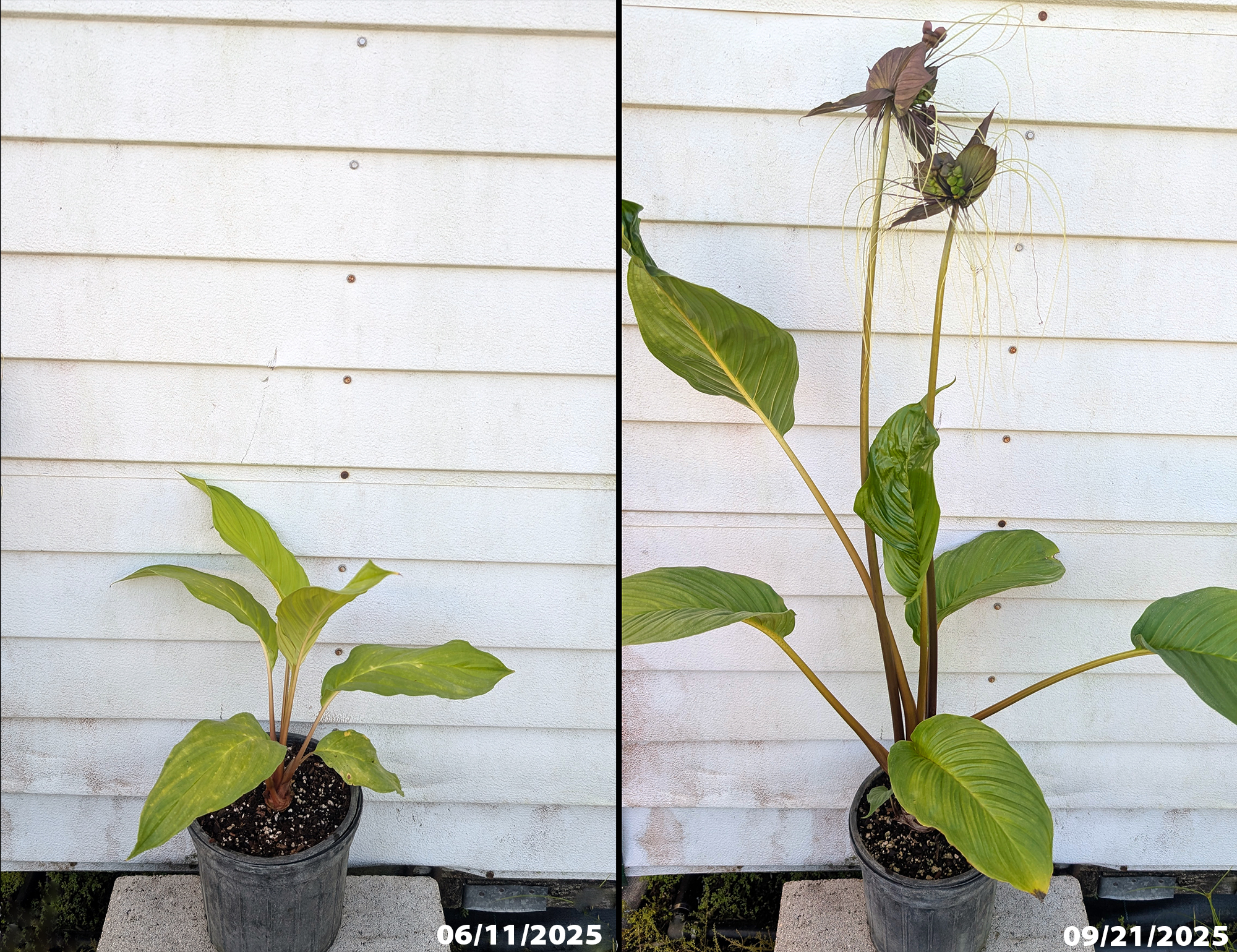
📊 Seasonal feeding schedule with Green Magic and Sunshine Boosters.
| Season | Product | Method | Goal |
|---|---|---|---|
| Spring (March) | Green Magic | Soil Surface | 6-month steady nutrient base. |
| Growing Season | Sunshine Boosters | Foliar (Every 5-7 days) | Calcium & Bio-available growth power. |
| Late Summer | Green Magic | Soil Surface | Replenish foundation for Fall. |
| Winter | Sunshine Epi | Foliar/Drench | Cold tolerance and shipping recovery. |
Quick Dose Reference
- Green Magic: 1 teaspoon per 1 gallon of soil volume.
- Sunshine Boosters: 25 ml (5 tsp) per 1 gallon of water.
- Pro Tip: Always spray in the early morning or late evening to prevent leaf scorch and ensure maximum absorption through the stomata.
❓Frequently Asked Questions: Plant Nutrition & Fertilizer
General Fertilizer Concepts
Why is the"Spring Fertilizer Rush"a problem?
Most gardeners apply a large amount of traditional fertilizer once in
March. This creates a"roller coaster"effect where plants get a sudden
spike of
nutrients followed by weeks of starvation. This leads to inconsistent growth
and potential"fertilizer burn."
What is"fertilizer burn"?
Traditional fertilizers are made of soluble salts. When too many salts
accumulate around the roots, they actually pull water out of the plant
tissues
(osmosis), dehydrating the plant and damaging sensitive root tips and leaf
edges.
Is there a difference between"Slow-Release"and
"Controlled-Release"?
Yes.
- Slow-Release: Relies on natural factors like moisture and soil microbes to break down. It is often unpredictable.
- Controlled-Release: Uses engineered polymer membranes (like Polyon) to release nutrients at a specific, predictable rate based primarily on temperature.
Green Magic & Temperature
How does temperature affect my fertilizer?
Most fertilizers are lab-tested at 75°F. In hot climates
(90°F+), the nutrients release much faster. A"6-month"fertilizer
might only last 3
months in the summer heat.
How should I adjust Green Magic for my local weather?
- Cooler Climates (<60°F): Increase the application rate by 20%.
- Hot Climates (> 80°F): Decrease the application rate by 20% to prevent over-releasing.
The Calcium Gap
Why doesn't Green Magic contain Calcium?
Calcium salts are highly soluble and can destabilize the polymer coating
used in controlled-release granules. Therefore, most high-quality granules
leave Calcium out. You can provide Calcium by using SUNSHINE Boosters
Why is Calcium so important for new growth?
Calcium is the"bone"of the plant, building strong cell walls. Unlike
other nutrients, it is immobile—the plant cannot move it from old
leaves
to new ones. If you don't provide a constant supply, new leaves and fruit
will
emerge distorted or weak.
Advanced Science & Troubleshooting
What makes Sunshine Boosters"Bioavailable"?
Unlike most liquid fertilizers that use EDTA chelators, Sunshine Boosters
are amino-acid based. They use organic acids and glycine to escort minerals
into the plant, allowing it to incorporate nutrients into its proteins
almost
immediately.
Will these fertilizers affect the taste of my fruit?
No. Sunshine Boosters are made from pharmaceutical-grade components and
contain no urea or harmful salts, ensuring your harvest (like Mangoes or
Avocados) has a pure, natural flavor without a chemical aftertaste.
✨ Green Magic - 15% Off This Week
Build the foundation for the entire growing season with a steady, long-lasting nutrient base.
No coupon needed. The discount is automatically applied at checkout.
Smokey: Not quite. Green Magic is the steady base diet. Sunshine Boosters are the weekly power drink during active growth.
Sunshine: Ah. Like my regular meals and donuts on top.
Smokey: Exactly. Plants eat slowly from Green Magic, and once a week they get a fresh boost.
Sunshine: Sprinkle once, then boosters every week. The plant grows, I drink coffee, and nobody forgets anything important.
Smokey: Except where you left the donuts.
Sunshine: Smokey... nobody forgets donuts. Ever
Date: 16 Mar 2026
🌞 Spring Nutrition Strategy: How to Identify and Fix Plant Nutrient Starvation

Smokey: Yes, it is good. However, it managed to grow your waistline, not the mango. Starting tomorrow, you begin exercising.
Sunshine: Exercising? Like running?
Smokey: No. Pulling weeds.
Read more about Smokey & Sunshine
🌱 The Spring Fertilizer Rush
It's the middle of March. The weather warms up, plants wake up, and gardeners rush to Home Depot to buy fertilizer. We see this every spring: one big feeding, then weeks or months of nothing.
Tatiana Anderson, horticultural expert from Top Tropicals, reminds gardeners that plants do not eat that way. They grow best when nutrients arrive little by little, not in one giant spring dump. That idea is the science behind Green Magic controlled-release fertilizer usage.
🎢 The Fertilizer Roller Coaster
After that big spring feeding, plants usually respond quickly. Leaves turn greener, growth speeds up, everything looks great. But a few weeks later something strange happens. Growth slows down. Leaves lose color. The plant looks hungry again. So gardeners fertilize again.
This cycle of nutrient spikes followed by starvation is very common with traditional fertilizers. Plants do not like roller coasters. They grow best with steady nutrition.
🚽 Where Traditional Fertilizers Go
Traditional fertilizers are usually made from soluble nutrient salts. When you water the soil or when it rains, part of those nutrients dissolve and become available to plants.
But plants cannot absorb everything at once. The unused portion continues moving with water through the soil. In gardens and container plantings, that excess often travels through drainage and eventually reaches nearby canals, lakes, or rivers causing algae growth.
These dissolved salts are also the reason gardeners sometimes see what is called "fertilizer burn". When too many salts accumulate around the roots, they can pull water out of plant tissues and damage sensitive roots and leaf edges.
It is also important to understand that traditional fertilizers are not the same as slow-release fertilizers. Traditional fertilizers dissolve quickly, while slow or controlled-release fertilizers are designed to release nutrients gradually over time.
This is why large fertilizer applications often lead to two problems: a short nutrient spike for plants and nutrient pollution.
⏳ The Idea Behind Slow Release
Gardeners and scientists recognized this problem a long time ago. If nutrients dissolve too quickly, plants receive a spike and the rest is washed away before roots can use it. The obvious solution was to slow things down. Instead of dumping nutrients all at once, slow-release fertilizers were developed to feed plants gradually over time.
The goal is simple: keep nutrients in the soil longer and deliver them to plants little by little, closer to the way plants actually grow.
⚖️ Slow Release vs Controlled Release
Not all gradual fertilizers work the same way. There is an important difference between slow-release and controlled-release fertilizers.
Slow-release fertilizers rely on natural processes such as moisture, temperature changes, soil microbes, or simple coatings that slowly break down. The release rate can vary depending on weather, soil conditions, and watering.
Controlled-release fertilizers use engineered coatings that regulate how nutrients leave the fertilizer granule. The coating acts like a membrane, allowing nutrients to move out gradually in a more predictable way.
In simple terms, slow-release fertilizers slow things down, while controlled-release fertilizers are designed to control how nutrients are delivered over time.
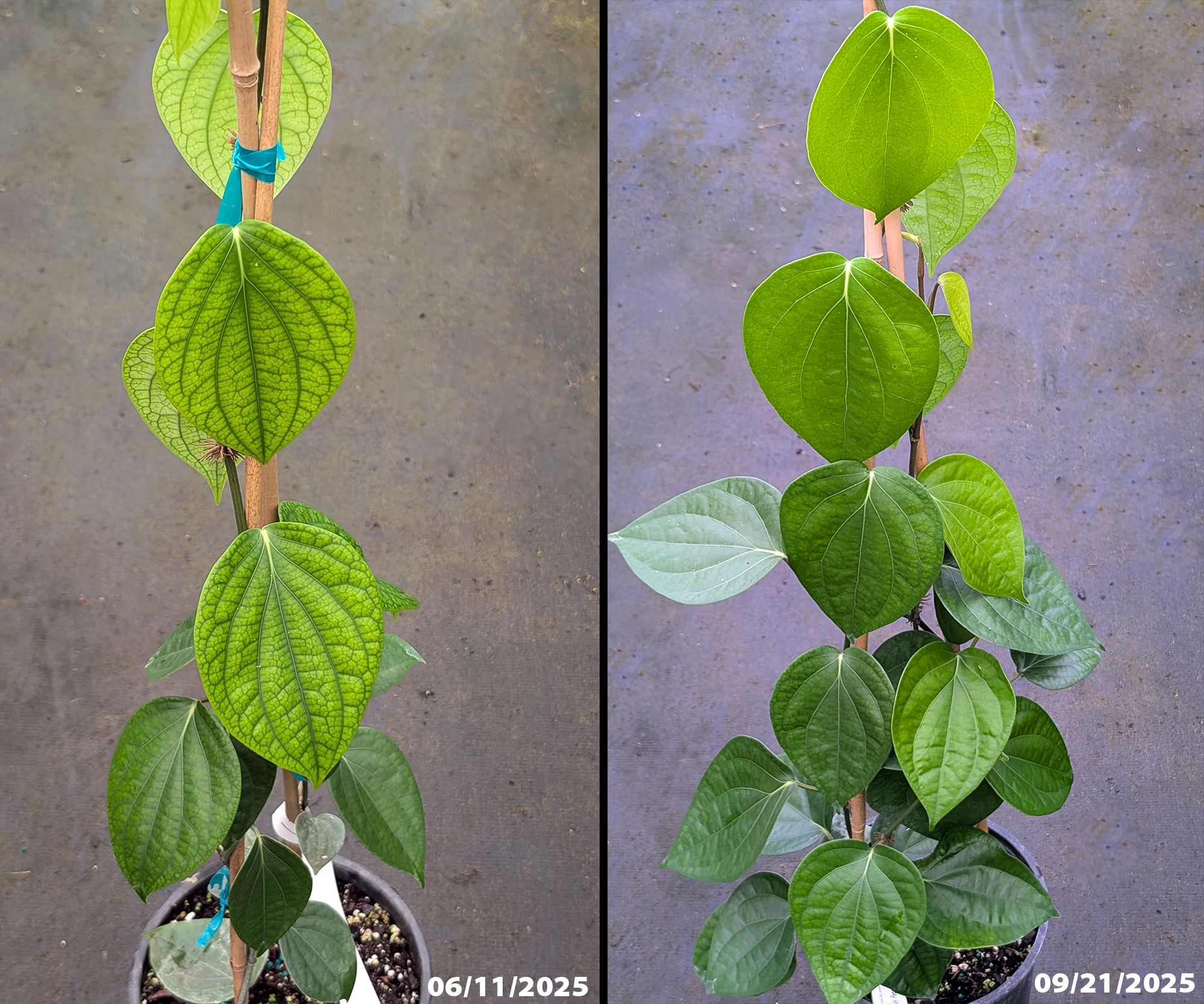
🌡️ The 75°F Trap
Most controlled or slow-release fertilizers are tested under laboratory conditions where soil temperature is around 75°F. But in real gardens, especially in warm climates, soil temperatures can be much higher. Container soil in full sun can easily reach 90°F or more. Higher temperature speeds up chemical and biological processes, including nutrient release from fertilizer coatings.
As a result, a fertilizer labeled 6-month release at 75°F may actually finish releasing nutrients in about 3 months in hot soil. That means plants receive nutrients too quickly early in the season and then may run short of food later, right when growth is strongest.
At 90°F and above, the issue is not only faster feeding. The fertilizer coating can release nutrients so quickly that the soil solution becomes highly concentrated with dissolved salts. In containers especially, this sudden surge of salts can pull water away from the roots through osmotic pressure, effectively dehydrating the roots at the exact moment when the plant needs water most. Instead of steady nutrition, the plant experiences a brief nutrient spike followed by stress.
⚙️ Why Release Mechanisms Matter
Different fertilizers use different coating technologies. Some rely on simple coatings that release nutrients mainly in response to moisture. When it rains or the soil stays wet, nutrients are released faster. When the soil dries, release slows down. This moisture-driven mechanism can be unpredictable because it depends heavily on rainfall and watering patterns.
More advanced fertilizers use membranes designed to regulate nutrient movement based primarily on temperature. Because plant metabolism is closely tied to temperature, this creates a much more scientific and predictable feeding process. As temperatures rise and plants grow faster, nutrients are released more actively. When temperatures drop and plant activity slows, the release rate also slows.
This scientific, temperature-based mechanism helps deliver nutrients gradually and predictably, reducing the large spikes and sudden shortages that often occur with simpler fertilizer coatings.
Controlled Release Technology
Modern controlled-release fertilizers use polymer coatings that act like a thin membrane around each granule. Water enters the granule, nutrients dissolve inside, and then slowly move through the coating into the soil.
The speed of this process is influenced mainly by soil temperature, which generally follows the plant's natural growth rate.
Polyon coating technology is known for its very consistent polymer layer, which helps deliver nutrients more evenly from granule to granule. This consistency is one reason controlled-release fertilizers are widely used in professional nurseries and container plant production.
Green Magic fertilizer uses advanced Polyon controlled-release technology to provide steady background nutrition for plants without the large nutrient spikes common with traditional fertilizers.
⚠️ The Calcium Gap
One nutrient that is often missing from many controlled-release fertilizers is Calcium. Calcium is essential for plant cell structure. It strengthens cell walls and supports healthy development of new leaves, roots, and fruit. In many ways, its role is similar to how calcium supports bone structure in the human body.
Unlike many other nutrients, Calcium is not mobile inside plants. The plant cannot move it from older leaves to support new growth. This is why calcium deficiency usually appears first in the newest leaves and growing tips. When plants lack calcium, new growth may become distorted, weak, or fail to develop properly because the cells cannot form strong walls.
Another important detail is that Calcium is not mobile inside plants. Once it becomes part of plant tissue it cannot move to new growth, which is why fresh leaves are the first to show deficiency symptoms.
No matter how much NPK fertilizer is added, plants cannot grow properly without enough Calcium because new cells simply cannot build their structure.
Calcium is difficult to include inside polymer-coated fertilizer granules because many calcium salts are highly soluble and can interfere with the stability of the coating.
For this reason most controlled-release fertilizers focus on delivering nitrogen, phosphorus, and potassium, while assuming that Calcium will come from irrigation water or soil amendments such as gypsum.
Garden advice often recommends bone meal as a Calcium source. While bone meal does contain Calcium, it releases very slowly and depends on soil biology and acidity, so it may take months before plants can actually use it. A more reliable Calcium source for many growers is gypsum, which supplies Calcium. However, adding it to container mixes is risky because the correct amount is difficult to control.
The most reliable way to supply Calcium is simple: use Sunshine Boosters. These liquid fertilizers deliver readily available Calcium directly to plants in soil and in containers, supporting strong new growth and preventing the hidden deficiencies that often limit plant development. We explained this approach in detail in our previous newsletter.
The Two-Layer Feeding System
Professional growers rarely rely on a single fertilizer. The most stable approach is combining controlled-release nutrition with targeted liquid feeding.
Green Magic provides steady background nutrition through Polyon controlled-release technology, supplying nitrogen, phosphorus, potassium, and essential microelements gradually over time.
Sunshine Boosters complement this base feeding by delivering Calcium and additional micronutrients in a form plants can absorb quickly when growth is most active.
Together they create a balanced system: Green Magic feeds plants continuously, while Sunshine Boosters provide the nutrients that controlled-release fertilizers cannot easily deliver.
Green Magic builds the foundation, Sunshine Boosters power the growth.
Date: 15 Mar 2026
Adeniums from a world of imagination - where Thai names become living stories
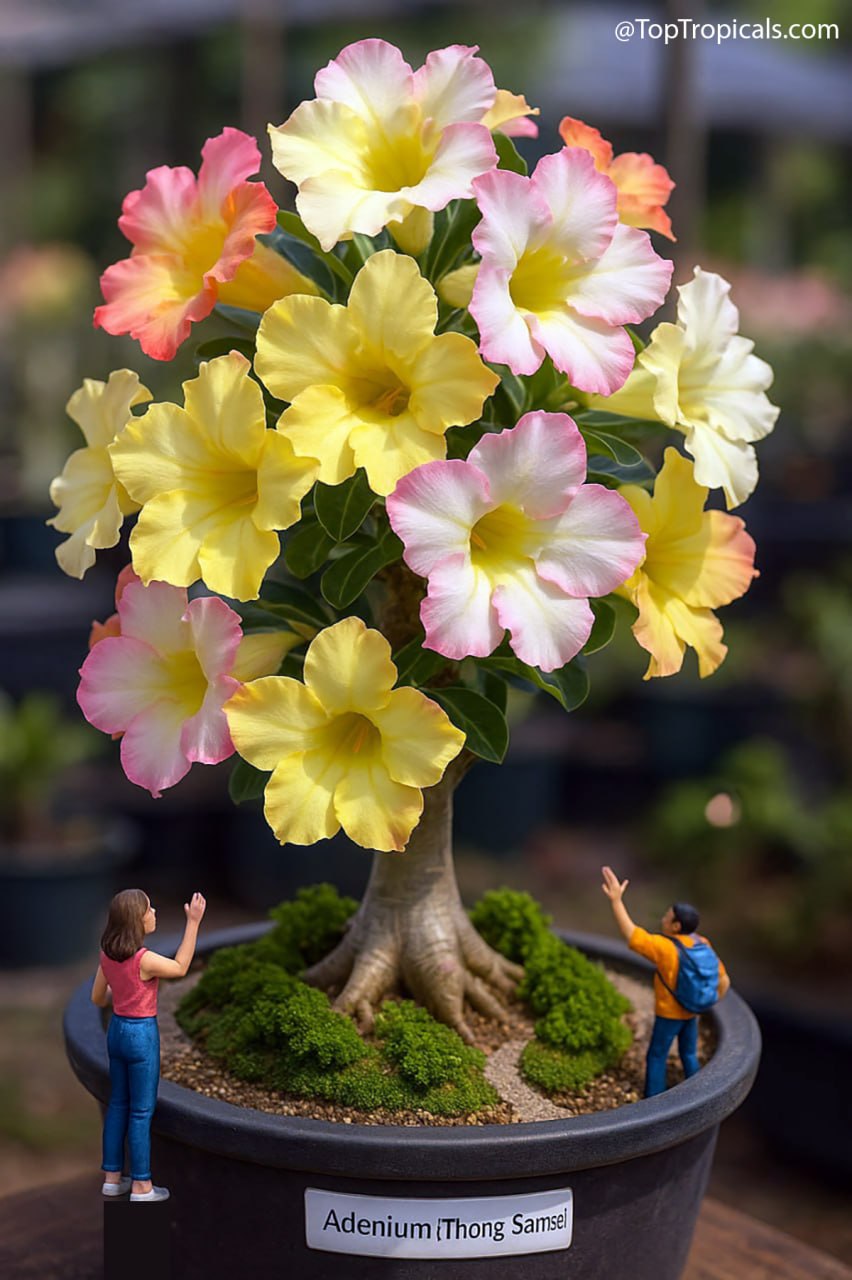
Adenium Thong Samsee - "Three Colors of Gold"

Adenium Ploysai - "Clear Crystal Gem"
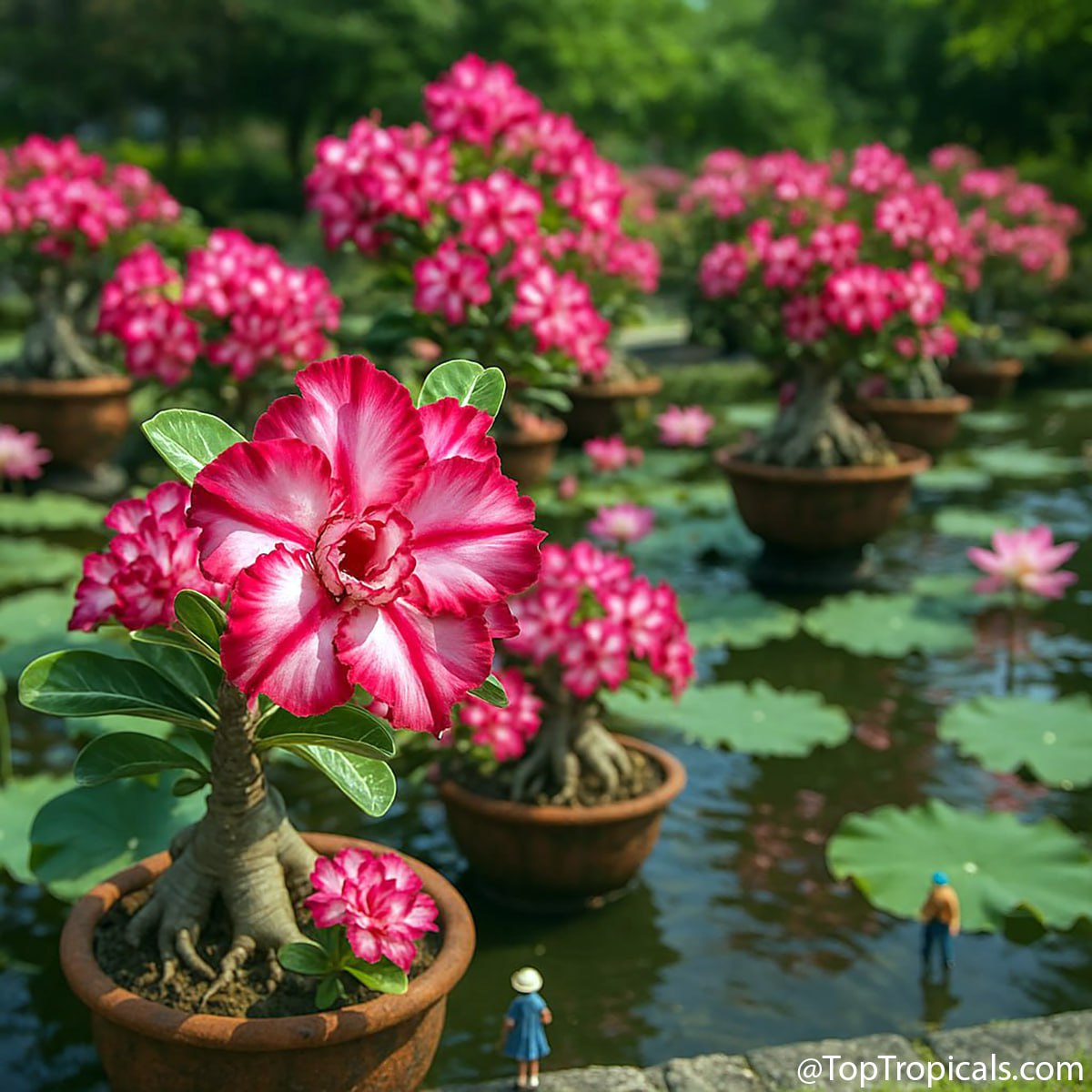
Adenium Bua Sawan - "Heavenly Lotus"
Some plants are grown for their flowers. Adeniums are also grown for their names!
- 🌸 Thong Samsee - "Three Colors of Gold" Golden Adenium blooms in soft yellow, cream, and pink shades - a perfect example of why Thai growers love the word Thong, meaning gold, in plant names that suggest prosperity and good fortune.
- 🌸 Ploysai - "Clear Crystal Gem" A treasure chest filled with glowing flowers, like precious stones discovered by a lucky explorer. In Thai plant names, Ploy means gemstone - a symbol of beauty and value.
- 🌸 Bua Sawan - "Heavenly Lotus"
🛒 Explore Exotic Thai Adeniums
📚 Learn more:
- · About #Adenium Rainbow - fantastic varieties
- · What Thai Adenium names mean: luck, gold, and mythology
- · How to learn the secret meanings behind Thai flower names
#Container_Garden #Adeniums #Horoscope #How_to #Discover
🟢 Join 👉 TopTropicals